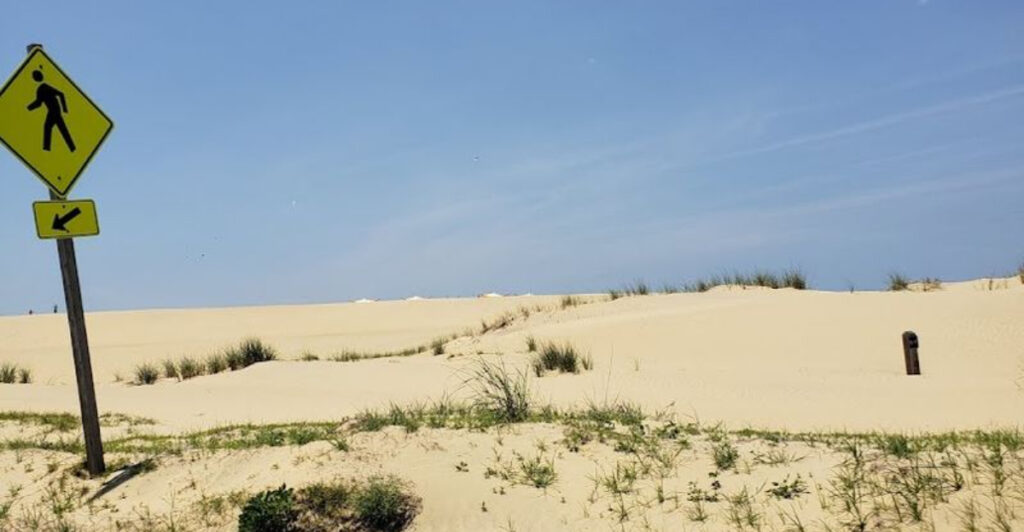
There is a stretch of the North Carolina coast where the land does something unexpected. Instead of flattening out into marshes or beach grass, it rises into towering walls of sand that can reach nearly 100 feet high.
This is not a mirage or a movie set. The East Coast’s tallest living sand dune system sits right on the Outer Banks, drawing families, adventurers, kite flyers, and hang gliders from across the country every single year.
I visited on a breezy afternoon in October, and I can honestly say nothing quite prepares you for the first time you crest that ridge and see the Atlantic Ocean on one side and Roanoke Sound on the other. Here is everything you need to know before you go.
Where It All Begins: Address, Location, and Getting There
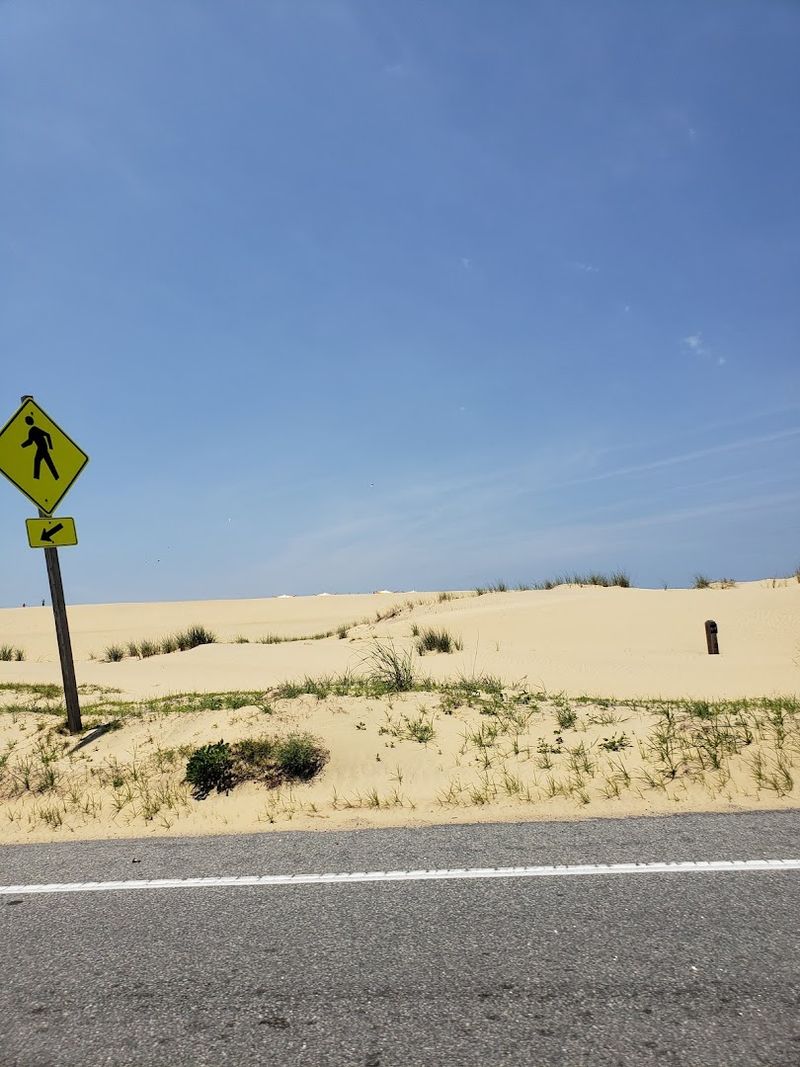
The first thing that surprises most people is how close Jockey’s Ridge State Park is to everyday beach traffic. The park sits at 300 W Carolista Dr, Nags Head, NC 27959, right off the busy bypass road that runs through the Outer Banks.
You can spot the dunes rising above the rooftops before you even pull into the parking lot. The entrance is clearly marked, and free parking is available in a spacious lot that rarely feels crowded even during peak summer months.
Nags Head is roughly a two-hour drive from Raleigh and about 90 minutes from Norfolk, Virginia, making it an easy day trip or weekend stop for travelers up and down the East Coast.
The visitor center near the entrance is a solid first stop. Staff there are friendly and ready with maps, tips, and free stickers for the kids.
The park is open every day from 8 AM to 8 PM, and all visitors need to be off the dunes by 7:45 PM. There is no admission fee, which makes it one of the best free outdoor experiences on the entire Eastern Seaboard.
The Story Behind the Dunes: History and How They Formed
Sand dunes of this scale do not just appear overnight. Jockey’s Ridge has been building for thousands of years, shaped by the relentless wind patterns that sweep across the Outer Banks from the Atlantic Ocean and Roanoke Sound.
The dunes are what geologists call a “medano,” a large hill of windblown sand without vegetation on its main face. That means the dune is always moving, always shifting, and never quite the same shape twice.
The park was officially established in 1975 after local resident Carolista Baum led a grassroots campaign to protect the dunes from development. Her effort is one of the most celebrated conservation stories in North Carolina history.
At their peak, the dunes once reached around 110 feet. Today they range between 80 and 100 feet depending on seasonal wind activity, which means the landscape literally changes from year to year.
Visitors who return after a decade often notice dramatic shifts in the sand hills, with some areas growing and others shrinking. That constant transformation is part of what makes this place feel alive in a way that most parks simply do not.
The Main Event: Climbing the Tallest Dune on the East Coast
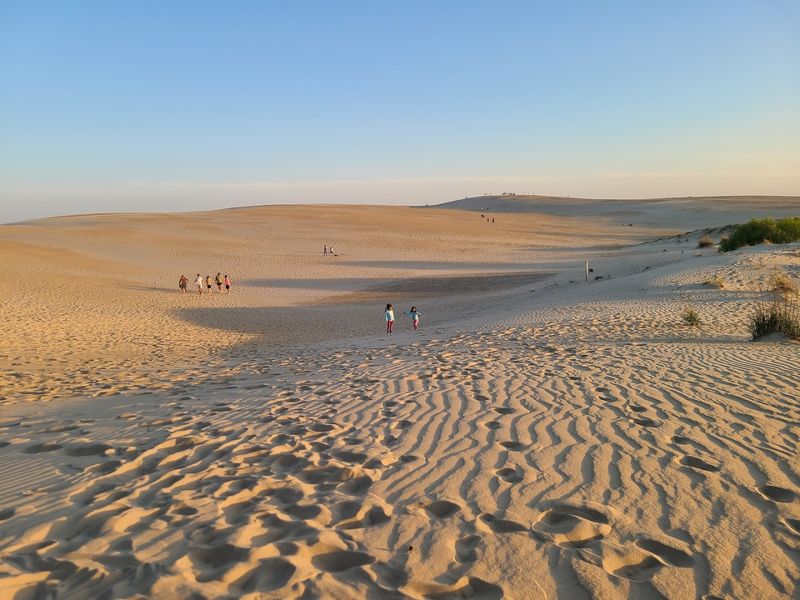
Let me be straightforward with you: climbing these dunes is a workout. Your legs will feel every step, especially on the steeper sections where the sand slides back under your feet as fast as you push forward.
Most people make it to the top in about 25 to 30 minutes at a comfortable pace. The trail is entirely sand, so going barefoot is actually the most popular and practical option once the surface cools down in the morning or evening.
The reward at the top is genuinely hard to put into words. You can see the Atlantic Ocean in one direction and Roanoke Sound in the other, with the narrow strip of land between them suddenly making the geography of the Outer Banks crystal clear.
The 360-degree view of Nags Head from the summit is something photographers and casual visitors alike rave about. Sunsets from this vantage point are especially striking, with the sky turning shades of orange and pink over the sound.
Your calf muscles will likely remind you of the climb the next morning, but that mild soreness feels completely worth it after an experience this visually rewarding.
Hang Gliding Over Sand: A Thrill Unlike Anything Else
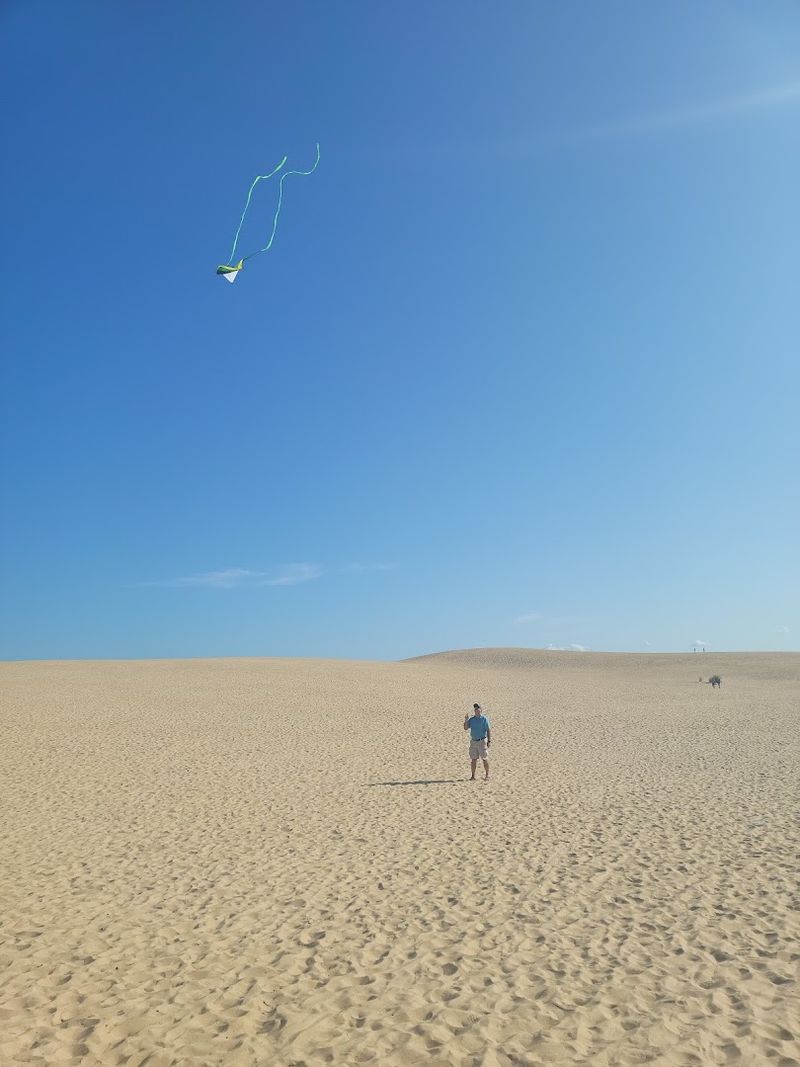
The wide open face of Jockey’s Ridge has been attracting hang gliding enthusiasts for decades. The consistent coastal winds and the soft sand landing zone make it one of the most beginner-friendly hang gliding locations anywhere in the United States.
Kitty Hawk Kites operates a hang gliding school right next to the park, and they have been teaching beginners to fly here since 1974. Lessons are structured for all skill levels, and the instructors bring a relaxed, encouraging energy that makes nervous first-timers feel at ease quickly.
The connection between this location and aviation history is hard to miss. The Wright Brothers conducted their first powered flight just a few miles north at Kill Devil Hills, and the same strong, reliable winds that drew them here still fill the sails of hang gliders every single day.
Watching someone glide silently down the face of the dune while you are standing at the top is a genuinely spectacular sight. The school sees visitors from across the country, and many people list it as the highlight of their entire Outer Banks trip.
Booking a lesson in advance during summer is strongly recommended, as spots fill up fast on clear, windy days.
Kite Flying and Family Fun on the Open Sand
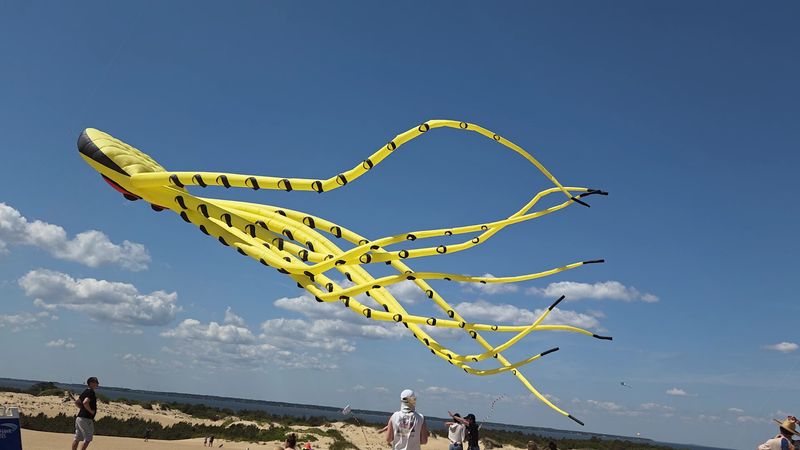
The wind at Jockey’s Ridge is almost always present, and kite flyers treat that as a personal gift from the coast. On any given afternoon, the sky above the dunes is dotted with colorful kites of every shape and size, creating a scene that feels both festive and completely natural.
Kids especially love the wide open space here. There are no trees, no fences, and no obstacles, just miles of sand rolling in every direction.
Running down the steep sides of the dunes is a favorite activity for children, and the soft sand makes it surprisingly safe.
The park also hosts an annual kite festival that draws competitors and spectators from across the region. The event fills the sky with elaborate and artistic kites, and the atmosphere on those days is hard to beat.
Families with younger children find that even a simple visit without any planned activity turns into hours of entertainment. Sand castles, footprint trails, and spontaneous races up and down the dunes keep everyone busy long past their planned departure time.
Bringing a cheap kite from the nearby shop takes the experience up another level entirely, and the wind here rarely lets you down on that front.
Dog-Friendly Trails and Practical Tips for Pet Owners
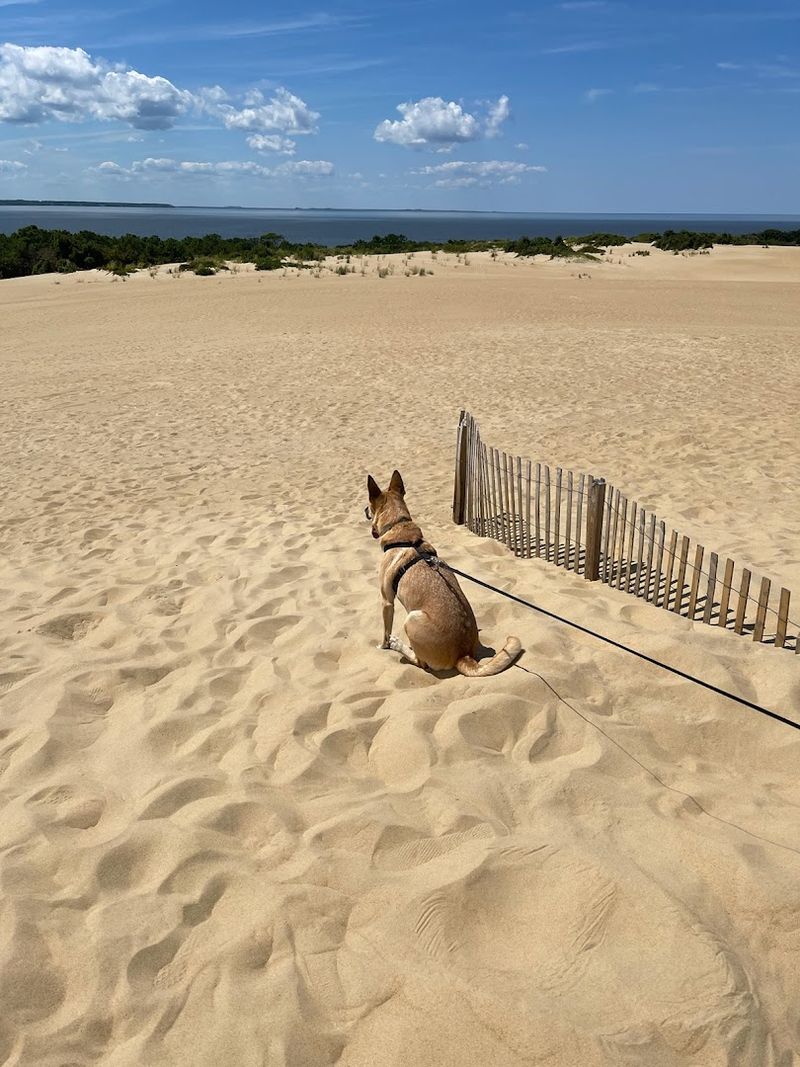
Jockey’s Ridge is one of those rare state parks that genuinely welcomes dogs rather than just tolerating them. The wide open dunes give pets plenty of room to explore, and the park provides low water spigots and dog bowls near the entrance at no charge.
The rinse station near the base of the dunes is especially handy for cleaning sandy paws before loading back into the car. It doubles as a cooling station on warmer days, which dogs tend to appreciate more than their owners do.
One important caution worth taking seriously: sand temperatures on sunny summer days can get extremely hot. The practical test is to press your bare hand flat on the surface and hold it there for ten seconds.
If that is uncomfortable, the sand is too hot for your dog’s paw pads, and it is better to visit in the early morning or evening instead.
Dogs on leash are welcome on all trails, and the open terrain means there is plenty of space to keep distance from other visitors if your pet is shy or easily distracted.
The combination of fresh air, wide open space, and interesting smells makes this one of the most entertaining outings you can give a dog on the East Coast.
Sunset Views and the Best Times to Visit
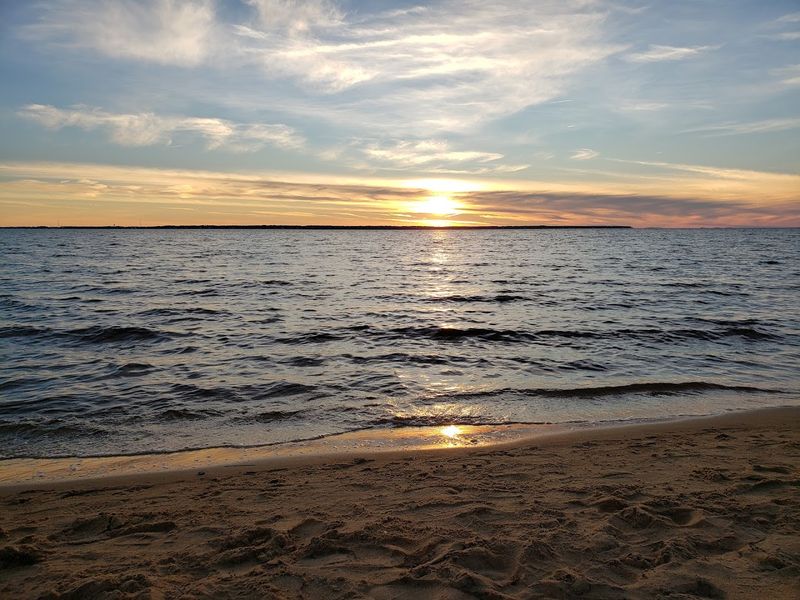
Timing your visit to Jockey’s Ridge can completely change the experience. The best advice I received before going was to arrive about 30 minutes before sunset, and it turned out to be perfect guidance.
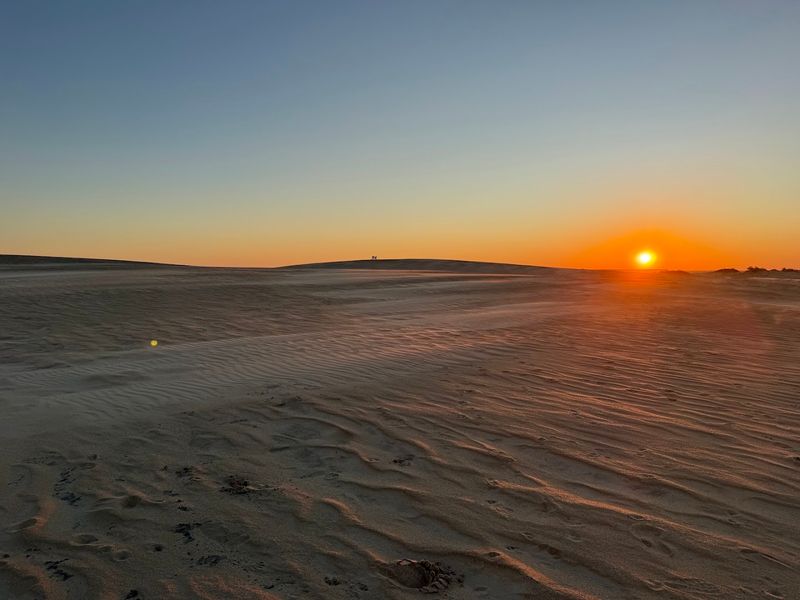
The light at that hour turns the sand a warm amber color, and the shadows cast by the dune ridges create a landscape that looks almost sculptural. Watching the sun drop toward Roanoke Sound from the top of the main dune is one of those moments that sticks with you long after the trip ends.
Summer mornings are the other sweet spot, especially in July and August when midday sand temperatures can climb uncomfortably high. Getting there right at the 8 AM opening means cooler sand, fewer crowds, and softer light for photography.
October is widely considered one of the best months overall. The weather is mild, the crowds thin out considerably, and the wind is consistently strong enough for kite flying without being overwhelming.
Rain does not necessarily ruin a visit here. The wind patterns on overcast days create fascinating ripple textures in the sand, and the muted light can actually make the dunes look even more dramatic than they do under bright sunshine.
The Buried Castle and Hidden Surprises Near the Park
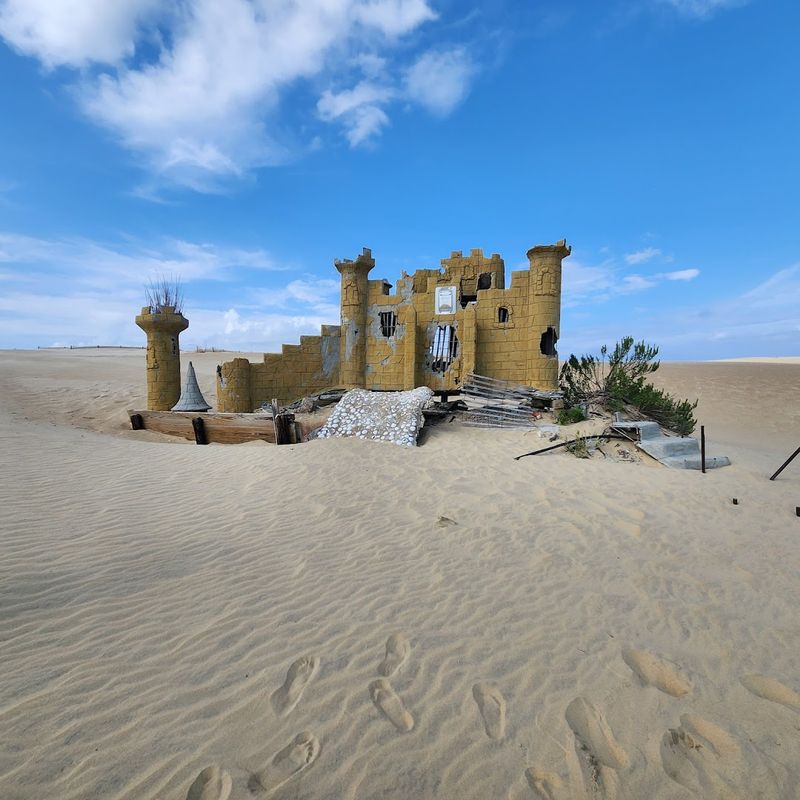
One of the quirkiest pieces of local lore connected to Jockey’s Ridge involves a castle that was slowly swallowed by the shifting dunes over the years. The structure was originally part of a miniature golf course that operated nearby decades ago.
As the dunes migrated, sand gradually buried the castle until it disappeared almost entirely. In recent years, the dune movement shifted again and the castle has re-emerged, now visible and accessible to curious visitors.
To find it, park at the Kitty Hawk Kites shop across the road from the main park entrance, use the crosswalk, and look just a few yards from the road. It is a short detour that takes about ten minutes and rewards you with a genuinely odd and memorable photo opportunity.
The park itself also marks the eastern terminus of the Mountains to Sea Trail, a long-distance hiking route that stretches all the way across North Carolina to the Great Smoky Mountains. There is a photo marker at the trailhead that makes for a fun stop.
These small discoveries tucked around the main dune experience are part of what makes a visit here feel layered and worth exploring slowly rather than rushing through.
What to Wear, Pack, and Leave at Home
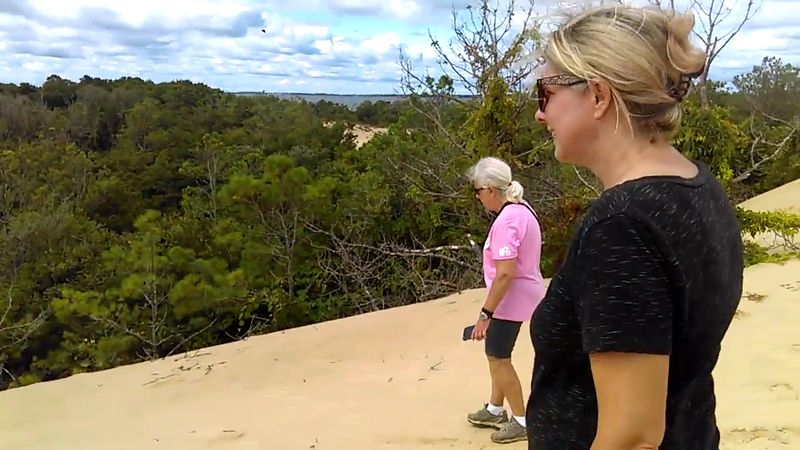
Footwear choices at Jockey’s Ridge deserve more thought than most people give them before arriving. Sandals and flip-flops sound logical for a sandy environment, but they fill with grit almost immediately and become more frustrating than helpful within the first five minutes.
Lightweight sneakers or water shoes that lace up securely work much better for the climb. Many experienced visitors simply go barefoot once they reach the sand, which is genuinely comfortable in the morning or evening when temperatures are moderate.
Water is non-negotiable. The climb is more physically demanding than it looks, and the coastal wind can mask how much you are sweating.
Bringing at least one large bottle per person is a minimum, and packing a small backpack keeps your hands free for the descent.
Sunscreen is essential even on cloudy days. The sand reflects UV rays upward, which means you can get sunburned from below as well as above, a detail that catches a lot of first-time visitors off guard.
Leave the stroller at the car. The soft sand makes pushing any wheeled device nearly impossible, and the park is currently building a boardwalk expected to open in 2026 that will eventually improve accessibility for those with mobility needs.
Why Travelers Keep Coming Back to This Outer Banks Icon
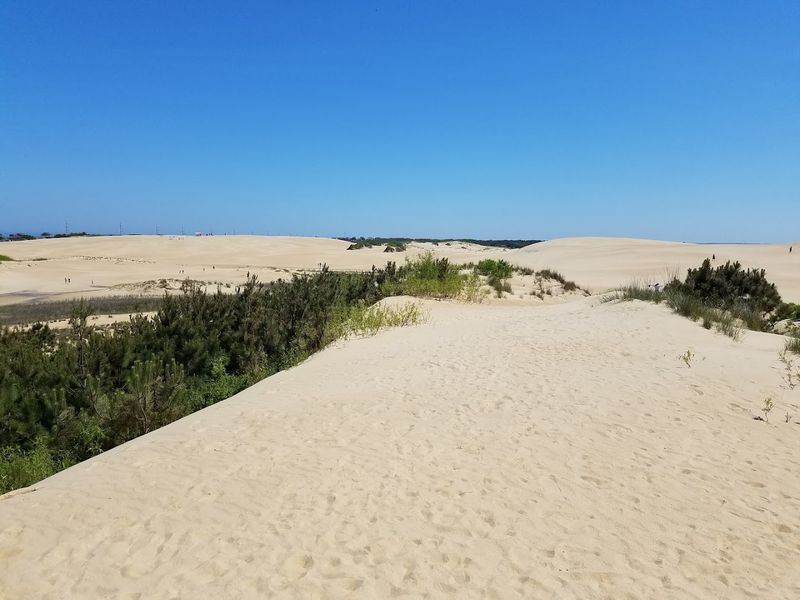
A 4.8-star rating from over 6,500 reviews is not something a place earns by accident. Jockey’s Ridge delivers something genuinely rare: a natural landscape so unusual that it feels completely out of place on the East Coast, yet fits perfectly into the wild character of the Outer Banks.
People return year after year and still find something new. The dunes shift between visits, new textures appear after storms, and the light changes the whole mood of the place depending on the season or time of day.
The fact that it costs nothing to enter removes every barrier that might otherwise keep a family from visiting. No tickets, no reservations, no crowds funneled through a single bottleneck.
Just open sand, open sky, and a view that earns its reputation every single time.
Solo travelers find it meditative. Couples find it romantic.
Families find it exhausting in the best possible way, with kids sleeping soundly on the drive home after hours of running, climbing, and exploring.
Every great road trip along the East Coast deserves at least one stop that resets your sense of what the coastline can look like, and this park delivers that reset with quiet, unhurried confidence.
Share this story