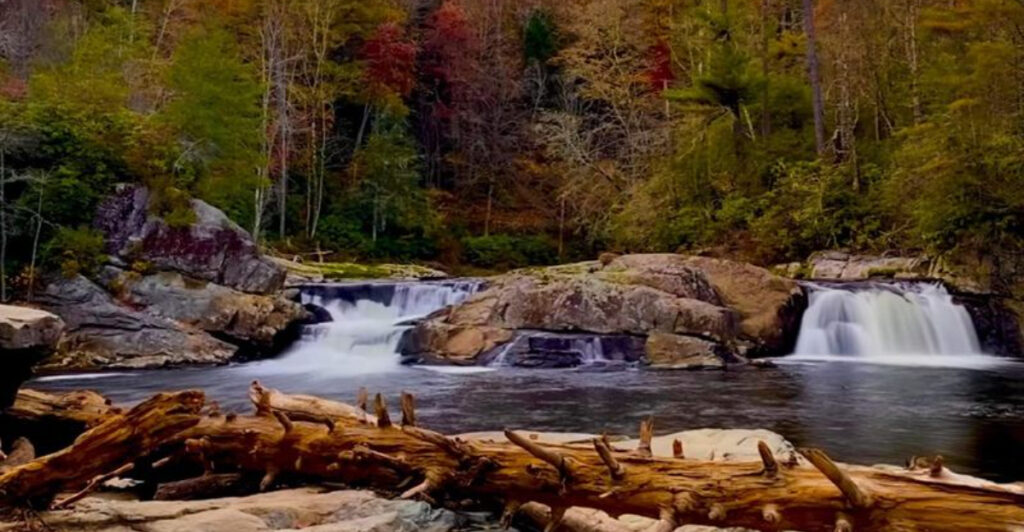
There is a waterfall in the North Carolina mountains that has been stopping people in their tracks for generations. It does not just trickle down a mossy rock face.
It drops hard and fast into one of the deepest gorges on the entire East Coast, sending mist into the air and turning the surrounding forest into something that feels almost surreal. Hikers come for the trails, photographers come for the light, and most people leave wondering why they waited so long to make the trip.
This is a place where the landscape does the talking, and trust me, it has plenty to say. Stick around, because every section of this article reveals a different layer of what makes this North Carolina treasure so worth visiting.
Where It All Begins: Location and Access
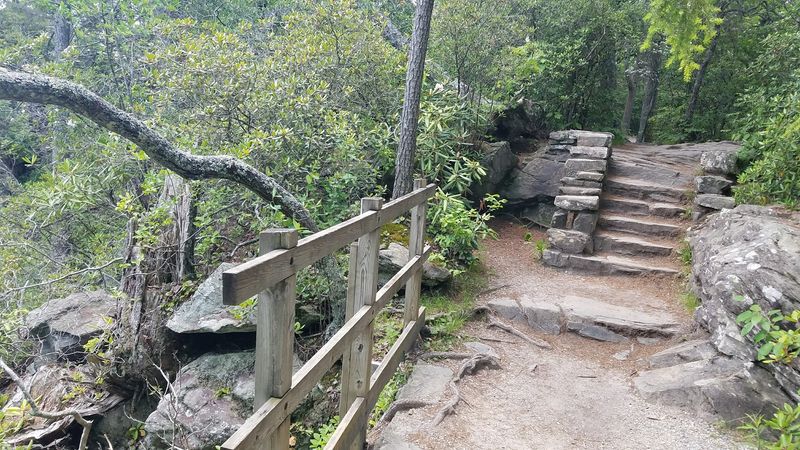
The trailhead for Linville Falls sits right off the Blue Ridge Parkway at milepost 316.4, near the unincorporated community of Linville Falls, North Carolina 28752, tucked into the junction of Avery, Burke, and McDowell counties.
Getting there is straightforward, and the drive along the Blue Ridge Parkway itself is worth the trip. The winding road cuts through dense hardwood forest, offering views that make it hard to keep your eyes on the pavement.
The National Park Service manages the site, and there is a small visitor center near the parking area that provides trail maps and basic information about the gorge. Restrooms are available near the trailhead, which is a welcome detail after a long drive.
The parking lot fills up fast on weekends, especially during fall foliage season. Arriving before 9 a.m. gives you the best shot at a spot without circling like a hawk over a field mouse.
No entry fee is required to hike to the falls, which makes this one of the most accessible natural wonders in the entire Southern Appalachian region.
The Falls Themselves: A Two-Stage Power Drop
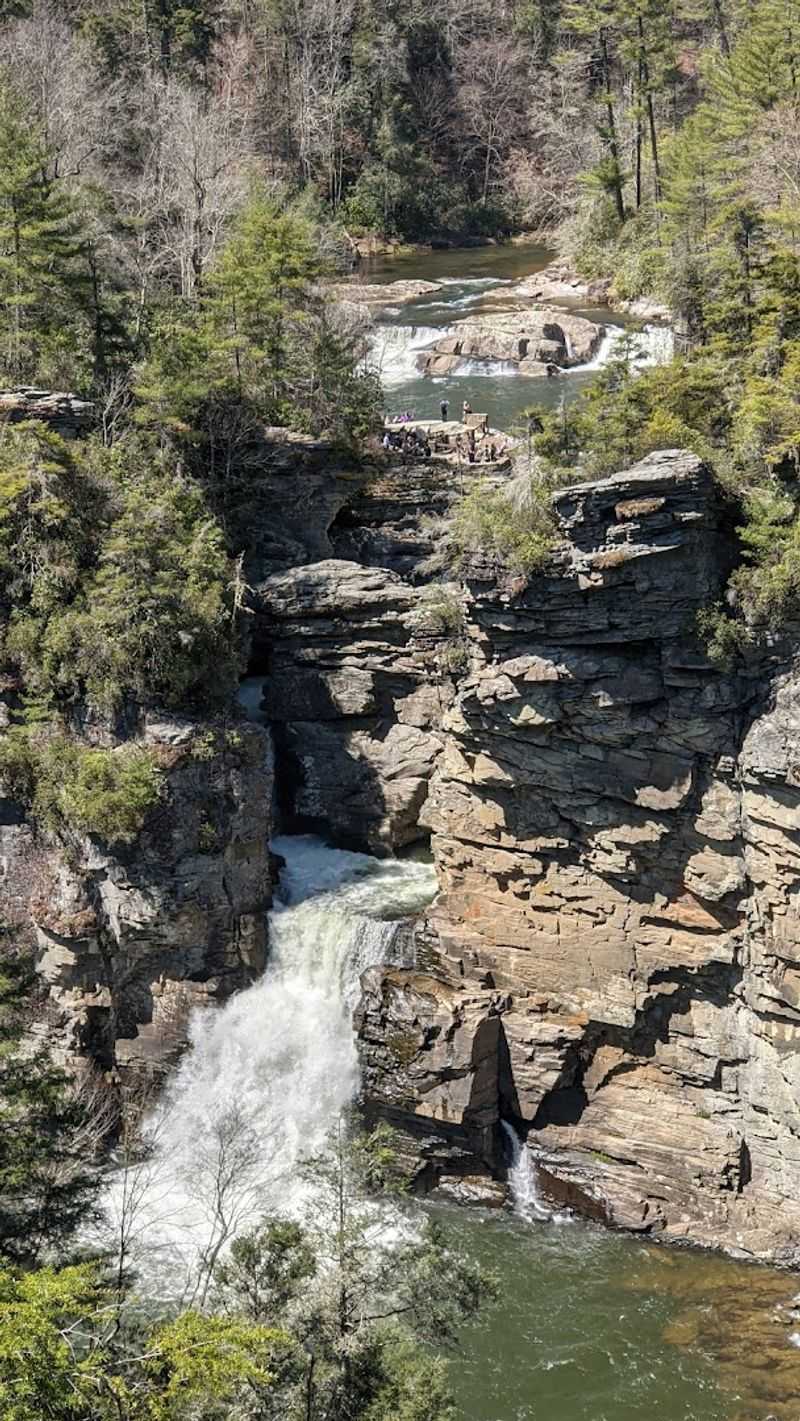
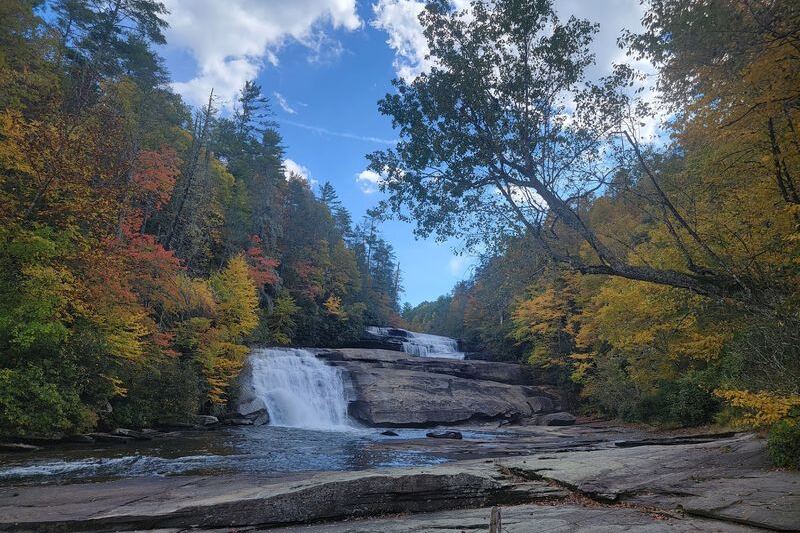
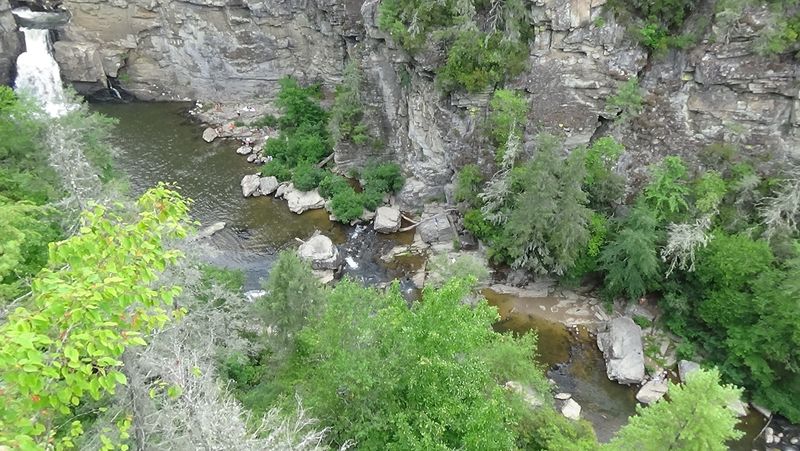
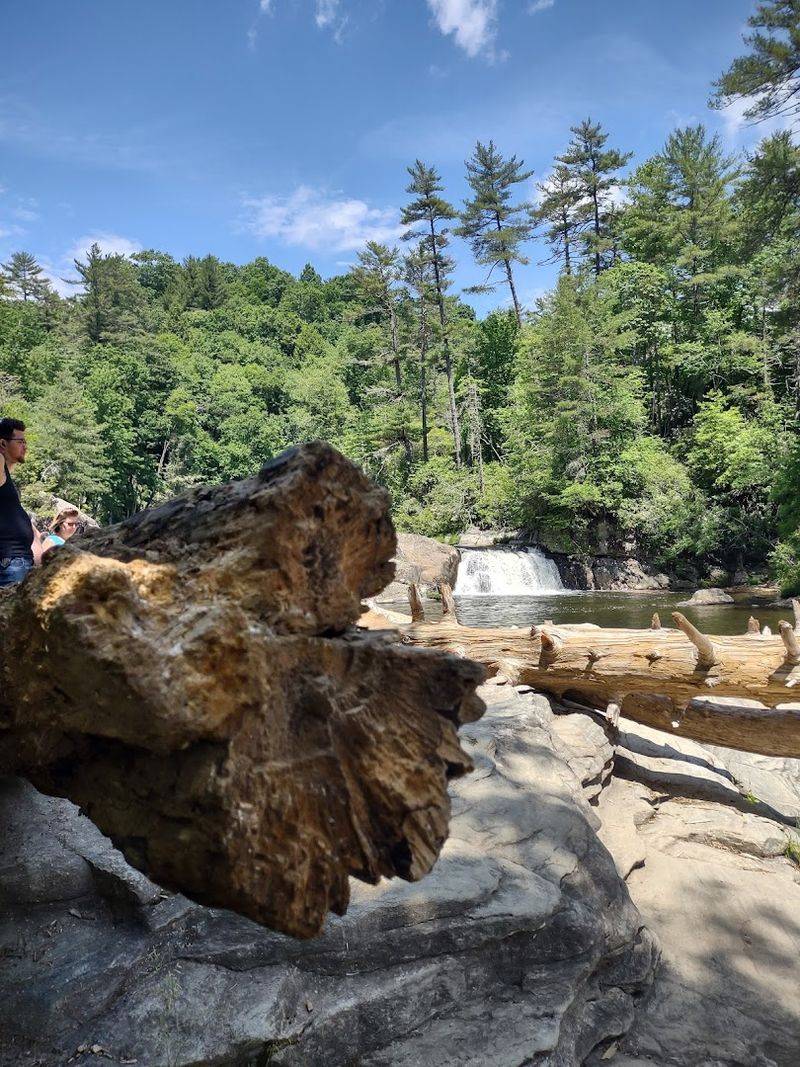
Raw power is the first thing you notice when you get close enough to feel the spray on your face. Linville Falls drops in two distinct stages, with the upper falls making a broad curtain-like plunge before the lower falls send water crashing dramatically into the gorge below.
The upper falls stretch about 12 feet wide and drop roughly 12 feet, creating a wide fan of water that spreads beautifully across the rock shelf. The lower falls are the showstopper, plunging nearly 60 feet straight into the Linville River below.
The combined effect is genuinely striking. Standing at the overlook and watching both stages work together feels like watching nature flex in slow motion.
The Linville River, which feeds the falls, originates near Grandfather Mountain and carves its way through the gorge with remarkable energy. The water runs cold year-round, which keeps the mist refreshing even on warm summer days.
Every season changes the personality of the falls. Spring brings the highest water volume, summer offers lush green framing, fall adds brilliant color, and winter occasionally coats the rocks in dramatic ice formations.
The Gorge Below: A Wilderness Like No Other
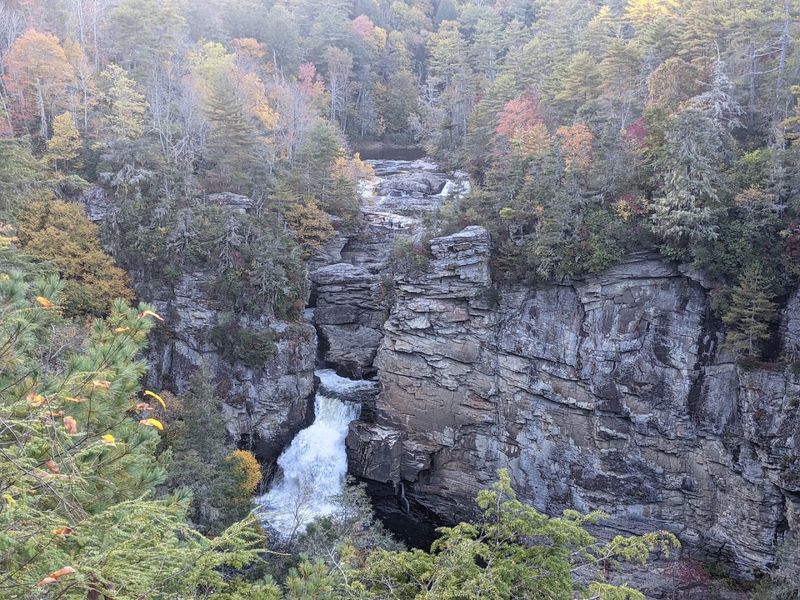
Beneath the falls lies one of the most rugged and celebrated wilderness areas in the eastern United States. The Linville Gorge Wilderness covers roughly 11,786 acres and is often called the Grand Canyon of the East, a nickname it earns with steep canyon walls that drop over 2,000 feet in some sections.
The gorge was carved over millions of years by the Linville River, and the exposed rock faces reveal some of the oldest geological formations in the Appalachian Mountains. Geologists and geology enthusiasts find the exposed quartzite and metamorphic rock layers genuinely fascinating.
Wildlife in the gorge includes black bears, white-tailed deer, wild turkeys, and a rich variety of bird species. The dense canopy and rocky terrain create a habitat that feels deliberately untouched.
The wilderness designation means no motorized vehicles and very limited development, which keeps the environment feeling raw and authentic. You are not going to find a snack bar or a gift shop down in the gorge.
Experienced hikers who venture deeper into the gorge often describe the sense of isolation as one of the most memorable parts of the whole experience.
Trail Options for Every Type of Hiker
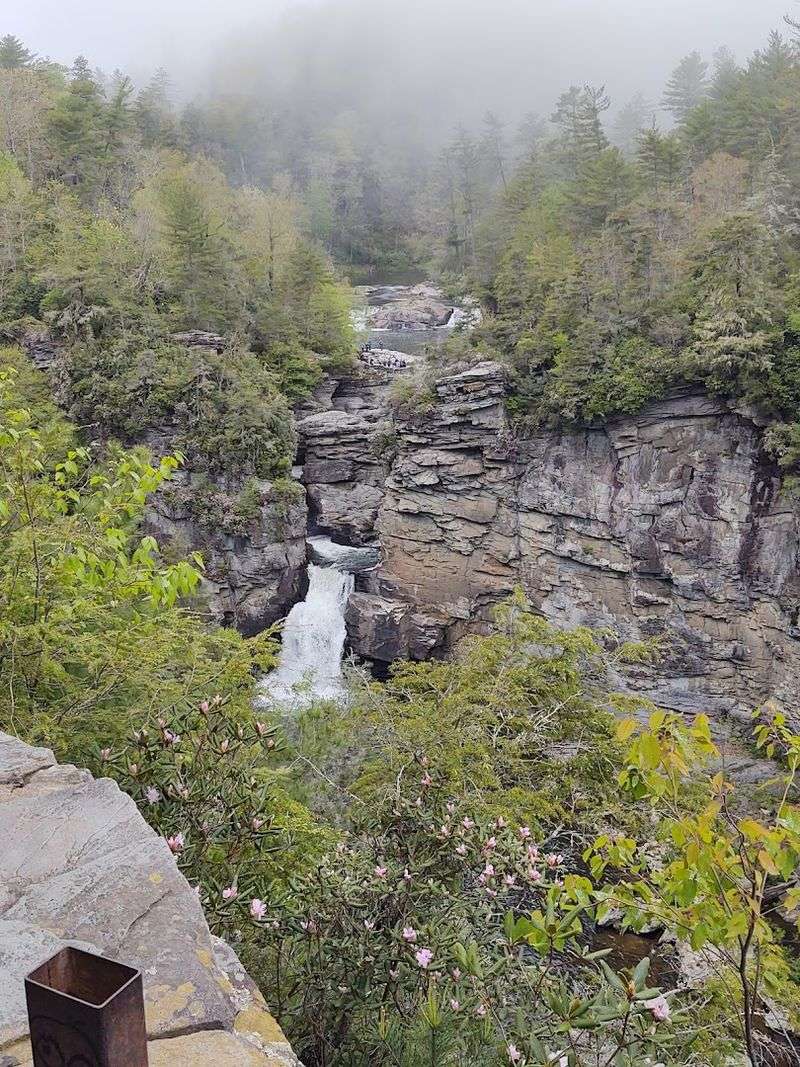
One of the best things about this spot is that it does not lock out beginners while still giving experienced hikers something worth sweating for. The trail system at Linville Falls offers multiple routes with different difficulty levels and different payoff views.
The Erwin’s View Trail is the most popular, running about 1.6 miles round trip and leading to four different overlooks. Each viewpoint gives you a distinct angle on the falls and the gorge, so the trail rewards patience and curiosity rather than just speed.
The Plunge Basin Overlook Trail is shorter and gives you a closer look at the lower falls and the deep pool at the base. This trail involves a bit more scrambling over rocks near the end, which most moderately fit hikers handle without trouble.
There is also a spur trail that leads down to the riverbank, letting you get close to the upper falls and feel the full force of the spray. Wear shoes with good grip, because the rocks near the water get slick quickly.
Most visitors complete the main trail loop in one to two hours, leaving plenty of time to linger at each overlook without feeling rushed.
Photography at Linville Falls: Chasing the Perfect Shot
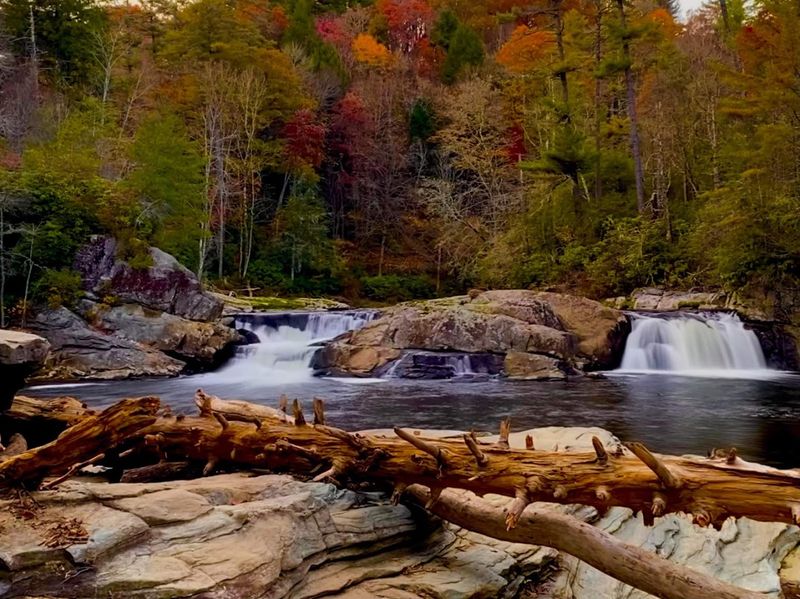
Few places in the Southeast hand photographers such dramatic material to work with. The combination of a multi-stage waterfall, a deep gorge, ancient rock formations, and seasonal foliage creates a scene that changes every time you visit.
The overlooks on the Erwin’s View Trail give you elevated angles that frame the falls against the gorge walls beautifully. Early morning light filters through the trees and hits the mist in ways that make long-exposure shots look almost painted.
A tripod is essential for waterfall photography here. The low-light conditions under the forest canopy and the motion blur needed to capture the water smoothly both require steady support.
Polarizing filters help cut through the glare on wet rocks and bring out the deep greens in the surrounding vegetation. Many photographers also use a neutral density filter to extend exposure times even in brighter conditions.
Fall is the most competitive season for photography at Linville Falls, with visitors sometimes queuing at overlooks for the best angle. Arriving at dawn is not just a tip, it is practically a requirement if you want the overlook to yourself and the light working in your favor.
The History Behind the Name
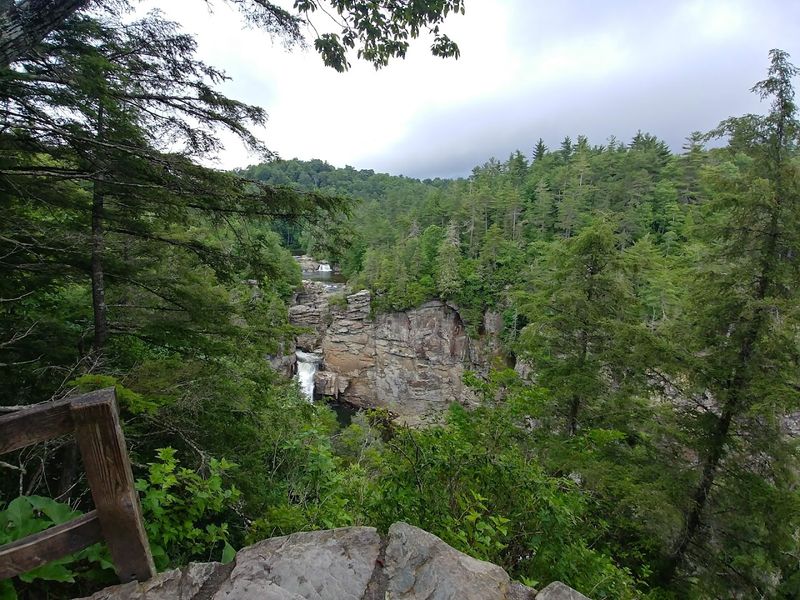
The name Linville carries a story that stretches back to the 1760s. John Linville, a frontier explorer, was among the early European settlers who ventured into this part of the North Carolina mountains, and the river, falls, and surrounding community all carry his name today.
The area was part of the Cherokee Nation’s ancestral territory long before European exploration, and the gorge itself held significant importance as a natural landmark and boundary in the region. The Cherokee called the river something closer to a description of its character, a rushing, unpredictable force through the mountains.
By the late 19th century, the area began attracting tourists and naturalists drawn by the dramatic scenery. The Blue Ridge Parkway, completed through this section in the mid-20th century, brought the falls to a much wider audience and formalized the trail system that visitors use today.
The National Park Service took over management of the falls area as part of the Blue Ridge Parkway corridor, ensuring long-term preservation of the site. That stewardship has kept the trails and overlooks in good condition while protecting the surrounding wilderness from development.
Best Times to Visit and What to Expect Each Season
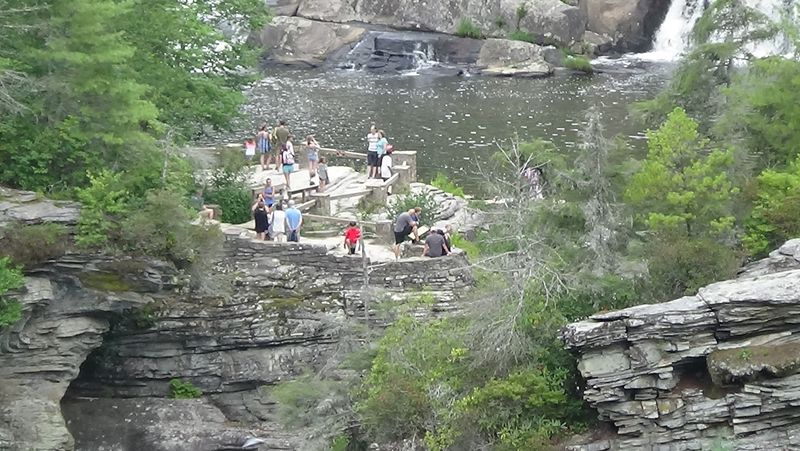
Timing your visit makes a significant difference in what you experience at Linville Falls. Each season delivers something genuinely different, and none of them are truly bad choices, though some are clearly more spectacular than others.
Spring brings the highest water flow, fed by snowmelt and seasonal rain. The falls roar with extra volume, the spray reaches farther, and the surrounding forest bursts into fresh green growth that frames every view with vivid color.
Summer draws the largest crowds, especially on weekends and holidays. The shade from the mature forest canopy keeps the trails cooler than you might expect, and the falls offer a natural misting experience that hikers genuinely appreciate on hot afternoons.
Fall is the headline season. The hardwood forest surrounding the gorge turns into a patchwork of orange, red, gold, and burgundy, typically peaking in mid to late October.
The overlooks become genuinely breathtaking during this window, and the parking lot reflects that with its capacity crowds.
Winter visits are quieter and occasionally reward patient visitors with ice formations on the rock faces near the falls. The bare trees actually open up some views that the summer canopy hides completely.
Wildlife and Flora Along the Trail
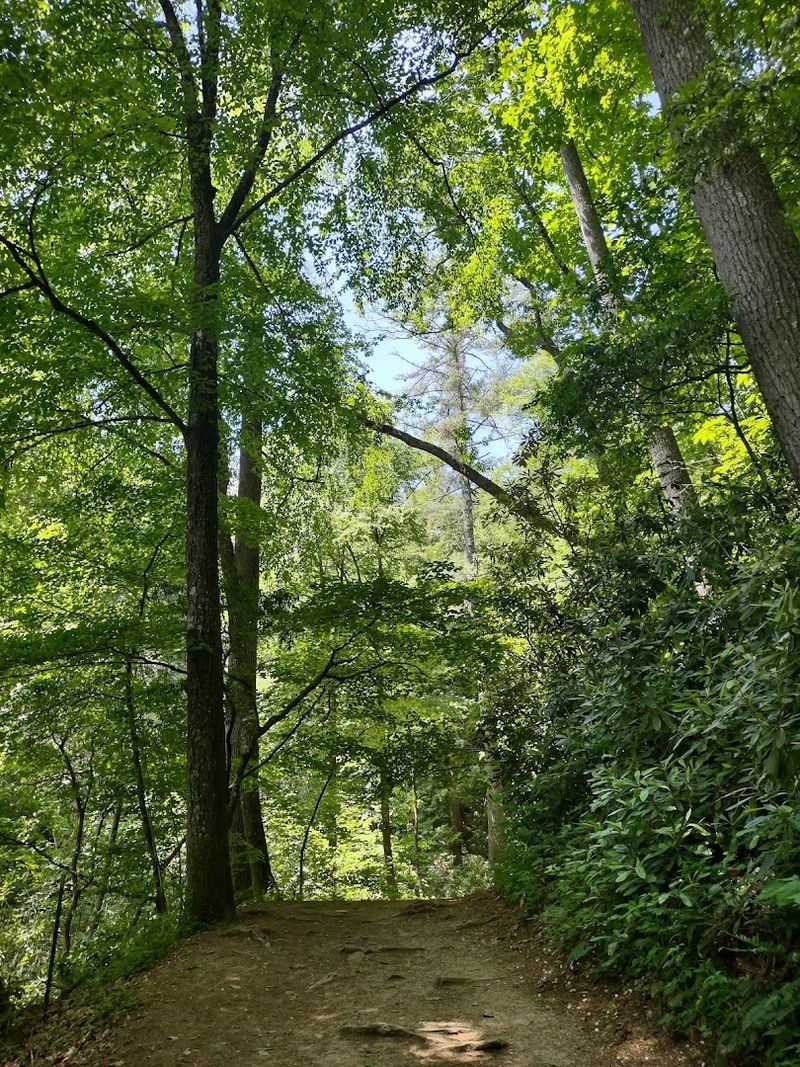
The trail to Linville Falls passes through a forest that feels deliberately curated by nature. Eastern hemlocks, tulip poplars, Fraser magnolias, and a dense understory of rhododendron line much of the path, creating a tunnel of green that feels genuinely immersive.
Rhododendron season, which typically runs from late May through mid-June, transforms the trail into something almost theatrical. The blooms cluster thickly along the path and near the water, and their reflection in the mist near the falls is one of those sights that makes people stop mid-stride.
Bird watchers find the gorge particularly rewarding. The area supports species including the peregrine falcon, which has been observed nesting on the cliff faces of the gorge.
Warblers, vireos, and various thrush species also frequent the forest during migration periods.
Black bears are present in the area, and while sightings on the main trail are not common, they do occur. Keeping food stored properly and making noise on the trail are sensible habits rather than overcautious ones.
Wildflowers appear along the trail edges from early spring through summer, adding small bursts of color that reward anyone paying attention to the forest floor rather than just the destination ahead.
Camping Near the Falls: Sleeping Close to the Roar
Spending a night close to Linville Falls turns a day trip into something much more memorable. The Linville Falls Campground, managed by the National Park Service, sits just minutes from the trailhead and offers both tent and RV sites in a forested setting.
The campground has over 50 sites spread across several loops, with access to restrooms and water. The sites are reasonably spaced, giving campers a sense of privacy without feeling completely isolated from the rest of the group.
Reservations are strongly recommended during peak season, particularly from July through October. The campground books up weeks in advance during fall foliage, and showing up without a reservation on a Saturday in October is a gamble that rarely pays off.
Evenings at the campground carry the faint sound of the river in the background, which makes falling asleep surprisingly easy. The absence of light pollution in this part of the mountains also means the night sky delivers a proper display of stars on clear nights.
The proximity to the trailhead means early risers can be at the overlook before the day-use parking lot even opens, giving them the falls entirely to themselves in the quiet morning light.
Tips for Making the Most of Your Visit
A few practical details go a long way toward making your visit smooth and enjoyable rather than frustrating. The most consistent advice from experienced visitors centers on timing, footwear, and preparation.
Wear proper hiking shoes with solid grip. The trails near the water and at the overlooks involve uneven terrain and roots, and the mist from the falls makes certain rock surfaces genuinely slippery.
Trail runners or light hiking boots work well for most people.
Bring more water than you think you need. The hike itself is not long, but the combination of sun, humidity, and physical activity adds up, especially for families with children.
There is no water available on the trail beyond the visitor center area.
Cell service in this part of the mountains is unreliable at best. Download an offline map before you leave home, and let someone know your plans if you intend to explore beyond the main trail.
The visitor center near the trailhead is worth a five-minute stop before heading out. The staff there are knowledgeable, genuinely helpful, and can give you current trail conditions that no website will have updated that morning.
Most importantly, resist the urge to rush. The overlooks reward people who sit quietly for a few minutes and let the scale of the gorge fully register.
Share this story