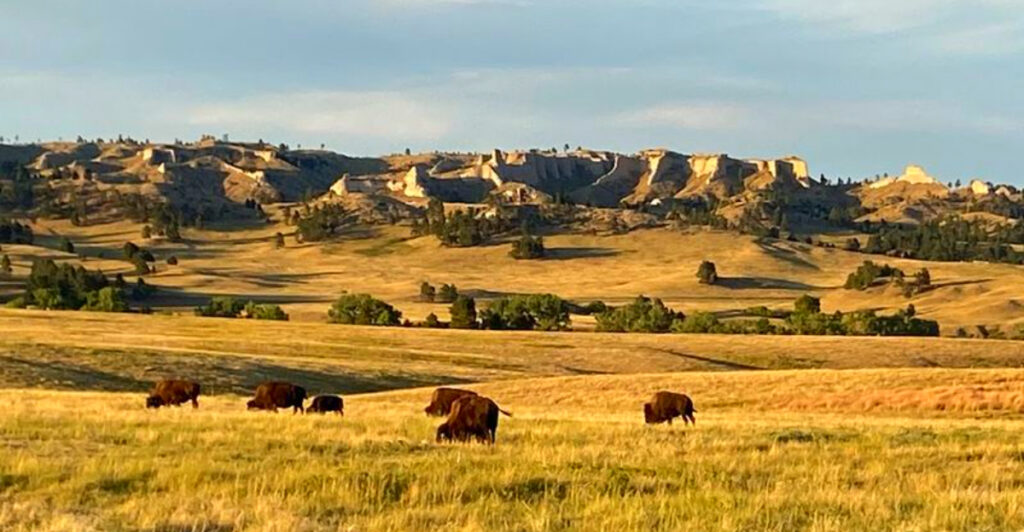
Nebraska is often overlooked, but its landscapes are far more diverse and fascinating than many travelers expect. Beyond the highways lie ancient fossil beds, unusual rock formations, hand-planted forests, and quirky small-town attractions that reveal a different side of the Great Plains.
This list highlights 13 hidden gems scattered across the state, each offering something unexpected. Whether you’re drawn to natural wonders, local oddities, or off-the-beaten-path adventures, these destinations prove there’s much more to Nebraska than meets the eye.
1. Toadstool Geologic Park, Crawford, Nebraska
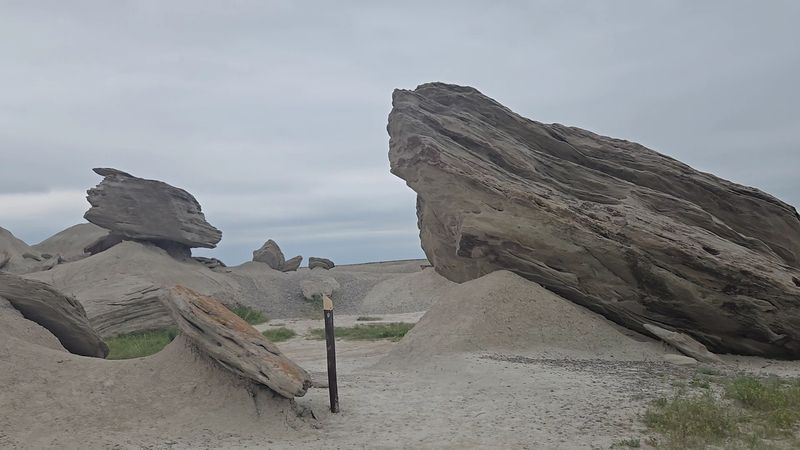
Most people do not expect to find a landscape that looks borrowed from the surface of Mars sitting quietly in the Nebraska panhandle. Toadstool Geologic Park, tucked inside the Oglala National Grassland, earns its unusual name from the mushroom-shaped rock formations that dot the terrain in every direction.
These formations developed over millions of years as softer layers of sediment eroded beneath harder caprock, leaving behind the distinctive toadstool shapes visitors see today. The area is also rich with ancient fossils, some dating back 30 to 35 million years.
A marked trail loops through the park and takes roughly 45 minutes to complete, making it accessible for most fitness levels. There are no crowds, no entry fees, and almost no cell service, which honestly adds to the appeal.
Photographers in particular tend to overstay their planned visit by a wide margin.
2. Ashfall Fossil Beds State Historical Park, Royal, Nebraska
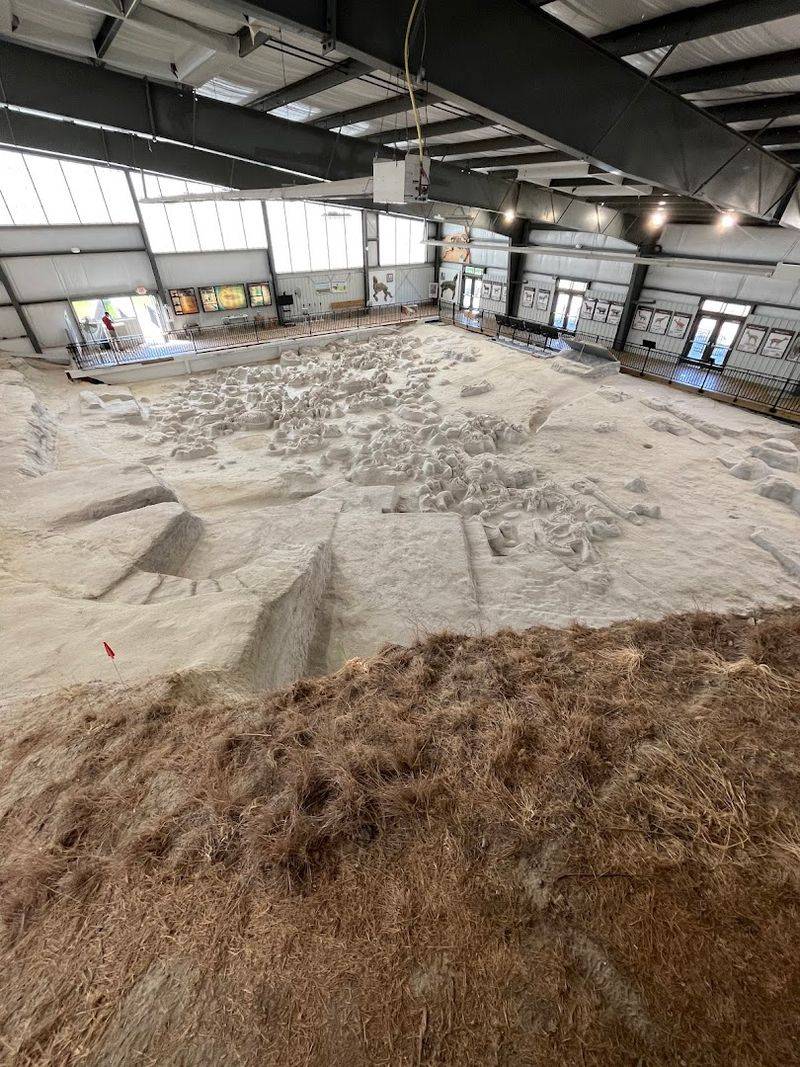
About 12 million years ago, a volcanic eruption blanketed a Nebraska watering hole in ash, preserving an entire community of prehistoric animals exactly where they fell. That site, now known as Ashfall Fossil Beds, gives visitors a front-row view of one of the most significant paleontological discoveries in North American history.
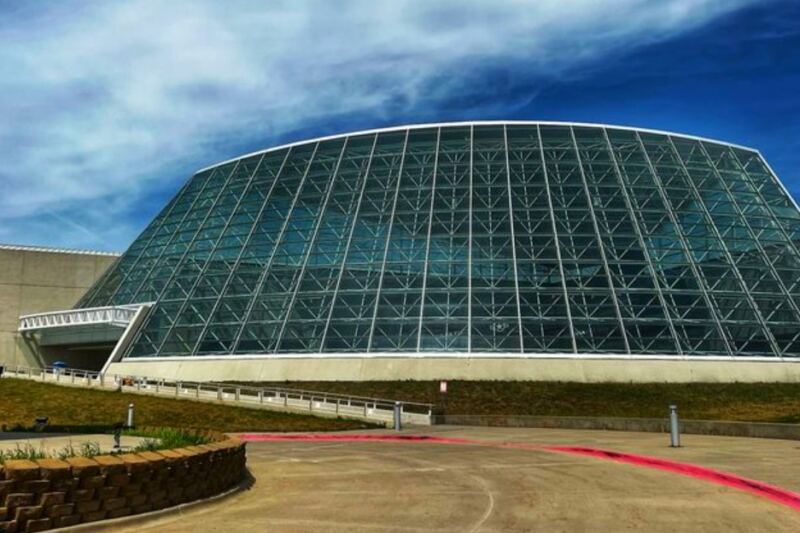
The centerpiece is the Hubbard Rhino Barn, a large protective structure built directly over the fossil site so that excavation can continue year-round. Visitors walk along elevated platforms and look down at ancient rhinos, three-toed horses, and barrel-bodied camels still embedded in the ash layer below.
Working paleontologists are often visible on-site during the summer season, which turns the visit into something closer to a live science demonstration than a typical museum trip. The park is located near the small town of Royal and is well worth the detour from Highway 20.
3. Smith Falls State Park, Valentine, Nebraska
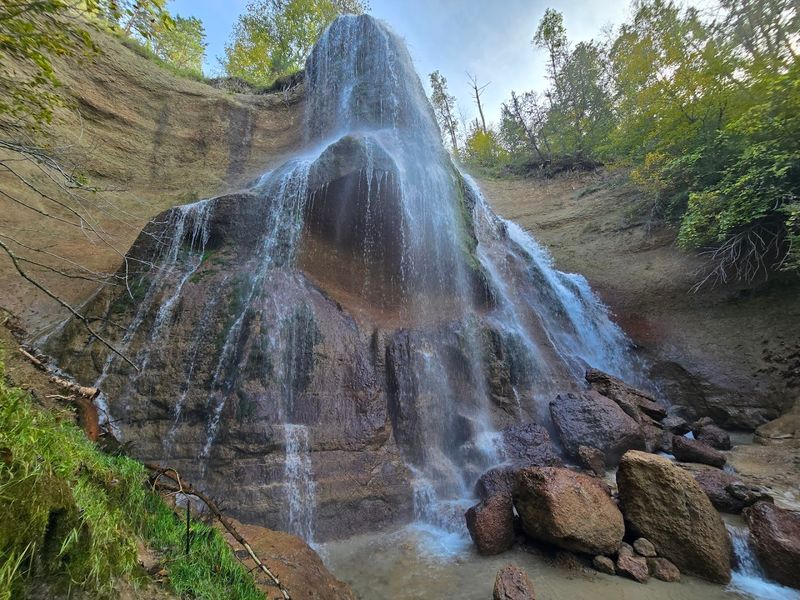
Nebraska’s tallest waterfall drops 63 feet into a narrow canyon along the Niobrara River, and a surprising number of people have never heard of it. Smith Falls State Park sits in a particularly scenic stretch of the Niobrara River Valley, and the trail leading to the falls crosses a charming footbridge before winding through dense vegetation that feels out of place in the wider prairie landscape.
The park is open year-round, though the trail can get muddy after rain. Summer is the busiest season, largely because the Niobrara River is one of the most popular tubing and canoeing destinations in the state.
Camping is available on-site, and the combination of river access and waterfall hiking makes this a genuinely well-rounded outdoor destination. Day visitors typically spend two to four hours here, though many end up staying for a full afternoon once they see how peaceful the canyon actually is.
4. Fort Robinson State Park, Crawford, Nebraska
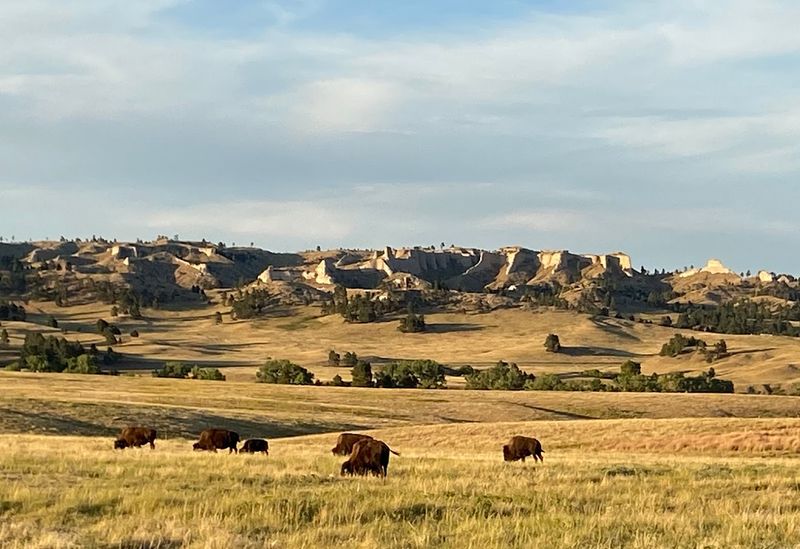
There are not many places where you can tour a 19th-century military fort in the morning and spot a bison herd in the afternoon, but Fort Robinson State Park manages both without breaking a sweat. The park covers more than 22,000 acres in the Pine Ridge region of northwestern Nebraska and carries a deep, layered history that spans from the Indian Wars era through World War II.
The historic district includes original and reconstructed buildings from the fort’s active military period, and guided tours are available during the summer months. The park also operates a working bison herd that visitors can observe from designated viewing areas.
Horseback riding, hiking, mountain biking, and jeep tours round out the activity list, making this one of the most diverse state parks in the region. Overnight lodging is available in renovated historic buildings, which gives the experience an added layer of authenticity that a standard campsite simply cannot match.
5. Carhenge, Alliance, Nebraska
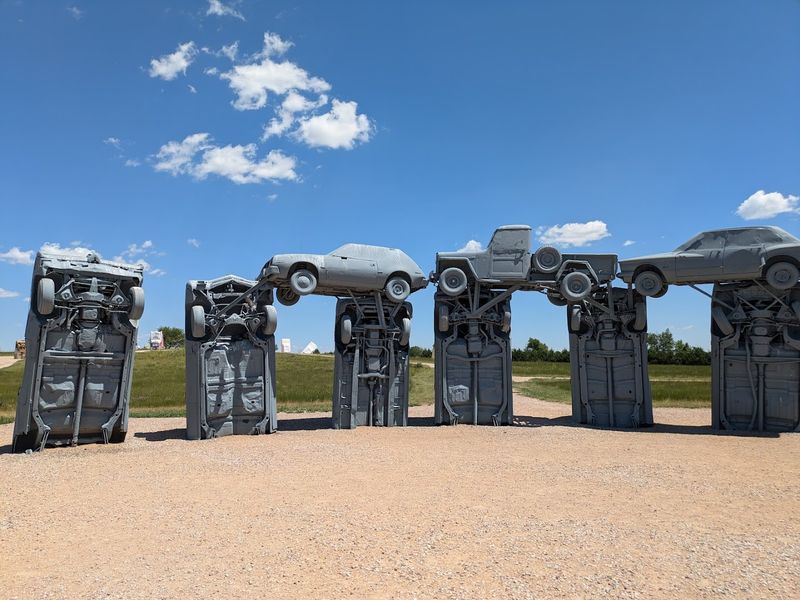
Nobody drives to Alliance, Nebraska expecting to find a full-scale replica of Stonehenge built entirely from old American cars, but here we are. Carhenge was created in 1987 by artist Jim Reinders as a tribute to his father, and the installation uses 38 vintage automobiles, all painted gray, arranged in a configuration that mirrors the layout of the original monument in England.
The scale is genuinely surprising. The cars are stacked and welded together to heights that match the original stone uprights, and the circular layout holds up to the comparison remarkably well when viewed from a distance.
Admission is free, and the site is open year-round. A small gallery on the property displays additional car-based sculptures created by the Friends of Carhenge group.
It takes about 30 to 45 minutes to walk the full site, though most visitors end up spending longer than expected once the photo opportunities start adding up.
6. Agate Fossil Beds National Monument, Harrison, Nebraska
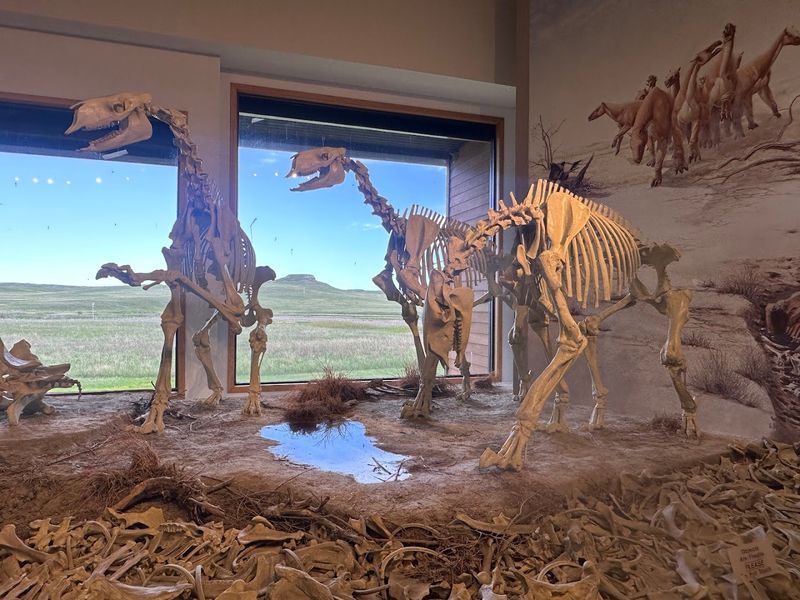
Roughly 20 million years ago, this quiet corner of northwestern Nebraska was home to a remarkable variety of prehistoric mammals, and the fossil record preserved here is considered among the richest in the Great Plains. Agate Fossil Beds National Monument protects that record and presents it through well-designed trails and exhibits that manage to be genuinely engaging without feeling like a lecture.
Two main trails wind across open prairie to the fossil quarry sites, covering about 2.7 miles in total. The visitor center houses an impressive collection of Native American artifacts donated by the Cook family, who owned the land before it became a national monument.
The park sees far fewer visitors than comparable sites in neighboring states, which means the trails are rarely crowded and the experience feels personal. Entrance is free, and the drive through the surrounding Niobrara Valley adds considerable scenic value to the overall trip.
7. Hudson-Meng Education & Research Center, Crawford, Nebraska
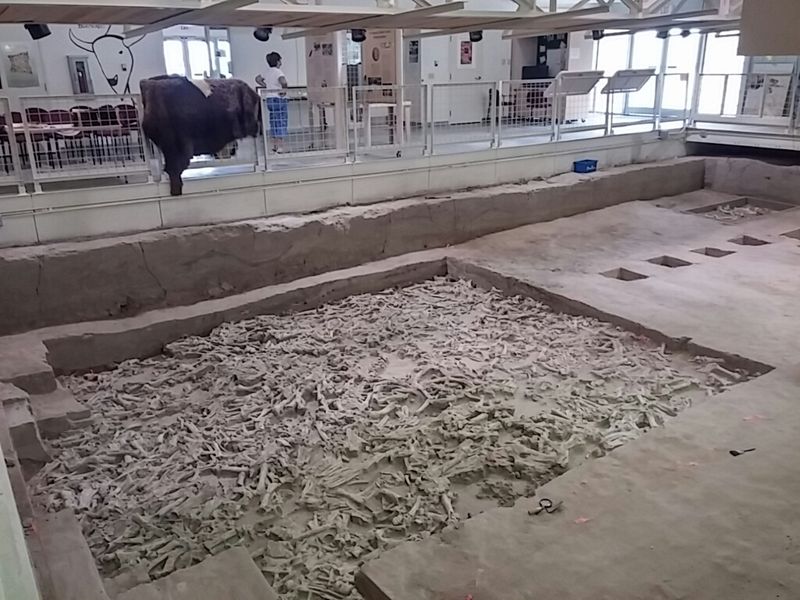
Somewhere between 9,500 and 10,000 years ago, a massive number of ancient bison met their end in a single location in northwestern Nebraska, and researchers are still trying to figure out exactly why. The Hudson-Meng Education and Research Center sits above that bonebed and gives visitors a surprisingly close look at one of the largest ancient bison kill sites ever discovered in North America.
The site contains the remains of more than 600 individual bison, and ongoing research continues to generate new theories about how they ended up here. The interpretive building is built directly over the excavation area, allowing visitors to look down at the actual bones.
The center is managed jointly by the U.S. Forest Service and the University of Nebraska, and guided tours are available during the summer season.
The remote location near Crawford means most travelers pass within an hour of it without ever knowing it exists.
8. Indian Cave State Park, Shubert, Nebraska
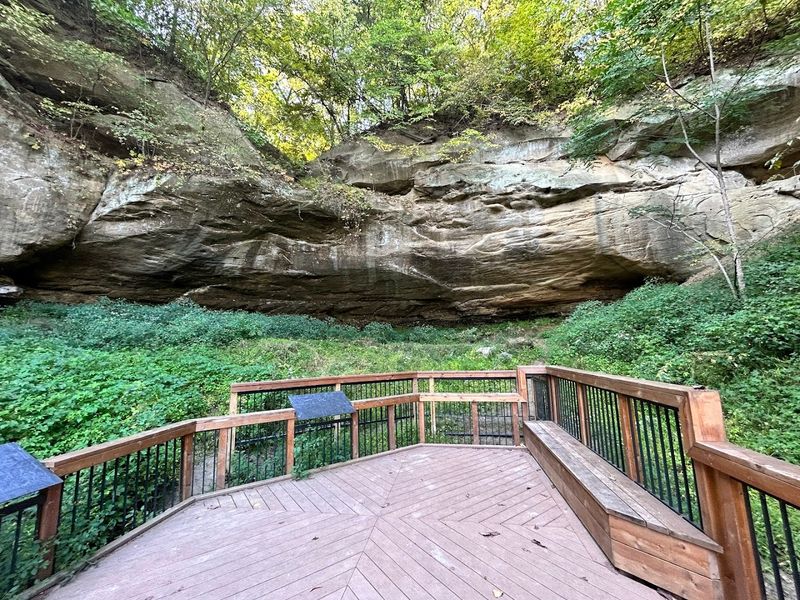
Nebraska is not typically associated with dramatic wooded terrain, which is exactly what makes Indian Cave State Park such a pleasant surprise. The park sits along the Missouri River in the state’s far southeastern corner, where steep forested bluffs and river views create a landscape that feels more like the Ozarks than the Great Plains.
The park’s centerpiece is a large sandstone cave containing petroglyphs left by Native Americans hundreds of years ago. Interpretive signs near the cave explain the history and significance of the carvings, adding cultural depth to what is already a visually striking location.
More than 20 miles of hiking trails cross the park, ranging from easy riverside walks to more challenging ridge routes. Fall is considered the best season to visit, when the hardwood forest turns a deep combination of orange, gold, and red.
Camping is available, and the park draws a loyal crowd of repeat visitors who treat it as a well-kept personal secret.
9. Ponca State Park, Ponca, Nebraska
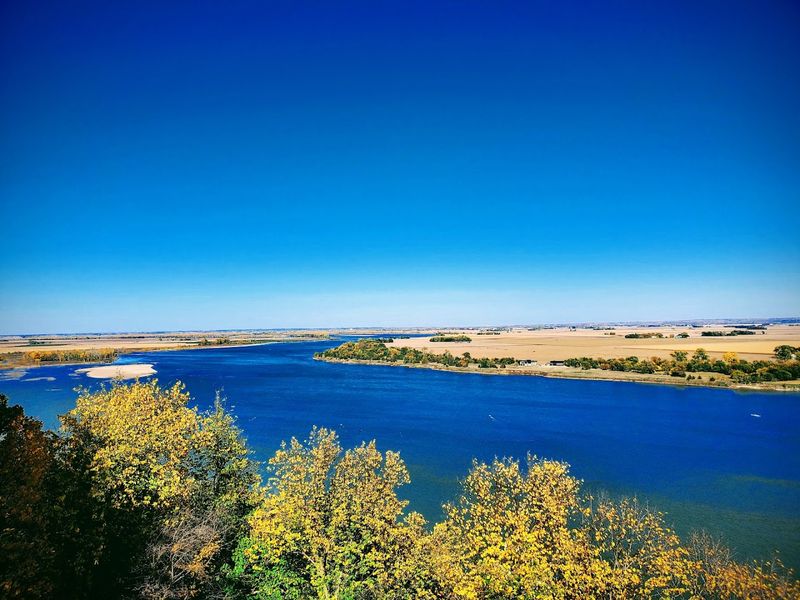
Perched above the Missouri River in northeastern Nebraska, Ponca State Park offers a style of scenery that most people simply do not associate with this state. Rugged wooded bluffs drop toward the river below, and several overlooks provide unobstructed views of the Missouri River valley that stretch well into South Dakota on clear days.
Wildlife is a genuine draw here. White-tailed deer are regularly spotted along the trails, and the park sits along a major bird migration corridor, making it a reliable destination for birdwatchers from spring through fall.
The park covers about 2,000 acres and includes over 20 miles of trails suited to hikers, mountain bikers, and horseback riders. Cabins and campsites are available for overnight stays.
The Three-State Overlook, one of the park’s signature viewpoints, gives visitors a rare chance to see Nebraska, South Dakota, and Iowa from a single vantage point, which is the kind of detail that tends to stick in the memory long after the trip is over.
10. Nebraska National Forest, Halsey, Nebraska
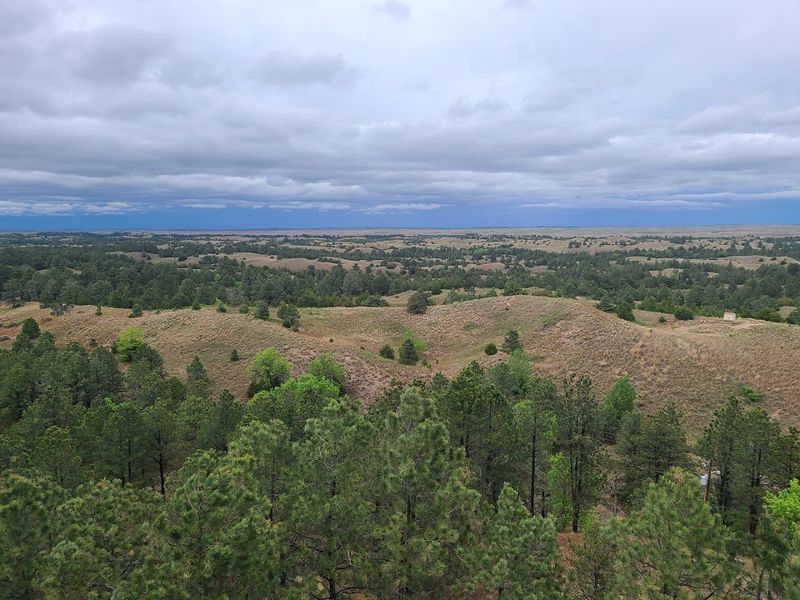
The Nebraska National Forest holds a record that most visitors would never guess: it is one of the largest hand-planted forests in the entire world. In the late 1800s and early 1900s, the federal government launched an ambitious project to prove that trees could be grown on the Sandhills, and the result is a 90,000-acre forest that grew from seedlings planted entirely by human hands.
The contrast between the dense stands of ponderosa pine and the surrounding grass-covered dunes is genuinely striking, and the forest feels completely out of context in the best possible way. Hiking, horseback riding, and mountain biking trails run through the property, and the campground at Halsey is a popular base for exploring the area.
The forest also contains the Bessey Nursery, one of the oldest federal tree nurseries in the country, which still produces millions of seedlings each year. It is the kind of place that rewards curiosity and punishes anyone who drives past without stopping.
11. Niobrara State Park, Niobrara, Nebraska
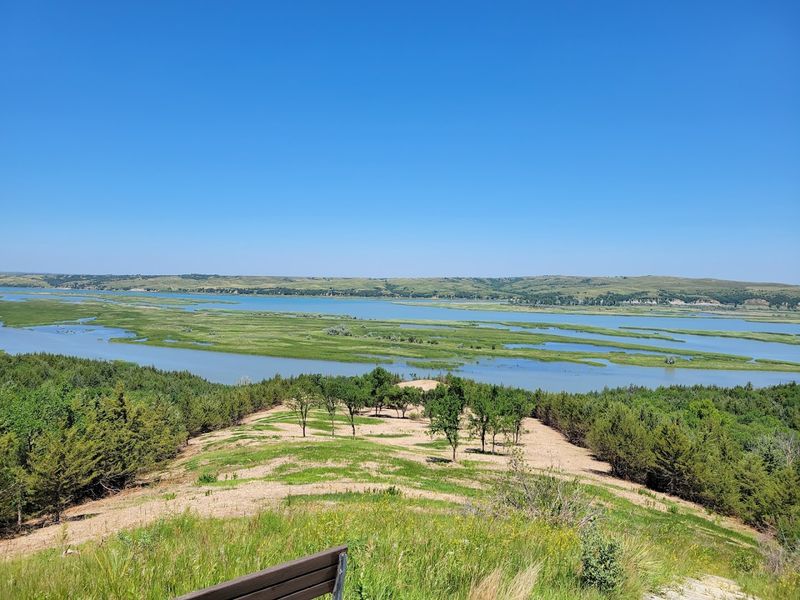
Two rivers meet at Niobrara State Park, and the view from the bluffs above that confluence is the kind of panorama that makes people stop mid-sentence. The park sits at the point where the Niobrara River flows into the Missouri River, and the elevated overlooks provide sweeping views of both river valleys that are hard to find anywhere else in the state.
The park covers nearly 1,700 acres and includes forested trails, open meadows, and several developed overlook areas. Birdwatching is particularly productive here, especially during spring and fall migration periods when large numbers of waterfowl and songbirds pass through the area.
Camping, cabin rentals, and a swimming pool make Niobrara a practical choice for families looking for an overnight destination with real scenic value. The park is small enough to feel intimate but varied enough to keep visitors busy for a full day or more.
Sunrise from the main overlook is an experience worth setting an early alarm for.
12. Fort Atkinson State Historical Park, Fort Calhoun, Nebraska
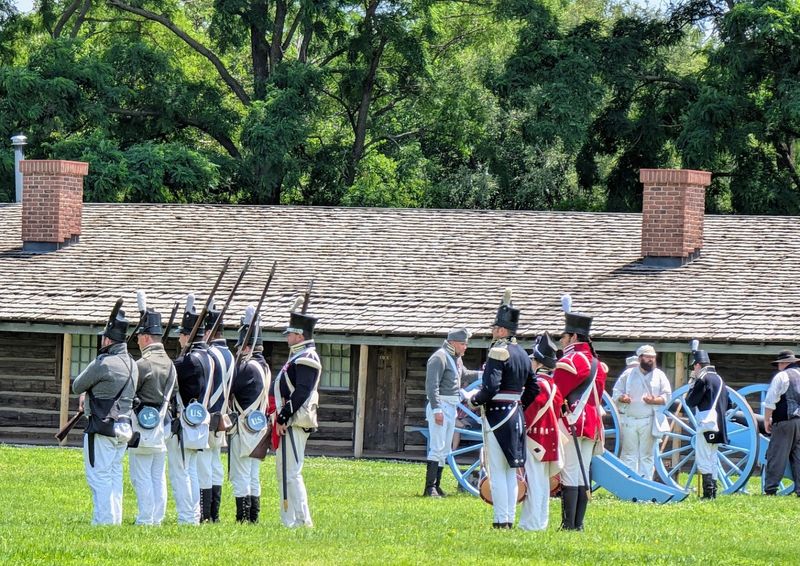
Built in 1820, Fort Atkinson was the first U.S. military fort west of the Missouri River, and its reconstructed version in Fort Calhoun stands as one of the most underappreciated historical sites in the entire state. The park does a thorough job of recreating life at the original fort, with reconstructed stone walls, period-appropriate buildings, and a visitor center that provides solid context for the site’s significance.
Living history demonstrations run throughout the summer season, featuring costumed interpreters who show visitors how soldiers lived, worked, and trained at a frontier outpost nearly 200 years ago. The demonstrations cover everything from blacksmithing to military drills.
The park sits just north of Omaha, making it an easy half-day trip from the city. Despite its proximity to a major metro area, Fort Atkinson consistently flies under the radar of both locals and tourists alike.
The grounds are well-maintained, and the combination of history and hands-on programming gives it appeal for visitors of all ages.
13. Scotts Bluff National Monument, Gering, Nebraska
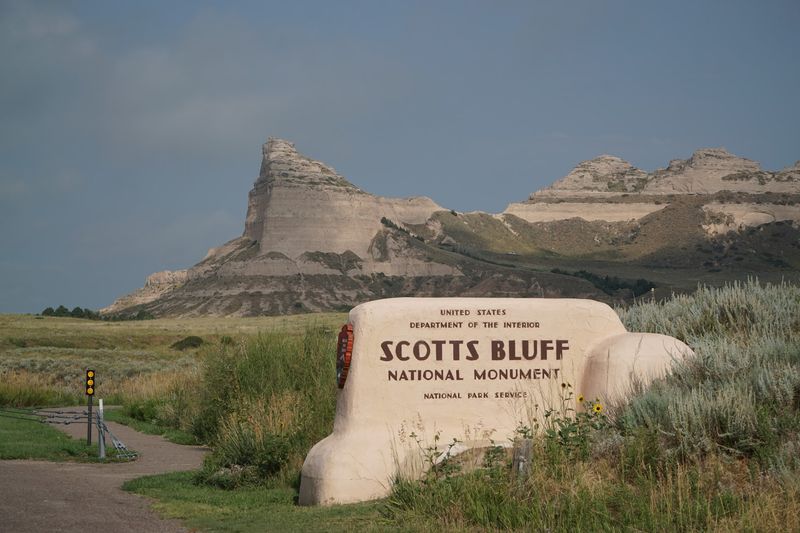
Scotts Bluff rises nearly 800 feet above the North Platte River valley, and for westward-bound pioneers in the 1800s, it served as a critical landmark along the Oregon Trail. The monument preserves not only the dramatic geology of the bluffs but also visible wagon ruts left behind by the thousands of emigrants who passed through this corridor between the 1840s and 1860s.
Visitors can reach the summit by car via a tunnel road or by hiking the 1.6-mile Saddle Rock Trail, which passes through the same gaps in the bluffs that pioneer wagons once navigated. The views from the top stretch across miles of farmland and river valley in every direction.
The visitor center includes exhibits on the Oregon, California, and Mormon trails, with original artwork by William Henry Jackson, who traveled the trail himself. Scotts Bluff is technically well-known, but the number of people who drive through Nebraska without stopping here remains genuinely baffling given how impressive the site actually is.
Share this story