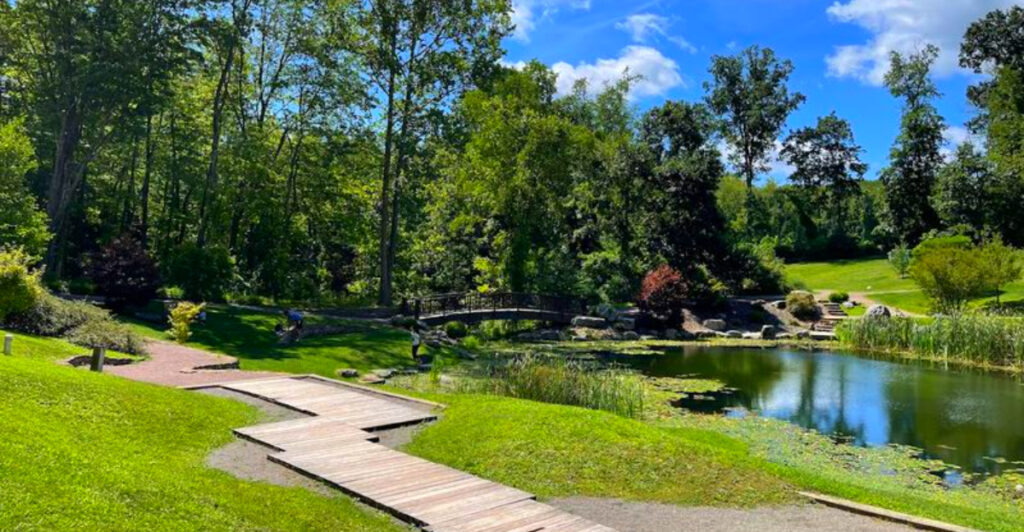
Some of Pennsylvania’s most impressive gardens exist because of what happened before they were built. Just outside Pittsburgh, this 460-acre botanical destination stands on land that was once heavily damaged by decades of coal mining.
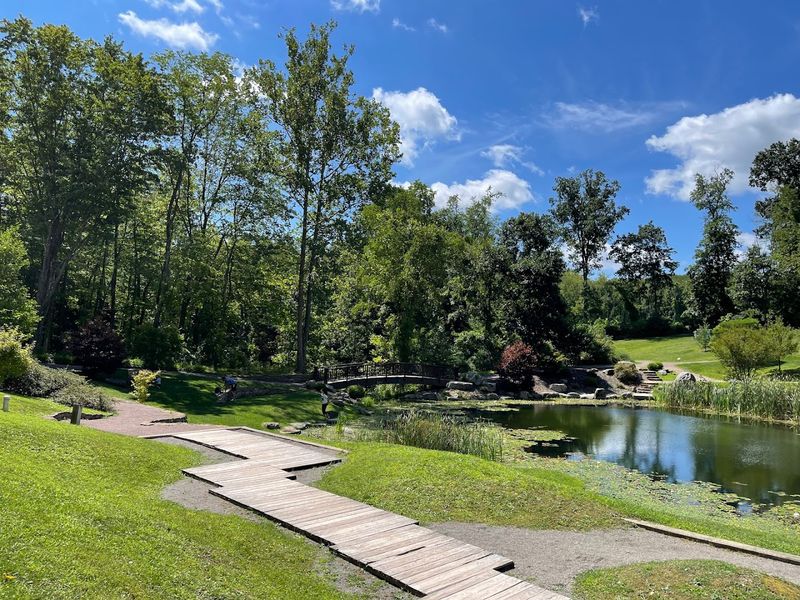
Today, visitors find woodlands, wetlands, native plantings, and walking trails where environmental restoration has completely reshaped the landscape.
What makes the garden unique is that its transformation is part of the attraction. A historic barn from the 1870s serves as a welcome center, lotus-filled ponds draw visitors throughout the year, and seasonal events have become major traditions for local families.
More than a botanical garden, it is a striking example of how damaged land can be restored into something both beautiful and useful.
Where the Garden Stands: Address, Location, and the Land Beneath Your Feet
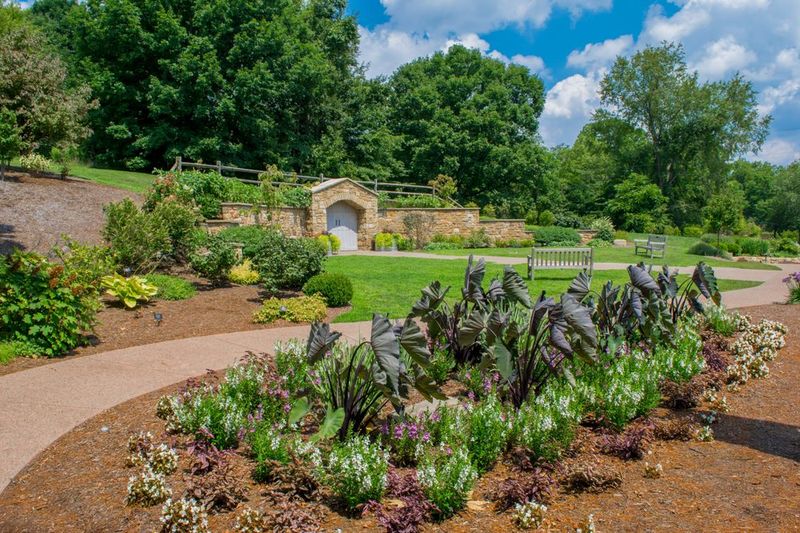
Before the first flower was ever planted here, the ground itself had to be saved. Pittsburgh Botanic Garden sits at 799 Pinkerton Run Rd, Oakdale, PA 15071, straddling Collier Township and North Fayette Township just west of Pittsburgh in Allegheny County, Pennsylvania.
The garden covers 460 acres, making it one of the largest botanical gardens in the United States by area. As of 2025, about 65 of those acres are open to the public, featuring cultivated gardens, restored woodlands, and a network of walking trails.
What makes this location extraordinary is what lies beneath it. Decades of coal, gas, and timber extraction left the land unstable, acidic, and riddled with underground voids.
The garden’s founders did not just plant flowers on top of the damage; they systematically repaired the earth itself. That foundational commitment to the land is what makes every step through this garden feel meaningful.
From Highwalls to Hiking Trails: The Mining History That Shaped Everything
The land’s past reads like a cautionary tale written in layers of rock and ruin. Starting in the 1920s, coal companies used a “room and pillar” method to extract coal from beneath the surface, leaving behind a honeycomb of underground chambers.
By the 1940s, extensive strip-mining had carved dramatic highwalls and left towering spoil piles across the hillsides.
Before 1977, coal companies faced no legal obligation to restore mined land, so those scars simply remained. Hurricane Ivan in 2004 made things worse, causing mines to overflow and sending acid runoff, sediment, and landslides across the property.
Reclamation crews had to excavate remaining coal, collapse underground voids, remove dangerous highwalls, fill vertical mine shafts, and haul away coal refuse piles before a single garden bed could be considered. Understanding this history transforms a casual walk here into something far more layered, and the next chapter of that story involves some seriously impressive chemistry.
The Lotus Pond Miracle: How Toxic Water Became a Garden Centerpiece
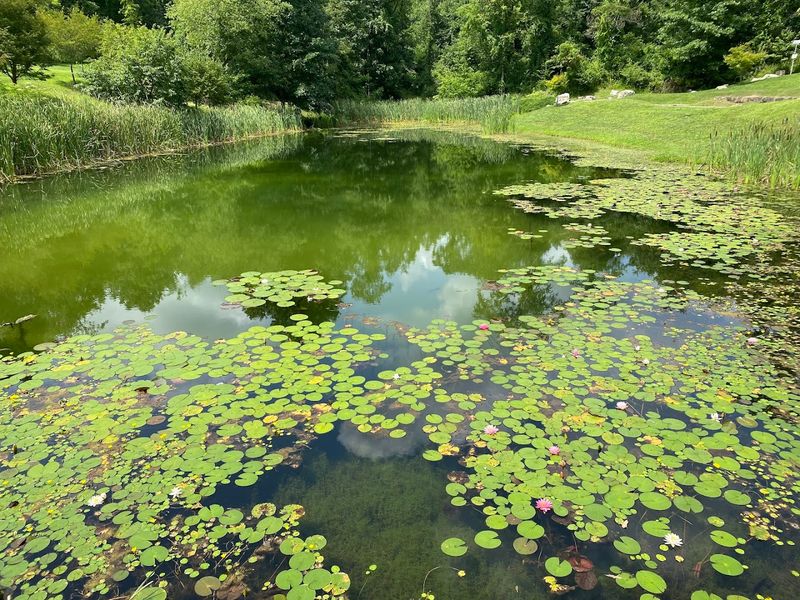
Few features at this garden carry as much scientific weight as the Lotus Pond, and yet it looks completely serene. Before remediation, the water feeding this area registered as low as pH 2.9, roughly as acidic as vinegar, and was loaded with dissolved toxic metals that made it impossible for plants or animals to survive.
The solution was an engineered drainable limestone bed system installed beside the pond. As water filters through the crushed limestone, its acidity is neutralized and the dissolved aluminum drops out of solution, leaving the water clean enough to support aquatic life.
Today, lotus blossoms rise from the surface each summer, dragonflies hover at the edges, and birds wade in the shallows. The Lotus Pond remediation project earned the 2014 Governor’s Award for Environmental Excellence, a recognition that feels entirely deserved once you understand what the water looked like before.
The transformation from lifeless to lush is nothing short of remarkable.
Planting 14,500 Trees: The Reforestation Effort Behind the Woodland Walks
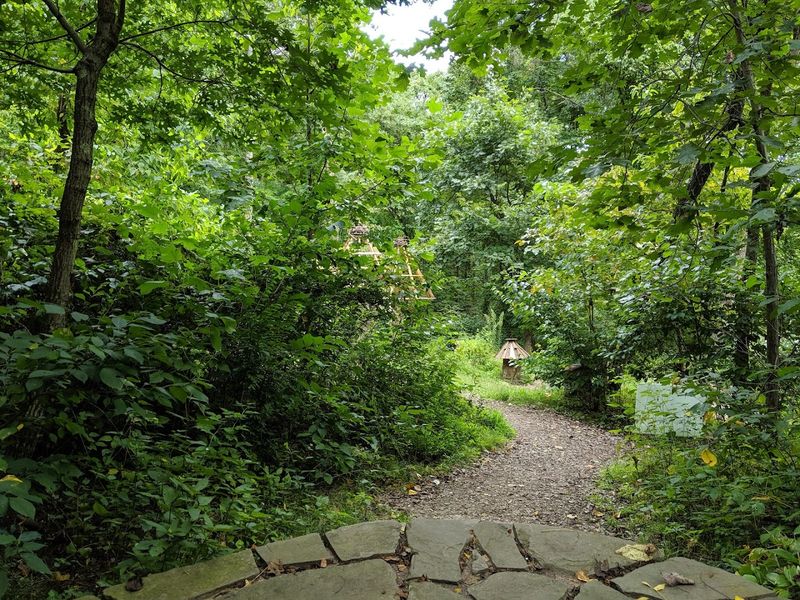
A forest does not grow back on its own after decades of strip-mining, at least not in any reasonable timeframe. Between 2019 and 2020, the garden’s team planted 14,500 native tree seedlings representing 35 different species, following guidelines set by the Appalachian Regional Reforestation Initiative.
The selection of species was deliberate, prioritizing trees that naturally belong to this region and can support local wildlife, stabilize slopes, and improve soil quality over time. Oaks, tulip poplars, serviceberries, and other Appalachian natives were chosen for their ecological roles, not just their looks.
Walking through the wooded sections of the garden today, you can already see the canopy thickening and the understory filling in with native shrubs and wildflowers. Deer have been spotted crossing the trails, and pollinators are returning in numbers that would have been unthinkable on this land just a generation ago.
The woodland sections feel young and alive, which is exactly what they are.
The Welcome Center That Started as a Barn in the 1870s
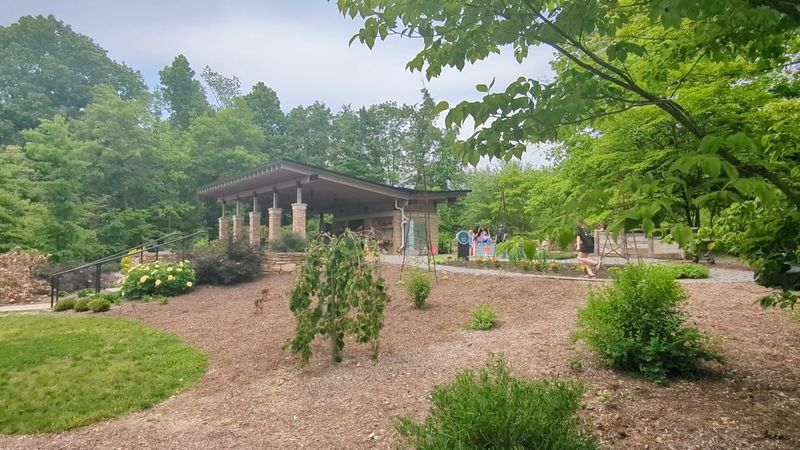
There is something quietly satisfying about starting a visit to a garden of reclamation inside a building that was itself reclaimed. The 7,500-square-foot Welcome Center opened in 2021 and is housed in a meticulously restored 1870s barn that anchors the main entrance to the property.
Inside, the space feels warm and purposeful. Visitor services, administrative offices, educational classrooms, a well-stocked gift shop, and a cafe all share the building.
The cafe has earned genuine praise from visitors, with looseleaf teas, fresh food, and views of the surrounding woodland that make it easy to linger longer than planned.
The gift shop leans heavily toward handmade and locally sourced items, houseplants, and nature-themed goods. It is the kind of shop where you pick up one thing and walk out with five.
The barn’s original bones give the whole space a grounded, honest character that feels perfectly matched to a garden built on the idea of giving something back to the land.
Woodlands of the World: Four Distinct Forest Experiences in One Visit
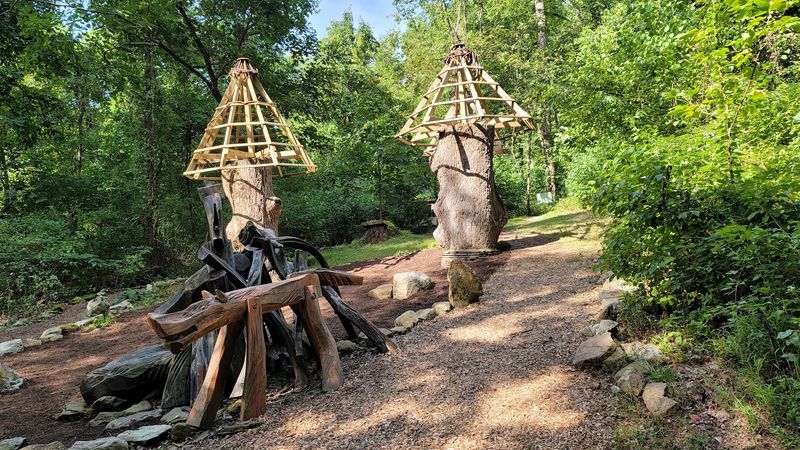
One of the most ambitious features of this garden is the Woodlands of the World collection, which presents four distinct forest themes within the property’s larger landscape. The Appalachian Plateau Forest celebrates the native ecology of western Pennsylvania, while the Eastern European, English, and Asian Forest sections introduce visitors to trees and understory plants from entirely different corners of the globe.
Each woodland section has its own character. The Appalachian section feels familiar and deeply rooted, while the Asian Forest introduces unexpected textures and forms that make you pause and look twice at a leaf or a bark pattern you have never seen before.
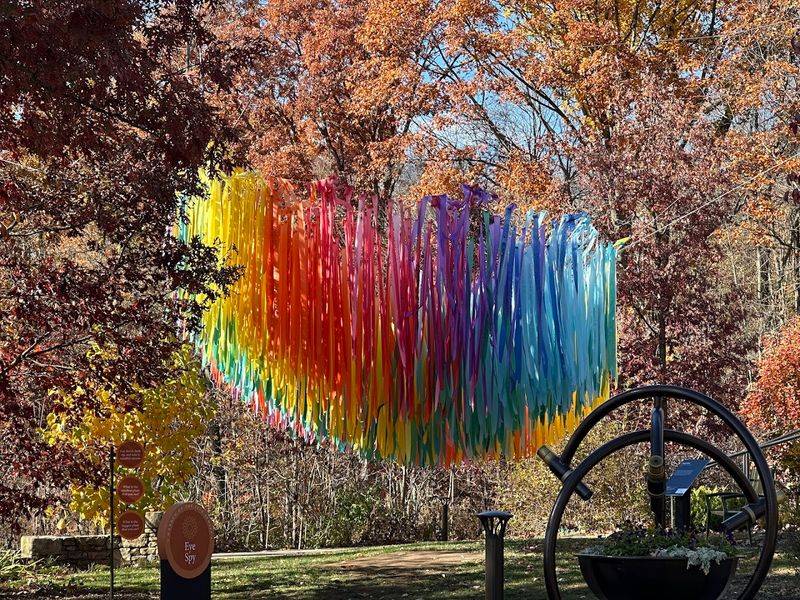
The trails connecting these sections vary in terrain and shade, so a single loop can take you from bright open meadow to cool, cathedral-like tree canopy within just a few minutes of walking. Momentum sculptures placed along some of the paths shift and spin with the breeze, adding a touch of playful surprise to the woodland experience.
550 Dogwood Trees and the Meadow That Stops Visitors in Their Tracks
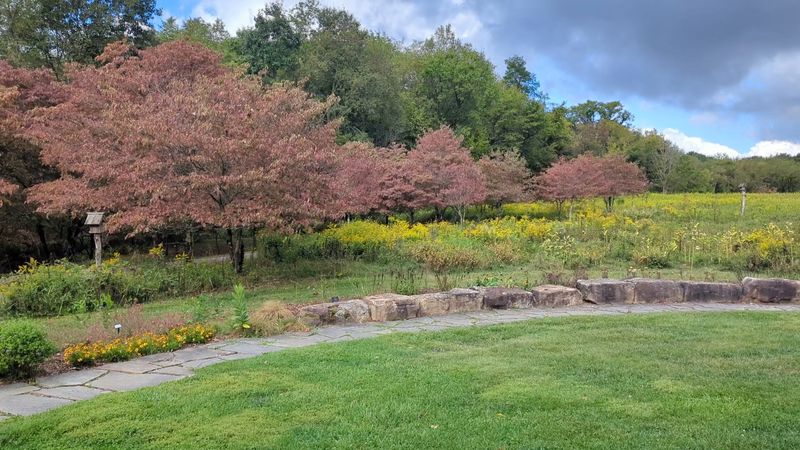
Spring at this garden has a centerpiece that visitors talk about for weeks afterward. The Margaret Lawrence Simon Dogwood Meadow contains over 550 native flowering dogwood trees, and when they bloom in spring, the effect is genuinely breathtaking.
White and pink blossoms spread across the open hillside in a display that feels almost theatrical.
Cornus florida, the eastern flowering dogwood, is native to Pennsylvania and plays an important ecological role, providing berries for birds and nectar for early pollinators. Planting 550 of them in one meadow is both a horticultural statement and a meaningful act of ecological restoration.
The meadow is best visited in late April through early May, though the foliage turns a rich burgundy-red in autumn, offering a second season of visual reward. Visitors who arrive expecting a typical botanical garden often find themselves stopping completely at this meadow, pulling out their phones, and realizing that no photo quite captures what they are actually seeing in front of them.
The Hillside Pollinator Garden and the Buzz You Can Actually Hear
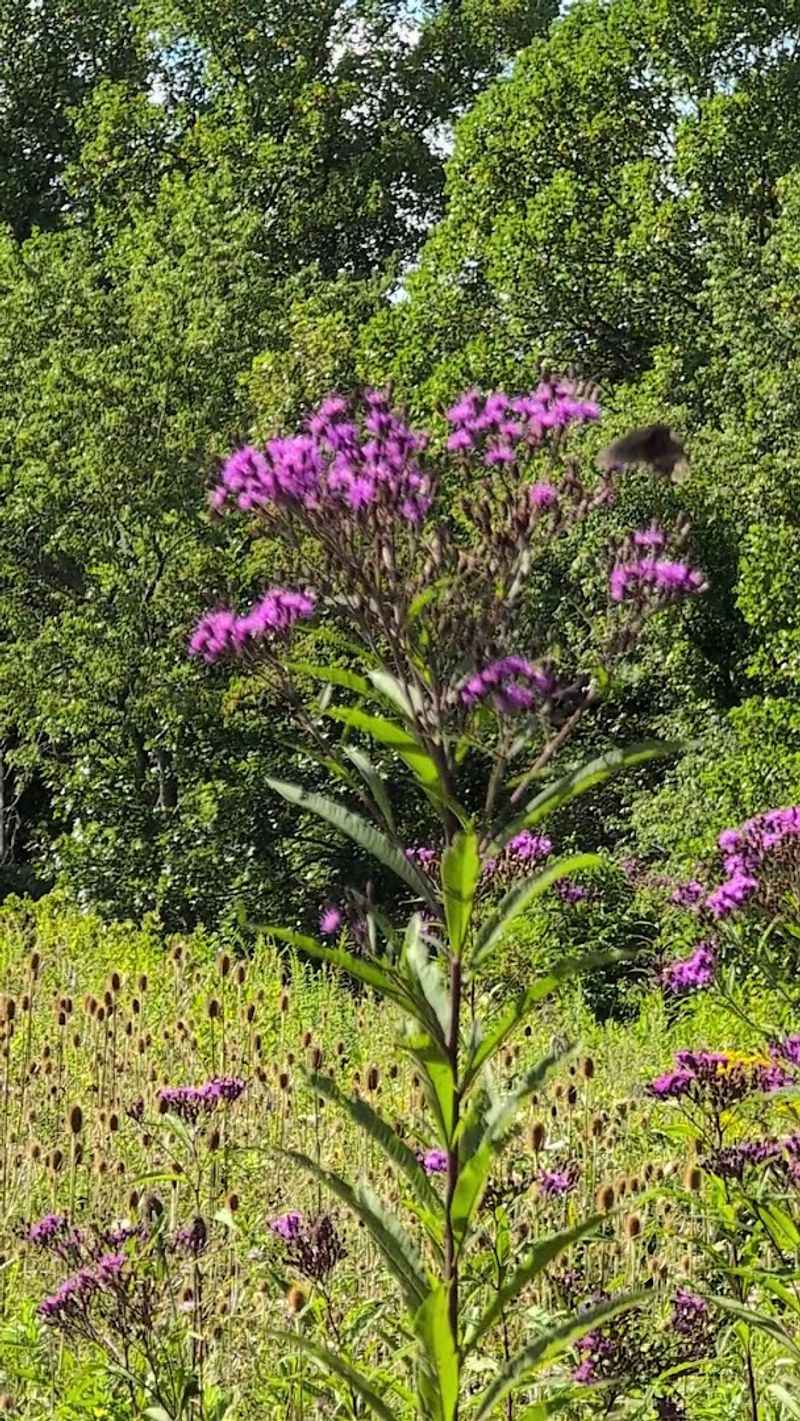
A garden that took this much effort to restore has every reason to celebrate the creatures that keep it alive, and the Hillside Pollinator Garden does exactly that. Native wildflowers cover the slope in waves of color through the warmer months, attracting bumblebees, honeybees, monarch butterflies, and the genuinely surprising hummingbird clearwing moth.
That last one deserves a mention. The hummingbird clearwing moth hovers at flowers just like a hummingbird, with transparent wings beating so fast they blur.
Visitors regularly mistake it for an actual hummingbird until they get close enough to notice the moth’s antennae and striped abdomen. Staff members have been known to sketch out custom routes for visitors who want to maximize their chances of spotting one.
The garden’s meadow bingo activity encourages younger visitors to count and record the pollinators they spot along the pathways, turning a nature walk into a gentle game of observation. The Hillside Pollinator Garden rewards patience and slow movement, which is exactly the right pace for this place.
Garden of the Five Senses and the Family Garden: Designed for All Ages
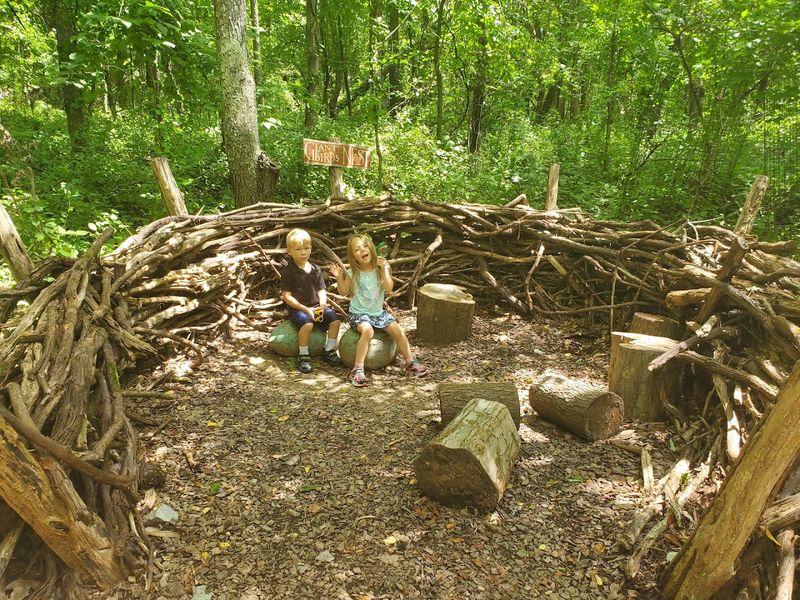
Not every botanical garden manages to hold the attention of a seven-year-old for more than fifteen minutes, but this one has clearly thought hard about that challenge. The Family Garden includes a sand play area, a kids’ climbing structure, and a series of stepping stones behind the pond that children return to repeatedly.
The Garden of the Five Senses takes a more deliberate approach, curating plants chosen specifically for their textures, scents, sounds in the wind, and visual interest. Running a hand along a fuzzy lamb’s ear leaf or leaning into the fragrance of a native herb bed turns the garden into something interactive rather than purely observational.
Tree mailboxes and small hidden houses tucked along the trails add a storybook quality that sparks imagination in younger visitors. The accessible pathways, which accommodate wheelchairs and scooters across gravel, cement, and grassy areas, mean that the garden’s playful spirit is genuinely available to everyone who comes through the gate.
The Historic Homestead: A Quiet Corner With Deep Roots
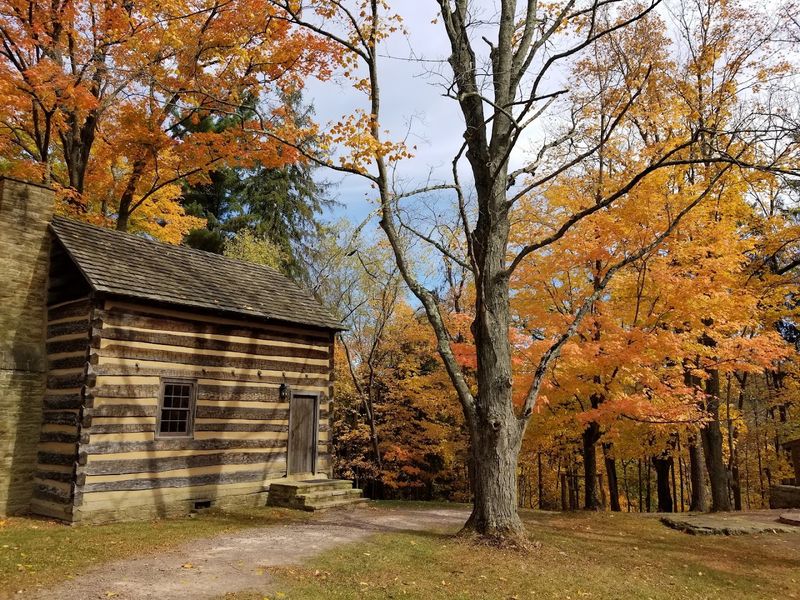
Tucked within the larger landscape, the Historic Homestead offers a different kind of story from the mining history that dominates the garden’s origin narrative. This section preserves remnants of the agricultural life that once characterized this part of western Pennsylvania, before the coal companies arrived and reshaped everything.
Heritage plantings around the homestead reflect the kinds of crops and ornamental gardens that farm families would have maintained in the 19th century. The contrast between this quiet, cultivated corner and the wilder reclaimed woodland sections nearby is striking and intentional.
The homestead also provides context for understanding just how dramatically this land changed over the course of a century, from working farm to industrial extraction site to botanical garden. That arc of transformation is one of the most compelling narratives in Pennsylvania’s environmental history, and standing in the homestead makes it feel personal rather than abstract.
The next section of the garden takes the story in a completely different seasonal direction.
Dazzling Lights: The Winter Event That Fills the Garden After Dark
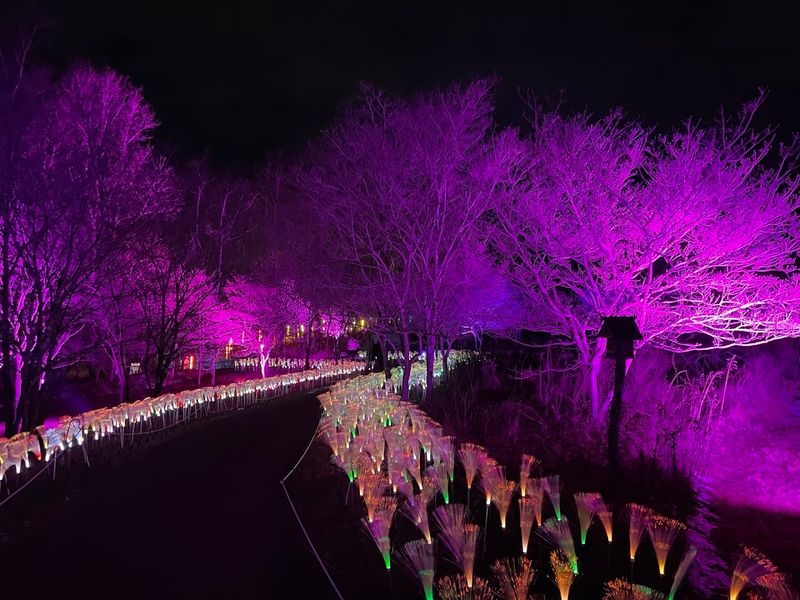
When the growing season winds down, the garden does not go quiet. The annual Dazzling Lights event transforms the property into an illuminated trail experience that draws thousands of visitors each November and December.
The roughly one-mile walking trail winds past large-scale light installations, including a towering illuminated tree at the entrance that sets the tone immediately.
The frozen lotus pond becomes a natural mirror for the surrounding lights, producing a reflection effect that visitors consistently describe as their favorite moment of the walk. A heated tent near the trailhead serves hot drinks and snacks, and a second refreshment station appears further along the route for those who need a midwalk warm-up.
The trail is mostly unpaved, so boots are strongly recommended, especially after snowfall or rain. Tickets are timed, and earlier slots tend to be less crowded.
A shuttle service connects the main parking area to the trailhead. The Dazzling Lights event has become a genuine Pittsburgh-area holiday tradition, and it sells out regularly as the season progresses.
Practical Tips for Visiting: Hours, Admission, and How to Make the Most of Your Trip
The garden is open Tuesday through Sunday, with hours running from 9 AM to 5 PM on most days and extended to 7 PM on Wednesdays and Thursdays. It is closed on Mondays.
Adult admission is $18, which some visitors find on the higher side, though the membership option offers considerably better value for anyone planning more than one or two visits per year.
The phone number is +1 412-444-4464, and the website at pittsburghbotanicgarden.org provides current event listings, membership details, and seasonal updates. The cafe inside the Welcome Center serves food and looseleaf teas, making a midday stop there a genuinely pleasant part of the visit rather than an afterthought.
Comfortable walking shoes handle the trails well in dry conditions, but boots make a noticeable difference after rain. The accessible pathways work well for wheelchairs and mobility scooters.
Arriving on a weekday morning offers the quietest experience, and the changing seasons mean that a return visit in a different month will feel like an almost entirely new place.
Share this story