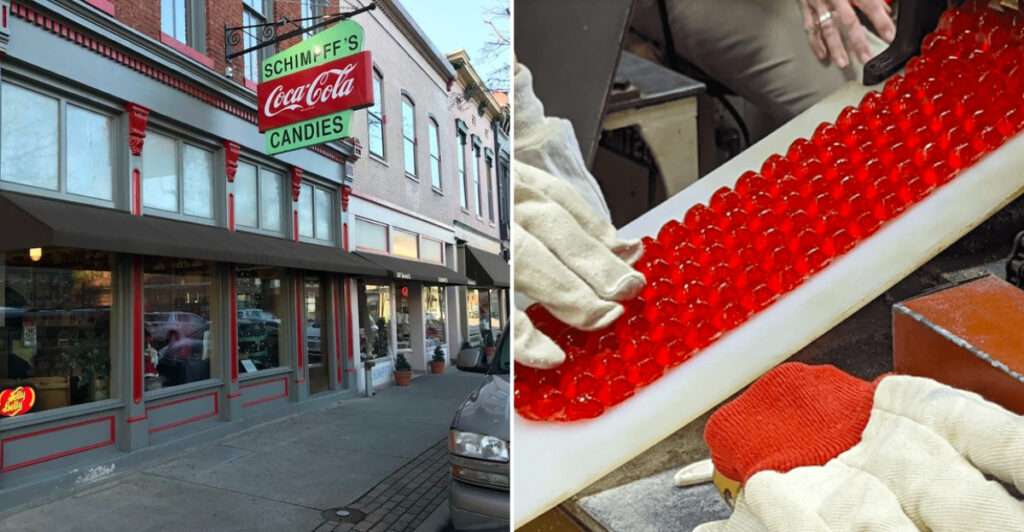
There is a candy shop in Jeffersonville, Indiana, that has been making the same cinnamon red hots since the day it opened in 1891. That is not a marketing slogan or a nostalgic exaggeration.
The recipes, the equipment, and in many ways the spirit of the place have stayed remarkably consistent across more than 130 years of American history. The shop has survived wars, recessions, and the rise and fall of countless food trends, yet it keeps pulling people in off the street with the promise of something genuinely old-fashioned.
USA Today even voted it the number one candy store in America in 2025. Whether you are a candy lover, a history enthusiast, or just someone who appreciates a place that actually means what it says, this Jeffersonville landmark has something worth knowing about.
How It All Started Back in 1891
The year 1891 was a busy one in American history. Ellis Island had just opened, the country was expanding rapidly, and in a small river town in Indiana, the Schimpff family opened a confectionery that would outlast nearly everything around it.
The shop was founded with a focus on handmade hard candies, and the cinnamon red hot became its signature product from the very beginning. That consistency across generations is rare in any industry, let alone the food business.
What makes the origin story compelling is not just the age of the place but the fact that the recipes did not drift. Many historic food businesses modernize over time, swapping old methods for faster, cheaper ones.
Schimpff’s held the line.
The current owners, Warren and Jill Schimpff, represent the continuation of that founding commitment, and they are known for being present in the shop and personally involved in candy demonstrations for guests.
Five Generations and Still Going Strong
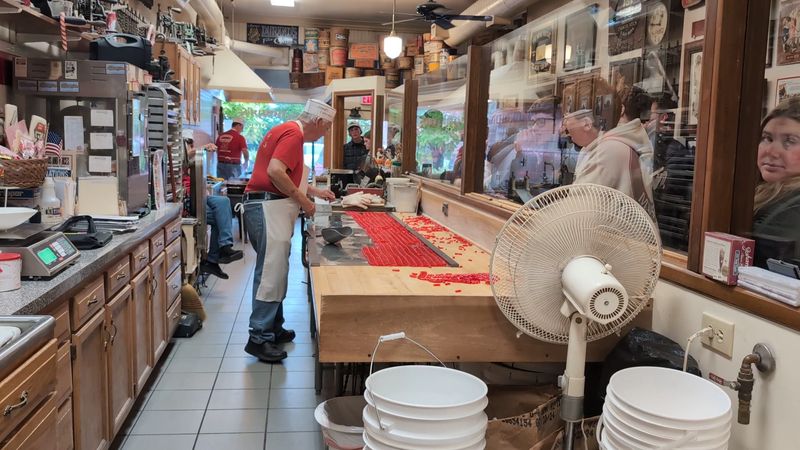
Running a family business for five generations is an achievement that most companies never come close to reaching. Schimpff’s has done exactly that, passing the confectionery from one generation to the next while keeping the core identity of the shop intact.
Each generation has had to make decisions about what to preserve and what to update, and by most accounts, the family has leaned heavily toward preservation. The equipment used to make candy includes pieces from the 1800s that are still operational today.
Warren and Jill Schimpff are the current stewards of that legacy, and they bring a personal warmth to the shop that guests consistently notice. They are not behind-the-scenes owners.
They show up, they demonstrate, and they tell the story of the shop with the kind of detail that only comes from living inside that history.
That hands-on approach gives the business a character that no amount of branding can manufacture.
The Cinnamon Red Hots That Started It All
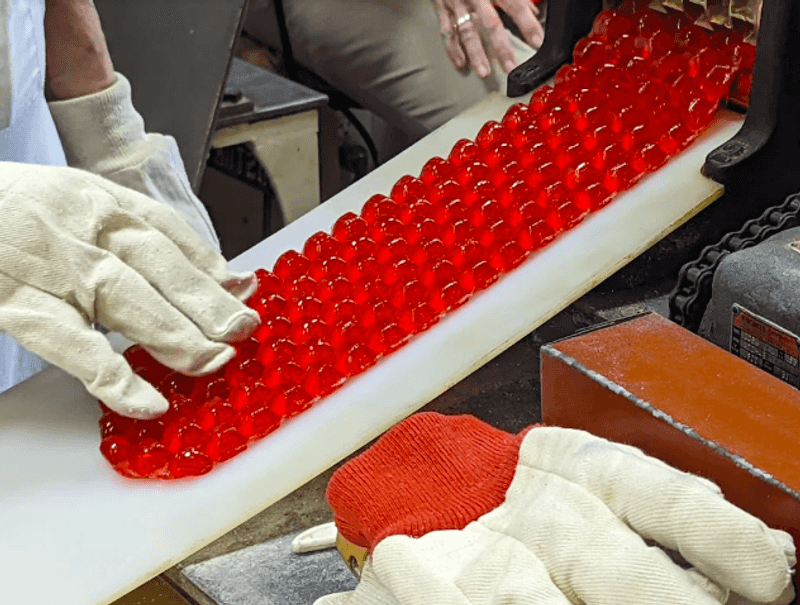
The cinnamon red hot is the candy that built Schimpff’s reputation, and it has been made using the same recipe since 1891. That is a straightforward fact that carries a lot of weight when you stop to think about how much has changed in American food culture over the past 134 years.
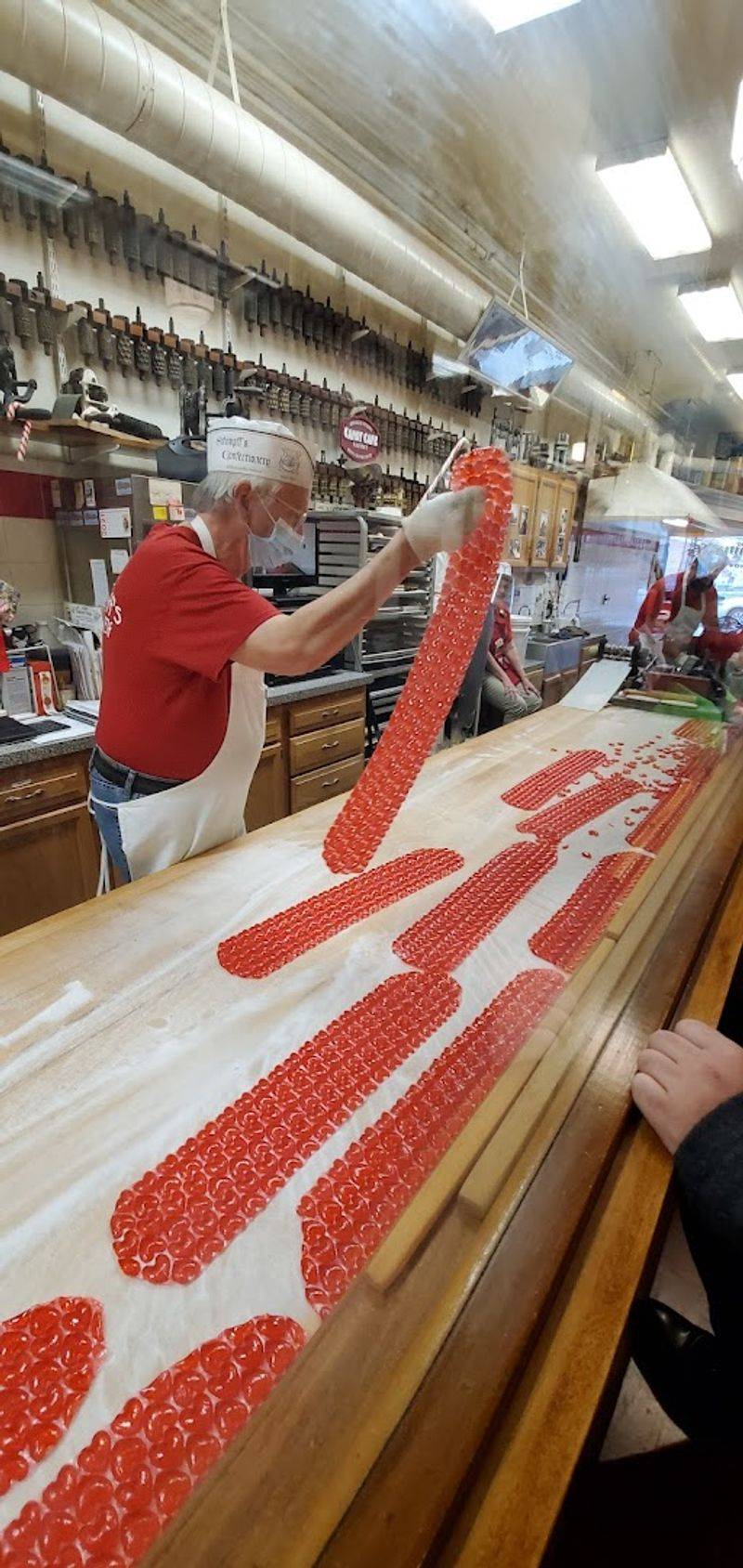
The candy is made from scratch using equipment that dates back to the 19th century. Watching the process from start to finish gives a clear picture of how much skill and physical effort goes into what looks like a simple piece of hard candy.
Guests who attend a live demonstration often get to sample a warm, freshly made piece right after it comes off the equipment. That experience tends to stick with people in a way that a pre-packaged candy from a grocery store simply cannot replicate.
The red hots are considered a must-buy by nearly everyone who makes the trip to Spring Street.
Live Candy-Making Demonstrations You Can Watch for Free
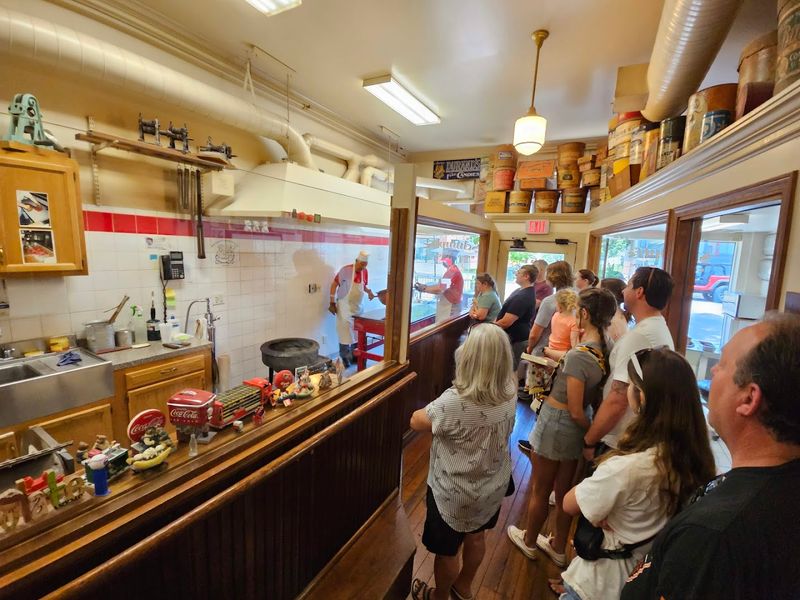
One of the most talked-about features of the shop is the live candy-making demonstration, which is free to watch. Guests can stand at the window or gather in the demonstration area and watch the entire process of making hard candy from raw ingredients to finished product.
The demonstrations are led by the owners themselves on many occasions, which adds a layer of authenticity that a hired performer simply cannot match. Warren and Jill Schimpff know every step of the process because they have done it hundreds of times.
Sampling is part of the experience. After watching the candy being made, guests typically get to try a piece while it is still warm, which gives a completely different impression of the product than eating it cold from a bag.
The demonstration schedule varies, so arriving earlier in the day generally increases the chance of catching one in progress. The shop opens at 10 AM Tuesday through Saturday.
The Candy Museum Hidden Inside the Shop
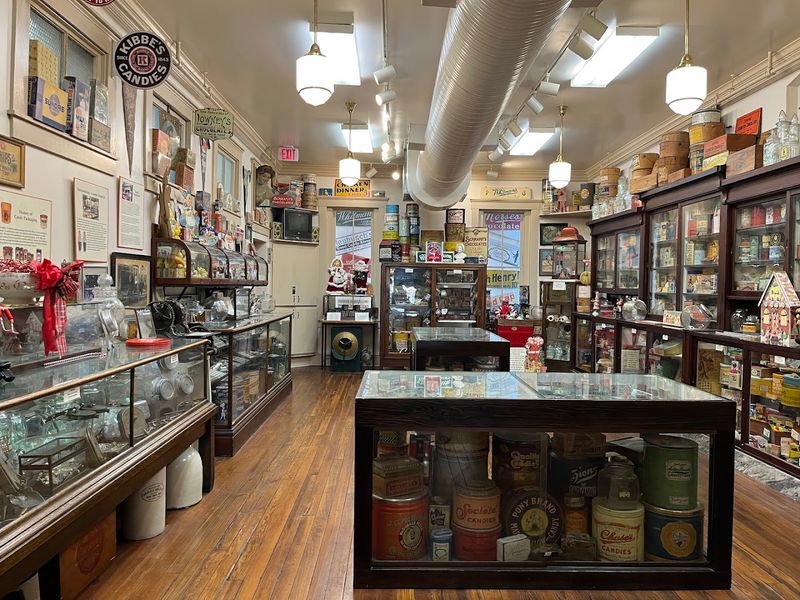
Tucked inside Schimpff’s is a small candy museum that most first-time visitors do not expect to find. Admission is free, which makes it one of the more generous cultural offerings in the region for what you actually get to see.
The museum holds an extensive collection of antique candy-making equipment, vintage storage boxes, historical posters, and artifacts that trace the evolution of the American confectionery industry. Some of the items on display are from the same era as the founding of the shop itself.
For anyone with an interest in American commercial history or manufacturing heritage, the museum room offers a surprisingly detailed look at how candy was produced and sold before industrial automation took over the industry.
The collection did not happen overnight. It represents decades of deliberate preservation by the Schimpff family, who understood early on that the equipment and ephemera of old-fashioned candy making had historical value worth protecting.
The Old-Fashioned Soda Fountain That Still Works
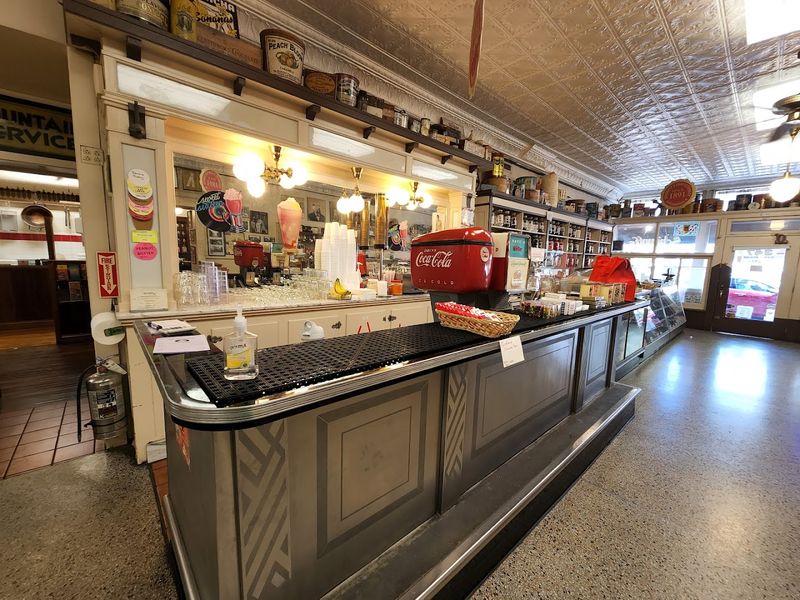
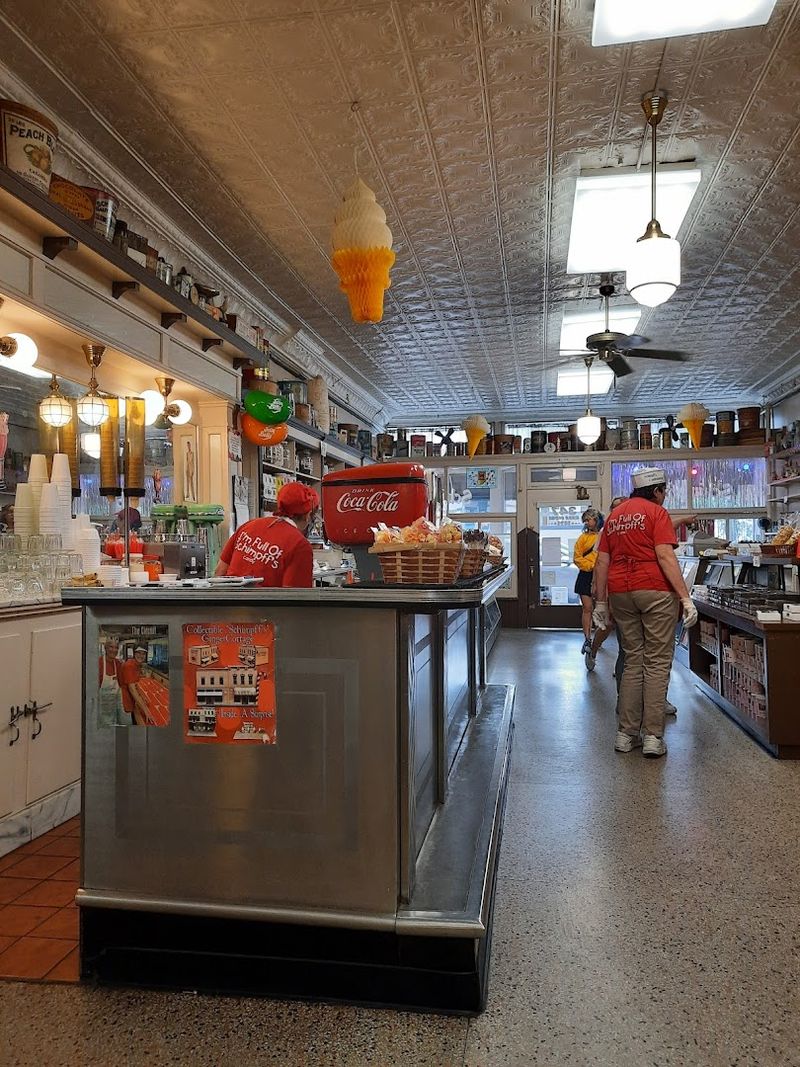
Alongside the candy operation, Schimpff’s runs a soda fountain that looks and functions like something from the mid-20th century. It is not a reproduction or a themed decoration.
The soda fountain is a working part of the shop where guests can order ice cream and classic fountain drinks.
Soda fountains were once a fixture of American town life, and finding one that has maintained its original character rather than being replaced by a modern setup is genuinely uncommon. Schimpff’s has held onto that piece of Americana in a way that feels natural rather than forced.
The soda fountain area adds a social dimension to the visit. It gives people a reason to sit down, slow the pace, and take in the surroundings rather than just grabbing a bag of candy and heading back out the door.
That combination of retail, demonstration, museum, and fountain service makes the shop function more like a destination than a simple store.
Seasonal Candy Making and Holiday Traditions
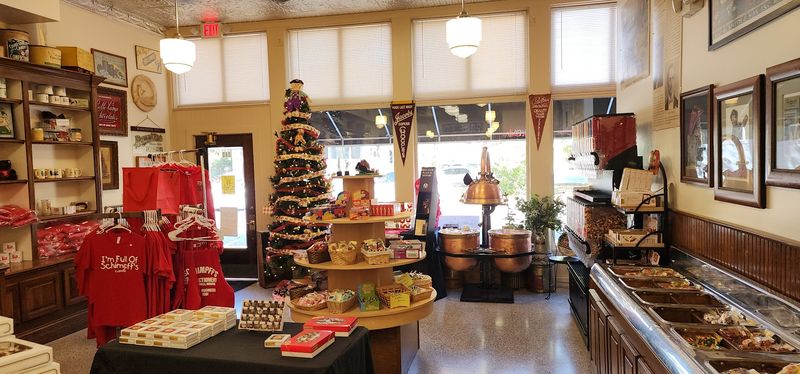
The candy-making calendar at Schimpff’s changes with the seasons, and that rotation gives repeat visitors a reason to come back at different times of year. The Christmas season is particularly popular because the shop makes candy canes by hand during that period.
Watching candy canes being made from scratch is a different kind of spectacle than the standard red hots demonstration. The process involves pulling and shaping hot sugar in a way that requires both speed and precision, and the finished product looks nothing like what comes out of a factory bag.
Holiday visits have become a tradition for many families in the region. Some people have been coming every Christmas season for years, bringing their children and eventually their grandchildren to watch the same process their own parents once showed them.
Seasonal specialties like the Red Hot Hoppers, which are cinnamon hard candies shaped like bunnies for Easter, show that the shop keeps the calendar interesting throughout the entire year.
Voted the Number One Candy Store in America in 2025
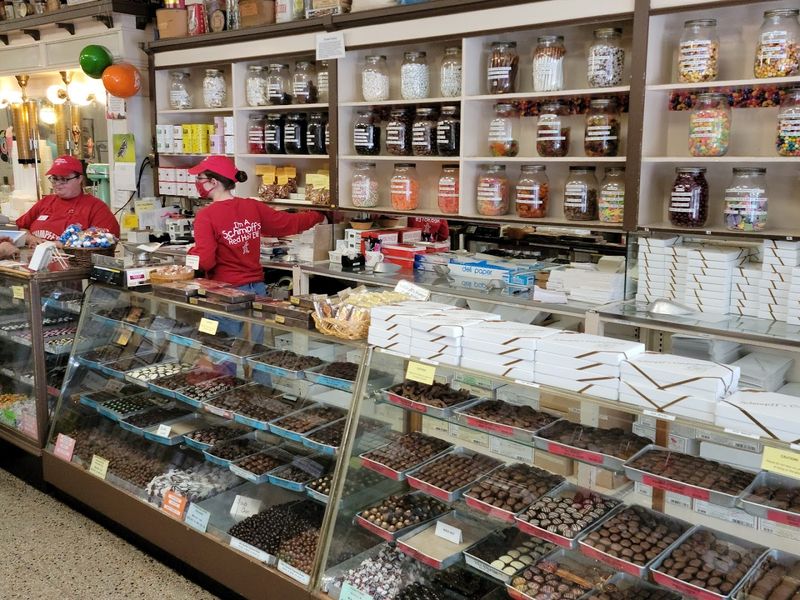
USA Today named Schimpff’s the number one candy store in the country in 2025, a recognition that put a national spotlight on a shop that locals in southern Indiana and northern Kentucky had already known about for decades.
The ranking was not based on size or volume. It reflected the combination of historical depth, product quality, and the kind of guest experience that larger candy brands with factory operations simply cannot offer.
Handmade candy, free demonstrations, a working museum, and a family still running the place after five generations adds up to something that stands apart.
For the Schimpff family, the award validated what they had been doing all along without changing the fundamental approach. The shop did not suddenly add new products or renovate to look more modern.
It kept doing what it has always done.
That steadiness in the face of national attention says a lot about the priorities of the people running the operation.
Equipment From the 1800s Still in Daily Use
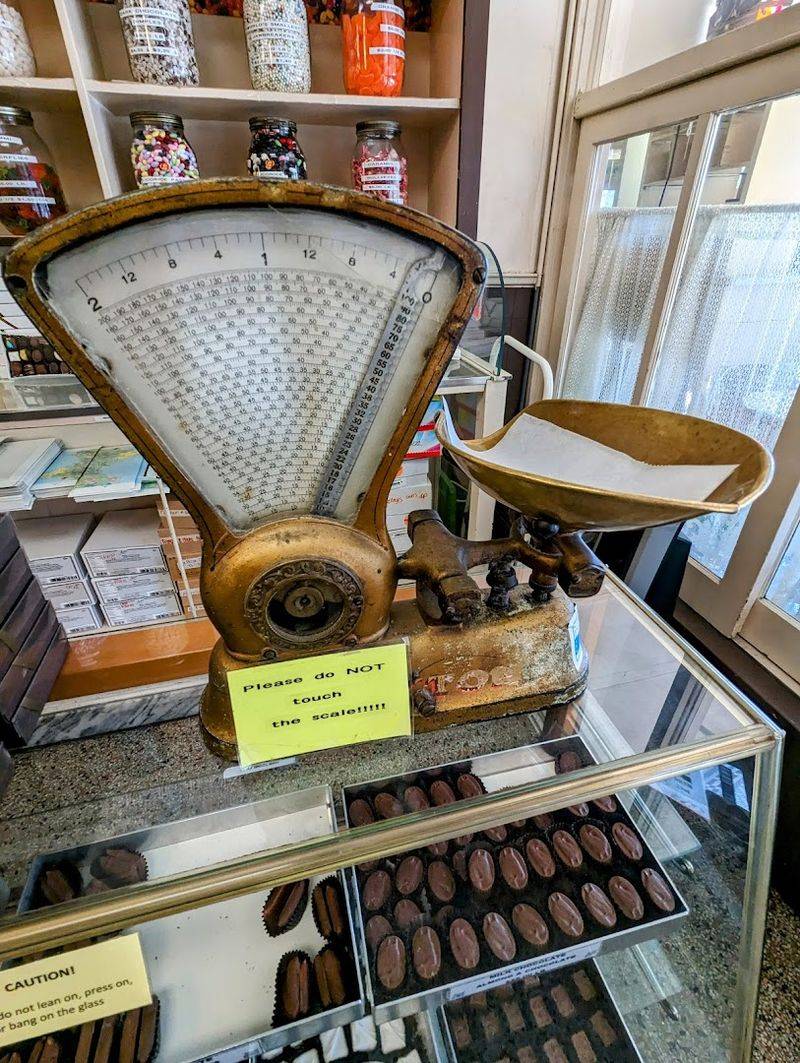
One of the most remarkable aspects of Schimpff’s operation is that the equipment used to make candy includes pieces that date back to the 19th century and are still being used in daily production. This is not display equipment.
These are functional tools that shape the candy guests buy and eat.
Maintaining antique machinery in working condition requires a level of technical knowledge and commitment that goes well beyond what most small businesses are willing to invest. The Schimpff family has treated that equipment as essential rather than ornamental.
For guests who watch the demonstrations, seeing 130-year-old equipment in active use adds a dimension to the visit that no modern candy factory tour can offer. There is a directness to the process that becomes very clear when the machinery doing the work was built before automobiles existed.
That connection between historic tools and present-day production is one of the most concrete ways the shop earns its reputation for authenticity.
Sugar-Free Options and Accessibility for All Guests
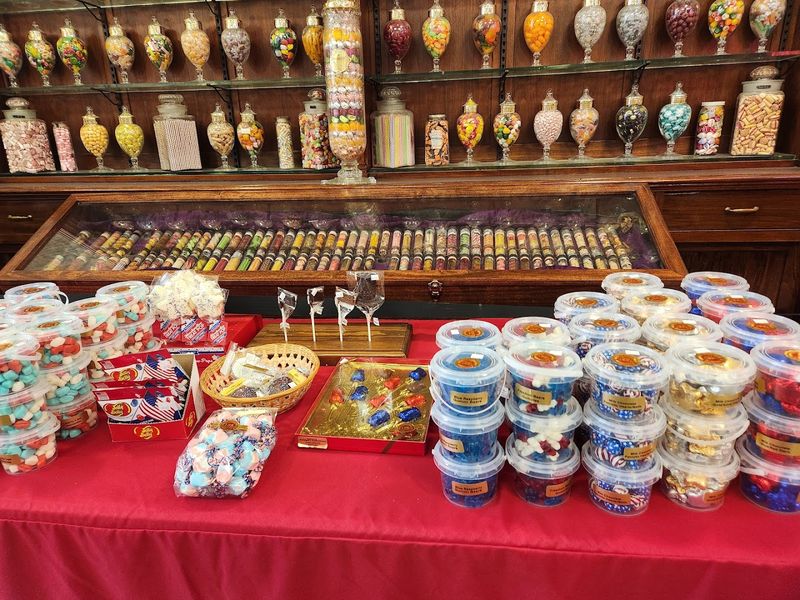
A shop built on hard candy and chocolate could easily overlook guests who need to avoid sugar for health reasons, but Schimpff’s has made a point of including sugar-free options in its selection. That inclusion broadens the shop’s appeal without compromising what it does best.
The shop is also reported to be handicap accessible, which matters for a historic building that could easily have physical limitations built into its older architecture. Making the space workable for guests with mobility needs reflects a thoughtful approach to hospitality.
Families with children are a core part of the shop’s regular traffic, and the mix of traditional and sugar-free options means that adults with dietary restrictions do not have to stand on the sidelines while everyone else shops.
That kind of practical inclusivity, handled without fanfare, is one of the small details that adds up to a genuinely welcoming experience for a wide range of guests who walk through the front door.
What to Know Before Your First Visit
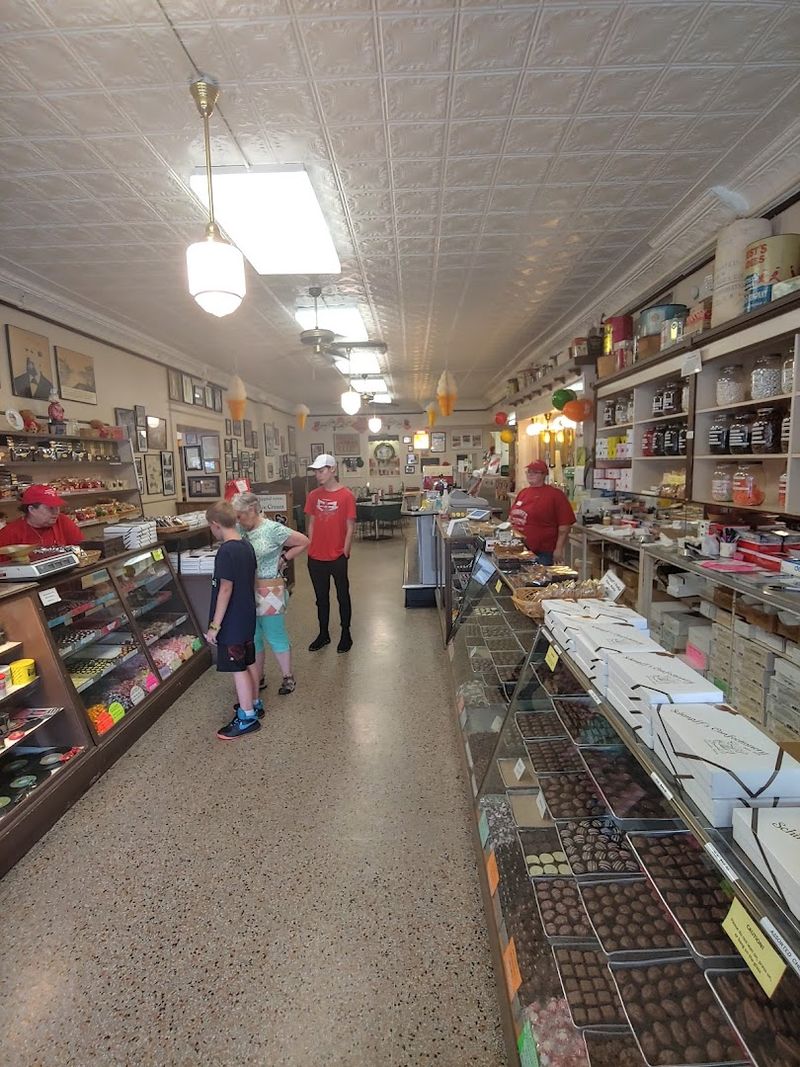
A few practical details make a first visit to Schimpff’s go more smoothly. The shop is open Monday through Saturday from 10 AM to 5 PM and is closed on Sundays, so planning around that schedule is important, especially for weekend travelers coming from out of town.
Street parking is available along Spring Street, and the area is walkable from the Big Four Bridge landing on the Jeffersonville side. Arriving earlier in the day tends to be better for catching a live candy-making demonstration, since those happen at scheduled intervals and availability can vary.
Bringing cash is a good idea, though the shop also accepts other payment methods. Budget for more than you think you will spend.
The combination of fresh candy, chocolate specialties, and the general pull of a well-stocked historic confectionery tends to add up quickly once you start browsing.
The website at schimpffs.com has current hours and event information worth checking before the trip.
Why This Shop Keeps Drawing People Back Year After Year
Some places earn repeat visits because they are convenient. Schimpff’s earns them because the experience is genuinely hard to replicate anywhere else.
The combination of handmade candy using 19th-century equipment, free demonstrations with sampling, a working museum, a soda fountain, and a family that has been at it for five generations creates something that sticks with people.
Guests come back for specific seasonal events, for the candy canes in December, for the Easter specialties, and for the red hots any time of year. Some families have built the shop into annual traditions that now span multiple generations of their own.
The fact that the owners are still present and personally involved keeps the experience from feeling corporate or impersonal. There is a continuity between the founding vision of 1891 and what happens inside the shop today that is rare and worth appreciating.
For a candy shop in a small Indiana river town, that kind of lasting pull is the most honest measure of success there is.
A Street Address That Anchors Over a Century of History
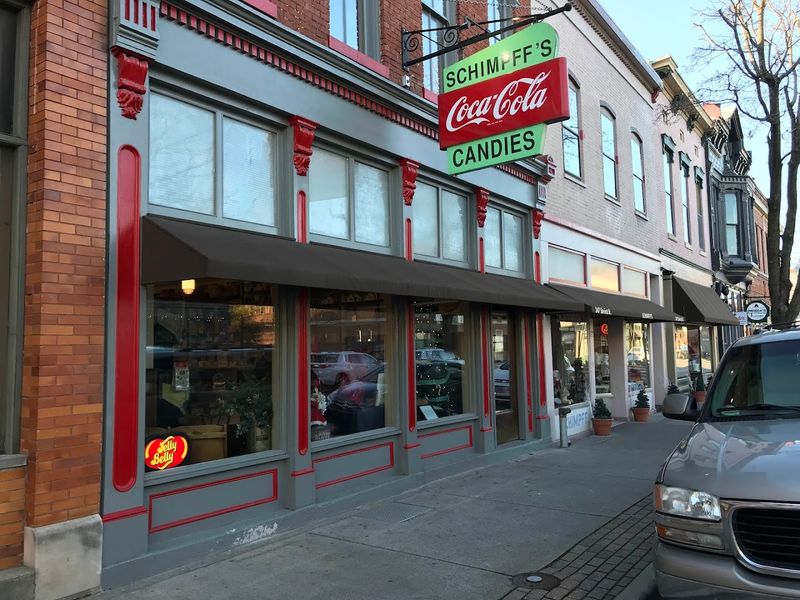
At 347 Spring St, Jeffersonville, IN 47130, Schimpff’s Confectionery sits in a stretch of downtown that still carries the architectural character of a much earlier era in American retail.
The location is close to the Ohio River and just a short walk from the pedestrian bridge that connects Jeffersonville to Louisville, Kentucky. That walking bridge has made the shop surprisingly accessible to people who cross over from the Kentucky side just to pay a visit.
The building itself fits the neighborhood in a way that feels organic rather than staged. There is no flashy renovation designed to look vintage.
The storefront simply is what it has always been, a working candy shop that happens to have been standing since the Gilded Age.
Street parking is available along Spring Street, and the shop is open Monday through Saturday from 10 AM to 5 PM, with Sundays reserved as a day off.
Share this story