Baltimore has no shortage of historic neighborhoods, waterfront views, and storied corners, but one spot on Thames Street carries a kind of weight that most places simply cannot claim. There is a bar in Fells Point that has been open since before the United States was even a country, and it is still welcoming people through its doors today.
The building itself dates back to the Colonial era, and the stories attached to it range from Revolutionary-era regulars to one of America’s most celebrated and mysterious writers. This is not a reconstructed heritage attraction or a themed novelty.
It is a working bar with live music, a full menu, and a character that took centuries to develop, and it sits right on the cobblestone stretch of Thames Street in one of Baltimore’s most beloved waterfront neighborhoods.
A Bar That Predates the Nation Itself
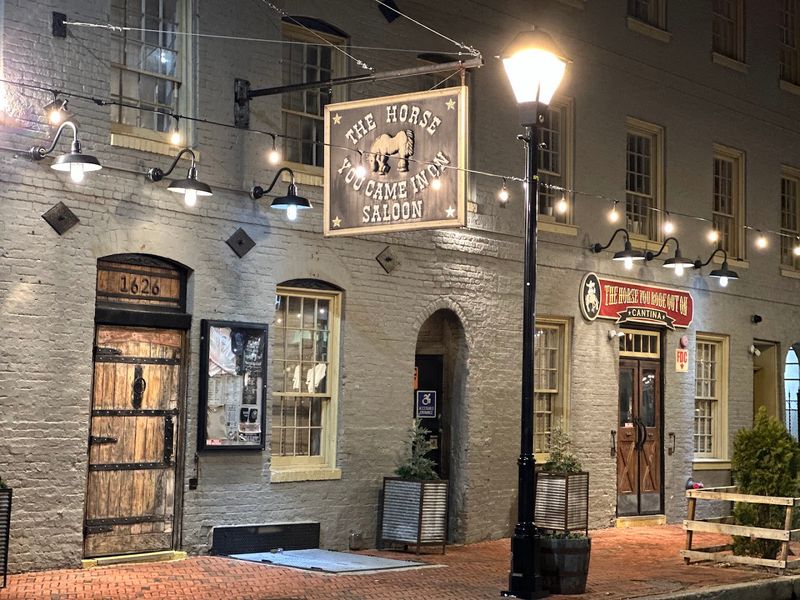
Most bars measure their history in decades. This one measures it in centuries.
The Horse You Came In On Saloon has been serving people continuously since 1775, making it not just the oldest bar in Maryland but one of the oldest continuously operating bars in the entire United States.
That means this place was already open when the first shots of the Revolutionary War were fired. It was pouring drinks before the Declaration of Independence was signed, before Washington crossed the Delaware, and before the country even had a name to put on a map.
Prohibition came and went, wars reshaped the world, and entire city neighborhoods rose and fell around it, but the bar kept going. That kind of staying power is not just rare, it is almost unheard of in American commercial history.
The 1775 founding date is not a marketing claim but a documented part of Baltimore’s historical record.
The Edgar Allan Poe Connection That Still Draws Crowds
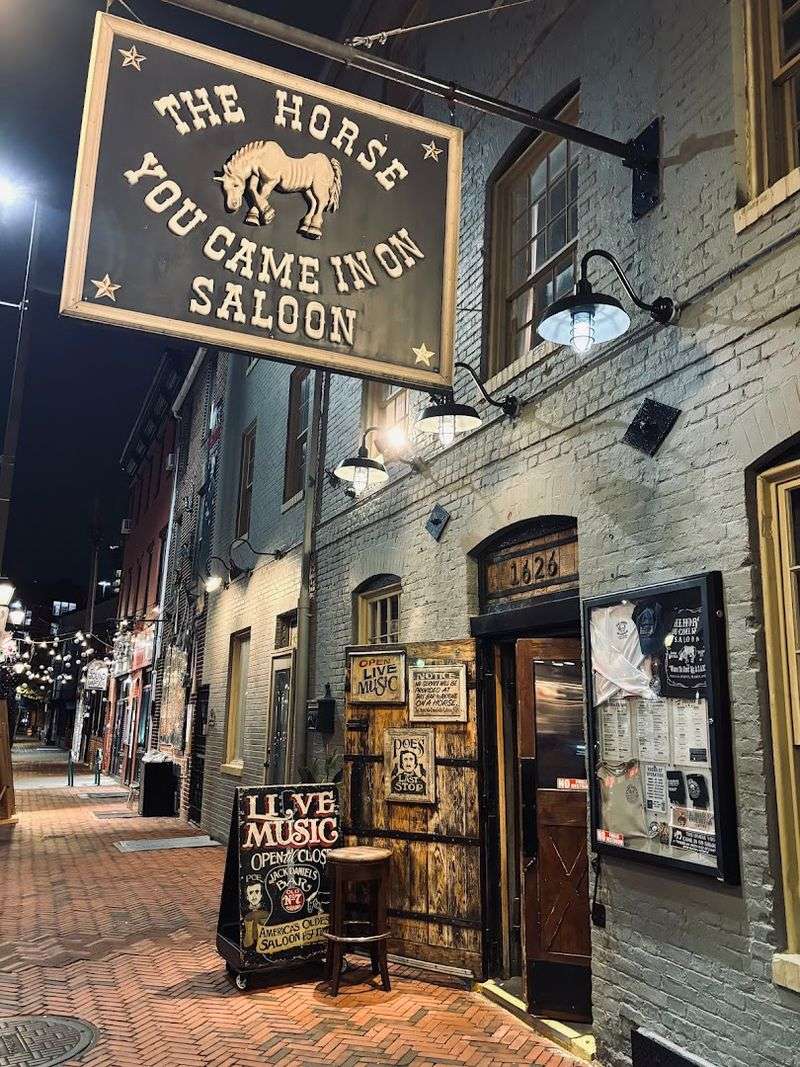
Among all the stories attached to this saloon, none draws more curiosity than its connection to Edgar Allan Poe. The bar is widely recognized as one of the last places where Poe was seen before his mysterious passing in Baltimore in October 1849.
Poe had deep ties to Baltimore throughout his life. He lived in the city at various points, and his grave is located there.
The saloon sits in a neighborhood he would have known well, and the claim that he spent time here in his final days has become one of the most talked-about parts of its identity.
Visitors who come specifically for the Poe connection often pair the trip with stops at the Edgar Allan Poe House on Amity Street, where he lived from 1833 to 1835, and his grave site at Westminster Hall. The saloon acts as a kind of final chapter in a self-guided Poe tour of the city, and that narrative pulls in literary travelers from across the country.
What the Inside Actually Looks Like
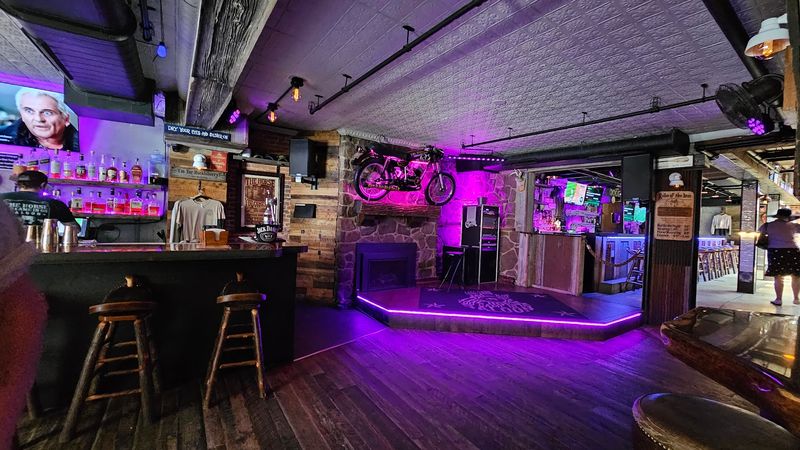
From the outside, the building looks modest. The interior is a different story entirely.
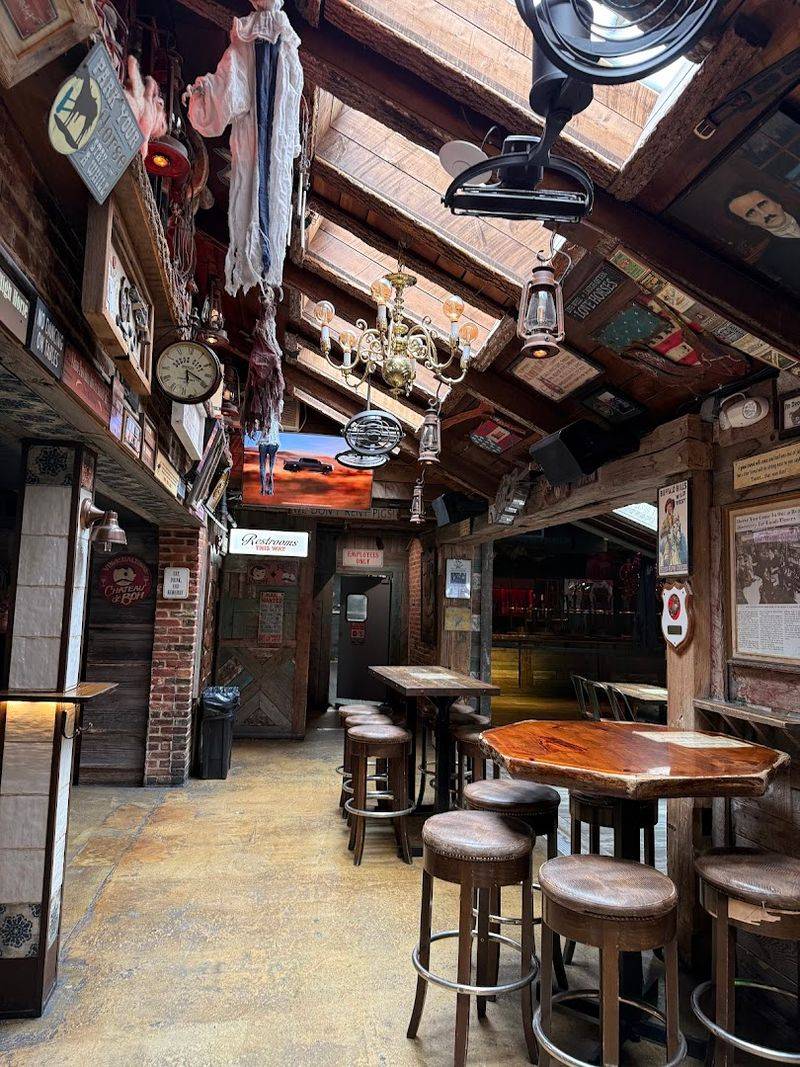
The saloon is significantly larger than its street-facing facade suggests, with multiple bar areas spread across the space, each with its own character and layout.
The front bar is the more compact and intimate section, often where live music gets set up. Further back, a much larger bar area opens up with tables, booths, and plenty of room for a crowd.
There are additional bar sections to the back and left that can be opened up for busier nights.
One of the most talked-about features is the motorcycle mounted on the wall near the front, which sets the tone for the overall aesthetic. The decor throughout is eclectic and unapologetically quirky, with items on the walls that range from genuinely historic to outright hilarious.
Even the bathrooms have been noted as worth a look. The bar stools shaped like saddles are a detail that almost nobody forgets after their first visit.
The Saddle Seats That Everyone Talks About
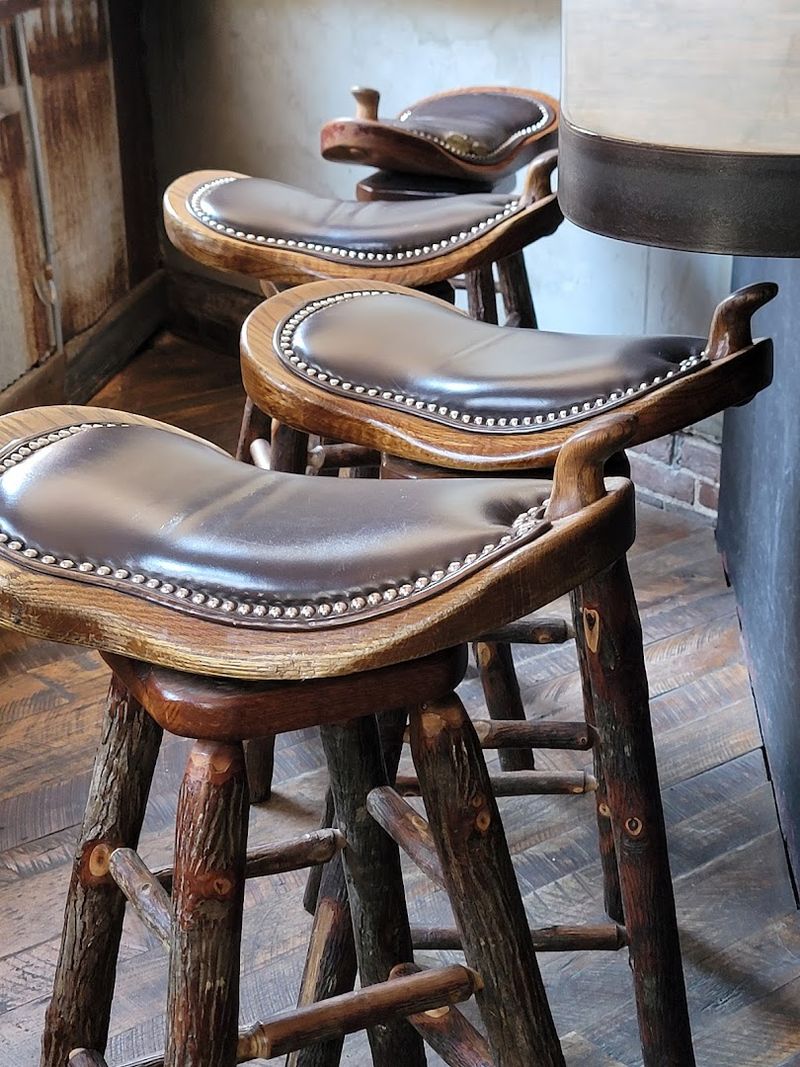
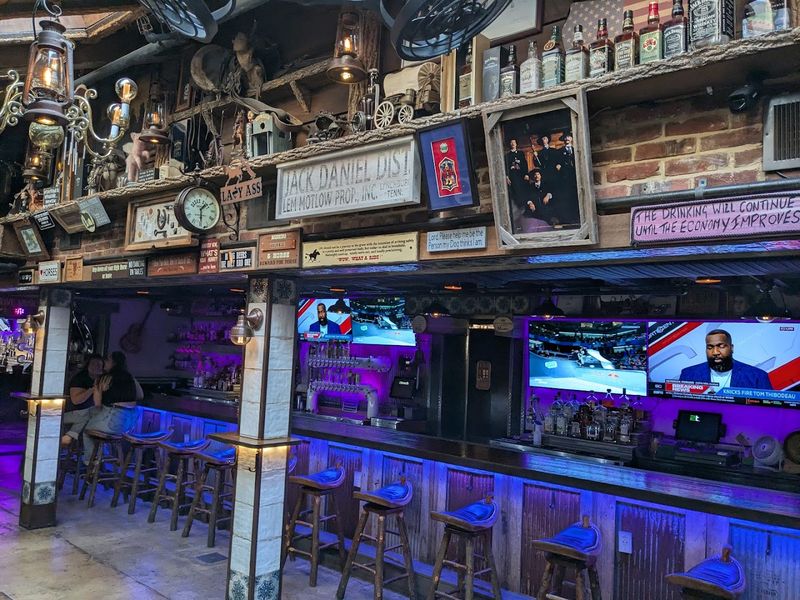
Bar stools come in all shapes, but few bars anywhere in the country have committed to a theme quite like this one. The bar seats at The Horse You Came In On Saloon are shaped like actual saddles, and they have become one of the most photographed and discussed features of the entire place.
The saddle seats fit the name of the bar perfectly and add a layer of playful personality that carries through the whole space. There are both standard saddle seats and side saddle options, which has become a running joke among regulars and first-timers alike.
For many people, sitting down on one of those saddle stools is a highlight of the visit in its own right. It is the kind of detail that sounds gimmicky on paper but works completely in context because the rest of the bar’s personality backs it up.
The whole space commits to a certain spirit, and the saddle seats are just the most literal expression of it.
Live Music Every Single Night
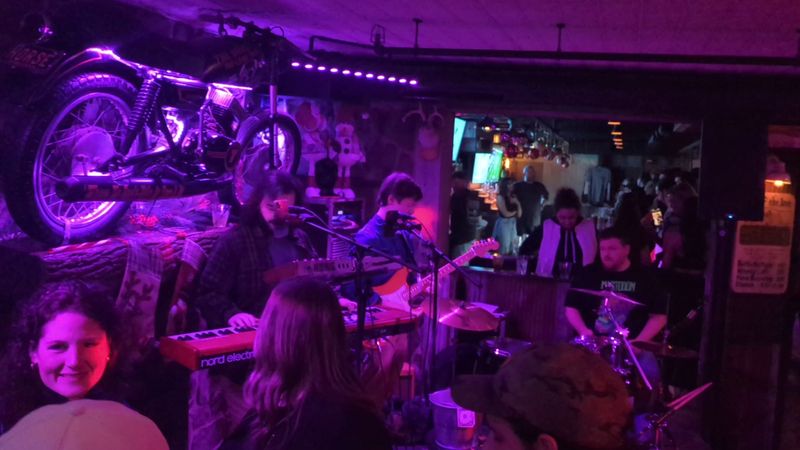
The Horse You Came In On Saloon is not just a historic site, it is also a working live music venue. Music plays here every night of the week, and the range of performers and genres keeps things from ever feeling predictable or routine.
The small stage near the front bar area creates an up-close experience where the music fills the room without overwhelming conversation. On any given night, the lineup might include blues, rock, classic covers, or something completely unexpected.
The programming leans toward variety rather than a single genre identity.
On weekday afternoons, the music tends to be more low-key and easy to talk over, while weekend evenings ramp up in energy as the crowd grows. The live music component is one of the main reasons people who come in for a quick look end up staying for hours.
There is always something happening, and the stage is rarely quiet for long once the doors open for the day.
The Hours and What to Expect on Different Days
Knowing when to go can make a real difference in the kind of experience a visit delivers. The saloon keeps a schedule that shifts across the week, with shorter windows on some days and longer stretches on others.
Monday and Tuesday hours run from 4 PM to 1:30 AM, making those evenings-only days. Wednesday through Saturday, the doors open at noon and stay open until 1:30 AM, which means there is a solid lunch window available on those days.
Sunday closes earlier, with hours running from noon to 10 PM.
Midweek afternoons tend to be quieter, which works well for people who want to absorb the history and the atmosphere without a packed room. Weekend evenings are when the energy peaks, with a full crowd, live music in full swing, and all bar sections open.
First-timers who want a more relaxed introduction to the place often find that a weekday afternoon visit is the right call before returning on a livelier night.
How the Bar Handled Prohibition and Kept Going
Surviving Prohibition is not something most bars in America can claim because most of them did not survive it. The 18th Amendment shut down legal alcohol sales across the country from 1920 to 1933, and countless establishments that had operated for years were forced to close permanently.
The Horse You Came In On Saloon is frequently described as Maryland’s only pre-Prohibition bar that is still actively operating today. That distinction sets it apart from every other drinking establishment in the state, no matter how old or well-regarded they might be.
The specifics of how the saloon navigated that era are part of the building’s longer history, but the fact that it came out the other side still functioning as a bar is a remarkable piece of American commercial resilience. Maryland itself had a complicated relationship with Prohibition enforcement, but surviving the era intact and continuing to operate for nearly a century afterward puts this place in genuinely rare company.
The Decor That Tells Its Own Story
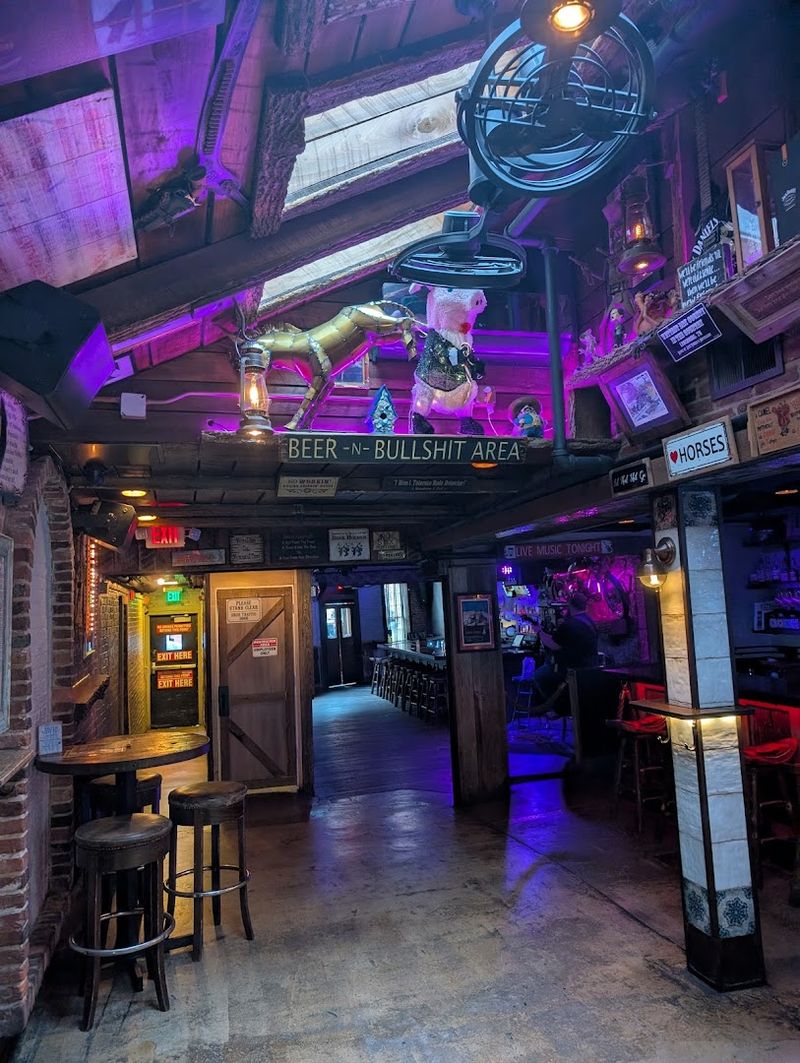
Walk through the saloon slowly and there is a lot to take in. The walls are covered in a mix of historic artifacts, humorous signage, and decorative items that collectively create an environment unlike any chain bar or newly opened concept space could replicate.
The motorcycle mounted near the front entrance is usually the first thing that catches people off guard. From there, the layers of decor continue throughout the space, with each section of the bar offering something different to look at.
The overall effect is dense without feeling cluttered, more like a place that has accumulated personality over time than one that was designed to look a certain way.
Even the bathrooms have developed a reputation as worth seeing, which is not something that gets said about most establishments. The decor is part of what makes the bar feel genuinely lived-in rather than staged, and it gives first-time visitors plenty to talk about long after they have left Thames Street behind.
Sports, Screens, and the Bar’s Viewing Culture
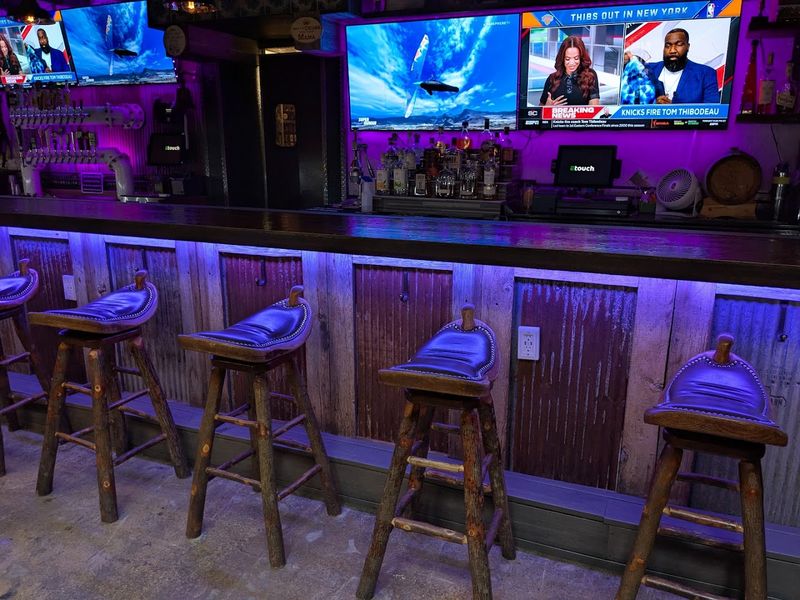
History and atmosphere aside, The Horse You Came In On Saloon is also a functioning neighborhood bar with televisions throughout and a clear sporting culture tied to Baltimore’s home teams. The Ravens and Orioles get priority on the screens, which reflects the deep loyalty that runs through the city’s sports fan base.
Multiple bar sections each have their own screens, which means there is usually a good sightline from most spots in the room on game days. The bar fills up noticeably when either team is playing, and the energy on those nights has a different character than a regular weeknight crowd.
The sports viewing policy is something to keep in mind for anyone planning to watch a specific game that falls outside the Ravens or Orioles schedule. The bar has a clear preference for its home teams, and that is a reflection of the neighborhood’s identity as much as anything else.
Baltimore takes its sports seriously, and this bar is no exception.
What the Bar Menu Looks Like
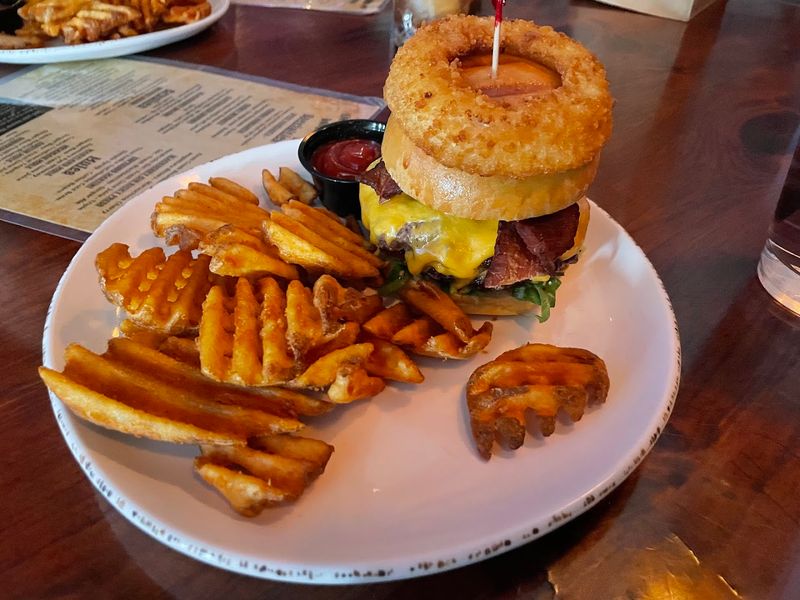
The Horse You Came In On Saloon runs as a full bar with a food menu that leans toward classic pub fare rather than an extensive dining program. The menu is not the main draw, but it holds up well for what it is and has surprised more than a few people who came in expecting minimal options.
Burgers, fries, and bar snacks make up the core of what is available. The Wild West burger has developed a following, described as well-seasoned and generously loaded.
Waffle fries appear as a side option, and there are smaller plates available for grazing rather than full meals.
Food availability can vary slightly by day, particularly earlier in the week, so checking ahead is a reasonable move for anyone planning a meal rather than just drinks. The portion sizes have been noted as leaning smaller for the price point, but the quality of what comes out of the kitchen is generally considered solid for a bar setting.
The menu fits the space well.
Why This Bar Is Worth the Trip From Anywhere in Maryland
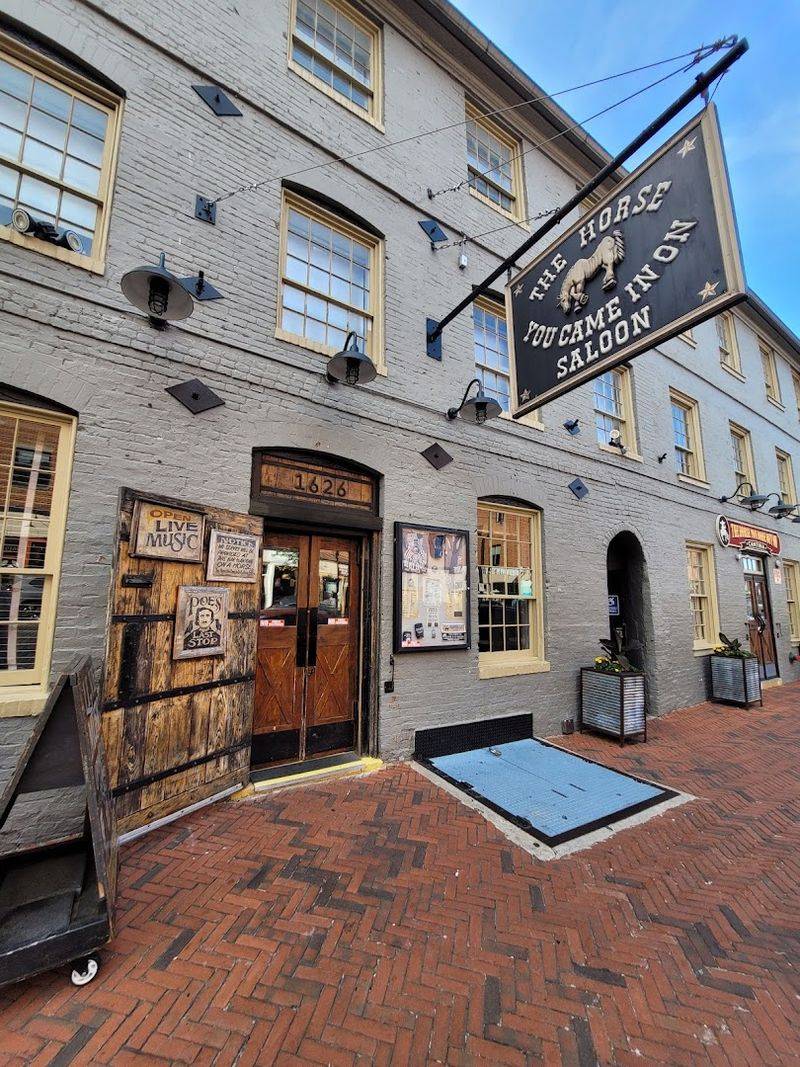
Maryland is a state with a lot of history packed into a relatively small footprint, but very few places offer the specific combination of documented age, literary legend, live music, and genuine neighborhood character that this saloon delivers in a single visit.
The drive from most points in Maryland to Fells Point is manageable, and the surrounding neighborhood offers enough to fill an entire day before or after stepping through the saloon’s doors. Parking in Fells Point requires some patience, but the waterfront location and walkable streets make the effort worthwhile.
The bar is open most days starting at noon, which means it works as a daytime destination as well as an evening one. Whether the draw is the Poe connection, the 1775 founding date, the live music, or simply the appeal of a bar that has outlasted every trend and transformation the city has seen, the result is the same.
Thames Street has had a lot of stories told on it, and this saloon has been part of nearly all of them.
Where to Find This Living Piece of Baltimore History
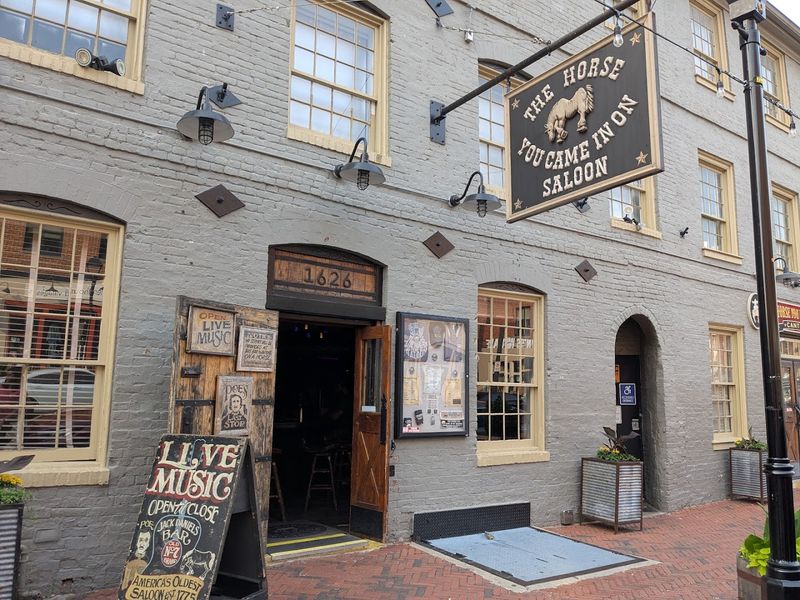
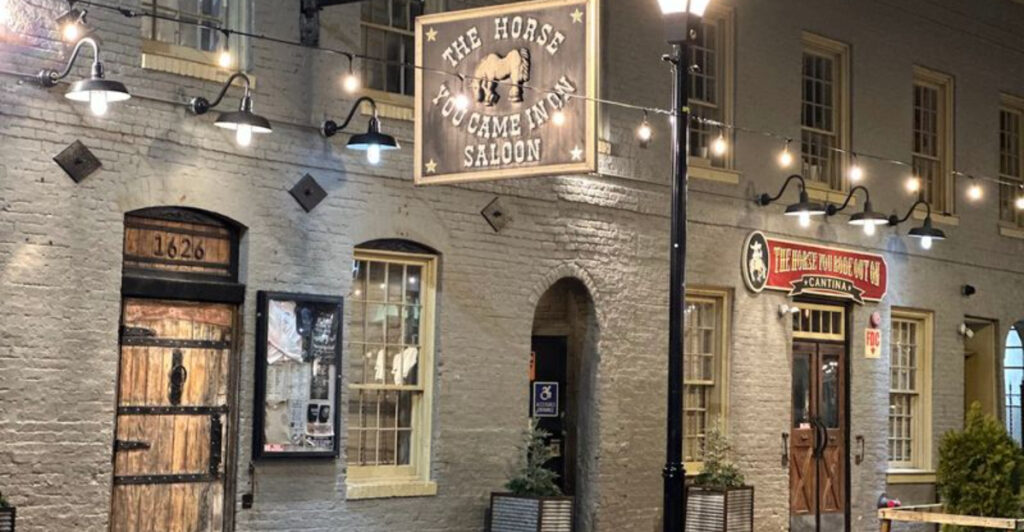
The address is 1626 Thames St, Baltimore, MD 21231, tucked into the heart of Fells Point, one of the oldest neighborhoods in the city. Thames Street runs along the waterfront, and the building that houses this saloon has been standing on it since the 18th century.
Fells Point itself has a long history as a shipbuilding hub and working-class port community, and the streets still carry that old-world character with cobblestones, narrow rowhouses, and a dense concentration of independent bars and restaurants.
The saloon sits among them all but carries a distinction that none of the others can match. The Colonial-era brick exterior does not shout for attention, but once you know what you are looking at, it is hard to walk past without stopping.
The building’s age alone makes it one of the most historically significant commercial structures still in active use anywhere in Maryland.
Share this story