Some places seem to exist in their own little bubble, untouched by the rush of modern life. Across the world, there are towns where cobblestone streets, centuries-old buildings, and age-old traditions have survived the test of time.
These remarkable places offer a rare glimpse into history, letting visitors experience what life looked like hundreds of years ago. Whether nestled in mountains, perched on cliffs, or surrounded by desert, each of these towns tells a story worth knowing.
1. Hallstatt, Austria
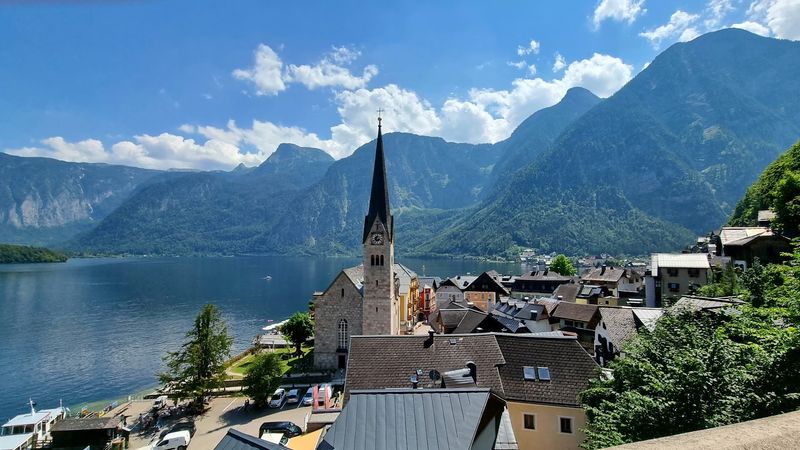
Tucked between a steep mountain and a glassy lake in the Austrian Alps, Hallstatt looks like it was painted rather than built. The town’s narrow lanes, centuries-old wooden houses, and ancient salt mines have barely changed in hundreds of years.
It is one of the oldest continuously inhabited settlements in the world, with a salt-mining history stretching back over 7,000 years.
Hallstatt’s population is small, just around 800 people, yet millions of tourists visit each year to see its fairy-tale scenery. The local government has worked hard to balance tourism with preservation, keeping the town’s architecture and traditions intact.
Strict building rules prevent modern developments from disrupting the historic skyline.
Walking through Hallstatt feels genuinely like stepping into another century. If you visit, take the funicular up to the salt mine for a hands-on history lesson that kids and adults both enjoy.
2. Shirakawa-go, Japan
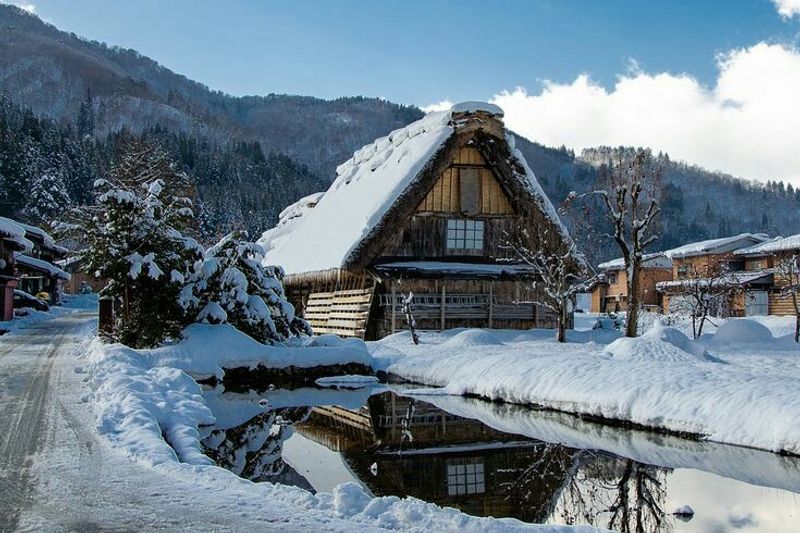
Few places in the world carry the quiet dignity of Shirakawa-go, a rural village in Japan’s mountainous Gifu Prefecture. Famous for its gassho-zukuri farmhouses, these buildings feature dramatically steep thatched roofs designed to shed the region’s heavy winter snowfall.
The name “gassho-zukuri” actually means “hands in prayer,” describing the triangular shape of the roofs.
Many families living here today are descendants of those who built these homes centuries ago. They continue traditional crafts, farming, and communal practices that have defined village life for generations.
The site earned UNESCO World Heritage status in 1995, which brought international attention and stronger preservation efforts.
Winter is the most magical time to visit, when the snow-dusted rooftops glow softly under floodlights during special illumination events. Shirakawa-go proves that a community can hold onto its roots without being left behind by the modern world.
3. Rothenburg ob der Tauber, Germany
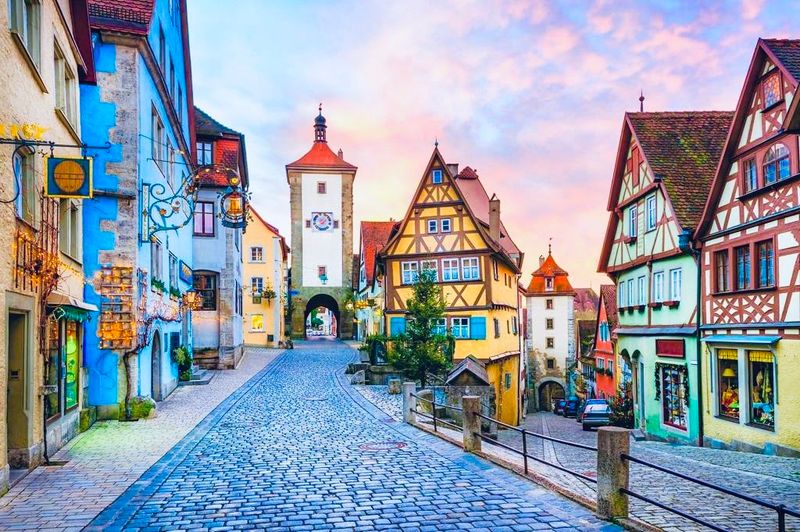
Walking through Rothenburg ob der Tauber is like flipping back the pages of a history book to the Middle Ages. Located in Bavaria, this walled town has preserved its medieval layout so completely that it still looks much as it did in the 14th and 15th centuries.
Its half-timbered houses, cobblestone alleys, and intact city walls are among the best-preserved in all of Germany.
One fun fact: during World War II, an American diplomat personally pleaded with a German general to spare the town from destruction, and it worked. That act of cultural diplomacy saved Rothenburg from the bombing that leveled so many other German cities.
Today, visitors can walk the full length of the ancient town walls, explore the Medieval Crime Museum, and sample the famous Schneeball pastry. Every corner of this town rewards curiosity and rewards those willing to slow down and look closely.
4. Alberobello, Italy
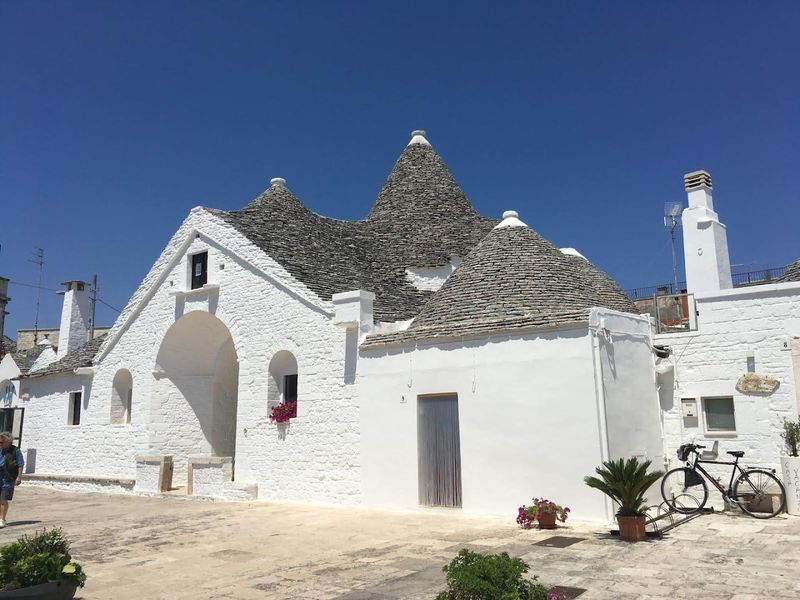
Alberobello, located in the Puglia region of southern Italy, is home to one of the most unusual townscapes in Europe. Its trulli, small whitewashed houses topped with dry-stone cone-shaped roofs, look like something out of a storybook.
Remarkably, these structures were originally built without mortar so they could be quickly dismantled to avoid property taxes imposed by local lords.
Today, around 1,500 trulli are still standing in the Rione Monti district alone, and many are still used as homes, shops, and guesthouses. The town became a UNESCO World Heritage Site in 1996, ensuring these quirky buildings will be protected for future generations.
Staying overnight in a trullo is an experience unlike any other. The thick stone walls keep the interior cool in summer and warm in winter, a natural engineering trick that modern builders still admire.
Alberobello is proof that clever old ideas never really go out of style.
5. Colmar, France
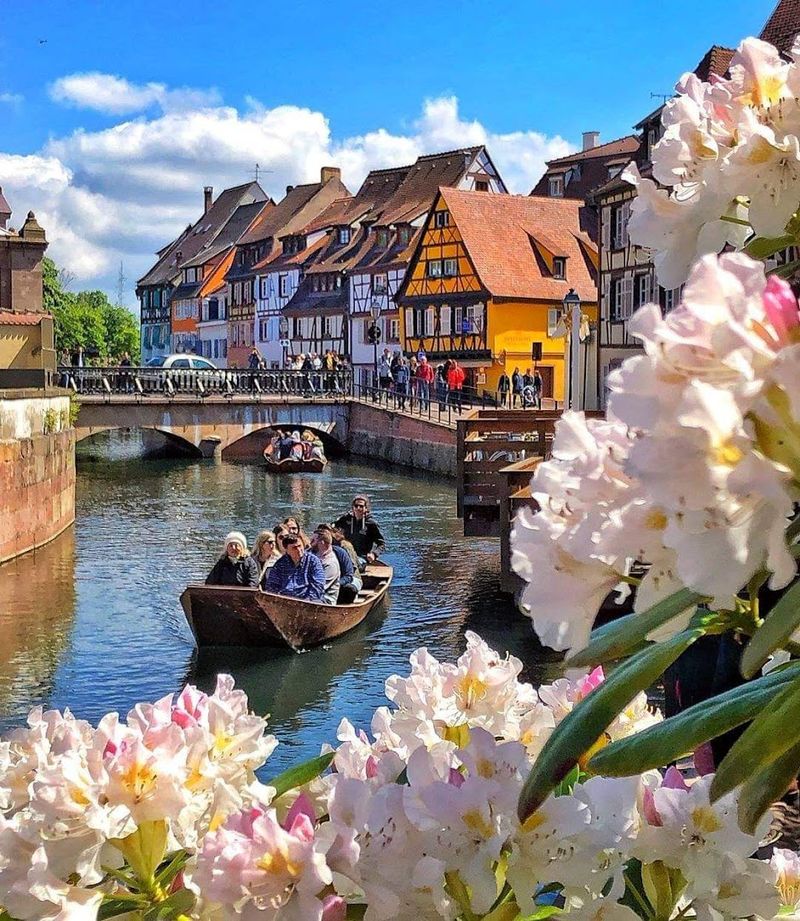
Colmar sits in the Alsace region of northeastern France, right on the border with Germany, and its architecture reflects that unique cultural blend beautifully. Pastel-colored half-timbered buildings lean over cobblestone streets, flower boxes burst with color from nearly every window, and canals wind through the charming Petite Venise neighborhood.
The town looks almost too perfect, like a movie set that someone forgot to take down.
Remarkably, Colmar survived both World Wars with most of its historic center intact. That survival allowed it to remain one of the finest examples of traditional Alsatian architecture anywhere in the world.
The old town has been carefully maintained, with local laws governing building colors and facade renovations.
Colmar’s Christmas market is considered one of the most beautiful in Europe, drawing visitors from around the globe. Even outside the holiday season, the town’s warmth and visual charm make every visit feel like a special occasion.
6. Cesky Krumlov, Czech Republic
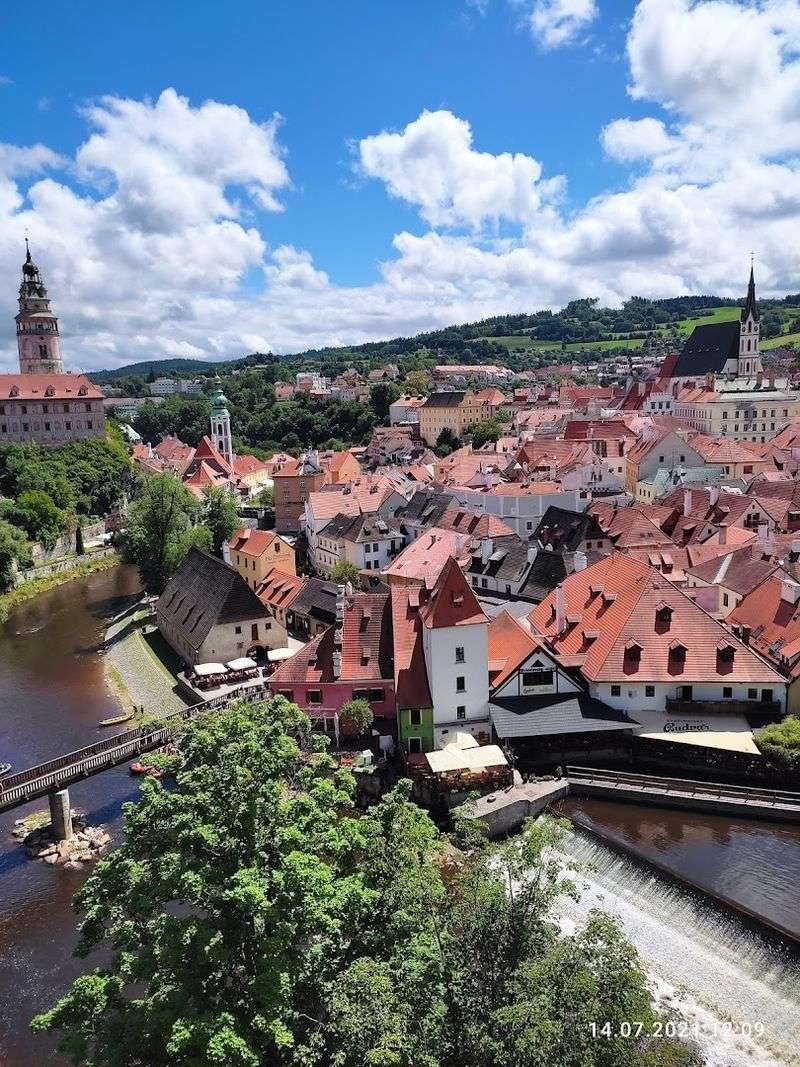
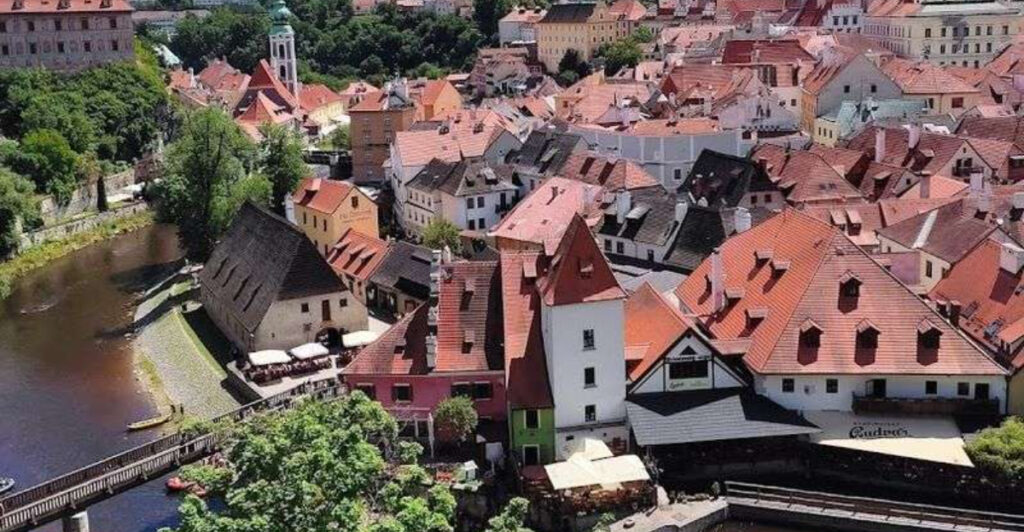
Cesky Krumlov is one of those rare places where you genuinely feel like the modern world has agreed to keep its distance. Wrapped in a dramatic bend of the Vltava River in southern Bohemia, this small town is dominated by a magnificent Renaissance castle that towers over a maze of medieval streets below.
The castle complex is the second largest in the Czech Republic, after Prague Castle.
The town was placed on UNESCO’s World Heritage list in 1992, which helped enforce strict rules about new construction and building alterations. As a result, walking through the old town feels remarkably authentic, with Gothic, Renaissance, and Baroque architecture standing side by side in excellent condition.
Summer brings theater performances in the castle’s open-air auditorium, a tradition with centuries of roots. Cesky Krumlov rewards visitors who take their time, because every alley seems to hide another courtyard, fountain, or centuries-old surprise worth discovering.
7. Giethoorn, Netherlands
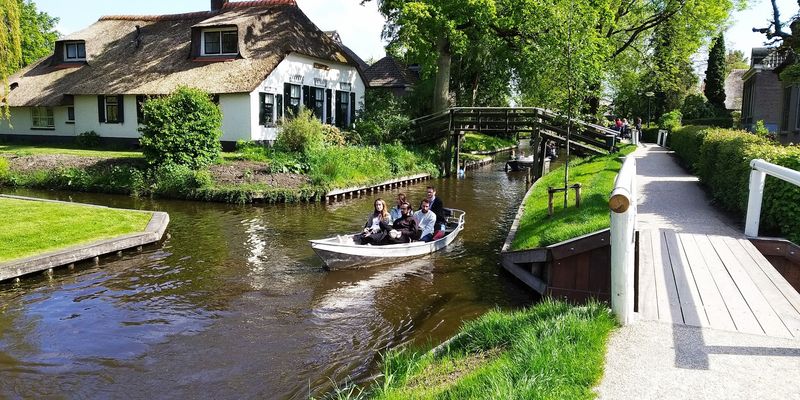
Giethoorn is unlike almost any other village in the world, because it has no roads running through its historic heart. Instead, canals serve as the main streets, and residents travel by small wooden boats called punters, just as people have done here for generations.
The village was founded around 1230, and its layout has changed surprisingly little since then.
The thatched-roof cottages that line the canals are picture-perfect, surrounded by lush gardens and weeping willows that trail into the water. Because there are no cars in the central area, Giethoorn is one of the quietest inhabited places in Europe.
The only sounds you typically hear are birdsong, water lapping, and the occasional creak of a wooden boat.
Renting a small electric boat is the best way to explore the village at your own pace. Giethoorn proves that sometimes the best way to get around is the slowest way possible.
8. Oia, Greece
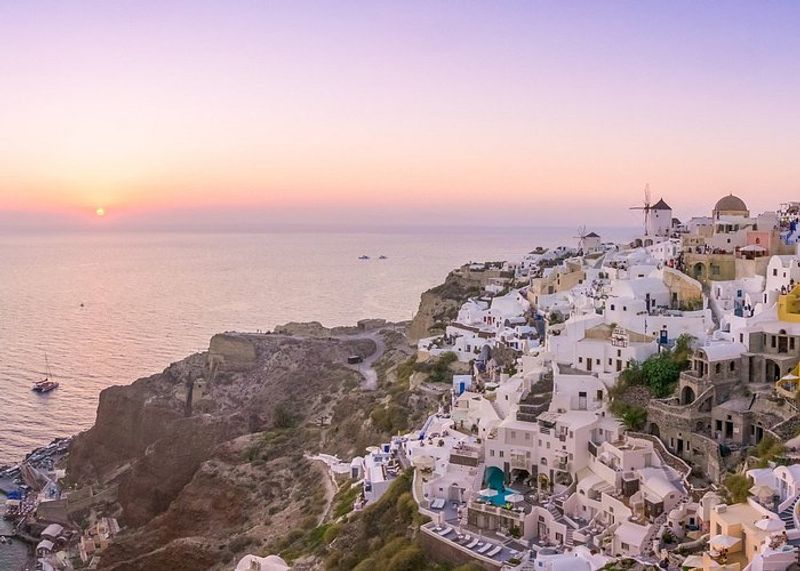
Perched dramatically on the northern tip of Santorini, Oia is one of the most photographed villages in the world. Its signature whitewashed cubic buildings, blue-domed churches, and cave homes carved directly into volcanic rock create an image that has become almost synonymous with the Greek islands.
The town sits on the rim of a massive ancient caldera, offering views that genuinely take your breath away.
After a devastating earthquake in 1956 destroyed much of the original village, Oia was carefully rebuilt using traditional Cycladic architectural styles. Strict preservation laws have since kept the village’s iconic appearance intact, limiting building heights, colors, and materials.
Oia is especially famous for its sunsets, which draw large crowds every evening to the castle ruins at the western end of town. Arriving early to claim a good spot is strongly recommended.
Despite its popularity, Oia manages to retain a timeless, almost otherworldly atmosphere that keeps visitors returning.
9. Reine, Norway
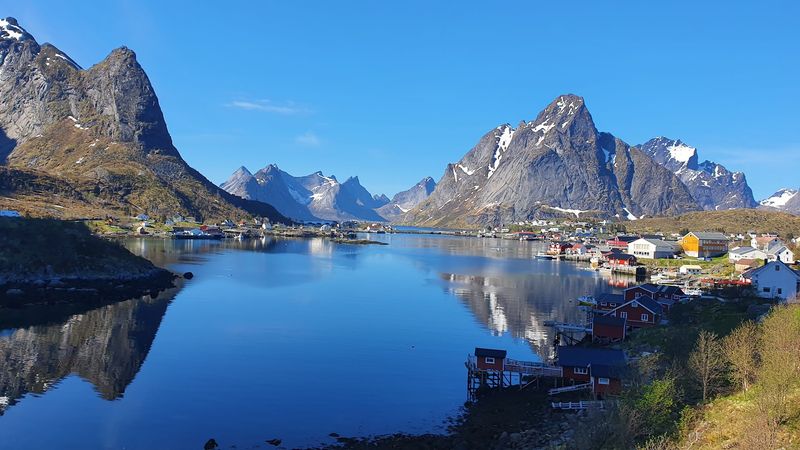
Reine is a tiny fishing village in Norway’s Lofoten Islands, and its reputation for breathtaking scenery is completely deserved. Clusters of traditional red wooden cabins, known locally as rorbuer, sit on stilts above glassy fjord waters, framed by some of the most dramatic mountain scenery in Scandinavia.
The village has fewer than 300 permanent residents, yet it draws visitors from every corner of the globe.
Fishing has been the backbone of Reine’s economy for centuries, and that heritage is still very much alive today. Locals continue to dry cod on wooden racks along the shoreline, a practice dating back to Viking times.
The sight of those fish drying in the cold Arctic air is one of the most distinctive images of northern Norway.
In winter, the northern lights frequently dance above the mountains, adding a surreal glow to an already extraordinary landscape. Reine is the kind of place that makes you reconsider what the word “beautiful” actually means.
10. San Gimignano, Italy
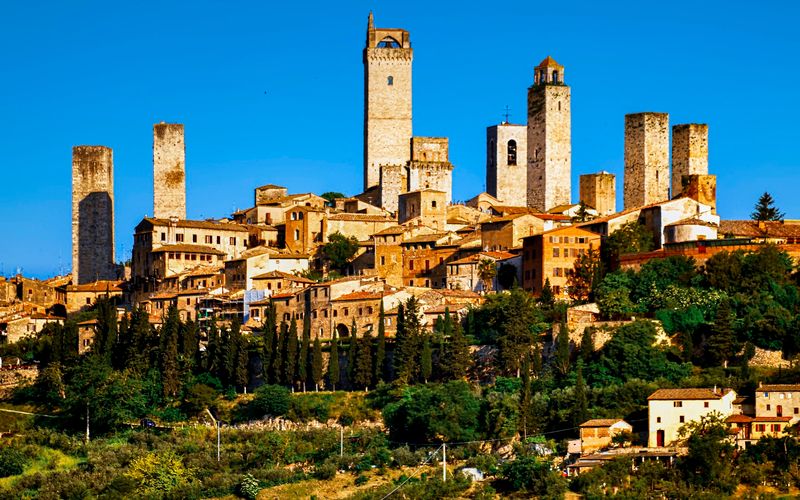
San Gimignano earned its nickname, the “Medieval Manhattan,” honestly. Rising from the Tuscan hills, its collection of medieval stone towers creates a skyline that has barely changed since the 14th century.
At its peak, the town had 72 towers, built by wealthy families competing to show off their power and status. Today, 14 towers still stand, and the effect is still genuinely striking.
The town became a UNESCO World Heritage Site in 1990, which helped lock in protections for its extraordinary skyline and historic streets. Walking through the center, you pass Romanesque churches, medieval frescoes, and ancient wells that have served the town for centuries.
San Gimignano is also famous for its white wine, Vernaccia di San Gimignano, which was the first Italian wine to receive DOC status back in 1966. Pairing a glass with local wild boar salami while sitting in the main piazza is one of those simple pleasures that stays with you long after you leave.
11. Bibury, England
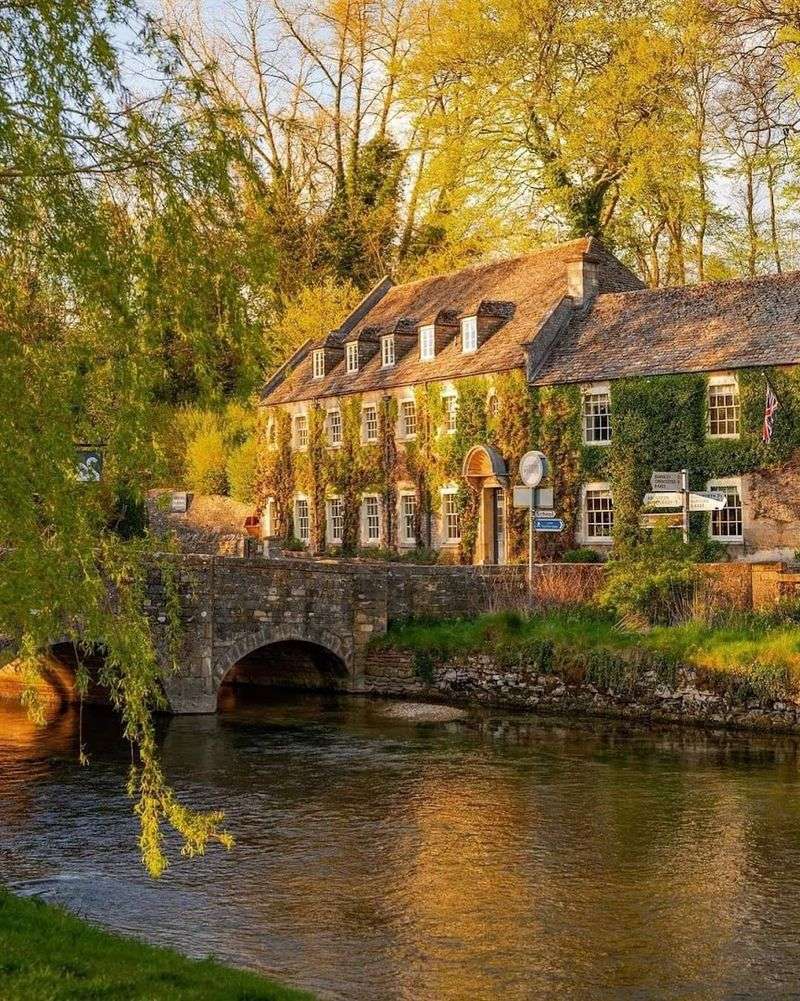
William Morris, the famous 19th-century designer, once called Bibury the most beautiful village in England, and it is hard to argue with him. Located in the Cotswolds region, Bibury is best known for Arlington Row, a terrace of medieval wool merchant cottages built from warm honey-colored limestone.
These cottages date back to the 14th century and have remained largely unchanged since the 17th century.
A peaceful trout stream called the River Coln runs through the village, adding to its picture-postcard quality. The water is so clear you can watch the trout swimming below the surface, and the banks are lined with weeping willows and wildflowers in warmer months.
Bibury appears on the British passport, a quiet acknowledgment of its status as a national treasure. Despite being a small village, it attracts enormous numbers of visitors each year.
Arriving early in the morning, before the crowds, is the best way to experience its genuine tranquility firsthand.
12. Hoi An, Vietnam
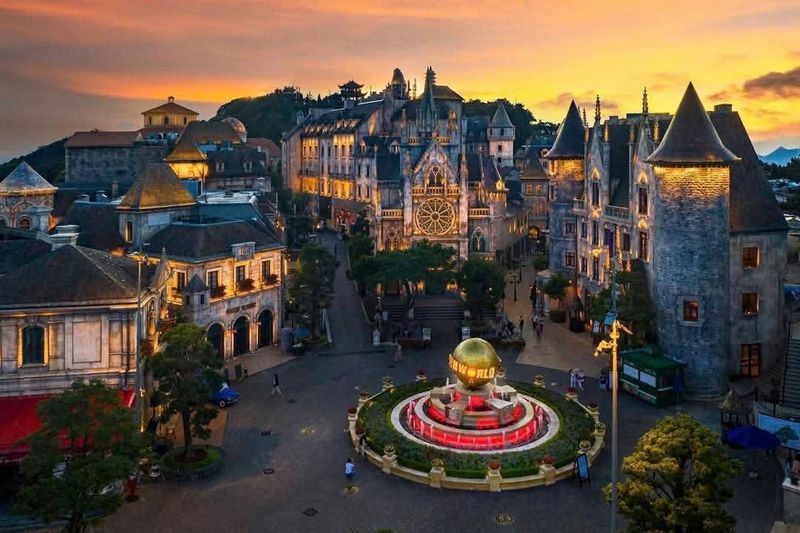
Hoi An’s ancient town glows a warm golden yellow, and not just because of the hundreds of silk lanterns that hang from every building. The town’s historic merchant houses, temples, and covered bridges are painted in a distinctive ochre color that has become its visual signature.
Located on Vietnam’s central coast, Hoi An was once one of Southeast Asia’s most important trading ports.
Merchants from China, Japan, and Europe all left their mark here, creating a fascinating architectural blend that you simply cannot find anywhere else. The Japanese Covered Bridge, built around 1590, remains one of the town’s most beloved landmarks.
Hoi An’s historic district has been a UNESCO World Heritage Site since 1999, and conservation efforts have been strong and consistent.
Every full moon, the town turns off its electric lights and illuminates the streets with lanterns alone, creating one of the most atmospheric evenings in all of Asia. Hoi An rewards slow exploration, rewarding those who linger in its quieter back streets.
13. Paraty, Brazil
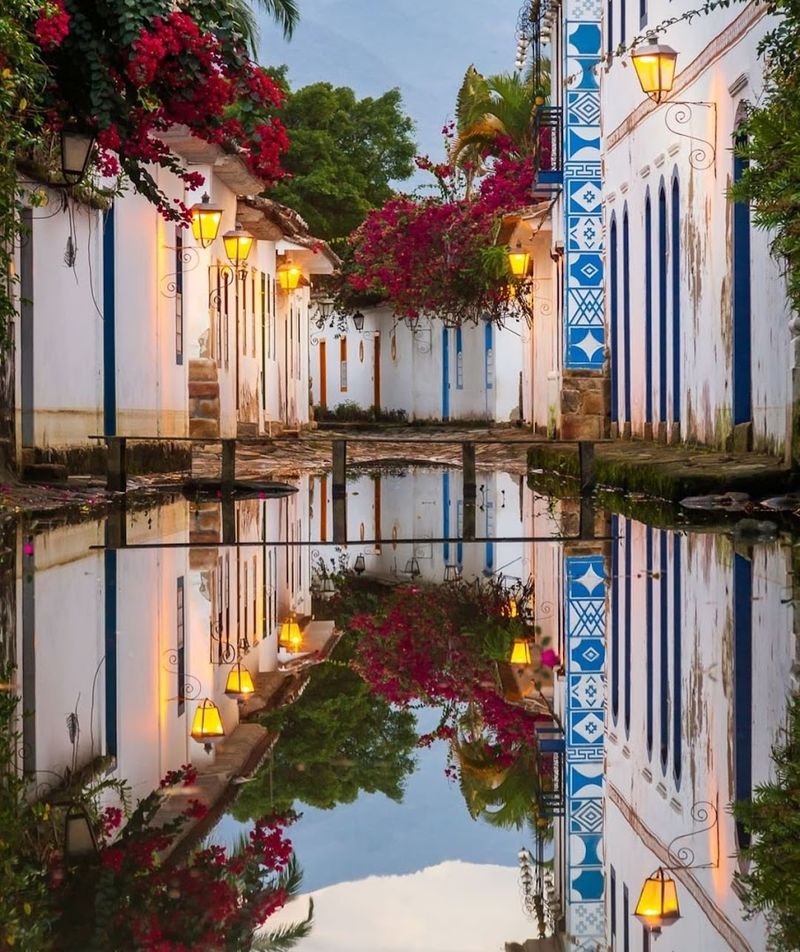
Paraty sits on the southern coast of Rio de Janeiro state, and its historic center is one of the best-preserved examples of Portuguese colonial architecture in all of Brazil. The town was founded in the 17th century as a key stop on the gold route between the interior of Brazil and the coast.
Its cobblestone streets were deliberately laid at a slight angle so that ocean tides could wash them clean twice a day.
That clever engineering detail means that during very high tides, the lower streets actually flood with shallow seawater, creating a surreal scene of locals wading past colonial buildings. Cars are banned from the historic center, which keeps the atmosphere peaceful and the streets intact.
Paraty joined the UNESCO World Heritage list in 2019 as part of a combined site with the Atlantic Forest. Its blend of colonial history, natural beauty, and vibrant local culture makes it one of South America’s most rewarding destinations for curious travelers.
14. Ait Benhaddou, Morocco
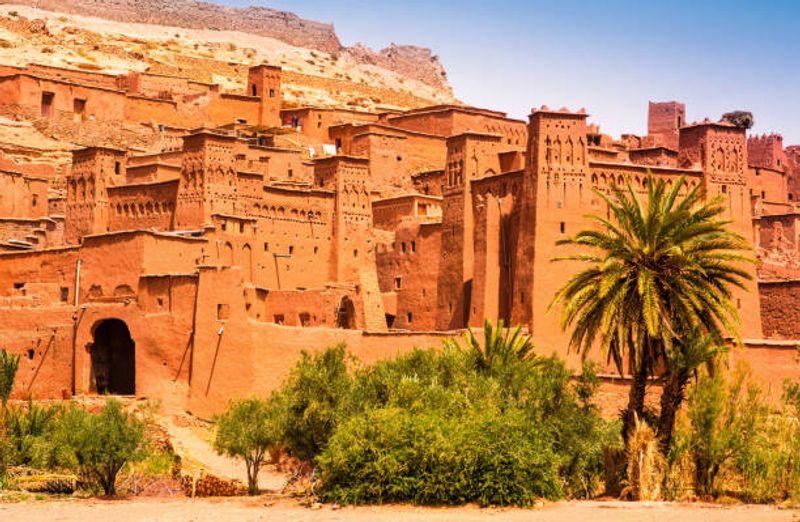
Rising from the edge of the Sahara like something sculpted by the desert itself, Ait Benhaddou is a fortified village built entirely from sun-dried mud bricks and clay. Located along the old caravan route between the Sahara and Marrakech, this ksar, which is the local word for a fortified village, has served as a trading post and refuge for centuries.
Its earthen towers and walls blend so naturally into the surrounding landscape that from a distance it can be hard to tell where the village ends and the desert begins.
Hollywood has certainly taken notice. Ait Benhaddou has appeared in films including Lawrence of Arabia, Gladiator, and the television series Game of Thrones.
That cinematic history has brought global attention and helped fund ongoing restoration work.
A UNESCO World Heritage Site since 1987, Ait Benhaddou is still home to a small number of families who maintain the traditional construction techniques passed down through generations. Crossing the riverbed to reach its gates is itself an unforgettable experience.
15. Cuzco Historic District, Peru
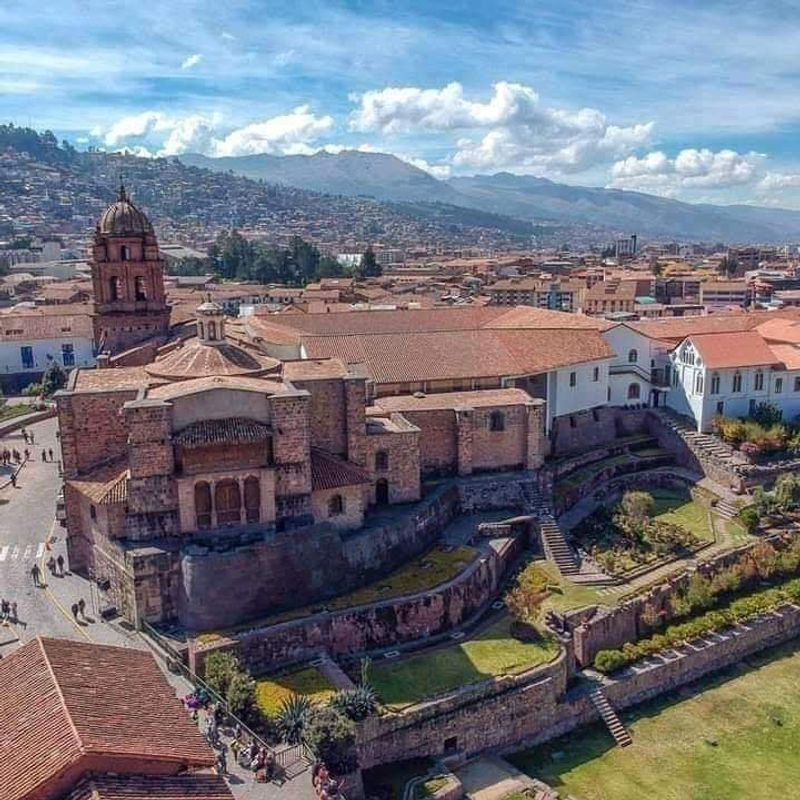
Cuzco’s historic center carries the weight of two empires in a single city block. The Inca built their capital here over a thousand years ago, constructing massive stone walls so precisely fitted together that not even a sheet of paper can slide between the stones.
When the Spanish arrived in the 16th century, they built their own churches and palaces directly on top of those Incan foundations, creating a layered cityscape unlike anywhere else on earth.
Walking through the old city today, you can see this collision of civilizations at every turn. Colonial cathedrals rise above perfectly preserved Incan stonework, and local Quechua women in traditional clothing sell goods in plazas that have been gathering places for centuries.
Cuzco was designated a UNESCO World Heritage Site in 1983, recognizing its extraordinary historic value. At an elevation of over 11,000 feet, the city also reminds visitors that human civilization has always been remarkably adaptable, no matter the terrain or the era.
Share this story