There is a small town tucked into the Wallowa Mountains of northeastern Oregon where bronze statues outnumber the people who live there, and a lake so blue it almost looks painted sits just down the road. That town is Joseph, Oregon, and it has quietly become one of the most surprising art destinations in the entire Pacific Northwest.
At the heart of it all is Valley Bronze of Oregon, a working foundry that has been turning raw metal into world-class sculptures since 1982. By the time you finish reading this, you will want to book a trip and see it for yourself.
The Town of Joseph and Valley Bronze of Oregon
Nestled at the foot of the Wallowa Mountains in northeastern Oregon, the town of Joseph feels like a place that decided art was just as essential as electricity.
Valley Bronze of Oregon calls 307 W Alder St, Joseph, OR 97846 home, and it has been anchoring this creative community for over four decades.
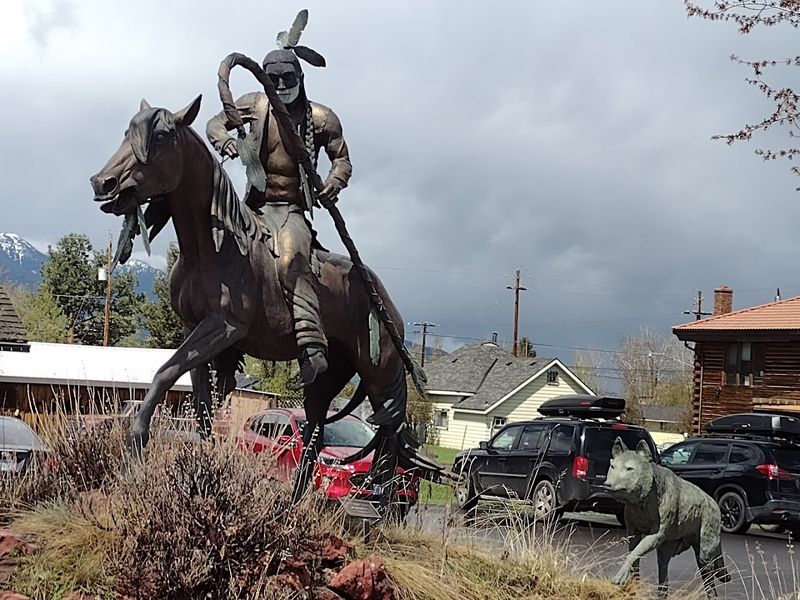
Joseph itself has a population of only around 1,000 people, yet the streets hold more bronze sculptures than most mid-sized cities could dream of displaying.
The foundry opened in 1982 and quickly became the economic and cultural backbone of the region, drawing collectors, tourists, and serious art lovers from across the country.
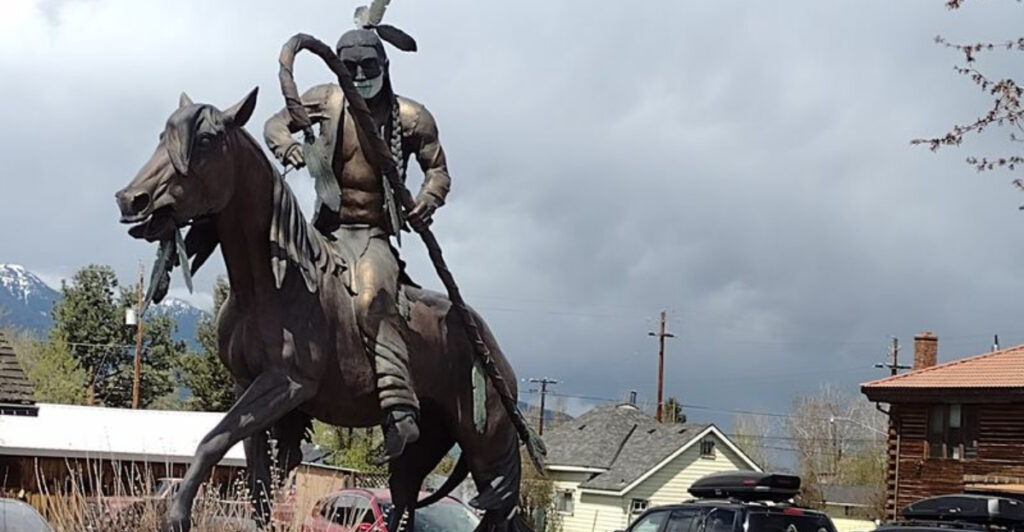
What makes this place genuinely different is that the art is not locked inside a gallery. It lives on sidewalks, in parks, and outside storefronts, greeting every visitor who wanders through.
The Wallowa Valley itself is spectacularly beautiful, with mountains rising sharply above the valley floor and Wallowa Lake glittering just a few miles south of town.
Coming here for the first time feels less like a detour and more like a discovery you will be telling friends about for years.
The Lost Wax Casting Process
The lost wax casting method is one of the oldest metalworking techniques on the planet, dating back over 5,000 years, and Valley Bronze of Oregon has mastered it completely.
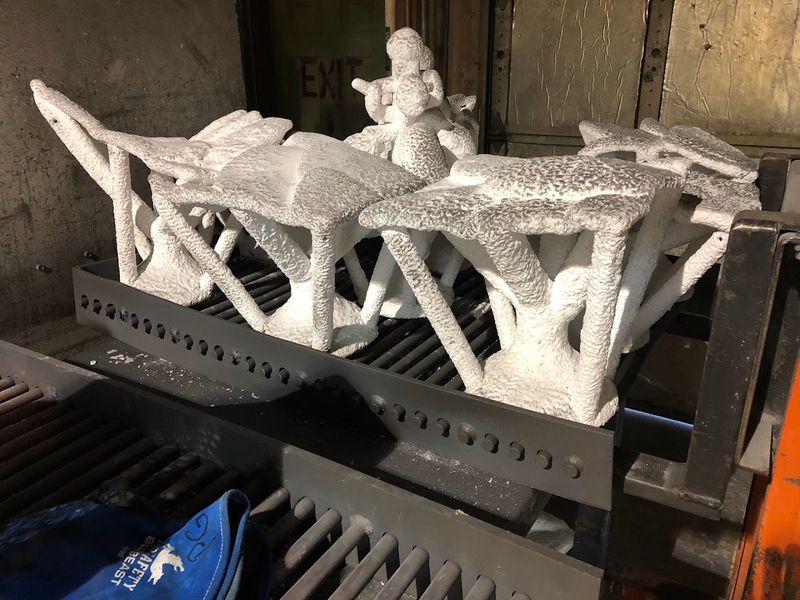
The process begins with an artist’s original sculpture, which is then used to create a detailed wax replica coated in layers of ceramic shell material.
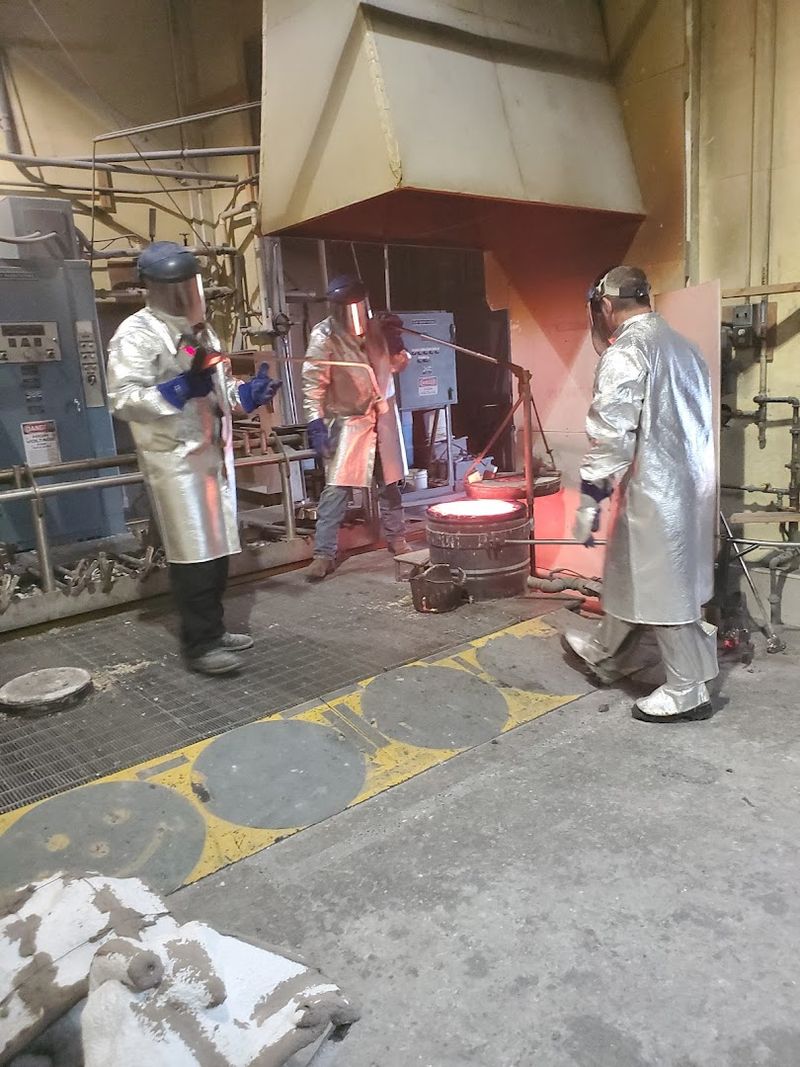
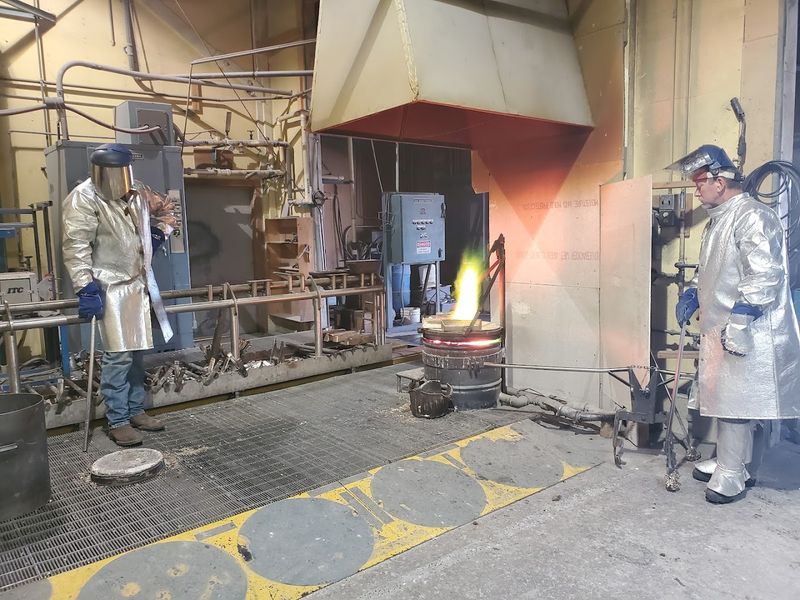
Once the shell hardens, the wax is melted out, leaving a hollow ceramic mold ready to receive superheated molten bronze poured at roughly 2,000 degrees Fahrenheit.
After cooling, the ceramic shell is broken away to reveal the raw bronze casting underneath, which is then cleaned, welded, and finished by hand.
Every single step requires a different set of skills, and the workers at Valley Bronze are not just technicians. They are trained artists in their own right.
Watching the casters pour molten metal is genuinely thrilling in a way that no photograph fully captures.
The heat radiating from the furnace, the glow of the liquid bronze, and the precision required make it clear that this craft demands serious respect.
Few manufacturing processes in the art world are this visually dramatic or this technically demanding to witness up close.
The Foundry Tour Experience
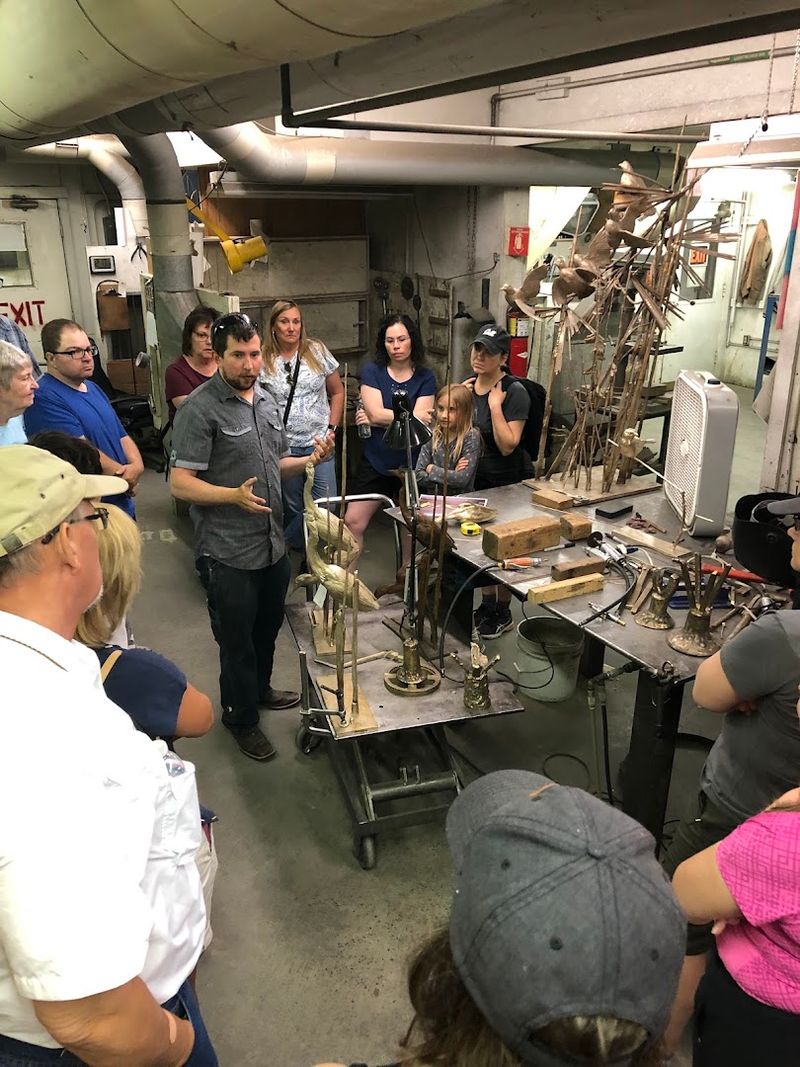
Tours at Valley Bronze of Oregon run Monday through Thursday at 11 AM, cost $15 per person, and last roughly one to one and a half hours depending on the guide and the group’s curiosity.
The tour takes visitors through each stage of the production floor, from the wax room where sculptures are shaped and refined, all the way through to the patina station where color is chemically applied to the finished bronze.
Groups are kept small enough that you can get genuinely close to each workstation and ask real questions without shouting over a crowd.
The guides who lead these tours actually work in the foundry, which means the knowledge they share comes from hands-on daily experience rather than a rehearsed script.
One guide named Casey has been particularly praised for his calm, knowledgeable style that makes even complex metallurgical steps easy to understand.
The tour works best for adults and older teens who have a genuine interest in how things are made, though younger visitors may find the pace a bit slow in certain sections.
Booking ahead is wise since group sizes are limited and spots fill up faster than you might expect during summer months.
The Bronze Sculptures of Joseph’s Streets
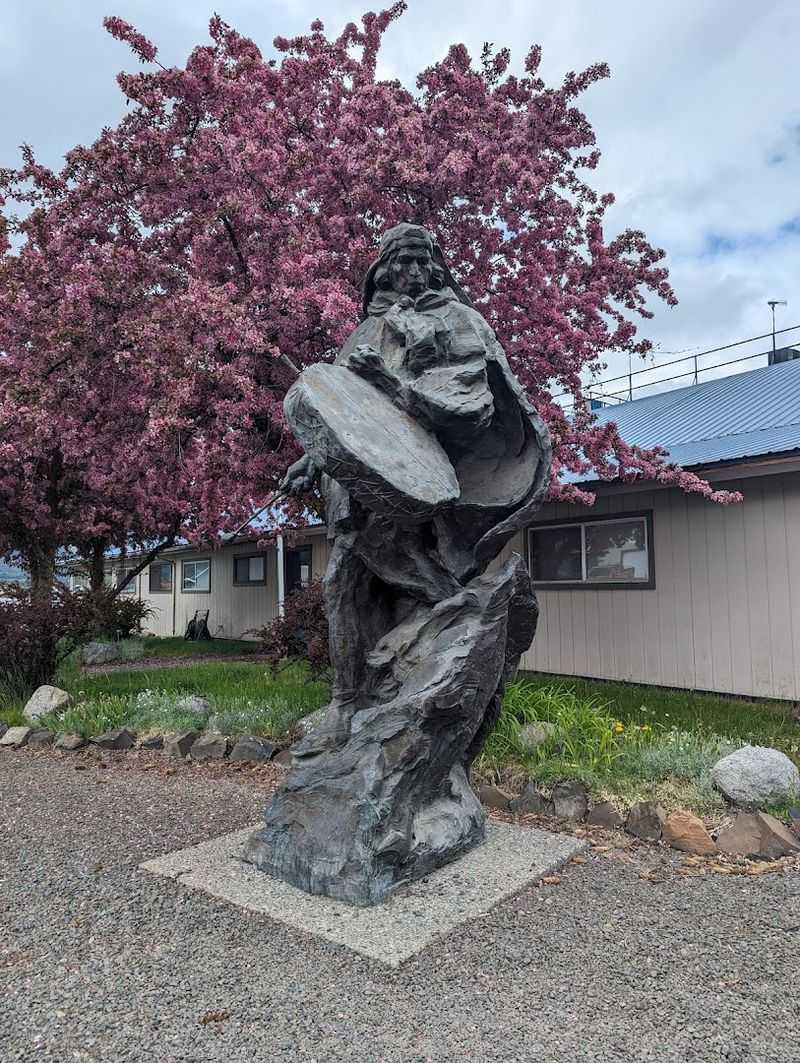
One of the most striking things about walking through downtown Joseph is the sheer number of bronze sculptures you encounter before you have even found a place to park properly.
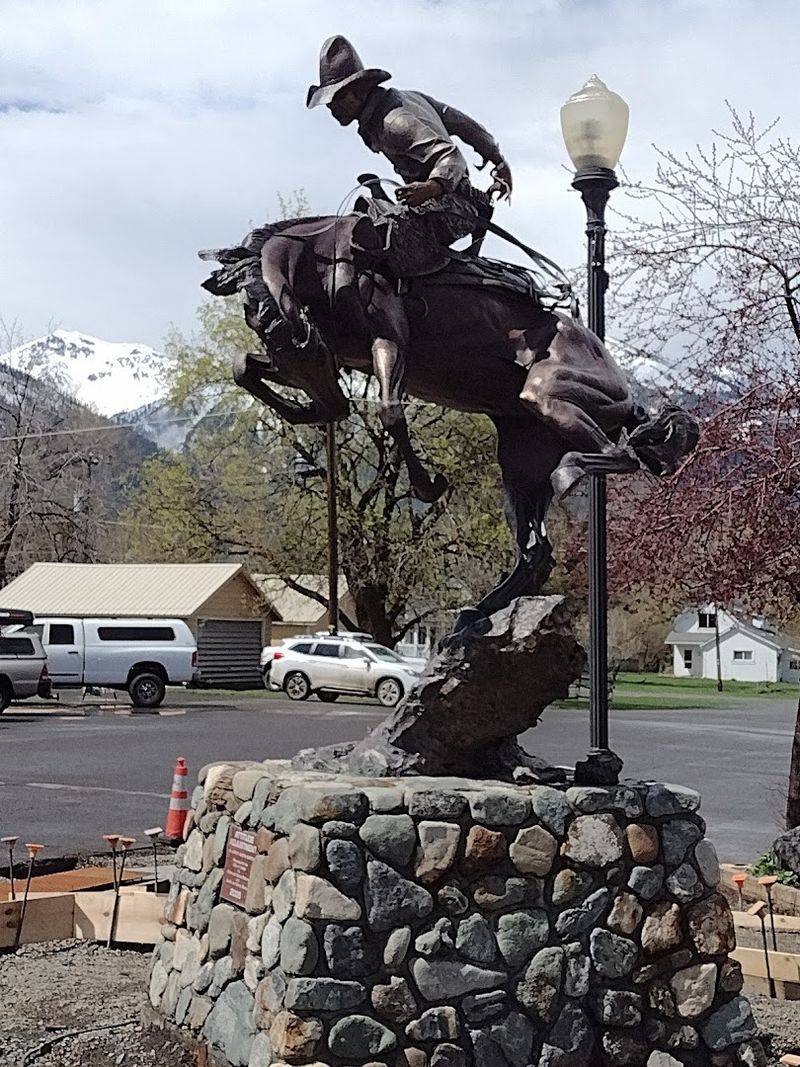
The statues range from monumental figures of historical importance to playful wildlife pieces that make children stop mid-stride to touch them.
The Chief Joseph statue is widely considered the most powerful piece in the outdoor collection, a commanding bronze portrait of the famous Nez Perce leader after whom the town is named.
Another crowd favorite is a sculpture of a woman in a blue dress, which has an unusual painted patina that makes it stand out among the more traditionally brown bronze works nearby.
Many of these outdoor sculptures were cast right here at Valley Bronze, giving the town a rare quality where the place of creation and the place of display are one and the same.
Artists from across the United States and beyond have sent their work to Joseph to be cast, and some of those finished pieces have ended up permanently installed on these very sidewalks.
Taking a self-guided walking tour of the sculptures costs nothing and rewards you with a surprisingly rich art experience at every corner.
Wallowa Lake and Its Brilliant Blue Waters
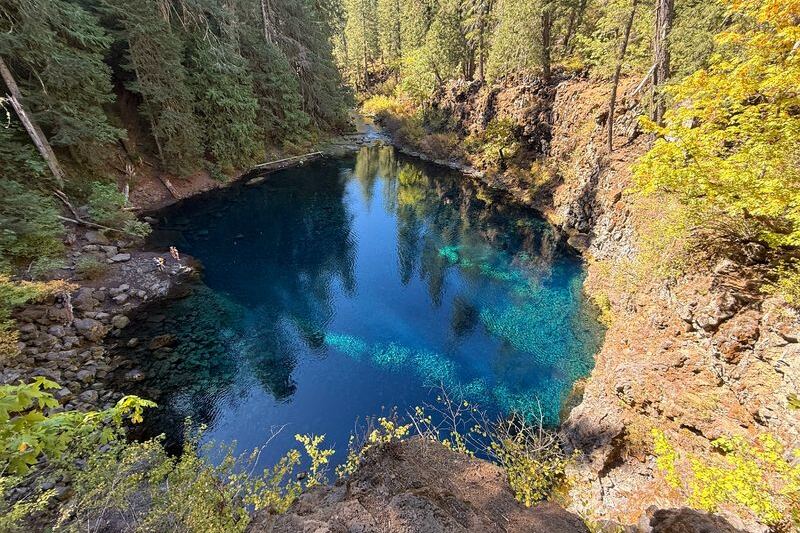
Just a few miles south of downtown Joseph, Wallowa Lake sits in a glacially carved valley and produces a shade of blue that genuinely stops people in their tracks.
The lake stretches about four miles long and reaches depths of over 280 feet, which contributes to that deep, saturated color that photographs almost look edited even when they are not.
Wallowa Lake State Park surrounds much of the shoreline and offers camping, boating, fishing, and easy access to trails that climb into the surrounding Eagle Cap Wilderness.
The water stays cold year-round, fed by mountain snowmelt, so swimming is bracing rather than leisurely, though plenty of visitors wade in anyway just to say they did.
Paddleboats and canoes are available for rent near the marina, making it easy to get out on the water even without your own gear.
The mountain backdrop behind the lake is the kind of scenery that makes you understand why people choose to live in small towns far from everything else.
On a clear morning, the reflection of the peaks on the lake surface is so sharp and still that the whole scene feels almost unreal, like the landscape is showing off just for you.
The Patina Artists and Color Work
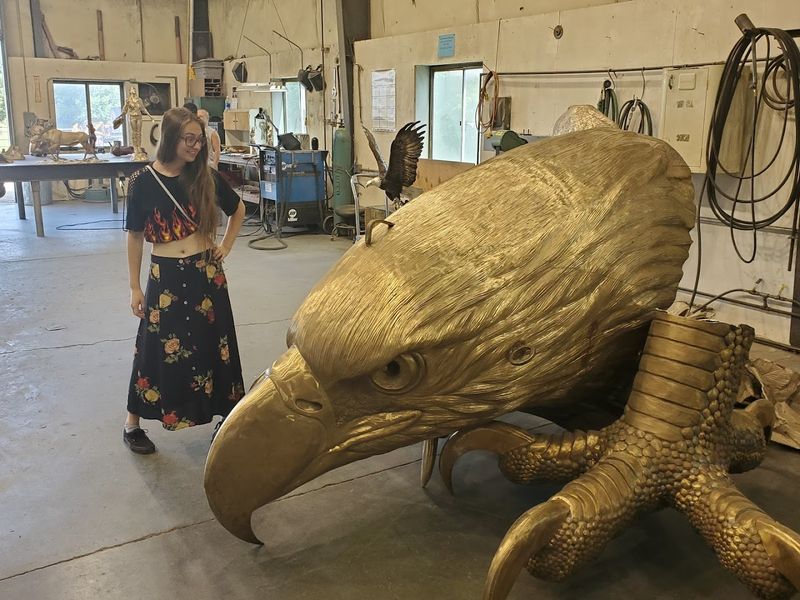
Most people assume that the color of a bronze sculpture happens naturally over time, and while weathering does play a role outdoors, the rich tones you see on finished foundry work are almost always applied intentionally.
At Valley Bronze, the patina artists use a combination of heat and chemical solutions to create specific colors, textures, and finishes on each piece before it leaves the foundry.
The range of results is remarkable. Finished sculptures can appear deep chocolate brown, forest green, blue-black, or even warm golden tones depending on what the original artist requested.
Applying patina is genuinely skilled work that requires a trained eye and a steady hand, because the chemical reactions happen quickly and the results are difficult to reverse once set.
Tour visitors often say the patina station is one of the most surprising stops on the walkthrough, since most people had no idea that bronze color was so deliberately crafted.
The woman in the blue dress sculpture visible on Joseph’s streets is a great example of how far patina work can push the boundaries of what bronze traditionally looks like.
This part of the process connects chemistry, artistry, and craftsmanship in a way that makes you see every bronze sculpture you encounter differently afterward.
The Wax Room and Sculpture Preparation
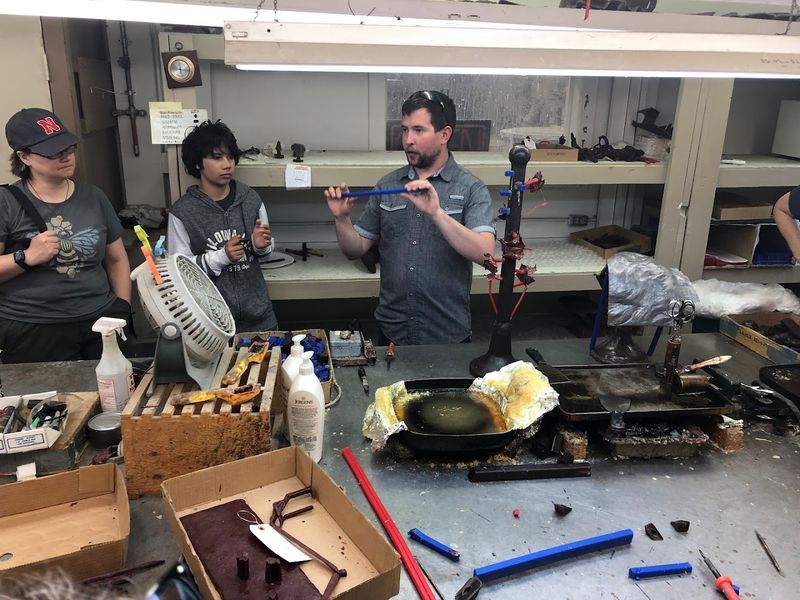
Before any bronze gets poured, the wax room at Valley Bronze is where the real detail work happens, and it is one of the most quietly fascinating stops on the entire tour.
After an artist’s original sculpture is used to create a rubber mold, liquid wax is poured into that mold to produce a near-perfect replica of the original piece.
Skilled workers called wax chasers then spend hours refining the wax replica by hand, smoothing seam lines, restoring fine details, and correcting any imperfections before the piece moves to the next stage.
The precision required in this step is what ultimately determines how closely the finished bronze will match the artist’s original vision, so nothing gets rushed through the wax room.
Seeing a craftsperson bent over a delicate wax figure with tiny tools, working through a magnifying lens to preserve a sculptor’s original brushstroke marks, puts the whole operation into perspective.
This is not mass production. Every piece that passes through Valley Bronze receives individual attention at each stage from workers who genuinely care about the outcome.
The wax room is proof that even in an industrial foundry setting, the work is fundamentally human, careful, and deeply connected to the original artist’s intentions.
Valley Bronze’s Global Art Impact
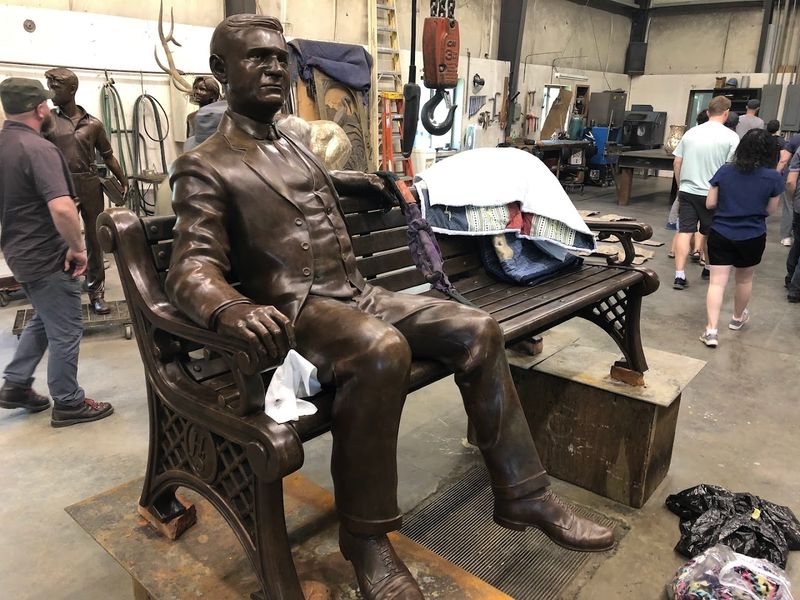
For a foundry operating out of a town of 1,000 people in rural northeastern Oregon, the reach of Valley Bronze’s work is genuinely extraordinary.
Sculptures cast here have been installed in public spaces, museums, corporate headquarters, and private collections across the United States and internationally.
The foundry has worked with some of the most respected figurative sculptors in North America, producing pieces that end up in places most visitors would never connect back to a small mountain town in Oregon.
This global footprint is a testament to the quality standards the foundry has maintained since its founding in 1982, because the art world is competitive and collectors have options.
Major commissions require not just technical precision but also the ability to scale work up dramatically, casting pieces that may be many times larger than the artist’s original model while preserving every detail.
Valley Bronze has built a reputation for handling exactly those kinds of complex, large-scale projects without compromising the integrity of the original artwork.
The fact that world-class bronze art is being produced in a town most people could not find on a map without help makes Joseph, Oregon one of the most genuinely surprising creative hubs in the American West.
Best Time to Visit Joseph and Valley Bronze
Summer is peak season in Joseph, running roughly from late June through early September, when the weather in the Wallowa Valley is warm, the mountains are accessible, and the town buzzes with visitors.
The foundry tours run Monday through Thursday from 7 AM to 4 PM, with the public tour typically departing at 11 AM, so planning your visit around a weekday morning gives you the best shot at joining one.
Friday, Saturday, and Sunday tours are not available, which catches a surprising number of weekend travelers off guard when they arrive in town.
Spring visits in May and early June offer cooler temperatures and fewer crowds, though mountain roads and trails may still have snow at higher elevations.
Fall is arguably the most beautiful time to be in the Wallowa Valley, with golden aspens lining the hillsides and the lake reflecting autumn colors in a way that feels almost theatrical.
Winter brings a quieter version of Joseph, with the foundry still operating on its regular schedule but far fewer tourists competing for parking or tour spots.
No matter when you arrive, calling ahead to confirm tour availability at +1 541-432-7551 or checking the website at valleybronze.com is always the smart move before making the drive.
The Eagle Cap Wilderness and Outdoor Adventures Nearby
The Eagle Cap Wilderness begins practically at the edge of town, making Joseph one of the best basecamp towns for serious outdoor adventure in all of Oregon.
Over 500 miles of trails wind through the wilderness area, leading to alpine lakes, granite peaks, and high meadows that see very few visitors compared to more famous Oregon destinations.
The hike to Ice Lake is one of the most popular routes in the area, climbing steadily through forest and open slopes before arriving at a stunning high-altitude lake ringed by peaks.
Horseback riding into the backcountry is a tradition in this part of Oregon, and several outfitters near Joseph offer guided trips ranging from half-day rides to multi-day pack trips.
Fishing in the Wallowa River and its tributaries draws anglers looking for trout in clear, cold water that runs right through the valley floor.
Mountain biking, rock climbing, and wildlife watching round out the options for visitors who want more than just a gallery experience during their stay.
The combination of world-class art in town and world-class wilderness just outside it is genuinely rare, and it is a big part of what makes Joseph worth the long drive from anywhere.
The Wallowa County Art Scene Beyond the Foundry
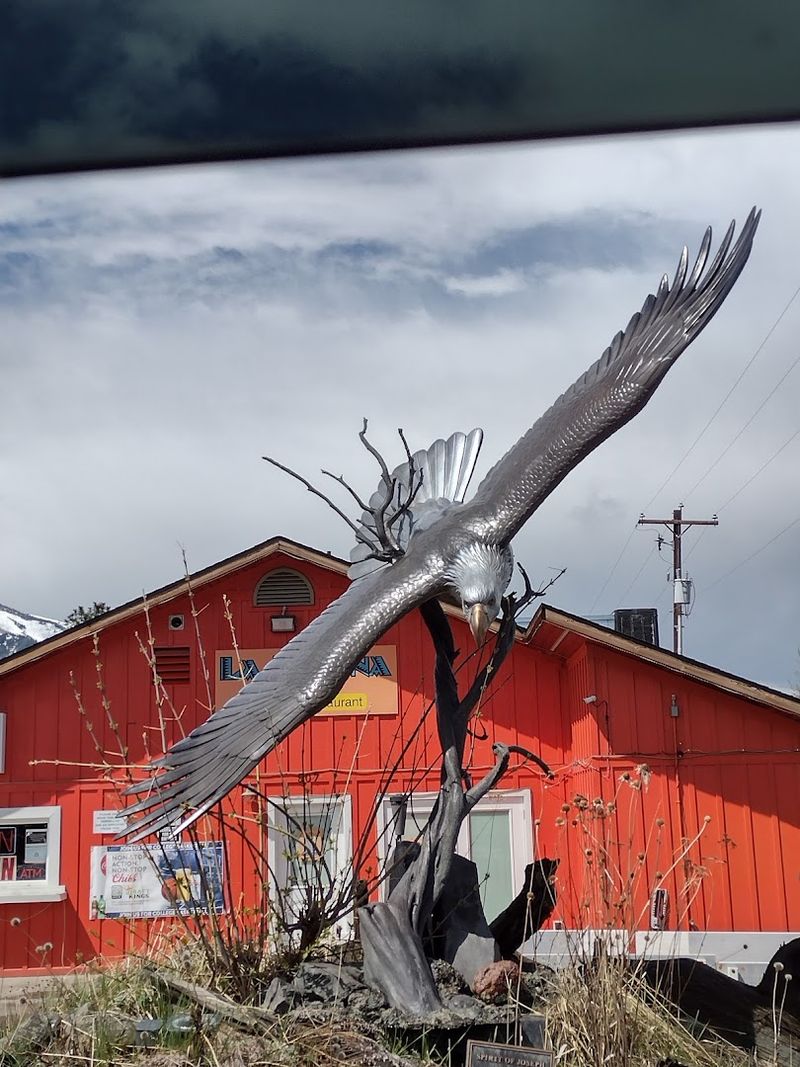
Valley Bronze may be the anchor of Joseph’s art identity, but the creative energy in Wallowa County extends well beyond one foundry on Alder Street.
Downtown Joseph has a concentration of independent galleries, studios, and shops that would feel at home in a much larger city, all packed into a walkable few blocks of a mountain town.
Many of the galleries focus on Western art, wildlife subjects, and Native American themes that connect directly to the history and landscape of this part of Oregon.
The Nez Perce people have deep historical ties to the Wallowa Valley, and that cultural heritage is reflected in artwork, interpretive displays, and public sculptures throughout the area.
The Chief Joseph Days Rodeo, held every July, brings the community together in a celebration that mixes Western tradition with the broader artistic identity of the region.
Local artists who live and work in Joseph have built careers here in part because the foundry created an infrastructure and a reputation that attracts serious art buyers from across the country.
Spending a full day just wandering galleries, chatting with working artists, and admiring outdoor sculptures is a completely satisfying experience that requires no agenda and no admission fee for most of it.
Practical Tips for Your Visit to Valley Bronze
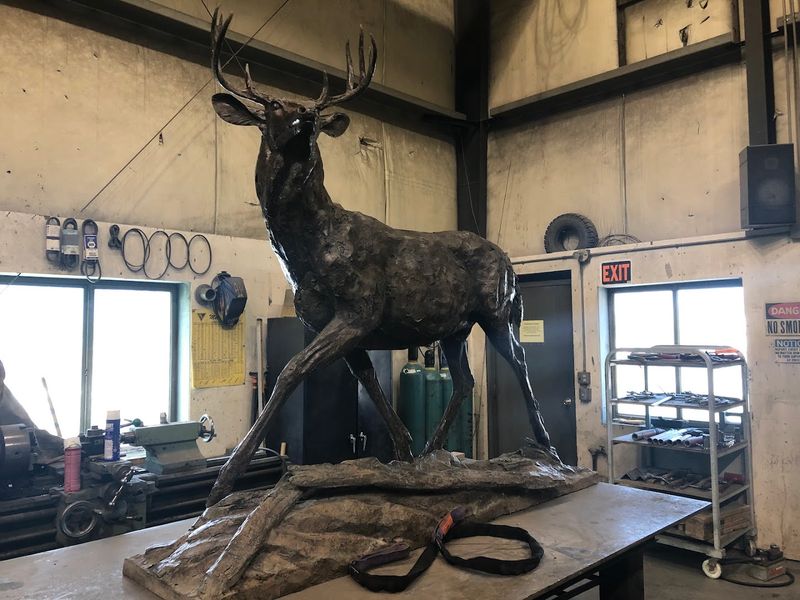
A few practical details can make the difference between a smooth visit and a frustrating one when planning a trip to Valley Bronze of Oregon.
Tours cost $15 per person and depart at 11 AM Monday through Thursday. The foundry does not offer weekend tours, so building your itinerary around a weekday is essential.
The address is 307 W Alder St, Joseph, OR 97846, and parking in Joseph is generally easy to find since the town is compact and not heavily congested even in summer.
Joseph is about a four-hour drive from Portland and roughly two hours from La Grande, the nearest city with a full range of services, so filling your gas tank before the final stretch is genuinely good advice.
Comfortable closed-toe shoes are recommended for the foundry tour since the production floor has uneven surfaces and the area around the furnaces can get warm.
The foundry’s website at valleybronze.com has current tour information, and the phone number +1 541-432-7551 connects you directly to staff who can answer specific questions.
Joseph has several lodging options including a state park campground at Wallowa Lake, a handful of bed and breakfasts, and short-term rental cabins that book up quickly during summer weekends.
Share this story