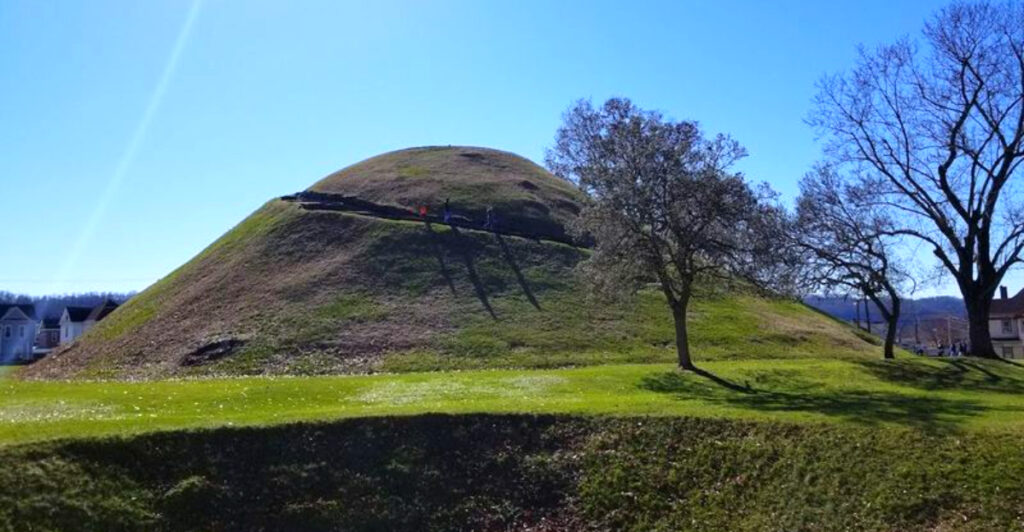
Long before European settlement, Indigenous cultures were building monumental structures across North America. In Moundsville, West Virginia, one of the most impressive examples still stands today: a massive Adena burial mound that rises 62 feet above the surrounding landscape and dates back more than 2,000 years.
What makes the site so fascinating is what it reveals about the people who built it. Along with the towering earthwork, visitors can explore a museum featuring archaeological discoveries, artifacts, and insights into the engineering skills and traditions of one of the region’s earliest cultures.
It is a landmark that offers a deeper look at a chapter of American history many people never learn about.
Where the Mound Stands: Address, Location, and First Impressions
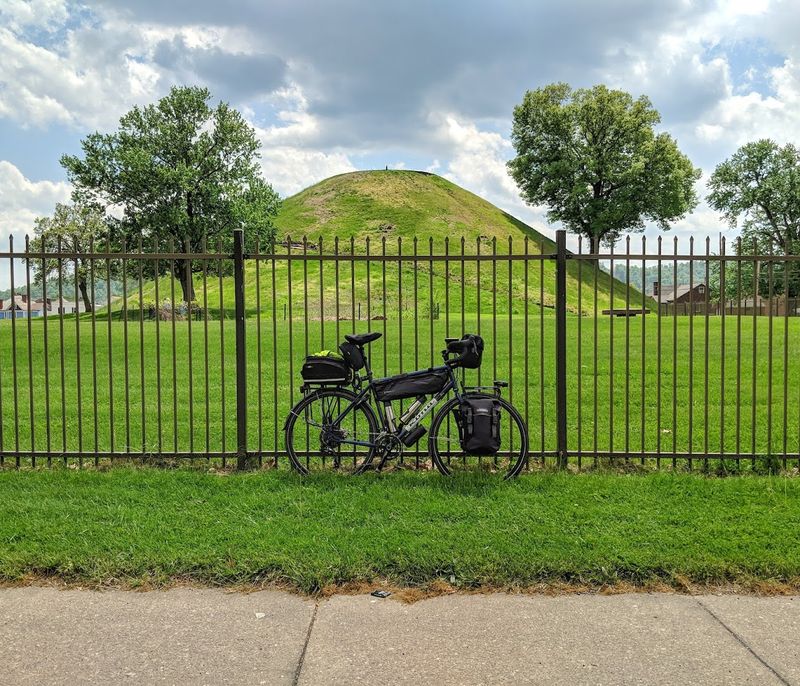
The first thing that hits you when you arrive at 801 Jefferson Ave, Moundsville, WV 26041, is the sheer physical presence of this mound. It does not look like a natural hill.
It looks deliberate, symmetrical, and ancient in a way that is hard to put into words.
Moundsville sits in the northern panhandle of West Virginia, right along the Ohio River, about 12 miles south of Wheeling. The Grave Creek Mound Archaeological Complex occupies a prominent spot in the heart of town, making it impossible to miss from the main road.
The site is open Tuesday through Saturday from 9 AM to 4:30 PM, and admission to the museum is free. You can reach the site by phone at 304-843-4128 or visit wvculture.org for more information.
The parking area is easy to navigate, and the grounds are well maintained, giving the whole place a welcoming, accessible feel from the moment you arrive.
The Adena People: Who Actually Built This Enormous Earthwork
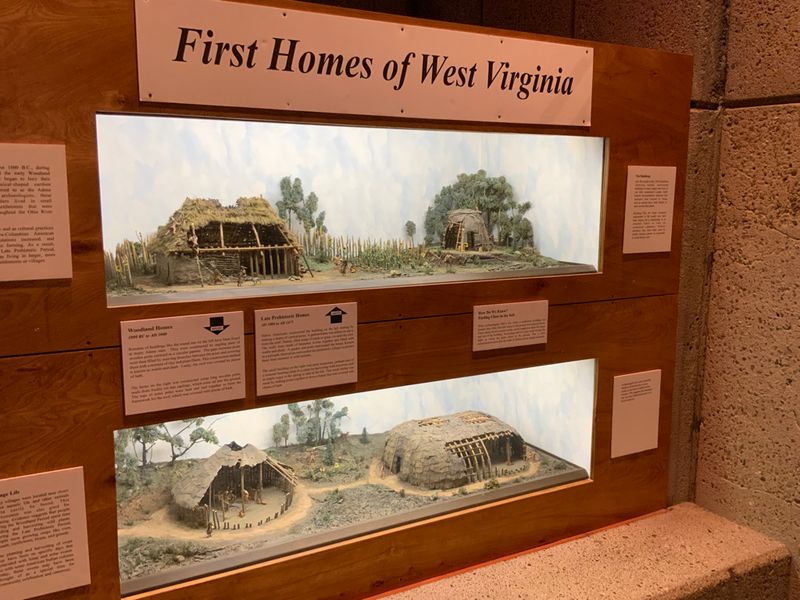
Long before European settlers had any idea this land existed, the Adena culture was thriving across the Ohio River Valley. These Early Woodland period Native Americans were not wandering nomads.
They built permanent ceremonial sites, maintained complex social structures, and practiced elaborate burial rituals that reflected deep spiritual beliefs.
The Adena culture flourished roughly between 1000 B.C. and 200 A.D., and Grave Creek Mound stands as one of their most ambitious achievements. Archaeologists believe construction happened in stages over many generations, with the mound growing taller and wider as successive burials were added over time.
Two burial vaults were discovered inside the mound, and the artifacts found within them suggest that the individuals buried here held positions of high social status. Copper bracelets, shell beads, and engraved tablets were among the objects recovered, painting a picture of a culture far more sophisticated than early European settlers ever gave them credit for.
The Numbers Behind the Mound That Will Make Your Jaw Drop
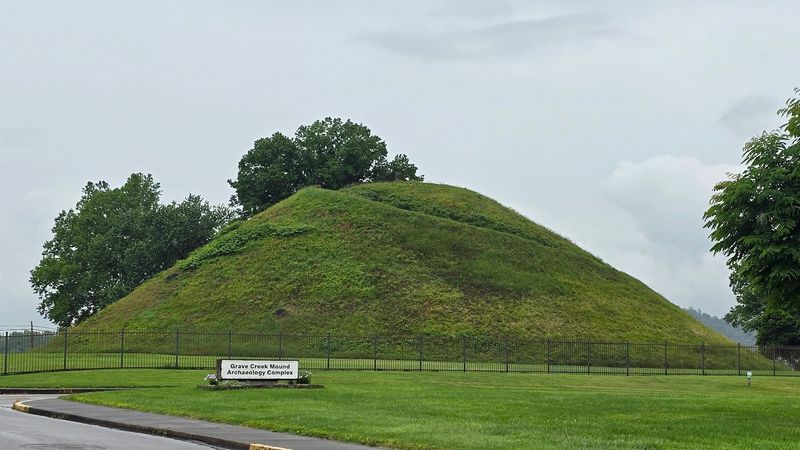
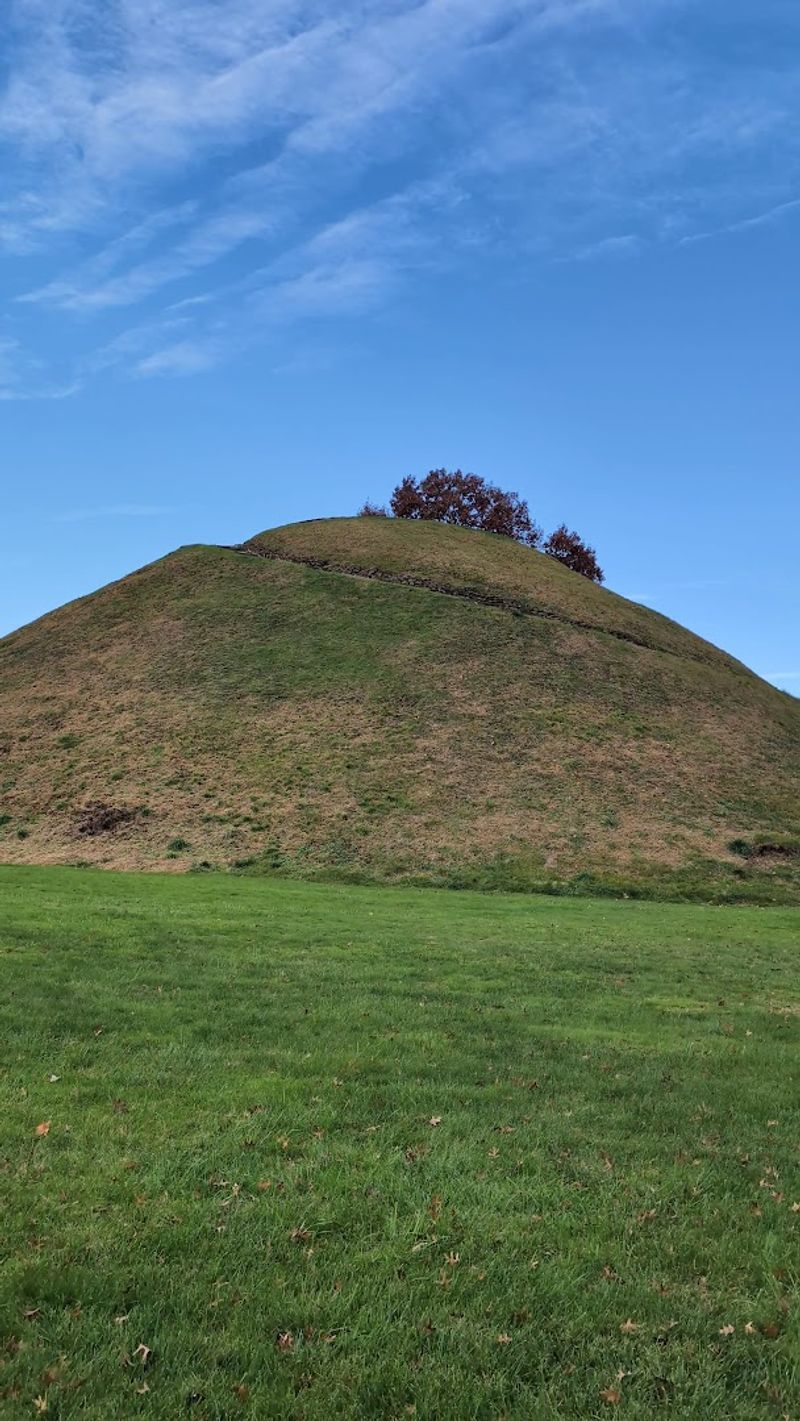
Some historical facts feel abstract until you put them in physical terms. Grave Creek Mound currently stands 62 feet tall and measures 240 feet across at its base.
When first documented in 1838, it was even larger, measuring 69 feet high and nearly 295 feet in diameter before centuries of erosion and human interference took their toll.
Archaeologists estimate that constructing this mound required moving somewhere between 57,000 and 60,000 tons of earth. That translates to roughly three million individual basket-loads of soil, all carried by hand with no machinery, no metal tools, and no draft animals.
A moat once encircled the entire structure, running 910 feet long, 40 feet wide, and four to five feet deep, with at least one passageway crossing it. That moat was discovered during excavations in the 1970s, and its existence suggests the site was far more architecturally complex than its simple outward appearance implies.
The scale of this project, by any measure, is extraordinary.
Climbing to the Top: What the View From Up There Actually Feels Like
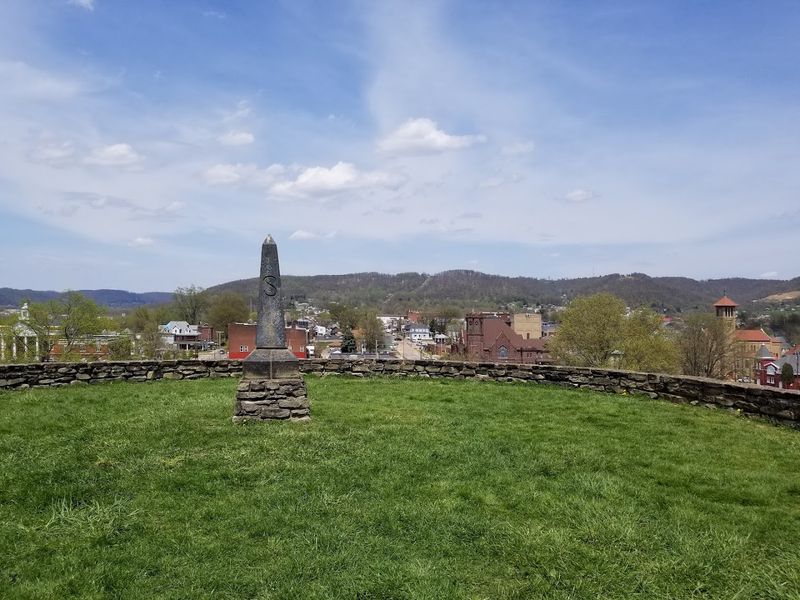
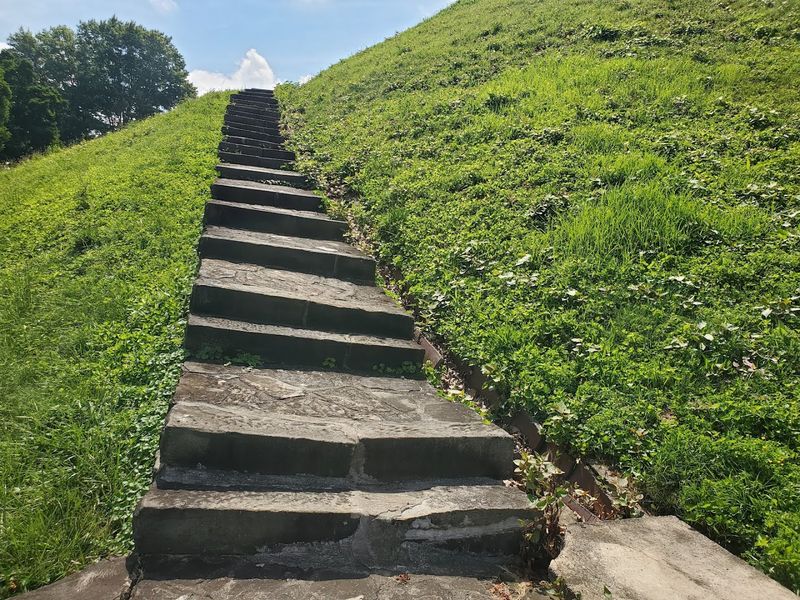
The stone steps carved into the side of the mound are not a casual stroll. They are steep, uneven in places, and require a bit of physical effort, especially on a warm day.
But every step is worth it, and the payoff at the summit is genuinely rewarding.
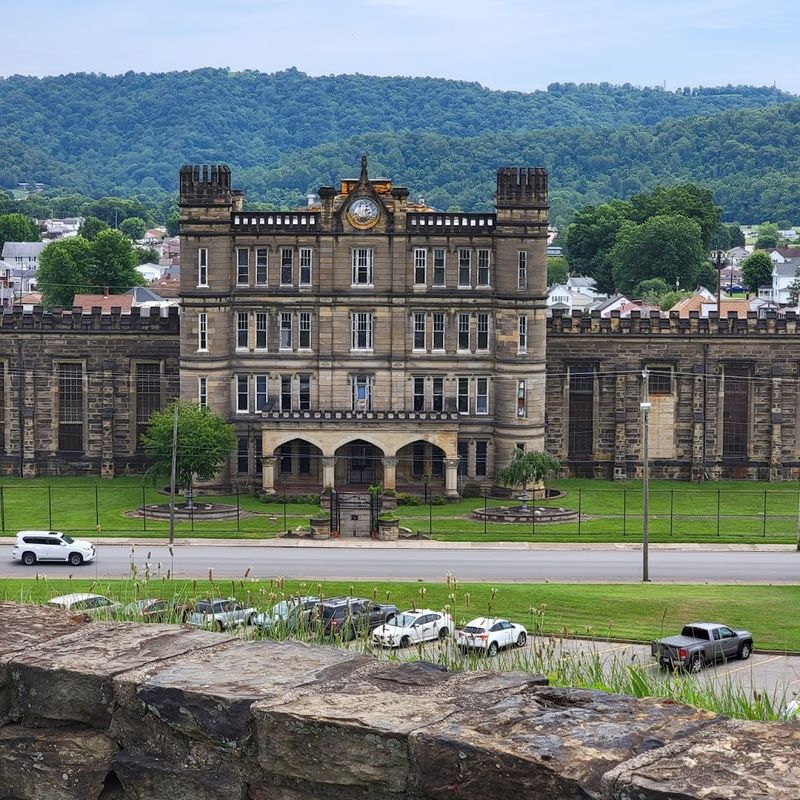
From the top, you get a sweeping view of downtown Moundsville, the Ohio River valley in the distance, and directly across the street, the imposing Gothic facade of the former West Virginia State Penitentiary. The contrast between the ancient mound and the 19th-century prison creates a visual that feels almost cinematic.
A low stone wall at the top gives you a place to catch your breath and take it all in. The steps have been repaired multiple times over the years and there are plans for future renovation, so the experience may improve even further down the road.
For now, the climb remains a memorable and worthwhile part of the visit.
A Turbulent Past: The Mound’s Wild and Unlikely History After Discovery
Not every ancient monument gets a dignified story. Grave Creek Mound was first noted by European settlers around 1770 when Joseph Tomlinson arrived in the area.
The first recorded excavation came in 1838, carried out by Abelard Tomlinson and Thomas Biggs, who dug into the mound looking for artifacts and found two burial chambers.
What followed was a series of indignities that would make any archaeologist wince. The mound was turned into a short-lived curiosity museum, then a failed entertainment venue, and at various points even had a dance floor installed on its summit.
A massive prison was later constructed right next door, and the surrounding landscape that once included hundreds of smaller mounds was almost entirely wiped out by development.
By the time serious preservation efforts began, only this single mound remained from what was once a much larger ceremonial landscape. The U.S. government designated it a National Historic Landmark in 1964, finally giving it the protection it had deserved for centuries.
Inside the Delf Norona Museum: More Than Just a Gift Shop and Plaques
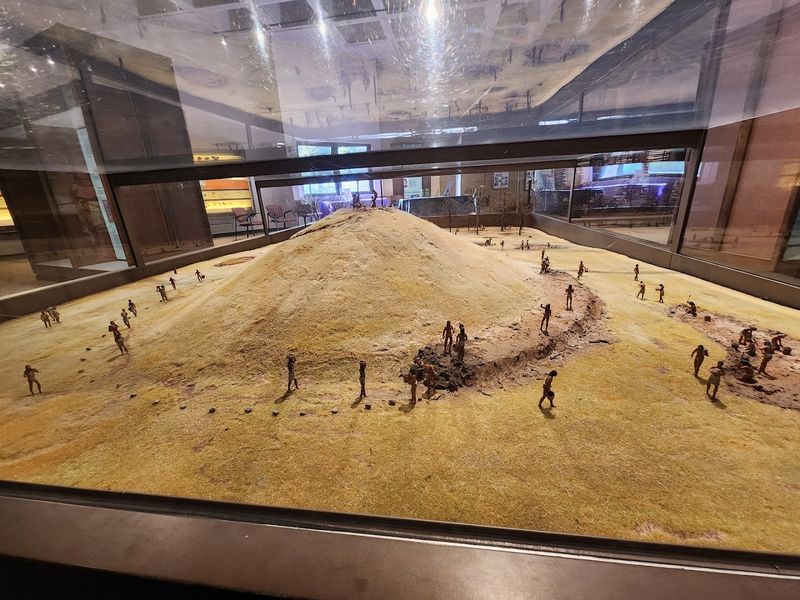
Many people arrive expecting a small roadside exhibit and leave genuinely surprised by how much the museum contains. The Delf Norona Museum, which sits at the base of the mound and is free to enter, covers far more ground than the mound’s origin story alone.
Exhibits walk visitors through the archaeology of the Adena culture, the history of the Ohio River valley, and the story of Moundsville itself as a community. Rare artifacts recovered from excavations, including engraved tablets, copper ornaments, and shell beads, are displayed alongside detailed interpretive panels that explain their significance without requiring any prior knowledge of archaeology.
There are also exhibits about local industries, including the Marble King glass factory and regional stoneware producers, which adds an unexpected layer of depth to the experience. The museum feels bigger on the inside than its exterior suggests, and the staff members are knowledgeable, enthusiastic, and genuinely happy to point you toward things you might otherwise miss.
The Artifacts That Survived: What Was Found Inside the Burial Vaults
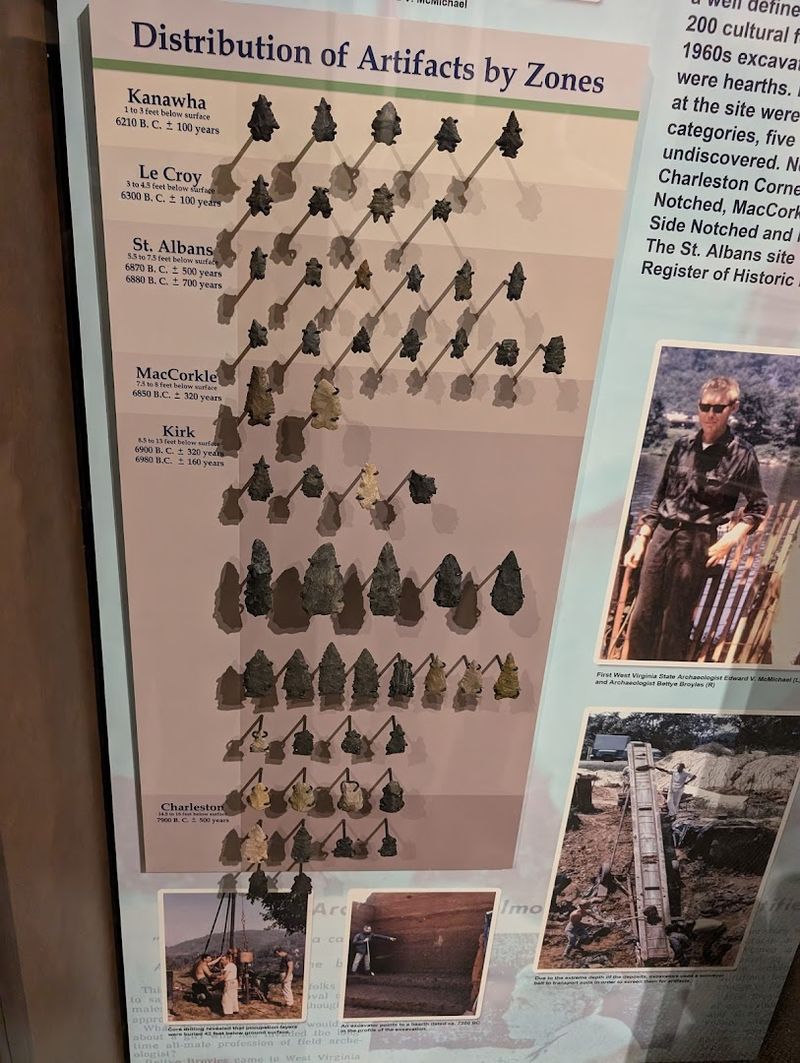
Two burial vaults were found inside Grave Creek Mound, and the objects recovered from them tell a story about wealth, ceremony, and social hierarchy within the Adena world. The individuals interred here were not ordinary community members.
The quality and quantity of goods buried with them suggest they held significant status.
Among the recovered items were copper bracelets, shell beads, mica ornaments, and engraved stone tablets. One tablet in particular, known as the Grave Creek Tablet, became famous and controversial after its discovery in 1838.
Some researchers claimed the inscriptions on it represented an ancient written language, sparking decades of debate that eventually concluded the tablet was likely a 19th-century forgery.
Despite the tablet controversy, the genuine artifacts from the mound remain fascinating and are some of the most important Adena-era objects known to exist. Seeing them in person, displayed in context with clear explanations, makes the ancient world they came from feel surprisingly immediate and real.
The Mysterious Moat That Surrounded the Entire Mound
Most casual visitors focus entirely on the mound itself and never think about what surrounded it. Excavations conducted in the 1970s revealed something that completely changed how archaeologists understood the site: a massive moat had once encircled the entire mound.
That moat measured 910 feet in length, 40 feet in width, and four to five feet in depth. At least one passageway crossed it, suggesting controlled access to the mound was intentional and meaningful.
The moat likely served both practical and ceremonial purposes, defining the sacred boundary of the site and separating the burial monument from the everyday world outside it.
This discovery transformed Grave Creek Mound from a standalone earthwork into a more complex, planned ceremonial landscape. The fact that a feature this large remained hidden for so long speaks to how much of the original site was altered or buried over the centuries of development that followed.
There may still be more to uncover beneath the surface.
The Neighbor Across the Street: The Former West Virginia State Penitentiary
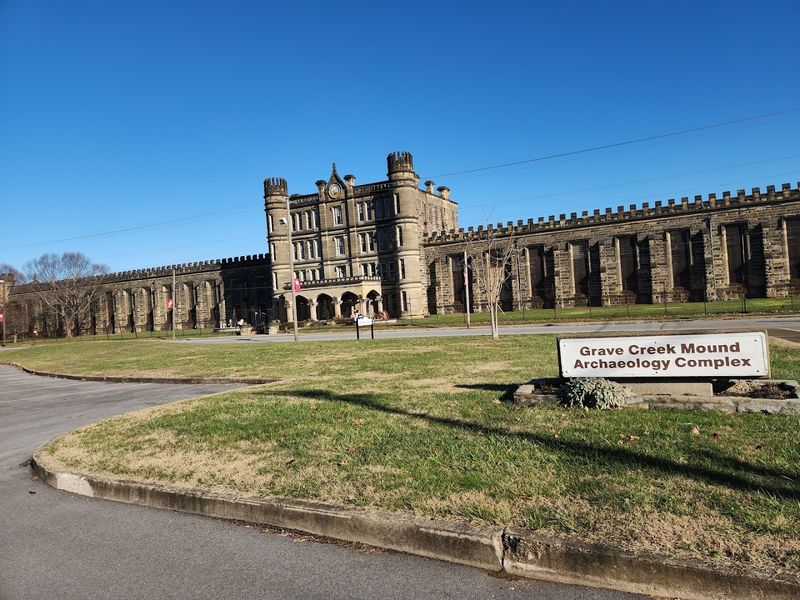
Few historic sites in America have a neighbor quite like this one. Directly across Jefferson Avenue from the mound stands the former West Virginia State Penitentiary, a Gothic Revival stone structure that operated from 1876 to 1995 and now offers tours of its own.
The contrast between the two sites is striking. One is a 2,000-year-old monument to ceremonial life and community.
The other is a 19th-century institution with a dark and complicated history. Together, they make Moundsville one of the more unusual history destinations in the eastern United States.
The museum at the mound site actually addresses the relationship between these two neighbors, explaining how the prison’s construction affected the surrounding archaeological landscape. Many visitors choose to spend a half day or more in this single block of Jefferson Avenue, moving between the mound, the museum, and the penitentiary grounds.
It is a pairing that feels almost too strange to be real, yet here it all is.
Practical Tips for Making the Most of Your Visit
A few practical details can make the difference between a rushed stop and a genuinely satisfying visit. The site is open Tuesday through Saturday from 9 AM to 4:30 PM, and it is closed on Sundays and Mondays, so plan your trip accordingly.
Admission to the museum is completely free, which makes this one of the best-value history stops in the region.
The trail to the top of the mound closes during snowy or icy conditions for safety reasons, so a warmer-weather visit gives you the best chance of making the full climb. Comfortable shoes are a practical necessity since the stone steps are uneven and can be tiring.
Children with energy to burn will actually enjoy the climb, and the view from the top keeps everyone entertained.
The gift shop carries a solid selection of books, locally made glass items, gemstones, honey, and other regional products at reasonable prices. Parking is free, the staff is approachable, and the whole experience typically takes between one and two hours.
Why This Site Still Matters: A Living Piece of American Prehistory
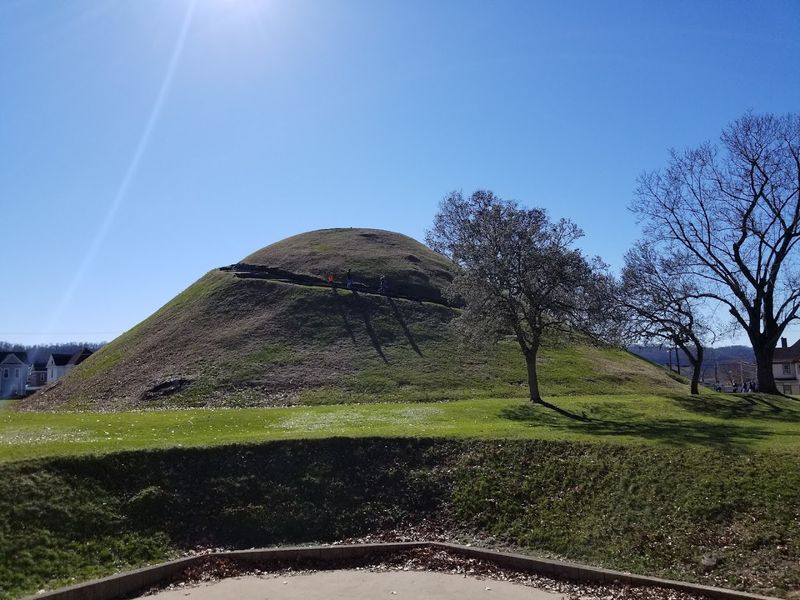
There is something quietly powerful about standing at the base of a structure that has outlasted empires, survived neglect, and endured centuries of misuse, and still commands attention. Grave Creek Mound is not a reconstruction or a replica.
Every inch of it is original, shaped by human hands more than two thousand years ago.
Its designation as a National Historic Landmark in 1964 was a turning point, but the real preservation work happens through education. The free museum, the interpretive exhibits, and the knowledgeable staff all serve to connect modern visitors to a culture that left no written records but built something that speaks clearly across millennia.
Annual events like Archaeology Day bring additional programming and community engagement to the site, keeping it active and relevant beyond passive observation. For anyone who cares about American history in its fullest and oldest sense, this site is not optional.
It is essential, and it makes a compelling case that West Virginia holds far more history than most people ever expect.
Share this story