Some structures do more than get you from point A to point B. Bridges can be jaw-dropping works of art, feats of engineering that seem almost impossible, and windows into history that stretch back hundreds of years.
From foggy harbors in California to misty mountain valleys in China, the world’s most spectacular bridges are worth traveling thousands of miles to see. Get ready to add a few new destinations to your bucket list.
Golden Gate Bridge — San Francisco, California, United States
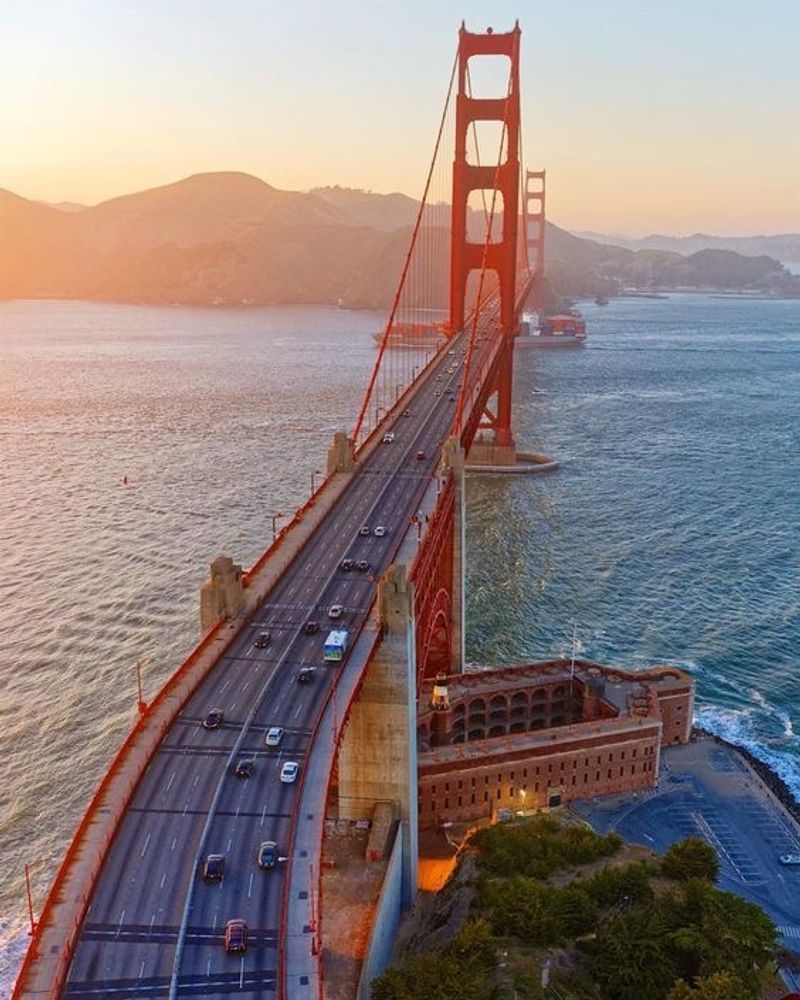
Few structures on Earth have been photographed more times than the Golden Gate Bridge, yet somehow it still manages to take your breath away in person. Completed in 1937, this suspension bridge stretches 1.7 miles across the mouth of San Francisco Bay, connecting the city to Marin County.
Its signature International Orange color was actually chosen to keep it visible through the thick coastal fog.
The bridge towers rise 746 feet above the water, taller than most skyscrapers of its era. Walking or cycling across it is an experience unlike any other, with sweeping views of the bay, Alcatraz Island, and the San Francisco skyline all competing for your attention.
Wind can be fierce up there, so bring a jacket.
Engineers once estimated it would take 35 years to build and most people doubted it could be done at all. It was finished ahead of schedule.
Today, roughly 10 million visitors come to see it every year, and on clear days, you can spot it from miles away. The Golden Gate is not just a bridge; it is a symbol of human ambition at its most spectacular.
Tower Bridge — London, England
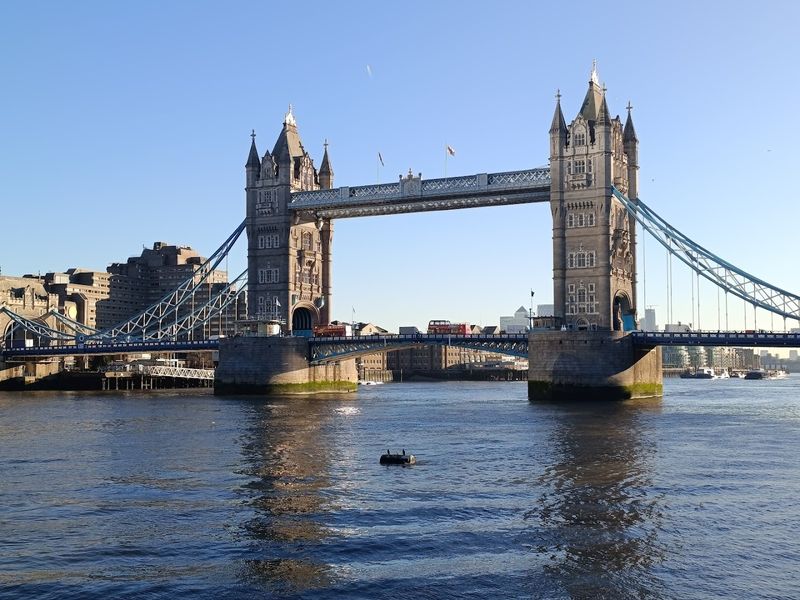
Ask anyone to picture London and Tower Bridge will almost certainly appear in their mind within seconds. Built between 1886 and 1894, this iconic Victorian structure spans the River Thames near the Tower of London, and its twin Gothic towers have become one of Britain’s most recognized images worldwide.
Interestingly, it is often confused with the much simpler London Bridge nearby.
What makes Tower Bridge truly special is that it is also a bascule bridge, meaning its two road sections can be raised to allow tall ships to pass through. This still happens around 800 times a year.
Watching those massive sections lift is genuinely exciting, even for locals who have seen it dozens of times.
Visitors can walk across a glass-floored walkway suspended between the two towers, offering a stomach-dropping view of the Thames and the city below. The Tower Bridge Exhibition inside lets you explore the Victorian engine rooms that once powered the lifting mechanism.
Seeing the bridge lit up at night, reflected in the dark water of the Thames, is a moment that stays with you long after you have left London.
Millau Viaduct — France
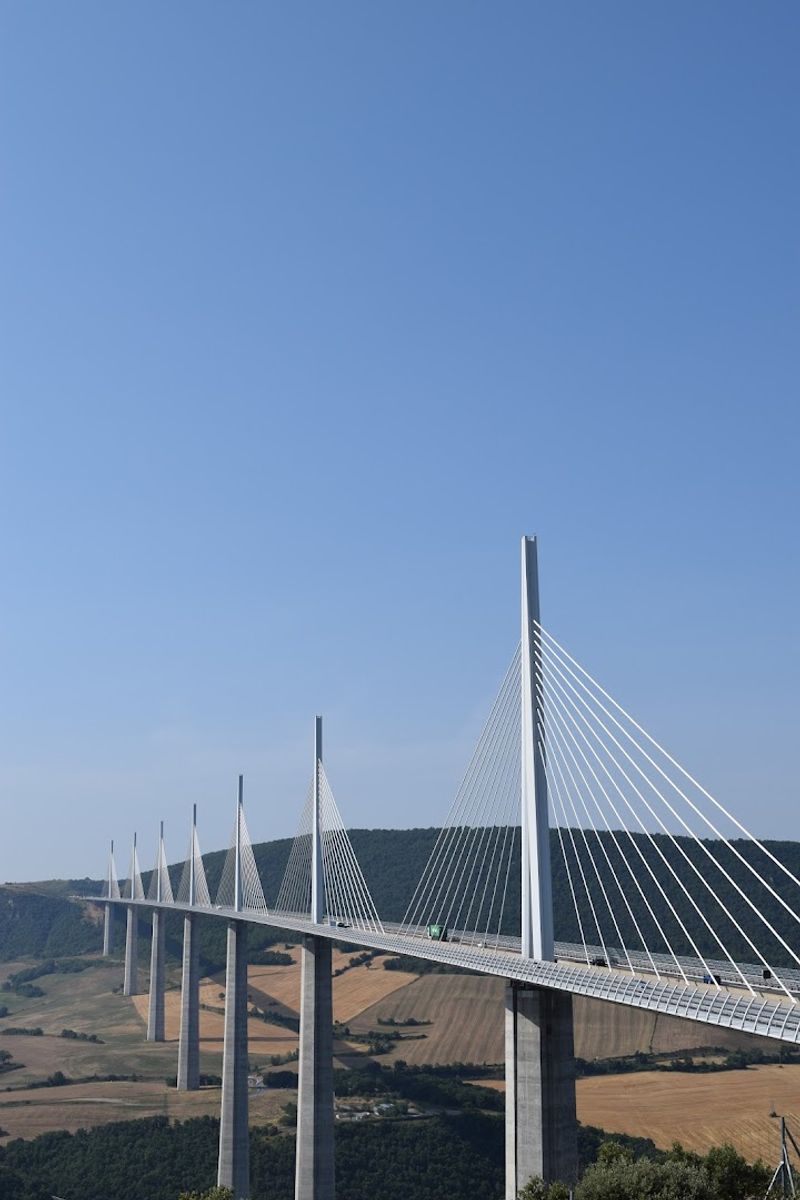
Driving across the Millau Viaduct feels a little like flying. This extraordinary cable-stayed bridge crosses the Tarn Valley in southern France at such a height that on misty mornings, its elegant pylons appear to pierce through clouds floating below the road deck.
Designed by architect Norman Foster alongside engineer Michel Virlogeux, it opened in December 2004 and immediately became a landmark of modern engineering.
At its tallest point, the Millau Viaduct stands 1,125 feet above the valley floor, making it taller than the Eiffel Tower. Its longest span stretches 1,122 feet between supports.
The designers were determined it should be beautiful as well as functional, and the result is a structure that looks more like sculpture than infrastructure.
Before the viaduct opened, the town of Millau suffered massive traffic jams every summer as tourists poured into southern France. The bridge cut travel times dramatically and transformed the region.
Visitors now come specifically to see the viaduct from viewpoints in the valley below, where the full scale of the structure becomes truly apparent. Seeing those slender white pylons disappearing into the clouds is something photographs simply cannot prepare you for.
Akashi Kaikyo Bridge — Japan
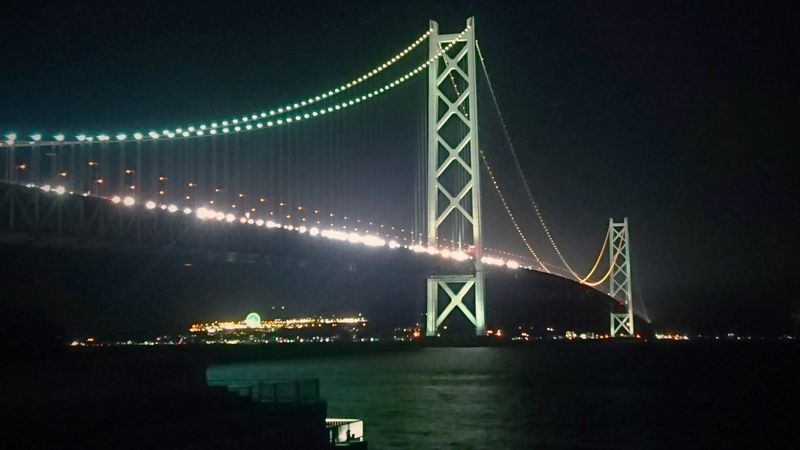
Numbers alone barely capture how extraordinary the Akashi Kaikyo Bridge really is. Stretching across the Akashi Strait between Kobe and Awaji Island in Japan, its central span measures 6,532 feet, making it the longest suspension bridge span on the planet.
Construction took ten years and required enough wire to circle the Earth seven times over.
The bridge was designed to withstand earthquakes measuring up to magnitude 8.5 and winds of up to 180 miles per hour. Those are not just theoretical numbers for Japan, a country that experiences regular seismic activity.
During its construction, a major earthquake struck the region in 1995 and actually shifted one of the towers slightly, requiring engineers to adjust their plans mid-project.
At night, the Akashi Kaikyo Bridge transforms into something magical. Its towers and cables are lit with programmable LED lights that shift through different color schemes depending on seasons and celebrations.
The effect from the shoreline is genuinely stunning. A visit to the Maiko Marine Promenade nearby gives excellent views of the full span, and the bridge’s own exhibition center tells the fascinating story of how this engineering giant came to exist.
It is a structure that rewards curiosity at every level.
Charles Bridge — Prague, Czech Republic
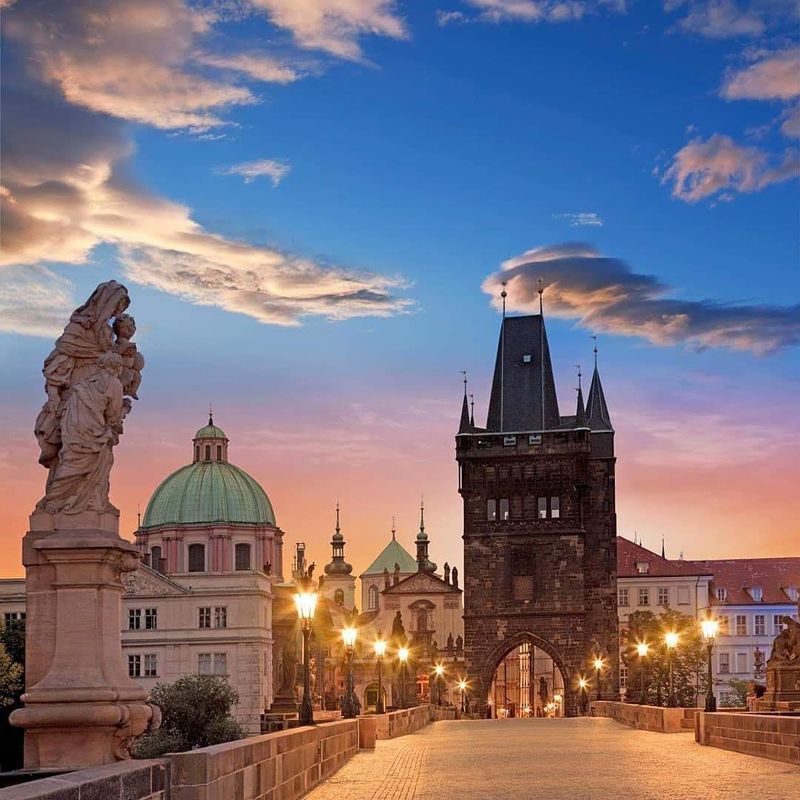
Step onto Charles Bridge at dawn and you will understand why Prague has inspired artists, writers, and musicians for centuries. Built in 1357 under the orders of King Charles IV, this medieval stone bridge crosses the Vltava River and connects Prague’s Old Town to the Lesser Town.
It served as the city’s main crossing for over 400 years and remains one of Europe’s most atmospheric walkways.
Lining both sides of the bridge are 30 Baroque statues of saints, added between the 17th and 18th centuries. Each one tells a story from Czech religious history, and locals say touching the statue of St. John of Nepomuk brings good luck.
The bronze plaque at his feet has been polished smooth by millions of hopeful hands over the years.
By midday, the bridge fills with tourists, street musicians, portrait artists, and vendors selling handmade crafts. But arrive before sunrise and you may have it nearly to yourself, with just the river mist and the distant silhouette of Prague Castle for company.
Few experiences in Europe feel quite as timeless as standing on Charles Bridge as the city slowly wakes around you. It genuinely feels like stepping into another century.
Sydney Harbour Bridge — Sydney, Australia
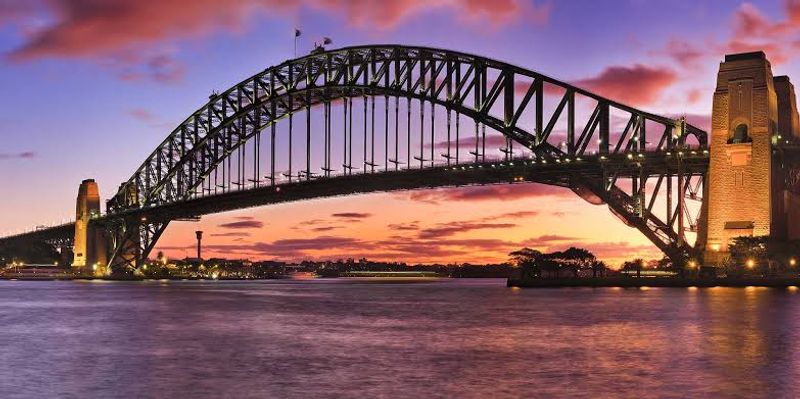
Locals call it the Coathanger, and once you see it, the nickname makes perfect sense. Sydney Harbour Bridge stretches its enormous steel arch across one of the world’s most beautiful natural harbors, connecting the Sydney central business district to the North Shore.
Opened in 1932 after nine years of construction, it was at that time the widest long-span bridge ever built on Earth.
For the truly adventurous, BridgeClimb Sydney offers a guided climb to the very top of the arch, 440 feet above the harbor. Groups are harnessed in and led up metal ladders to a summit that delivers one of Australia’s most breathtaking panoramic views.
On a clear day you can see the Blue Mountains in the distance, and the Opera House sits like a gleaming jewel directly below.
The bridge carries eight lanes of traffic, two railway lines, a cycling path, and a pedestrian walkway simultaneously. Over 160,000 vehicles cross it every single day.
On New Year’s Eve, Sydney stages one of the world’s most celebrated fireworks displays, with the bridge serving as the dramatic centerpiece. Watching those fireworks cascade from the arch while the harbor glitters below is a spectacle that belongs on every traveler’s wish list.
Ponte Vecchio — Florence, Italy
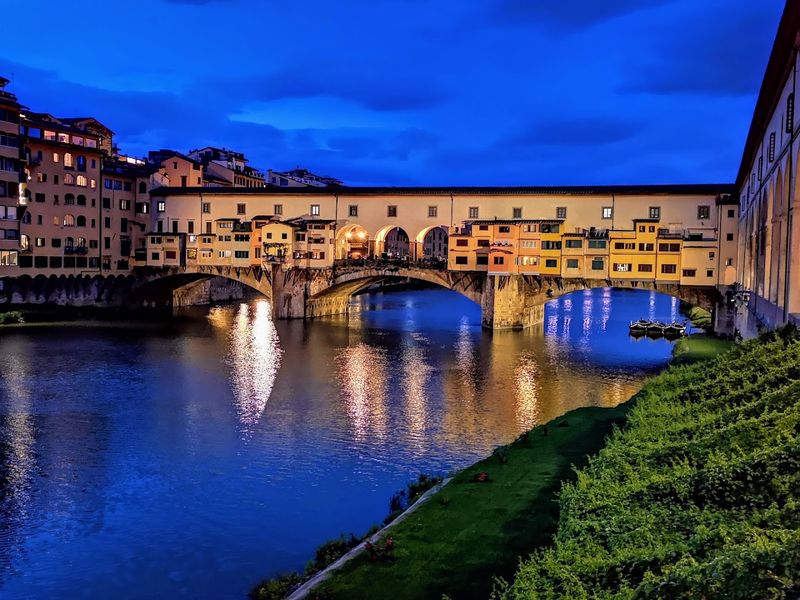
Ponte Vecchio is the only bridge in Florence to have survived World War II intact, and the story behind that survival is remarkable. As German forces retreated through Italy in 1944, orders came to destroy the city’s bridges.
Ponte Vecchio was reportedly spared on direct orders from Adolf Hitler himself, who considered it too historically significant to demolish. Whether that story is entirely accurate is debated by historians, but the bridge still stands.
Built in 1345 over the Arno River, Ponte Vecchio is famous for the shops that line both sides of its span. Originally these were butcher stalls, but a Medici ruler eventually evicted the butchers and replaced them with goldsmiths and jewelers, who remain there to this day.
The small shops seem to hang directly off the bridge’s edges, creating one of the most distinctive architectural sights in all of Italy.
Running above the shops is the Vasari Corridor, a private elevated passageway built for the Medici family so they could move between their palace and the government offices without mixing with the public. Walking across Ponte Vecchio surrounded by glittering jewelry displays and the smell of the river below is an experience that has barely changed in centuries.
Brooklyn Bridge — New York City, New York, United States
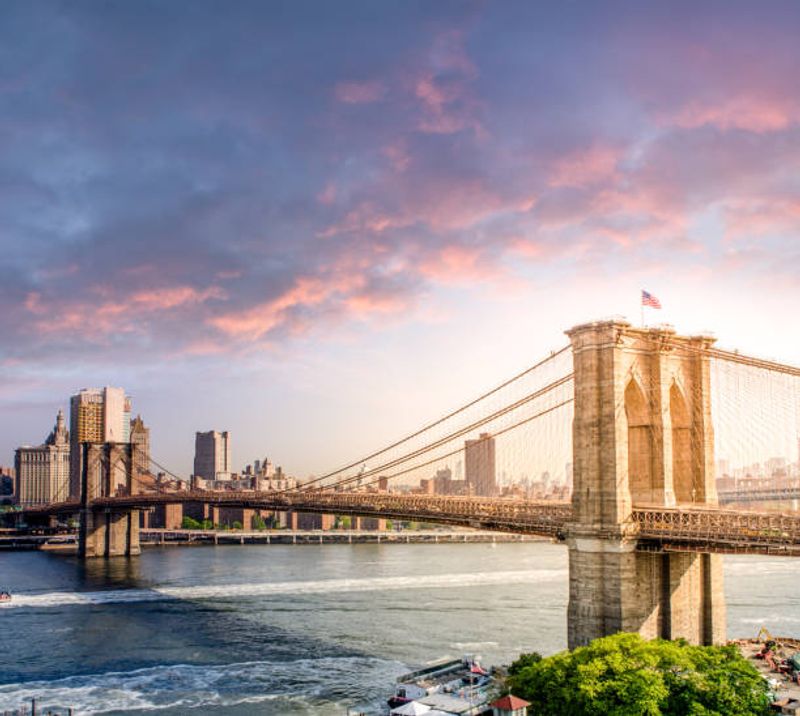
When the Brooklyn Bridge opened on May 24, 1883, New Yorkers were so suspicious of its safety that showman P.T. Barnum marched 21 elephants across it to prove the structure could hold.
It held. The bridge went on to become one of the most celebrated engineering achievements of the 19th century and remains one of New York City’s most beloved landmarks over 140 years later.
Designed by John Roebling, who died from an injury sustained during the project’s early stages, the Brooklyn Bridge was completed by his son Washington and daughter-in-law Emily. Its Gothic stone towers were the tallest structures in the Western Hemisphere when construction began.
The web of steel cables radiating from those towers gives the bridge a visual elegance that purely modern designs rarely match.
Walking across the Brooklyn Bridge is one of those New York City experiences that feels genuinely cinematic. The wooden pedestrian boardwalk runs above the traffic lanes, offering unobstructed views of the Manhattan skyline, the East River, and the Statue of Liberty on a clear day.
The journey from Brooklyn to Manhattan on foot takes about 30 minutes and rewards you with some of the most iconic urban views on Earth. Bring a camera and plenty of time.
Golden Bridge — Da Nang, Vietnam
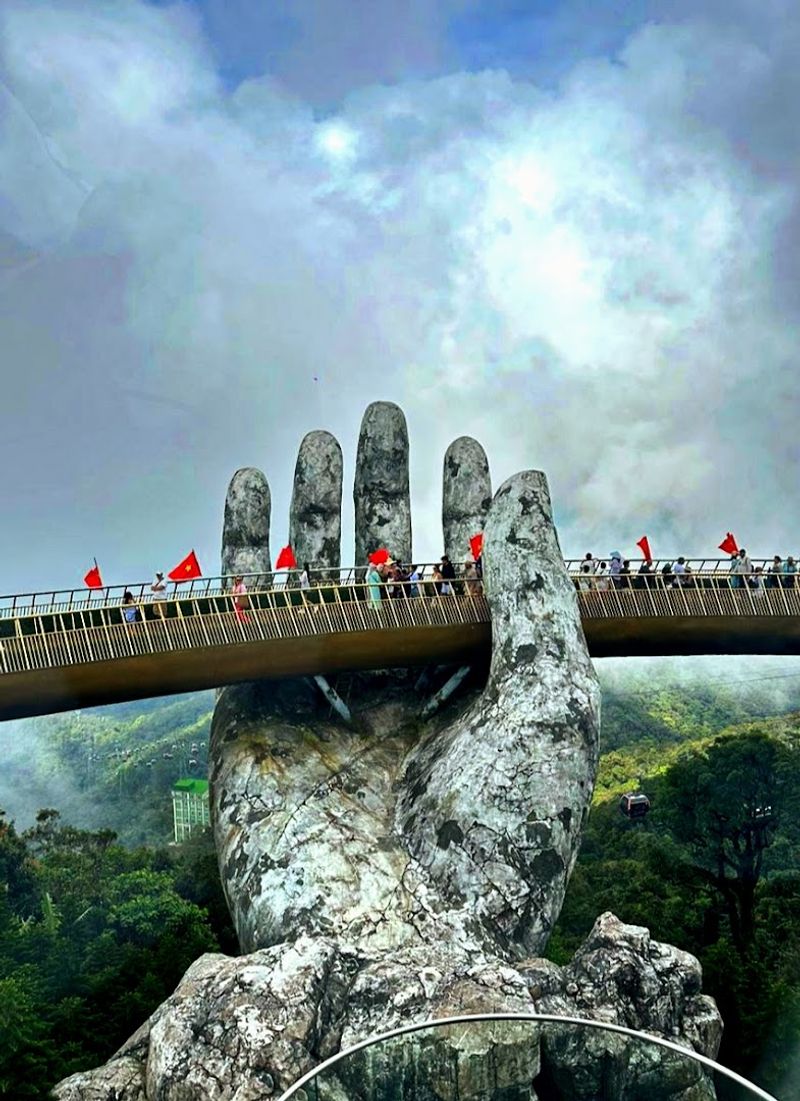
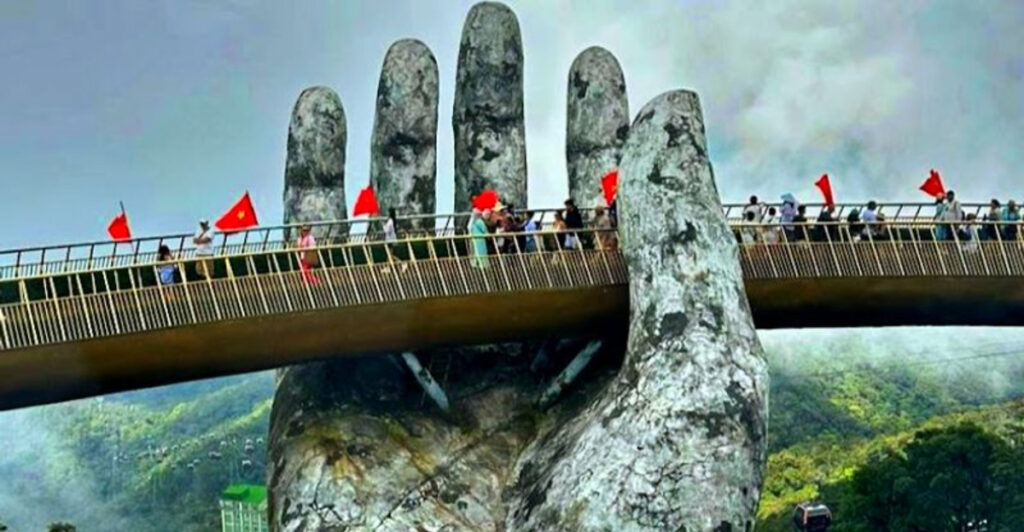
Two giant stone hands appear to rise from the mountainside and cradle a gleaming golden walkway above the clouds. That is the Golden Bridge in Vietnam’s Ba Na Hills, and when photographs of it spread across the internet in 2018, the world stopped scrolling.
Opened that same year near Da Nang, this 490-foot-long pedestrian bridge was designed by the Vietnamese firm TA Landscape Architecture and became an overnight global sensation.
Perched at an elevation of around 4,600 feet in the Truong Son Mountains, the bridge offers extraordinary views of forests, distant peaks, and the valleys below. The stone hands are constructed to look ancient and weathered, as though some mythological giant has held this golden path steady for thousands of years.
The effect is genuinely surreal, especially when morning fog rolls through and the bridge seems to float in midair.
Reaching the Golden Bridge requires a cable car ride up the mountain, which is itself a spectacular journey. The Ba Na Hills resort area surrounding it includes French village architecture, gardens, and amusement attractions.
Visiting early in the morning gives you the best chance of seeing the bridge above the clouds before day-trippers arrive in large numbers. It is the kind of place that makes you question whether you have wandered into a dream.
Chapel Bridge — Lucerne, Switzerland
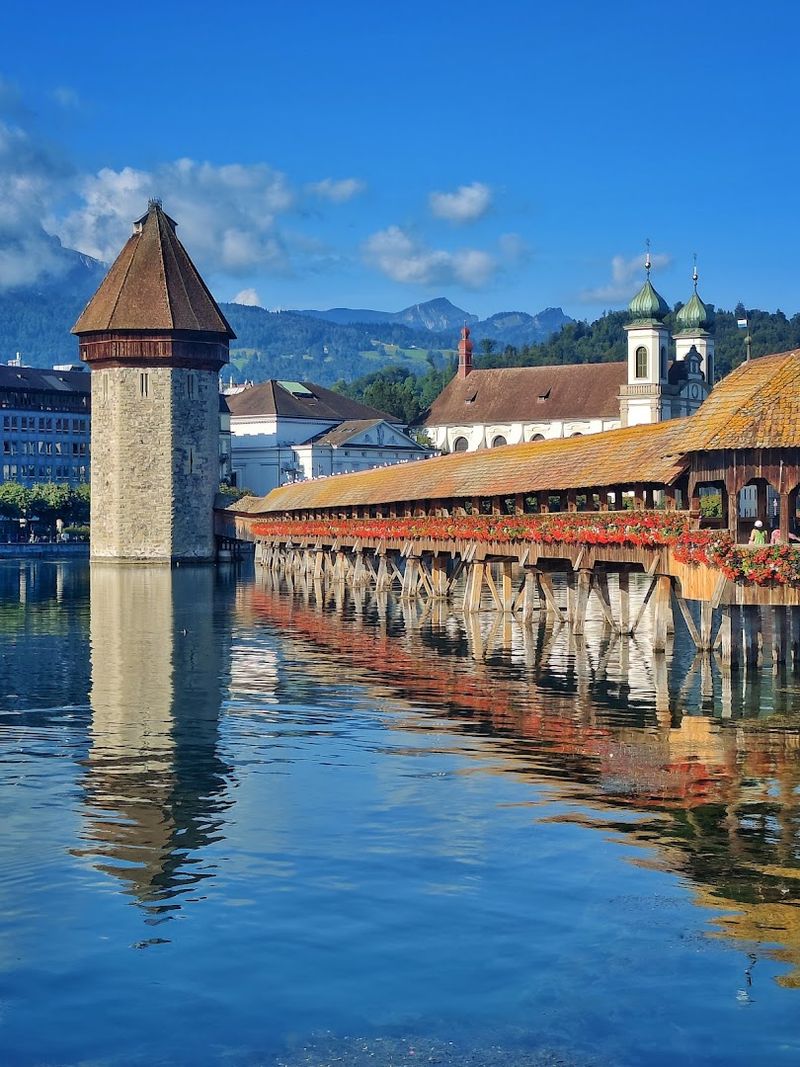
Lucerne’s Chapel Bridge is the oldest surviving covered wooden bridge in Europe, and it looks every bit the part. Stretching diagonally across the Reuss River since 1333, this 558-foot-long covered walkway connects the old town to the newer parts of the city in a way that feels more like walking through a gallery than crossing a river.
Inside the covered roof hang 17th-century triangular paintings depicting scenes from Lucerne’s history and the lives of its patron saints.
The Water Tower standing beside the bridge is even older, dating back to around 1300. It has served at various times as a prison, a torture chamber, and a treasury.
Today it stands as one of Switzerland’s most photographed structures, its reflection shimmering in the green waters of the Reuss.
A fire in 1993 destroyed a large section of the bridge and many of its historic paintings. Restoration work rebuilt the damaged portions using traditional methods, and the bridge reopened within months.
Flower boxes now line the railings and bloom colorfully throughout spring and summer, adding to the storybook charm of the scene. Visiting Lucerne without crossing Chapel Bridge is a bit like visiting Paris without seeing the Eiffel Tower.
It simply is not done.
Rialto Bridge — Venice, Italy
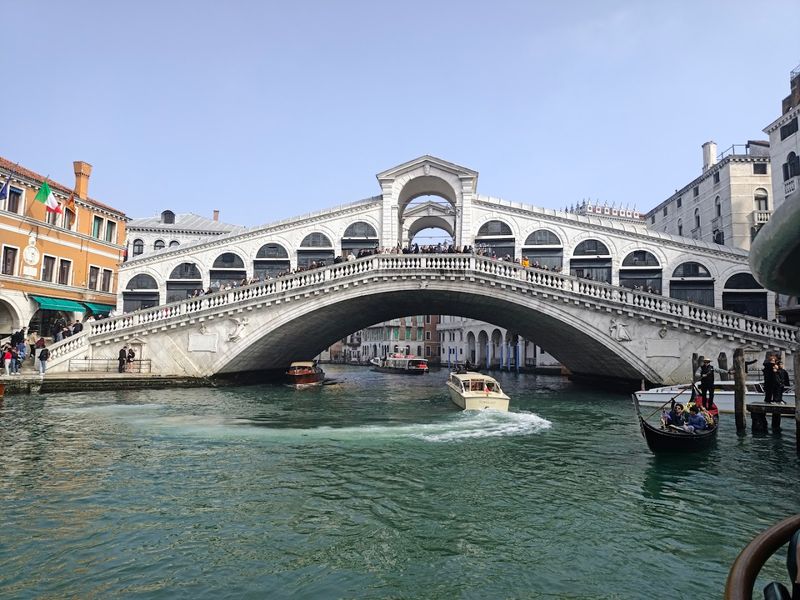
For nearly 300 years, the Rialto Bridge was the only way to cross Venice’s Grand Canal on foot, and the city’s merchants, traders, and citizens all funneled across its single stone arch. Completed in 1591 after much debate among Venetian officials, it replaced a series of wooden drawbridges that kept collapsing.
The designer, Antonio da Ponte, won the commission over proposals submitted by Michelangelo and Palladio, which is either a remarkable achievement or a great trivia question depending on your perspective.
The bridge is lined with two rows of shops running parallel to each other, with a central walkway between them. Jewelry, leather goods, and Venetian souvenirs fill the stalls, and browsing them while gondolas drift through the canal below is a pleasantly chaotic experience.
The views from the top of the arch in both directions along the Grand Canal are genuinely spectacular.
Early morning is the best time to visit if you want photographs without crowds. As the sun rises over the canal and the water turns gold, the Rialto Bridge looks almost impossibly beautiful.
By mid-morning, tourist groups arrive in waves. The bridge itself is small enough to cross in under a minute, but most visitors linger far longer than that, and it is easy to understand why.
Pingtang Bridge — Guizhou, China
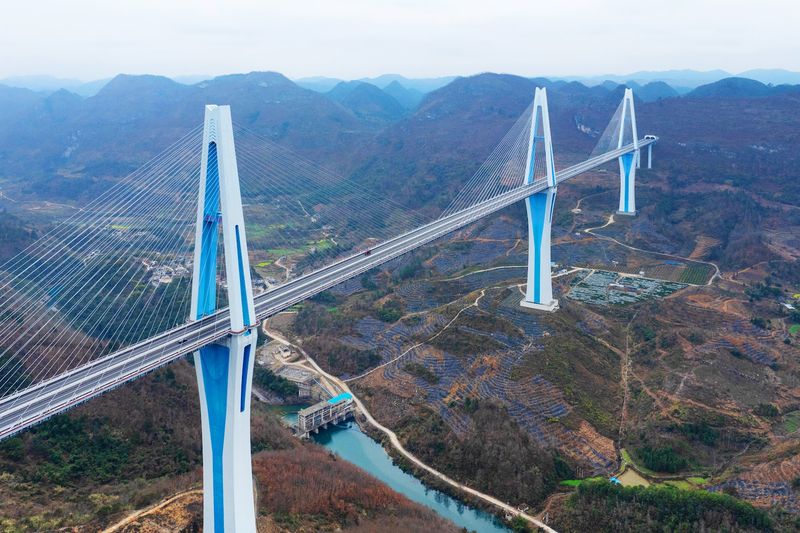
China has built more world-record bridges in the past two decades than any other country, and the Pingtang Bridge stands as one of its most impressive achievements. Opened in 2016 in Guizhou Province, this cable-stayed giant stretches 2,135 feet across a deep mountain valley, with its road deck sitting hundreds of feet above the gorge below.
The scale of the surrounding karst landscape makes even this enormous bridge look delicate by comparison.
Guizhou Province is often called China’s bridge museum because of the sheer concentration of extraordinary crossings built there. The rugged mountain terrain that once isolated communities for centuries has been transformed by these engineering projects, dramatically improving travel times and economic opportunities for local residents.
Pingtang Bridge played a significant role in that transformation.
A glass-floored observation platform near the bridge allows visitors to look straight down into the valley below, which is not for the faint-hearted. Bungee jumping operations have also been established at the site, drawing thrill-seekers from across China and beyond.
Viewing the bridge from the valley floor gives a better sense of its true scale, with the cable-stayed towers rising against a backdrop of forested peaks. The photography opportunities from multiple angles are extraordinary for anyone willing to explore the surrounding area on foot.
Great Belt Bridge — Denmark
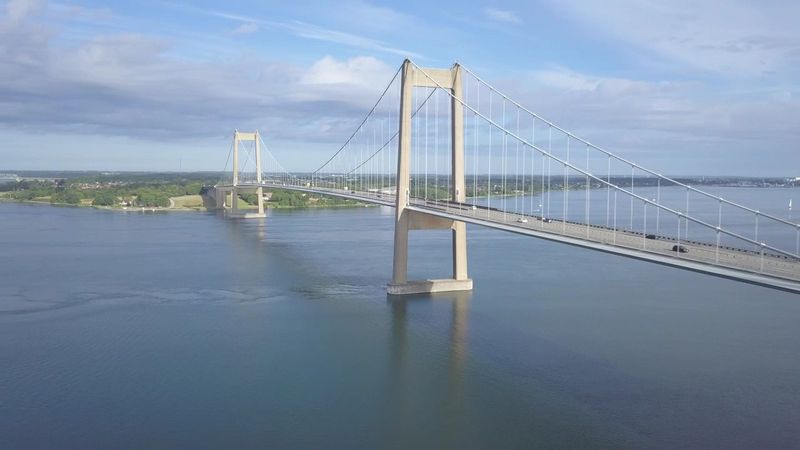
Before the Great Belt Bridge opened in 1998, the only way to travel between Denmark’s largest islands was by ferry. The crossing could take over an hour, and traffic jams at the ferry terminals were a regular frustration for Danish commuters and travelers.
The bridge changed everything almost overnight, cutting the crossing time to just 10 minutes and fundamentally reshaping how people move around the country.
The full Great Belt Fixed Link actually consists of two bridges and a tunnel working together. The eastern section carries rail traffic through a tunnel beneath the sea, while the western section carries road traffic across two bridges.
The suspension bridge portion rises 833 feet at its towers and has a main span of 5,328 feet, making it one of Europe’s longest suspension bridges. Its clean, modern lines look striking against the open Scandinavian sky.
Driving across the Great Belt Bridge on a clear day is a memorable experience, with wide views of the Baltic Sea stretching in both directions and cargo ships passing far below. The bridge also hosts an annual run called the Great Belt Bridge Run, when thousands of participants get to cross on foot, an opportunity not available during normal operations.
For a piece of infrastructure, it generates a remarkable amount of affection from the people who use it.
Chengyang Wind and Rain Bridge — Guangxi, China
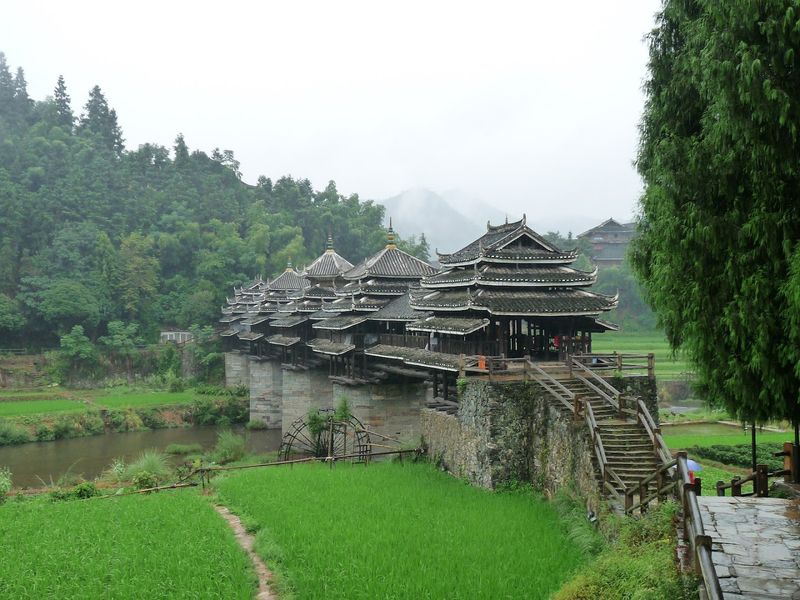
Built entirely without a single nail, the Chengyang Wind and Rain Bridge in Guangxi stands as one of the most extraordinary examples of traditional craftsmanship anywhere in Asia. Completed in 1916 by the Dong ethnic minority people, this 207-foot-long covered bridge spans the Linxi River and features five pavilion towers of varying heights, each decorated with intricate carved woodwork and upturned eaves.
The Dong people built it as a shelter from wind and rain, and also as a gathering place for the community.
The joinery technique used throughout the structure relies entirely on interlocking wooden pieces fitted together with extraordinary precision. No metal fasteners were used anywhere in the construction.
The result has stood for over a century, surviving floods, storms, and the pressures of time, which says everything you need to know about the skill of the builders who created it.
Visiting Chengyang means traveling to the Sanjiang Dong Autonomous County, a journey that takes you through some of Guangxi’s most scenic countryside. Rice terraces, traditional Dong villages, and forested hills surround the bridge on all sides.
Locals still use the bridge daily, and vendors sell snacks and crafts from within its covered walkway. Seeing this structure in its natural setting, still very much alive as part of the community, makes it far more moving than any museum exhibit ever could.
Duge Bridge — Guizhou and Yunnan, China
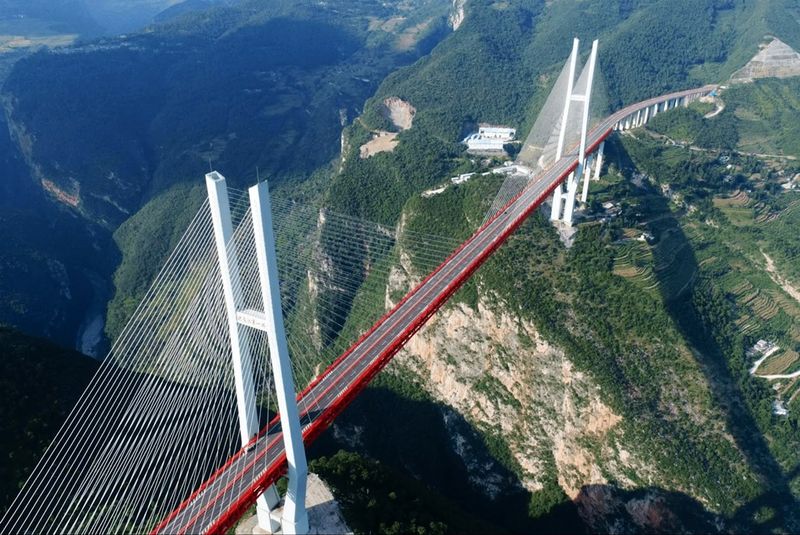
Standing on the Duge Bridge and looking down into the Beipan River Canyon below is the kind of experience that resets your understanding of just how high up a bridge can actually be. When it opened in 2016, the Duge Bridge claimed the title of the world’s highest bridge by deck height, with the road surface sitting a staggering 1,854 feet above the river.
That is nearly half a mile of empty air between you and the water.
The bridge spans the border between Guizhou and Yunnan provinces and carries a six-lane expressway across a canyon that would otherwise require an enormous detour through mountain roads. Its cable-stayed design allows the pylons to be positioned far back from the canyon edges, reducing the need for foundations in the unstable cliff faces.
Engineers working on this project faced conditions that would have made most construction projects impossible.
Viewing platforms have been built on both sides of the canyon, and the perspective from below looking up at the bridge against the sky is genuinely difficult to process. The canyon itself is wild and dramatic, with forested walls dropping sharply to the river.
Bungee jumping from the Duge Bridge has been offered to adventurous visitors, making it one of the most extreme drop locations on Earth. For most people, simply crossing it is more than enough of an adventure.
Share this story