France has a way of surprising even the most well-traveled people. Sure, everyone knows about the Eiffel Tower, but this country hides medieval fortresses, lavender-scented hillsides, prehistoric caves, and sun-baked Mediterranean coves that most visitors never even hear about.
Whether you love history, food, outdoor adventure, or just wandering through beautiful streets with a good pastry in hand, France delivers something extraordinary at every turn. Get ready to add some serious destinations to your travel bucket list.
Paris
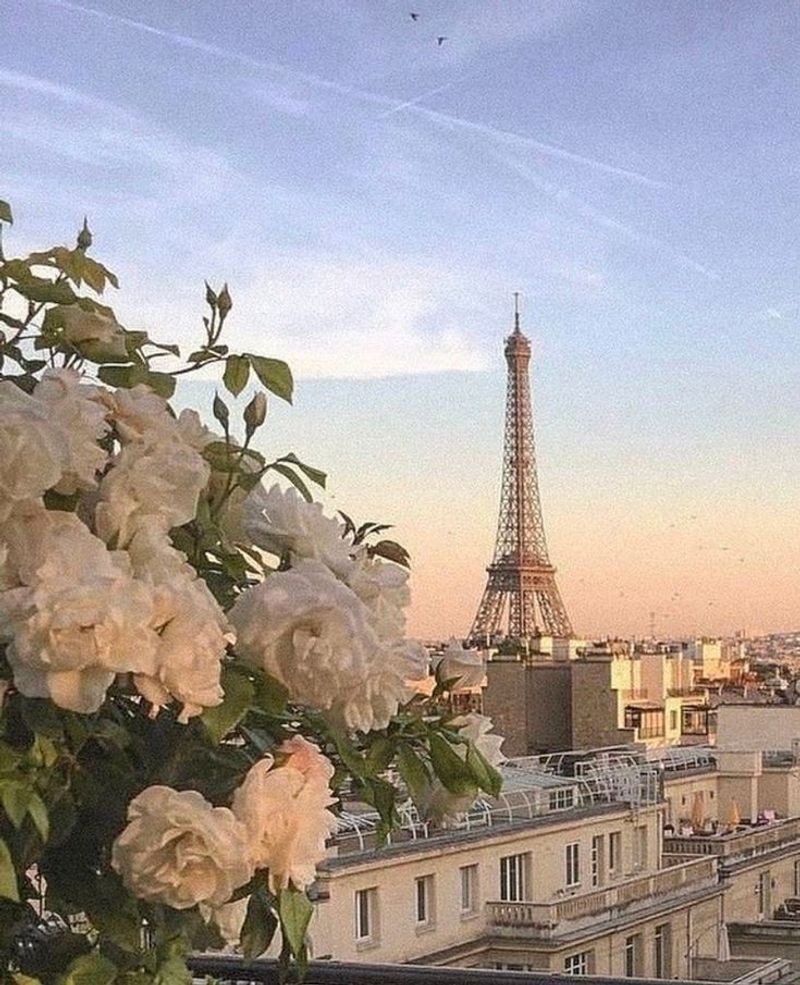
Some cities are famous. Paris is legendary.
From the moment you step off the train and spot the Eiffel Tower cutting across the skyline, you understand why millions of people fall completely head over heels for this place every single year.
The Louvre alone could keep you busy for days, housing over 35,000 works of art including the Mona Lisa. Strolling along the Seine at dusk, watching the light bounce off the water and the old stone bridges, feels like walking inside a painting.
The city’s neighborhoods each carry their own personality. Montmartre is bohemian and artsy, Le Marais is trendy and historic, and Saint-Germain-des-Prés is all cozy bookshops and sidewalk cafés.
French cuisine hits differently when eaten in Paris. A buttery croissant from a local boulangerie, a bowl of French onion soup, or a perfectly prepared steak frites at a neighborhood bistro will ruin you for ordinary food forever.
Paris rewards slow travelers who wander without a plan just as much as those with a packed itinerary.
Mont-Saint-Michel
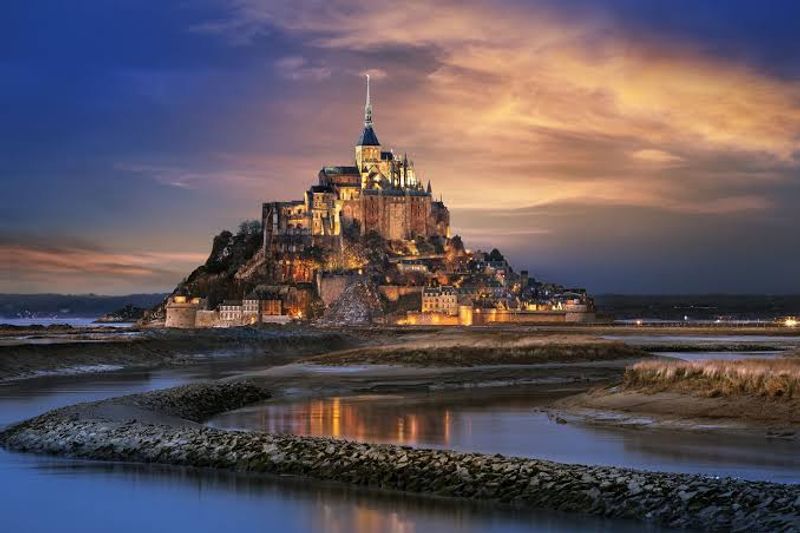
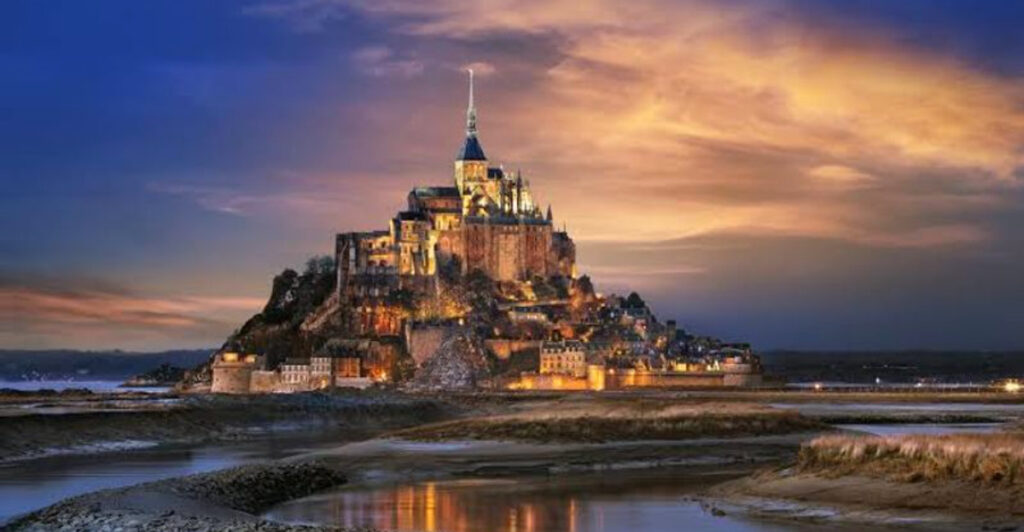
There are few places on Earth that genuinely look like they were lifted from a fairy tale, and Mont-Saint-Michel is absolutely one of them. This rocky island topped with a Gothic abbey rises straight out of the sea on the border between Normandy and Brittany, and the view from the mainland will stop you cold.
The tides here are among the most dramatic in Europe. When the water pulls back, a vast stretch of golden sand surrounds the island.
When it returns, Mont-Saint-Michel becomes an island again almost magically. The medieval village inside the walls is packed with narrow cobblestone lanes, tiny shops, and restaurants serving the region’s famous fluffy omelets.
Climbing to the abbey at the top rewards visitors with sweeping views of the bay and the surrounding countryside. The abbey itself is a masterpiece of medieval architecture, with soaring arches and cloisters that feel both ancient and alive.
UNESCO recognized this site decades ago, and it is easy to see why. Visiting at sunrise or sunset, when the crowds thin and the light turns golden, makes the experience genuinely unforgettable.
Versailles
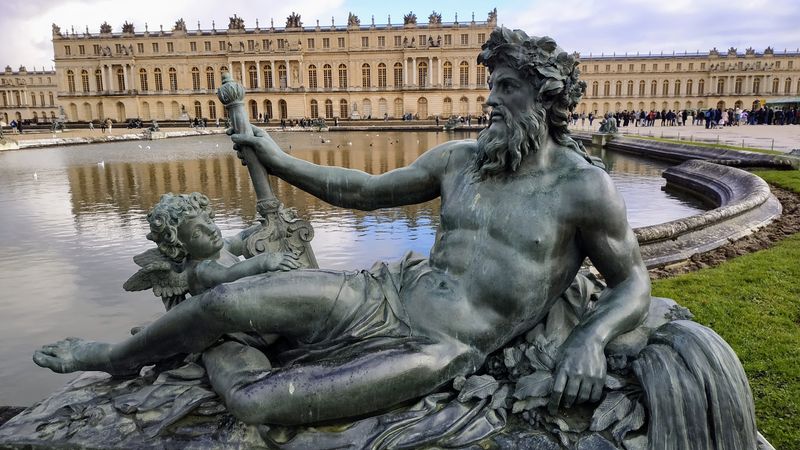
King Louis XIV wanted to build the most impressive palace the world had ever seen, and honestly, he nailed it. The Palace of Versailles is so outrageously grand that even people who normally skip palaces find themselves completely speechless walking through its gilded halls.
The Hall of Mirrors alone is worth the trip. Stretching 73 meters long and lined with 357 mirrors reflecting the garden views, it was designed to dazzle foreign dignitaries into submission.
It still works. The royal apartments, the chapel, and the opera house are equally spectacular, each room more ornate than the last.
Outside, the formal gardens stretch as far as the eye can see. Geometric flower beds, sculpted hedges, and enormous fountains cover nearly 800 hectares of manicured landscape.
On weekends in summer, the Musical Fountain Shows bring the gardens to life with classical music and dramatic water displays. Booking tickets in advance is strongly recommended because lines here can be brutally long.
Arriving early or visiting on a weekday makes the experience far more enjoyable. Versailles sits just 40 minutes from Paris by train, making it a very easy and very rewarding day trip.
Nice
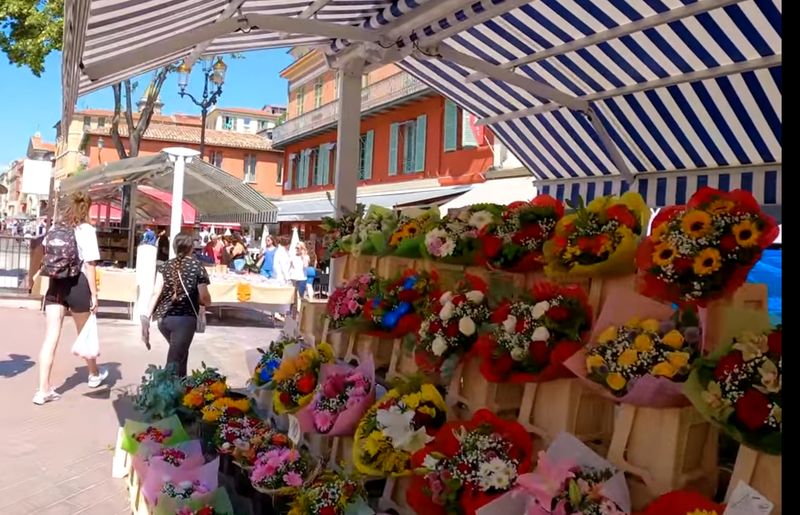
Nice smells like sunscreen, fresh flowers, and espresso all at once, and that combination alone tells you everything you need to know about this city. Sitting on the French Riviera with the Mediterranean lapping at its shores, Nice is the kind of place that makes you want to cancel your return flight.
The Promenade des Anglais is the city’s famous seafront walkway, stretching along the bay for nearly seven kilometers. It is perfect for morning jogs, afternoon strolls, or simply sitting on a bench and watching the world roll by.
The old town, known as Vieux-Nice, is a tangle of colorful baroque buildings, flower markets, and hole-in-the-wall restaurants serving socca, a local chickpea pancake that is crispy, savory, and wildly addictive.
UNESCO recognized Nice for its outstanding universal value as a model resort city that influenced urban planning across Europe. The hilltop Castle Park offers panoramic views over the red rooftops and the sparkling sea that are genuinely hard to beat.
Nice also serves as a perfect base for day trips to Monaco, Antibes, and the perfume town of Grasse. The weather is famously sunny, with over 300 days of sunshine per year.
Provence
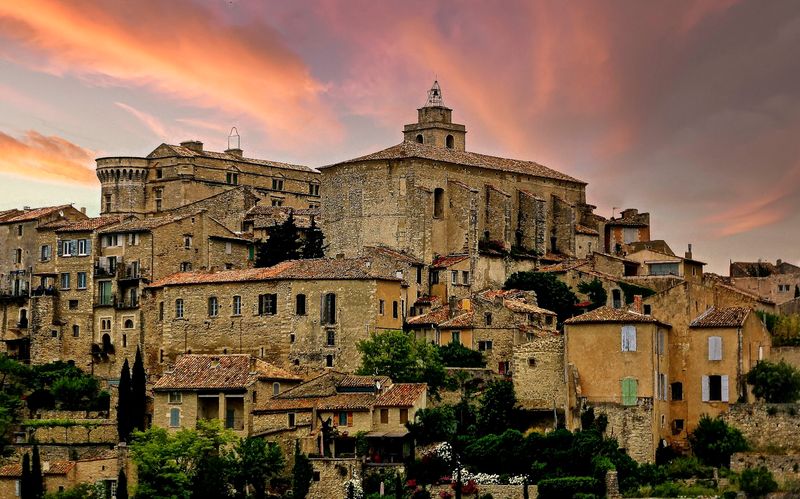
Every July, vast stretches of Provence turn an almost unreal shade of purple as millions of lavender plants burst into bloom simultaneously. The scent drifts across entire hillsides, and the sight of those violet rows stretching toward distant mountains is one of the most iconic images in all of France.
Provence is not just about lavender, though. The region is dotted with gorgeous hilltop villages like Gordes, Les Baux-de-Provence, and Roussillon, each perched dramatically above the surrounding countryside.
Sunday markets overflow with olives, cheeses, herbs, honey, and hand-painted ceramics. Local rosé wine, produced in enormous quantities across the region, is some of the best in the world.
Roman history runs deep here too. The cities of Arles and Nimes preserve extraordinary ancient monuments, from amphitheaters to temples, that rival anything found in Rome itself.
The Luberon Natural Regional Park offers excellent hiking through wild landscapes of limestone cliffs, oak forests, and lavender plateaus. Provence rewards visitors who take their time, linger over long lunches, and resist the urge to rush.
The slower you travel here, the more the region reveals its extraordinary charm and character.
Loire Valley
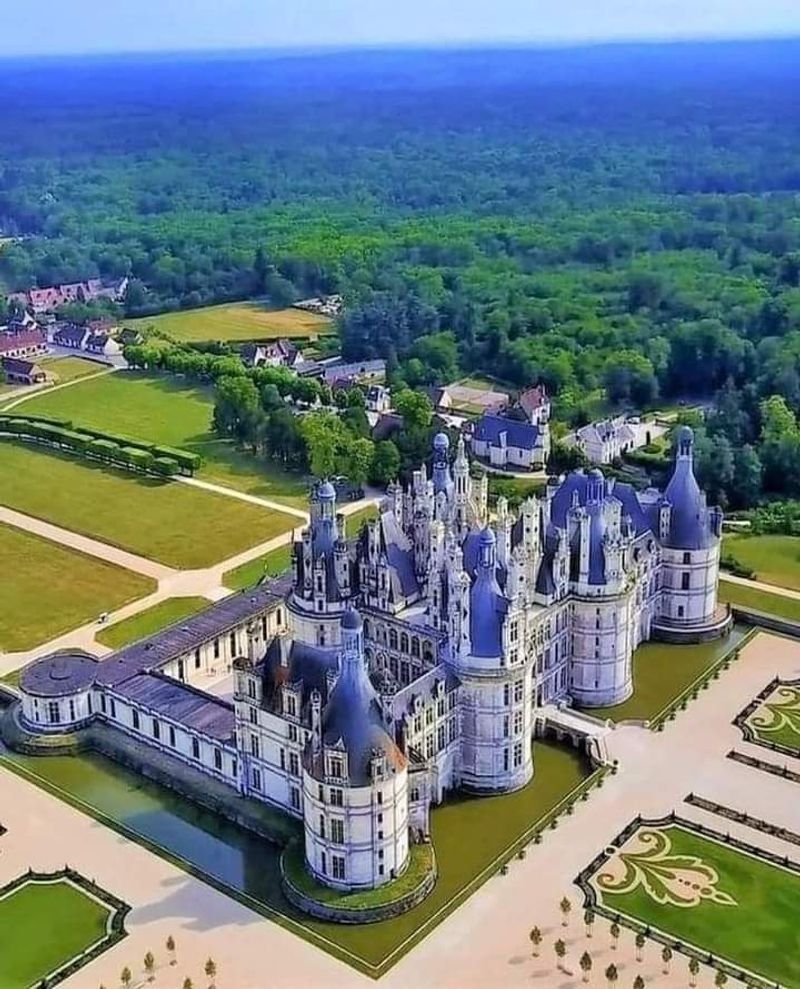
Imagine cycling through a forest and suddenly spotting a fairy-tale castle with over 400 rooms and 365 fireplaces rising above the treetops. That is a perfectly normal Tuesday in the Loire Valley, where magnificent châteaux appear around nearly every bend in the road.
The Loire Valley earned its nickname, the Garden of France, honestly. The region produces exceptional wines, grows some of the country’s finest vegetables and fruits, and offers landscapes so perfectly composed they look almost too good to be real.
The châteaux of Chambord, Chenonceau, and Amboise are the most famous, but smaller and lesser-known castles hidden throughout the valley are equally worth exploring.
UNESCO listed the entire cultural landscape of the Loire Valley, recognizing not just individual monuments but the harmonious relationship between the river, the towns, the vineyards, and the architecture. The valley is extremely bike-friendly, with a dedicated cycling route called La Loire à Vélo stretching over 900 kilometers.
Traveling by bike allows visitors to stop at châteaux, vineyards, and riverside villages at their own pace. Spring and early autumn are the best times to visit, when crowds are manageable and the scenery is at its most beautiful.
Bordeaux
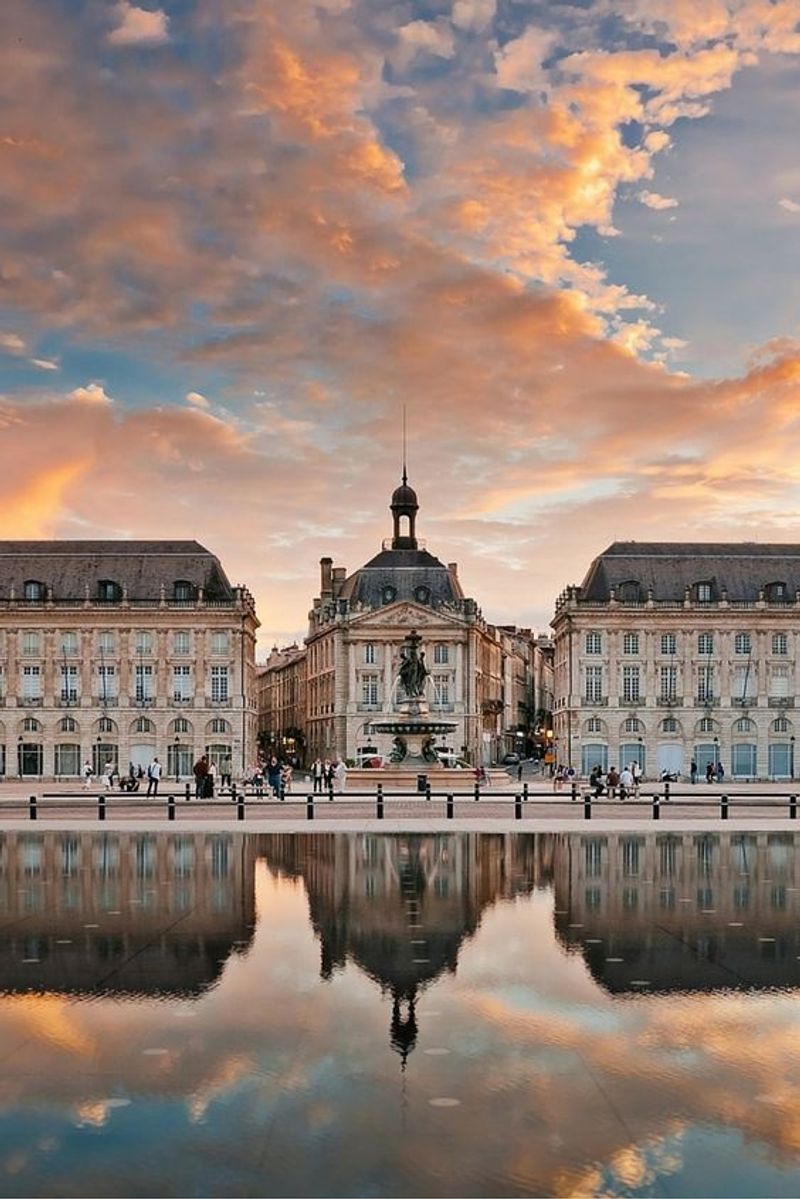
Bordeaux went from being a slightly sleepy wine city to one of Europe’s most exciting urban destinations in a remarkably short time. A massive urban renewal project transformed its waterfront, cleaned its stone facades, and earned it the nickname Little Paris, though locals will quickly point out that Bordeaux has its own very distinct personality.
The city’s historic center, known as the Port of the Moon because of the crescent shape of the Garonne River, is a UNESCO World Heritage site. Elegant neoclassical buildings line broad avenues, and the famous Water Mirror in front of the Place de la Bourse creates one of the most photographed reflections in France.
Wine culture is woven into every aspect of city life here.
The Cite du Vin wine museum is a wildly impressive modern building shaped like a wine decanter, offering interactive exhibits about wine culture from around the world. The surrounding wine regions of Saint-Emilion, Pomerol, and Medoc are home to some of the world’s most celebrated vineyards.
Day trips to these areas from the city are easy to arrange and deeply rewarding. Even people who do not drink wine find Bordeaux’s architecture, food scene, and riverside energy completely captivating.
Carcassonne
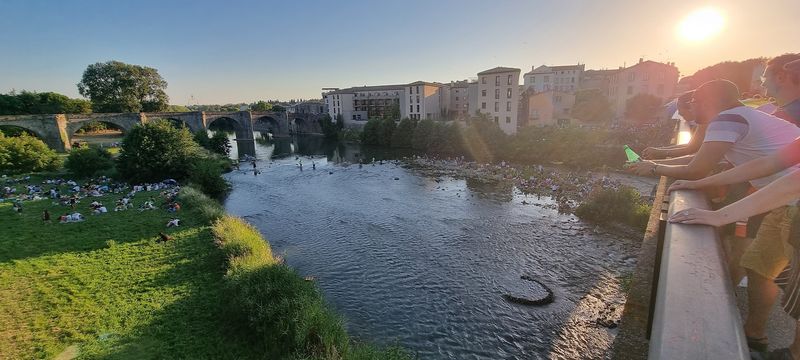
Walking through the gates of Carcassonne feels like stepping straight into a medieval siege movie, except the only battles happening now involve tourists fighting over the best spot to photograph the towers. This remarkably well-preserved walled city in southern France is genuinely one of Europe’s most dramatic sights.
Carcassonne has two distinct parts. The lower town, called the Bastide Saint-Louis, is a pleasant grid of streets with a relaxed southern French atmosphere.
The upper citadel, the Cite, is the star attraction, encircled by two rings of fortified walls and 52 towers that date back to Visigoth and Roman times, later expanded by the Crusaders and the French crown.
Inside the walls, cobblestone streets wind past souvenir shops, restaurants, and the impressive Basilica of Saints Nazarius and Celsus, which contains some stunning medieval stained glass windows. The castle of the Counts sits at the heart of the Cite and offers fascinating exhibits on the history of the fortifications.
Carcassonne hosts a spectacular fireworks display every July 14th that lights up the medieval walls with color. Staying overnight inside the citadel, when the day-trippers leave and the atmosphere turns genuinely magical, is a travel experience well worth arranging.
Lyon
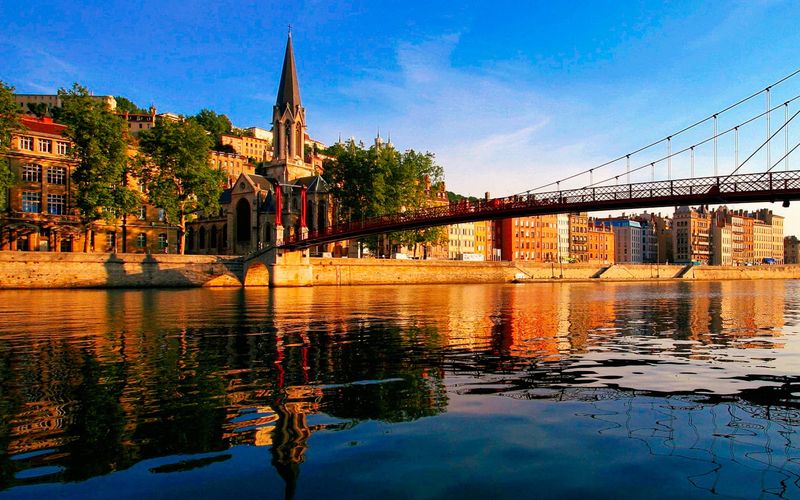
Ask any serious food lover where they would eat their last meal in France, and a surprising number will say Lyon without hesitation. This city in eastern France has been considered the gastronomic capital of the country for centuries, and it wears that title with tremendous pride and zero arrogance.
The city’s famous bouchons are small, cozy restaurants serving traditional Lyonnaise cuisine: quenelles, andouillette, salade lyonnaise, and praline tarts. These are not fancy places.
They are loud, friendly, and focused entirely on the pleasure of eating well. Paul Bocuse, arguably the most influential French chef of the 20th century, was born near Lyon and spent his entire career here.
Beyond food, Lyon has extraordinary things to see. The old town, Vieux-Lyon, is one of the largest Renaissance neighborhoods in Europe and a UNESCO World Heritage site.
Hidden passageways called traboules thread through the old buildings, originally used by silk workers to transport goods. The Fourviere basilica sits high above the city and offers breathtaking panoramic views.
Lyon also has a world-class contemporary art museum, excellent Roman ruins on the hill, and a thriving live music scene. It consistently ranks among the most livable cities in France.
Strasbourg
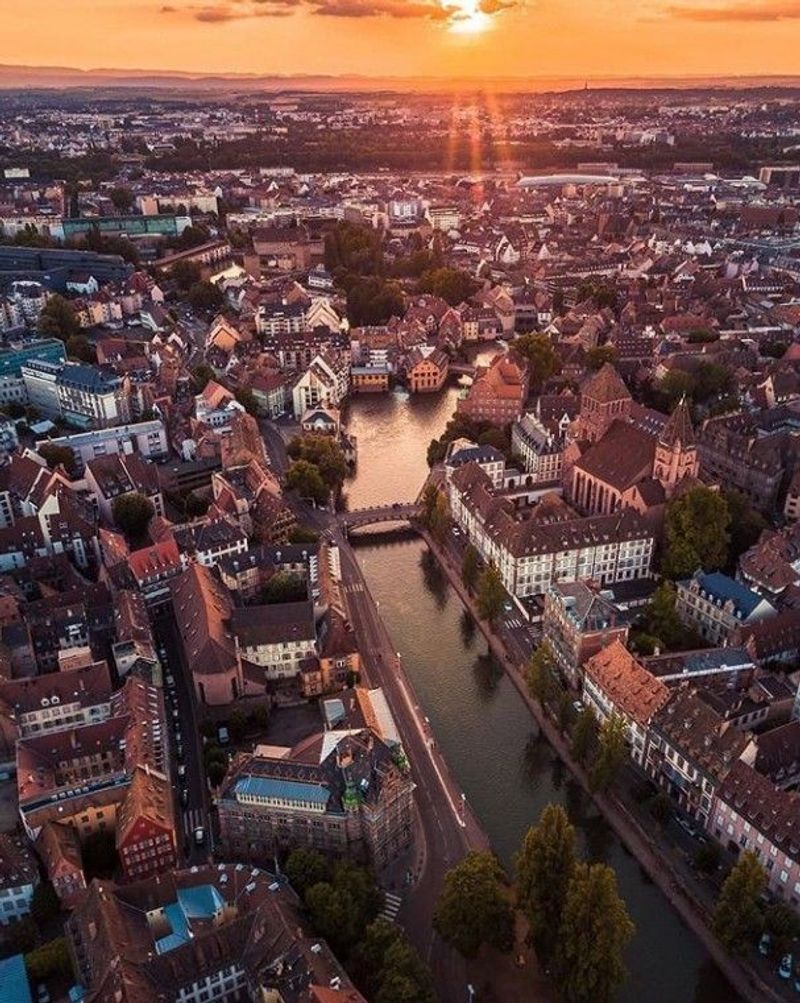
Strasbourg sits right on the border between France and Germany, and the city has spent centuries absorbing the best of both cultures into one fascinatingly hybrid identity. The result is a place that feels unlike anywhere else in France, with half-timbered houses, Germanic street names, and menus that blend choucroute garnie with foie gras without batting an eye.
The Strasbourg Cathedral is one of the most stunning Gothic structures in the world. Built from distinctive pink Alsatian sandstone, it dominated the European skyline for over two centuries as the tallest building on the continent.
The astronomical clock inside the cathedral puts on a small mechanical show every day at noon that draws crowds of delighted visitors.
The Petite France district is the city’s most photographed neighborhood, where flower-draped half-timbered houses lean over quiet canals and lock bridges. It is genuinely as picturesque as the postcards suggest.
Strasbourg is also home to the European Parliament and several other major European institutions, giving it an international energy that feels different from other French cities. The Christmas market held here every December is one of the oldest and most celebrated in Europe, transforming the city center into a glittering wonderland of lights, mulled wine, and gingerbread.
Chamonix-Mont-Blanc
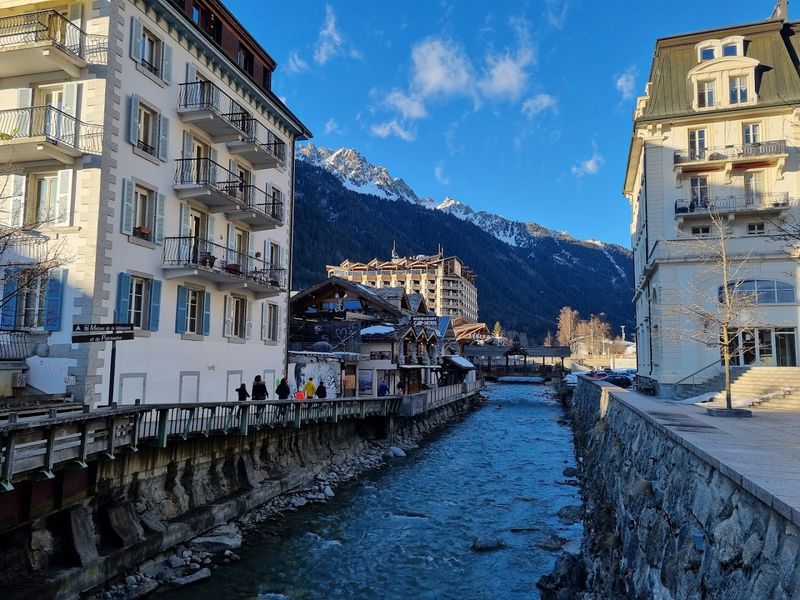
Standing in the center of Chamonix and looking up at Mont Blanc, the highest peak in Western Europe at 4,808 meters, produces a specific feeling somewhere between pure awe and mild existential panic. The mountain is enormous in a way that photographs simply cannot capture accurately.
Chamonix built its global reputation on adventure. The Aiguille du Midi cable car whisks visitors from the town center to a viewing platform at 3,842 meters in under 20 minutes, offering views that stretch across France, Italy, and Switzerland simultaneously.
In winter, the ski runs here range from gentle beginner slopes to the terrifying Vallee Blanche, a 20-kilometer off-piste descent that experienced skiers talk about for years afterward.
Summer in Chamonix is equally spectacular and far less crowded than the ski season. Hundreds of kilometers of hiking trails thread through the valley and up into the surrounding peaks.
The famous Tour du Mont Blanc, a multi-day trek circling the massif through three countries, begins and ends here. Mountain biking, paragliding, rock climbing, and white-water kayaking keep the valley buzzing with activity year-round.
The town itself has excellent restaurants, lively bars, and a genuinely international atmosphere that makes it feel like a small city tucked into an enormous mountain.
Saint-Malo
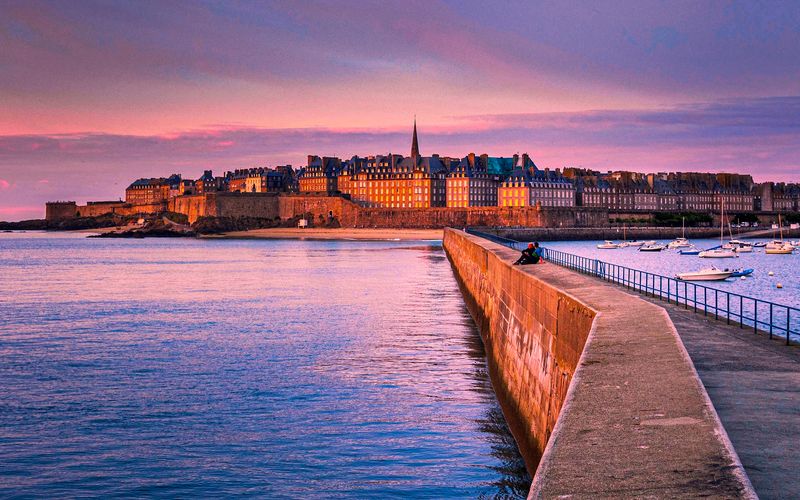
Saint-Malo has the kind of history that belongs in a pirate novel, which is fitting because the city was literally home to a fleet of licensed pirates called corsairs who terrorized English and Dutch shipping for centuries on behalf of the French crown. The sea is in this city’s blood, and you feel it everywhere you go.
The old town, known as Intra-Muros, is entirely enclosed within massive granite walls that visitors can walk along for spectacular views of the Atlantic. The city was almost entirely destroyed during World War II but was painstakingly rebuilt stone by stone to look exactly as it did before the war.
From a distance, it looks genuinely medieval.
The beaches surrounding Saint-Malo are wide, sandy, and dramatic. At low tide, you can walk across the causeway to the tiny island of Grand Be, where the romantic writer and adventurer Chateaubriand is buried in a simple tomb facing the sea.
The tidal range here is among the largest in the world, sometimes reaching over 13 meters, which transforms the landscape completely between morning and afternoon. Local restaurants serve outstanding oysters, mussels, and the region’s famous buckwheat crepes, called galettes, which pair perfectly with a cold glass of dry Breton cider.
Avignon
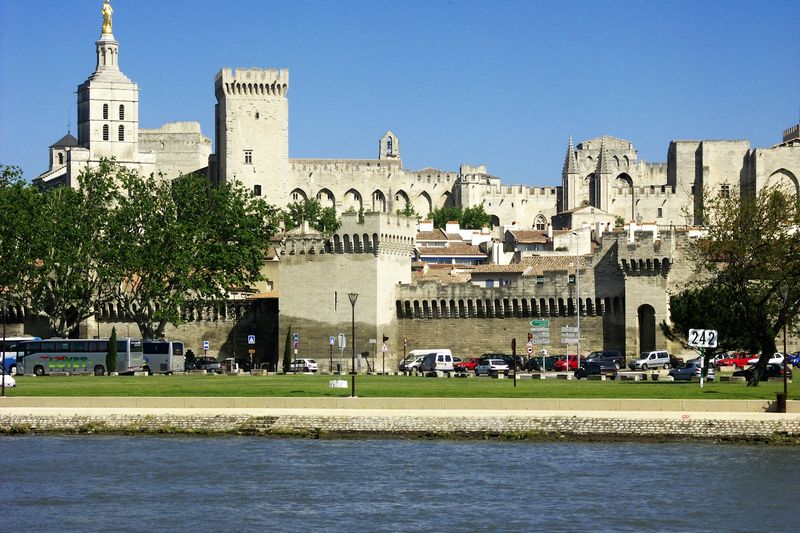
For most of the 14th century, Avignon was effectively the center of the Christian world. Seven consecutive popes chose to rule from here rather than Rome, and the city they built around themselves reflects that extraordinary ambition in stone and scale.
The Palace of the Popes is the dominant landmark and one of the largest Gothic buildings ever constructed. Its thick walls and soaring towers give it the appearance of a fortress as much as a palace, which was entirely intentional.
Inside, the scale of the rooms is almost disorienting. The Grand Tinel banquet hall alone stretches nearly 50 meters long.
Frescoes, tapestries, and carved stonework fill the chambers where medieval popes once held court.
Outside the palace, Avignon’s old town is a pleasure to explore. The famous Pont Saint-Benezet, the broken bridge immortalized in a French children’s song, stretches partway across the Rhone and offers great views back toward the city.
The historic center is ringed by well-preserved medieval walls that are easy to walk along. Every July, Avignon transforms into one of Europe’s biggest theater festivals, filling the streets with performers, audiences, and an electric creative energy.
The city sits at the heart of excellent wine country, with Chateauneuf-du-Pape just a short drive away.
Giverny
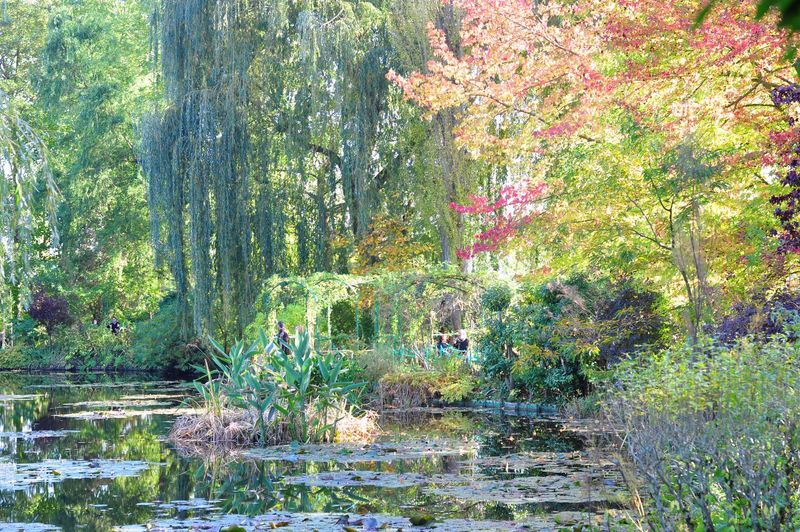
Claude Monet spent 43 years in Giverny, and in that time he did not just paint the garden. He designed it, planted it, redirected a stream to create the famous lily pond, and essentially built himself a living work of art that he could paint from every angle in every season.
Walking through it today, you see exactly what he saw.
The water garden is the most famous part, with its arching Japanese bridge draped in wisteria and the lily pads floating across the glassy surface of the pond. In late spring and early summer, the colors are extraordinary.
The flower garden beside Monet’s pink-and-green house is a riot of nasturtiums, roses, irises, and sunflowers arranged with the same compositional genius he brought to his canvases.
Monet’s house is open to visitors and has been beautifully restored, including his cheerful yellow dining room and the kitchen with its blue-and-white Delft tiles. His personal Japanese print collection hangs throughout the rooms.
The village of Giverny itself is tiny and charming, with a small museum dedicated to American artists who came to paint alongside Monet in the late 19th century. Arriving early in the morning before tour buses arrive makes the entire experience feel quiet and personal.
Dordogne Valley
Twenty-five thousand years ago, someone stood in a cave in the Dordogne and painted a horse on the wall with such skill and confidence that modern artists have spent decades trying to understand how they did it. The Lascaux cave paintings are among the greatest artistic achievements in human history, and they were made here, in this quiet valley in southwestern France.
The Dordogne is a layered place. Prehistoric history sits beneath medieval history, which sits beneath Renaissance history, and all of it is wrapped in some of the most beautiful river scenery in France.
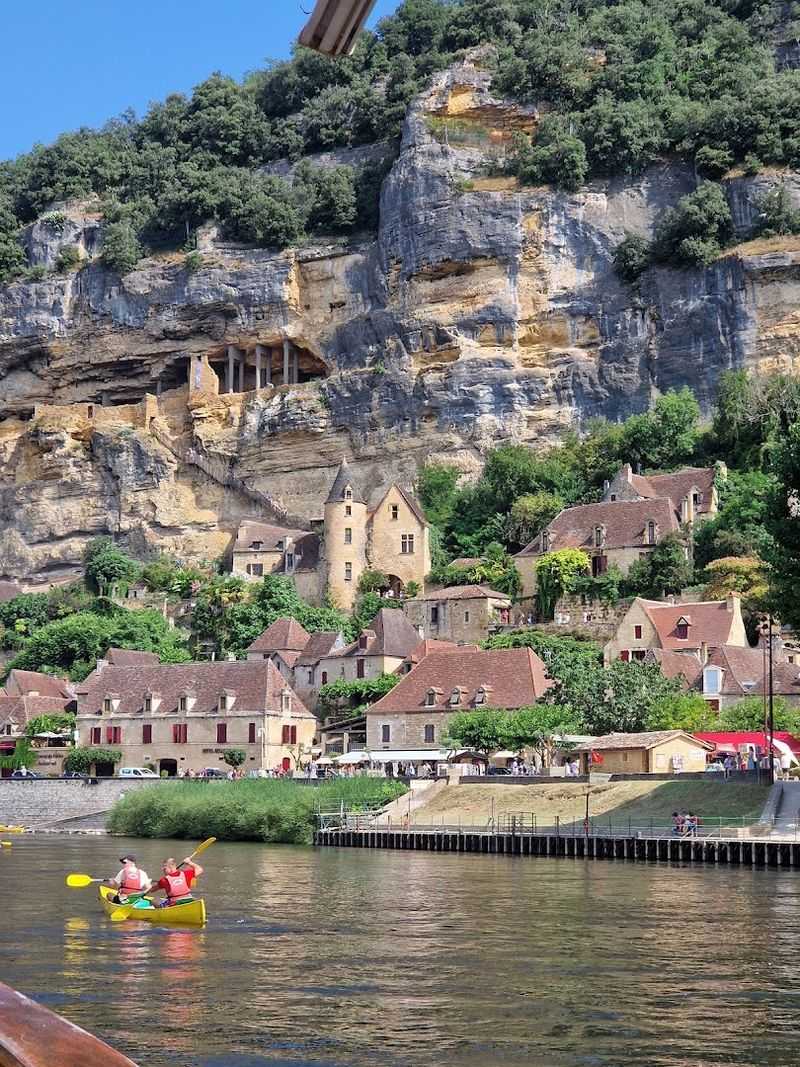
Castles perch on limestone cliffs above the river. Villages like Sarlat-la-Caneda and Beynac-et-Cazenac look almost unchanged from the Middle Ages.
Canoe rental shops line the riverbanks, and paddling downstream past castles and cliffs on a warm afternoon is one of the great simple pleasures of French travel.
The food in the Dordogne is spectacularly rich. This is the heartland of foie gras, duck confit, walnut oil, black truffles, and Bergerac wine.
Local markets in Sarlat overflow with regional delicacies every Saturday morning. The original Lascaux cave is no longer open to protect the paintings, but an extraordinary replica called Lascaux IV allows visitors to experience the art in remarkable detail.
Arles
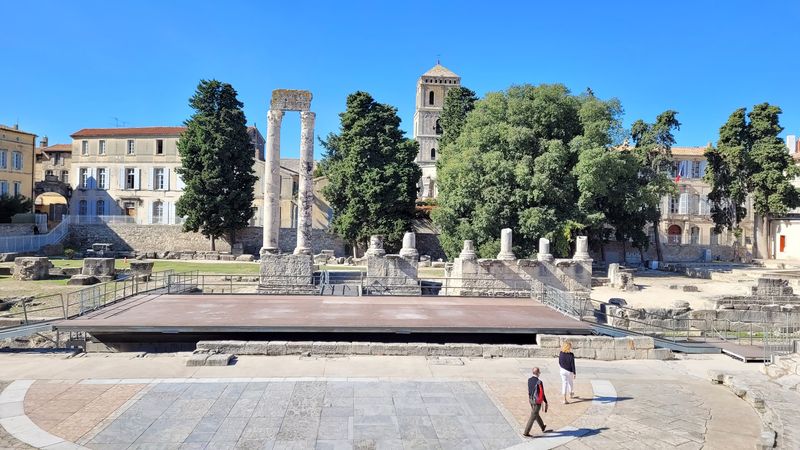
Vincent van Gogh arrived in Arles in February 1888 and immediately started painting as if he had found the place he had been looking for his entire life. In just 15 months, he produced over 300 paintings and drawings inspired by the town’s light, its people, and its landscapes.
That same golden light still floods the streets today.
Arles punches well above its weight for a city of its size. The Roman amphitheater, built in the first century and still used for bullfights and concerts, seats over 20,000 spectators.
The Roman theater, the baths of Constantine, and the necropolis of Alyscamps are equally impressive ancient monuments scattered throughout a compact, walkable city center. UNESCO recognized the entire ensemble of Roman monuments here as a World Heritage site.
The annual Rencontres d’Arles photography festival, held every summer, transforms the city into one of the world’s most important venues for contemporary photography. Exhibitions fill Roman monuments, churches, and warehouse spaces throughout the city.
The Fondation Vincent van Gogh maintains a permanent collection and rotating exhibitions celebrating the artist’s connection to the city. Arles also has excellent restaurants serving classic Provencal cuisine, and the Saturday market along the Boulevard des Lices is one of the best in the entire region.
Corsica
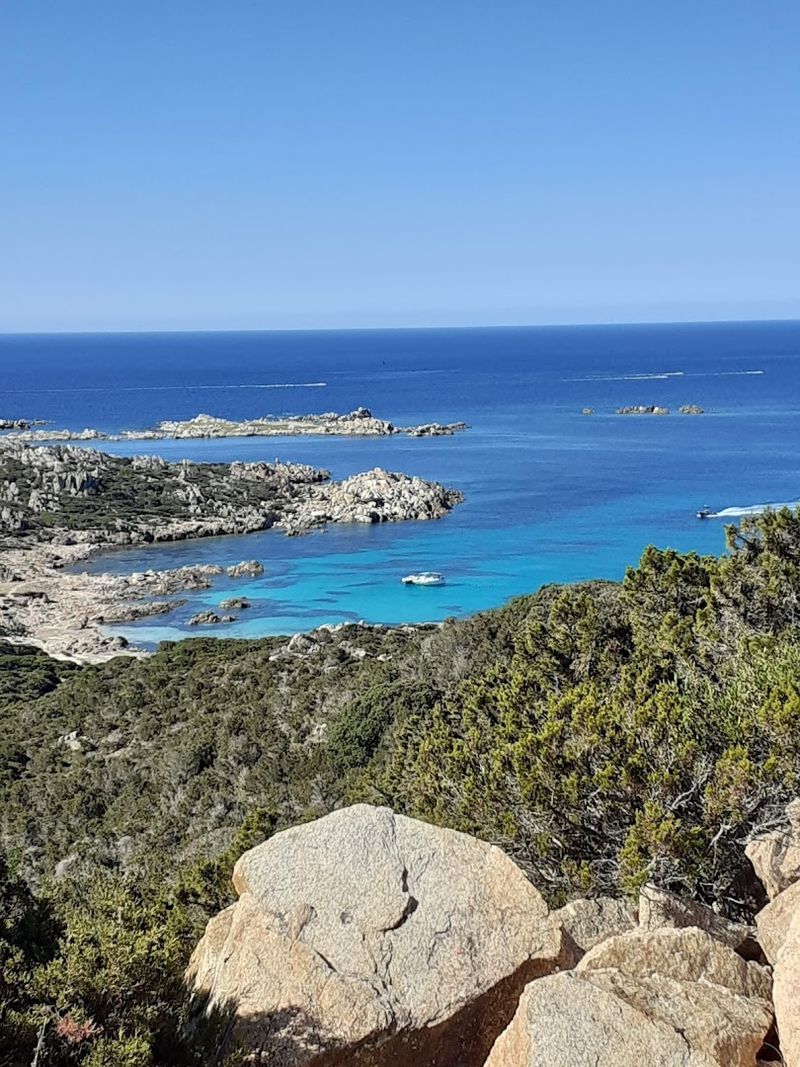
Napoleon Bonaparte was born in Corsica, and even he, after conquering most of Europe, reportedly said that he could recognize his home island with his eyes closed just from the scent of its wild scrubland. The maquis, a fragrant mix of rosemary, myrtle, lavender, and cistus, perfumes the entire island in a way that is completely unique.
Corsica feels dramatically different from mainland France. The interior is rugged and mountainous, with peaks that hold snow well into spring.
The coastline is an extraordinary collection of turquoise coves, dramatic sea cliffs, and white sandy beaches that rival anything in the Caribbean. The GR20, widely considered one of the most challenging and rewarding long-distance hiking trails in Europe, crosses the island from north to south through wild mountain terrain.
The food culture on the island is fiercely local and deeply proud. Corsican charcuterie, particularly the smoked lonzu and coppa, is exceptional.
Local cheeses, chestnut-based dishes, and robust Corsican wines round out a food scene that feels entirely its own. The island’s two main cities, Ajaccio and Bastia, have distinct characters worth exploring.
Ferry connections from Nice, Marseille, and Toulon make Corsica very accessible, and the island rewards visitors who rent a car and explore beyond the main tourist beaches.
Pont du Gard
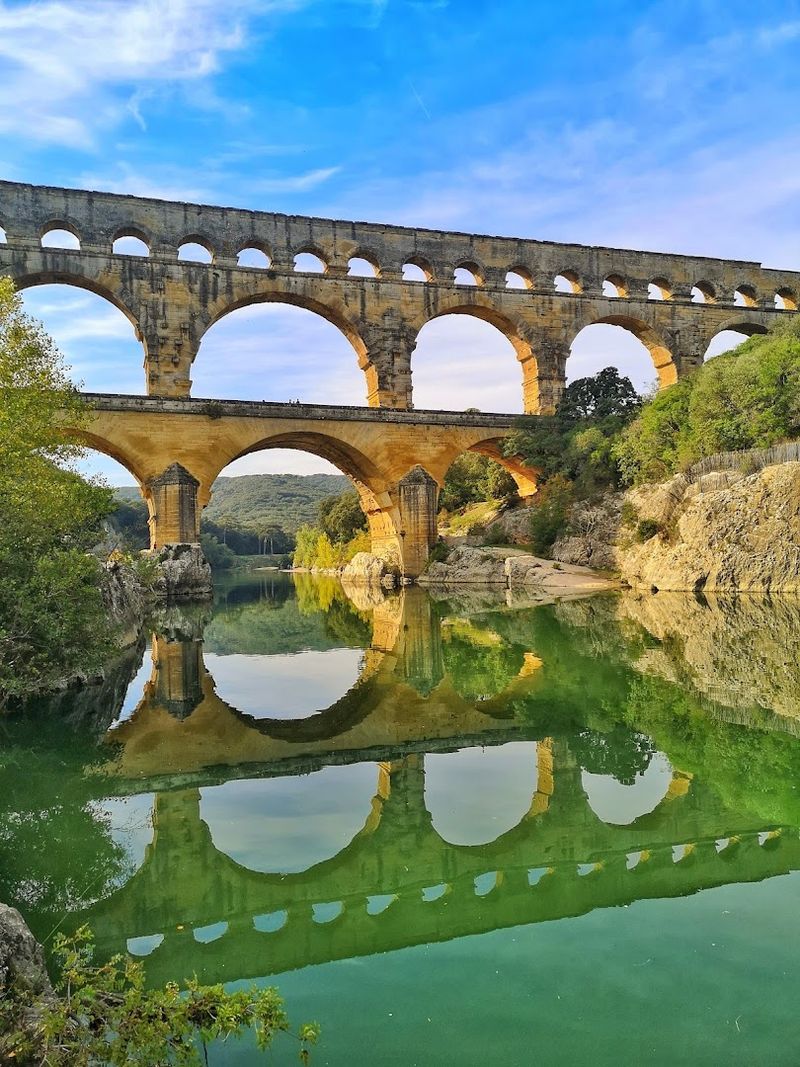
Roman engineers built Pont du Gard around 50 AD without using any mortar at all. The massive limestone blocks, some weighing up to six tons, were cut with such precision that they have held together for nearly 2,000 years through floods, wars, and centuries of neglect.
That fact alone should make your jaw drop.
The aqueduct stretches 275 meters across the Gardon River in three tiers of arches, the highest reaching 49 meters above the water. It was part of a 50-kilometer system designed to carry fresh water to the Roman city of Nimes, dropping just 17 meters in elevation across the entire length.
The engineering precision required to achieve that gentle gradient across such a distance was extraordinary even by modern standards.
The site today is beautifully managed, with an excellent museum explaining the construction techniques and the Roman civilization that produced them. Visitors can walk across the top of the aqueduct for breathtaking views of the surrounding garrigue landscape.
In summer, swimming in the Gardon River beneath the ancient arches is enormously popular and deeply memorable. The combination of natural beauty and historical significance makes Pont du Gard genuinely one of the most impressive sites in France, yet it receives far fewer visitors than the major city attractions and never feels overwhelmingly crowded.
Champagne Region
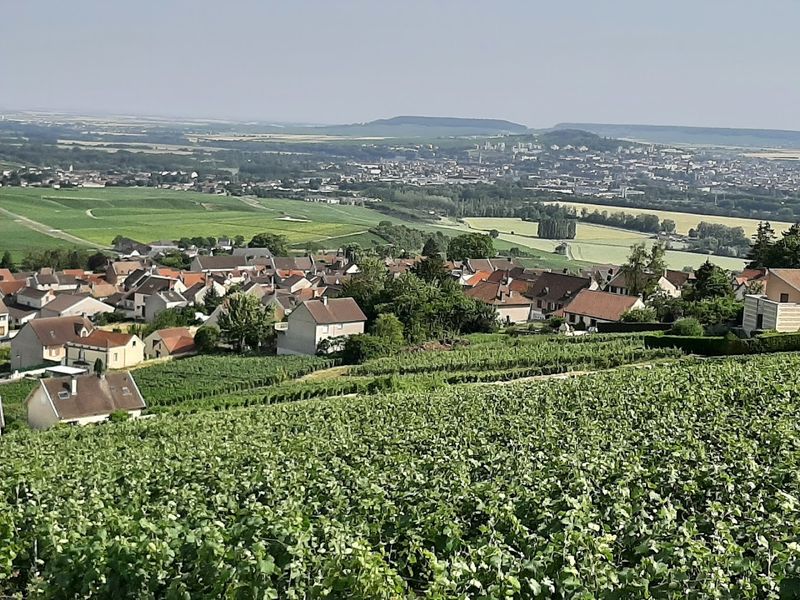
The word champagne is legally protected. Only sparkling wine produced in this specific region of northeastern France, using specific grape varieties and a specific second fermentation method, can legally carry the name.
That level of geographic and legal protection tells you exactly how seriously the French take what happens in these vineyards.
The Champagne region’s landscape is quietly beautiful rather than dramatically spectacular. Rolling chalk hills covered in precisely tended vines stretch in every direction, interrupted occasionally by small villages and the grand cathedral city of Reims.
The cathedral of Notre-Dame de Reims, where French kings were crowned for centuries, is one of the finest Gothic buildings in existence and an absolute must-see.
The real magic of Champagne happens underground. The major houses, including Moet and Chandon, Veuve Clicquot, and Taittinger, maintain extraordinary networks of chalk caves called crayeres, some carved by the Romans, where millions of bottles age slowly in cool darkness.
Tours of these cellars are fascinating, educational, and typically end with a tasting that is hard to match anywhere in the world. The smaller grower-producers scattered throughout the villages offer a more intimate alternative to the famous houses.
Visiting in September during harvest is particularly special, when the whole region buzzes with activity and the smell of fermenting grapes fills the air.
Calanques National Park
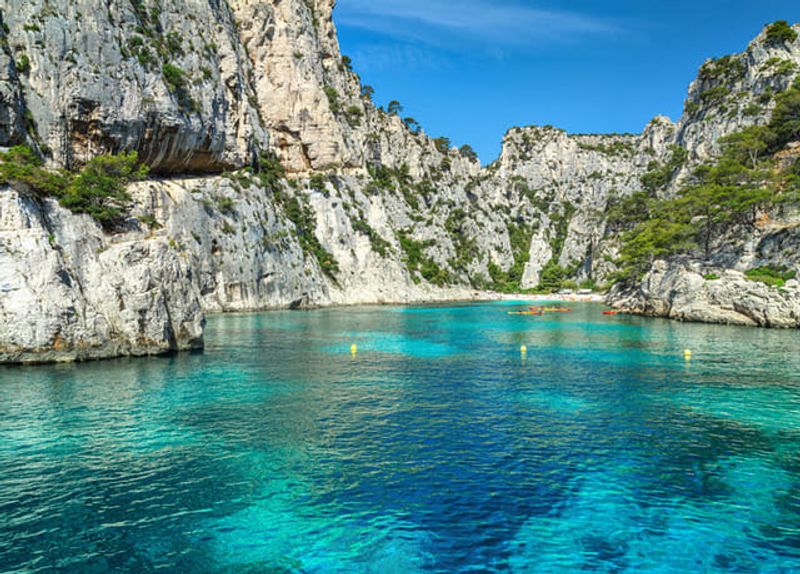
The Calanques look like someone took the Swiss Alps, painted them white, and dropped them directly into the Mediterranean Sea. These dramatic limestone cliffs plunging into impossibly clear turquoise water between Marseille and Cassis create a coastal landscape so striking it seems almost digitally enhanced in person.
The national park protects over 20 kilometers of coastline and extends both above and below the waterline, making it a paradise for hikers, rock climbers, kayakers, and snorkelers simultaneously. The most famous calanques, En-Vau and Port-Miou, require either a moderate hike or a boat trip to reach, which helps keep the most spectacular spots feeling relatively wild even during peak summer season.
Marseille, France’s oldest city and second-largest, sits right at the park’s doorstep and deserves its own exploration. The Vieux-Port, the city’s ancient harbor, is surrounded by restaurants serving bouillabaisse, the famous Marseille fish stew that is a meal and a cultural institution rolled into one.
The city has a gritty, energetic, multicultural personality that feels completely different from anywhere else in France. Combining a few days in Marseille with hiking and swimming in the Calanques makes for one of the most satisfying and varied travel experiences the entire country has to offer.
Share this story