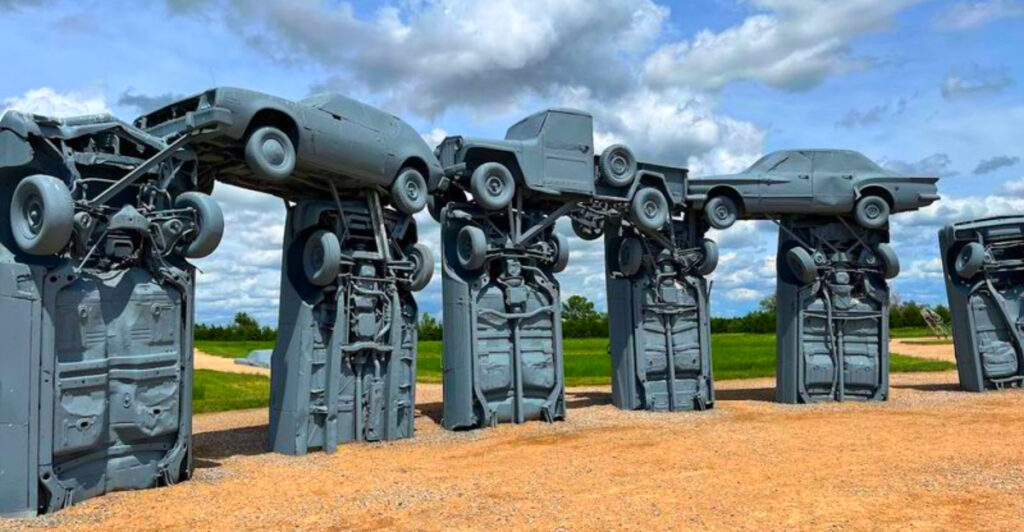
Nebraska does not always get the credit it deserves as a road trip destination, but the state is quietly home to some of the most unusual, creative, and downright fascinating roadside attractions in the country. You can drive past a Stonehenge made entirely of cars, peek into a time capsule sealed with over 5,000 everyday objects, or stand on a tower overlooking the world’s largest railroad yard.
The variety is genuinely surprising, and the stories behind each stop are even better than the photos. This list covers 13 attractions scattered across the state, from the panhandle to the eastern edge, each one offering something you probably did not expect to find in the middle of the Great Plains.
Pack a snack, charge your phone, and get ready to question everything you thought you knew about Nebraska road trips.
1. The Archway Museum, Kearney, Nebraska
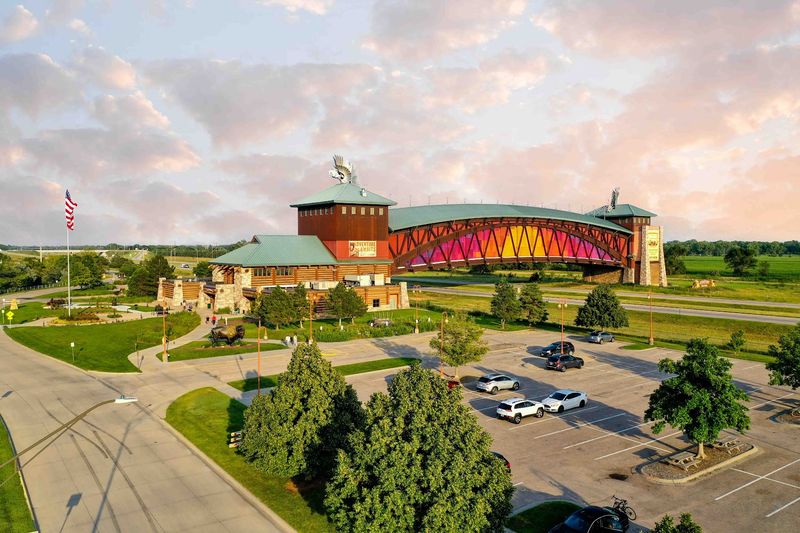
Most museums sit quietly on a street corner, waiting to be noticed. The Archway in Kearney chose a bolder strategy: it simply built itself directly over Interstate 80, so that thousands of drivers pass beneath it every single day whether they plan to stop or not.
The structure spans the highway at Exit 275 and houses an immersive, self-guided experience covering 180 years of American travel history. Exhibits trace the stories of Oregon Trail pioneers, Pony Express riders, railroad workers, and mid-century highway travelers, all connected by the same stretch of Nebraska land.
Interactive displays, life-size dioramas, and period artifacts fill the interior in a way that feels more like walking through history than reading about it. The museum typically takes one to two hours to explore, and the view from the building over the highway is a photo opportunity you will not find anywhere else.
2. World’s Largest Time Capsule, Seward, Nebraska
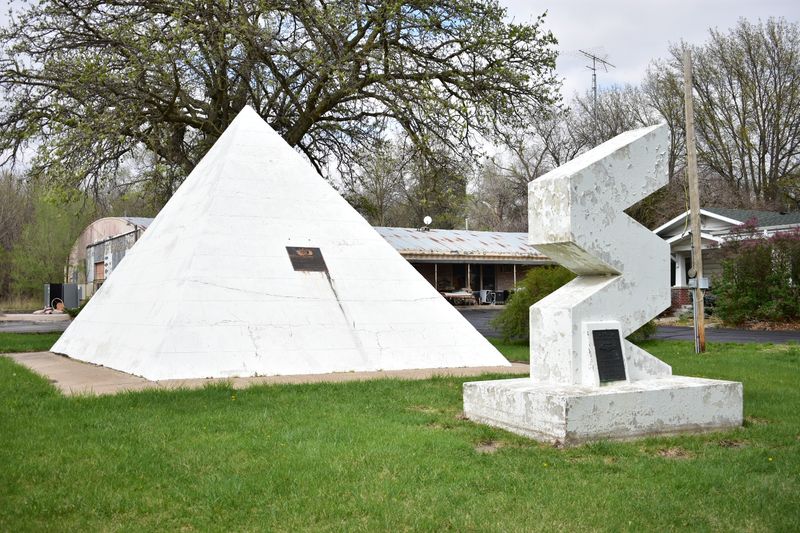
Harold Davisson sealed this 45-ton vault on July 4, 1975, and planned for it to stay that way for exactly 50 years. The capsule is scheduled to be opened on July 4, 2025, making this one of the most time-sensitive roadside attractions in the country right now.
Inside, over 5,000 items from mid-1970s American life are preserved, including a Kawasaki motorcycle, bikini bottoms, a Chevy Vega, and hundreds of everyday objects that Davisson collected to represent the era. The capsule measures 20 by 8 by 6 feet and sits in a residential Seward neighborhood, which makes its presence even more delightfully unexpected.
The structure itself looks like something between a bunker and a monument, and its roadside sign explains the project in detail. It is a fascinating conversation starter about time, preservation, and what we choose to remember.
3. Pioneer Village, Minden, Nebraska
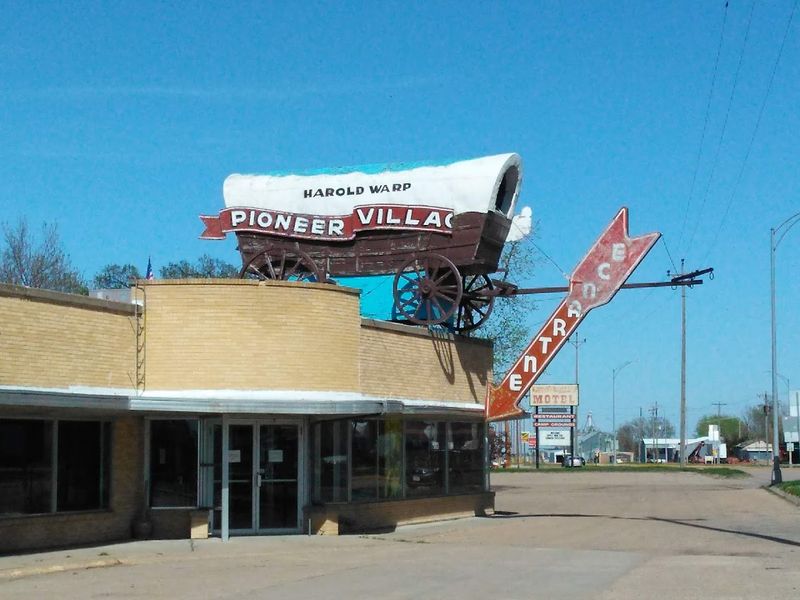
Twenty acres, 28 historic buildings, and more than 50,000 artifacts sound like an exaggeration until you actually arrive at Pioneer Village and realize the numbers are completely accurate. Founded by Harold Warp, this sprawling complex in Minden is part museum, part historical archive, and part celebration of everyday American life from the 1800s onward.
The collection covers an almost overwhelming range of categories, including early automobiles, farm machinery, household appliances, horse-drawn carriages, and vintage advertising displays. Entire buildings are dedicated to single topics, giving each exhibit room to breathe and tell its story properly.
Visitors who enjoy nostalgia tend to lose track of time here, wandering from building to building and recognizing objects their grandparents once used. Budget at least half a day, bring comfortable shoes, and prepare to discover something genuinely surprising around almost every corner.
4. Golden Spike Tower, North Platte, Nebraska
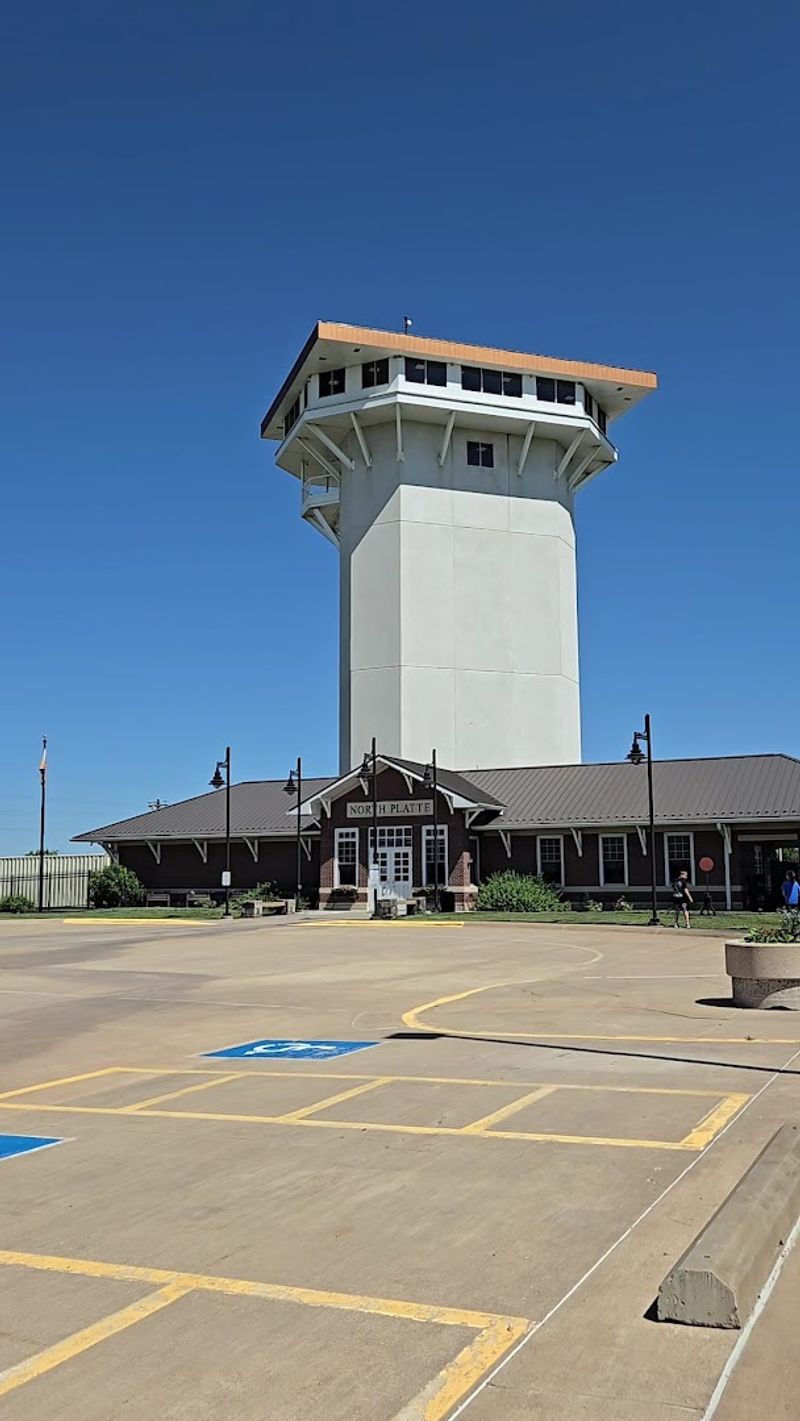
Bailey Yard in North Platte holds the record as the world’s largest railroad classification yard, covering 2,850 acres and containing 350 miles of track. The Golden Spike Tower was built specifically so visitors could stand above it all and watch the operation unfold in real time.
From the upper observation deck, the view stretches far enough that the yard seems to reach the horizon. Railcars are sorted, switched, and routed around the clock, and the sheer scale of the activity below is genuinely difficult to process from ground level.
Inside the tower, exhibits explain how Bailey Yard works, the history of Union Pacific, and the critical role North Platte played in transcontinental rail travel. Train enthusiasts consider this a must-visit, but even travelers with no particular interest in railroads tend to find the overhead view unexpectedly captivating.
Admission is affordable and the visit typically runs about an hour.
5. World’s Largest Covered Porch Swing, Hebron, Nebraska
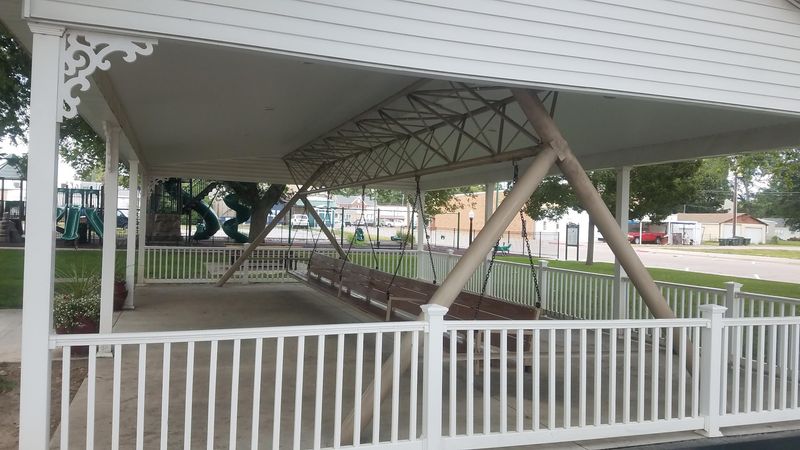
Hebron, Nebraska has a population of around 1,500 people and, against all reasonable expectations, holds the record for the world’s largest covered porch swing. The swing can seat dozens of people simultaneously and is fully functional, meaning visitors are not just allowed to sit on it but actively encouraged to do so.
The structure is genuinely massive, with a proper roof overhead and a sturdy frame built to handle the weight of a crowd. Local volunteers constructed and maintain it, and the town takes obvious pride in the distinction.
Unlike many record-holding attractions that exist purely as photo props, this one delivers an actual experience. Sitting on a swing big enough to hold your entire extended family is a specific kind of fun that is hard to find anywhere else.
It is free, it is open year-round, and it takes about 15 minutes to fully enjoy.
6. Carhenge, Alliance, Nebraska
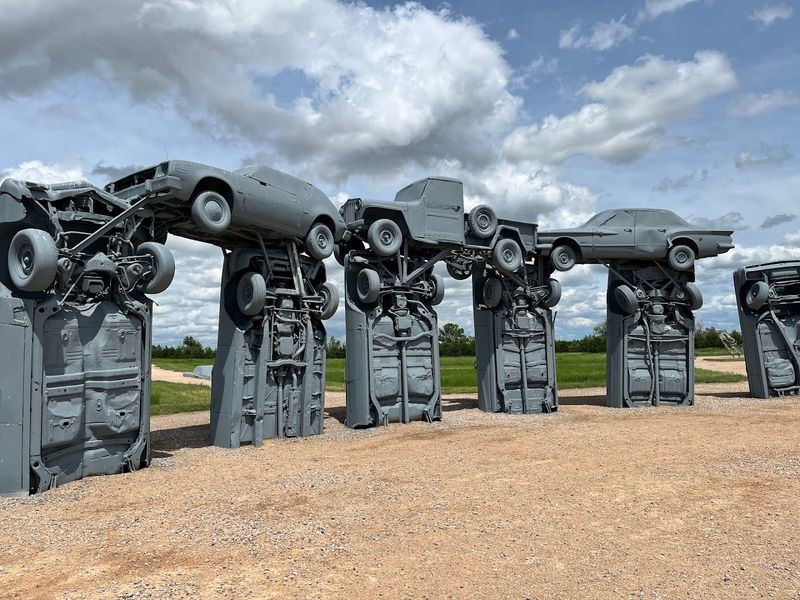
Back in 1987, artist Jim Reinders gathered his family, a collection of vintage American cars, and a very specific vision, and built one of the most creative roadside monuments in the United States. Carhenge is a full-scale replica of England’s Stonehenge, constructed from 38 automobiles all painted the same shade of gray to mimic the original standing stones.
The cars are arranged in the same circular pattern as the real Stonehenge, and the proportions are surprisingly accurate. Some vehicles are buried trunk-first in the ground, while others are welded on top to form the iconic arched trilithons.
Beyond the main circle, the site also includes several additional car art sculptures created over the years. Admission is free, the prairie backdrop is dramatic, and the whole experience takes about 45 minutes to explore properly.
7. Bigfoot Crossroads of America Museum, Hastings, Nebraska
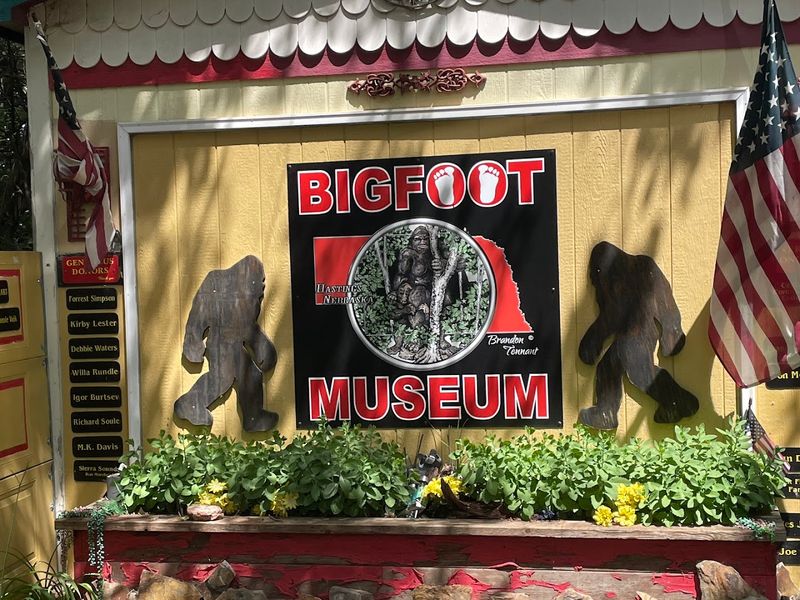
Hastings is already famous as the birthplace of Kool-Aid, but the city has another claim to fame that is considerably hairier. The Bigfoot Crossroads of America Museum is a dedicated space exploring North America’s most enduring cryptid legend through exhibits, artifacts, folklore, and pop culture displays.
Visitors encounter plaster casts of alleged footprints, documented sighting reports from across the country, and an enthusiastic collection of Bigfoot-related memorabilia that spans decades. The museum takes the subject seriously enough to be informative while staying lighthearted enough to be fun for skeptics and believers alike.
The exhibits are well-organized and cover the legend from multiple angles, including Indigenous traditions, modern sighting databases, and media coverage. It is a surprisingly thorough look at why this particular story has captured the American imagination for so long.
Plan for about an hour, and bring your sense of humor along for the visit.
8. Toadstool Geologic Park, Crawford, Nebraska
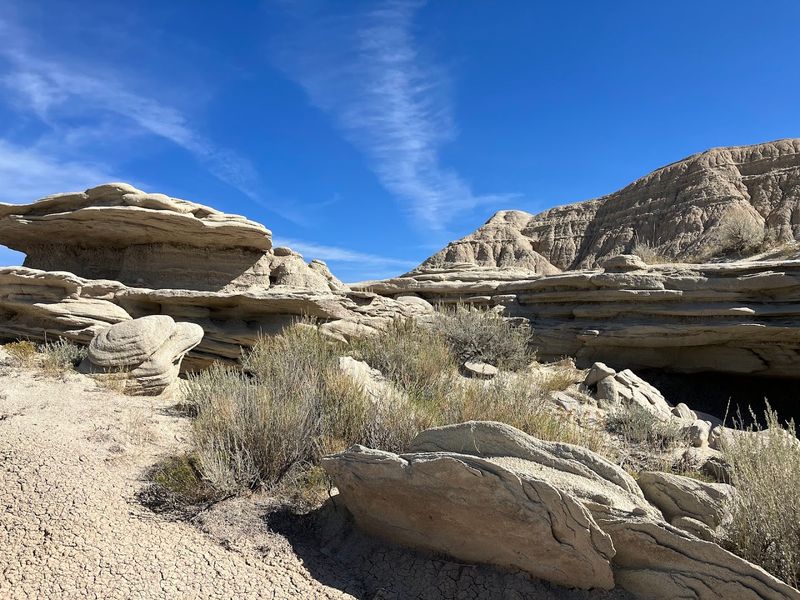
Nebraska’s panhandle hides a landscape so strange that first-time visitors frequently stop and double-check that they are still in the right state. Toadstool Geologic Park features wind-eroded rock formations shaped like enormous mushrooms, stacked stones, and balanced boulders that look like they were arranged by someone with a very specific aesthetic vision.
The park is sometimes called Nebraska’s Badlands, and the comparison is accurate. The terrain is stark, pale, and layered with geological history stretching back more than 30 million years.
Fossil fragments from ancient mammals can occasionally be spotted in the exposed rock layers along the hiking trail.
The main loop trail covers about 1.5 miles and takes roughly an hour to complete at a relaxed pace. There are no admission fees, no crowds, and very few guardrails between you and one of the most visually striking natural landscapes in the Great Plains.
9. Chimney Rock National Historic Site, Bayard, Nebraska
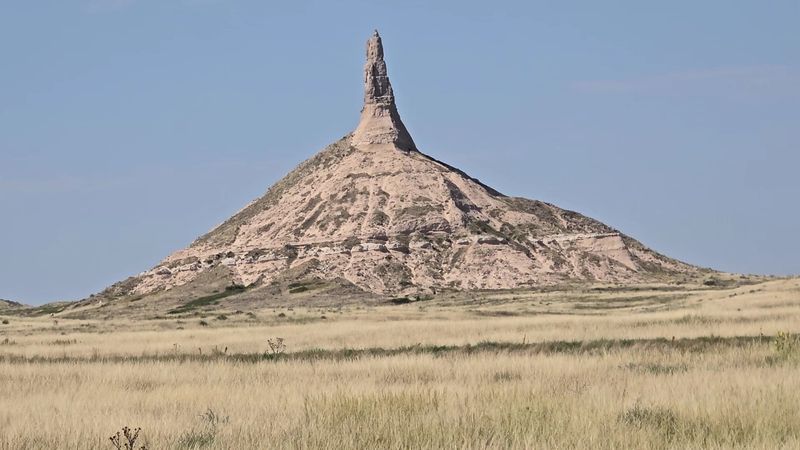
For generations of westward-bound pioneers, Chimney Rock was the most anticipated landmark on the entire Oregon Trail. Rising nearly 300 feet above the surrounding plains, the narrow rock spire was visible from miles away and served as a reliable signal that travelers were making real progress across the continent.
Today the site is managed by the National Park Service and includes a visitor center with exhibits covering the history of overland migration, the geology of the formation, and the role this particular landmark played in the national story of westward expansion.
The rock itself cannot be climbed, but the views from the surrounding area are dramatic enough to justify the stop on their own. Sunrise and late afternoon light are particularly good times to visit for photography.
The site sits about three miles south of Bayard and is accessible year-round with a modest entrance fee.
10. Ashfall Fossil Beds State Historical Park, Royal, Nebraska
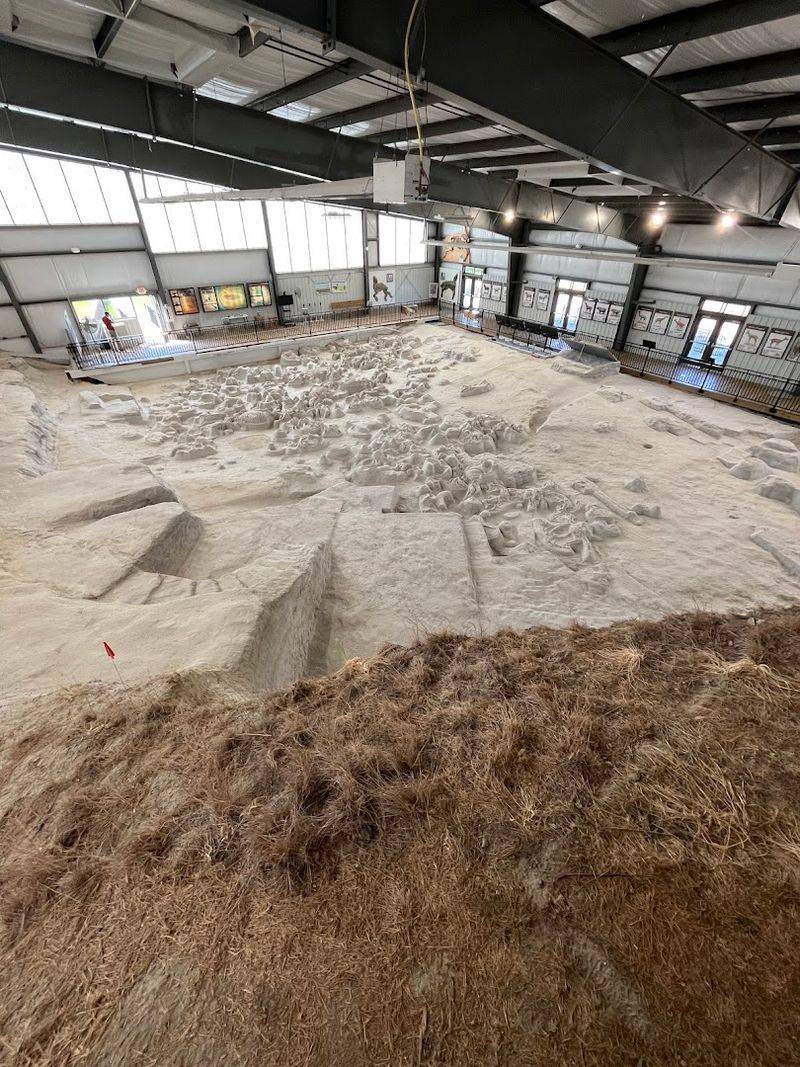
About 12 million years ago, a massive volcanic eruption buried a Nebraska watering hole under a deep layer of ash, preserving the animals gathered there in extraordinary detail. Ashfall Fossil Beds State Historical Park in Royal protects that site and has earned the nickname Nebraska’s Pompeii for exactly that reason.
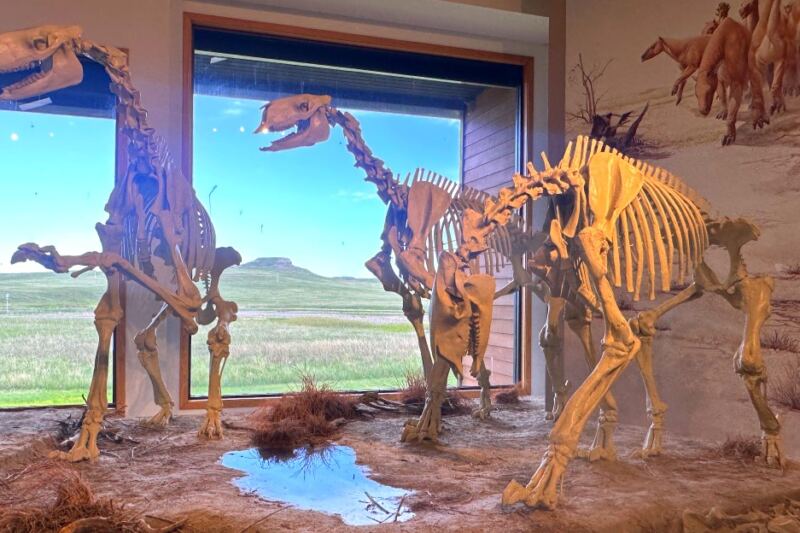
The centerpiece of the park is the Hubbard Rhino Barn, a large enclosed structure built directly over the active excavation area. Inside, visitors can walk along elevated boardwalks and look down at more than 200 complete fossil skeletons, including barrel-bodied rhinos, three-toed horses, and ancient camels, all preserved exactly where they fell.
Paleontologists still work the site during summer months, so visitors sometimes get to watch real fossil excavation in progress. The combination of genuine science, accessible presentation, and sheer prehistoric drama makes this one of the most remarkable stops in the entire state.
11. Scotts Bluff National Monument, Gering, Nebraska
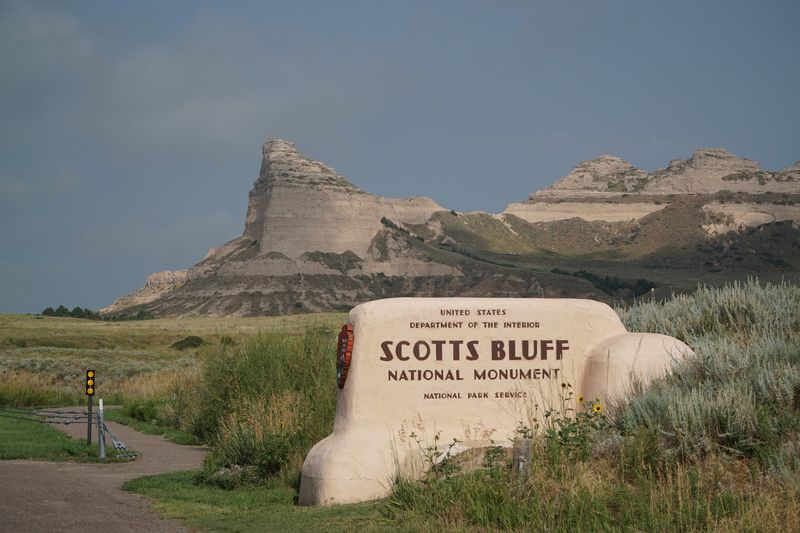
Scotts Bluff rises 800 feet above the North Platte River Valley and served as one of the most important navigational landmarks for pioneers traveling the Oregon, California, and Mormon trails throughout the 1800s. The formation was so well known that it appeared on trail maps and in the journals of thousands of westward migrants.
The National Monument today offers two ways to reach the summit viewpoints: a paved road that winds through tunnels carved directly into the bluffs, or a series of hiking trails that climb the formation on foot. Both options deliver sweeping views of western Nebraska that extend for miles in every direction.
The visitor center at the base includes exhibits on trail history, Native American connections to the land, and the geology behind the bluffs’ formation. Entry fees are reasonable, and the park is open year-round, though spring and fall tend to offer the most comfortable conditions for hiking.
12. Museum of American Speed, Lincoln, Nebraska
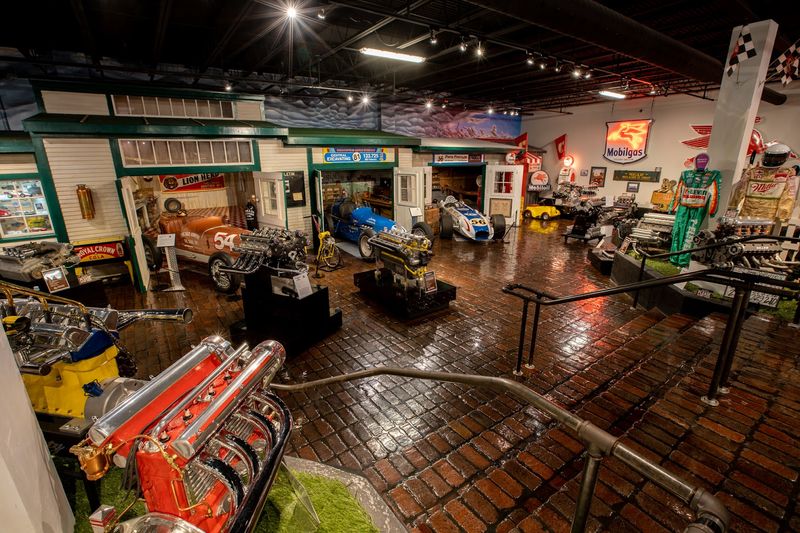
Founded in 1992 by racing enthusiast Bill Smith, the Museum of American Speed in Lincoln is one of the largest and most comprehensive automotive museums in the country. The facility covers more than 150,000 square feet across three levels, housing a collection that ranges from early racing engines to full championship-winning race cars.
The exhibits are organized to tell the story of American motorsport and automotive culture from the early 20th century onward. Vintage hot rods, muscle cars, pedal cars, die-cast models, and rare mechanical components all have dedicated display space, and the sheer density of the collection rewards slow, careful browsing.
Even visitors who do not consider themselves car enthusiasts tend to find something that catches their attention, whether it is a beautifully restored classic or an obscure piece of racing history they had never encountered before. Allow at least two hours, and consider that most visitors end up needing more.
13. Fort Cody Trading Post and Buffalo Bill Ranch Sign, North Platte, Nebraska
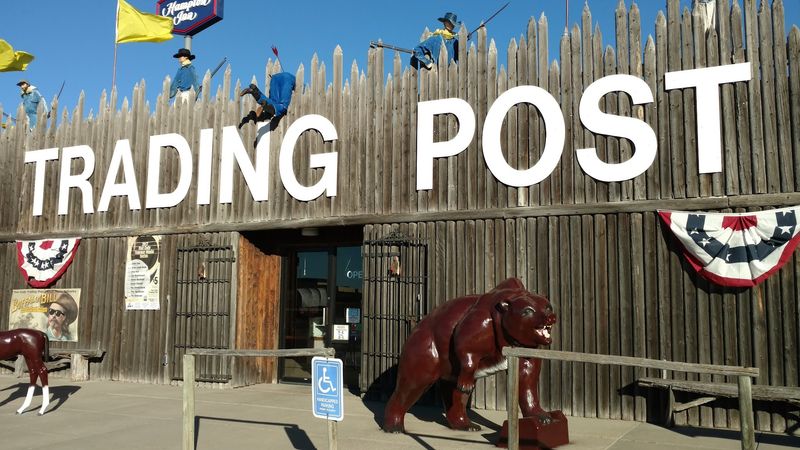
North Platte was home to Buffalo Bill Cody, and Fort Cody Trading Post has been celebrating that connection with considerable enthusiasm since 1961. The trading post sits along Interstate 80 and greets travelers with oversized western-themed signage and displays that capture the spirit of classic American highway culture.
Inside, the shop carries western souvenirs, Native American crafts, novelty items, and Buffalo Bill memorabilia across a surprisingly large retail floor. A hand-carved miniature Wild West show with over 20,000 figures is one of the most talked-about features, and it runs on a continuous loop for visitors who stop long enough to watch.
The exterior signage alone is worth a photo stop, and the trading post functions as a reliable rest break with restrooms, snacks, and a genuine sense of old-school roadside Americana. It is the kind of place that feels like a throwback to a specific era of American travel that most highways have long since left behind.
Share this story