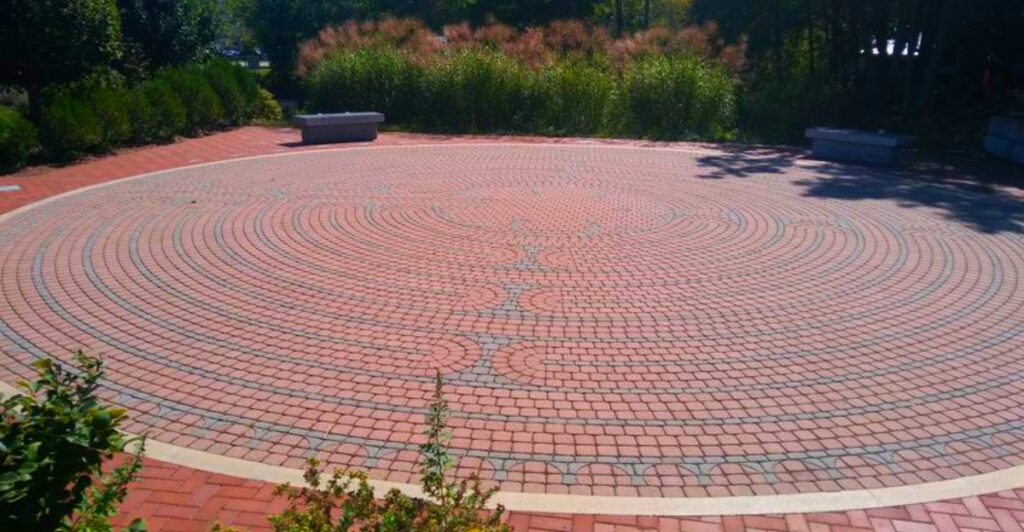
Tucked into downtown Nashua, this small public garden offers a surprising escape from the city’s busy streets. Inspired by the labyrinth at France’s Chartres Cathedral, the space combines winding pathways, sculptures, colorful tilework, and quiet seating areas into a destination designed for reflection rather than recreation.
Unlike a typical park attraction, the garden encourages visitors to slow down and spend time exploring its details. Its central location makes it easy to miss, but those who stop often discover one of Nashua’s most distinctive hidden gems.
It’s a place that stands out not because of its size, but because of the experience it creates.
Where Exactly This Garden Hides in Plain Sight
Most urban parks announce themselves loudly, but this one practically whispers. The Reflection Garden and Labyrinth is tucked within Rotary Common Park at 315 Main Street in downtown Nashua, New Hampshire, with a secondary entrance noted at 14 Bridle Path, Nashua, NH 03060.
The park sits directly across Main Street from Marketplace Plaza, making it easy to spot once you know what you are looking for. From the street, it reads as a patch of green amid a busy commercial corridor, and that understated quality is part of its charm.
Nearby landmarks include the Holocaust Memorial and the strip mall across the street, both of which offer parking since the garden itself has no dedicated lot. The walk from either spot takes only a couple of minutes.
Once you step inside the open space, the commercial energy of downtown Nashua softens noticeably, and the garden begins to do its quiet work on you right away.
The Surprising History Beneath Your Feet
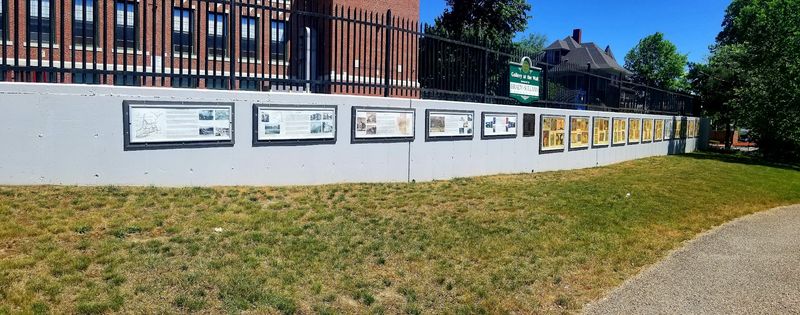
The ground you walk on at this garden carries more history than most visitors realize. The land that makes up Rotary Common Park has an extensive commercial past, and the park itself features displays that walk you through the area’s story in text and images.
Panels and reproduced photographs protected in weather-resistant plastic share the neighborhood’s evolution from a busy industrial and commercial district to the contemplative green space it is today. That transformation from hustle to stillness feels almost intentional, as if the land itself decided it had earned a rest.
The Rotary Club of Nashua played a significant role in developing and maintaining the space, which is reflected in the park’s full name. Local investment and civic pride are woven into every corner of the design.
Knowing that the garden grew out of community effort rather than a top-down city project makes every step along its brick path feel a little more meaningful and personal.
Who Built the Labyrinth and Why It Matters
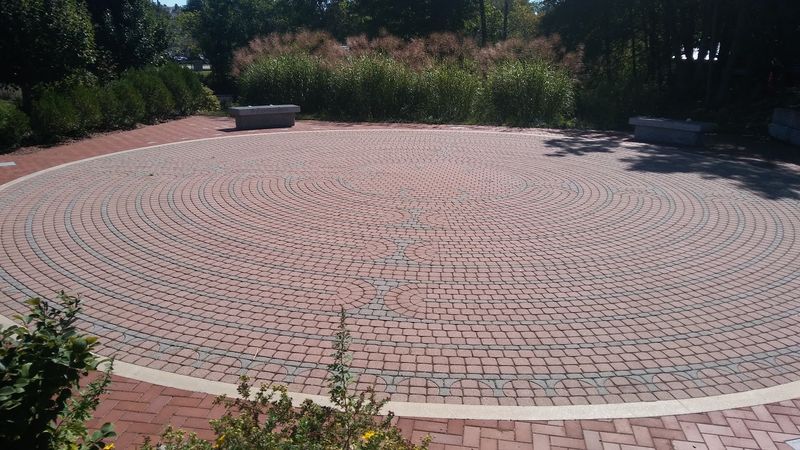
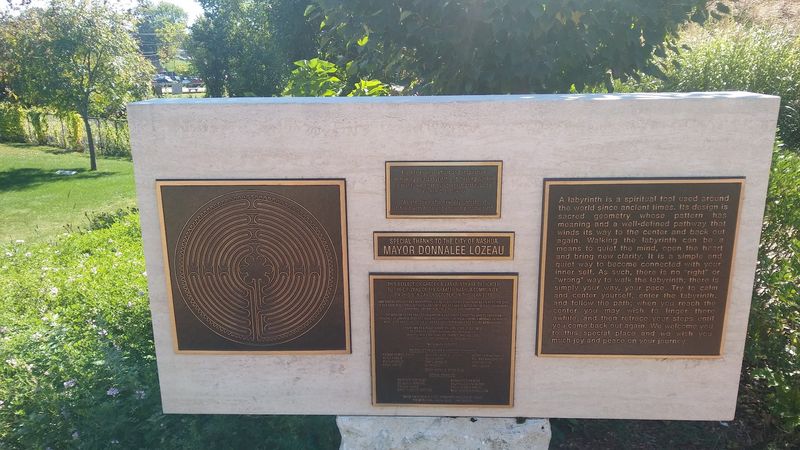
Local artist Marty Kermeen is the creative mind behind the labyrinth at the heart of this garden, and the design he chose carries real weight. The pattern is an 11-circuit replica inspired by the famous labyrinth at Chartres Cathedral in France, one of the most recognized contemplative walking designs in the world.
That French original dates back to the 13th century and was built into the floor of a Gothic cathedral as a path for spiritual pilgrimage. Kermeen brought that centuries-old tradition to a New Hampshire sidewalk, which is a genuinely remarkable thing to do.
The choice of 11 circuits means the path winds inward through eleven concentric rings before reaching the center, creating a walk that takes longer than you expect and demands a certain mental presence. The labyrinth is built from brick set into the ground, durable and understated, blending into the park’s overall aesthetic without demanding attention until you actually stop and look down at what is beneath your feet.
How a Labyrinth Differs From a Maze
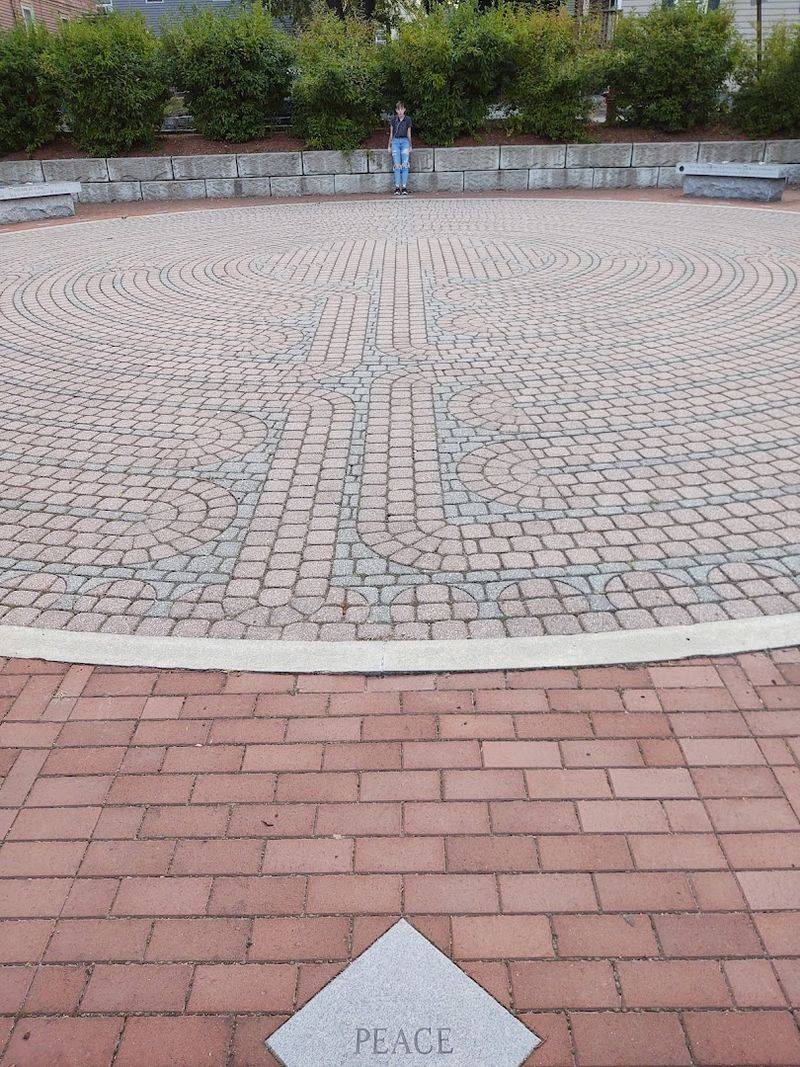
A lot of first-time visitors arrive expecting a puzzle, and that expectation needs a quick reset. A labyrinth is not a maze.
There are no dead ends, no wrong turns, and no frustrating backtracks. There is only one path, and it leads to the center.
The whole point is to walk slowly, let your mind follow the turns without forcing anything, and arrive at the middle feeling more settled than when you started. Think of it less as a navigation challenge and more as a moving meditation with a clear destination.
At this garden, the labyrinth is compact enough that you can technically cross it in a few large steps, but that completely misses the purpose. The magic only happens when you commit to the pace the path sets for you.
Visitors who take around 20 minutes, pausing at the center before walking back out, consistently describe the experience as genuinely calming in a way that is hard to explain until you try it yourself.
The Sculpture That Stops You Mid-Step
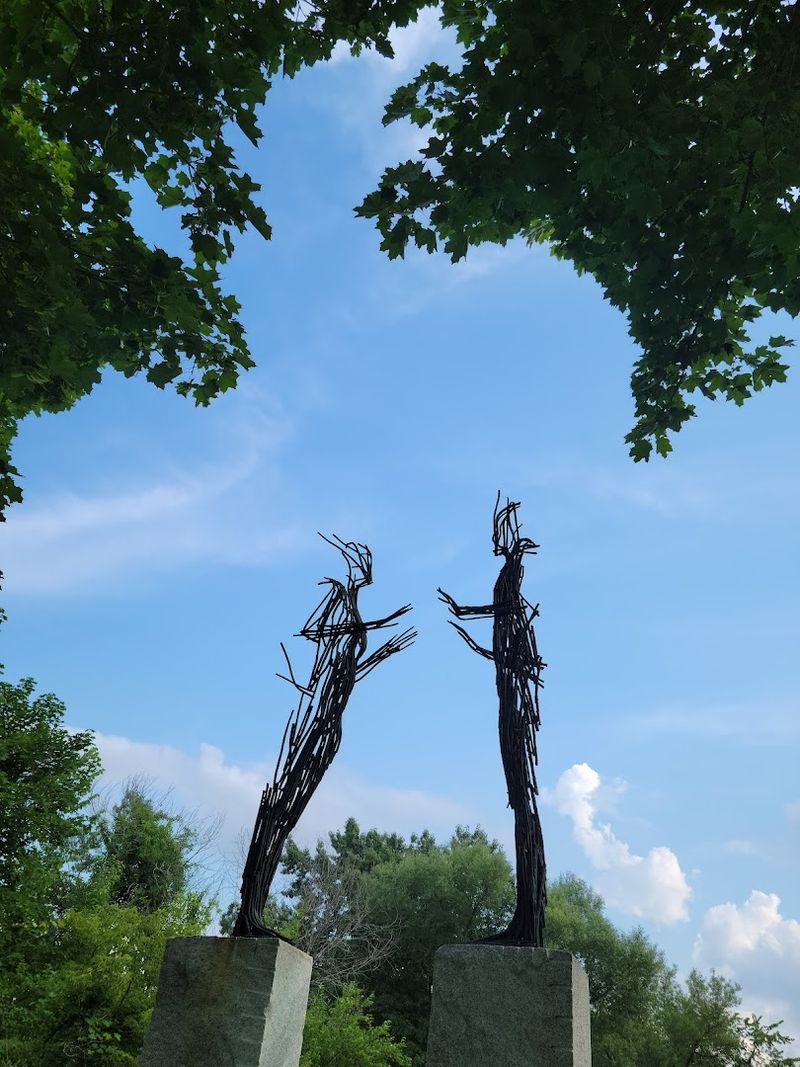
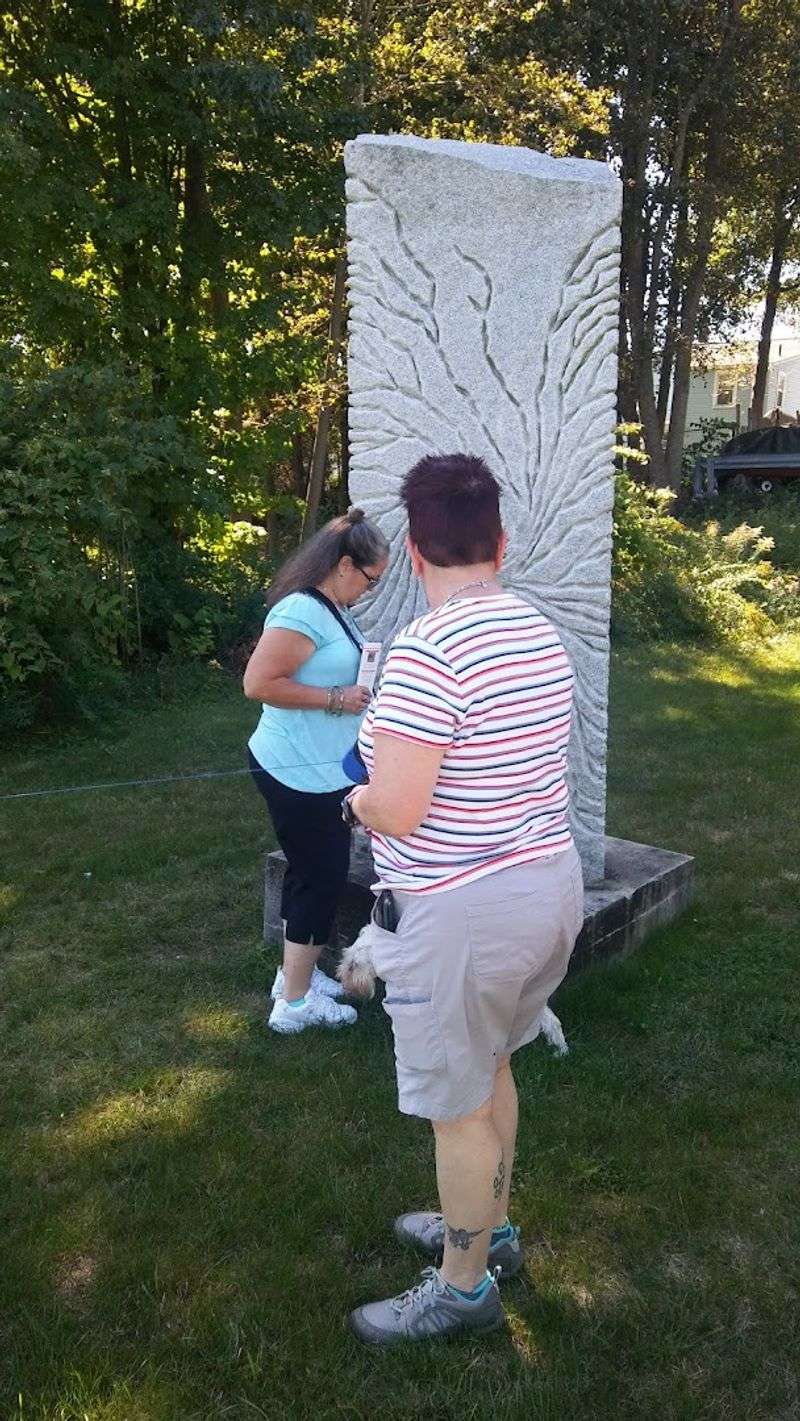
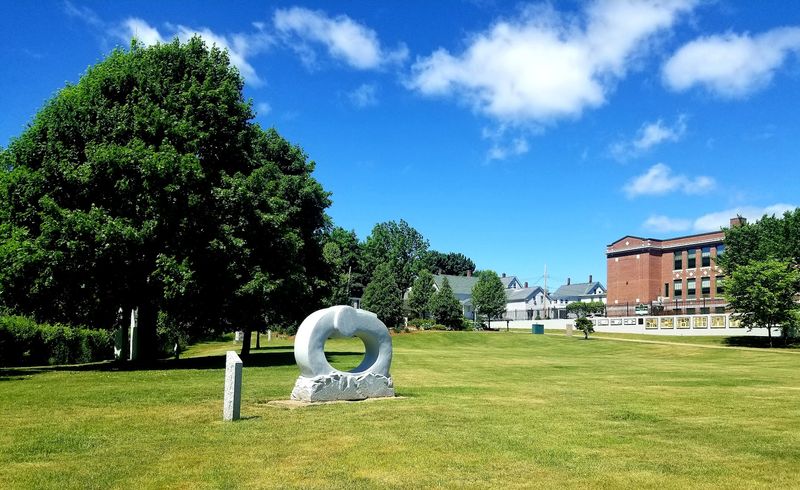
Art has a way of catching you off guard when you are not looking for it, and that is exactly what happens with the sculptures scattered throughout this garden. The most notable piece is called “Encounter,” created by artist Luben Boykov, and it has a presence that makes you pause and actually look rather than just glance.
Boykov’s work tends to explore human connection and the tension between stillness and movement, and “Encounter” fits naturally into a space designed for reflection. The sculpture garden aspect of the park is not a single concentrated area but rather a series of works placed throughout the grounds, so discoveries happen gradually as you move through the space.
Each piece feels considered rather than decorative, as if the curators thought carefully about where art could deepen the experience rather than simply fill empty space. The combination of sculpture and labyrinth turns an ordinary city park visit into something closer to a slow gallery walk, and the next feature of this garden adds yet another layer to that experience.
Tiles, Words, and the Small Details Worth Noticing
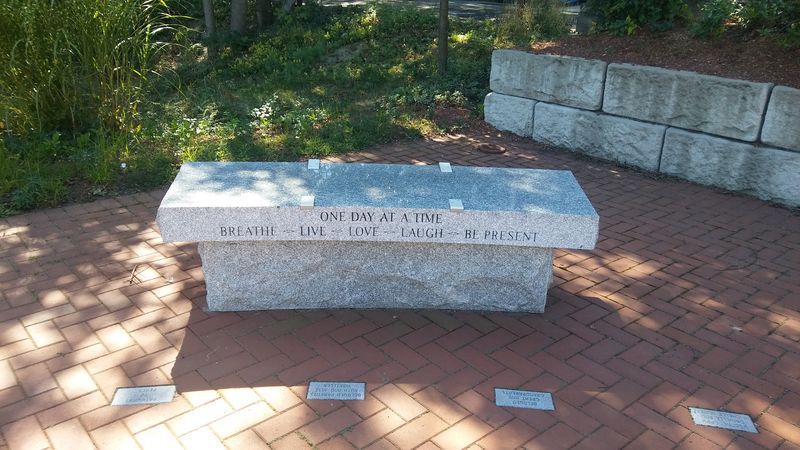
Some of the most quietly powerful moments at this garden come not from the big sculptures or the labyrinth, but from the small tiles set into the design around the space. Colorful tiles inscribed with inspiring words and phrases are embedded throughout the garden, and they reward the kind of slow, attentive walking the space encourages.
The words range from simple affirmations to more philosophical prompts, and stumbling across a new one mid-walk creates a small but genuine moment of connection. It is the kind of detail that feels human and handmade rather than corporate or generic.
These tiles give the garden a layered quality, where the more time you spend, the more you notice. First-time visitors often focus on the labyrinth and the larger sculptures, but return visitors tend to mention the tiles as the detail that sticks with them longest.
Paired with the marble benches placed throughout the space, the overall design clearly prioritizes lingering over passing through, which is a rare and refreshing quality in a public park.
What the Marble Benches Are Actually For
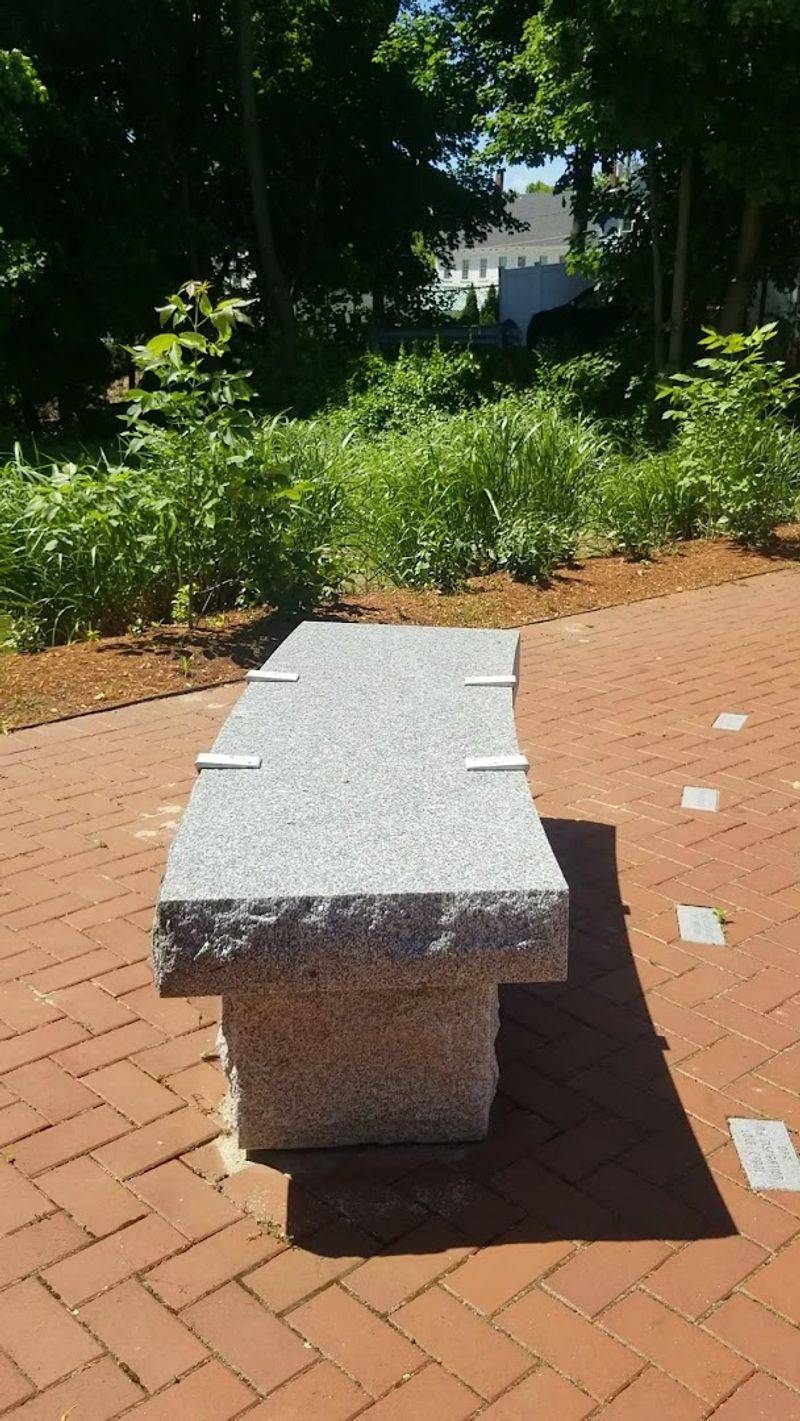
Marble benches do not appear in most city parks, and their presence here says something deliberate about the design philosophy behind this space. They are placed at thoughtful intervals throughout the garden, positioned to offer views of the labyrinth, the sculptures, or simply the open green space around them.
Sitting on a marble bench has a different quality than dropping onto a plastic chair or a wooden slat. The material itself feels considered, a little formal, a little cool to the touch, and it signals that this is a place worth settling into rather than passing through quickly.
Visitors who come with a lot on their minds often describe the benches as the place where the real release happens. You walk the labyrinth, you look at the art, and then you sit.
The combination of physical movement and stillness seems to be the full experience the garden was designed to offer. The benches are not an afterthought; they are as central to the design as the labyrinth itself.
The Green and Floral Surroundings That Frame Everything
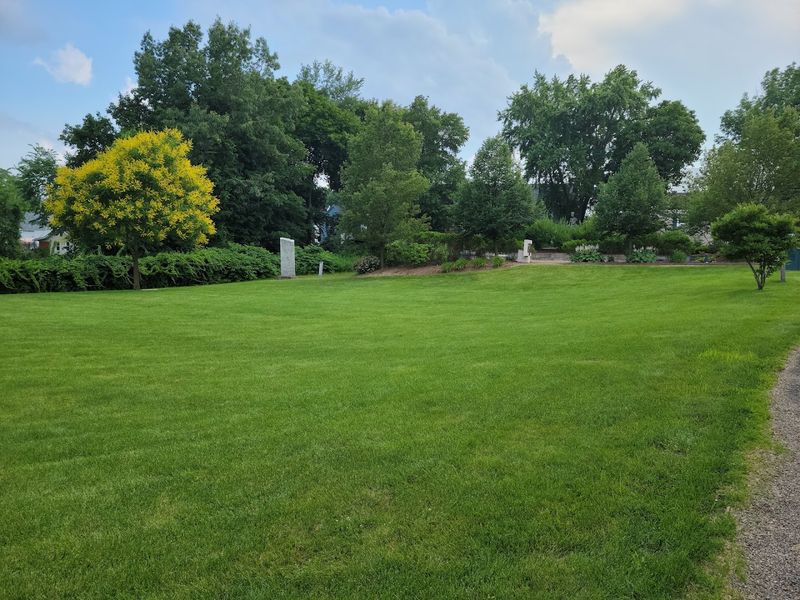
Beyond the brick and stone features, the garden earns its name partly through the plant life that surrounds and softens everything. Lush greenery and vibrant floral displays frame the labyrinth and the sculptures, giving the space a sense of enclosure that muffles the nearby road noise more effectively than you might expect.
The plantings are not exotic or overly manicured. They have a natural, approachable quality that fits the meditative tone of the space rather than competing with it.
Seasonal flowers add color at different points in the year, meaning the garden looks noticeably different depending on when you visit.
Spring visits bring fresh green growth and early blooms, while summer fills the space with fuller, more saturated color. Even in quieter seasons, the structure of the garden holds up because the brick labyrinth, stone benches, and sculptures remain as anchors.
The plantings are the emotional warmth of the space, and the hardscape elements are its bones, and together they create something that feels genuinely complete.
The Atmosphere That Makes This Place Feel Different
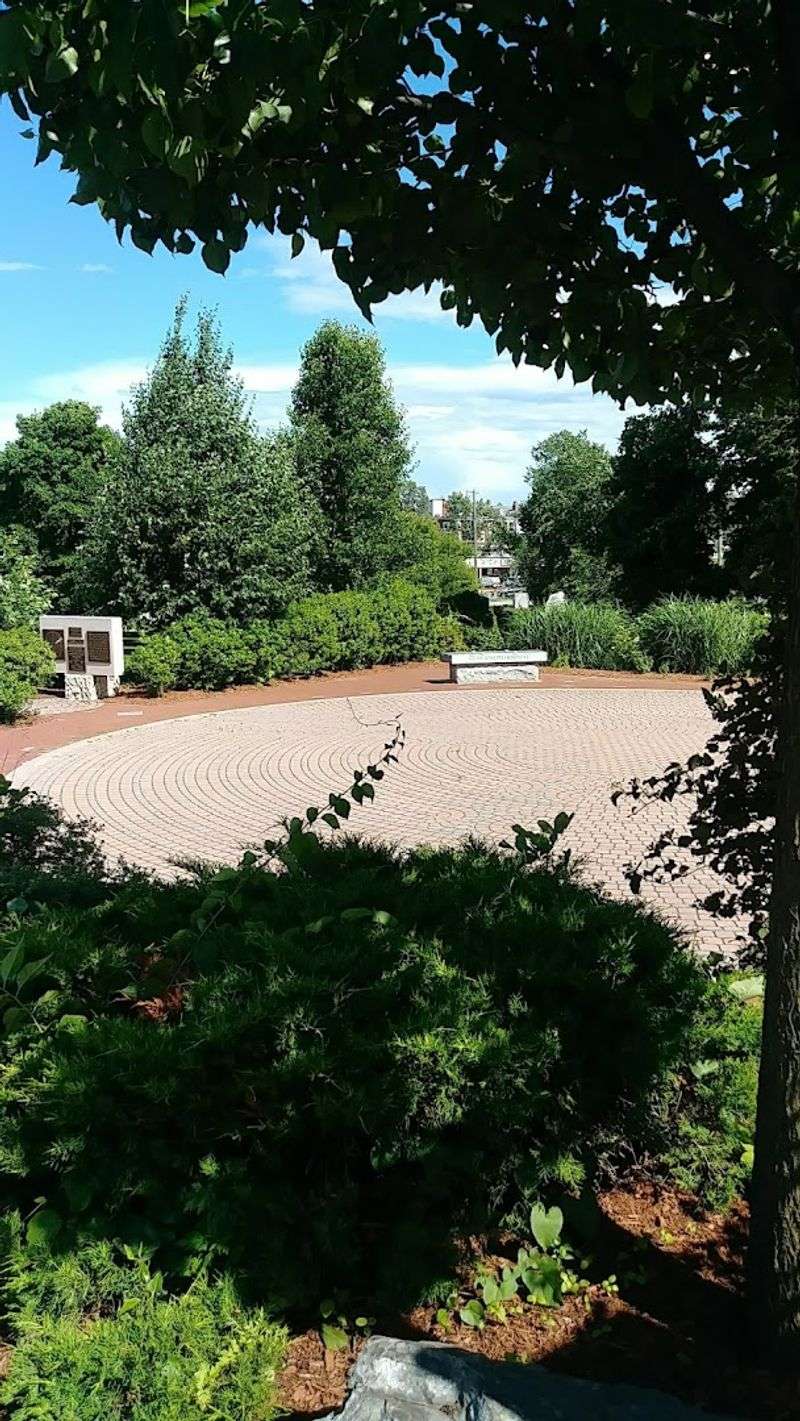
There is something about the openness of this garden that makes it feel safer and calmer than its surroundings would suggest. The park sits in a dense downtown area, yet the open layout creates a visual and psychological buffer from the commercial energy just steps away.
The labyrinth occupies a slightly elevated plateau within the park, which gives it a natural separation from the street level and adds a subtle sense of arrival when you step onto it. That small change in elevation matters more than it sounds, because it shifts your perspective just enough to feel like you have entered a different kind of space.
The overall atmosphere is best described as quietly sacred, not in a religious sense but in the sense that the space asks you to behave differently than you would on a sidewalk. People speak more softly here, move more slowly, and tend to put their phones away.
That collective unspoken agreement to be present is one of the most unexpectedly powerful things about visiting this garden.
When to Visit for the Best Experience
Timing your visit makes a real difference at this garden. The space is open 24 hours a day, every day of the week, which means you technically have the freedom to show up at any hour.
In practice, early weekday mornings offer the most serene experience by a significant margin.
Weekend afternoons tend to bring more foot traffic from the surrounding downtown area, and Friday evenings in particular can get noisy as people gather in the park to unwind after the week. The contemplative atmosphere that makes the garden special is harder to access when the space is busy or loud.
Morning visits in the warmer months are especially rewarding because the light falls softly across the brick labyrinth and the sculptures take on a different quality in the early hours. Arriving when the garden is quiet and largely empty gives you the full experience the design intended.
Pair that timing with a slow walk through the labyrinth and a few minutes on one of the marble benches, and you will understand exactly why regulars keep coming back.
Why This Garden Deserves More Attention Than It Gets
Not every meaningful place announces itself with fanfare, and this garden is proof of that. It sits in the middle of a busy city, free to enter, open every day, and yet most people in Nashua and beyond have never heard of it.
That quiet obscurity is both its limitation and its greatest quality.
The fact that it is not overrun with visitors means that when you arrive, the space actually works. You can walk the labyrinth without weaving around crowds, sit on a bench without competing for space, and absorb the art without someone else’s commentary in your ear.
That kind of uncluttered access to a thoughtfully designed public space is increasingly rare.
The garden was built with a clear intention, to offer a place for body and spirit to slow down together, and it delivers on that intention in a way that feels honest and unforced. Whether you come once out of curiosity or return regularly as a personal ritual, the Reflection Garden and Labyrinth offers something genuinely worth your time in a city that rarely gets credit for its quieter, more contemplative side.
Share this story