Scotland’s landscapes and historic landmarks played a starring role in Outlander, bringing the series’ world to life with real castles, villages, and battlefields. Yet these locations were remarkable long before they appeared on screen, each offering its own rich history and distinctive character.
From the tower house that inspired Lallybroch to grand estates and dramatic countryside settings, these places showcase the beauty and heritage that make Scotland so captivating. Whether you’re an Outlander fan or simply love historic destinations, these 12 locations are sure to inspire your next adventure.
1. Doune Castle, Doune, Scotland, United Kingdom
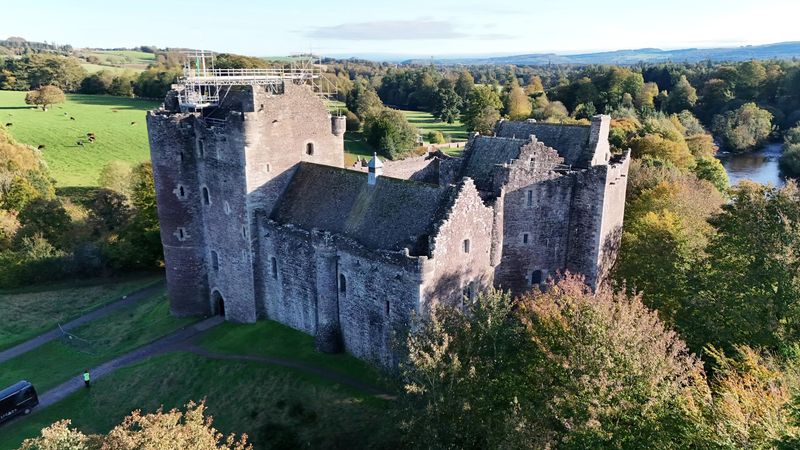
Long before it became Castle Leoch in Outlander, Doune Castle was already one of Scotland’s most impressively intact medieval fortresses, and it earns that reputation on its own terms.
Built in the late 14th century, the castle features a towering 100-foot gatehouse, a grand great hall, and a kitchen block that gives a real sense of how a powerful household once operated.
The courtyard is spacious and open, making it easy to picture the kind of clan gatherings that Outlander brought to life on screen.
Fans of other shows and films will also recognize it from Monty Python and the Holy Grail and the pilot episode of Game of Thrones, which makes Doune something of a serial screen star.
An audio guide narrated by Sam Heughan is available, adding a fun layer for Outlander fans exploring the halls.
The riverside setting adds a quieter appeal, with woodland walks nearby that round out the visit nicely.
2. Culross Palace, Culross, Scotland, United Kingdom
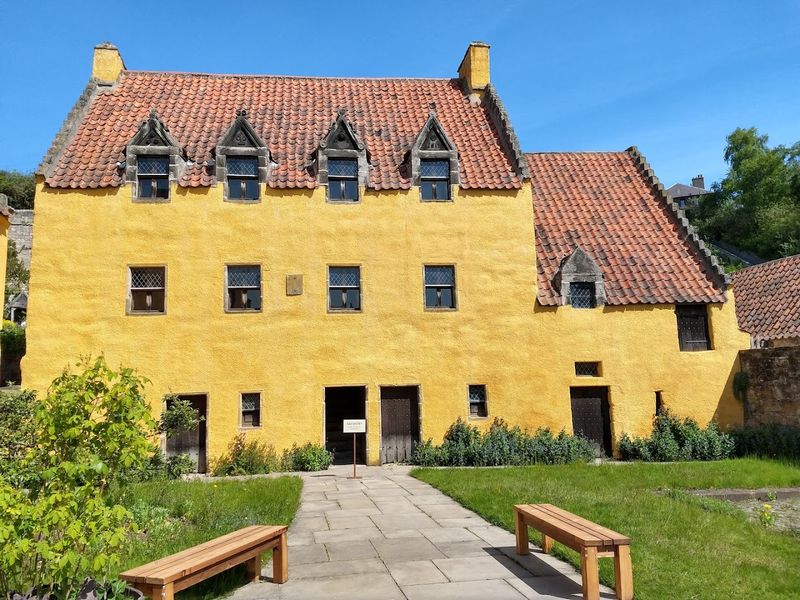
That warm ochre-yellow color is the first thing most visitors notice about Culross Palace, and it sets the tone for a village that feels genuinely preserved rather than staged for tourists.
The palace itself dates to the late 16th and early 17th centuries, and its painted ceilings are among the finest surviving examples of decorative domestic interiors from that period in Scotland.
In Outlander, the village of Culross served as the fictional Cranesmuir, and the palace gardens were used to represent Claire’s herb garden at Castle Leoch.
Compact rooms, a terraced garden, and original painted woodwork make the interior feel like a real window into how a prosperous Scottish merchant family once lived.
Outside the palace, the cobbled lanes and whitewashed houses with red pantile roofs keep the atmosphere going throughout the whole village.
Culross is managed by the National Trust for Scotland, and the entire burgh has a consistency that makes it one of Scotland’s most visually complete historic towns.
3. Midhope Castle, South Queensferry, Scotland, United Kingdom
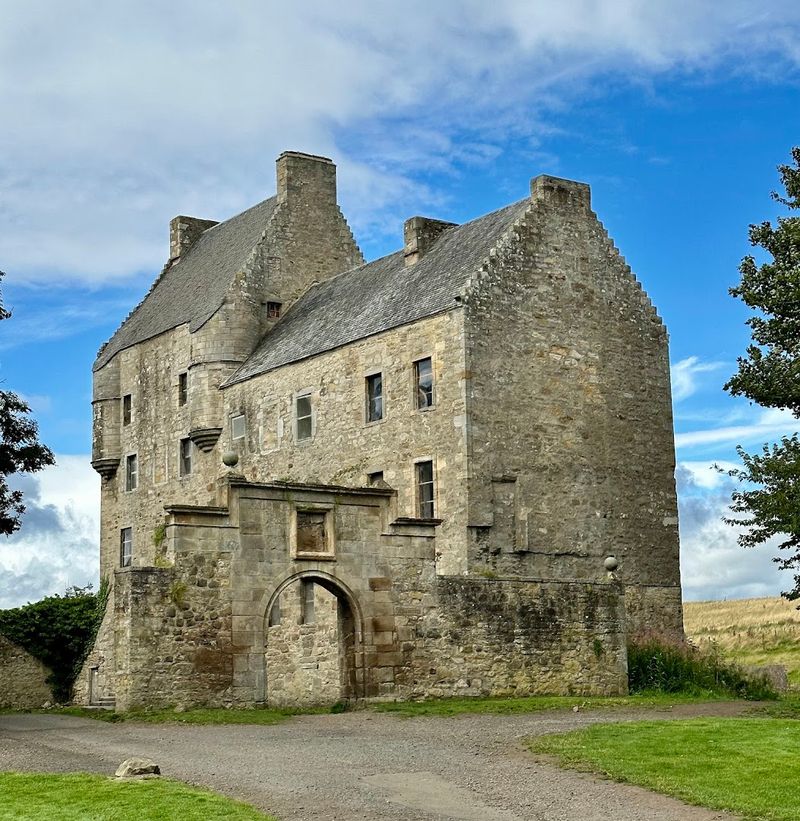
Every Outlander fan knows the moment they see it: the arched gateway, the tall stone tower, and the slightly weathered look that makes Midhope Castle the perfect stand-in for Lallybroch, Jamie Fraser’s ancestral home.
This 16th-century tower house sits on the Hopetoun Estate near South Queensferry, and its timeworn exterior was used extensively during filming of the series.
The interior is derelict and closed to visitors, but the exterior is accessible and gives fans a full view of the facade that appeared in so many key scenes.
What makes Midhope special beyond the Outlander connection is its genuine age and condition. It has not been restored into a polished attraction, which means the stone looks exactly as lived-in and storied as the fictional Lallybroch was supposed to be.
A visit here is straightforward and low-key, with no entry fee for the exterior and no crowds competing for the same photograph.
The Hopetoun Estate itself is worth exploring further for its grander Georgian mansion nearby.
4. Blackness Castle, Blackness, Scotland, United Kingdom
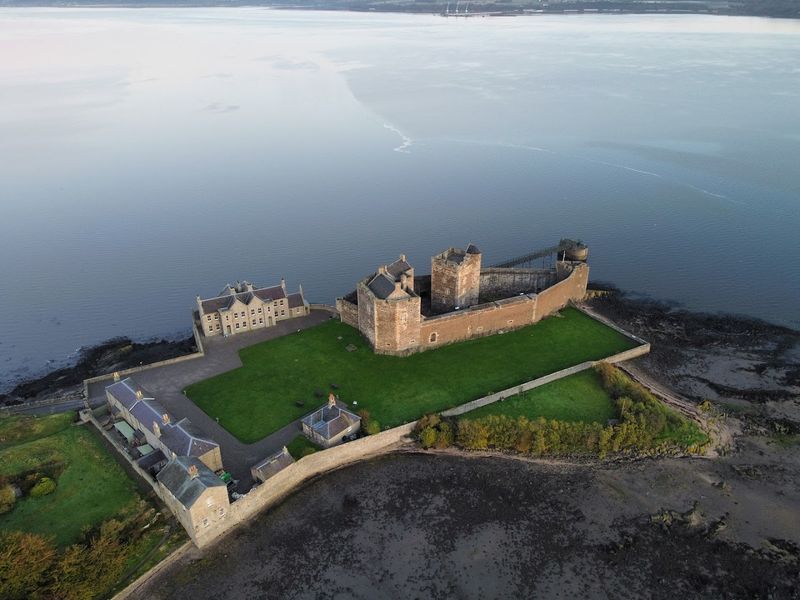
Built on a narrow promontory jutting into the Firth of Forth, Blackness Castle has a shape that earned it the nickname the Ship That Never Sailed, and that distinctive silhouette is hard to forget once you have seen it.
The 15th-century fortress served as Fort William in Outlander, the grim base of Captain Black Jack Randall, and its stone interior was the setting for some of the show’s most intense scenes.
History, however, gave the castle plenty of drama long before any cameras arrived. It served as a state prison, a garrison fortress, and an ammunition depot across several centuries.
The views across the Firth of Forth are genuinely striking, with the water visible from nearly every angle of the castle walls.
Historic Environment Scotland manages the site, and entry is affordable. The coastal walk leading to the castle adds an enjoyable approach that builds anticipation before you even reach the gate.
Blackness is only about 4 miles from Linlithgow, making the two easy to combine in a single day.
5. Falkland Palace, Falkland, Scotland, United Kingdom
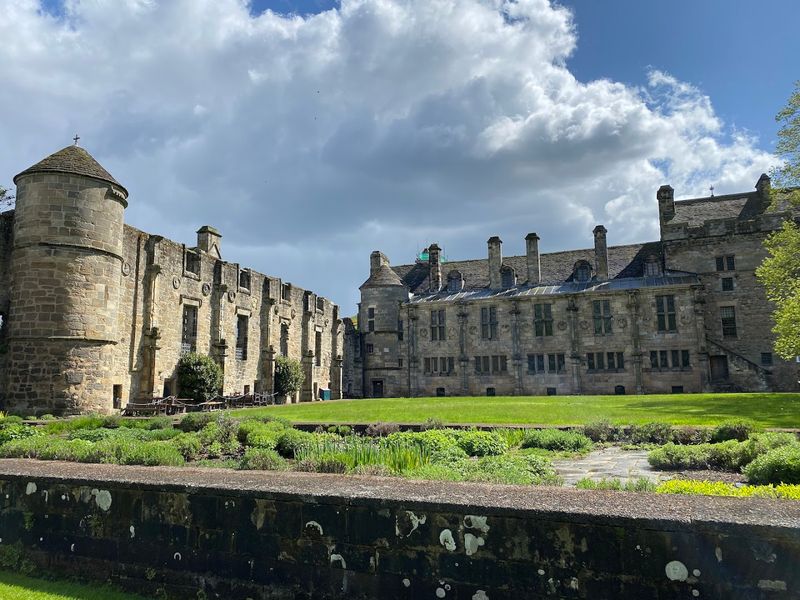
Renaissance architecture is not something you expect to find tucked into a quiet Fife village, but Falkland Palace delivers exactly that, complete with ornate stonework, a royal tennis court, and a formal garden that has been carefully maintained for centuries.
In Outlander, the village of Falkland stood in for 1940s Inverness, and the Covenanter Hotel on the square served as Mrs. Baird’s B&B where Claire and Frank began their fateful second honeymoon.
The palace itself was a favorite retreat of the Stuart monarchs, and its history is rich enough to stand entirely apart from its screen credits. Mary, Queen of Scots spent time here, and the building still carries a sense of royal purpose.
The walled garden is one of the highlights, with herbaceous borders and a working royal tennis court that dates to 1539, making it the oldest in Britain still in use.
Falkland village keeps the period feel going with its cobbled square, traditional shopfronts, and a general pace of life that resists rushing.
6. Glencoe Visitor Centre, Glencoe, Scotland, United Kingdom
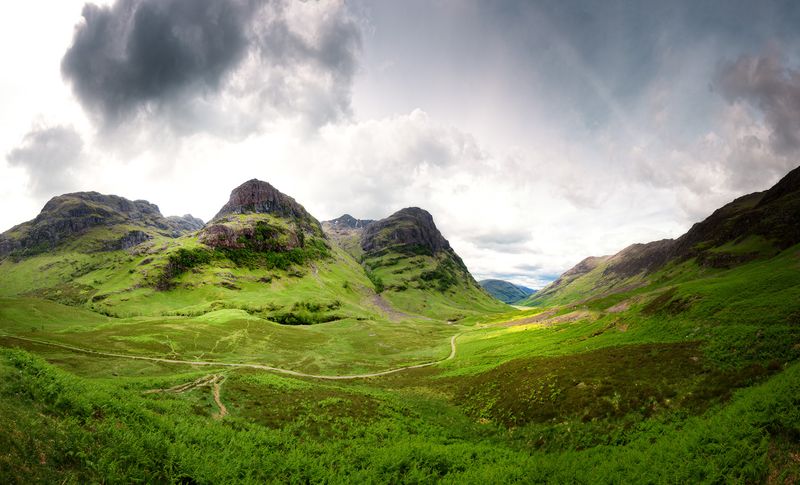
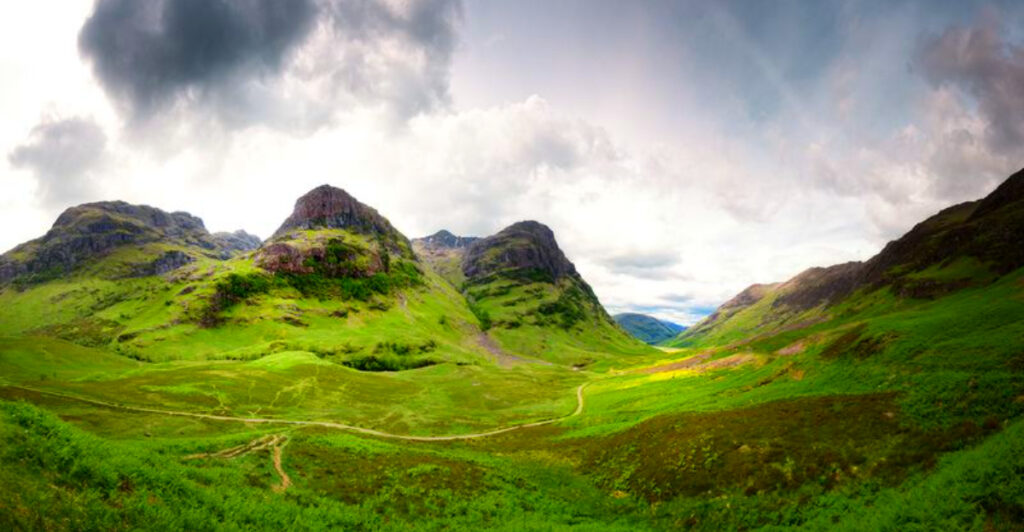
Few landscapes in Scotland carry the kind of raw, unfiltered drama that Glencoe delivers, and it is no coincidence that the iconic opening credits of Outlander sweep across this glen with such confidence.
The Glencoe Visitor Centre, run by the National Trust for Scotland, provides a practical and informative starting point before heading into the mountains. Exhibits cover the area’s geology, wildlife, and the 1692 Glencoe Massacre, a historical event with deep emotional weight for Scotland.
From the visitor centre, a network of walking routes fans out across the glen, ranging from gentle lochside paths to more challenging mountain trails. The Three Sisters ridge is one of the most photographed formations in the entire country.
Even on a grey day, the scale of the landscape is striking. The mountains rise steeply on both sides of the valley, and the open floor of the glen gives a real sense of exposure and space.
Glencoe is about 17 miles south of Fort William, making it an easy addition to any Highland road trip.
7. Culloden Battlefield, Inverness, Scotland, United Kingdom
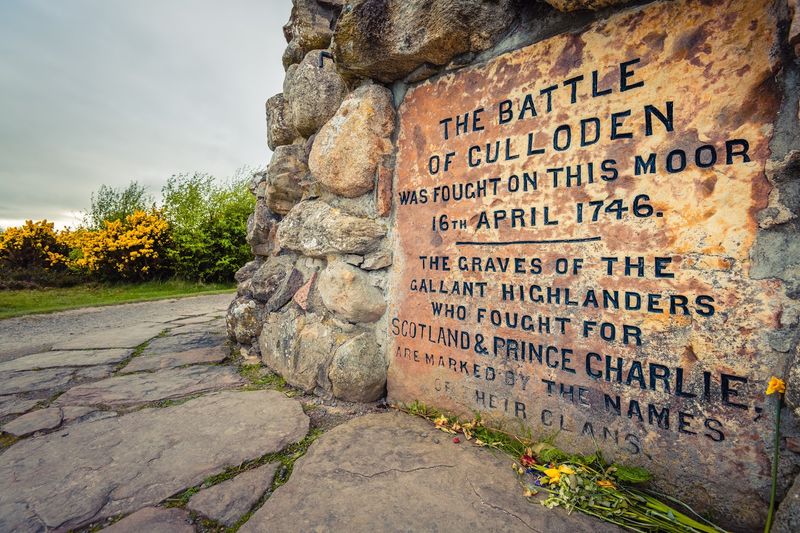
April 16, 1746 is a date that changed Scotland permanently, and Culloden Battlefield is where that change happened in the span of under an hour during the last pitched battle fought on British soil.
Outlander built much of its emotional core around the Jacobite Rising and the Battle of Culloden, which makes this site particularly resonant for fans of the series. The battlefield and visitor centre together tell the story with clarity and care.
The National Trust for Scotland visitor centre uses artefacts, interactive displays, and first-person accounts to explain both the military strategy and the human cost of the battle. It is thorough without being overwhelming.
Outside, the open moorland is marked with clan grave markers, a memorial cairn, and information boards placed along a walking route across the battlefield.
The atmosphere here is subdued and respectful, which feels appropriate given the scale of what happened. Most visitors find themselves walking more slowly and quietly than they expected.
Culloden is about 5 miles east of Inverness and easy to reach by bus or car.
8. Highland Folk Museum, Newtonmore, Scotland, United Kingdom
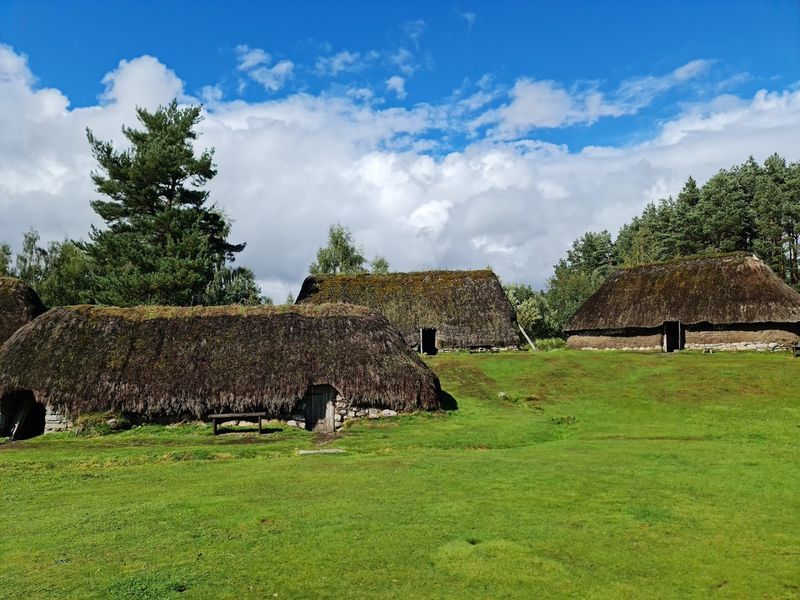
Forget the grand castles for a moment, because the Highland Folk Museum offers something rarer: a detailed, hands-on look at how ordinary Highland people actually lived during the centuries that Outlander dramatizes so vividly.
Spread across 80 acres near Newtonmore, this open-air museum features reconstructed buildings from different periods of Highland history, including a working 1700s township that was used as a filming location for Outlander’s early Highland scenes.
Thatched cottages, a working croft, a schoolhouse, and a post office from various eras are all part of the site. Staff in period dress demonstrate traditional crafts and daily tasks, which adds real educational value without feeling like a performance.
The museum is free to enter, which makes it one of Scotland’s best-value cultural stops. It is run by Highland Council and consistently earns high marks from visitors for its depth and accessibility.
Allow at least two to three hours to walk the full site properly. The 1930s working farm and the furnished interiors of the older buildings are particular highlights worth lingering over.
9. Linlithgow Palace, Linlithgow, Scotland, United Kingdom
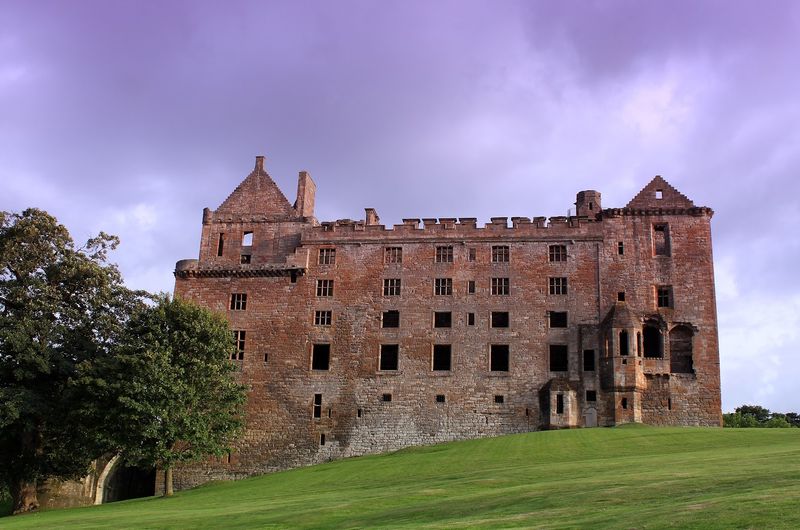
Mary, Queen of Scots was born within these walls in 1542, and Linlithgow Palace has been carrying that remarkable detail with quiet dignity ever since.
The red sandstone ruin sits beside Linlithgow Loch and has a scale that makes clear just how grand this royal residence once was. The roofless great hall, with its tall windows open to the sky, is one of the most striking interior spaces in Scottish heritage.
In Outlander, Linlithgow Palace stood in for the grim Wentworth Prison, a transformation that says a lot about how adaptable and atmospheric the ruin can be depending on the lighting and the camera angle.
Historic Environment Scotland maintains the site, and entry is reasonably priced. The ground floor rooms and the courtyard fountain, which reportedly ran with different liquids during royal feasts, are well worth exploring.
The loch-side setting gives the palace a picturesque backdrop that photographs well from multiple angles around the water.
Linlithgow town itself is pleasant and has good cafes and independent shops within easy walking distance of the palace entrance.
10. Preston Mill, East Linton, Scotland, United Kingdom
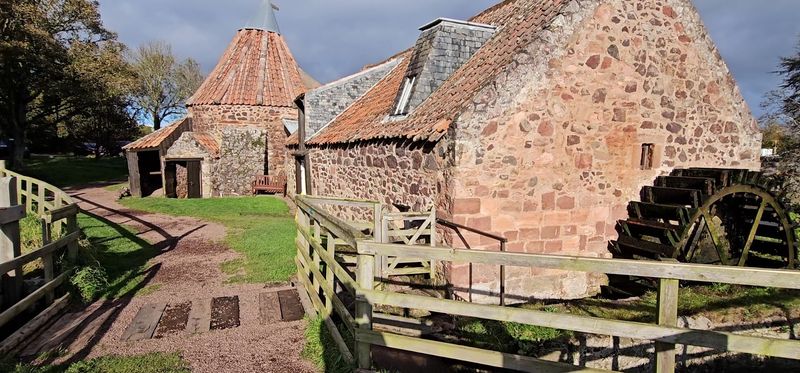
Preston Mill has the kind of compact, well-composed look that makes it a favorite subject for photographers, but there is more going on here than a pretty picture.
The mill is one of the oldest surviving water-powered grain mills in Scotland, with parts of the building dating back to the 16th century. Its distinctive conical roof, red pantile coverings, and working waterwheel make it immediately recognizable, and it appeared in Outlander as the mill at Lallybroch.
National Trust for Scotland guides lead tours that explain the milling process in practical detail, covering how grain moved through the building and how hard the work actually was. The contrast between the mill’s charming exterior and its demanding history is part of what makes it interesting.
Nearby, the Phantassie Doocot is a beehive-shaped dovecote that once housed hundreds of pigeons and is worth a short detour.
East Linton itself is a pleasant village with a good cafe, and the River Tyne beside the mill makes for a relaxing spot to sit before or after the tour.
11. Craigmillar Castle, Edinburgh, Scotland, United Kingdom
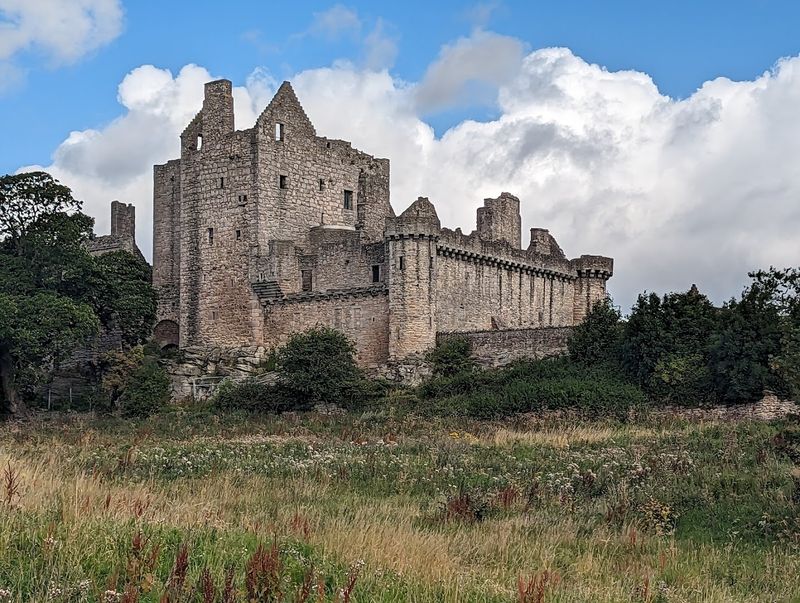
Just three miles from Edinburgh city centre, Craigmillar Castle manages to feel genuinely remote, partly because it sits on a low hill with open views and partly because it gets far fewer visitors than the more famous castle on the Royal Mile.
The 15th-century ruin is one of Scotland’s best-preserved tower houses, with a complex of courtyards, towers, and passages that reward slow exploration. Mary, Queen of Scots retreated here after the murder of her secretary David Rizzio in 1566, and the castle played a role in the plotting that defined her turbulent reign.
Outlander used Craigmillar to represent several locations, taking advantage of its layered stonework and variety of interior spaces.
Historic Environment Scotland manages the site, and entry is low-cost. The upper floors of the main tower offer panoramic views over Edinburgh and the surrounding countryside, which alone justifies the climb.
Because Craigmillar sits outside the main tourist trail, it tends to be quieter than comparable sites, making it a more relaxed and personal experience for those who seek it out.
12. Drummond Castle Gardens, Crieff, Scotland, United Kingdom
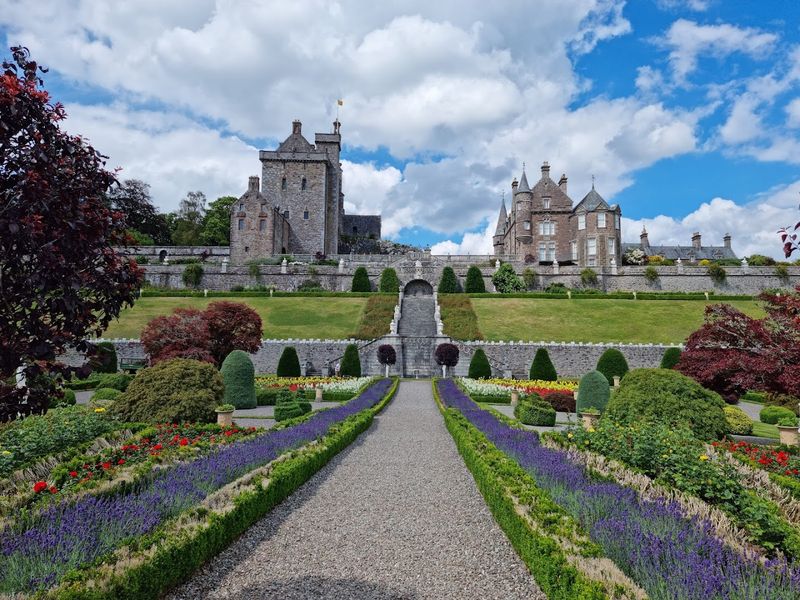
Most Scottish castle gardens are pleasant. Drummond Castle Gardens are something else entirely, a formal parterre on a scale that makes you do a double-take when you first see it from the upper terrace.
The gardens were famously used in Outlander to represent the gardens of the Palace of Versailles during the Paris sequences in Season 2, and the choice makes perfect sense. The geometric patterns, clipped yew hedges, and long axial layout have a European grandeur that stands apart from the wilder Highland landscapes elsewhere on this list.
The central feature is a multi-faced sundial from 1630, and the whole design radiates outward from it in a pattern best appreciated from above on the castle terrace.
The castle itself is a private residence and not open to visitors, but the gardens are the real draw anyway. They open seasonally, typically from May through October, and entry is ticketed.
Drummond is about two miles south of Crieff, making it a natural pairing with other Perthshire stops like Scone Palace or the town of Crieff itself.
Share this story