Forget the airport stress, the long security lines, and the cramped seats. High-speed rail has quietly become one of the best ways to travel, whisking passengers between cities at jaw-dropping speeds while offering views you would never get from 30,000 feet.
From Japan’s legendary bullet trains to Africa’s newest high-speed marvel, these routes prove that the journey itself can be the highlight of any trip. Buckle up, because these ten rail rides are nothing short of extraordinary.
Tokyo to Kyoto — Japan (Shinkansen)
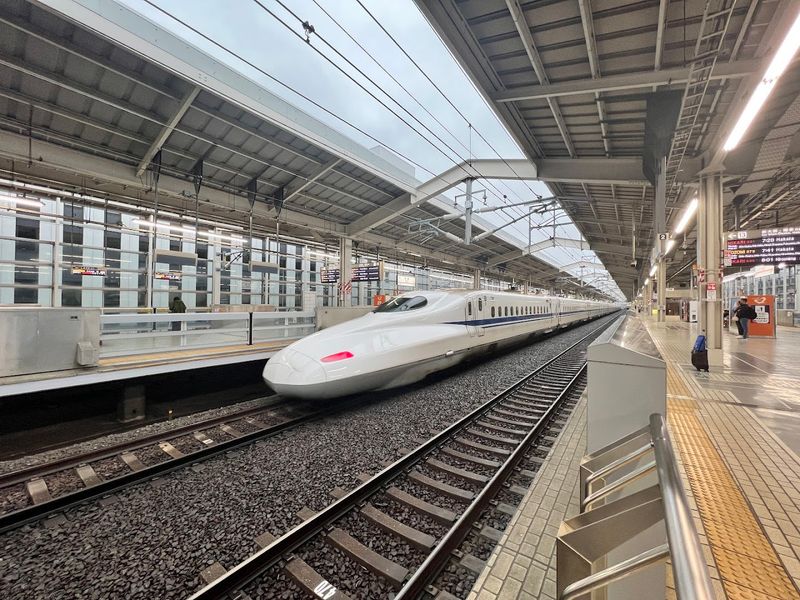
Picture this: you board a train in Tokyo, grab a bento box from the station, and two hours later you are stepping off in ancient Kyoto. That is the magic of Japan’s Shinkansen.
Launched in 1964 just before the Tokyo Olympics, it was the world’s first true high-speed rail line and it has been turning heads ever since.
The Tokaido Shinkansen, which operates this route, runs at speeds up to 285 km/h (177 mph). On a clear day, passengers on the right-hand side heading toward Kyoto get a breathtaking view of Mount Fuji framed perfectly between the hills.
It is the kind of moment that makes you reach for your phone immediately.
What really sets the Shinkansen apart is its legendary punctuality. The average delay is measured in seconds, not minutes.
Trains depart and arrive with almost robotic precision, which is something airline passengers can only dream about. The seats are spacious, the ride is whisper-quiet, and the whole experience feels effortlessly polished.
For first-time visitors to Japan, this train journey is practically a rite of passage.
Paris to London — France & United Kingdom (Eurostar)
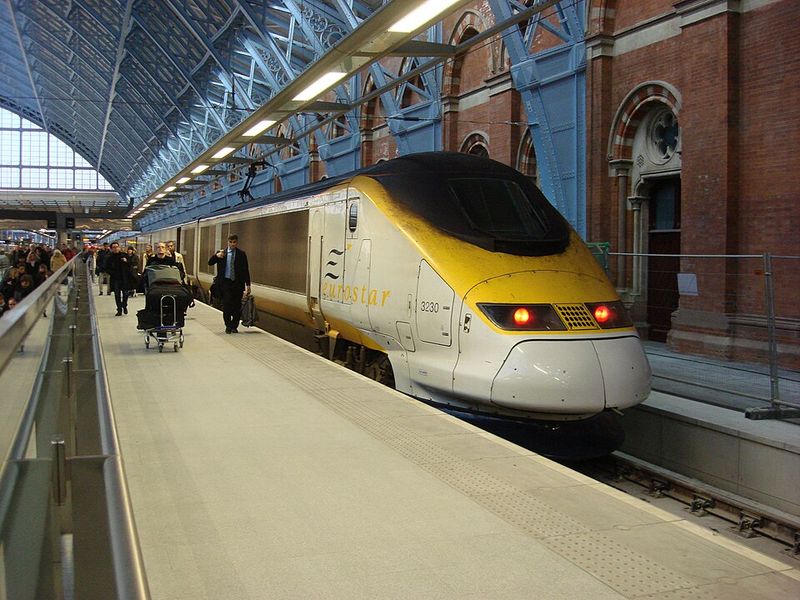
There is something undeniably thrilling about boarding a train in the heart of Paris and arriving in central London just over two hours later. No airport, no turbulence, no middle seat next to a snoring stranger.
The Eurostar slips beneath the English Channel through the Channel Tunnel, one of the greatest engineering achievements of the 20th century.
The tunnel itself stretches 50 kilometers (31 miles), with about 38 of those kilometers running underwater. Passengers barely notice the transition from daylight to tunnel darkness before popping out on the other side of the Channel.
It is a surprisingly smooth experience for something so geographically dramatic.
Arriving at London’s stunning St Pancras International is a reward in itself. The Victorian Gothic station is jaw-droppingly beautiful, with a soaring iron and glass roof that has been lovingly restored.
Business travelers use this route daily, but tourists love it too because the city-center-to-city-center convenience beats flying hands down. Eurostar also has a much lower carbon footprint than flying the same route, which is a genuinely good reason to choose the train.
City hopping has never felt this civilized.
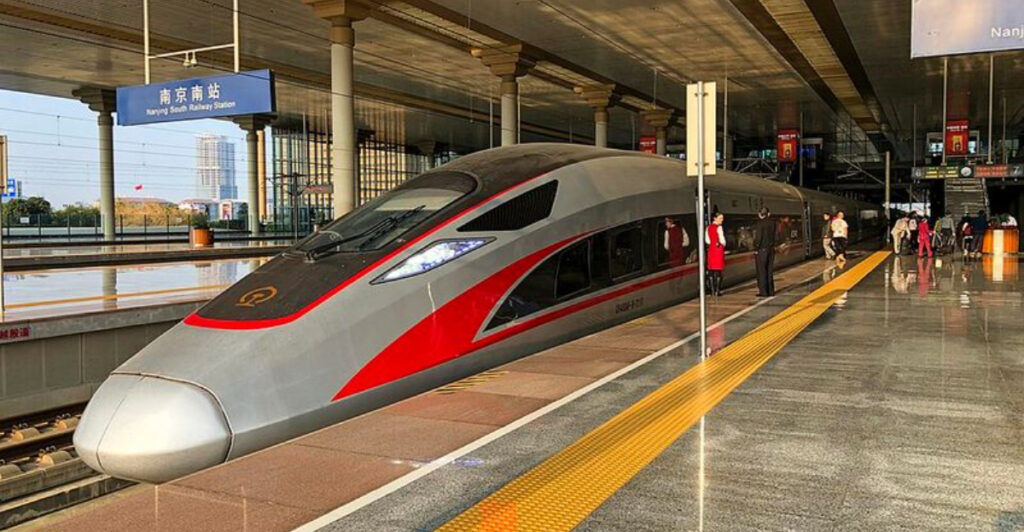
Beijing to Shanghai — China (Fuxing)
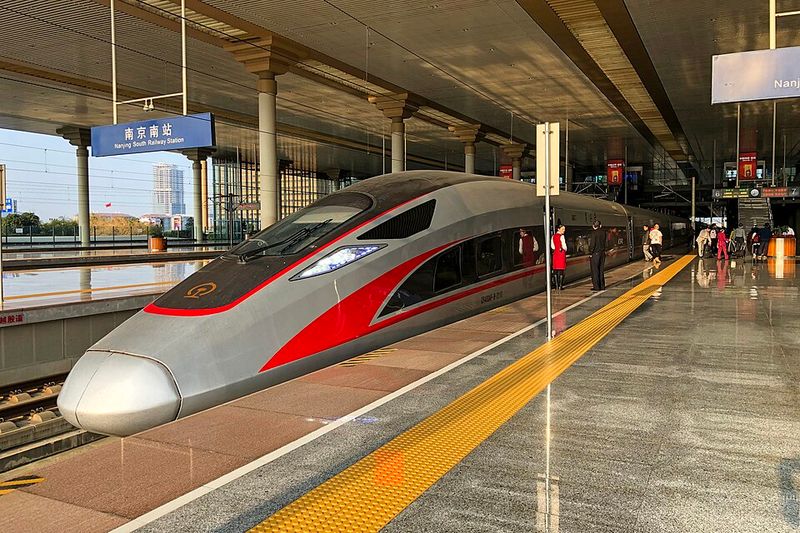
China built more high-speed rail in the past two decades than the rest of the world combined. The Beijing to Shanghai route is the crown jewel of that network, covering over 1,300 kilometers (808 miles) at speeds regularly hitting 350 km/h (217 mph).
That is faster than most small aircraft fly at cruising altitude.
The Fuxing train, whose name literally translates to “rejuvenation,” represents China’s ambition to dominate global rail technology. Unlike earlier models that borrowed foreign designs, the Fuxing was developed entirely by Chinese engineers.
It is faster, quieter, and more energy-efficient than its predecessors, which is a significant technological leap in a short span of time.
The journey takes as little as four and a half hours, connecting two of the world’s most dynamic cities. Passengers travel through sprawling urban landscapes, flat agricultural plains, and the occasional misty river valley.
First-class seats offer plenty of legroom, power outlets, and surprisingly good onboard food. With trains departing frequently throughout the day, the route feels more like a metro line than an intercity service.
It is high-speed rail operating at a scale that simply has no equal anywhere on Earth.
Milan to Rome — Italy (Frecciarossa)
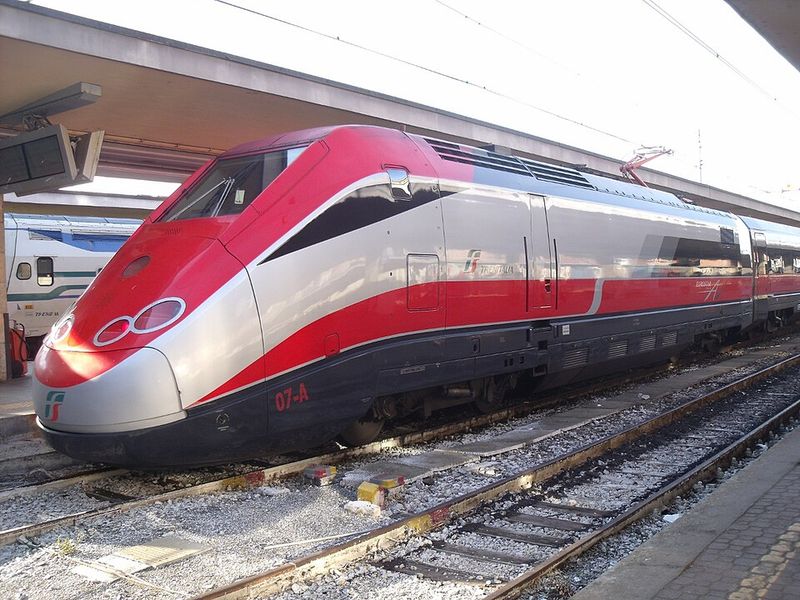
Italians have a word for doing things with flair, and the Frecciarossa, which translates to “Red Arrow,” lives up to that reputation entirely. This flagship Italian high-speed service connects Milan and Rome in under three hours, slicing through the Italian peninsula at up to 300 km/h (186 mph).
The train looks like it was designed by a Ferrari engineer who moonlights in rail.
The route passes through some of Italy’s most scenic terrain. Rolling Tuscan hills, ancient hilltop towns, and sun-drenched valleys drift past the window like a slow-moving postcard.
It is the kind of scenery that makes even the most seasoned traveler pause mid-conversation to stare outside.
Frecciarossa offers four classes of service, from standard to an executive class that rivals business-class flying in terms of comfort and food quality. The onboard menu features real Italian cuisine, including proper espresso, because anything less would be unacceptable on an Italian train.
Trenitalia, the operator, has invested heavily in making this route a premium experience from platform to platform. For travelers choosing between flying and taking the train between these two cities, the train wins on nearly every count.
Style, speed, and scenery rarely come packaged this neatly.
Madrid to Barcelona — Spain (AVE)
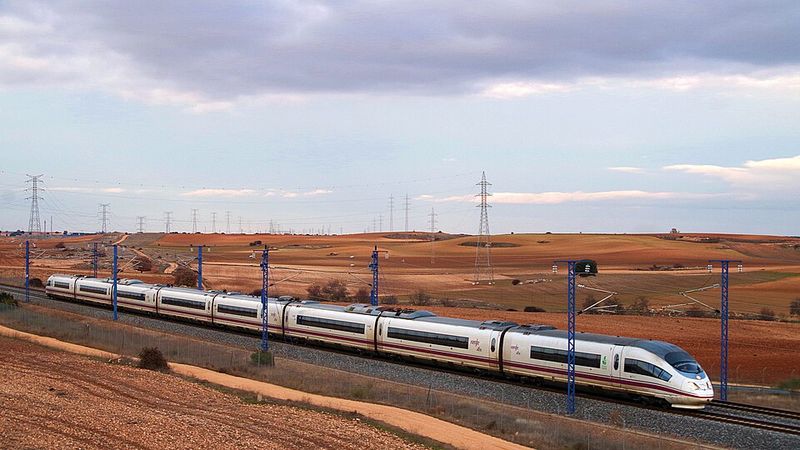
Before Spain’s AVE launched on this route in 2008, the train journey between Madrid and Barcelona took about nine hours. Today, the fastest services do it in just two hours and thirty minutes.
That is not an improvement, that is a complete reinvention of what traveling between two cities can feel like.
Spain actually has the longest high-speed rail network in Europe, which surprises many people who think France or Germany would claim that title. The AVE, short for Alta Velocidad Espanola, also cleverly spells out the Spanish word for bird, which feels entirely appropriate given how quickly it moves.
Trains cruise comfortably at 300 km/h (186 mph) across Spain’s vast, sun-baked interior plateau.
The landscape between the two cities is striking in a raw, open way. Endless plains of golden scrubland and dramatic limestone ridges roll by outside the window, occasionally punctuated by ancient windmills that would not look out of place in a Don Quixote illustration.
Onboard, the seats are wide and the ride is impressively smooth. Renfe, the national operator, frequently runs promotions that make tickets surprisingly affordable.
For anyone visiting Spain, booking this route is a no-brainer that adds genuine adventure to an already exciting trip.
Paris to Marseille — France (TGV)
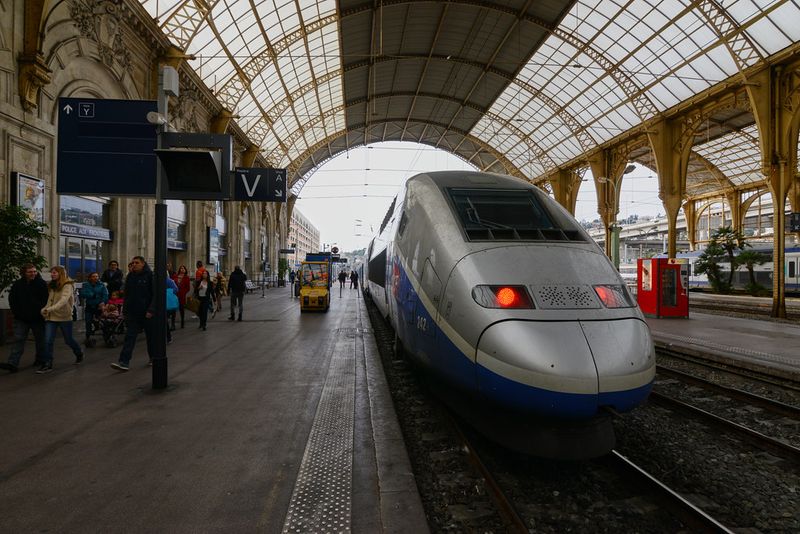
When France launched its Train a Grande Vitesse in 1981, it rewrote the rulebook for what a train could do. The TGV was the world’s fastest scheduled passenger train at the time, and the Paris to Marseille route remains one of its most celebrated runs.
The journey covers about 775 kilometers (481 miles) and takes roughly three hours at speeds up to 320 km/h (199 mph).
Heading south from Paris, the landscape transforms dramatically. The neat suburbs give way to the rolling hills of Burgundy, then the rugged terrain of the Rhone Valley, and finally the sun-drenched, herb-scented landscape of Provence.
By the time Marseille’s glittering Mediterranean coastline comes into view, passengers feel like they have traveled through multiple countries in one sitting.
Marseille itself is a wonderfully gritty, vibrant port city that rewards curious visitors with incredible seafood, colorful markets, and a genuinely infectious energy. The TGV makes a weekend trip from Paris to the Mediterranean coast not just possible but genuinely easy.
SNCF, the French rail operator, has also invested in newer Ouigo budget services on this corridor, meaning travelers can sometimes grab tickets for remarkably low prices. Fast, scenic, and surprisingly affordable when booked in advance.
Seoul to Busan — South Korea (KTX)
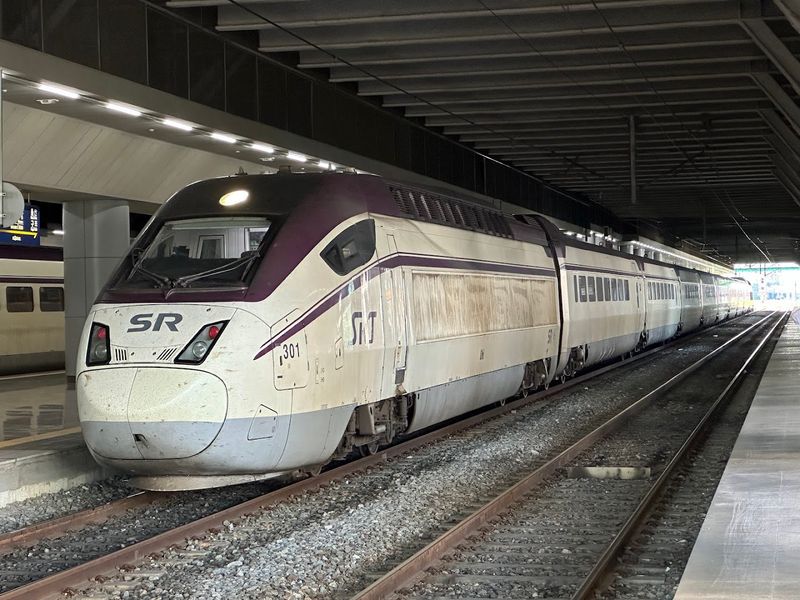
South Korea packed an enormous amount of ambition into a relatively small country when it launched the KTX in 2004. The Seoul to Busan route covers about 417 kilometers (259 miles) and takes as little as two hours and fifteen minutes.
For a country the size of Indiana, that kind of connectivity has been genuinely transformative for both business and tourism.
The journey offers a fascinating contrast of landscapes. Passengers pass through dense urban corridors around Seoul before the scenery opens up into Korea’s dramatic mountain ranges, river valleys, and neatly terraced farmland.
It is a surprisingly scenic ride for a route that is essentially connecting two major metropolitan areas.
Busan, the destination, is one of Asia’s most underrated cities. It boasts stunning beaches, some of the world’s best seafood markets, colorful hillside neighborhoods, and a buzzing nightlife scene that draws visitors from across the region.
The KTX made weekend trips from Seoul to Busan genuinely practical, and Koreans have embraced that freedom enthusiastically. Trains run frequently, tickets are affordable by international standards, and the onboard experience is clean and comfortable.
South Korea’s rail network may not grab as many headlines as Japan’s or China’s, but it absolutely deserves a place in any conversation about the world’s best high-speed services.
Tangier to Casablanca — Morocco (Al Boraq)
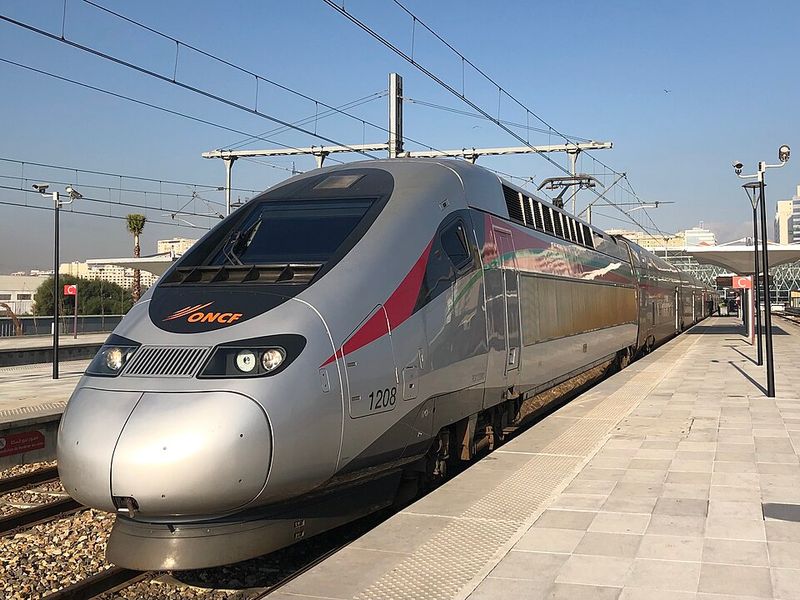
Africa got its first true high-speed rail service in 2018, and Morocco made sure it arrived in style. The Al Boraq, named after the mythical creature from Islamic tradition said to have carried the Prophet on a celestial journey, reaches speeds of up to 320 km/h (199 mph).
That is a bold statement for a continent where rail infrastructure has historically lagged far behind the rest of the world.
The line currently runs from Tangier on the northern coast down through Kenitra to Casablanca, with the full journey taking around two hours and ten minutes. Before Al Boraq, the same trip took over four hours by conventional train.
The difference has had a real impact on how Moroccans travel for work and leisure across the northern part of the country.
The train itself was built with Alstom technology and is essentially the same platform used by France’s TGV. Passengers enjoy comfortable air-conditioned carriages, which is a genuine luxury given Morocco’s scorching summer temperatures.
Outside the window, the landscape shifts from the lush green hills near Tangier to the flat Atlantic coastal plains approaching Casablanca. Plans to extend the network deeper into the country are already underway.
Al Boraq is not just a train; it is a symbol of Morocco’s modernizing ambitions.
Shanghai Airport to Longyang Road — China (Maglev)
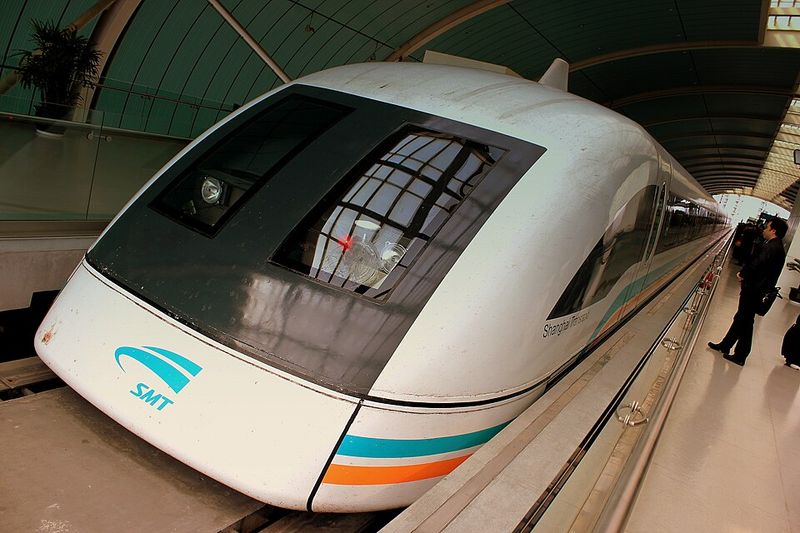
At 431 km/h (268 mph), the Shanghai Maglev does not just go fast, it goes faster than any other commercial passenger train on the planet. The ride from Pudong International Airport to Longyang Road station covers about 30 kilometers (19 miles) and takes a mind-bending seven minutes.
Passengers watching the speedometer display inside the cabin tend to go very quiet as the number climbs.
Magnetic levitation technology means the train never actually touches the track. Instead, powerful electromagnets lift the entire vehicle a few centimeters above the guideway, eliminating friction almost entirely.
The result is a ride so smooth it barely feels like movement at all, which is either wonderfully futuristic or slightly unsettling depending on your perspective.
The Maglev opened in 2004 and was jointly developed with German engineering firm Transrapid. Despite its record-breaking speed, the route remains relatively short and functions primarily as an airport connector.
Tickets cost around 50 yuan (about seven US dollars) for a standard seat, making it one of the most accessible futuristic experiences in the world. Travelers with a connection to catch should know the seven-minute journey still requires the usual airport check-in time, but the ride itself is absolutely worth arriving a little early for.
Frankfurt to Munich — Germany (ICE)
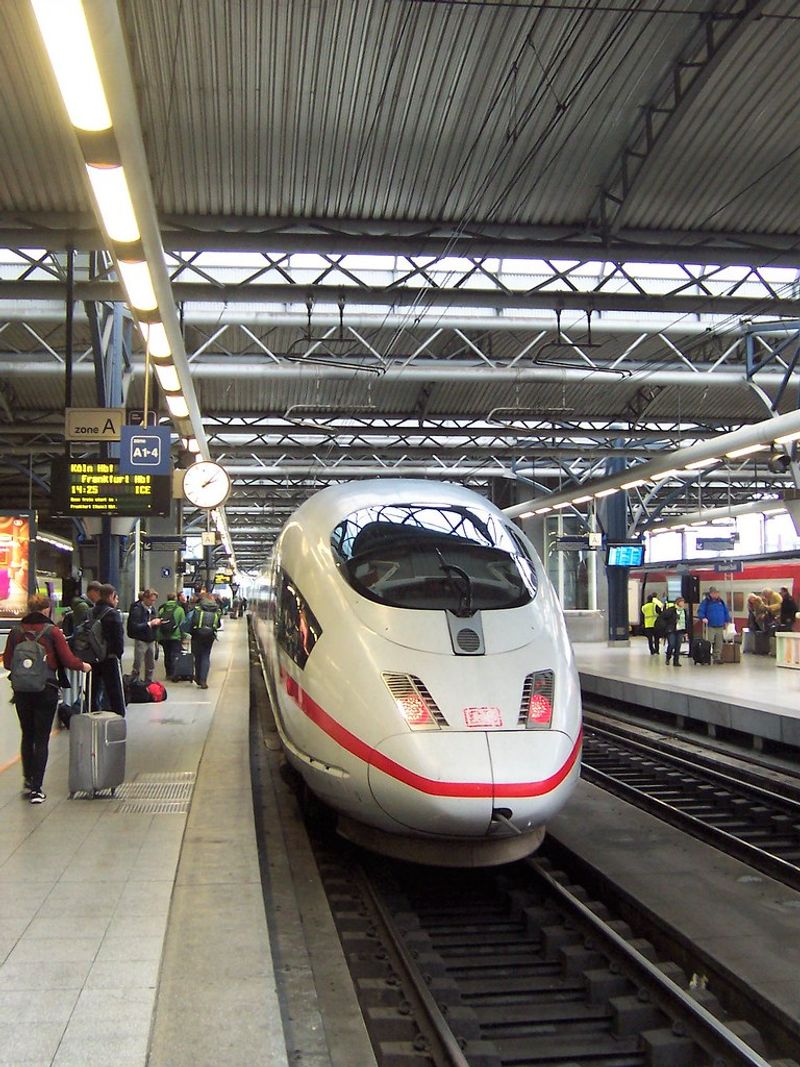
Germany approaches engineering the way a master craftsman approaches a fine piece of furniture: with precision, patience, and an almost stubborn commitment to quality. The ICE, or InterCity Express, embodies that philosophy entirely.
The Frankfurt to Munich route is one of the most popular in the German network, covering around 390 kilometers (242 miles) in about three hours and fifteen minutes.
The route passes through some of Germany’s most beautiful scenery. Passengers travel through the forested hills of the Spessart region, the wine-growing valleys of Franconia, and eventually into the wide, open plains of Bavaria with the Alps shimmering on the southern horizon.
It is the kind of journey that rewards window-seat passengers generously.
Deutsche Bahn, Germany’s national rail operator, has invested billions in upgrading the ICE fleet with newer trains featuring better Wi-Fi, quieter interiors, and improved passenger information systems. Speeds on certain upgraded sections of track now reach 300 km/h (186 mph).
The ICE also connects seamlessly to broader European rail networks, making Frankfurt and Munich natural jumping-off points for longer rail adventures across the continent. For travelers who value reliability, comfort, and the quiet satisfaction of arriving precisely on time, the ICE delivers an experience that is hard to fault.
Share this story