Some destinations seem almost too carefully designed to be real. With colorful facades, charming streets, and striking symmetry, they capture the same whimsical aesthetic that has made Wes Anderson’s films instantly recognizable.
Across Europe, towns and neighborhoods blend vibrant architecture, historic character, and picture-perfect details in ways that feel straight out of a movie set. Whether you’re a fan of Anderson’s distinctive style or simply appreciate beautiful places, these 14 destinations offer plenty of visual inspiration and storybook charm.
1. Colmar, Grand Est, France
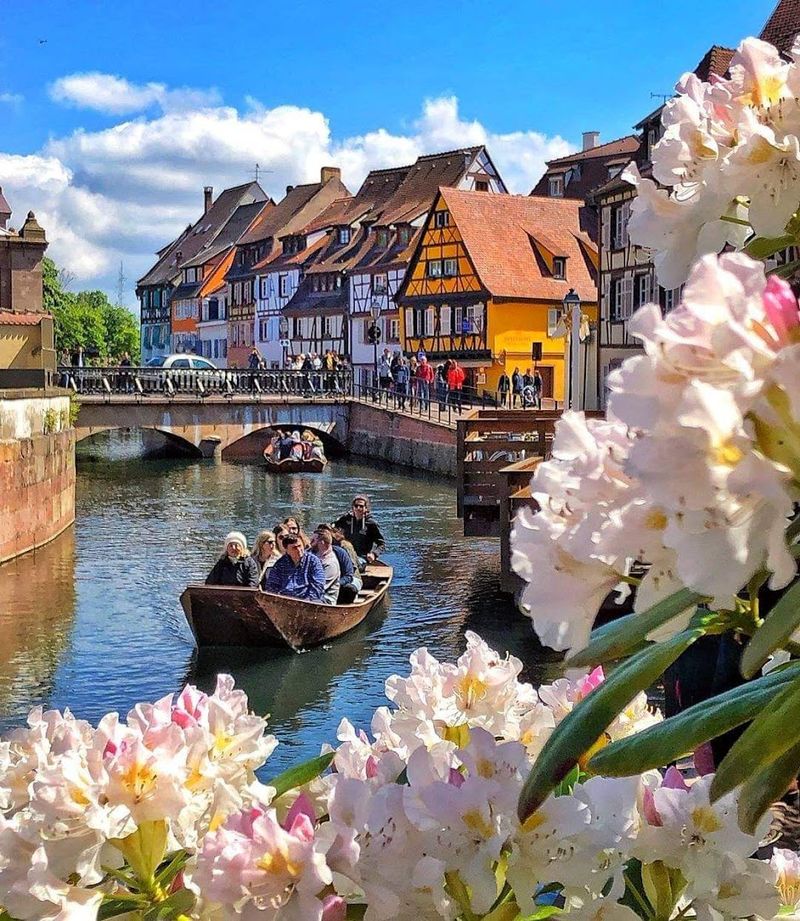
Few towns in Europe can match Colmar for sheer visual coordination. The half-timbered houses here come in soft shades of pink, mint, and butter yellow, lined up along canals with the kind of precision that seems almost too deliberate to be accidental.
The neighborhood known as Little Venice is the crown jewel, where flower boxes burst with color and narrow boats drift past facades that look freshly painted every single morning. Colmar sits in the Alsace region, historically caught between French and German influences, which gives its architecture a wonderfully hybrid character.
The town also hosts a famous Christmas market each winter, drawing visitors who come specifically for the fairytale atmosphere. Every street corner offers a composition so balanced and colorful that it genuinely looks like a still frame from a carefully crafted feature film.
2. Sintra, Lisbon District, Portugal
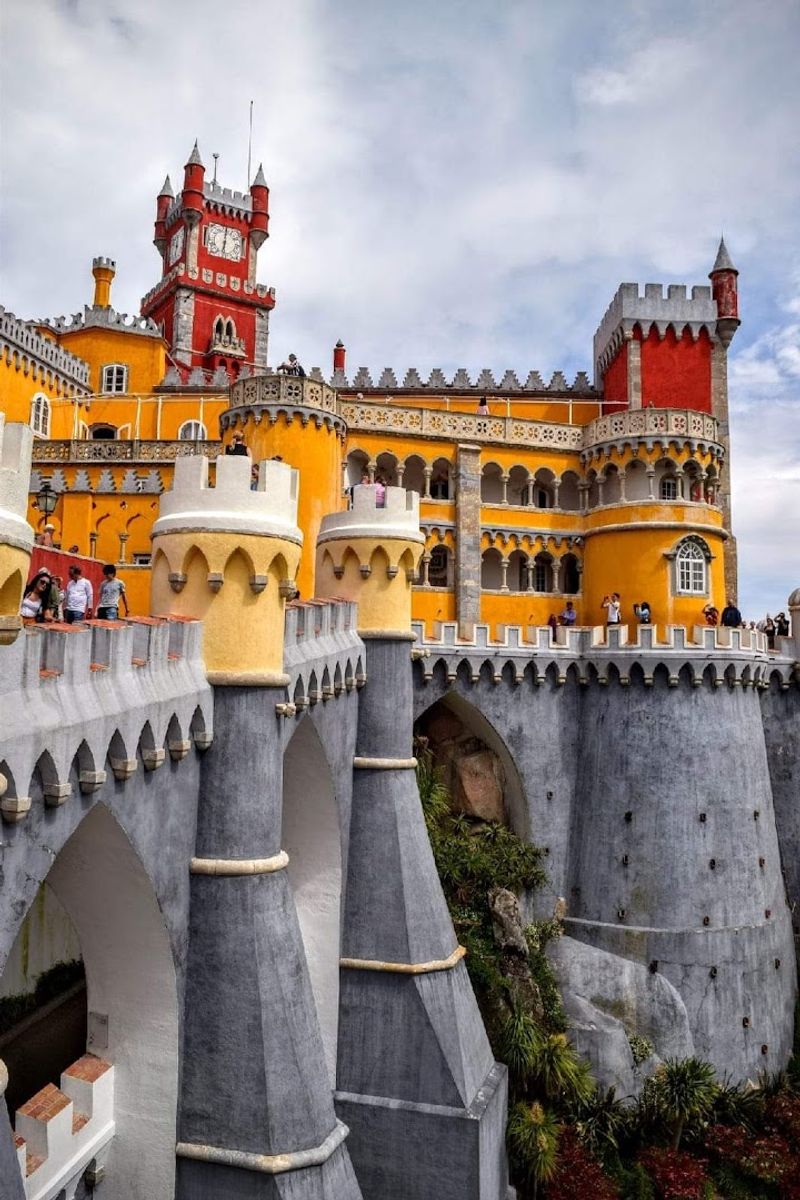
Pena Palace does not do subtlety. Perched on a hilltop above Sintra, this royal residence combines vivid yellow and red towers, battlements, and decorative tiles into a structure that looks like three different architectural eras decided to merge without asking permission first.
The palace was built in the mid-1800s for King Ferdinand II, who wanted something bold and eclectic. He succeeded on a spectacular scale.
The surrounding forest is laced with hidden gardens, ruined chapels, and winding paths that connect several other palaces dotted across the same hilltop.
Sintra itself is a UNESCO World Heritage Site, and the town below the hill is filled with tiled shopfronts, pastry shops, and colorful townhouses. The combination of whimsical architecture, layered history, and misty forest setting makes it one of the most cinematically rich towns in southern Europe.
3. Menton, French Riviera, France
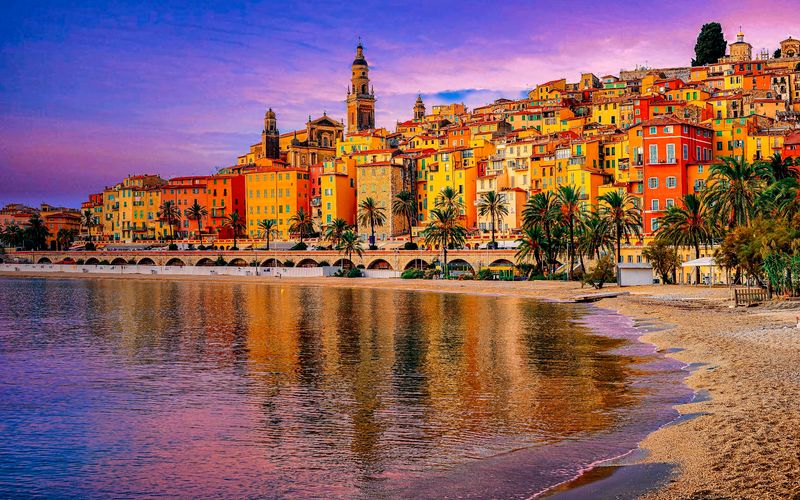
Menton sits right at the French-Italian border, and its architecture reflects both cultures with a confident blend of Baroque grandeur and sun-washed Mediterranean color. The old town rises above the harbor in stacked tiers of peach, apricot, and lemon-colored buildings that create a layered backdrop visible from the sea.
At the very top of this arrangement sits the Basilica of Saint-Michel-Archange, reached by a dramatic ceremonial staircase that would look perfectly at home in any symmetry-obsessed film. The town is also famous for its lemon festival, held each February, which transforms the promenade into a giant citrus sculpture garden.
Menton has a warmer microclimate than the rest of the Riviera, which allows exotic gardens and lemon groves to thrive right alongside the historic center. The combination of bold color, architectural layering, and quirky traditions gives it a genuinely cinematic personality.
4. Cesky Krumlov, South Bohemian Region, Czech Republic
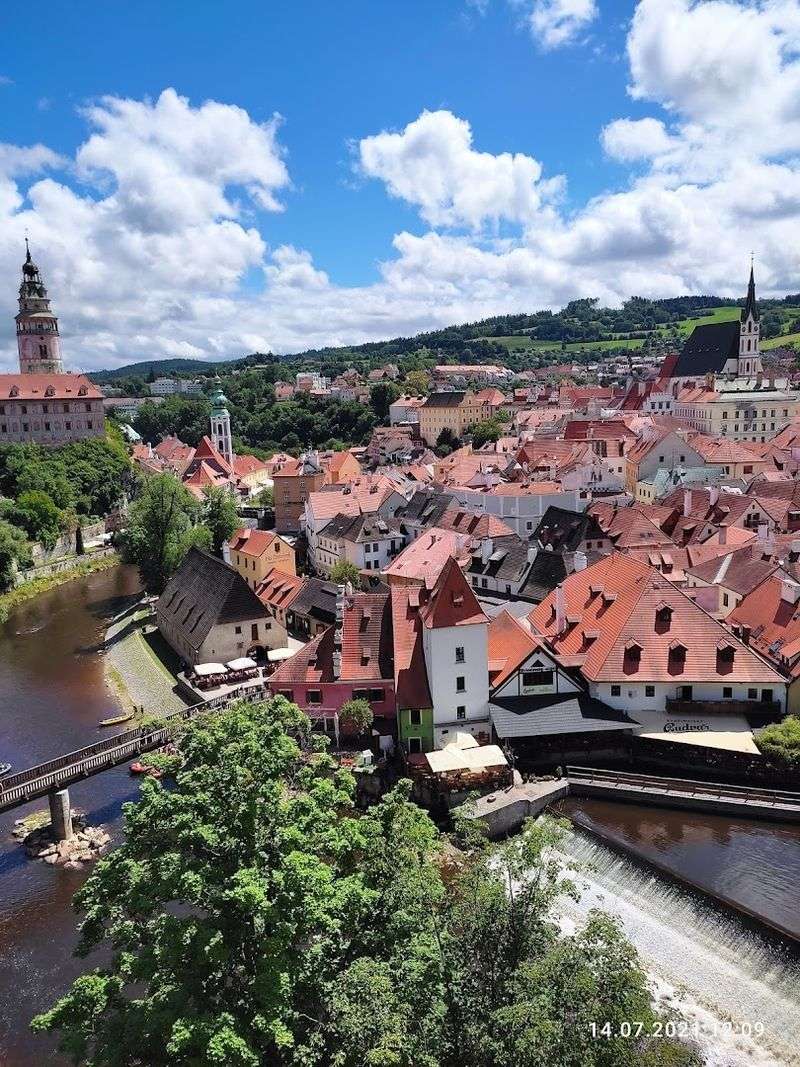
Cesky Krumlov wraps itself around a horseshoe bend of the Vltava River in a way that looks more like a carefully constructed scale model than an actual functioning town. Red-tiled rooftops, cream-colored walls, and a towering castle complex create a setting that has remained largely unchanged since the 16th century.
The castle itself is one of the largest in Central Europe, featuring a baroque theater, a painted tower, and a tiered garden that rises above the old town in neat geometric layers. The whole complex is a UNESCO World Heritage Site, and it draws visitors who genuinely struggle to believe the place is real.
The town below the castle is compact enough to explore entirely on foot in a single afternoon. Cobblestone lanes connect small squares, artisan shops, and riverside terraces, making Cesky Krumlov one of the most complete medieval townscapes left in Europe.
5. Hallstatt, Upper Austria, Austria
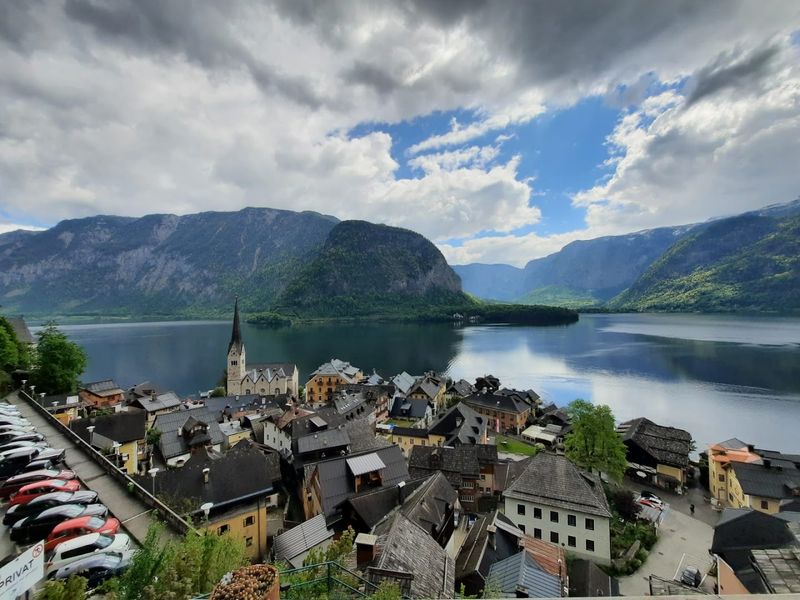
Hallstatt is so photogenic that China built an exact replica of it in Guangdong Province, which is either the greatest compliment a village has ever received or a very strange form of flattery. The original sits on the edge of a narrow Alpine lake, with pastel-colored houses, a white church spire, and sheer mountain cliffs forming a backdrop that looks digitally enhanced even when viewed in person.
The village has been inhabited for over 7,000 years and was once a major center of salt mining, which is why the surrounding mountains are riddled with ancient tunnels still open to visitors today. That history gives Hallstatt depth beyond its postcard looks.
The best-known view is from the lake, where the entire village reflects perfectly in calm water. Early morning visits before tour groups arrive offer a more peaceful experience of one of Europe’s most replicated landscapes.
6. Burano, Veneto, Italy
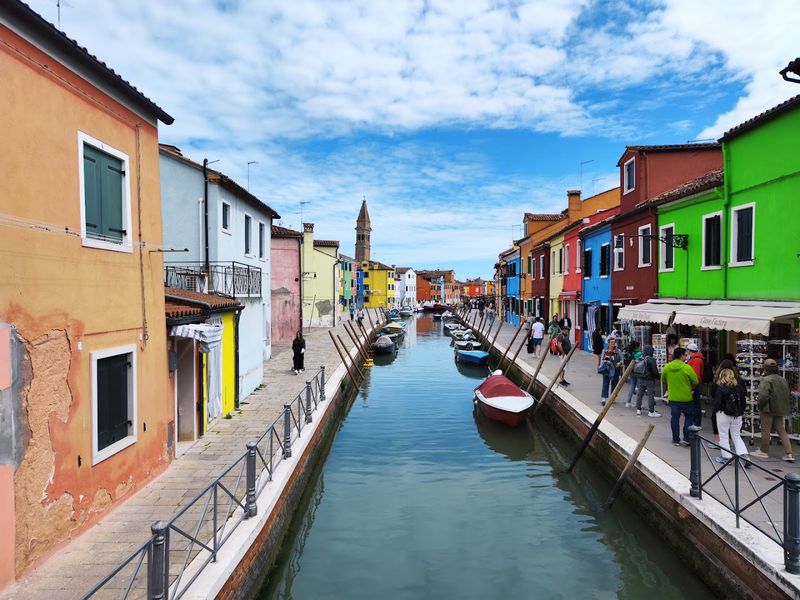
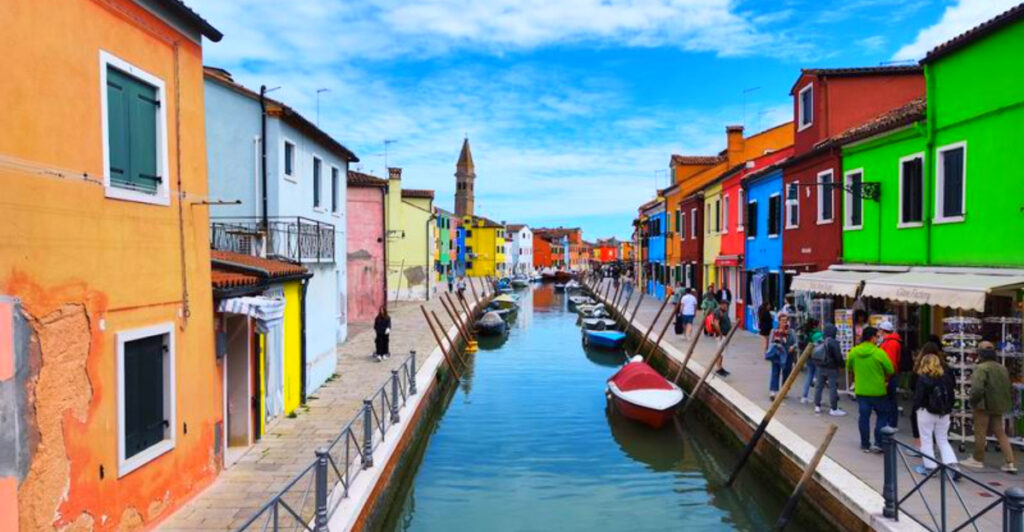
Nobody told the residents of Burano to coordinate their house colors, and yet somehow they absolutely did. This small island in the Venetian Lagoon is covered in homes painted in vivid reds, cobalt blues, canary yellows, and lime greens, arranged in rows so cheerful they almost seem to be competing with each other.
The origin of the tradition is practical rather than artistic. Fishermen historically painted their homes in bright, distinct colors so they could spot them from a distance on the water.
The result, centuries later, is one of the most visually striking streetscapes in all of Europe.
Unlike Venice, Burano is compact, quiet, and easy to explore on foot. The island is also famous for its handmade lace, which adds another layer of intricate craft to its already meticulous visual identity.
7. Nyhavn, Copenhagen, Denmark
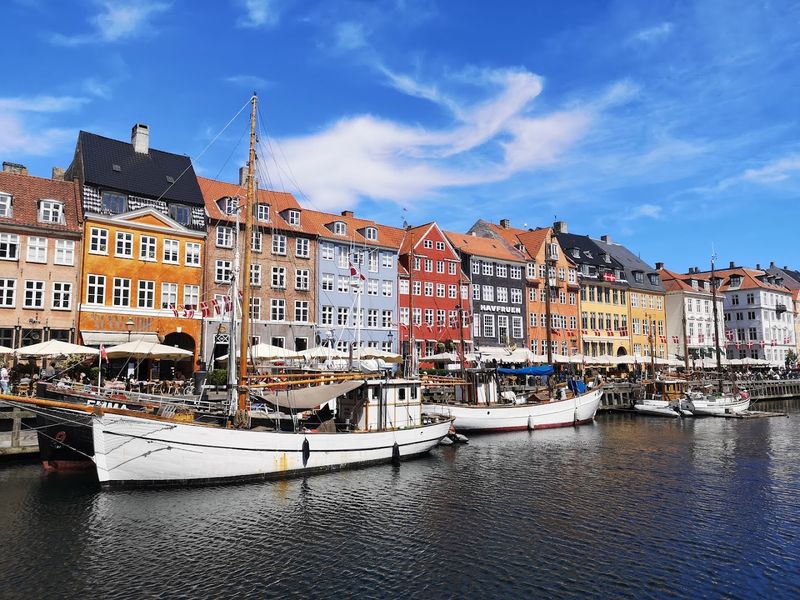
The numbers painted above the doors of Nyhavn’s townhouses tell a surprisingly literary story. Hans Christian Andersen, the author of The Little Mermaid and Thumbelina, lived at three different addresses along this canal during his lifetime, making the street both beautiful and historically significant.
The buildings themselves date from the 17th and 18th centuries, painted in rich shades of red, yellow, blue, and ochre, and lined up along the harbor with the kind of architectural consistency that looks almost orchestrated. Historic wooden ships are permanently moored along the quay, adding a nautical layer to the visual composition.
Nyhavn is one of Copenhagen’s most visited areas, and it connects the old city center to the harbor waterfront. The canal-side restaurants and the symmetrical row of facades create a scene that manages to feel both historic and energetically alive at the same time.
8. Rovinj, Istria, Croatia
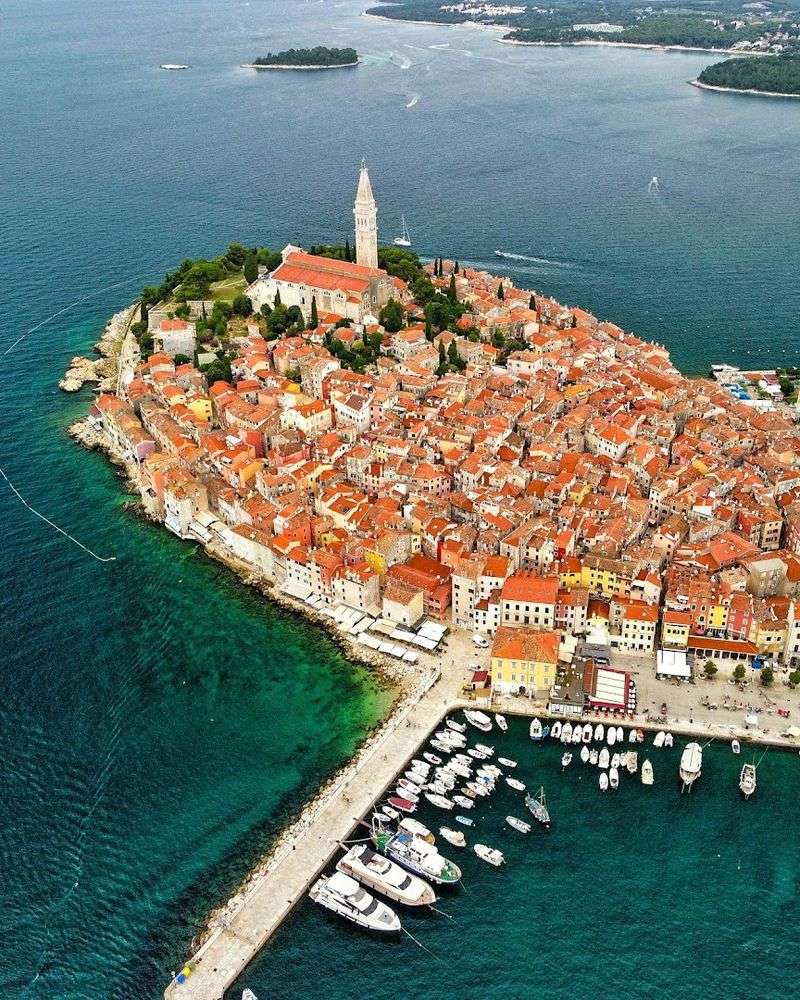
Rovinj occupies a small peninsula that juts into the Adriatic, and its old town climbs upward from the waterfront in a dense cluster of terracotta, ochre, and pale pink buildings. The whole arrangement is crowned by the Church of Saint Euphemia, whose tall baroque tower serves as a visual anchor visible from far out at sea.
The town was part of the Venetian Republic for centuries, and that influence shows clearly in the architecture, the narrow lanes, and the general layout of the old quarter. Streets here are steep, uneven, and occasionally so narrow that two people can barely pass each other, which only adds to the charm.
Rovinj is also a working fishing port, so the harbor area has an authentic, non-touristy energy that balances the more picturesque parts of the old town. The combination of Venetian heritage, colorful facades, and Adriatic views makes it one of Croatia’s most visually distinctive coastal towns.
9. Annecy, Haute-Savoie, France
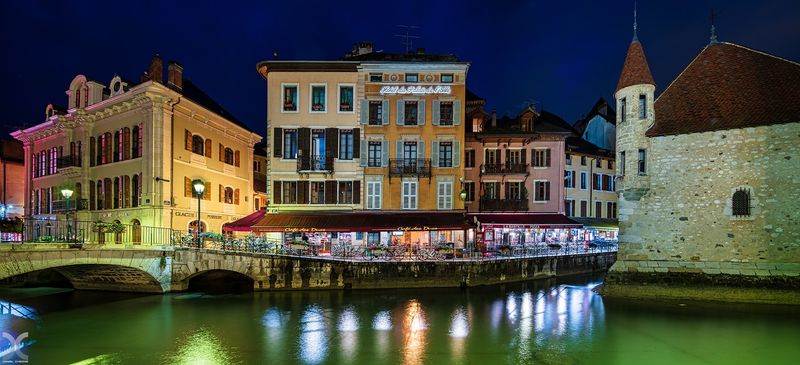
Annecy sits at the northern tip of a mountain lake in the French Alps, and its old town is threaded through with canals so clear and turquoise that they look like they belong in a travel brochure rather than real life. The medieval quarter, known as the Vieille Ville, is a grid of covered arcades, colorful townhouses, and flower-draped bridges.
The most iconic structure is the Palais de l’Ile, a 12th-century island prison that sits in the middle of the main canal like a small stone ship. Its triangular silhouette against the surrounding colorful buildings is one of the most reproduced images in the entire French Alps.
Annecy holds regular markets, cycling events, and an annual animation film festival, which gives the town a lively, creative identity beyond its visual appeal. The lake and mountain backdrop ensure that almost every view from the old town includes at least two layers of natural beauty.
10. Sighisoara, Mures County, Romania
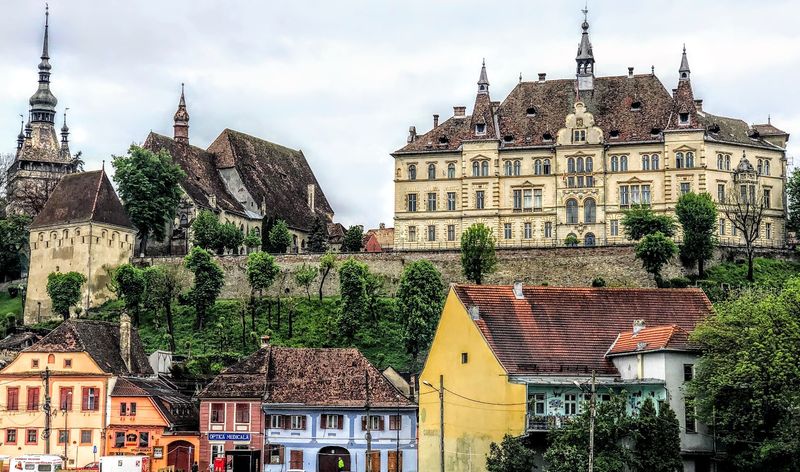
Sighisoara is one of the few inhabited medieval citadels left in Europe, and it wears that distinction with a lot of colorful confidence. The hilltop fortress is packed with homes painted in mustard yellow, burnt orange, and pale blue, arranged along cobblestone lanes that wind between towers and churches dating back to the 14th century.
The Clock Tower, built in the 1300s, is the main entrance to the upper citadel and houses a small history museum inside its multiple floors. From the top, the view over the lower town and surrounding Transylvanian hills is genuinely spectacular.
Sighisoara is also historically notable as the birthplace of Vlad III, the 15th-century ruler whose reputation inspired the Dracula legend. The town handles this piece of history with a certain dry humor, which somehow fits perfectly with its offbeat, fairytale visual character.
11. Gdansk Old Town, Pomeranian Voivodeship, Poland
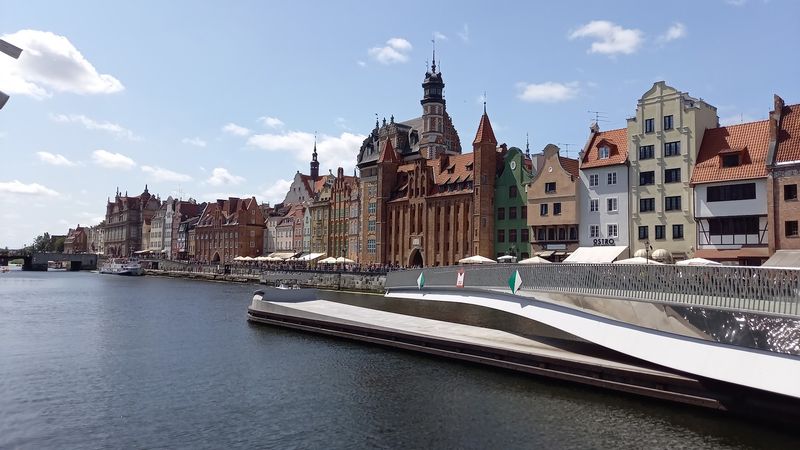
Gdansk’s Long Lane, known locally as Ulica Dluga, is essentially a parade of architectural ambition. The merchant houses here were built by wealthy traders during the 16th and 17th centuries, and each one tried to outdo the next with ornate facades, decorative friezes, and elaborate gabled rooftops in shades of gold, terracotta, and forest green.
Much of the old town was destroyed during World War II and meticulously rebuilt from historical records and old photographs, which makes its current appearance both a preservation story and a remarkable act of collective memory. The reconstruction is so detailed that it is genuinely difficult to tell which buildings are original and which are postwar replicas.
The street ends at the iconic Green Gate, which once served as a royal residence for visiting Polish monarchs. Gdansk combines Baltic trading history, dramatic architecture, and a resilient civic identity that gives it a character unlike any other city on this list.
12. Bruges, West Flanders, Belgium
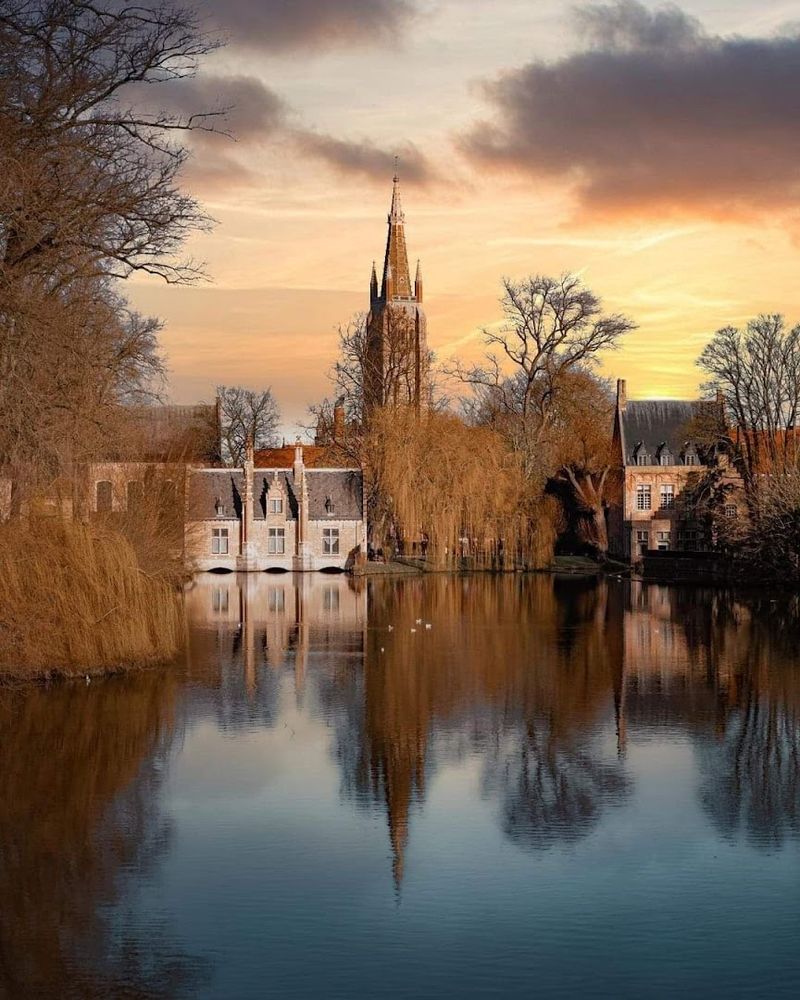
Bruges is the kind of medieval city that managed to sidestep the industrial revolution almost entirely, which is why so much of its 15th-century architecture is still standing and still in use. The historic center is a network of canals, cobblestone squares, and brick buildings with stepped gable rooftops that give the skyline a distinctive zigzag silhouette.
The Markt, the central square, is framed by guild houses and dominated by the 83-meter Belfry tower, which has been keeping time over the city since the 13th century. Horse-drawn carriages still operate tours through the old town, a detail that would fit comfortably into any period film production.
Bruges is also home to a remarkable collection of Flemish art, housed in small museums tucked into former almshouses and merchant buildings throughout the city. The whole place operates at a pace and visual register that feels genuinely removed from the modern world.
13. Gamla Stan, Stockholm, Sweden
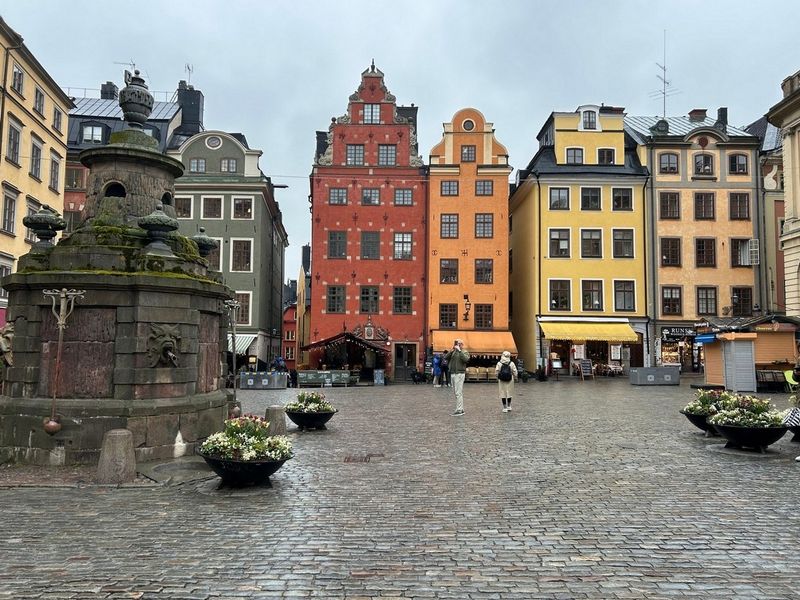
Gamla Stan, Stockholm’s old town, occupies a small island at the center of the city and contains one of the best-preserved medieval street plans in northern Europe. The buildings here are painted in deep mustard yellows, burnt oranges, and dusty terracottas, packed so tightly together that some alleyways are barely wide enough for two people to pass comfortably.
The narrowest street in Stockholm, Marten Trotzigs Grand, is just 90 centimeters wide at its tightest point, which gives some indication of how densely this island was built. Despite being in the middle of a major capital city, Gamla Stan operates on a completely different scale and pace from the modern neighborhoods surrounding it.
The Royal Palace, one of the largest palaces in Europe with over 600 rooms, sits at the northern edge of the island and adds a layer of institutional grandeur to the otherwise intimate streetscape. The contrast between the palace’s scale and the surrounding narrow lanes is part of what makes Gamla Stan so visually interesting.
14. Portmeirion, Gwynedd, Wales, United Kingdom
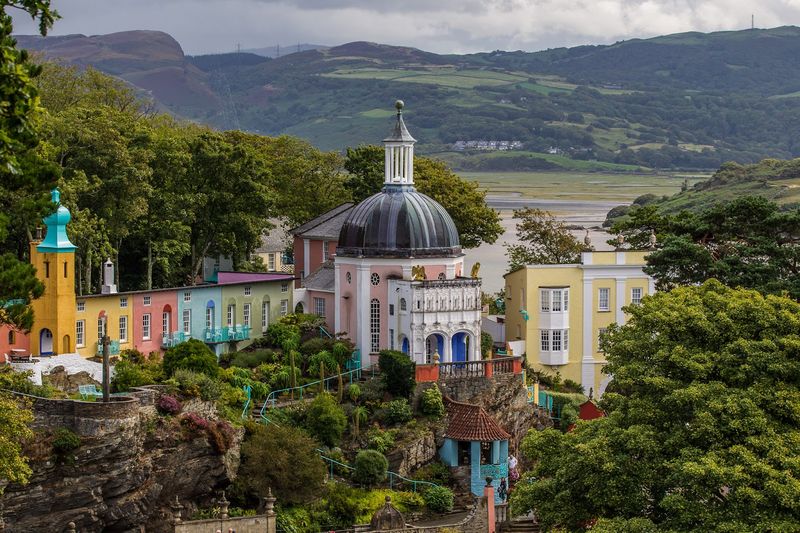
Portmeirion was not discovered or preserved. It was invented.
The Welsh architect Bertram Clough Williams-Ellis designed and built this Italianate village on the coast of north Wales between 1925 and 1975, importing architectural salvage from demolished buildings across Europe and assembling them into something entirely new and entirely his own.
The result is a pastel-painted village with a central piazza, ornamental gardens, a lighthouse, a town hall, and dozens of architectural details that reference Italian coastal towns without actually being one. It is, in essence, a real building that functions as a permanent film set, which is probably why the 1960s television series The Prisoner was filmed there.
Portmeirion is open to day visitors and also operates as a hotel, meaning guests can actually stay overnight inside one of Europe’s most deliberately theatrical spaces. For anyone interested in the intersection of architecture, fantasy, and design history, it is an almost unmissable destination.
Share this story