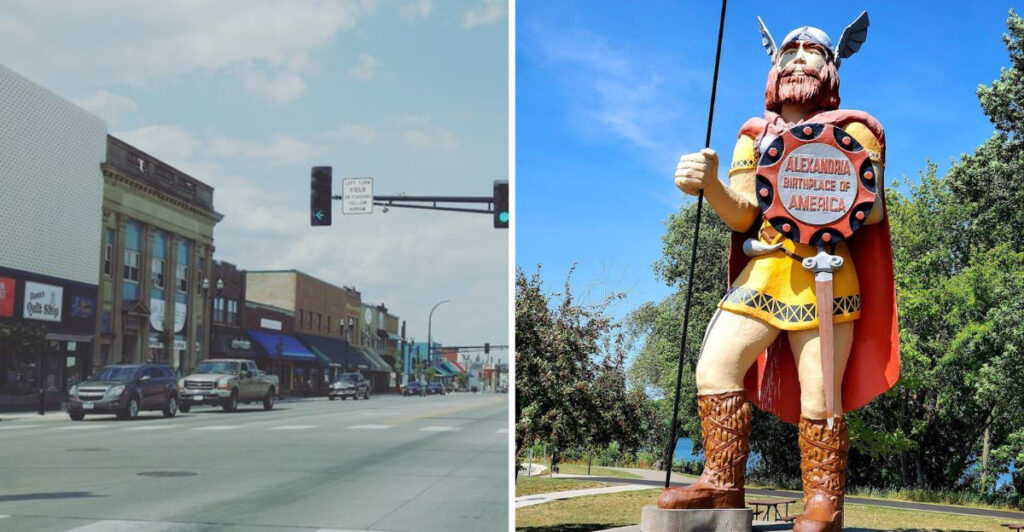
There is a town in central Minnesota where the legend of Norse explorers runs so deep that a giant Viking statue stands guard at the edge of the highway. Most people drive through on their way somewhere else, never stopping to ask why a landlocked Midwestern city has such a fierce obsession with Scandinavian history.
The answer involves a controversial runestone, a farmer’s field, and a debate that historians and archaeologists have argued about for over a century. Alexandria, Minnesota is not just another lake town.
It is a place where the past feels urgent, where local pride collides with big historical questions, and where every corner of the community seems to celebrate the idea that Vikings may have walked this land long before Columbus ever set sail. Keep reading, because this story gets genuinely fascinating.
The Kensington Runestone: The Artifact That Started It All
Back in 1898, a Swedish-American farmer named Olof Ohman claimed he pulled a large flat stone from the roots of a tree on his property near Kensington, Minnesota. Carved across its surface were runic inscriptions that, when translated, described a group of Norsemen exploring the region in 1362.
The stone immediately sparked fierce debate. Some scholars called it a remarkable proof of pre-Columbian Norse exploration deep into North America.
Others dismissed it as a clever 19th-century hoax, pointing to linguistic details they found suspicious.
Decades of analysis have never fully settled the argument. Geologists, linguists, and historians have all weighed in with conflicting conclusions.
What is undeniable is that the Kensington Runestone became the defining symbol of Alexandria and the spark behind one of the most entertaining historical controversies in American history.
Where Exactly Alexandria Sits on the Map
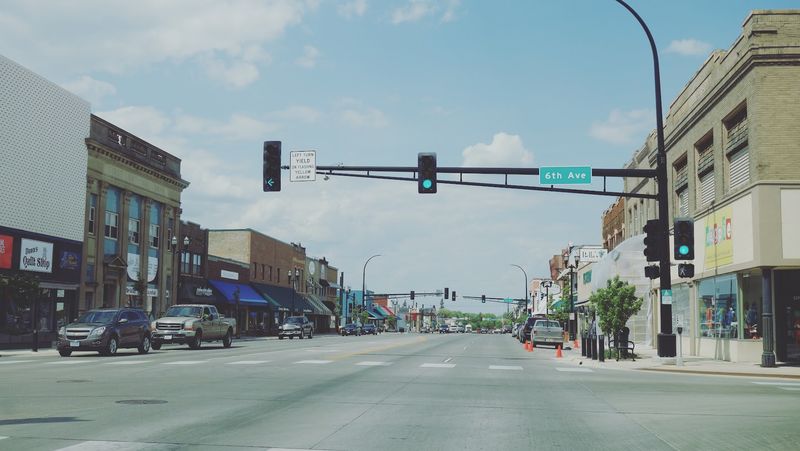
Alexandria is the county seat of Douglas County, Minnesota, and sits along Interstate 94 roughly halfway between Minneapolis and Fargo. The official address places it at Minnesota 56308, and the city coordinates land at approximately 45.88 degrees north latitude.
With a population of about 14,335 people as of the 2020 census, Alexandria punches well above its weight in terms of tourism and cultural identity. Minnesota State Highways 27 and 29 also pass through the city, making it genuinely easy to reach from multiple directions.
Lake Carlos State Park sits just ten miles to the north, adding serious natural beauty to an already appealing destination. The combination of easy highway access, a compact downtown, and stunning lake country surrounding the city makes Alexandria feel like a place that rewards both a quick stop and a longer stay.
Big Ole: The Viking Who Watches Over the City
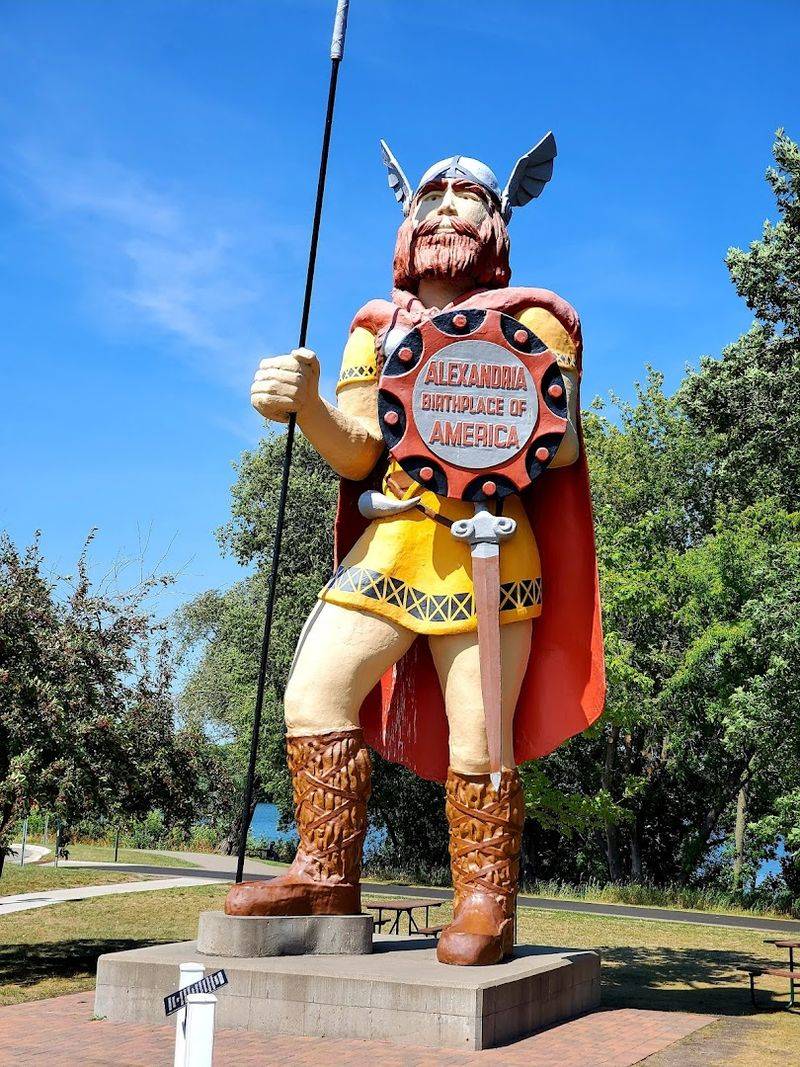
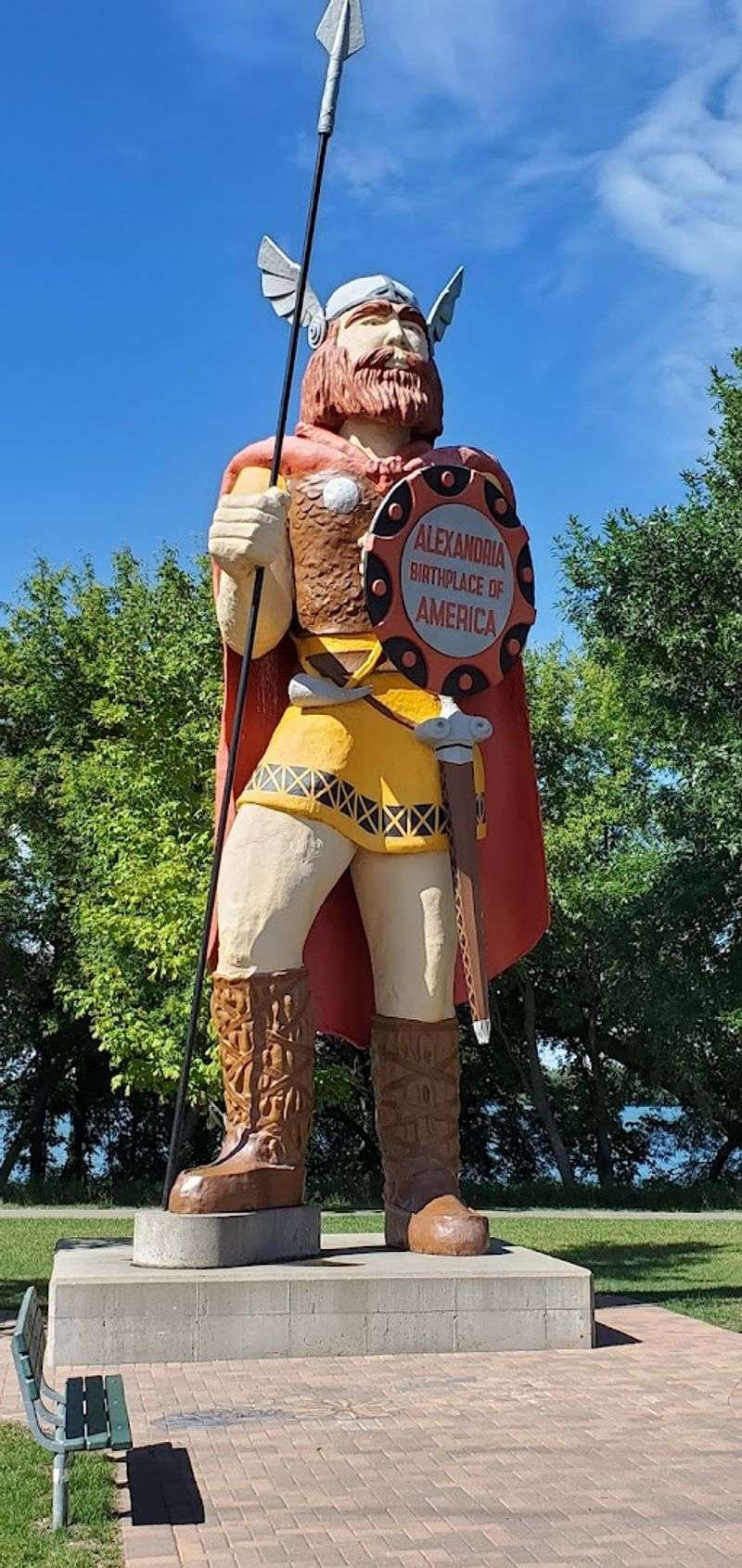
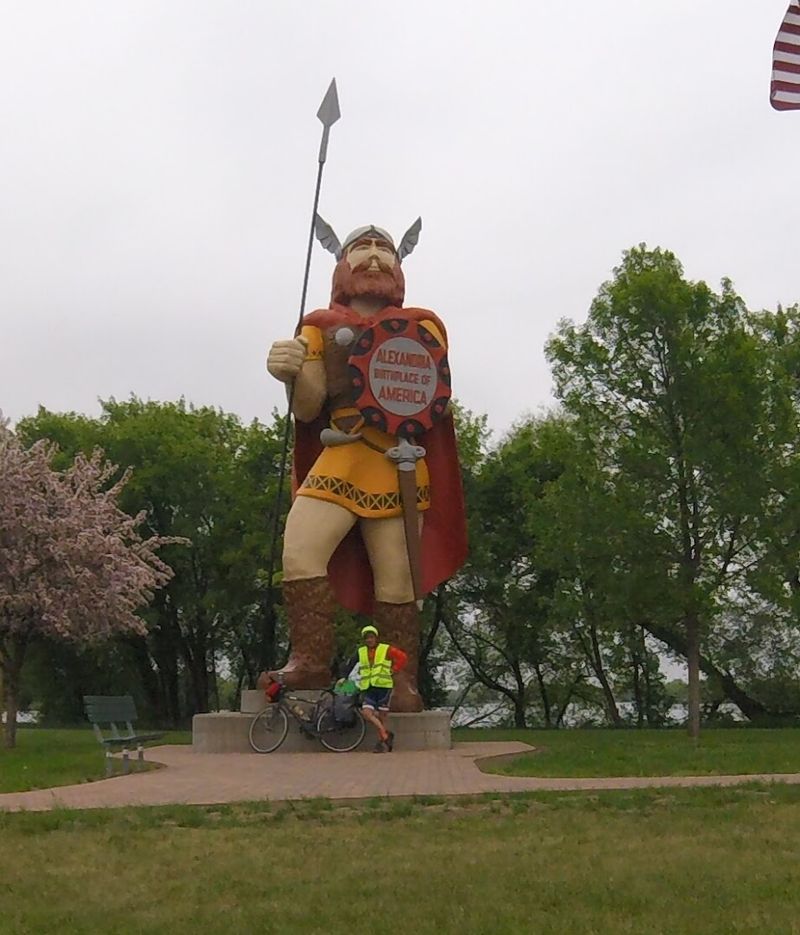
Few roadside attractions in Minnesota command attention quite like Big Ole, a 28-foot-tall fiberglass Viking warrior who has been standing watch in Alexandria since 1965. He was originally built for the New York World’s Fair, where he represented Minnesota and carried a shield boldly declaring Alexandria the “Birthplace of America.”
That claim rests entirely on the Kensington Runestone story, and Big Ole wears it without apology. After the fair, he was brought back to Alexandria and installed as a permanent fixture, becoming one of the most photographed roadside attractions in the entire state.
He holds a spear, wears a horned helmet, and has a presence that feels both ridiculous and strangely impressive at the same time. Stopping for a photo with Big Ole has become a Minnesota road trip tradition, and honestly, it is hard to drive past without pulling over.
The Runestone Museum: Where the Stone Lives Today
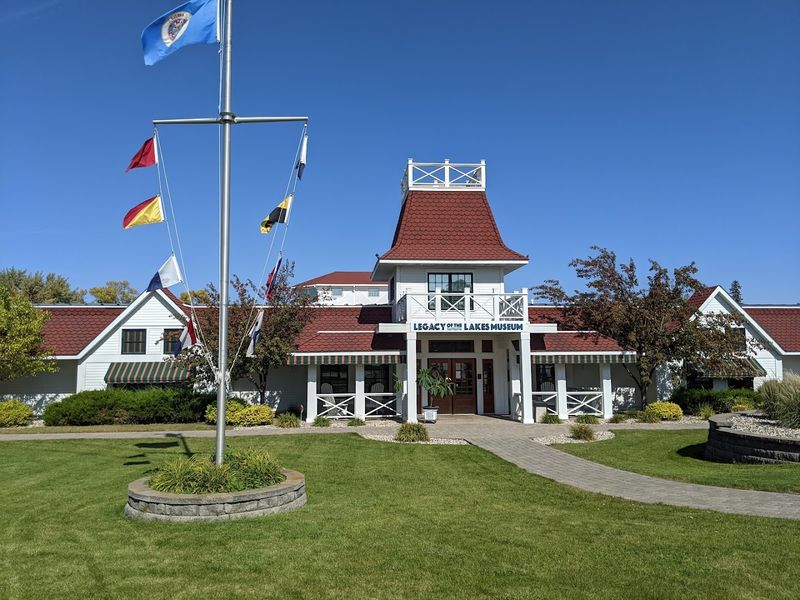
The Kensington Runestone does not sit in a vault somewhere. It is on public display at the Runestone Museum in Alexandria, where visitors can see the actual artifact up close and read the translated inscription for themselves.
The museum sits in the heart of the city and has been drawing curious visitors for decades.
Beyond the stone itself, the museum contains a replica 14th-century Norse camp, a collection of pre-Columbian artifacts, and exhibits that lay out both sides of the authenticity debate in a fair and engaging way. It does not try to force a conclusion on you.
Fort Alexandria, a replica frontier fort on the museum grounds, adds another layer of regional history to the experience. The whole complex manages to feel educational without feeling dry, which is a harder balance to strike than most museums realize.
Plan for at least two hours here.
The Viking Controversy: Real History or Elaborate Hoax
The core question surrounding the Kensington Runestone has never been fully resolved, and that unresolved tension is a big part of what makes Alexandria so culturally interesting. Mainstream archaeology has generally leaned toward skepticism, noting that some of the runic characters on the stone did not appear in known medieval Norse writing until after the 1800s.
Supporters of authenticity have pushed back hard, commissioning geological studies that suggest the stone’s weathering pattern is consistent with centuries of exposure rather than a recent carving. A researcher named Scott Wolter conducted an analysis in the early 2000s that reignited serious public interest in the pro-authenticity argument.
The debate continues to attract academics, amateur historians, and documentary filmmakers. For Alexandria, the controversy is not a source of embarrassment.
It is practically a civic asset, keeping the city relevant in conversations about North American history that stretch far beyond Minnesota.
Lake Country Surrounding the City
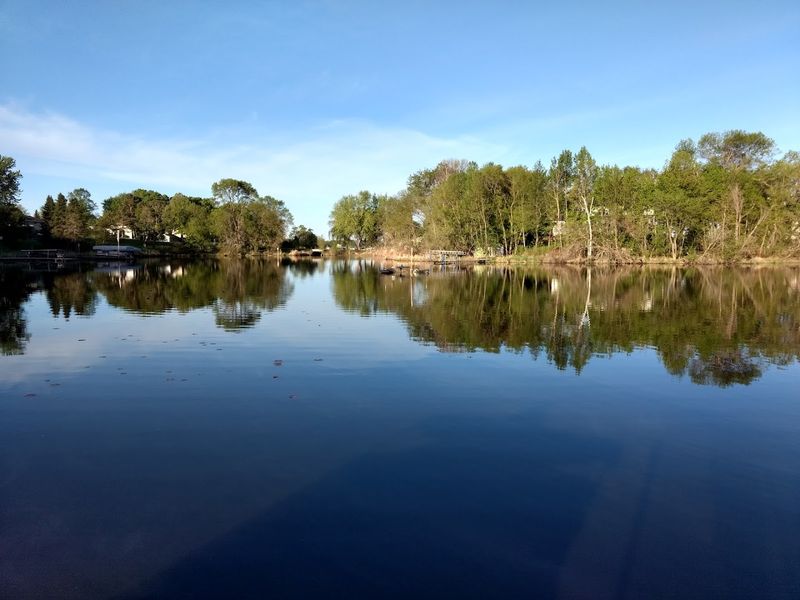
Alexandria sits in the middle of one of Minnesota’s most lake-rich regions, with over 300 lakes within a short drive of the city. This is not a marketing exaggeration.
Douglas County genuinely earns its reputation as a destination for fishing, boating, kayaking, and swimming.
Lake Le Homme Dieu, Lake Darling, and Lake Carlos are among the most popular, each offering different personalities ranging from quiet and wooded to busy with summer activity. The lakes are clean, accessible, and surrounded by a mix of family resorts, public boat landings, and state park facilities.
Summer weekends bring visitors from the Twin Cities who are willing to make the roughly two-and-a-half-hour drive north for a weekend on the water. The lake culture here is genuine and deeply rooted, not a manufactured tourism experience.
You can feel the difference the moment you arrive at the shoreline.
Lake Carlos State Park: Ten Miles North and Worth Every One
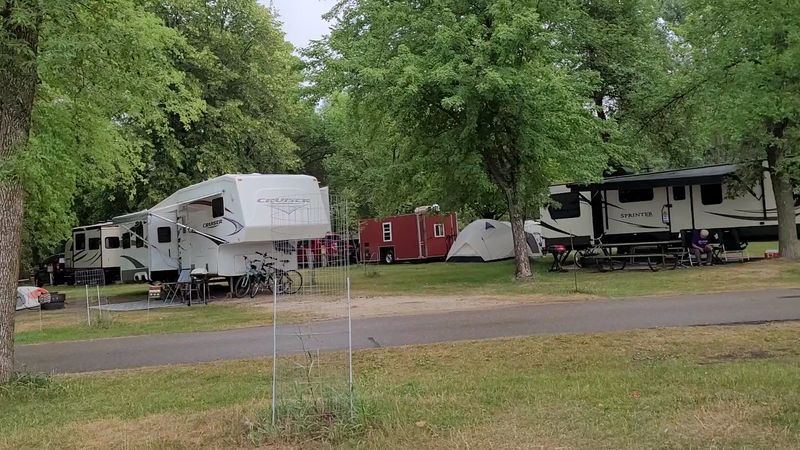
Lake Carlos State Park is one of the best state parks in Minnesota, and the fact that it sits just ten miles north of Alexandria makes it a natural extension of any visit to the city. The park covers over 1,200 acres and centers on the crystal-clear waters of Lake Carlos, one of the region’s deepest lakes.
Hiking trails wind through hardwood forests and past hidden wetlands, offering a range of difficulty levels that work for casual walkers and serious hikers alike. The campgrounds are well-maintained, and reservations fill up fast during summer, so planning ahead is genuinely necessary.
Swimming, canoeing, horseback riding, and cross-country skiing in winter all give the park a year-round appeal that keeps it busy across seasons. The park also has an interpretive program that connects the natural landscape to the broader regional history, which feels especially relevant given Alexandria’s Viking claims just down the road.
Downtown Alexandria: Small City, Real Character
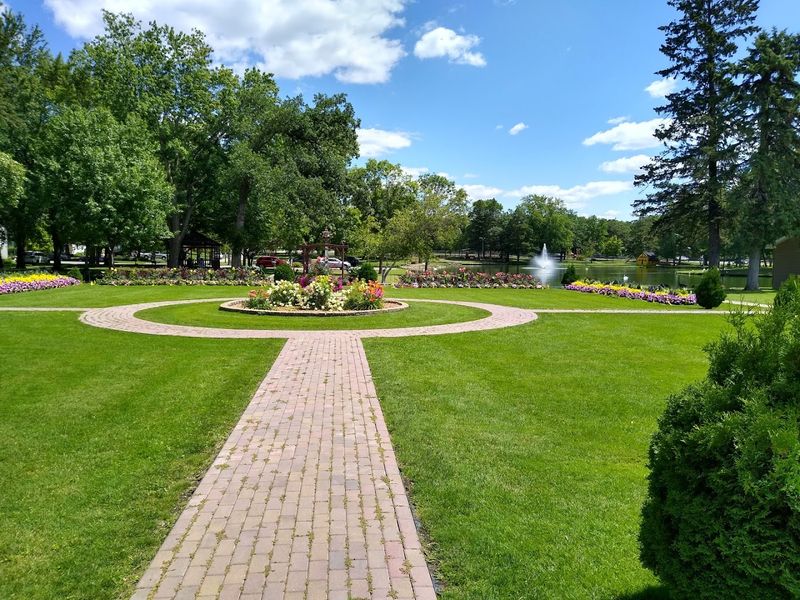
Downtown Alexandria has the kind of compact, walkable energy that larger cities spend millions trying to manufacture. The main commercial district is anchored by locally owned shops, restaurants, and a farmers market scene that reflects the agricultural roots of the surrounding region.
Broadway Street serves as the main artery, lined with a mix of historic buildings and updated storefronts that have managed to hold onto their original character. There is no shortage of places to grab a good meal, pick up locally made goods, or just walk around and absorb the atmosphere.
The city has invested in public art installations and seasonal events that keep downtown feeling alive rather than hollow. A community this size could easily feel sleepy, but Alexandria pushes back against that with consistent programming and a genuine local pride that shows up in how people talk about their town.
That energy is contagious.
The Scandinavian Heritage That Shapes the Culture
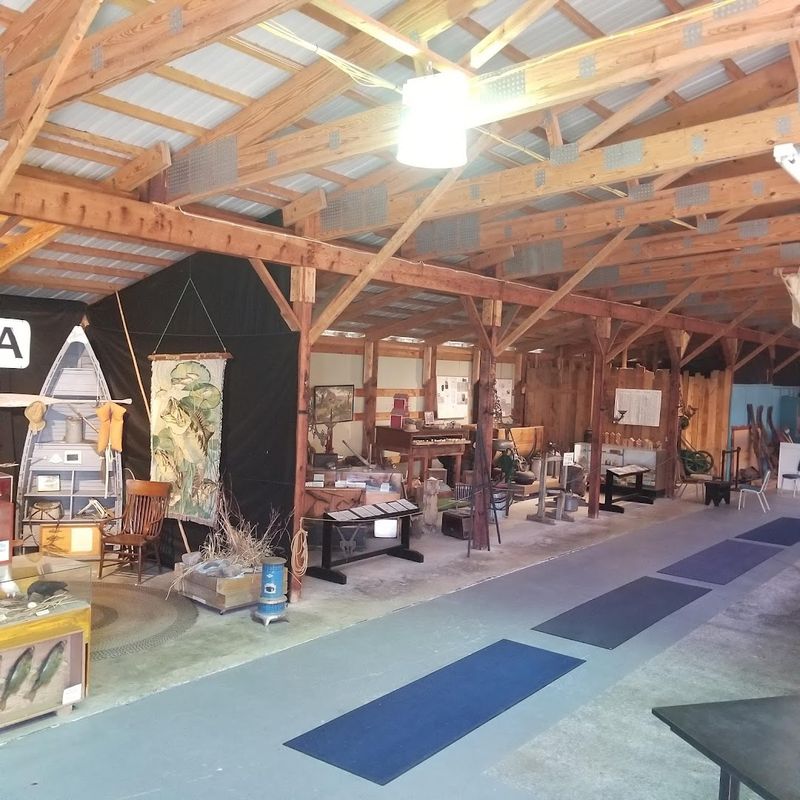
The Viking obsession in Alexandria is not just about one controversial stone. The broader Scandinavian heritage of central Minnesota runs deep, shaped by waves of Norwegian, Swedish, and Danish immigrants who settled the region in the late 1800s and early 1900s.
Their descendants still make up a significant portion of the community, and that heritage shows up in local surnames, church traditions, food culture, and the general sensibility of the place. The Kensington Runestone story resonates here partly because it aligns with a community identity that was already proud of its Norse roots.
Annual events, local festivals, and cultural organizations in the area regularly celebrate Scandinavian traditions in ways that feel genuine rather than performative. When Alexandria leans into its Viking mythology, it is drawing on something real in the community’s DNA, not just inventing a tourism hook from scratch.
Fishing Culture: A Serious Local Tradition
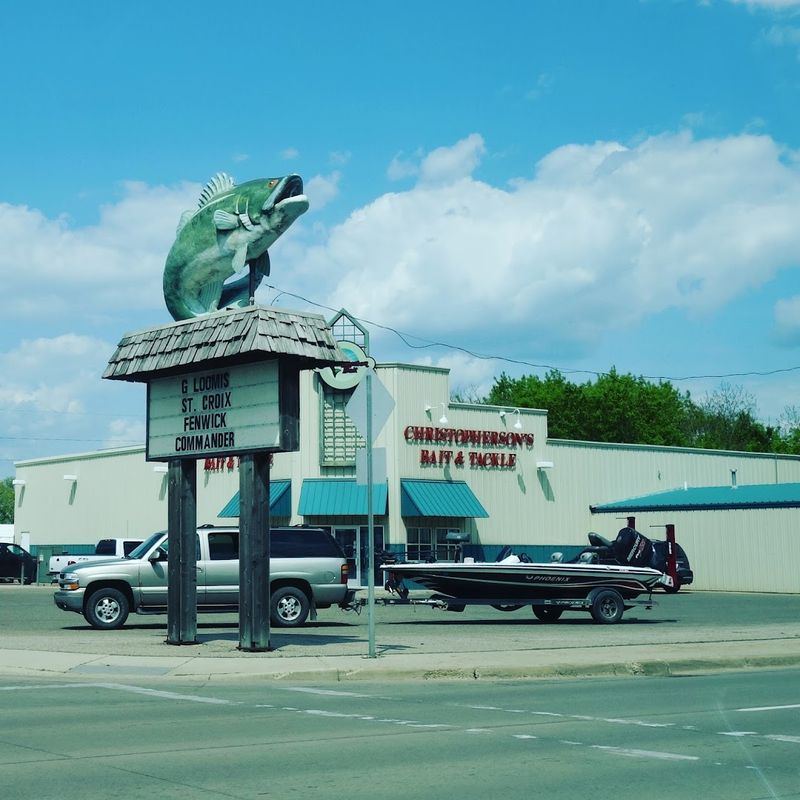
Fishing is not a casual hobby in Alexandria. It is practically a civic religion.
The lakes surrounding the city are stocked with walleye, northern pike, bass, and panfish, and the local fishing culture reflects generations of people who take their time on the water seriously.
Ice fishing in winter draws just as much enthusiasm as open-water fishing in summer. Drive around the lakes in January and you will see entire villages of ice houses set up on the frozen surface, complete with heaters, tip-ups, and people who have clearly been doing this their whole lives.
Local bait shops, fishing guides, and tackle stores are woven into the economic fabric of the city in a way that makes clear this is not just a tourist feature. For visitors who want to experience the real Alexandria beyond the Viking mythology, getting out on the water is the most direct path there.
The Annual Vikingland Band Festival
Every summer, Alexandria hosts the Vikingland Band Festival, one of the largest marching band competitions in the upper Midwest. The event draws high school bands from across Minnesota and neighboring states, turning the city’s streets into a showcase of precision marching, colorful uniforms, and competitive music performance.
The festival has been running for decades and has become a point of genuine local pride, not just as a tourism event but as a community tradition that families return to year after year. The energy of a full marching band moving down a main street is something that is hard to describe and easy to feel.
For visitors who happen to be passing through during the festival, it is one of those unexpected experiences that turns a planned quick stop into a full afternoon. The name, of course, ties right back to the Viking identity that Alexandria wears so confidently.
Local Dining: What to Eat in Alexandria

The dining scene in Alexandria reflects its identity as a working lake town with deep Midwestern roots and a steady flow of tourists who expect something more than fast food. Walleye is the star of most menus, served fried, baked, or pan-seared, and the quality is consistently high because the fish is genuinely local.
Several restaurants along the lake shores offer outdoor seating with water views, which adds a dimension to a meal that no amount of interior decorating can replicate. The casual atmosphere is part of the appeal, and most places welcome guests who show up in fishing clothes without a second glance.
Breakfast spots in the downtown area tend to be busy on weekend mornings, drawing both locals and visitors who have been up since dawn on the water. Showing up hungry after a morning on the lake and finding a genuinely good meal waiting is one of Alexandria’s most reliable pleasures.
Why Alexandria Stays With You After You Leave
Some towns are easy to pass through and easy to forget. Alexandria is not one of them.
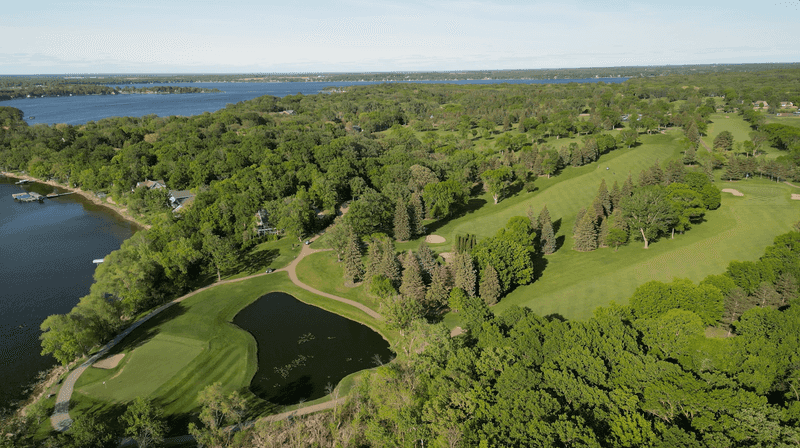
The combination of a genuinely unresolved historical mystery, a massive Viking standing on the edge of the highway, 300-plus lakes, and a community that takes pride in all of it creates something that lingers in the memory.
The Kensington Runestone may never be definitively proven authentic or fraudulent, and in a strange way, that ambiguity is what keeps people coming back to think about it. Alexandria built an identity around a question rather than an answer, and that turns out to be a remarkably durable foundation.
Whether you stop for the Viking statue, the museum, the fishing, or just a good meal on the water, Alexandria rewards curiosity. It is the kind of place that makes you want to tell someone else about it the moment you get back in the car.
Share this story