There is a cave in Ohio that carries the name of a man who actually lived inside it. He was a real hermit, and the place he called home has since become one of the most visited natural spots in the entire state.
The gorge surrounding it is packed with waterfalls, mossy cliffs, stone bridges, and trails that wind through rock formations unlike anything else in the Midwest. Whether you are a first-time visitor or someone who makes the trip every fall, this place has a way of surprising you each time.
By the end of this article, you will know the full story behind the name, what to expect on the trails, when to go, how to prepare, and why so many people keep coming back year after year.
The Hermit Behind the Name
Long before tourists arrived with hiking boots and trail maps, a man named Richard Rowe made this sandstone cave his permanent home in the early 1800s.
He was a fur trapper and hunter who chose solitude over society, living out his years inside the cave with his two grandchildren after losing his family.
When he passed away, he was buried right there inside the cave, which is how it earned the name that still sticks today.
That backstory gives the place a different kind of weight than your average hiking trail.
You are not just walking through a pretty gorge; you are walking through someone’s actual home. The cave is part of Hocking Hills State Park, and the history woven into the rock walls makes every step feel like a small act of discovery.
Where Exactly You Are Going
Old Man’s Cave sits within Hocking Hills State Park, just outside Logan, Ohio, at the address of 19852 OH-664, Logan, OH 43138.
Logan is a small city in Hocking County, roughly 60 miles southeast of Columbus, making it a very doable day trip from central Ohio or a perfect base for a weekend escape.
The park entrance leads to a well-organized visitor area with a parking lot, restrooms, a gift shop, and a small lodge nearby.
The Hocking Hills region itself is known for its unique geology, carved out over thousands of years by water cutting through Black Hand sandstone.
Old Man’s Cave is considered the centerpiece of the park, and it connects to several other trails and attractions within the larger Hocking Hills system. If you have never been to this part of Ohio, prepare to be genuinely surprised by what the landscape has to offer.
The Gorge That Stops You in Your Tracks
The gorge at Old Man’s Cave is the kind of place that makes you stop mid-step just to look up and take it all in.
Towering sandstone walls rise on both sides, covered in thick green moss that clings to every crack and crevice. The rock has been sculpted by centuries of water erosion into smooth, sweeping curves that look almost deliberate.
A creek runs along the gorge floor, and depending on the season, it can be a gentle trickle or a rushing current after heavy rain.
The scale of the cliffs is hard to fully appreciate until you are actually standing at the bottom looking up.
What makes this gorge stand out from other Ohio parks is the sense of enclosure, like the world above has temporarily disappeared and you are walking through a place that operates on its own quiet rules.
Upper Falls and the Start of the Trail
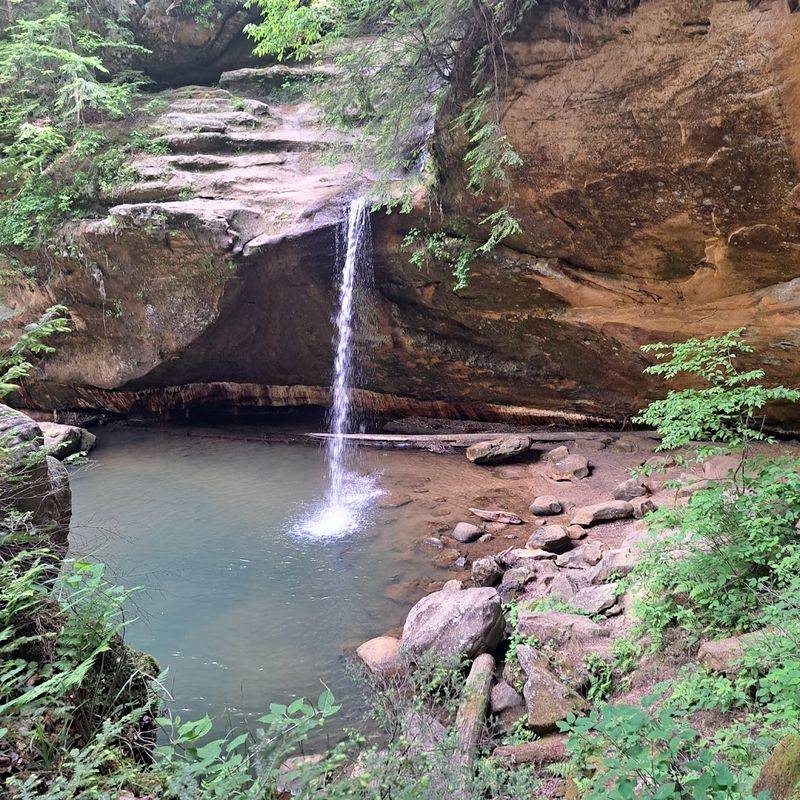
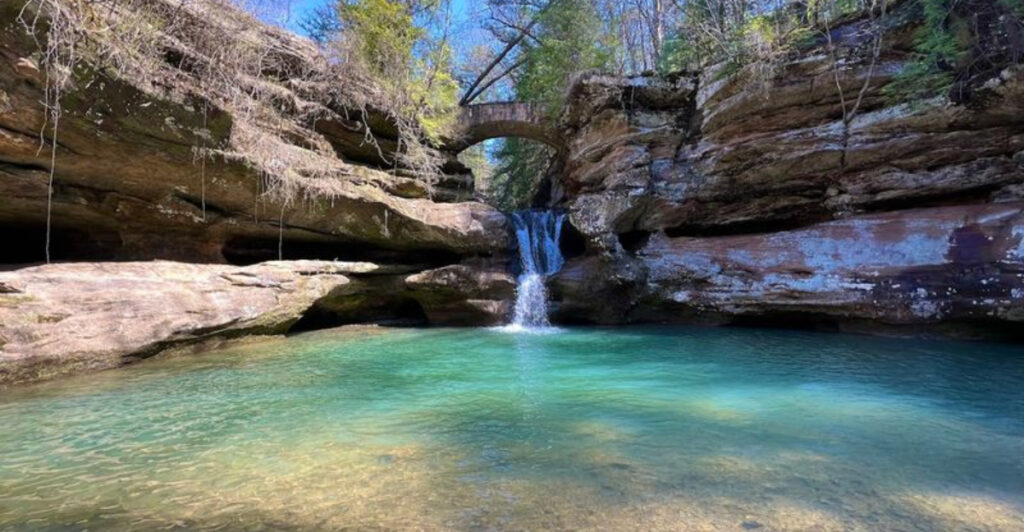
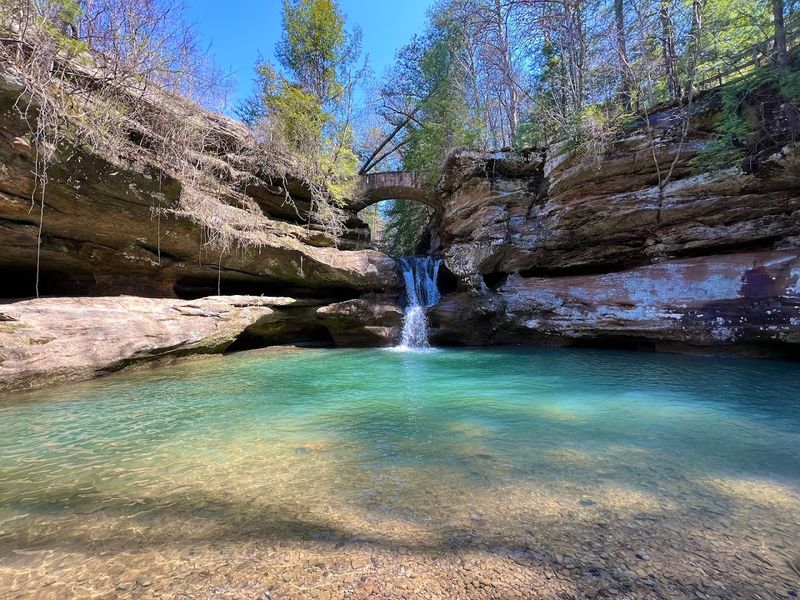
Many visitors start their hike from the main parking area and head toward the Upper Falls first, which sets a strong tone for everything that follows.
The Upper Falls is a wide, flat waterfall that spills over a sandstone ledge into a shallow pool below. It is not enormous, but the way the water fans out across the rock face gives it a dramatic look, especially after rainfall.
The trail leading to it is relatively easy and well-marked, making it a good warm-up before the terrain gets more interesting further along.
Early morning visits reward you with soft light filtering through the tree canopy, which makes the water catch and shimmer in a way that is genuinely hard to photograph well but impossible to forget.
Starting here also means you build up to the cave itself, rather than jumping straight to the main attraction and missing the full story the trail is trying to tell.
The Cave Itself Up Close
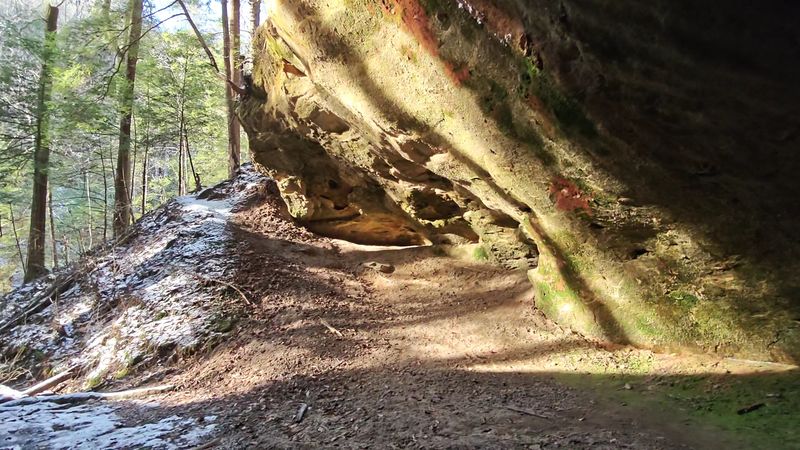
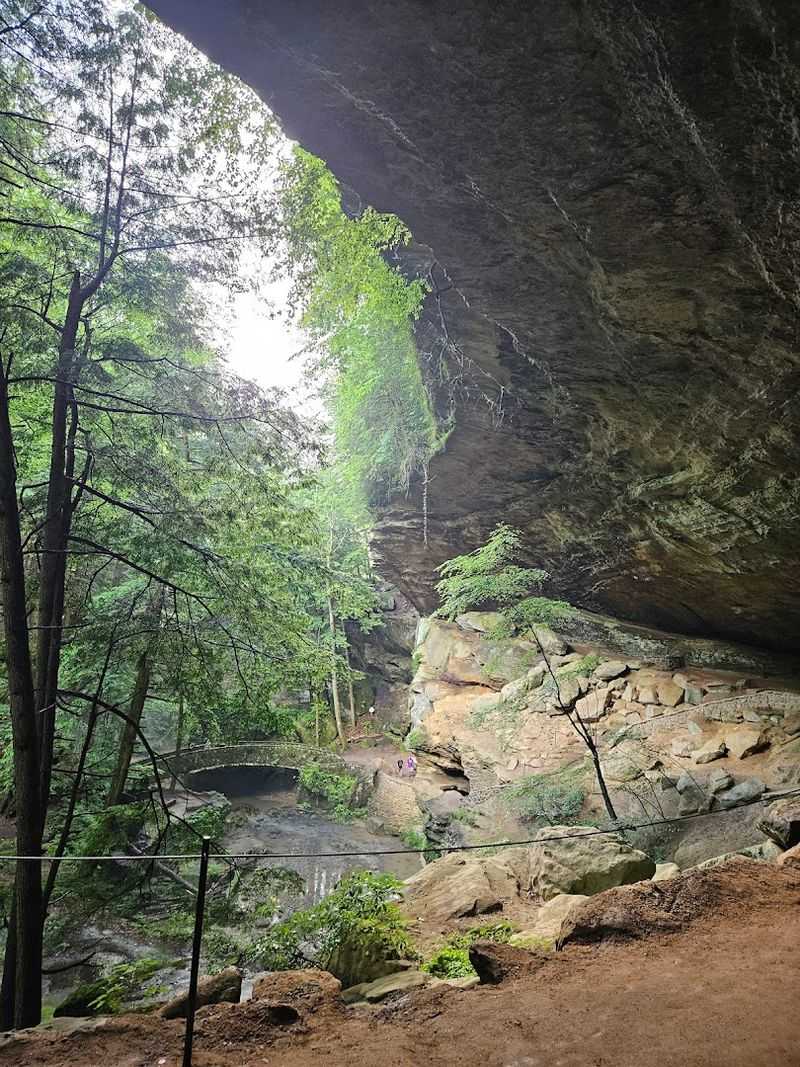
The actual cave at Old Man’s Cave is what geologists call a recess cave, which means it is more of a massive overhang than a deep tunnel you walk through.
The ceiling arches dramatically overhead, and the back wall is dark and streaked from decades of moisture and mineral deposits. Standing inside it feels surprisingly cool even on warm days, and the acoustics make every sound echo in an oddly satisfying way.
This is where Richard Rowe lived, and once you see the space, you can actually picture someone building a small life here. It is sheltered, close to water, and surrounded by natural resources.
The cave sits right along the main trail loop, so you will pass through it naturally without any detours.
Take a moment to slow down here rather than rushing through, because the details in the rock, the textures, the shadows, the moss, are worth more than a quick glance.
Lower Falls and Devil’s Bathtub
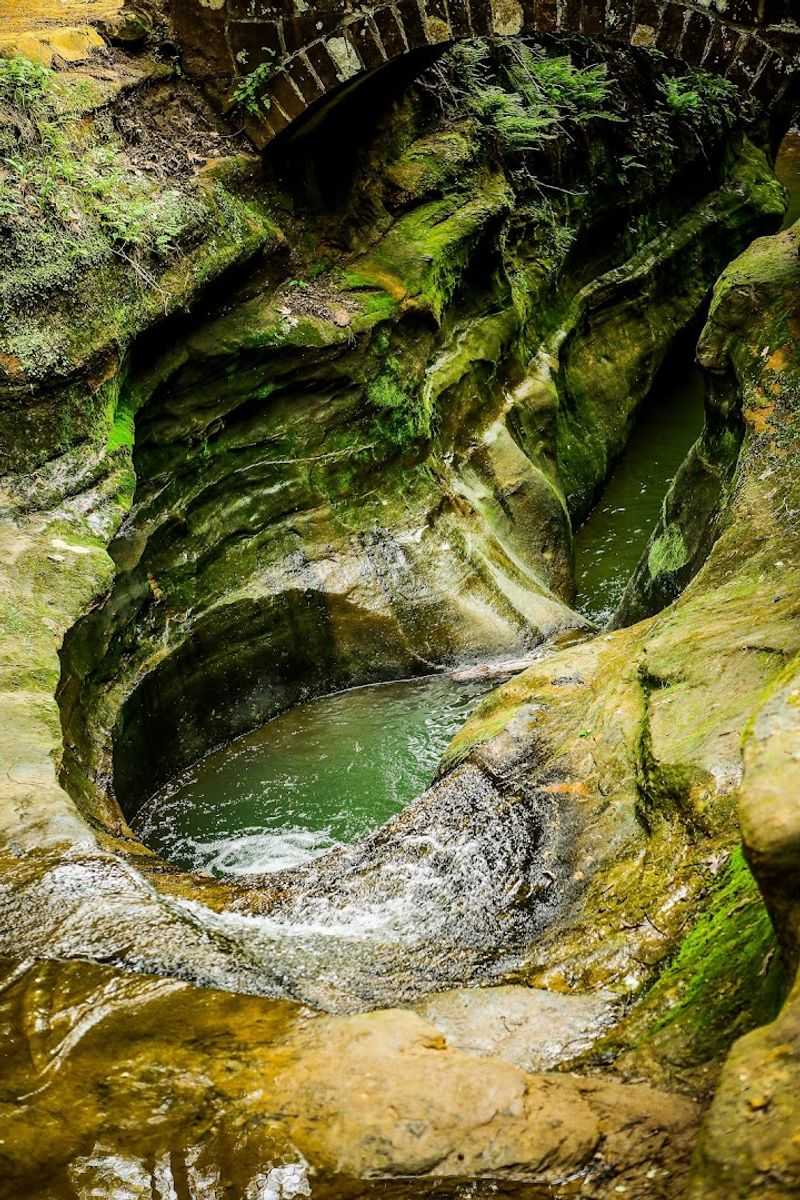
Further along the trail, past the main cave, the Lower Falls offer a completely different visual experience from the Upper Falls at the start of the hike.
The water here drops into a circular pool carved into the sandstone, and that pool has earned the nickname Devil’s Bathtub, which is exactly as dramatic and fun as it sounds.
The formation is genuinely unusual, a near-perfect bowl of rock filled with clear, cold water that seems almost too perfectly shaped to be natural.
Getting to the Lower Falls requires a bit more effort than the earlier sections of the trail, with some steeper sections and uneven terrain along the way.
Most visitors agree the extra steps are worth every one of them. The Lower Falls tend to draw fewer people than the main cave area, which means you often get a quieter, more personal experience at one of the most photogenic spots in the entire park.
Stone Steps, Bridges, and a Tunnel
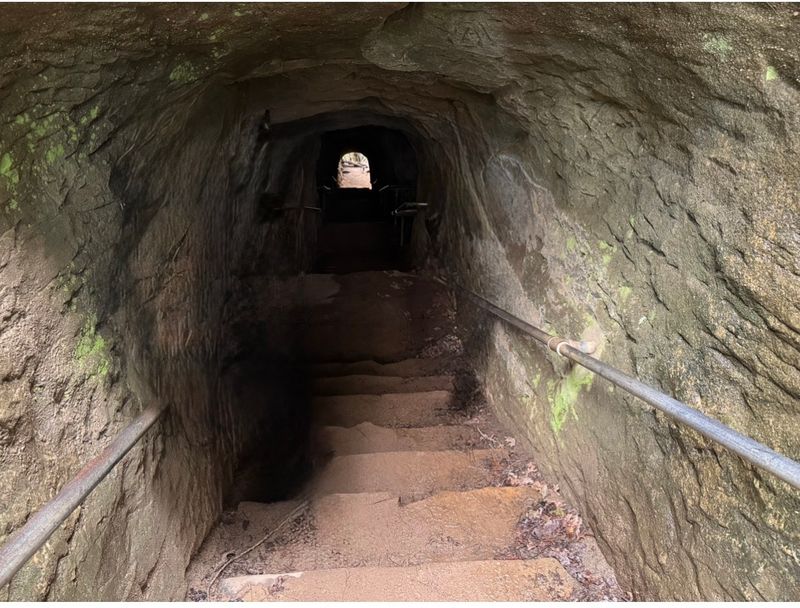
One of the most memorable parts of the trail is the infrastructure built directly into the rock itself.
Stone steps descend into a tunnel carved through the sandstone, and while it is short enough to walk through without a flashlight, the moment of stepping into that darkness and seeing the light at the other end feels genuinely cinematic.
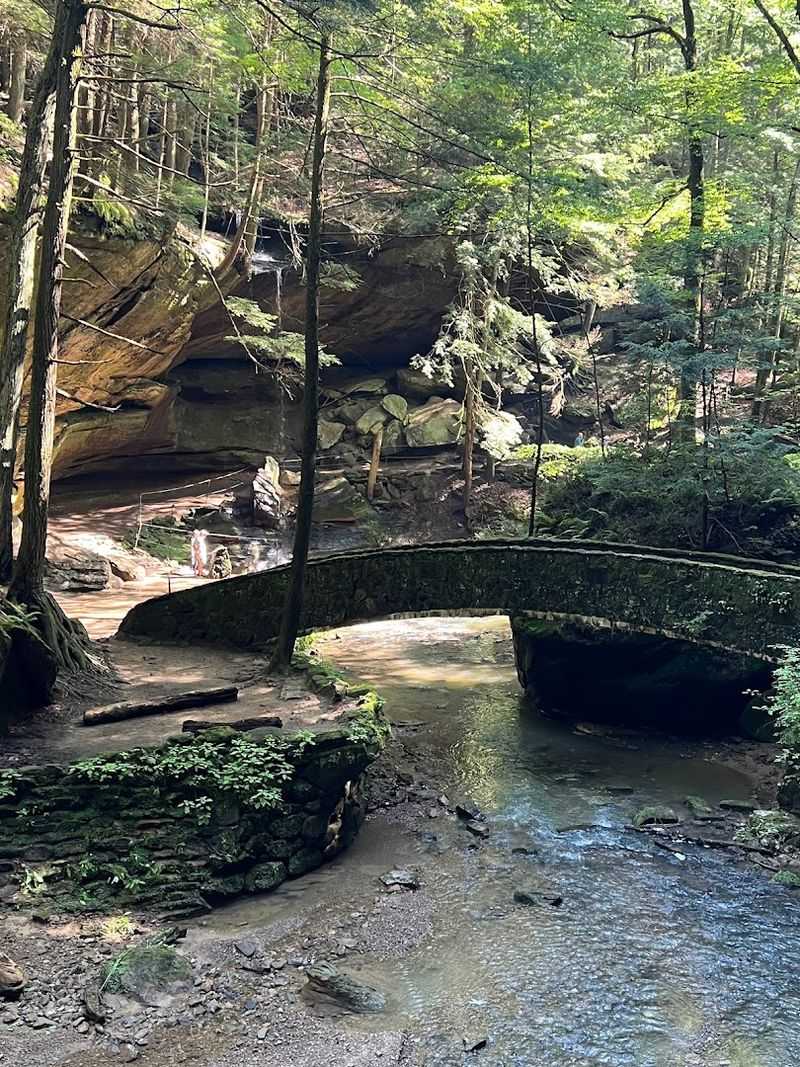
A cobblestone bridge spans the creek at one point, and the craftsmanship is old enough to feel like it belongs in a completely different era.
There are also bridges overhead that you can spot from below, giving the gorge a layered, almost theatrical quality where hikers above and below can wave to each other across the rock walls.
These built elements blend into the natural environment so well that it takes a second look to realize how much human effort went into making the trail both accessible and beautiful. The trail designers clearly had good taste.
Trail Options and Difficulty Levels
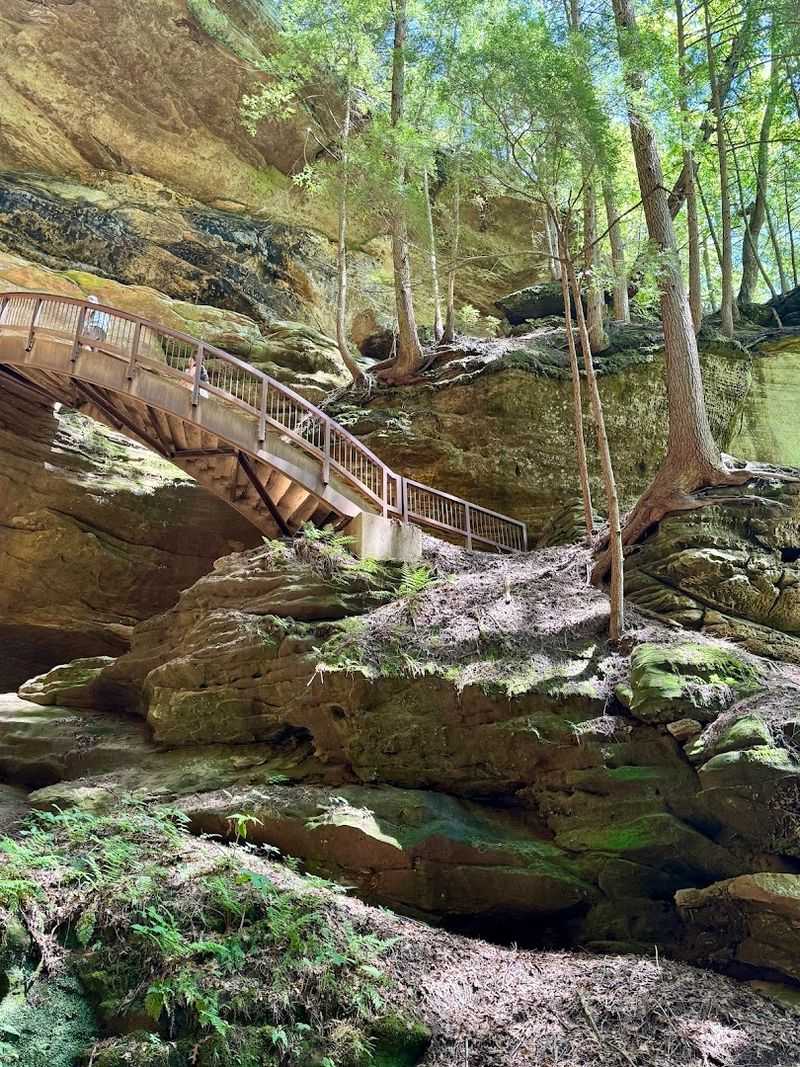
Not every visitor wants the same hike, and Old Man’s Cave does a solid job of offering options that suit different energy levels and time constraints.
The main gorge loop is under a mile and takes most people between 30 and 45 minutes at a relaxed pace. It covers the cave, Upper Falls, and a good stretch of the gorge without too much elevation change.
Adding the Lower Falls extends the hike to roughly 40 minutes to an hour depending on how long you linger.
For those who want more, the park connects to longer trails including Whispering Cave and Broken Rock, which add both mileage and challenge.
Broken Rock in particular has a reputation for feeling slightly off-trail, which is part of its appeal for hikers who enjoy a bit of uncertainty with their scenery.
All trails are marked, though some signs are easier to spot than others, so a quick look at the trail map before you head out saves a lot of guesswork.
What to Wear and Bring
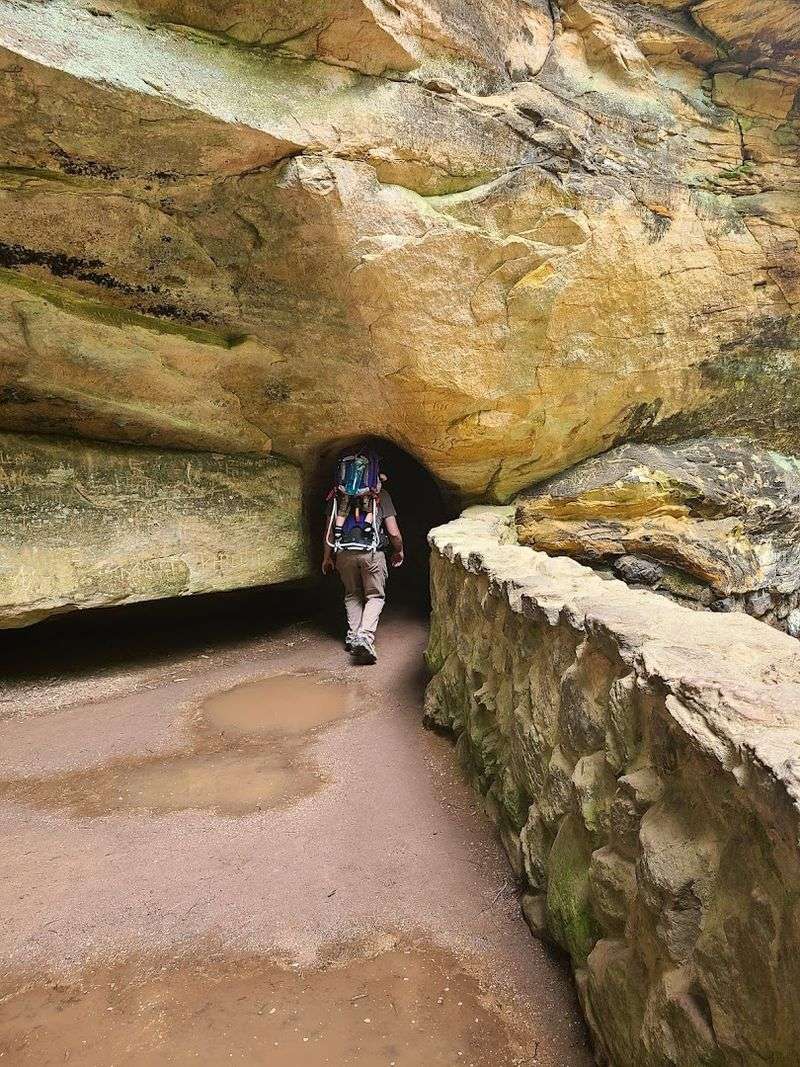
The trail at Old Man’s Cave is not technically demanding, but the surface conditions can catch unprepared visitors off guard.
Sections of the path run along the creek and over natural rock, which becomes slick when wet or when temperatures drop in winter. Hiking boots or shoes with solid grip are strongly recommended, especially outside of summer.
Sandals and flat sneakers work fine on dry days in warm weather, but one rainy stretch of trail can turn them into a liability.
Bring water, particularly if you are extending the hike beyond the main loop, since there are no water stations along the trail itself.
A light jacket is worth packing even in summer, since the gorge stays noticeably cooler than the surrounding area thanks to the shade from the cliffs and canopy above.
A fully charged phone doubles as both a camera and a flashlight for the tunnel section, so make sure it is topped up before you arrive.
The Best Time of Year to Visit
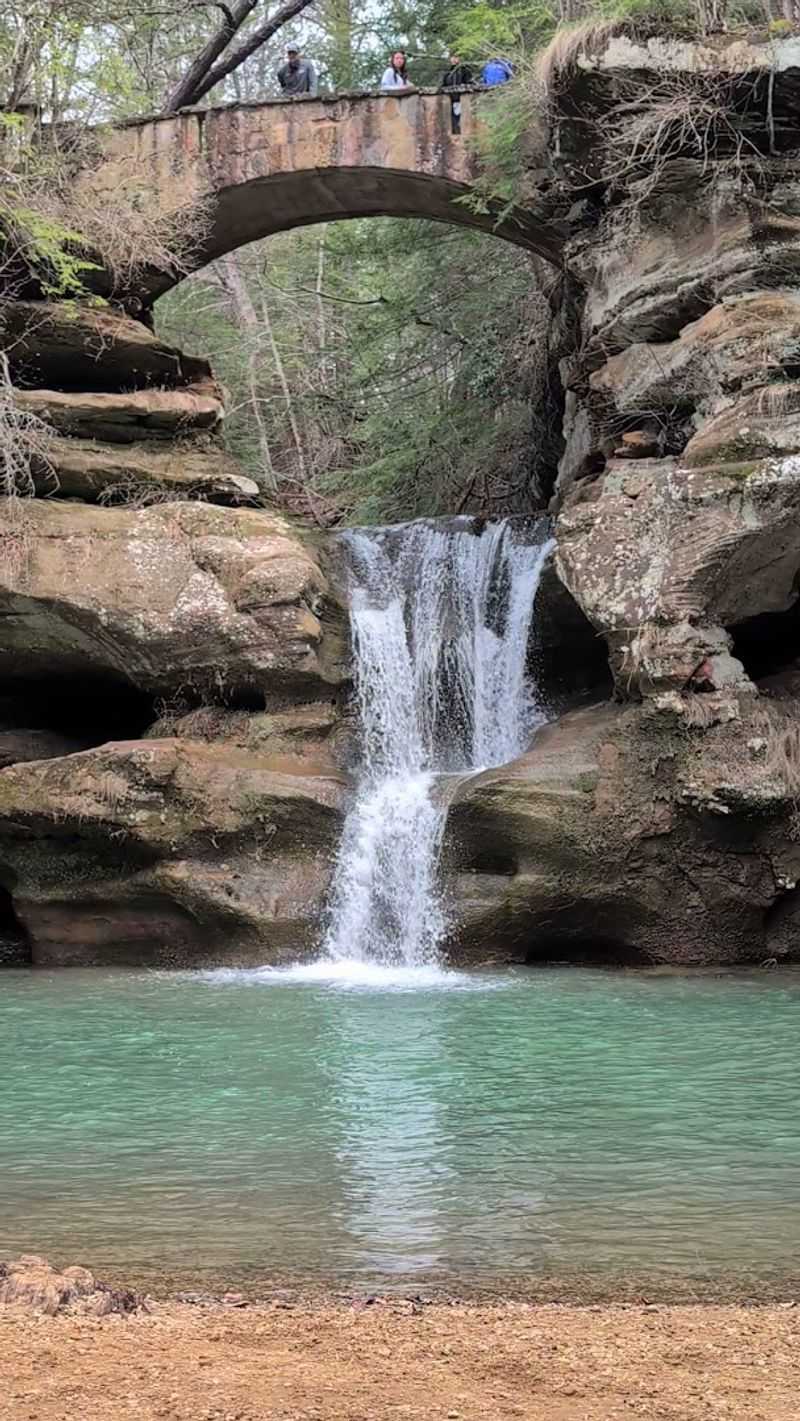
Every season brings something different to Old Man’s Cave, and there is a genuine argument to be made for each one depending on what you are after.
Fall is widely considered the peak season, and for good reason. Late October wraps the gorge in orange, red, and gold, and the cooler air makes hiking genuinely comfortable.
Spring brings higher water flow, which makes the waterfalls more dramatic and the creek more lively, though mud can be an issue on the trails after rain.
Summer draws the biggest crowds but also offers the fullest canopy of green overhead, which creates a cathedral-like effect inside the gorge.
Winter visits are surprisingly rewarding for those willing to brave the cold. Ice formations along the cliff walls and frozen waterfalls create a completely different atmosphere that feels almost otherworldly.
The park itself looks different every single time you come back, which is the main reason so many people make it an annual tradition.
Parking and Crowds: The Real Talk
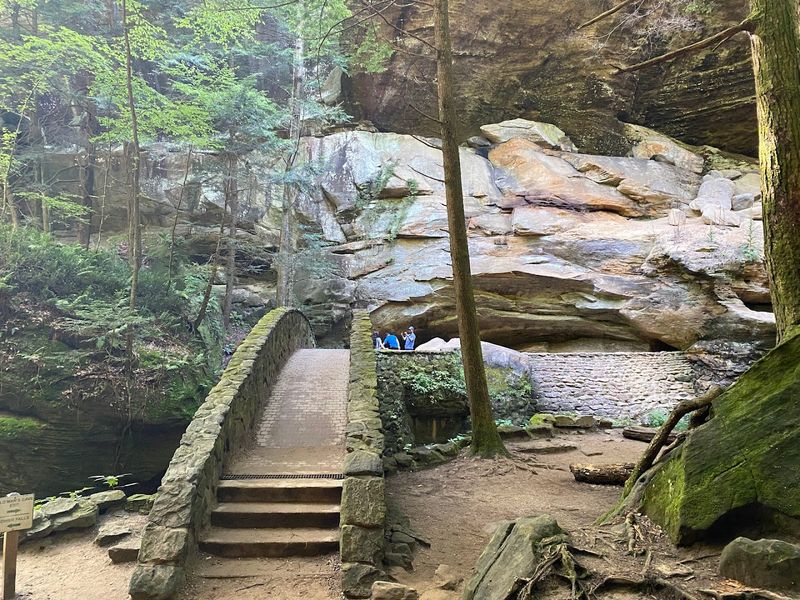
Here is the part of the trip that no one wants to talk about but everyone needs to know: parking at Old Man’s Cave is genuinely competitive on weekends and holidays.
The main lot fills up fast, sometimes within the first hour of opening on busy weekend mornings. Cars spill out along the road, and the wait can stretch longer than the hike itself if you arrive mid-morning on a Saturday in October.
The solution is simple but requires commitment: arrive early, ideally before 9 a.m., especially during peak seasons like fall and summer weekends.
Weekday visits are noticeably calmer, and a Tuesday or Wednesday morning in late October might just be the best-kept secret in all of Hocking Hills.
The park does not charge an admission fee, which is part of why it draws such consistent crowds. Free and beautiful is a combination that is hard to resist, no matter the season.
Kid-Friendly and Family-Ready
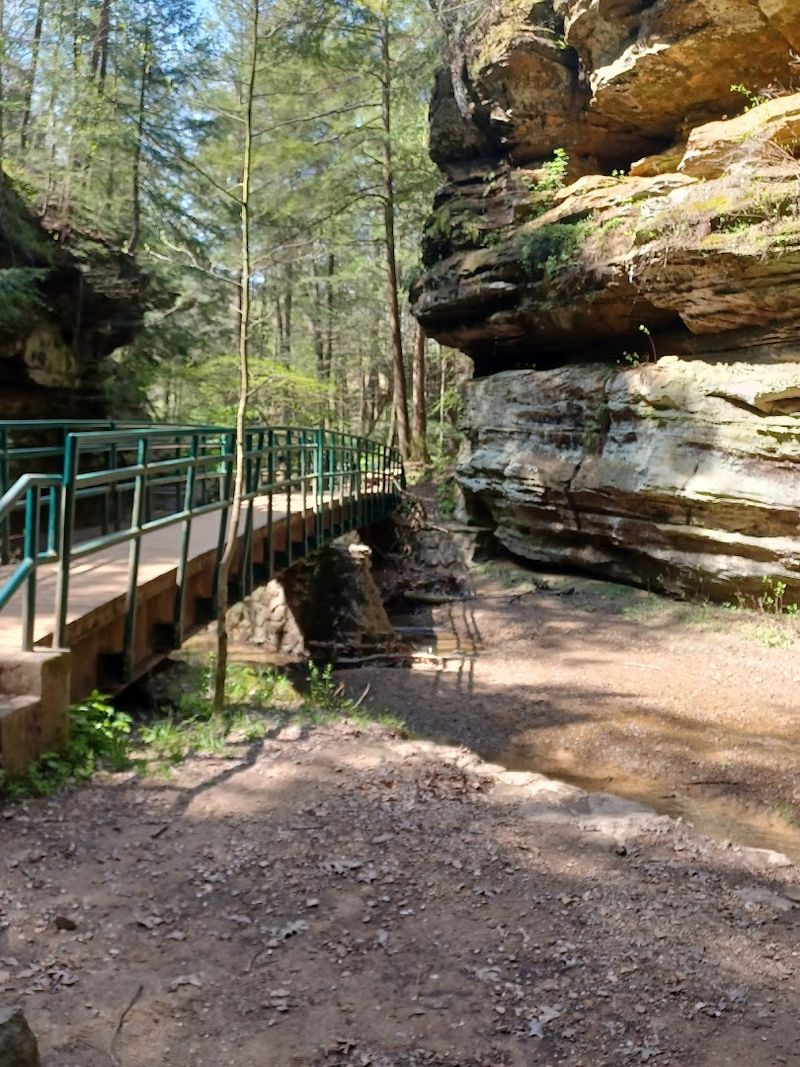
Old Man’s Cave earns high marks as a family destination, mostly because the main trail is short enough to keep younger kids engaged without pushing anyone past their limits.
The combination of a real cave, multiple waterfalls, a creepy-cool spot called Devil’s Bathtub, and bridges both underfoot and overhead gives children plenty of things to point at and ask questions about.
The trail does include some steep sections and uneven terrain, so kids who are steady on their feet will have an easier time than very young toddlers.
Strollers are not practical on the natural trail surfaces, but older children generally handle it well with minimal fuss.
Dogs are welcome on the trails as long as they are leashed, which makes it a solid option for families who prefer not to leave their pets behind.
The built-in story of the hermit who lived in the cave is also a natural conversation starter that tends to keep curious kids asking questions the whole way through.
Photography Tips for the Gorge
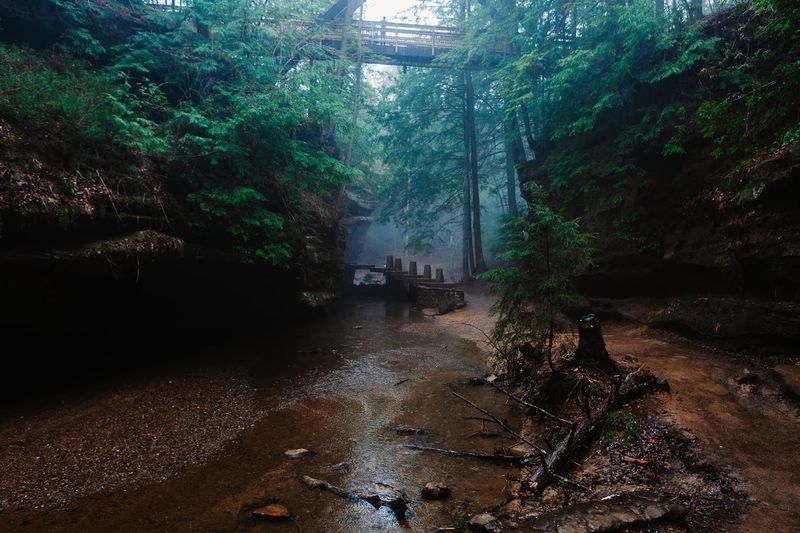
Old Man’s Cave is one of those places where every direction you point a camera produces something worth keeping.
The gorge walls, covered in textured moss and streaked with mineral patterns, provide a natural backdrop that works in almost any light. Overcast days are actually ideal for shooting here because the soft, diffused light eliminates harsh shadows inside the gorge.
Early morning visits reward photographers with mist rising off the creek and golden light filtering through the tree canopy above the gorge rim.
For waterfall shots, a slower shutter speed creates that smooth, silky water effect that makes the falls look even more dramatic than they appear in person.
The cobblestone bridge and the tunnel entrance are two structural features worth framing carefully, since they add a historical, almost storybook quality to the natural surroundings.
Autumn visits give you the added bonus of brilliant foliage pressing in from every angle, which turns even a casual snapshot into something that looks carefully composed.
Safety and Trail Etiquette
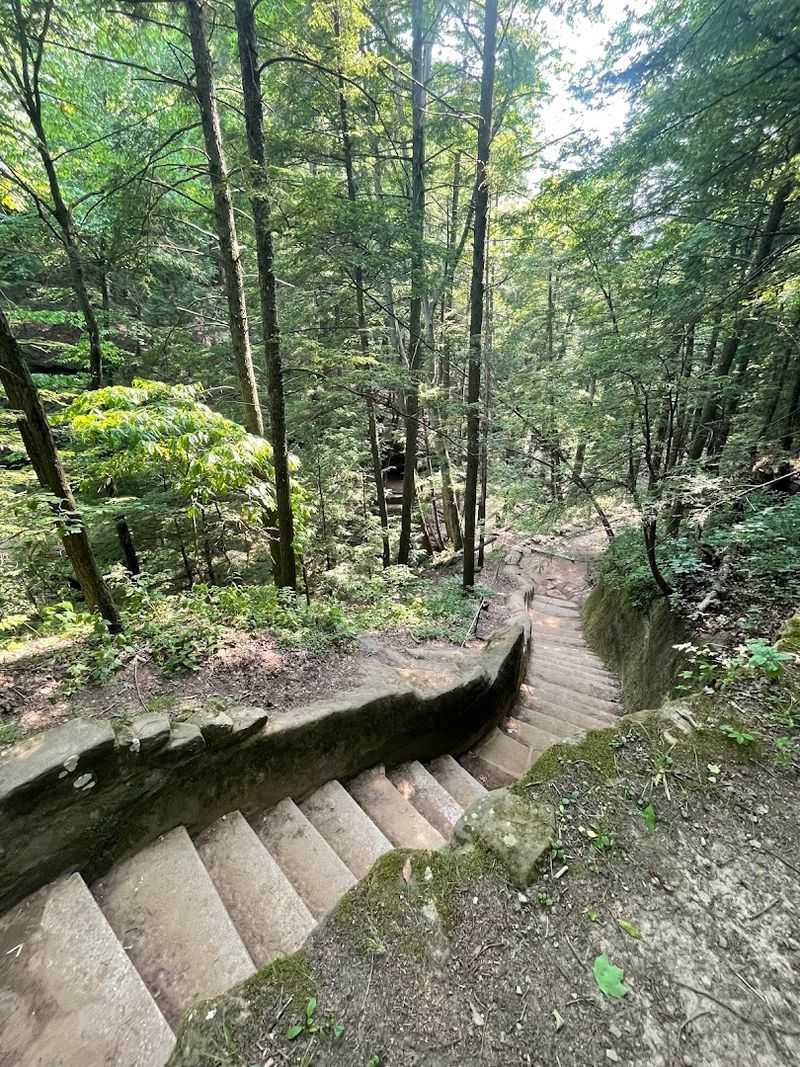
The trail at Old Man’s Cave is well-maintained, but a few safety points are worth keeping in mind before you head down into the gorge.
Some staircases along the route do not have handrails, and the stone surfaces can become very slick after rain or in freezing temperatures. Taking it slow on those sections is not excessive caution; it is just common sense.
The tunnel section near the exit of the main loop is unlit, but short enough that phone flashlights handle it easily. Children and older visitors may want a steady hand nearby for that stretch.
On the trail etiquette side, the path gets busy enough that passing slower hikers politely and giving space at viewpoints makes the experience better for everyone.
The park asks visitors to stay on marked trails to protect the fragile moss and plant life on the gorge walls, which is a reasonable request given how much of the park’s beauty depends on that vegetation staying intact.
Why People Keep Coming Back
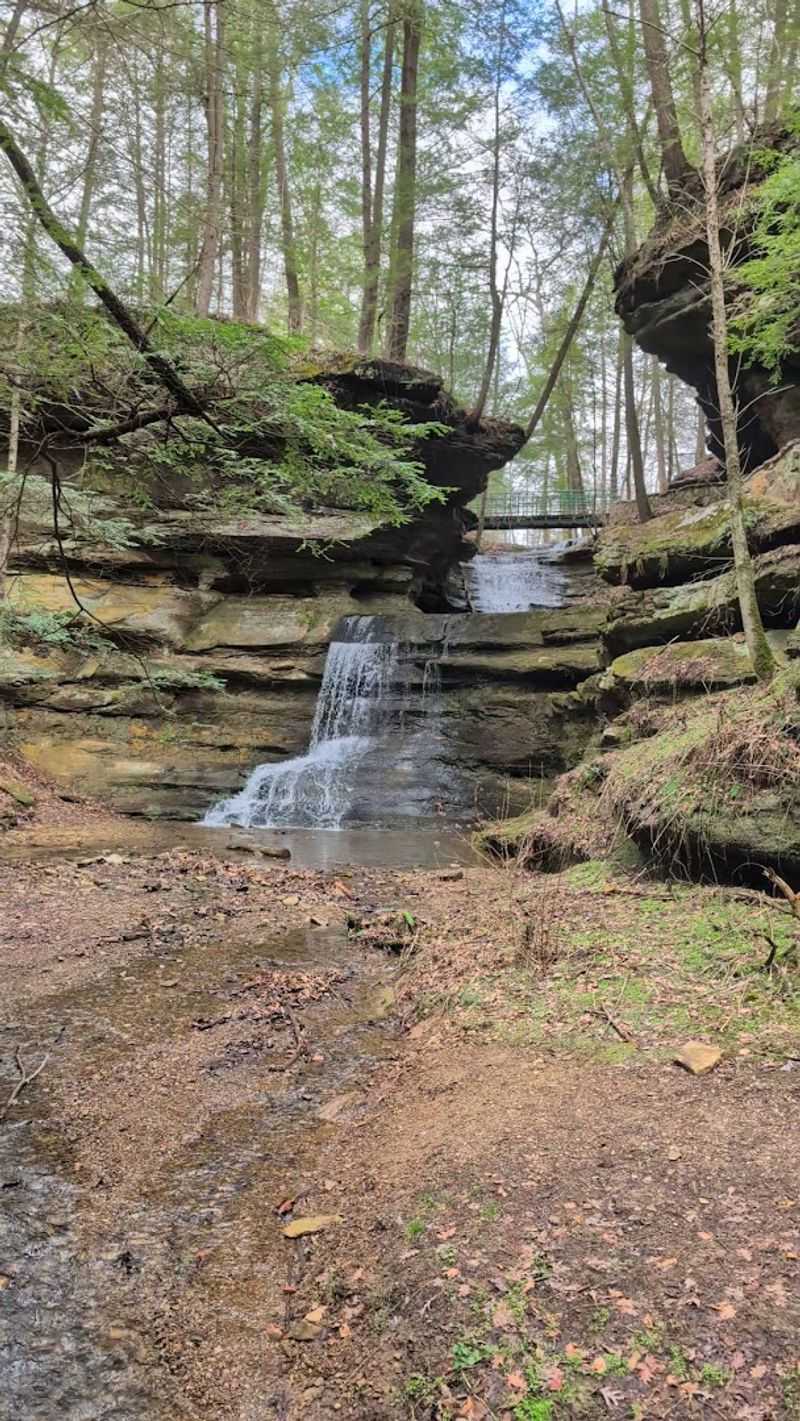
There is something about Old Man’s Cave that resists being fully captured in a photo or summed up in a single visit.
The gorge looks genuinely different depending on the season, the weather, and even the time of day you walk through it. A spring morning after rain and a dry October afternoon feel like two entirely separate experiences in the same physical space.
The history adds another layer that grows richer the more you think about it. A man actually lived here, raised his grandchildren here, and was buried here.
That is not background trivia; it is the whole reason the place has a name at all.
The trails are free, the scenery is exceptional, and the combination of history, geology, and accessible hiking is rare enough that it earns its reputation without needing any exaggeration.
If you have been on the fence about making the drive to Hocking Hills, consider this your nudge to finally go book that weekend and see it for yourself.
Share this story