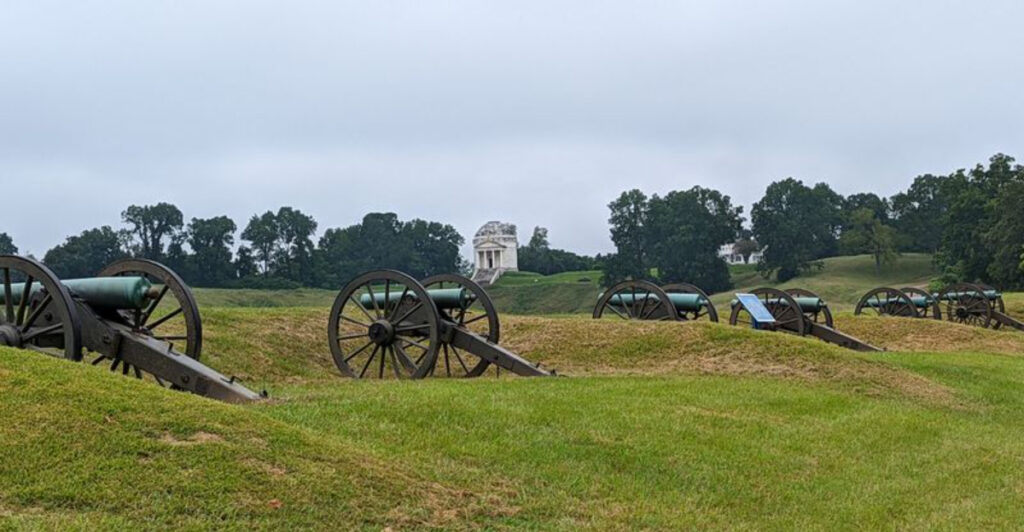
There is a place in Mississippi where history is not behind glass or tucked inside a textbook. It spreads across miles of rolling hills, marked by hundreds of monuments, cannons, and earthworks that have stood for over 160 years.
And right at the heart of it all sits something truly rare: an actual Civil War ironclad gunboat, pulled from the Yazoo River and preserved for the world to see. Vicksburg National Military Park is one of those places that makes history feel real in a way that is hard to shake.
Whether you are a history enthusiast, a casual traveler, or someone just passing through Mississippi, this park delivers a powerful experience that goes far beyond what any museum display could offer. Keep reading to find out exactly what makes this landmark so worth your time.
The Story Behind the Vicksburg Campaign
Few military campaigns in American history changed the course of a war as dramatically as the Siege of Vicksburg. From May 18 to July 4, 1863, Union forces under General Ulysses S.
Grant surrounded the Confederate stronghold of Vicksburg, Mississippi, cutting off supplies and reinforcements for 47 days.
The city sat high on bluffs above the Mississippi River, making it a critical control point for river trade and troop movement. Whoever held Vicksburg controlled the river, and controlling the river meant splitting the Confederacy in two.
When Vicksburg finally surrendered on July 4, 1863, the same day as the Union victory at Gettysburg, the tide of the war shifted decisively. The park exists today to honor every soldier who fought on both sides of that grueling campaign, and the landscape itself still tells that story with remarkable clarity.
Getting There: Address and Location Details
Vicksburg National Military Park sits at 3201 Clay St, Vicksburg, MS 39183, right on the western edge of Mississippi near the Louisiana state line. The park is easy to reach from Interstate 20, making it a natural stop for road-trippers cutting across the South.
Vicksburg itself is a small city with a big history, perched above the Mississippi River and packed with antebellum architecture, museums, and Civil War sites beyond the park boundaries. The surrounding area rewards curious travelers who want to extend their visit into town.
The park is open daily from 8:30 AM to 5 PM, giving you a solid window to explore. Arriving early on weekday mornings tends to mean fewer crowds and cooler temperatures, which matters a lot in a Mississippi summer.
Plan for at least half a day, though a full day is honestly the smarter call.
The USS Cairo: A Gunboat Unlike Any Other
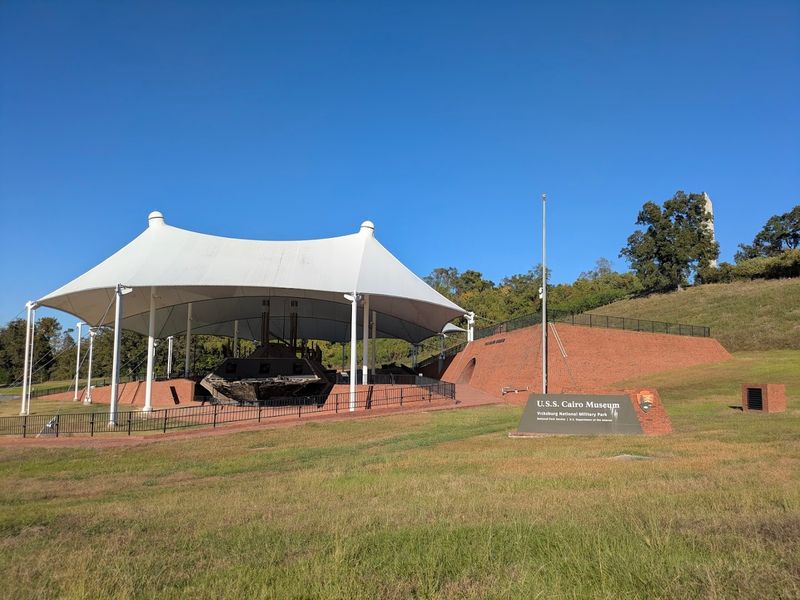
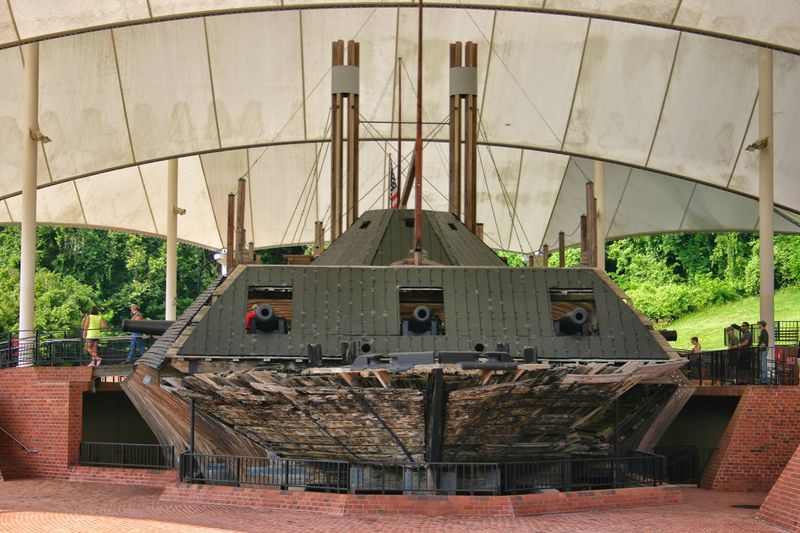
The USS Cairo is the undisputed star of the park, and for good reason. Built in 1861, this City-class ironclad gunboat served the Union Navy on the western rivers before becoming the first vessel in history to be sunk by an electrically detonated torpedo, on December 12, 1862, in the Yazoo River.
What makes it extraordinary is that the Cairo was raised from the riverbed in 1964, over a century after it sank, and painstakingly preserved. It is now one of only a handful of Civil War-era warships that visitors can actually see up close.
The massive iron cladding, the cannon ports, the engine machinery, and the cramped crew quarters all survive in remarkable condition. Standing next to it, you get a visceral sense of just how bold and dangerous naval warfare was during that era.
No photograph does it justice.
The USS Cairo Museum Experience
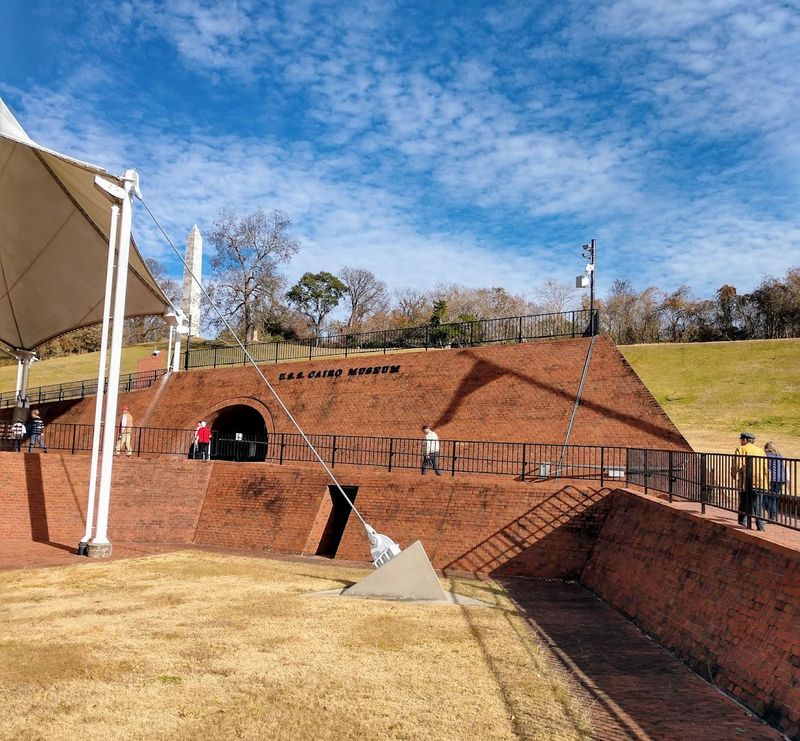
Right next to the gunboat itself, the USS Cairo Museum houses thousands of artifacts recovered from the river bottom during the salvage operation. Personal belongings, tools, weapons, dishes, and even clothing from the crew were preserved in the anaerobic mud of the Yazoo River for over a century.
The interpretive displays do a thorough job of explaining how ironclad warships worked, how the Cairo was built, and what daily life looked like for the 175 men who served aboard her. The signage is clear and detailed without being overwhelming, which makes it accessible even for younger visitors.
One of the most moving sections features personal items like combs, razors, and pocket knives that belonged to real crew members. These small objects connect you to the human side of the conflict in a way that cannon and artillery simply cannot.
The museum alone is worth the trip.
The 16-Mile Driving Tour Through the Battlefield
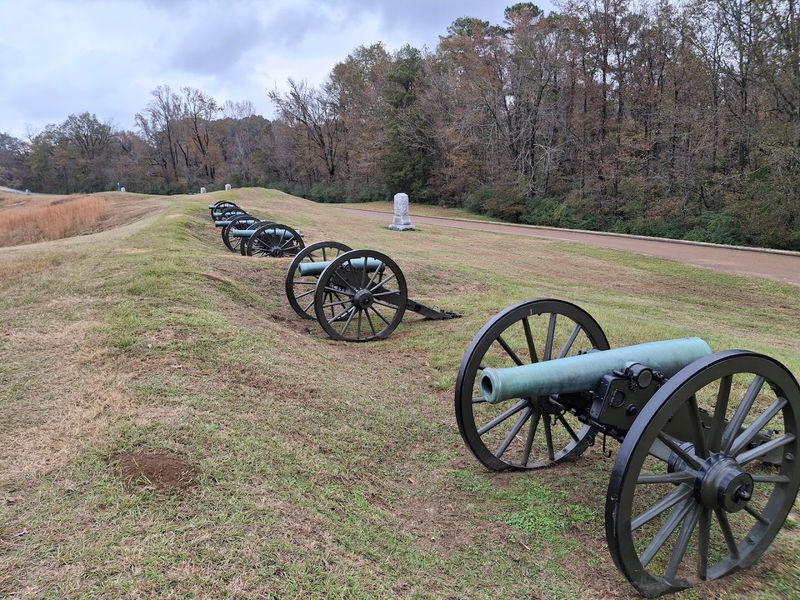
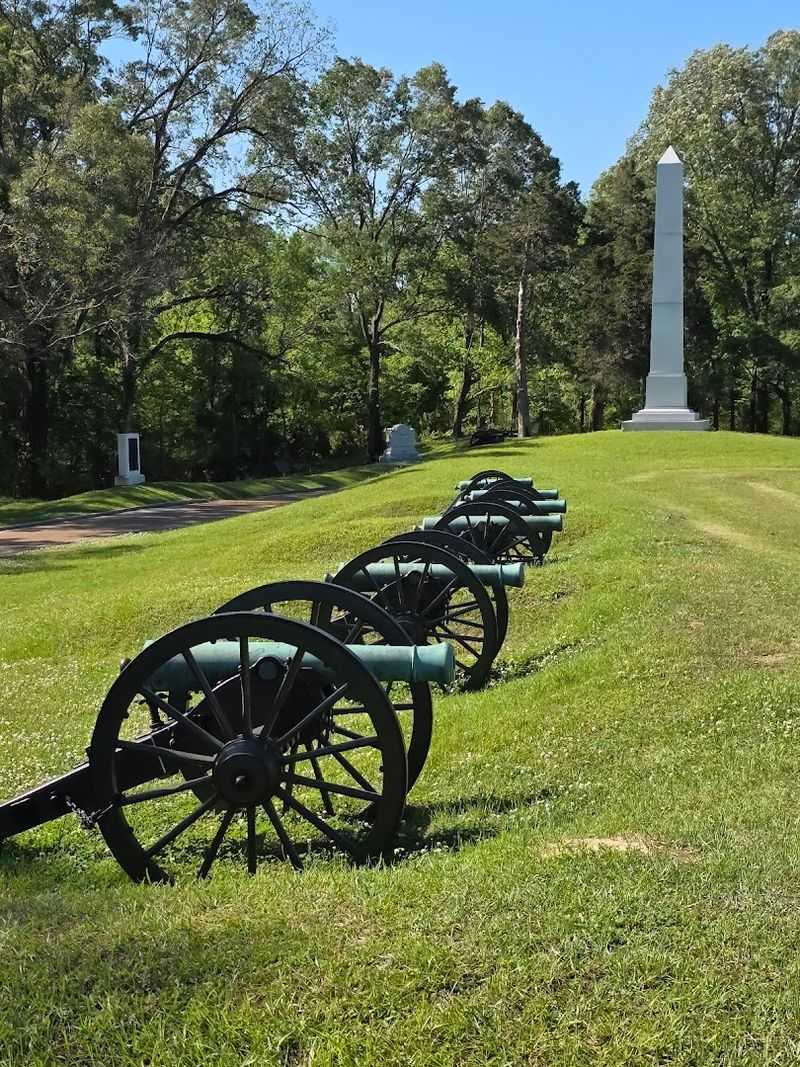
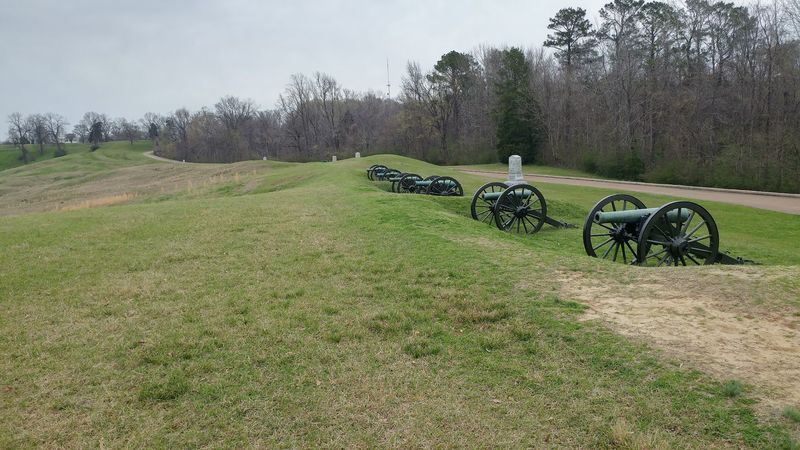
The park’s self-guided driving tour covers roughly 16 miles and winds through the full breadth of the battlefield, passing over 1,300 monuments, markers, and memorials along the way. Color-coded maps and the free National Park Service app make navigation straightforward, even for first-time visitors.
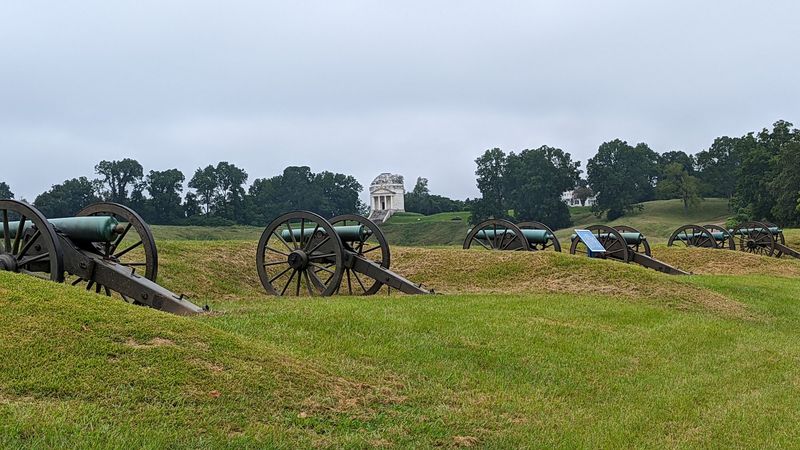
The route takes you through terrain that genuinely shaped the outcome of the siege. The hills, ravines, and earthwork trenches are still visible, and the landscape helps you understand why this ground was so fiercely contested.
Stopping at key positions and looking out over the rolling land gives you a tactical picture that no map or book can fully replicate.
On hot summer days, the driving format is a practical blessing. You can hop out at the most significant stops, walk a short distance to a monument or cannon, and return to an air-conditioned car before Mississippi’s heat becomes a factor.
Smart touring at its best.
The Visitor Center and Orientation Film
Before heading out onto the battlefield, a stop at the visitor center is genuinely worth your time. The building houses a well-organized display room that walks you through the Vicksburg Campaign day by day, using maps, photographs, weapons, and personal accounts to build a clear narrative of the 47-day siege.
The 20-minute orientation film provides essential context for everything you will see on the driving tour. Many visitors who skip it later wish they had not, because the film fills in the strategic picture that makes the monuments and positions on the battlefield far more meaningful.
The display to the right of the entrance is particularly well done, offering a concise visual timeline that even younger visitors can follow. It covers Union and Confederate perspectives without oversimplifying the complexity of the campaign.
Think of the visitor center as the key that unlocks everything else in the park.
Monuments From Every State That Fought Here
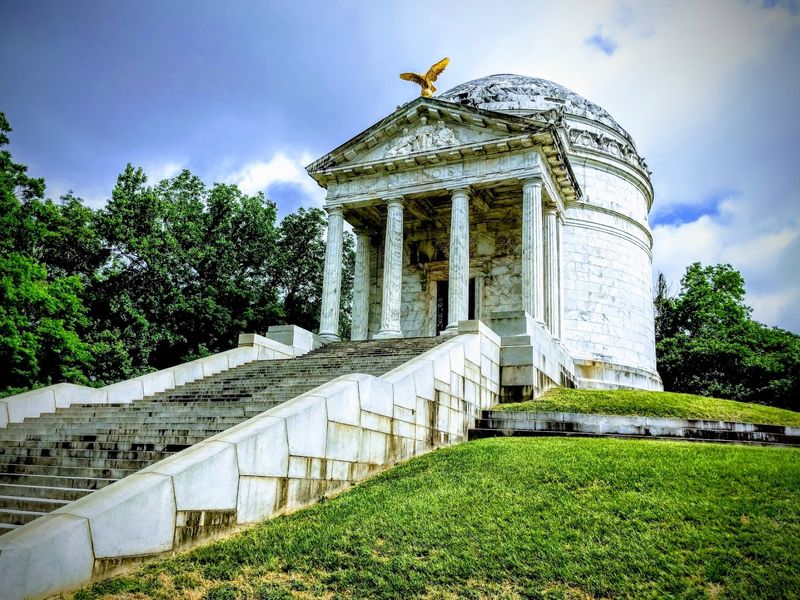
More than 1,300 monuments and markers spread across the park, representing states from both the Union and the Confederacy. The sheer variety of memorial styles is striking, ranging from simple granite tablets to towering neoclassical structures with bronze statues and carved inscriptions.
The Illinois Monument is consistently the one that stops visitors in their tracks. Built to resemble the Pantheon in Rome, its domed interior is inscribed with the names of the 36,325 Illinois soldiers who participated in the Vicksburg Campaign.
The scale of it is genuinely humbling.
The Wisconsin Monument, the Pennsylvania Memorial, and dozens of state markers dot the landscape throughout the tour route, each one telling a slightly different story about the men who served here. Walking up to these structures and reading the names and unit numbers carved into the stone makes the human cost of the campaign feel very personal and very real.
The Shirley House: The Only Surviving Wartime Structure
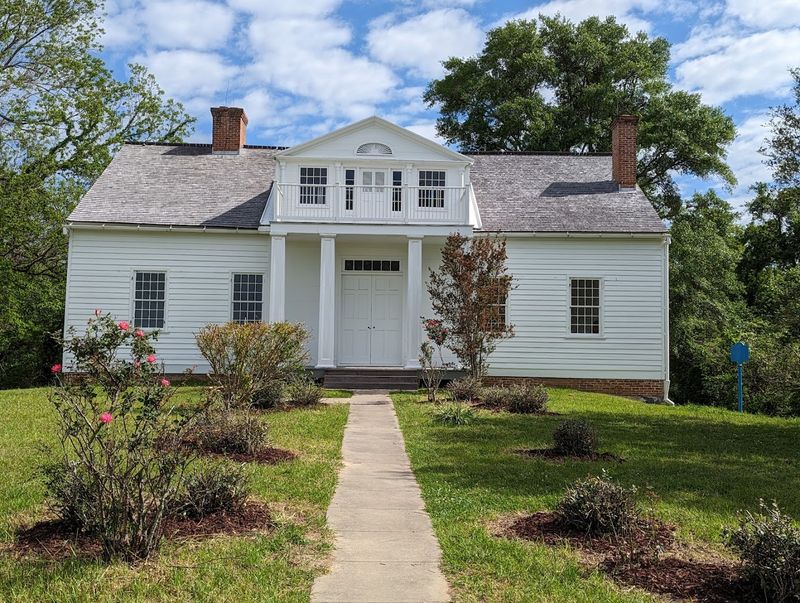
Known as the White House by Union soldiers during the siege, the Shirley House is the only building on the battlefield that survived the campaign intact. The Shirley family lived here when the fighting began, and their home sat directly between Union and Confederate lines during the siege.
The house is modest by any measure, a simple white frame structure with green shutters, but its survival across 160-plus years gives it an almost eerie weight. Union soldiers used the surrounding area as a command position, and the family eventually had to shelter in a nearby ravine as conditions worsened.
Today the house is carefully preserved as part of the park’s historic fabric. You cannot go inside, but walking around it and reading the interpretive markers that explain its role during the siege adds a deeply human dimension to a battlefield that can otherwise feel dominated by artillery and military strategy.
The Vicksburg National Cemetery
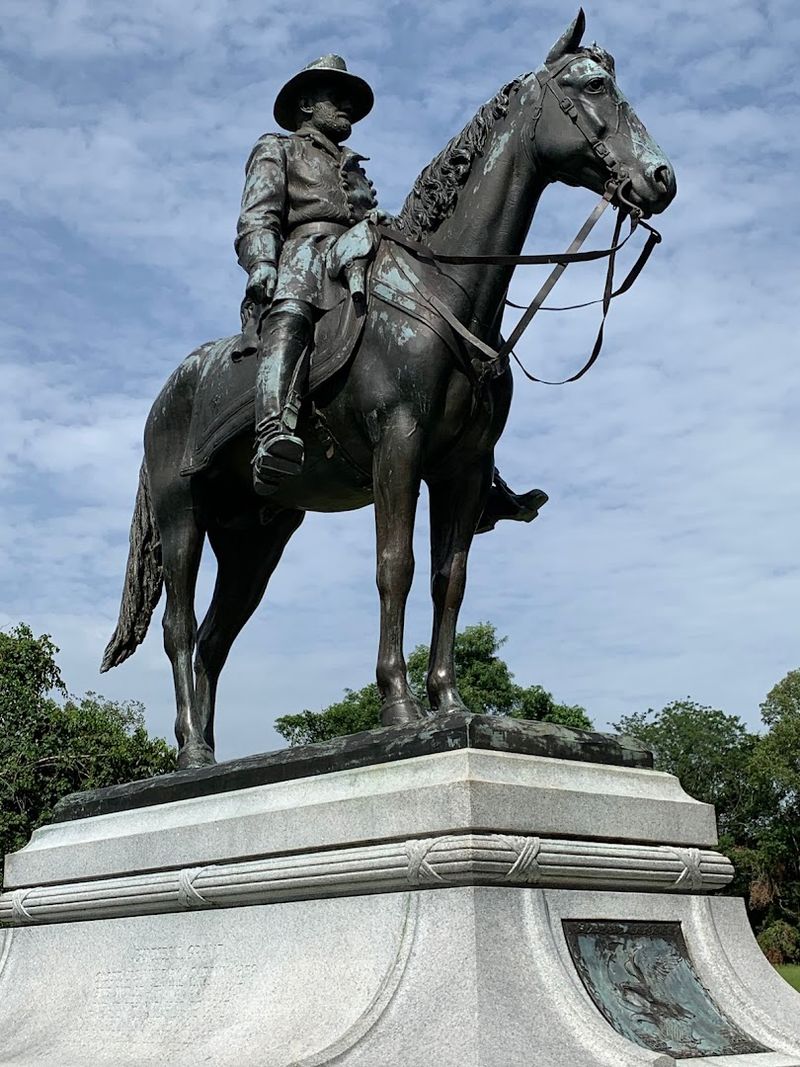
Adjacent to the battlefield, the Vicksburg National Cemetery is one of the largest Civil War cemeteries in the country, with over 17,000 Union soldiers buried here. The rows of white marble headstones extending across the hillside create a quietly powerful visual that stays with you long after you leave.
More than 12,000 of those buried here are listed as unknown, a sobering reminder of how chaotic and devastating the campaign truly was. The cemetery was established in 1866, just three years after the siege ended, and has been maintained by the federal government ever since.
Confederate soldiers who fell during the campaign are buried in a separate cemetery in the city of Vicksburg, just outside the park boundaries. Walking through the national cemetery encourages a kind of quiet reflection that feels appropriate for a place of this historical weight.
It is not a cheerful stop, but it is an important one.
Hiking and Walking Trails on the Battlefield
Beyond the driving tour, the park offers several trails that let you explore the battlefield on foot. A popular 3.5-mile loop takes hikers past historical markers, earthwork trenches, and artillery positions that are best appreciated at walking pace rather than from a car window.
The terrain here is hilly and varied, which reflects the tactical reality of the siege. Union forces had to push uphill against entrenched Confederate defenders, and walking those same slopes gives you an immediate physical understanding of how difficult the assault positions actually were.
Wearing long pants and sturdy shoes is a practical recommendation, especially if you plan to walk through grass near the monuments. The park is well-maintained, but some of the trail sections run through uneven ground near the earthworks.
Bring water, particularly in warmer months, because the Mississippi heat builds quickly once the morning shade burns off.
The Audio Tour and NPS App
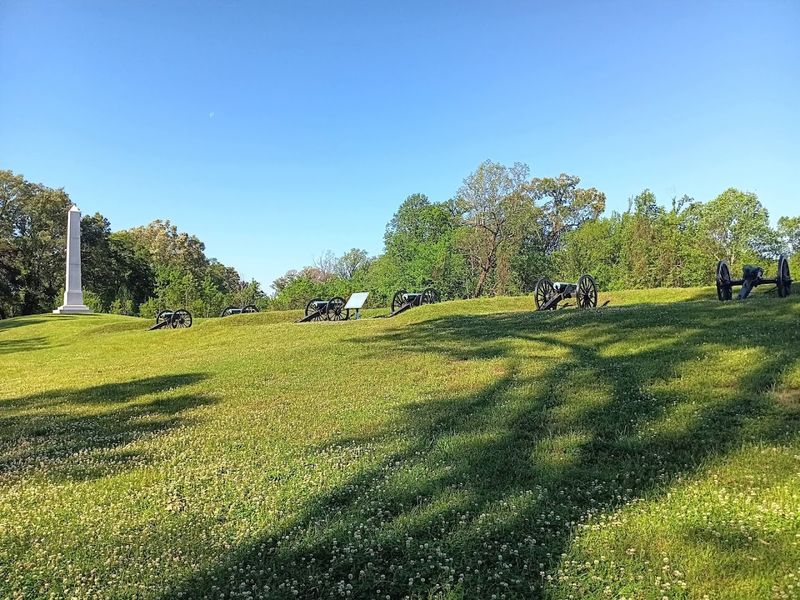
The National Park Service offers a free audio tour through its official app, which pairs with the driving tour route and adds narration at key stops throughout the battlefield. Downloading the app before you arrive is the smarter move, since connectivity inside the park can be inconsistent in some areas.
The audio content covers Union and Confederate perspectives at each major stop, giving you a more layered understanding of how the campaign unfolded from both sides of the line. Rangers and historians contributed to the recordings, so the information is accurate and well-sourced.
The park also provides printed maps with color-coded routes at the entrance gate, which serve as a reliable backup if you prefer a low-tech approach. Either way, having some form of guided content significantly enriches the experience.
The battlefield is visually striking on its own, but the context transforms it from scenery into something genuinely meaningful.
Practical Tips for Planning Your Visit
The park charges a $20 vehicle entry fee, which covers the full battlefield driving tour, the USS Cairo Museum, and access to all monuments and trails. If you visit multiple national parks throughout the year, an America the Beautiful annual pass quickly pays for itself and works here too.
Summer visits are absolutely doable, but the heat in Mississippi can climb fast. Early morning arrivals, around 8:30 AM when the park opens, give you cooler temperatures and softer light for photographs.
Overcast days are actually ideal for long outdoor walks between stops.
Plan for a minimum of three to four hours to cover the driving tour and the USS Cairo Museum. A full day is the better option if you want to explore the cemetery, walk the trails, and spend proper time at the visitor center.
The park rewards those who take their time rather than rushing through.
Share this story