Germany is full of surprises, especially when you wander off the well-worn tourist path. While cities like Munich and Berlin steal the spotlight, countless smaller towns quietly hold some of the country’s most stunning scenery, history, and culture.
From vine-draped river valleys to hilltop castles and medieval market squares, these hidden gems are waiting to be discovered. Pack your bags and get ready to see a side of Germany most travelers completely miss.
Monschau, North Rhine-Westphalia
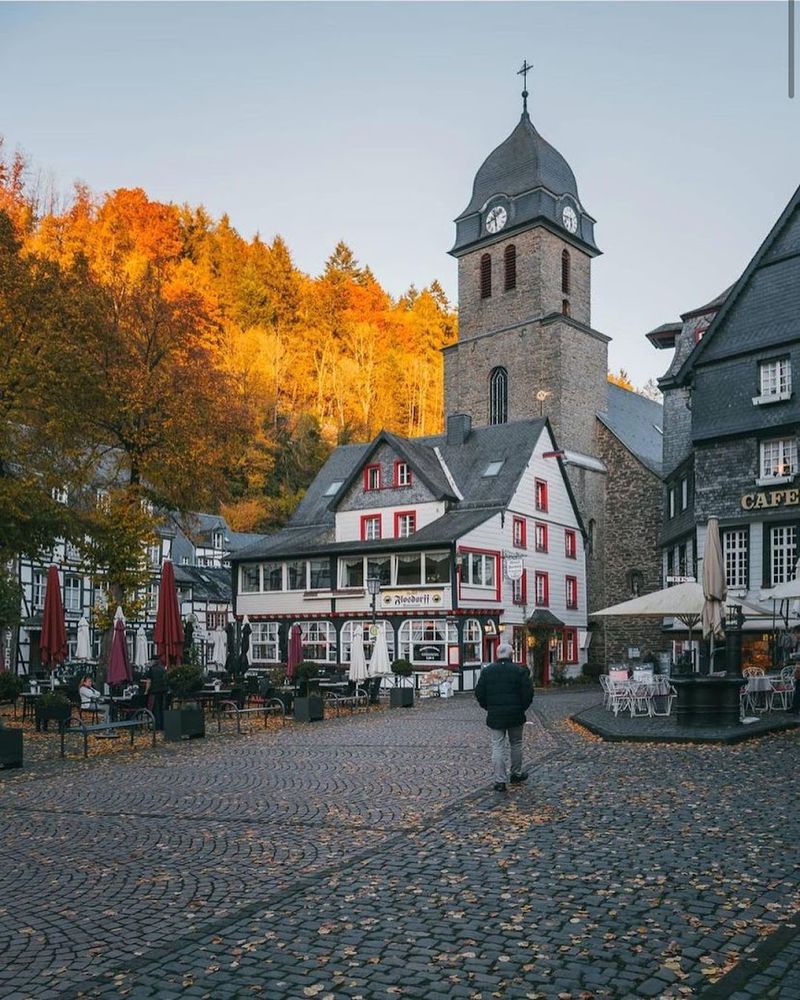
Step into Monschau and you might genuinely wonder if you’ve accidentally time-traveled to the 1600s. Tucked snugly into a narrow valley in the Eifel Mountains, this town looks almost exactly as it did centuries ago.
Cobblestone lanes twist between leaning half-timbered houses painted in warm reds, yellows, and browns.
The Rur River flows quietly through the center, reflecting the colorful buildings above it. Wooden bridges connect the two sides of town, making every stroll feel like a scene from a storybook.
Local shops sell handmade mustard, chocolates, and glassware that make excellent souvenirs.
Monschau is also a fantastic base for hiking in the Eifel National Park nearby. Trails wind through forests, past moorland, and along river paths that are gorgeous in every season.
In winter, the town transforms into one of Germany’s most beloved Christmas market destinations, drawing visitors from across Europe. Despite this seasonal fame, Monschau stays surprisingly crowd-free compared to bigger German destinations, giving travelers a more personal, relaxed experience throughout the year.
Quedlinburg, Saxony-Anhalt
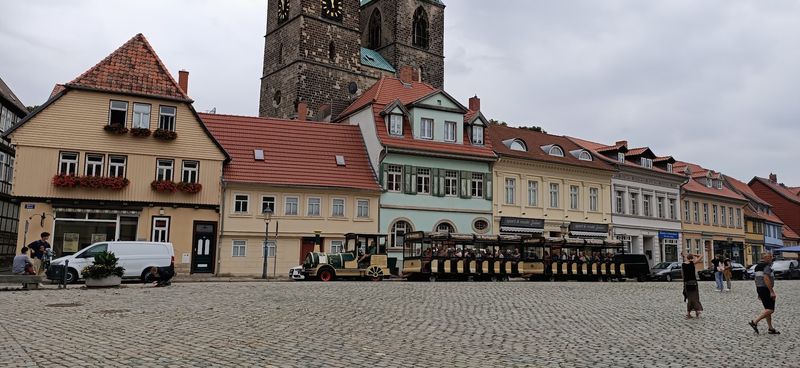
Quedlinburg holds a staggering record: over 1,300 half-timbered buildings packed into a single medieval old town. That number alone earns it UNESCO World Heritage status, but numbers never truly capture how magical this place feels on foot.
Walking through its streets is like flipping through a living history book.
The town was a major political and religious hub during the early Middle Ages, and that importance shows in its architecture. The hilltop Stiftskirche, a collegiate church dating back over a thousand years, watches over the rooftops with quiet authority.
Inside, the crypt holds the tomb of King Henry I, one of Germany’s earliest rulers.
Quedlinburg also has a surprisingly lively arts scene, with galleries, craft shops, and local restaurants tucked into centuries-old buildings. Spring is especially wonderful here, when flowers bloom along the narrow lanes and the whole town feels freshly painted.
Because it sits in eastern Germany, it receives far fewer international tourists than comparable towns in Bavaria or Baden-Wurttemberg. That means shorter lines, friendlier prices, and a more genuine local atmosphere that is increasingly hard to find in popular European destinations.
Gengenbach, Baden-Württemberg
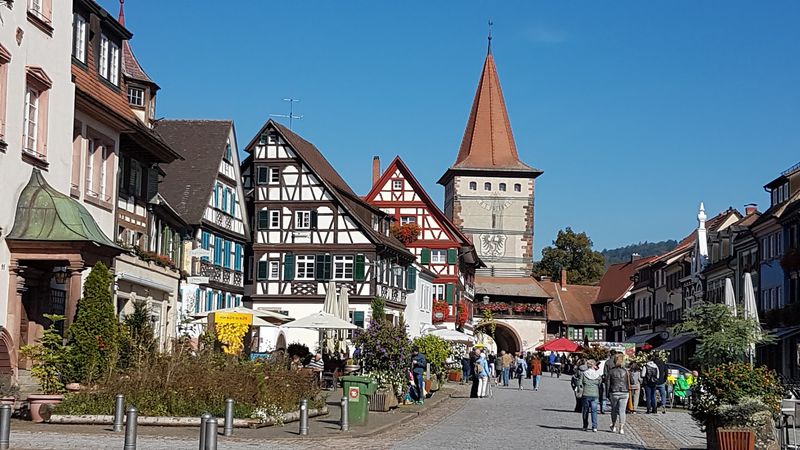
Gengenbach is the kind of town that makes people stop mid-stride and reach for their camera. Sitting right on the edge of the Black Forest, it blends medieval architecture with cheerful flower displays that spill from every window box and doorstep.
The cobblestone streets practically beg you to slow down and explore.
The old town is compact and walkable, centered around a beautiful market square lined with pastel-colored buildings and a lovely baroque town hall. Local wine bars and bakeries offer regional Black Forest specialties that taste even better when enjoyed at an outdoor table in the sunshine.
Each December, Gengenbach hosts one of Germany’s most creative Advent calendars, using the town hall facade as a giant display with 24 illuminated windows. International media has covered this tradition repeatedly, yet the town itself remains refreshingly low-key year-round.
Day-trippers from nearby Offenburg often visit, but overnight tourists are rare, meaning hotel prices stay reasonable. The surrounding vineyards produce excellent Ortenau wines, and several local estates welcome visitors for tastings.
Whether you visit in summer bloom or winter glow, Gengenbach consistently delivers one of the most photogenic experiences in all of southwestern Germany.
Bamberg, Bavaria
Bamberg sits across seven hills just like Rome, and locals are absolutely not shy about pointing that out. Built where the Regnitz River meets the Main-Danube Canal, this Bavarian gem blends medieval, Renaissance, and Baroque architecture into one remarkably cohesive old town that UNESCO declared a World Heritage Site in 1993.
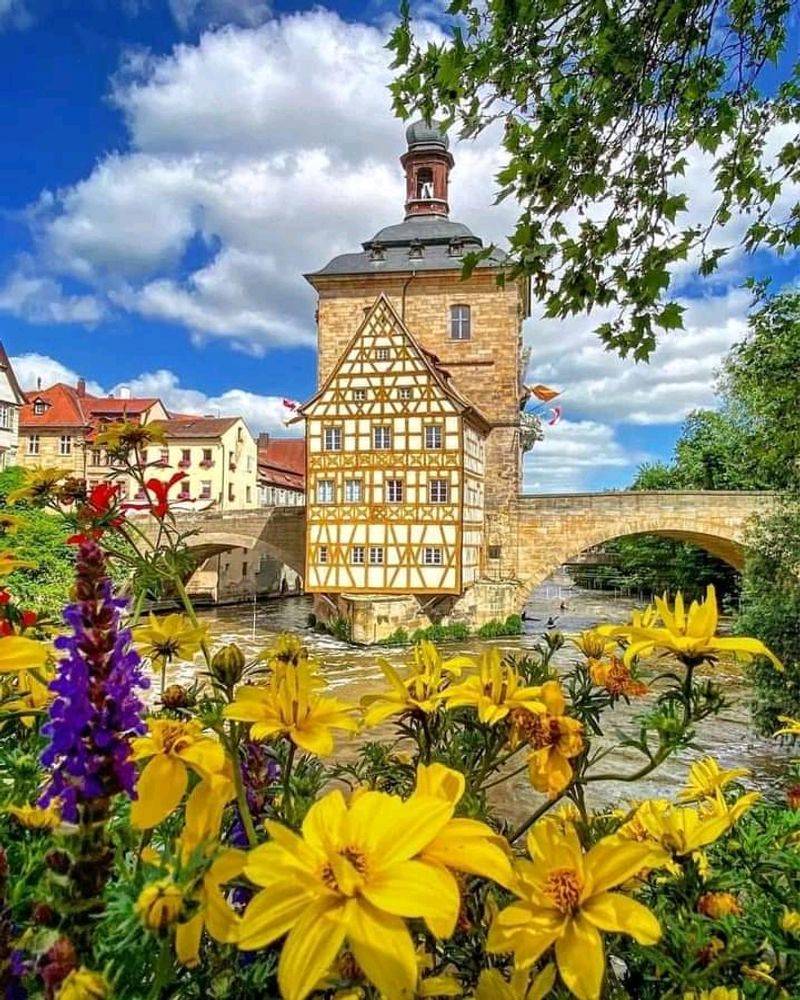
The town’s most iconic view is called Little Venice, a row of colorful fishermen’s houses built directly on the riverbank. Their reflections shimmer in the water below, creating a scene that photographers chase at sunrise and sunset alike.
The Altes Rathaus, an old town hall literally built on an island bridge, is another sight that stops visitors in their tracks.
Bamberg is also famous for Rauchbier, a distinctive smoked beer brewed locally for centuries using malted barley dried over open flames. The result tastes faintly of bacon, which sounds strange but wins over nearly everyone who tries it.
Around ten local breweries still operate in the area, making Bamberg a serious pilgrimage spot for craft beer enthusiasts. Despite all this, the town remains far less hectic than Munich or Nuremberg, offering a genuinely relaxed Bavarian experience with world-class sights and excellent food.
Meersburg, Baden-Württemberg
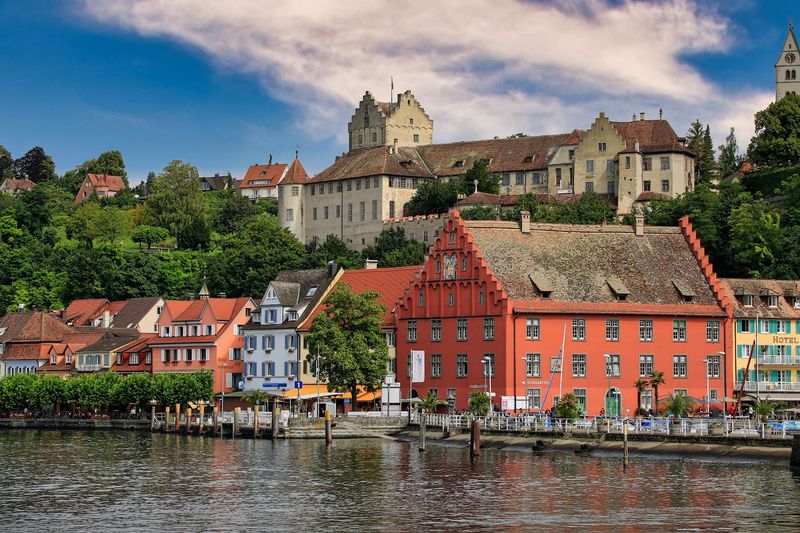
Meersburg clings dramatically to a hillside above Lake Constance like a town that refused to come down from its perch. Vineyard terraces cascade from the old town toward the shimmering lake below, while the snow-capped Alps of Switzerland and Austria glow on the horizon on clear days.
Few places in Germany offer a view this layered and breathtaking.
At the heart of Meersburg sits the Altes Schloss, Germany’s oldest continuously inhabited castle, dating back to the 7th century. It’s still in private ownership today, which somehow makes visiting it feel even more special.
The town also honors the German poet Annette von Droste-Hulshoff, who spent her final years here and whose face appears on the old 20-Deutsche Mark banknote.
The lakeside promenade is perfect for a leisurely walk, lined with cafes and wine bars where you can sample local Spätburgunder and Müller-Thurgau wines. Ferries cross the lake regularly to Konstanz and other shore towns, making Meersburg a great hub for exploring the entire Bodensee region.
Summer brings warm weather ideal for swimming, sailing, and cycling along the lakeshore. Despite all these attractions, Meersburg stays wonderfully unhurried, especially outside of peak holiday weeks.
Wernigerode, Saxony-Anhalt
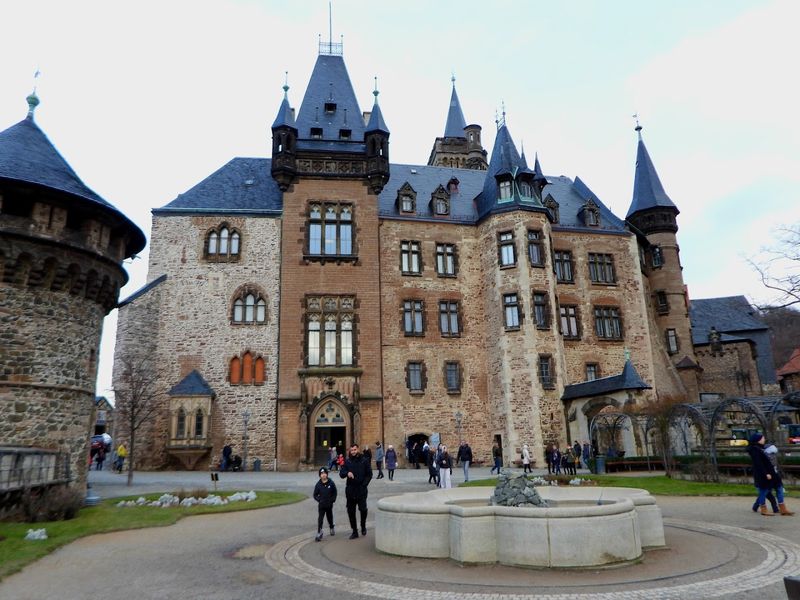
Wernigerode looks like someone took a children’s fairy tale and built it in real life. Brightly painted half-timbered houses in every imaginable color line the streets, and a turreted castle peers down from a forested hill above the rooftops.
The combination is so storybook-perfect it almost feels staged, yet every bit of it is genuinely centuries old.
The Schloss Wernigerode castle is open to visitors and houses a fascinating museum of decorative arts and noble life. The view from its terrace over the town and surrounding Harz Mountains is worth the uphill walk on its own.
Back in town, the Kleinstes Haus (Smallest House) is a local curiosity that draws plenty of amused photos from tourists.
Wernigerode is also the starting point for the Harz narrow-gauge railway, a historic steam train that chugs up to the Brocken, the highest peak in northern Germany. The journey through forested mountain landscapes is spectacular in autumn when the leaves turn gold and amber.
Local restaurants serve hearty Harz cuisine including Harzer Roller cheese, smoked meats, and dark rye bread. The town manages to feel festive year-round, with seasonal markets and festivals keeping the atmosphere lively without ever feeling overwhelming for visitors.
Bernkastel-Kues, Rhineland-Palatinate
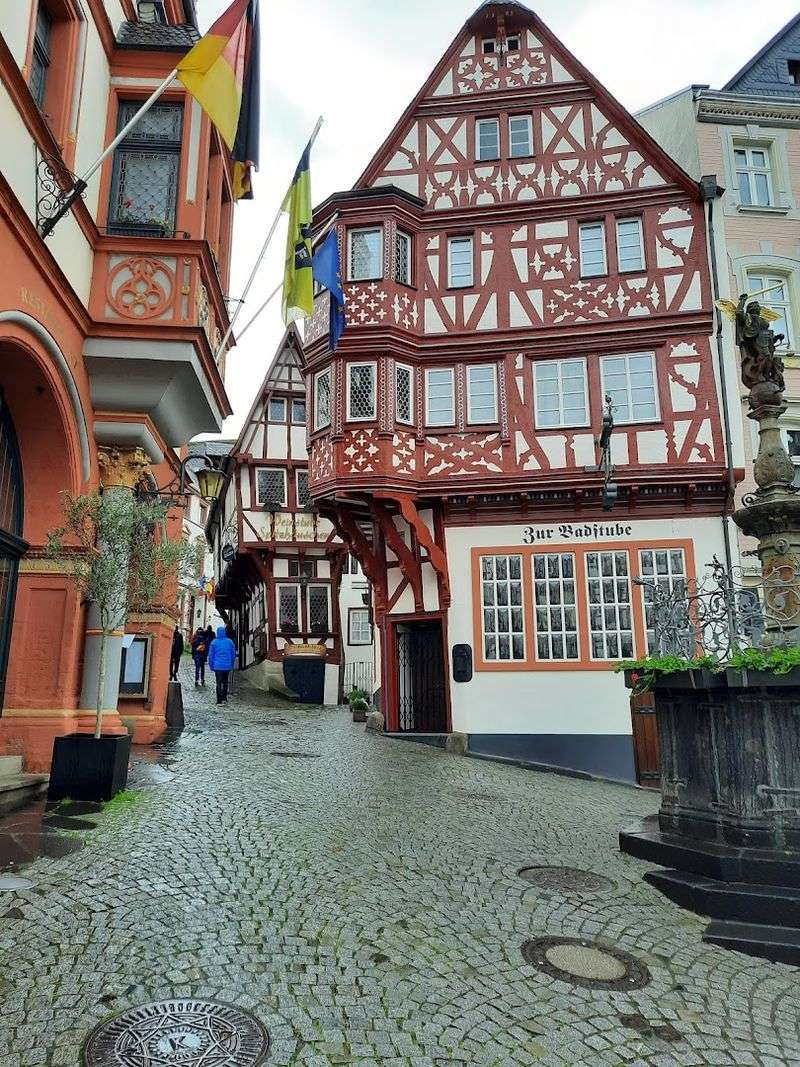
Bernkastel-Kues has a market square so crooked and colorful that architects study it just to understand how the buildings are still standing. Located in the heart of the Moselle wine region, this twin town straddles the river and wraps itself in some of Germany’s most dramatic vineyard scenery.
Every direction offers a postcard-worthy view.
The Marktplatz is genuinely one of Germany’s finest medieval squares, surrounded by leaning half-timbered buildings from the 14th and 15th centuries. A Renaissance fountain sits at its center, and the whole scene is best enjoyed with a glass of local Riesling in hand.
The Moselle Valley produces some of Germany’s most celebrated white wines, and many local estates offer tastings.
Across the bridge in Kues, the St. Nikolaus Hospital is a beautifully preserved 15th-century almshouse still operating today, a rare living monument to medieval charity. Hiking trails climb the steep vineyard slopes for panoramic valley views that reward every step.
September brings the famous Bernkastel Wine Festival, drawing wine lovers from across Europe to its riverside stalls and live music stages. Even outside festival season, the town’s atmosphere is warm and welcoming, with excellent local restaurants serving Moselle fish dishes and regional specialties.
Bacharach, Rhineland-Palatinate
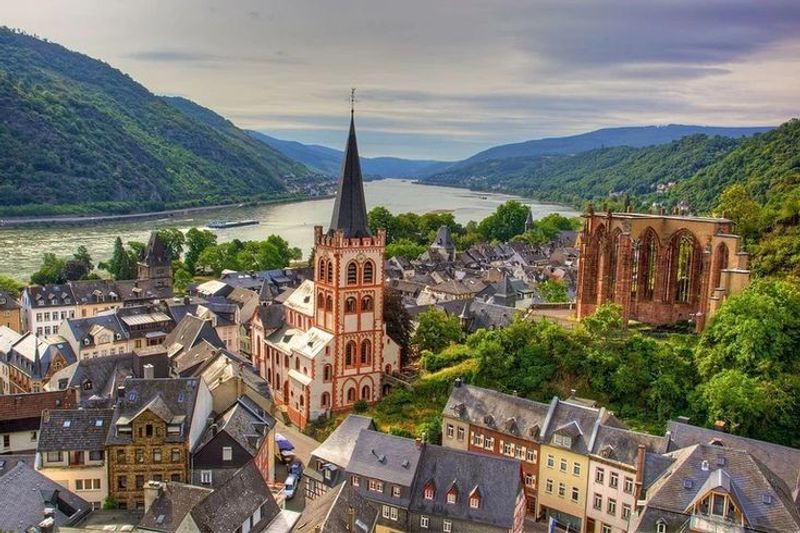
Rhine River cruise ships glide past Bacharach without stopping nearly as often as they should. This small Rhineland town sits quietly behind a complete set of medieval town walls, with towers, gates, and half-timbered houses that have barely changed since the 14th century.
Compared to the busier Rhine stops nearby, Bacharach feels like a genuine secret.
The ruined Stahleck Castle looms above the town on a forested ridge, now converted into a youth hostel with arguably the most dramatic location of any budget accommodation in Germany. Hiking up to it rewards visitors with sweeping views over the Rhine and surrounding slate-covered hills.
The path winds through vineyards producing the area’s famous Bacharacher Riesling.
Inside the old town walls, Peterskirche is a partly ruined Gothic church with a roofless choir chapel that creates a hauntingly beautiful open-air space. The town’s single main street is lined with wine bars, bakeries, and guesthouses all operating from medieval buildings.
Locals are notably friendly to visitors, perhaps because the town sees thoughtful travelers rather than mass tour groups. Autumn is a spectacular time to visit when the vine leaves turn deep red and gold against the grey stone walls, creating color contrasts that photographers absolutely love.
Tangermünde, Saxony-Anhalt
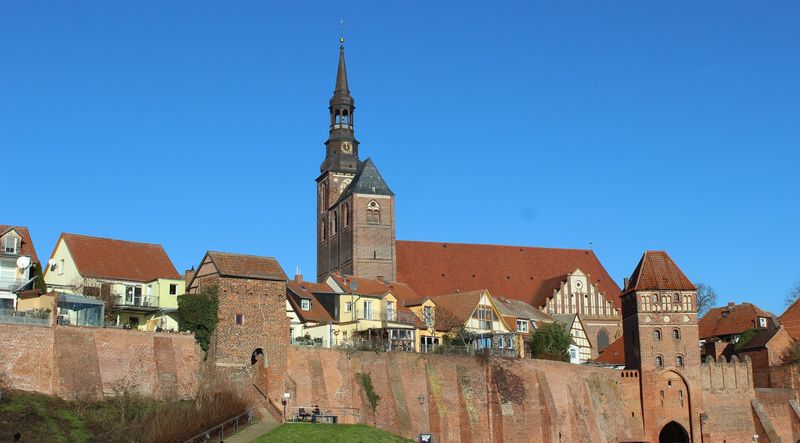
Not many tourists outside Germany have even heard of Tangermünde, and that is precisely what makes it so rewarding to visit. This small Elbe River town in Saxony-Anhalt preserves one of the finest examples of North German red-brick Gothic architecture anywhere in the country.
Its medieval fortifications are so complete they look freshly built.
Emperor Charles IV made Tangermünde a second imperial residence in the 14th century, and the town still carries that elevated historical pedigree in its bones. The Stephanskirche is a soaring Gothic brick church that dominates the skyline and houses original medieval furnishings.
The old town hall nearby is equally impressive, with an ornate stepped gable facade that typifies the North German Hanseatic style.
Walking the town walls offers views over the Elbe River floodplains, a landscape that feels wide, wild, and almost untouched by modern development. Local festivals celebrate the town’s medieval heritage with costumed markets and historical reenactments that attract regional visitors.
Overnight accommodation options are limited but charming, mostly small family-run guesthouses where hosts genuinely enjoy sharing local knowledge. Tangermünde rewards curious travelers who enjoy discovering history without the usual tourist infrastructure around it.
This is authentic, unhurried Germany at its very best.
Limburg an der Lahn, Hesse
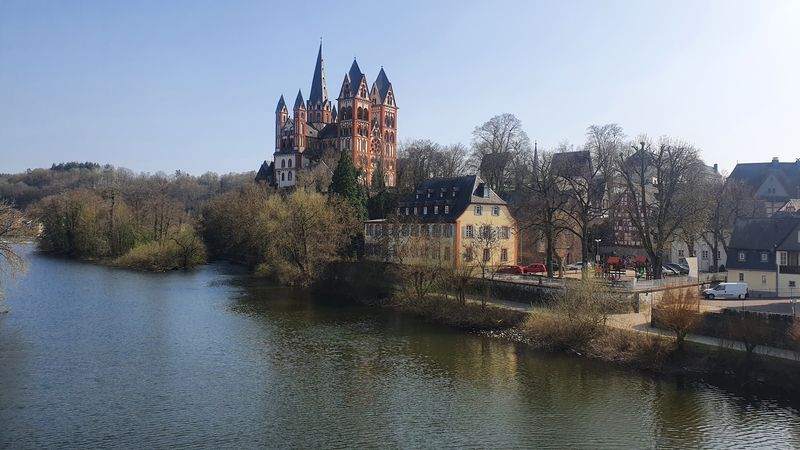
Limburg an der Lahn has a cathedral so dramatically placed it looks like it grew directly out of the rock it sits on. The seven-towered Limburger Dom rises from a cliff above the Lahn River, painted in bold ochre and white stripes that make it visible from miles away.
It is one of the most striking pieces of Romanesque architecture in all of Germany.
Below the cathedral, the old town is a textbook example of perfectly preserved German medieval urban planning. Colorful half-timbered houses from multiple centuries crowd together along sloping lanes, each one slightly different in style and decoration.
The oldest surviving half-timbered house in Germany, dating to around 1296, stands here quietly without much fanfare.
Limburg sits conveniently along the high-speed rail line between Frankfurt and Cologne, making it one of Germany’s most accessible hidden gems. Day trips from Frankfurt take under 45 minutes, yet surprisingly few international tourists make the journey.
The town’s covered market, local butchers, and traditional bakeries give it an authentically German daily rhythm that larger tourist towns often lose. A walk along the Lahn River path at sunset, with the cathedral glowing above, is one of those travel moments that stays with you for years.
Idstein, Hesse
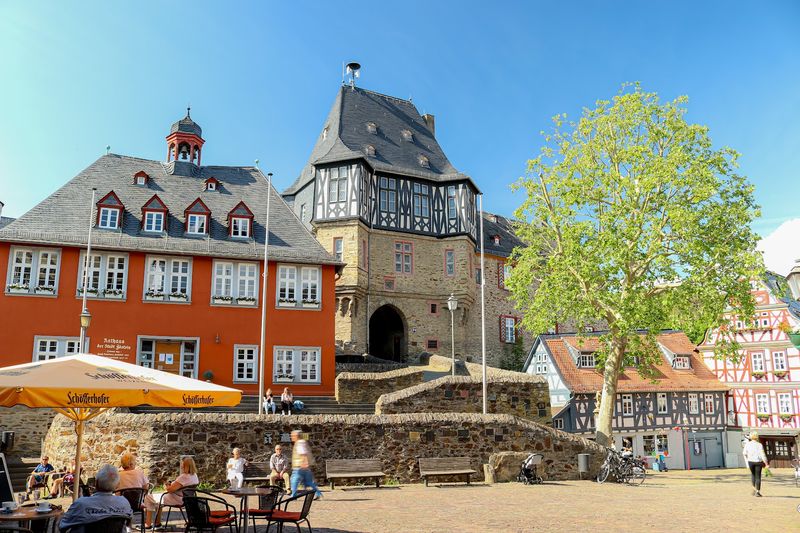
Idstein’s half-timbered houses are not just old, they are extravagantly decorated with carved wooden patterns that look more like furniture than architecture. Sitting in the Taunus hills of central Hesse, this small town is known to architecture enthusiasts but remains almost entirely off the radar for international tourists.
That gap between its quality and its fame is genuinely puzzling.
The market square is anchored by a beautifully ornate Renaissance town hall, and surrounding buildings from the 16th and 17th centuries compete for attention with their elaborate carved facades. The nearby Hexenturm, or Witch Tower, is a round medieval fortification with a grim history: it was used to imprison and execute people accused of witchcraft during the 17th century.
Idstein also has a fine Baroque palace complex that now serves as a school, its elegant architecture freely visible from the surrounding streets. The town’s compact old town is easily explored on foot in a single morning, making it a perfect stop on a road trip through central Germany.
Local cafes serve excellent apple wine, the traditional Frankfurt region drink, alongside hearty Hessian food. Frankfurt is only 30 kilometers away, yet Idstein maintains a completely different pace, quieter, greener, and far more personal than the busy city nearby.
Cochem, Rhineland-Palatinate
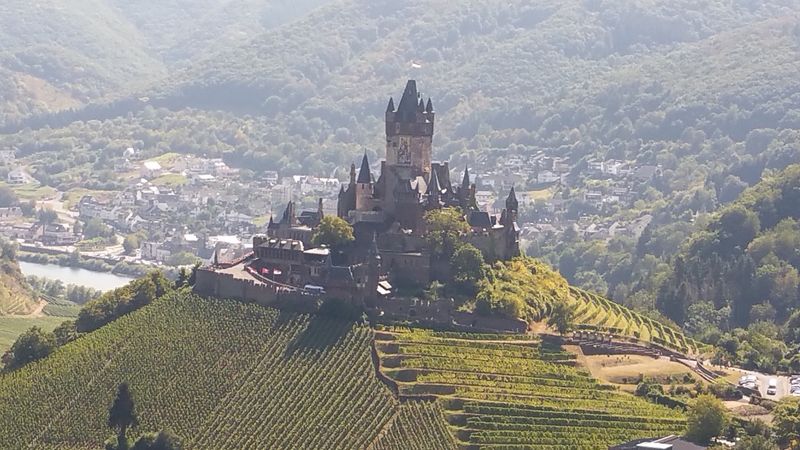
Cochem is the town that makes people question why they ever bothered going anywhere else along the Moselle. Perched dramatically on a hillside above a sweeping river bend, the Reichsburg Castle surveys vineyards, forests, and the tightly packed old town below with the confidence of a place that knows exactly how beautiful it is.
Autumn turns the whole scene into a fire of red and gold.
The castle was largely rebuilt in the 19th century in Neo-Gothic style, but its hilltop position and turreted silhouette are undeniably impressive. Guided tours take visitors through furnished rooms that recreate noble medieval life with surprising detail.
The walk up through the vineyards is steep but well worth it for the panoramic views from the battlements.
Down in the town, the riverside promenade fills with outdoor cafes and wine bars during summer, all serving local Moselle Rieslings and Pinot Noirs. A short river cruise is a relaxing way to see the surrounding valley from the water.
Cochem hosts several wine festivals throughout the year, with the Cochemer Weinfest in late summer drawing the largest crowds. Winter brings a charming Christmas market set against the illuminated castle backdrop, creating an atmosphere that feels genuinely magical rather than manufactured for tourists.
Tübingen, Baden-Württemberg
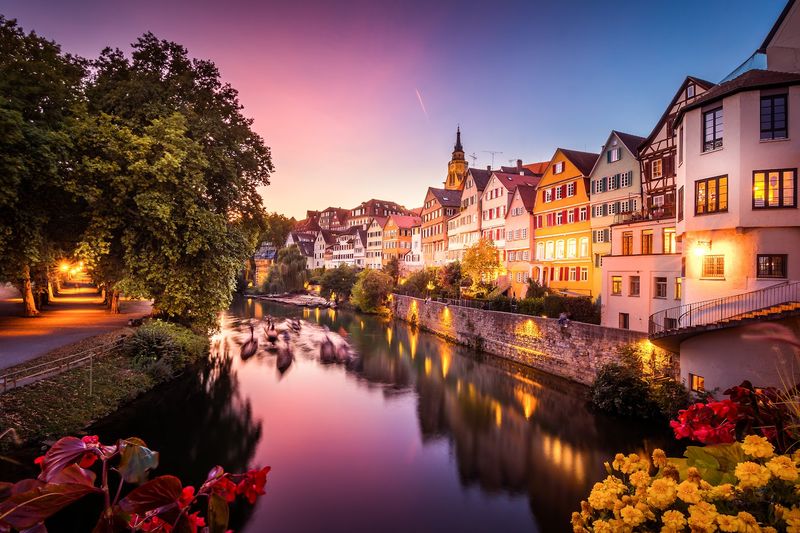
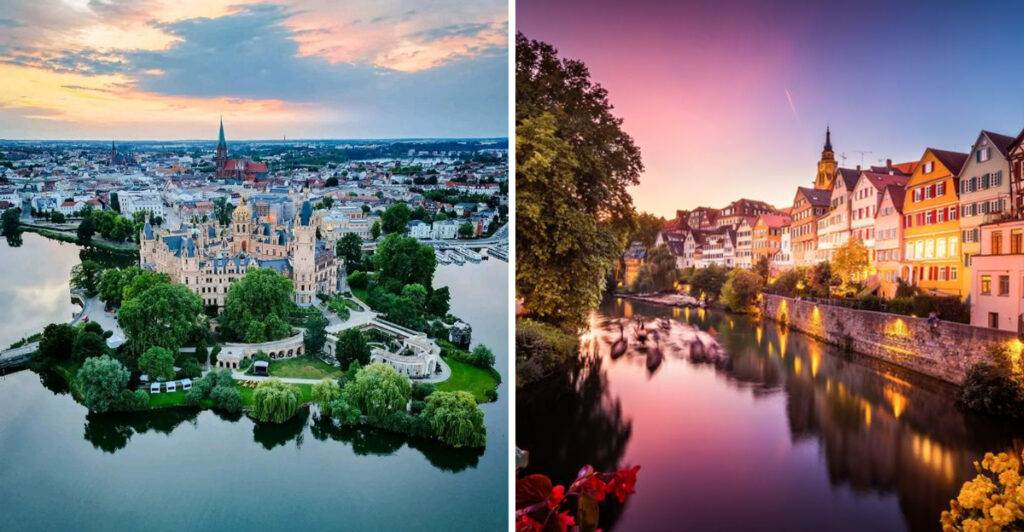
Tübingen is one of those rare German towns that survived World War II almost completely intact, and the result is a medieval old town so well-preserved it genuinely takes your breath away. Cascading down to the Neckar River, its colorful half-timbered houses, winding lanes, and flower-draped bridges create an atmosphere that feels both ancient and effortlessly alive.
The town is home to one of Germany’s oldest universities, founded in 1477, which fills the streets with students and gives Tübingen an intellectual energy that balances its historical beauty. Bookshops, jazz bars, and independent cafes occupy buildings that are centuries old, creating a wonderfully unexpected mix of old and new.
The philosopher Friedrich Hegel and the poet Friedrich Holderlin both studied here.
One of Tübingen’s most beloved activities is punting on the Neckar, where flat-bottomed boats called Stocherkähne are poled along the river beneath weeping willows and old stone bridges. Students race these boats in an annual competition that draws enthusiastic crowds.
The Hohentübingen Castle above the town houses university collections and offers sweeping valley views. Travel publications have recently started calling Tübingen one of Europe’s best hidden gems, so visiting sooner rather than later is genuinely good advice before word fully spreads.
Goslar, Lower Saxony
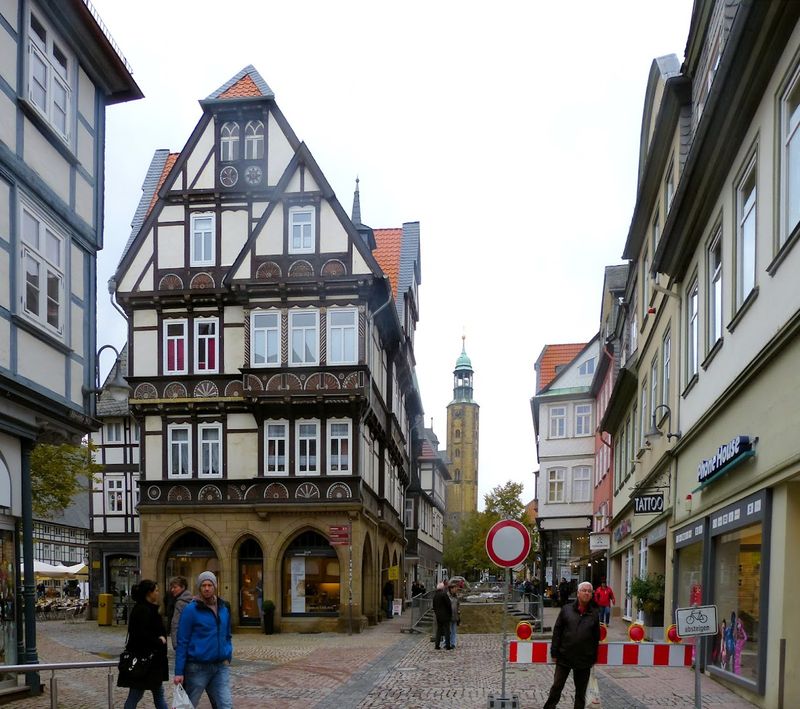
Goslar was once one of the wealthiest and most powerful cities in the Holy Roman Empire, all thanks to the silver mines in the nearby Rammelsberg mountain. That extraordinary wealth funded centuries of remarkable architecture, and the results are still standing today in one of northern Germany’s most impressive medieval old towns.
UNESCO recognized both the town and the mines as World Heritage Sites.
The Kaiserpfalz, a grand 11th-century imperial palace, dominates the southern edge of the old town. German emperors ruled from here for over two centuries, and the restored interior gives a vivid sense of that medieval imperial power.
The Marktplatz below is surrounded by ornate guild houses, a Gothic town hall, and a famous carillon that plays figures of miners and imperial scenes on the hour.
Goslar sits at the northern edge of the Harz Mountains, making it a perfect gateway for hiking, cycling, and winter sports. The Rammelsberg mine museum is fascinating for anyone interested in industrial history, with original tunnels and machinery preserved underground.
Despite all this, Goslar attracts far fewer international visitors than its Bavarian counterparts. Accommodation prices reflect that lower demand, making it one of Germany’s best-value heritage destinations for travelers who appreciate history without the premium price tag.
Schwerin, Mecklenburg-Vorpommern
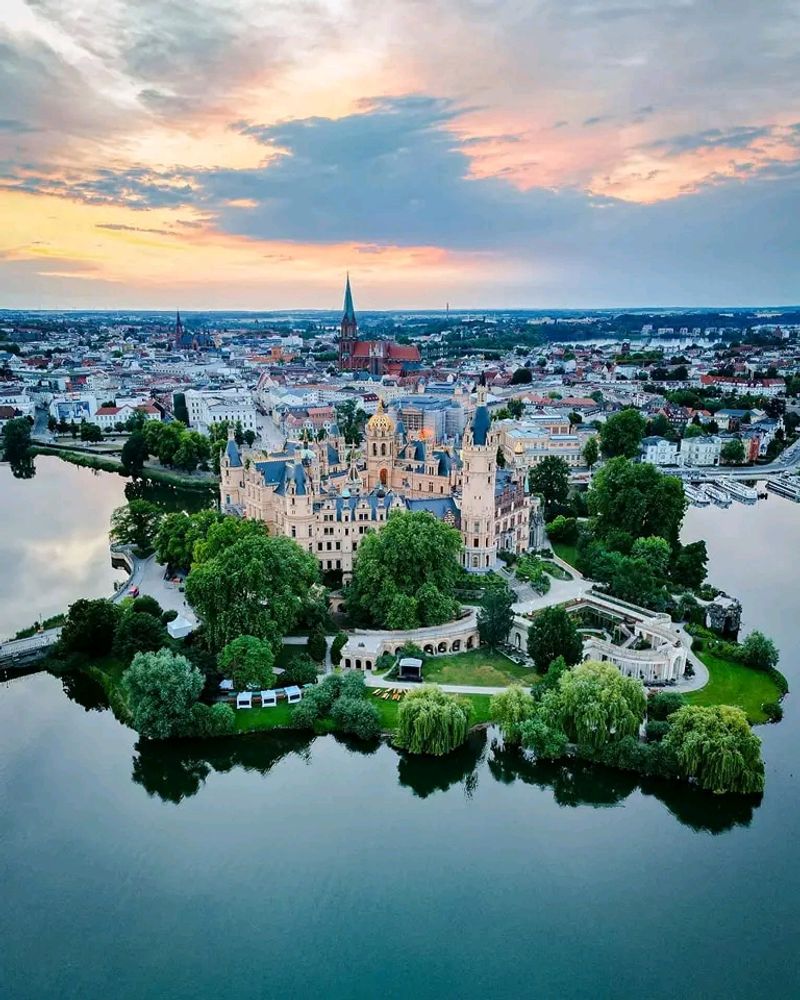
Schwerin has a castle so extravagantly turreted and romantically situated on its own lake island that it regularly gets mistaken for Neuschwanstein in social media posts. Built in the 19th century in a French chateau style, the Schweriner Schloss rises from the water like something conjured from a dream, complete with golden domes and pointed spires that catch the morning light beautifully.
As the capital of Mecklenburg-Vorpommern, Schwerin punches well above its weight in cultural offerings. The State Theatre is one of Germany’s finest regional opera houses, and the State Museum houses an impressive collection of Dutch and Flemish Old Masters paintings.
The old town between the castle and the cathedral is filled with elegant 19th-century architecture and pleasant pedestrian streets.
Schwerin sits among seven lakes, and cycling or kayaking routes connect them through forests and meadows that feel genuinely wild. The city is compact enough to explore comfortably on foot in a weekend, yet substantial enough to reward a longer stay.
Northern Germany remains dramatically undervisited compared to the south, meaning Schwerin offers world-class sights at a fraction of the usual tourist town prices. For travelers who want the fairy-tale castle experience without the Neuschwanstein crowds, Schwerin is the answer they have been looking for.
Share this story