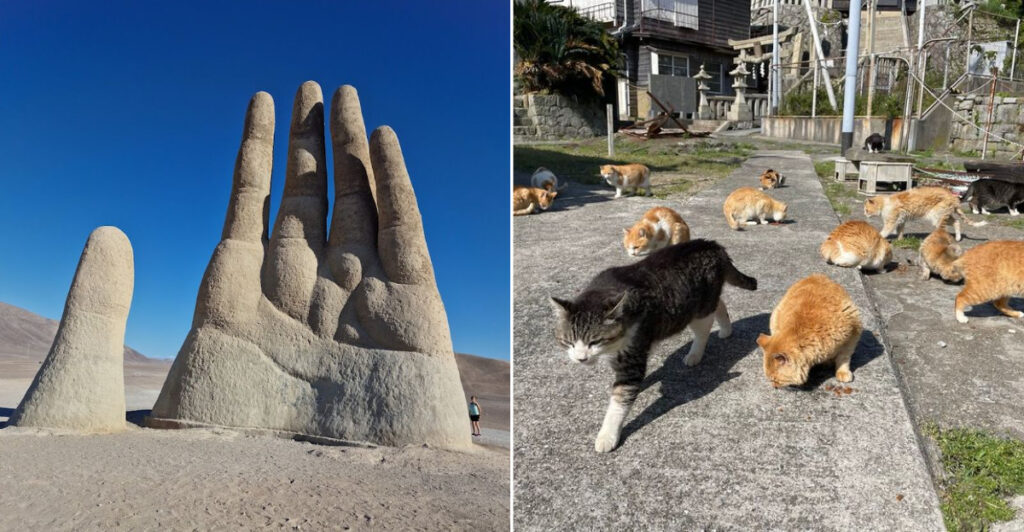
Some places on Earth are so bizarre, so wonderfully weird, that they make you question everything you thought you knew about our planet. From an island overrun by cats to a desert filled with giant stone goblins, the world has a seriously strange sense of humor.
I once stood in front of a museum dedicated entirely to heartbreak and thought, “Yep, this is real life.” If you love travel that leaves you genuinely speechless, buckle up because this list is about to deliver.
Museum of Broken Relationships – Zagreb, Croatia
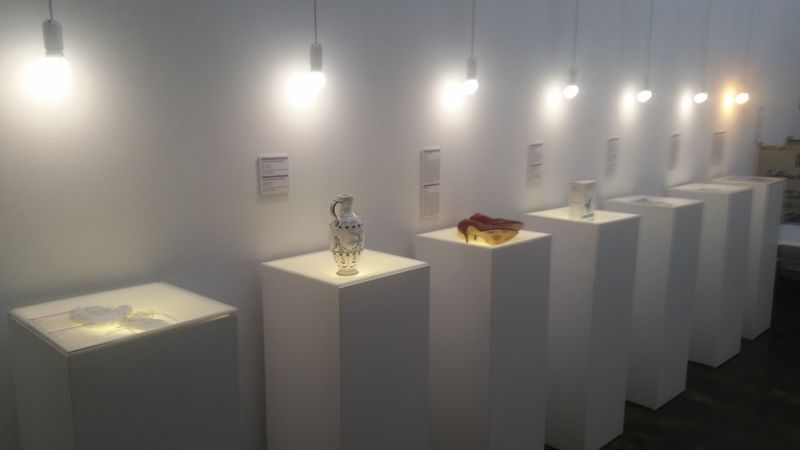
Heartbreak has never been this entertaining. The Museum of Broken Relationships in Zagreb, Croatia, is exactly what it sounds like: a collection of objects donated by people from around the world, each representing a love story gone sideways.
We are talking a toaster someone threw at their ex, a gnome that survived a breakup road trip, and letters that will make you laugh and cringe at the same time.
Every item comes with a short, anonymous story written by the donor. Some are funny.
Some are gut-wrenching. Most are oddly relatable.
The museum opened in 2010 and has since traveled the world as a touring exhibition before finding its permanent home in Zagreb.
Entry costs around 7 euros, which is honestly a bargain for the emotional rollercoaster waiting inside. It is one of those places that sticks with you long after you leave, which is kind of the whole point.
Carhenge – Alliance, Nebraska, USA
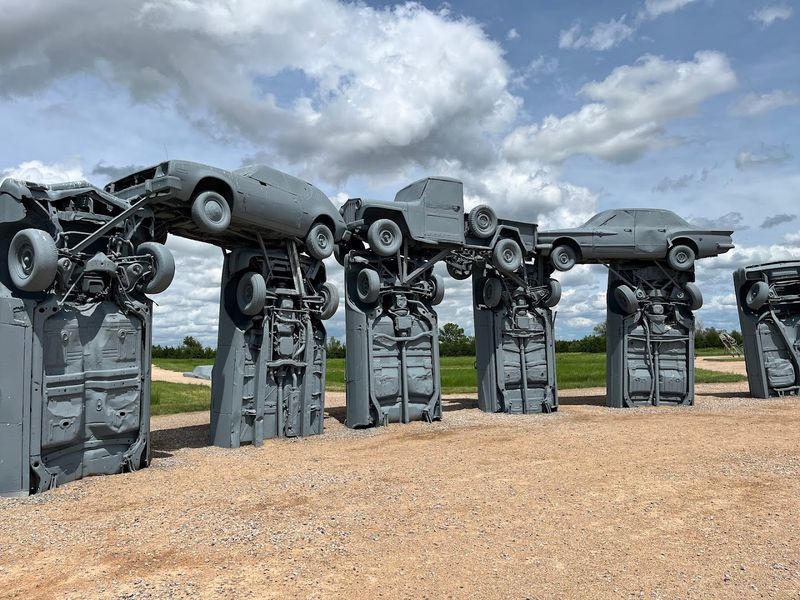
Nobody asked for Stonehenge made of old American cars, but here we are, and honestly, it is glorious. Carhenge sits on the flat plains of Alliance, Nebraska, built in 1987 by artist Jim Reinders as a tribute to his father.
He used 38 vintage automobiles, all spray-painted gray to match the original stones in England.
The result is equal parts absurd and impressive. Drive up and you will genuinely do a double-take.
The scale is surprisingly accurate to the real Stonehenge, which makes the whole thing feel weirdly respectful despite being made of rusty Cadillacs.
Admission is free, which feels right for something this cheerfully ridiculous. A small gift shop sells Carhenge souvenirs for those who need proof the place exists.
It sits about three miles north of Alliance on Highway 385, making it an easy stop on any Great Plains road trip. Bring your camera and your best deadpan expression.
The Upside-Down House – Szymbark, Poland
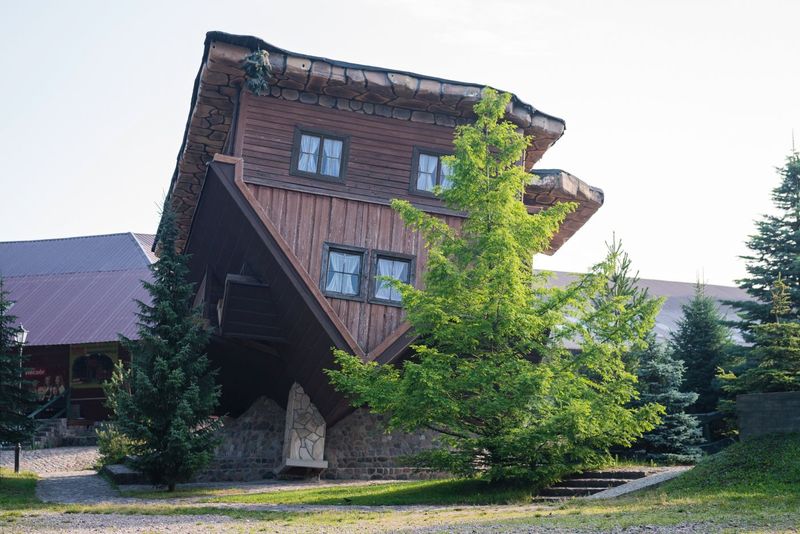
Walking through a house where the floor is the ceiling and the furniture hangs above your head is a genuinely disorienting experience. The Upside-Down House in Szymbark, Poland, was built in 2007 by entrepreneur Daniel Czapiewski as both an artistic statement and a commentary on the absurdity of communist-era Poland.
Deep stuff for a building that looks like it tripped over itself.
Visitors are welcome to walk through the interior, which is fully furnished and decorated. Most people report feeling dizzy within minutes.
The tilted walls and inverted layout mess with your brain in ways that are hard to describe until you experience it yourself.
Szymbark is a small village in the Kashubia region, and the house is part of a larger open-air museum celebrating local heritage. It is a great stop if you are traveling through northern Poland.
Just maybe skip lunch beforehand. Your stomach will thank you for the heads-up, or heads-down in this case.
Cat Island (Aoshima) – Japan
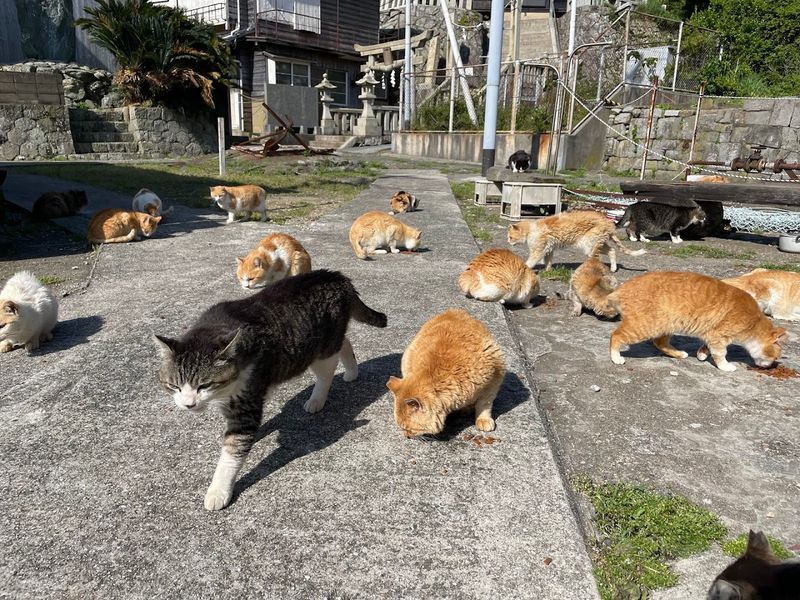
There are roughly six humans living on Aoshima Island. There are over a hundred cats.
You do the math, and then you book a ferry ticket immediately. Located off the coast of Ehime Prefecture in Japan, Aoshima earned its nickname through sheer feline determination after cats were brought in generations ago to keep mice away from fishing boats.
The cats never left. The humans mostly did.
Now the island operates on cat time, which means napping, demanding attention, and occasionally allowing tourists to pet them.
Ferries run limited trips daily from Nagahama Port, and day trips are the only option since there are no hotels or restaurants on the island. Pack your own snacks and prepare for an afternoon of being completely ignored by cats who have clearly decided they run the place.
Spoiler: they do. I went once and a tabby sat on my backpack for twenty minutes.
Ten out of ten, would revisit.
The Giant’s Causeway – Northern Ireland
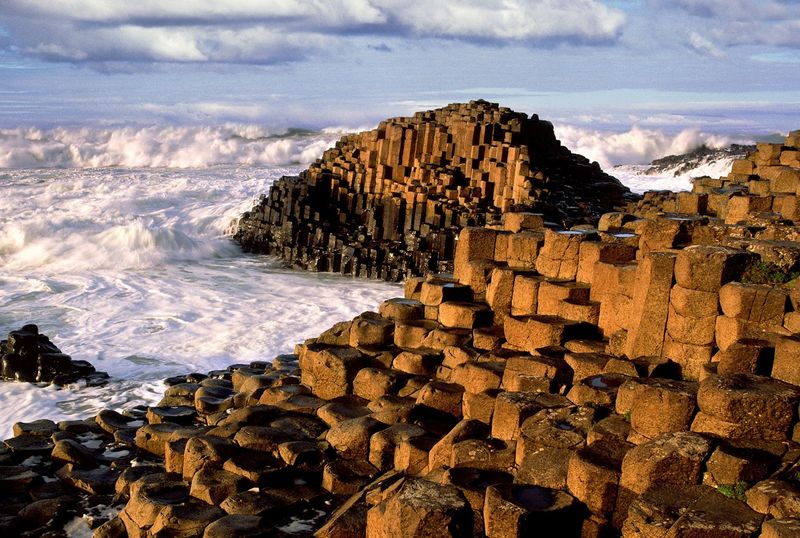
About 40,000 interlocking basalt columns line the coast of Northern Ireland, and they are so geometrically perfect that humans spent centuries arguing they must have been built by hand. Science eventually stepped in with a far less dramatic explanation involving volcanic eruptions from around 50 to 60 million years ago.
The legend version, involving a giant named Finn McCool building a road to Scotland, is significantly more fun.
The columns range from about 15 to 40 centimeters across and fit together like a natural puzzle. Walking across them feels like stepping onto another planet, one with excellent drainage and a strong breeze off the Atlantic.
The site is managed by the National Trust and draws around one million visitors annually. An excellent visitor center explains both the geology and the mythology, so you leave informed and slightly obsessed.
Entry to the causeway itself is free, though parking and the visitor center charge a fee. Go at sunrise if you want it mostly to yourself.
Spotted Lake – British Columbia, Canada
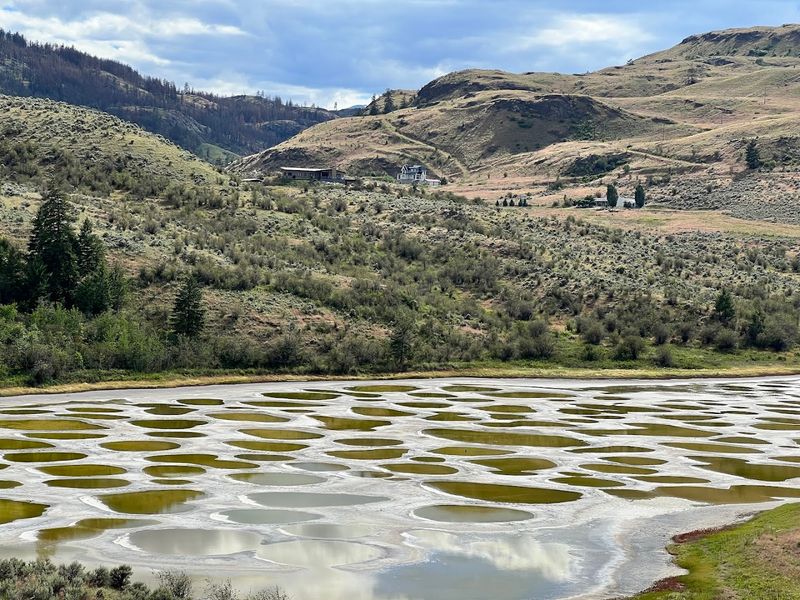
Every summer, something remarkable happens to a lake near Osoyoos, British Columbia. The water evaporates, leaving behind hundreds of circular pools filled with concentrated minerals in shades of green, yellow, and blue.
It looks less like a lake and more like a giant paint palette someone left outside.
The lake, known as Kliluk to the Okanagan Nation, has been considered sacred for centuries. Indigenous peoples used its mineral-rich mud for healing, and during World War One, minerals from the lake were reportedly used in ammunition production.
It is doing a lot more work than your average lake.
Today, the lake is privately owned by the Okanagan Nation Alliance, and visitors cannot walk on it. You can, however, pull over on Highway 3 and take in the view from the roadside.
The best time to visit is midsummer when the pools are most vivid. A short interpretive sign explains the science and the cultural significance.
Bring a wide-angle lens.
Socotra Island – Yemen
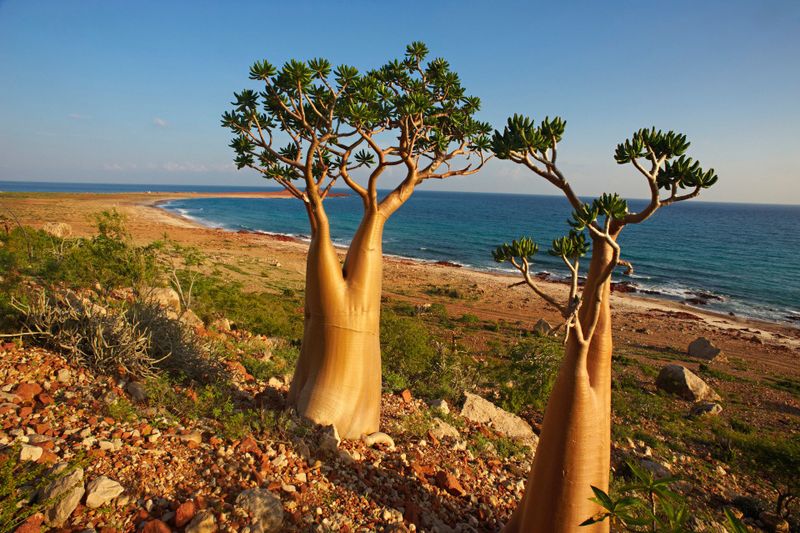
Socotra looks like someone designed a planet for a science fiction film and then forgot to tell Earth. The island sits in the Arabian Sea off the coast of Yemen and has been so geographically isolated for millions of years that around 37 percent of its plant species exist nowhere else on the planet.
The dragon’s blood tree, with its flat umbrella canopy and bright red sap, is the island’s most famous resident.
The dragon’s blood tree’s red sap has been used for centuries in medicine, dye, and varnish. The trees look like something out of a fantasy novel, with their wide, flat tops spreading like open umbrellas against the sky.
Getting to Socotra is not simple. Flights are limited and the political situation in Yemen requires careful research before planning a trip.
For adventurous travelers willing to navigate the logistics, the reward is an island that genuinely feels like nowhere else on Earth. That is not a cliche; it is just accurate.
The Hand in the Desert – Atacama Desert, Chile
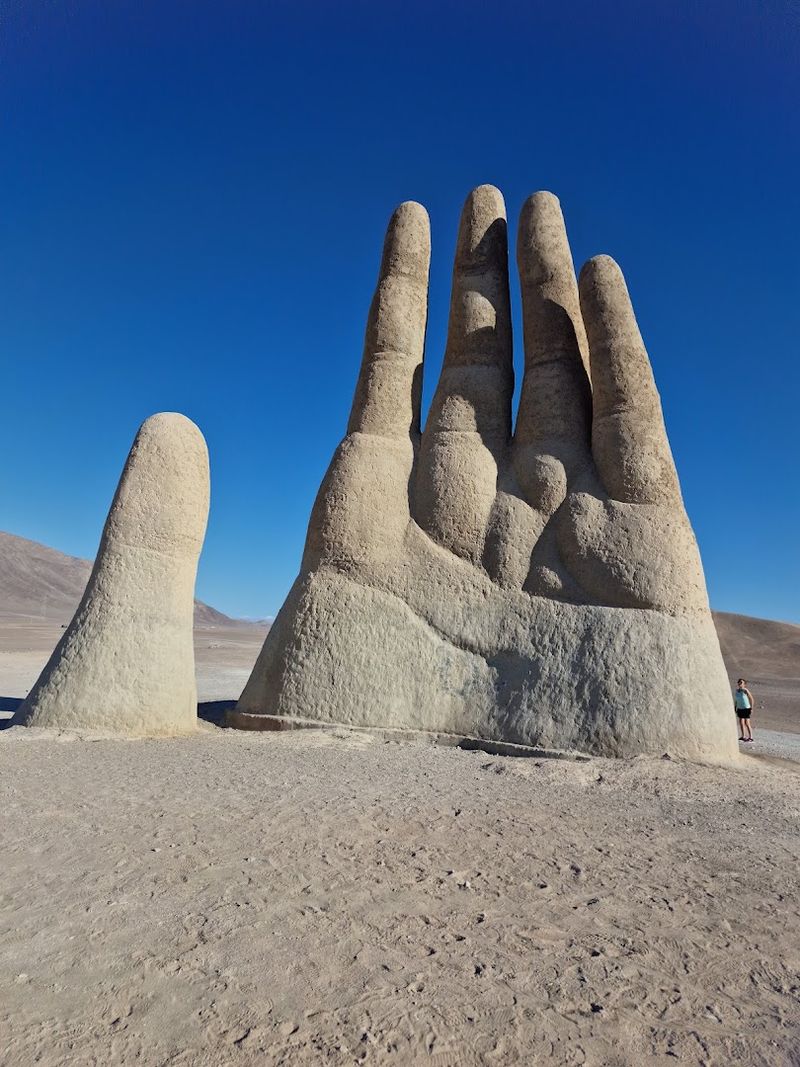
Driving through the Atacama Desert and spotting a giant human hand bursting out of the sand is not something you can prepare for, no matter how many travel blogs you have read. The sculpture, called Mano del Desierto, was created by Chilean sculptor Mario Irarrazabal and installed in 1992.
It stands about 11 meters tall and sits roughly 75 kilometers south of Antofagasta along the Pan-American Highway.
Irarrazabal designed the piece to express human vulnerability and loneliness, which makes total sense given it sits in one of the driest and most remote places on Earth. The Atacama receives less than one millimeter of rainfall per year in some areas.
The hand is free to visit and sits right off the highway, making it an easy stop during a road trip through northern Chile. Locals occasionally repaint it when graffiti accumulates, keeping it looking relatively fresh.
Visit at sunrise or sunset when the light turns the desert gold and the sculpture becomes genuinely dramatic.
Island of the Dolls – Xochimilco, Mexico

Don Julien Santana Barrera started hanging dolls on trees to honor the spirit of a girl who drowned near his island in the canals of Xochimilco. That was in the 1950s.
He kept adding dolls for the next 50 years until the island was covered with hundreds of them, weathered and wild-eyed, dangling from every available surface.
Don Julien was found drowned in the same canal in 2001. Locals say the dolls now protect the island.
Whether you find that comforting or deeply unsettling probably depends on your general relationship with horror films.
The island is accessible by trajinera, the colorful flat-bottomed boats that travel Xochimilco’s canals. Tours typically take around two hours and cost between 300 and 500 Mexican pesos.
Going during daylight is the standard recommendation, though some visitors specifically go at dusk for the atmosphere. It is genuinely one of the strangest places I have ever stood, and I mean that as a compliment.
Thor’s Well – Oregon, USA
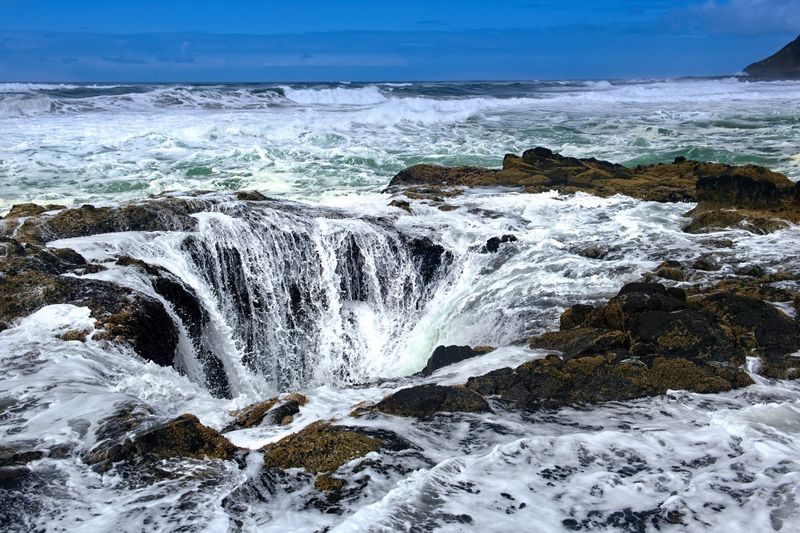
At high tide, Thor’s Well looks like the Pacific Ocean is being swallowed whole. This natural rock formation on the Oregon Coast near Cape Perpetua creates the illusion of a drainpipe that empties directly into the Earth.
Waves surge in, water shoots up, and for a brief moment the whole thing looks genuinely apocalyptic in the best possible way.
The well is actually a collapsed sea cave, roughly six meters deep, that fills and drains with each wave. The most dramatic views happen during high tide and stormy conditions, which Oregon provides with enthusiastic regularity between October and February.
Thor’s Well sits within the Siuslaw National Forest and is accessible via the Captain Cook Trail from the Cape Perpetua Scenic Area. Parking costs around 5 dollars.
Stay back from the edge; the rocks are slippery and the ocean does not care about your shoes. Telephoto lenses capture the spray beautifully from a safe distance.
Tripods are your best friend here.
Pamukkale – Turkey
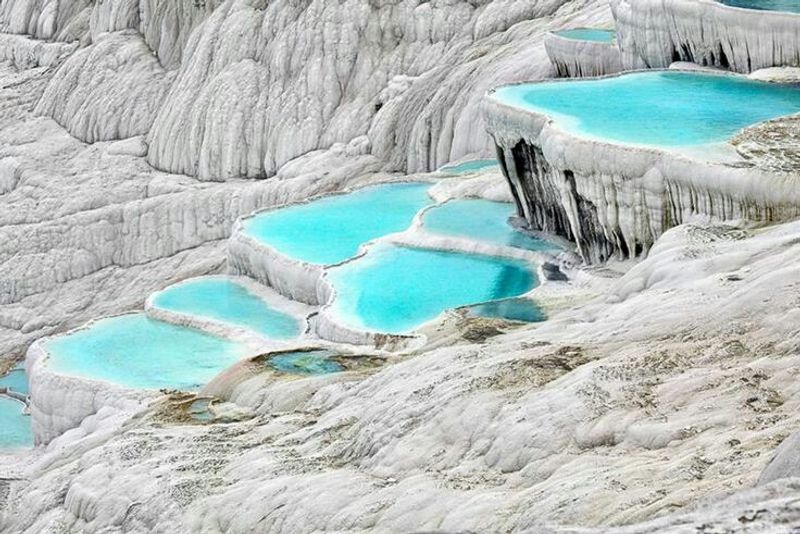
Pamukkale translates from Turkish as “cotton castle,” and once you see it, the name makes complete sense. Bright white calcium carbonate terraces step down a hillside in southwestern Turkey, each one holding a pool of warm, mineral-rich water.
The formations have been building up for thousands of years as thermal springs deposit minerals as they flow downhill.
The ancient Greeks and Romans knew about this place too. The nearby ruins of Hierapolis, a Roman spa city, sit right at the top of the terraces.
People have been soaking in these waters for at least 2,000 years, which puts your average weekend wellness retreat firmly in perspective.
Shoes must be removed before walking on the terraces to protect the formations. The water is warm but not hot, around 35 degrees Celsius, and perfectly safe to wade in.
The site is a UNESCO World Heritage Site and gets busy in summer. An early morning visit rewards you with softer light and significantly fewer crowds.
Worth every alarm clock sacrifice.
Chocolate Hills – Bohol, Philippines
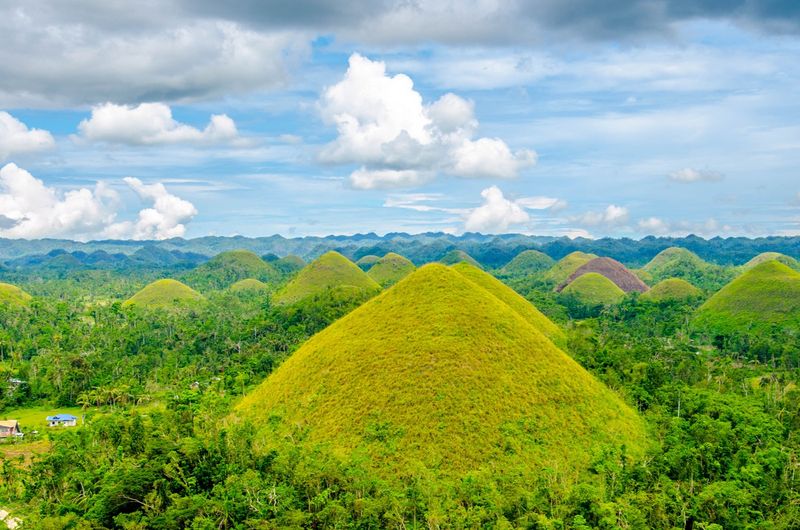
There are 1,268 of them. Scientists have counted.
The Chocolate Hills of Bohol, Philippines, are a geological formation of nearly identical cone-shaped hills spread across an area of about 50 square kilometers. During the dry season, the grass covering them turns brown, giving the landscape the appearance of an enormous box of chocolates left out in the sun.
The origin of the hills is still debated among geologists, though the most widely accepted theory involves the weathering of marine limestone over millions of years. Local legend, naturally, has a better story involving two feuding giants throwing rocks at each other until they wore themselves out and became friends.
The hills are what they left behind.
The best viewing point is the Chocolate Hills Complex near Carmen, which has an observation deck at the top of a staircase. Entry costs a small fee.
Visit between January and May for the full chocolate effect. Sunrise visits are worth the early start, as the hills glow golden before the heat kicks in.
Goblin Valley State Park – Utah, USA
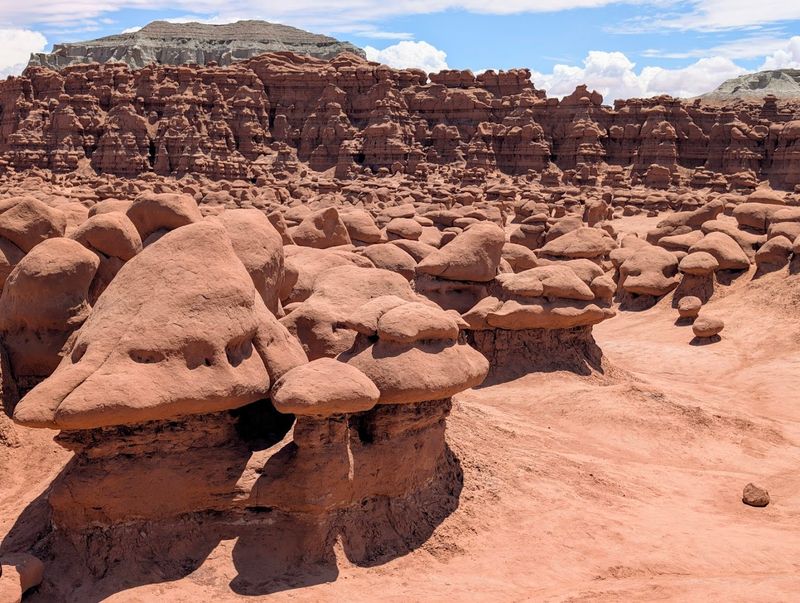
The park rangers in Goblin Valley had a challenge naming the formations here because “thousands of mushroom-shaped sandstone blobs” lacks a certain poetry. They went with goblins, and honestly, it fits.
The valley is filled with hoodoos, eroded sandstone formations that look like squat, lumpy figures frozen mid-shuffle across the desert floor.
Unlike most state parks, Goblin Valley actually lets you wander freely among the formations without staying on a trail. That open access makes it feel genuinely explorative.
Kids go absolutely feral with excitement, and adults are not far behind.
The park sits in central Utah near Hanksville and covers about 3,654 acres. Entry costs around 20 dollars per vehicle.
Camping is available and highly recommended since the night sky here is spectacular, sitting far from any major city lights. The best light for photography is early morning or late afternoon when the orange sandstone practically glows.
Pack water, sunscreen, and comfortable shoes you do not mind getting dusty.
The Big Pineapple – Bathurst, South Africa
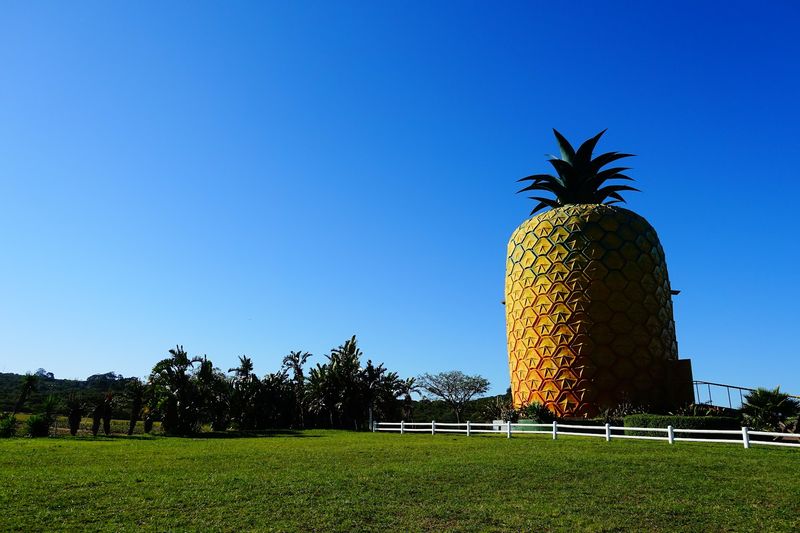
Standing 16 meters tall in the middle of the Eastern Cape, the Big Pineapple is exactly as committed to its theme as you are hoping. Built in 1988, this giant fruit-shaped structure celebrates Bathurst’s status as one of South Africa’s key pineapple-growing regions.
The Eastern Cape produces more pineapples than anywhere else in the country, and the town wanted everyone to know it.
Visitors can climb a spiral staircase inside the pineapple to reach a viewing area near the top. Inside the lower level, there is a small museum dedicated to the history of pineapple farming in the region, which is genuinely more interesting than it sounds.
The local pineapple industry has shaped the economy here for over 150 years.
Bathurst is located between Grahamstown and Port Alfred, making it a natural stop on a Garden Route road trip. The surrounding area also has hiking trails and a historic pub that has been operating since 1832.
Pineapple on pizza is probably not on the menu, but the real thing absolutely is.
Boulders Beach Penguin Colony – Cape Town, South Africa
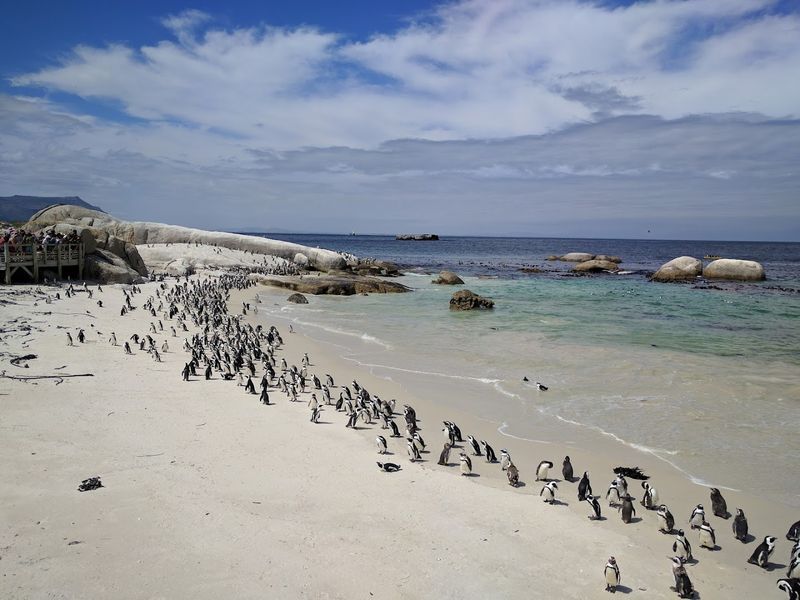
African penguins on a beach in South Africa feel like a prank the continent is playing on everyone’s expectations. Boulders Beach, located near Simon’s Town about 40 kilometers from Cape Town, hosts a thriving colony of African penguins that has been growing since two breeding pairs arrived in 1982.
There are now around 3,000 of them.
The penguins are small, confident, and completely unbothered by human visitors. Boardwalks allow you to get surprisingly close without disturbing the colony.
African penguins, also called jackass penguins because of their donkey-like call, are actually an endangered species, which makes the healthy Boulders colony an important conservation success story.
Entry to the beach is managed by South African National Parks and costs around 192 South African rand for international visitors. The best time to visit is between October and February during breeding season when chicks are visible.
Cape Town is a short drive away, making Boulders Beach an easy half-day trip that punches well above its weight on the memorable experience scale.
Share this story