Pennsylvania’s most memorable attractions are not always the ones listed in the guidebooks. Across the state, you’ll find giant sculptures, unusual landmarks, oddball museums, and roadside curiosities that turn an ordinary drive into something far more interesting.
From a shoe-shaped house you can actually stay in to a monument honoring a famous UFO incident, these destinations showcase a side of Pennsylvania that many travelers never see. Some are rooted in local history, others are simply delightfully strange, but all of them have one thing in common: they’re worth pulling over for.
Here are 10 of the state’s most unforgettable roadside attractions and the stories that make them so memorable.
1. Sherman Memorial Lighthouse, Tionesta, Pennsylvania
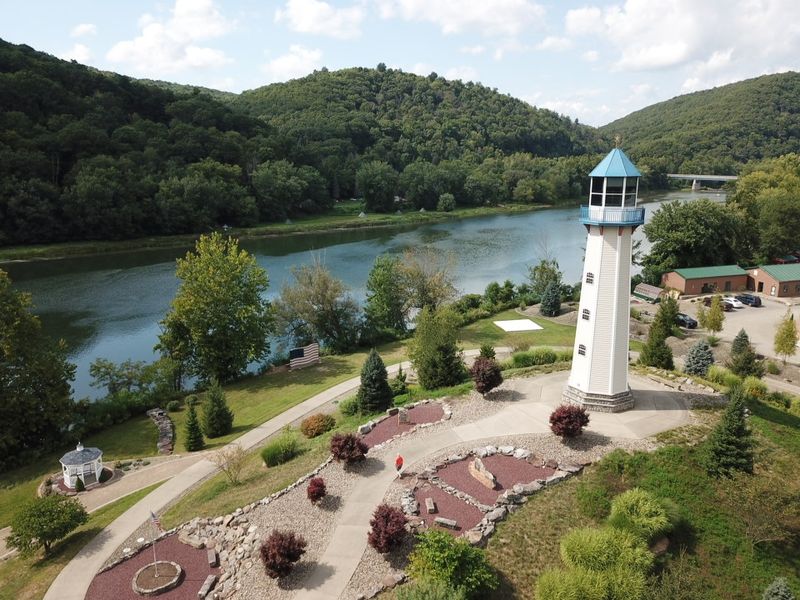
Jack Sherman built a 75-foot lighthouse in rural Forest County, Pennsylvania, approximately 60 miles from the nearest large body of water, and he did it entirely on purpose.
Completed in 2004, the Sherman Memorial Lighthouse was constructed as a personal tribute to Sherman’s family and as a home for his extensive collection of miniature lighthouse models. It is fully functional as a lighthouse in the technical sense, but it serves no navigational purpose whatsoever.
The structure stands along Route 62 near Tionesta and is visible from the road, making it an easy stop for travelers exploring the Allegheny National Forest region. The scale of the building is impressive, especially given that it was a private construction project rather than a government installation.
Sherman opened the property to visitors and ran tours during his lifetime. The lighthouse has continued to draw curious travelers who find the combination of genuine craftsmanship and completely impractical location utterly irresistible.
It is the kind of project that only happens when someone cares deeply about something and simply decides to build it, logic aside.
2. Randyland, Pittsburgh, Pennsylvania
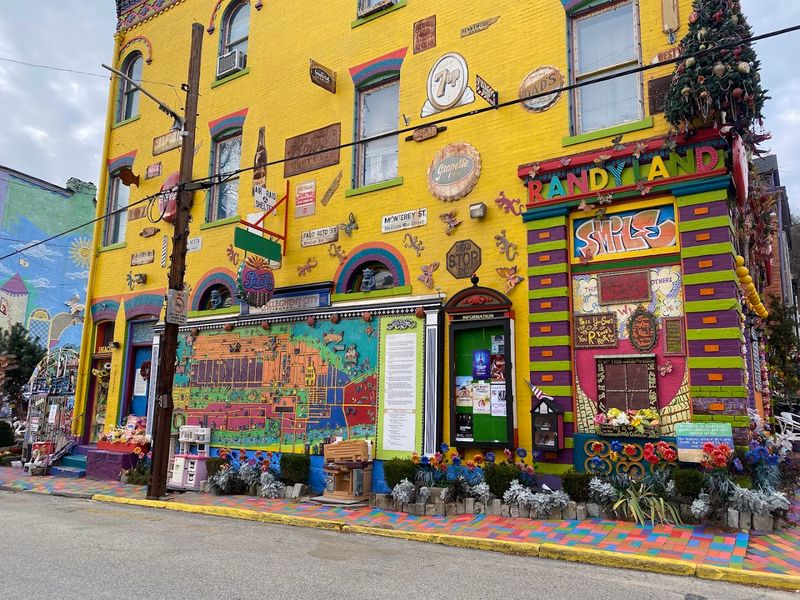
Randy Gilson spent years transforming a rundown Pittsburgh property into one of the most joyful public art spaces in the entire country, using recycled materials, bright paint, and an apparently limitless supply of creative energy.
Randyland sits in the Mexican War Streets neighborhood of Pittsburgh’s North Side. Every inch of the property is covered in hand-painted signs, mosaic tiles, repurposed furniture, and colorful sculptures made from salvaged objects.
Gilson purchased the building in 1995 for just $10 and has been adding to it ever since. The result is an ever-changing outdoor gallery that visitors can explore completely free of charge.
There are no ropes, no admission fees, and no guided tours required. You simply walk through and take it all in at your own pace.
Many visitors return multiple times because new details keep appearing as the collection grows.
It is one of those rare places that feels genuinely personal rather than commercially produced, which is exactly what makes it stand apart from typical tourist stops.
3. Bedford Coffee Pot, Bedford, Pennsylvania
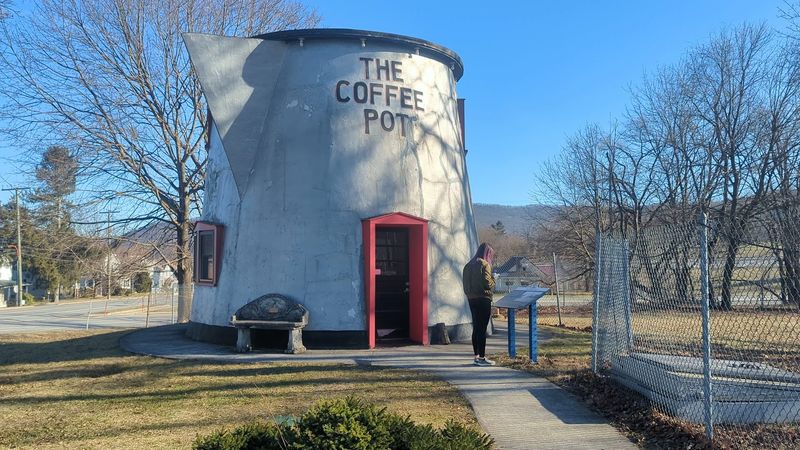
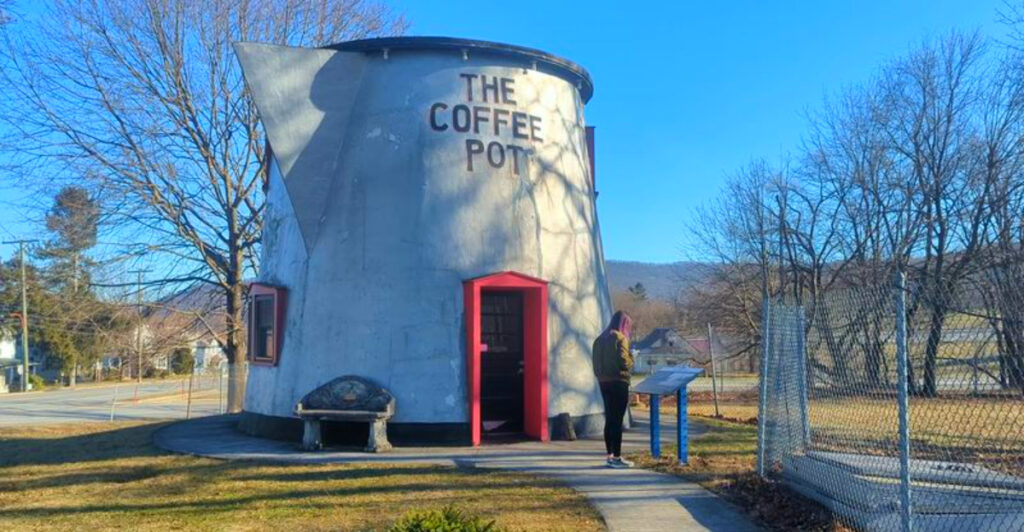
Few buildings in America have been turning heads for as long as the Bedford Coffee Pot, which has been confusing and delighting drivers along the Lincoln Highway since 1927.
The structure was originally built as a refreshment stand, designed in the shape of a giant coffee pot to grab attention from passing motorists. It represents a distinct era of American roadside architecture known as programmatic or mimetic design, where buildings were shaped like the products they sold.
The coffee pot fell into disrepair over the decades and faced demolition more than once. A local preservation effort saved it in 2004, and it was relocated to a more visible spot in Bedford where visitors can stop and photograph it easily.
It now sits near the intersection of Business Route 30 and Penn Street. The structure is not currently operating as a business, but it serves as a beloved landmark and a reminder of how creative roadside commerce used to be in the early days of American road travel.
4. Big Mac Museum Restaurant, Irwin, Pennsylvania
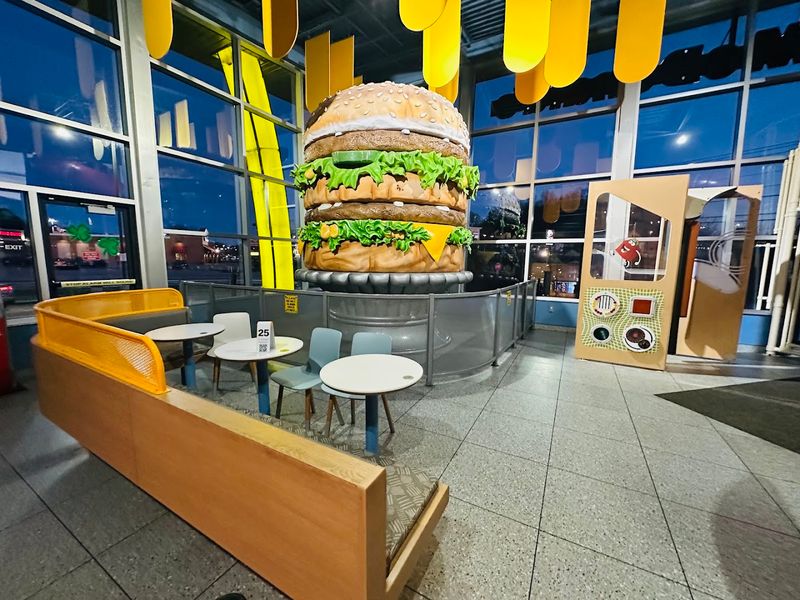
The Big Mac was invented in 1967 by a McDonald’s franchise owner named Jim Delligatti, who worked out of a location in Uniontown, Pennsylvania. That origin story is exactly why this particular McDonald’s in Irwin exists as a full-blown museum dedicated to the burger.
The Big Mac Museum Restaurant opened in 2007 to mark the sandwich’s 40th anniversary. Inside, visitors will find historical displays, memorabilia, and a 14-foot-tall Big Mac statue that has become the centerpiece of countless road trip photos.
The restaurant functions as a regular McDonald’s, so you can order a meal while browsing the exhibits. The museum section covers the history of the sandwich, its cultural impact, and various milestones in its decades-long run as one of the world’s most recognized fast food items.
It sits along Route 30, which makes it a natural stop for travelers heading between Pittsburgh and the Laurel Highlands. Even if you are not a fast food enthusiast, the sheer novelty of a burger museum is hard to pass up.
5. Doolittle Station, DuBois, Pennsylvania
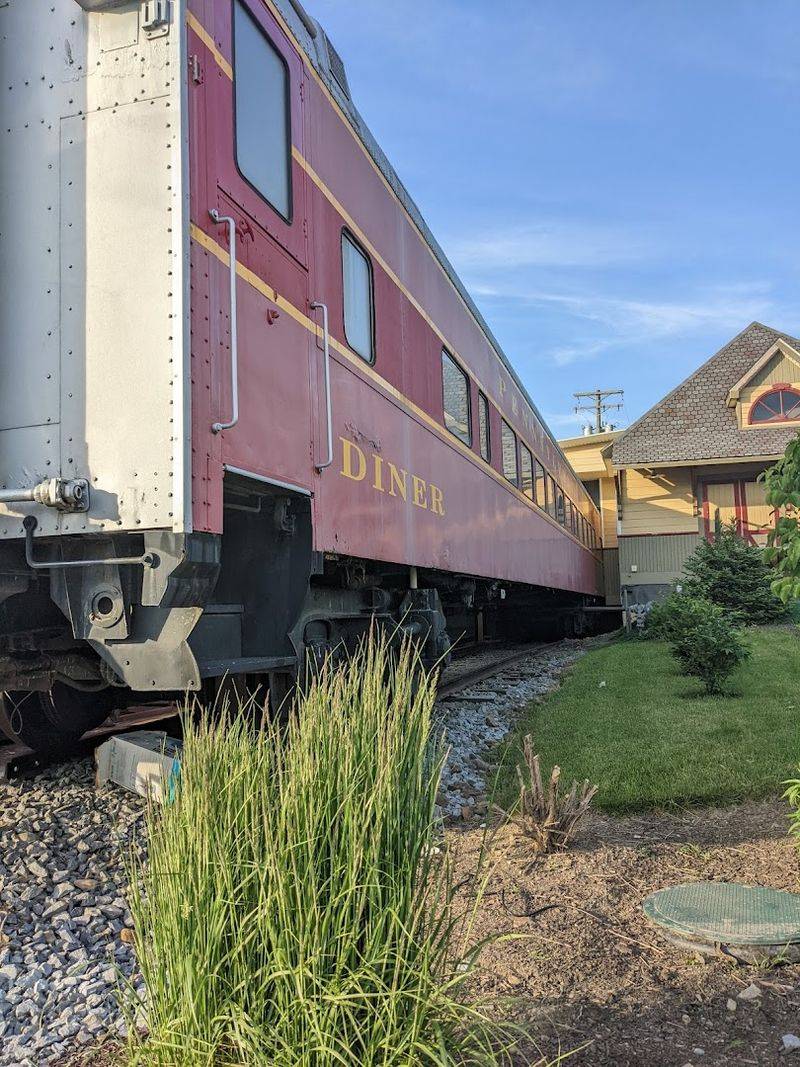
Authentic historic railcars do not usually double as restaurants, but Doolittle Station in DuBois has built an entire attraction around exactly that idea, and it works surprisingly well.
The property features a collection of vintage railroad cars that have been converted into dining spaces, a museum, and entertainment venues. The railcars themselves are genuine pieces of American railroad history, giving the whole experience a tangible connection to the past rather than a manufactured theme.
DuBois has a strong historical connection to the railroad industry, so the attraction fits naturally into the character of the region. Visitors can explore the cars, learn about local railroad history, and have a meal without ever setting foot in a conventional building.
The property is family-friendly and offers enough variety to keep different age groups engaged. It is not a massive tourist complex, which actually adds to its charm as a genuinely local roadside destination.
For travelers passing through central Pennsylvania on Route 219 or Interstate 80, Doolittle Station represents the kind of unexpected stop that turns a routine drive into a memorable one.
6. PennDOT Road Sign Sculpture Garden, Meadville, Pennsylvania
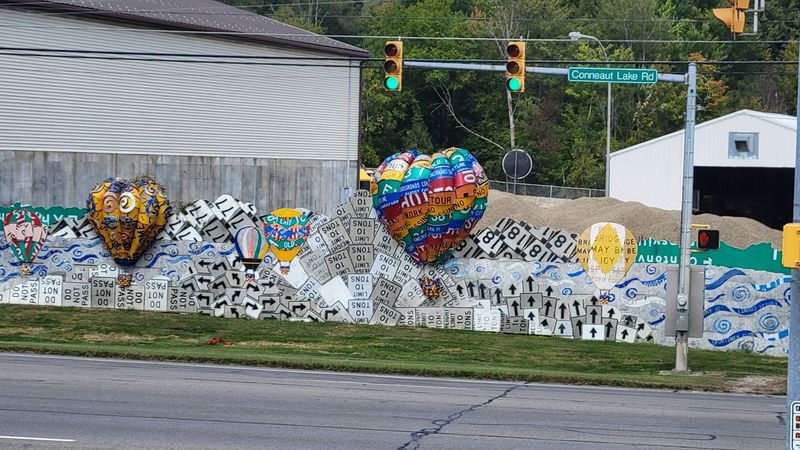
Retired road signs usually end up in a storage yard somewhere, but in Meadville, Pennsylvania, they became the raw material for one of the most creative public art projects in the state.
The installation is titled “Read Between the Signs” and stretches roughly 1,200 feet along a PennDOT maintenance facility. Artists used thousands of decommissioned traffic signs to construct detailed scenes depicting the history and culture of northwestern Pennsylvania.
The project involved collaboration between PennDOT and local artists, turning what could have been a pile of scrap metal into a genuine community landmark. The signs retain their original colors and shapes, which makes the visual effect both striking and immediately recognizable.
Scenes include historical events, natural landscapes, and cultural references specific to the Crawford County region. The mural is visible from the road and does not require any special access or admission fees to view.
It is one of those rare public art projects that manages to be both locally meaningful and broadly entertaining, regardless of whether you know the history behind each scene.
7. Giant Cowboy, Kittanning, Pennsylvania
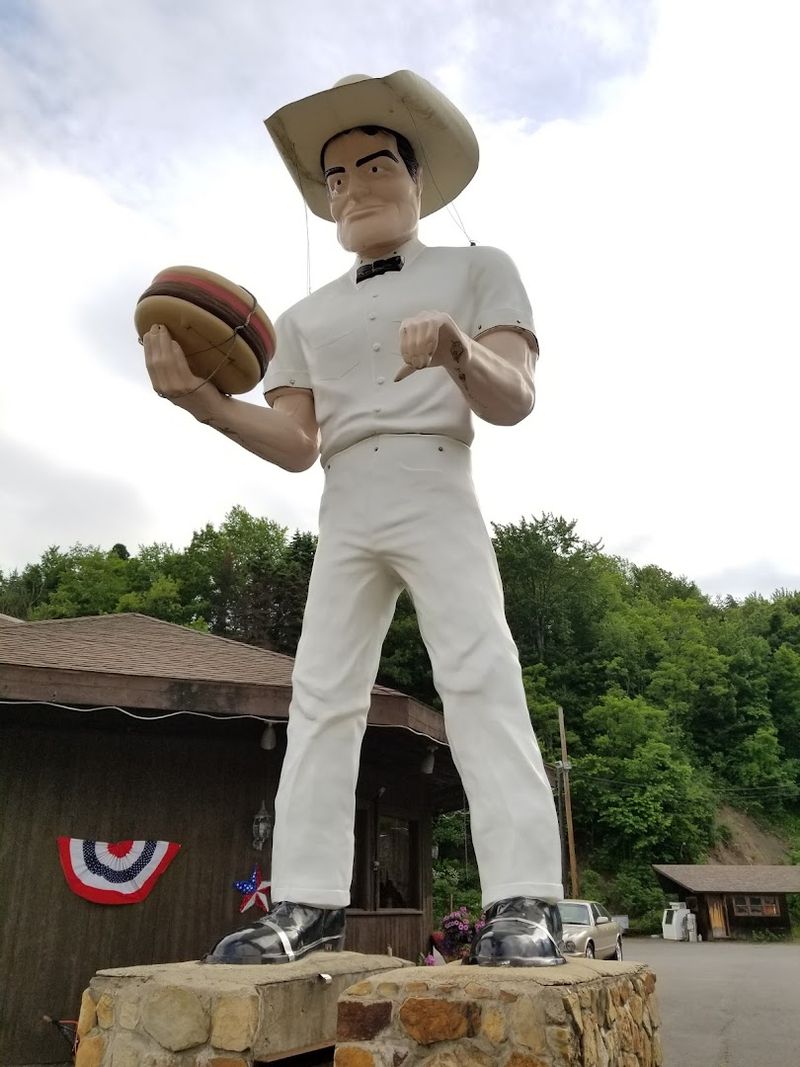
Sam has been standing along Route 422 east of Kittanning since 1962, holding a hamburger the size of a small automobile and looking completely unbothered by the decades passing around him.
The statue stands nearly 30 feet tall and was originally placed outside the Cadet Restaurant to draw attention from passing drivers. It was cast from the same mold used to create Paul Bunyan statues found at other locations across the country, which means Sam has distant cousins scattered around America.
The Cadet Restaurant has since closed, but Sam remains standing as a roadside landmark that locals take genuine pride in. Efforts to preserve and maintain the statue have kept it in reasonably good condition considering its age.
Giant roadside figures like Sam belong to a tradition of American advertising that peaked in the mid-20th century, when businesses competed for highway attention in the most dramatic ways possible. Most of those figures have since been removed or lost to time.
Sam’s continued presence makes him a living piece of roadside history, and pulling over for a photo is practically a civic duty.
8. Playthings, Etc., Butler, Pennsylvania
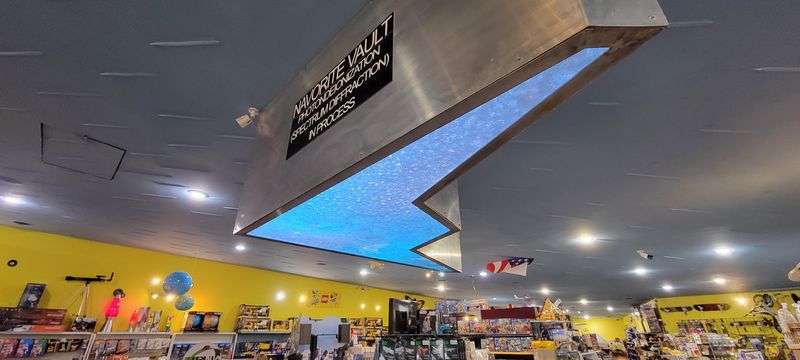
Most toy stores look like toy stores. Playthings, Etc. in Butler, Pennsylvania, looks like something that was designed to evade radar detection, and that is precisely why people slow down to stare at it.
The building’s angular, geometric design gives it an appearance closer to a stealth aircraft than a conventional retail space. The architect created a structure so visually unusual that the building itself became a roadside attraction independent of whatever is sold inside.
Butler County is not typically associated with avant-garde architecture, which makes the contrast between this building and its surroundings even more pronounced. Drivers who pass it for the first time almost always do a double-take.
The store sells toys and hobby items, but many visitors stop primarily to photograph the building from the road. It has developed a small but dedicated following among architecture enthusiasts and roadside attraction hunters.
There is something genuinely delightful about a building that refuses to blend in, especially when it sits in an ordinary commercial strip that makes the design choice look even more deliberate and bold.
9. Kecksburg UFO Monument, Kecksburg, Pennsylvania
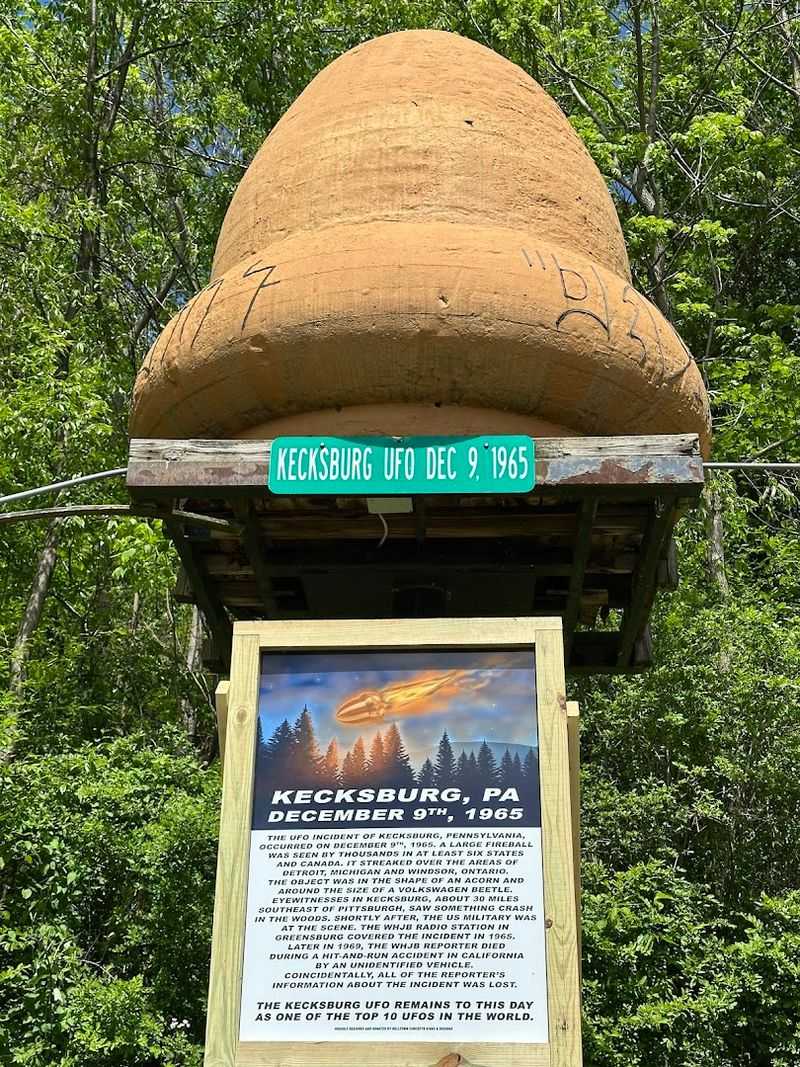
On December 9, 1965, residents of Kecksburg reported watching a fireball streak across the sky before something crashed into the nearby woods, and the debate about what exactly landed there has never fully been settled.
The U.S. military arrived quickly and reportedly removed an object described by witnesses as acorn-shaped with strange markings along its base. Official explanations pointed to a meteorite, but many researchers and locals have questioned that account ever since.
Today, a bronze replica of the reported object sits on display in the town as a roadside monument. It draws visitors from across the country who are interested in unexplained phenomena, Cold War history, and small-town mysteries.
The annual Kecksburg UFO Festival brings even larger crowds each summer, turning the quiet rural community into a lively gathering point for curious travelers. The monument itself is accessible year-round and free to visit.
Whether you lean toward the meteorite theory or something more unusual, the story behind this small monument is genuinely fascinating and well worth a stop.
10. Haines Shoe House, Hallam, Pennsylvania
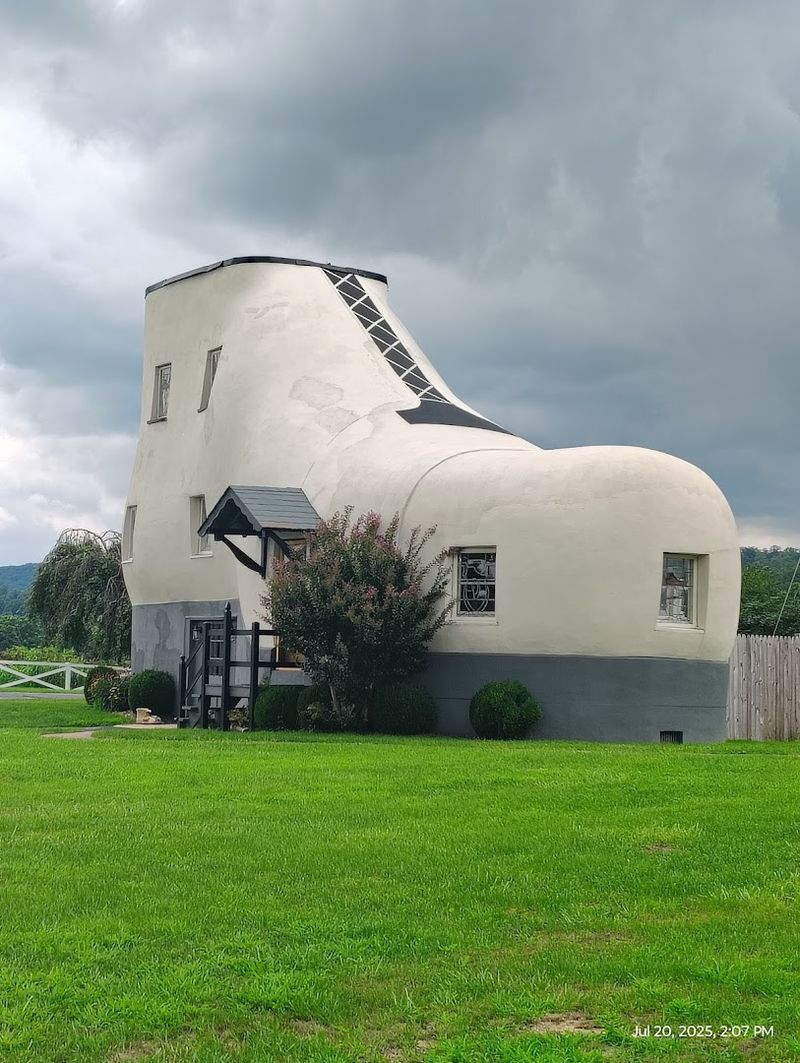
Back in 1949, shoe salesman Mahlon Haines decided the best way to advertise his business was to build a house shaped like a giant work boot, and honestly, nobody has ever come up with a better marketing idea since.
The Haines Shoe House stretches 48 feet long and stands 25 feet tall along Route 30 in York County. Haines reportedly used the house to reward newlyweds and senior citizens with free stays, which makes the whole story even more endearing.
The building has five rooms, two bathrooms, and a spiral staircase inside. Over the decades it has served as an ice cream stand, a museum, and a private residence.
Today it operates as a vacation rental, meaning you can actually book a night inside the boot.
Few roadside stops in the entire country offer that combination of history, novelty, and a genuinely usable experience. Stopping for photos is free and the structure is visible right from the road.
Share this story