Kansas rewards travelers who are willing to look beyond the interstate. While the state is often known for its open plains, it also hides towering rock formations, underground attractions, historic small towns, and landscapes unlike anything most visitors expect to find in the middle of the country.
From ancient chalk monuments and vast tallgrass prairies to folk art destinations and one-of-a-kind museums, these places reveal a side of Kansas that rarely makes the travel brochures. Many remain overlooked by visitors passing through, making them all the more rewarding to discover.
Here are 15 destinations that prove the Sunflower State is far more diverse, surprising, and memorable than its reputation suggests.
1. Little Jerusalem Badlands State Park, Oakley, Kansas
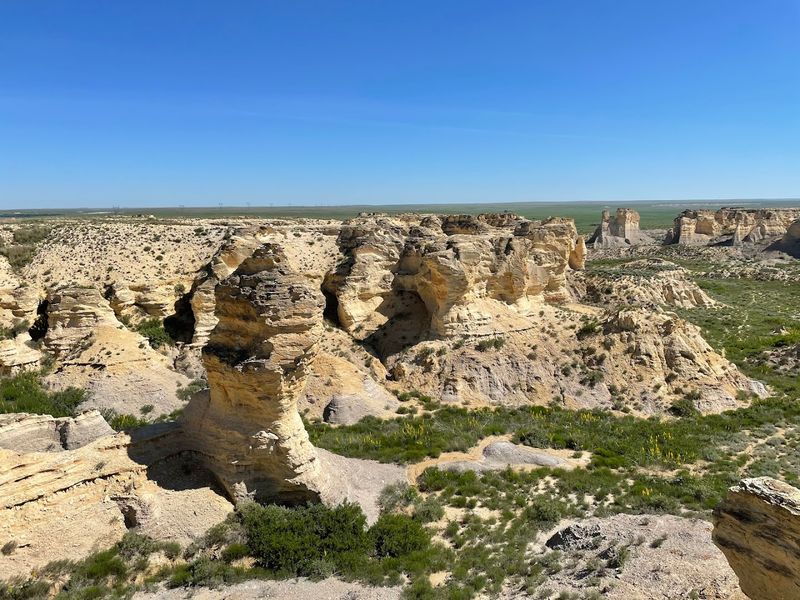
Nobody expects to find badlands in Kansas, and that is precisely what makes this place so memorable. Little Jerusalem Badlands State Park covers 220 acres of jagged chalk formations that look like they were dropped here from somewhere far more dramatic.
The landscape formed millions of years ago when this entire region sat beneath a vast inland sea. As that sea retreated, it left behind the raw chalk structures visitors see today.
Hiking trails cross the terrain and offer sweeping views that feel almost surreal against the surrounding flatlands. The park stays quiet on most days, making solitude a very real possibility.
It is one of the most visually striking natural sites in the entire state, and almost nobody outside Kansas knows it exists.
2. Monument Rocks, Oakley, Kansas
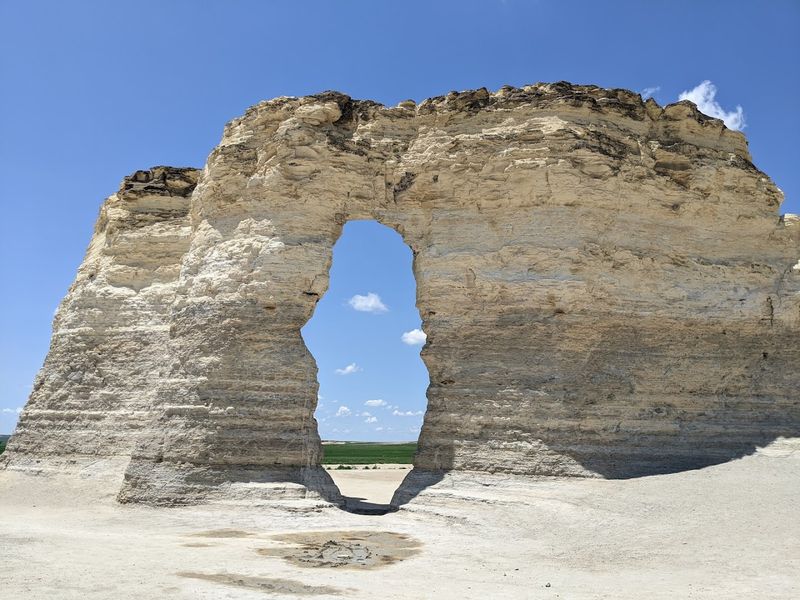
Rising up to 70 feet from the surrounding grasslands, these chalk pyramids look like the ruins of something ancient and enormous. Monument Rocks earned National Natural Landmark status, which puts them in rare company for a site that most Americans have never heard of.
The formations date back roughly 80 million years to the Cretaceous period, when a shallow sea covered the Great Plains. Fossils of ancient marine creatures have been found in the surrounding chalk, which adds a prehistoric layer to an already fascinating visit.
No entrance fee, no crowds, and no guardrails. Visitors can walk right up to the formations and explore freely.
The remote drive through open farmland only adds to the sense that you have discovered something truly off the beaten path.
3. Mushroom Rock State Park, Brookville, Kansas
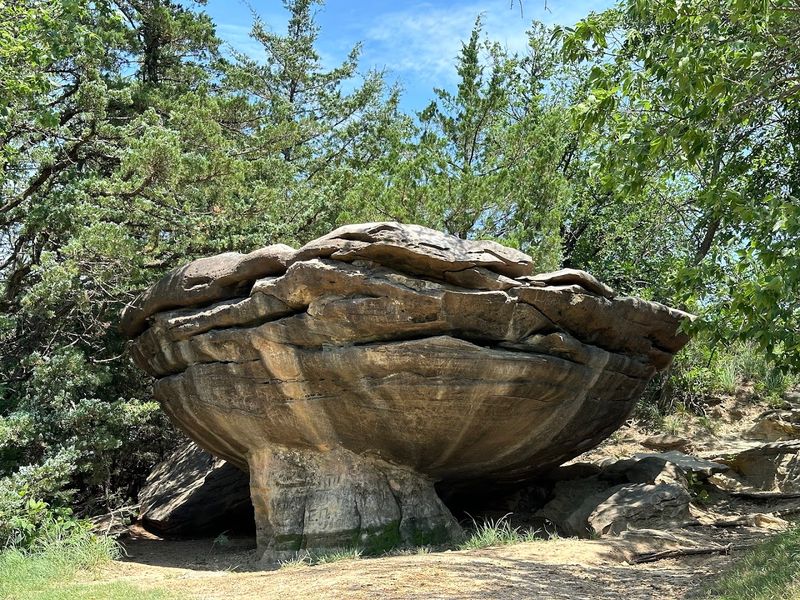
Kansas’s smallest state park is also one of its strangest, and that combination works out beautifully. Mushroom Rock State Park covers just five acres, but those five acres contain sandstone formations so unusual that they draw photographers from across the region.
Wind and erosion carved these boulders into shapes that genuinely resemble mushrooms, with wide caps balanced on narrower bases. Some formations are large enough to stand beside for a photo that will confuse everyone back home.
The park sits along a quiet road in central Kansas and takes only a short time to explore, making it a perfect unplanned stop on a longer road trip. Admission is free, parking is easy, and the formations are just weird enough to make the whole detour completely worthwhile.
4. Rock City, Minneapolis, Kansas
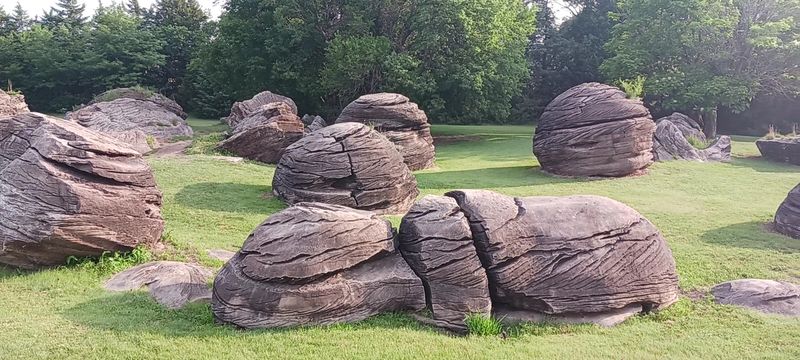
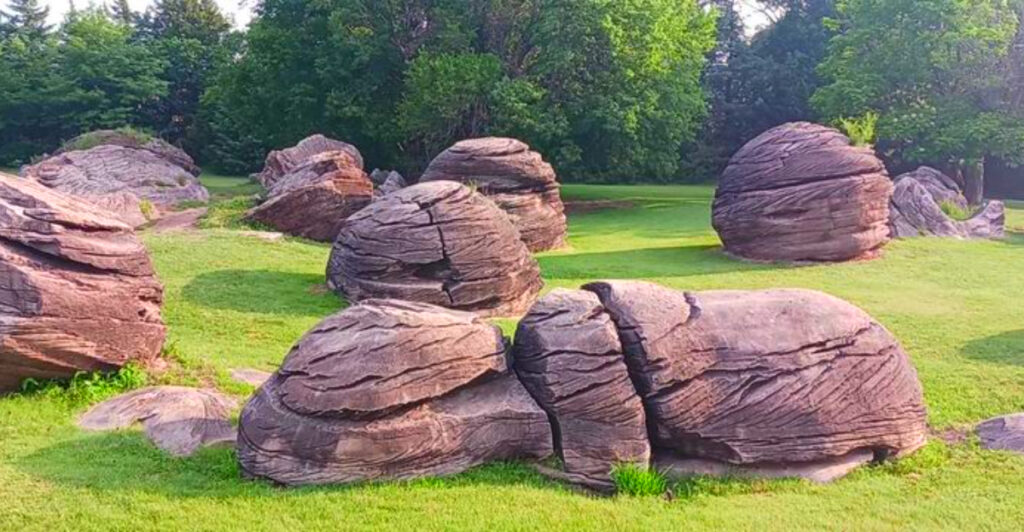
More than 200 giant sandstone spheres are scattered across a private hillside outside Minneapolis, Kansas, and the whole scene looks like nature got bored and started bowling. Rock City is one of the most genuinely baffling landscapes in the entire Midwest.
The boulders formed through a geological process called concretion, where minerals gradually cemented around a central point over millions of years. Some spheres measure up to 27 feet in diameter, which is far larger than they look in photos.
A small admission fee covers access to the grounds, where visitors are free to climb around and explore. The boulders vary in size and shape, and some have interesting surface textures from centuries of weathering.
It is the kind of place that takes about an hour to visit and stays in your memory for years.
5. Coronado Heights, Lindsborg, Kansas
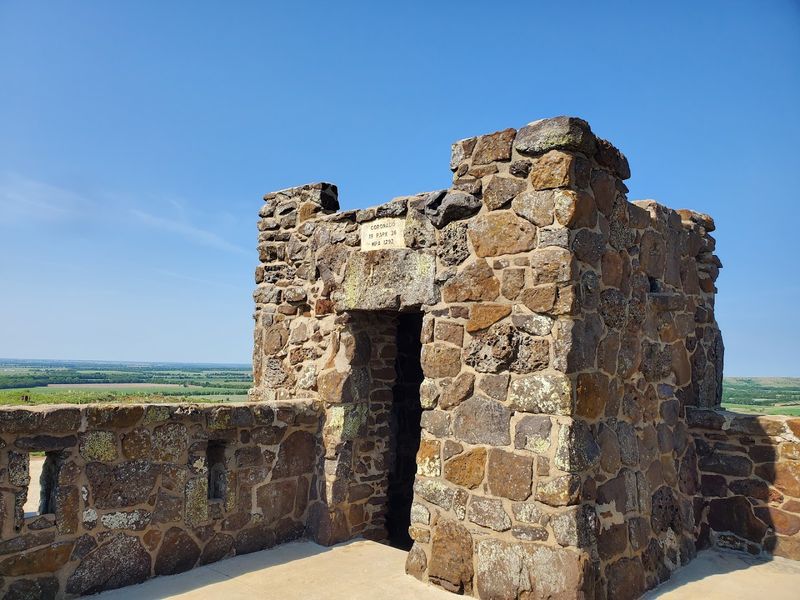
A stone castle on a Kansas hilltop sounds like a misprint, but Coronado Heights is completely real and genuinely charming. Built by the Civilian Conservation Corps during the 1930s, the structure sits at the top of a bluff with views stretching far across the Smoky Hills.
The hill itself is historically significant. Spanish explorer Francisco Vasquez de Coronado reportedly reached this area during his 1541 expedition through the Great Plains, making the site one of the earliest points of European contact in Kansas.
The nearby town of Lindsborg adds extra appeal with its strong Swedish heritage, colorful Dala Horse sculptures, and independent shops. Coronado Heights is technically a quick stop, but between the views and the history, most visitors end up staying longer than they planned.
6. Strataca, Hutchinson, Kansas
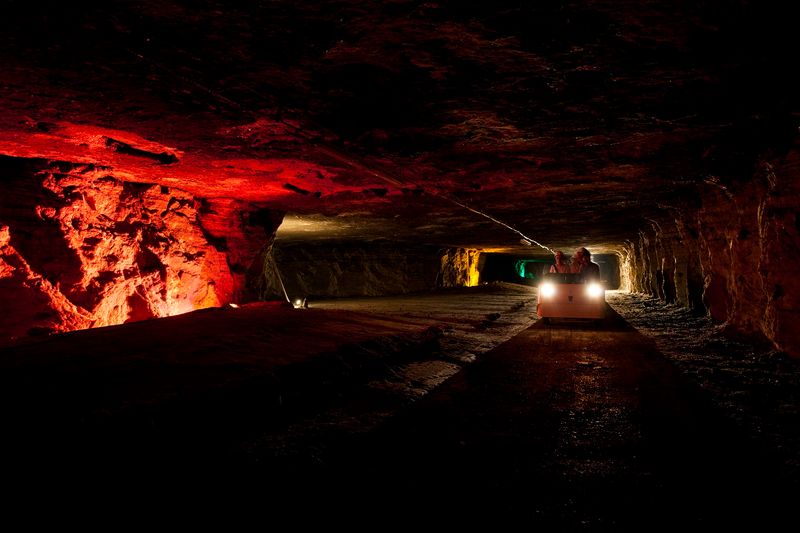
Strataca is the only underground salt mine museum in the United States, and that alone earns it a spot on any serious Kansas road trip. Visitors descend 650 feet below the surface in a mine elevator before exploring tunnels carved through solid salt deposits.
The salt beneath Hutchinson formed roughly 275 million years ago when an ancient sea evaporated and left its minerals behind. The mine has been in operation since 1923, and the museum opened to the public in 2007 to share that history with visitors.
An underground train ride moves guests through different sections of the mine, where exhibits cover geology, mining equipment, and the history of salt production in Kansas. The temperature underground stays at a constant 68 degrees year-round, which makes it a comfortable visit in any season.
7. Pawnee Indian Museum State Historic Site, Republic, Kansas
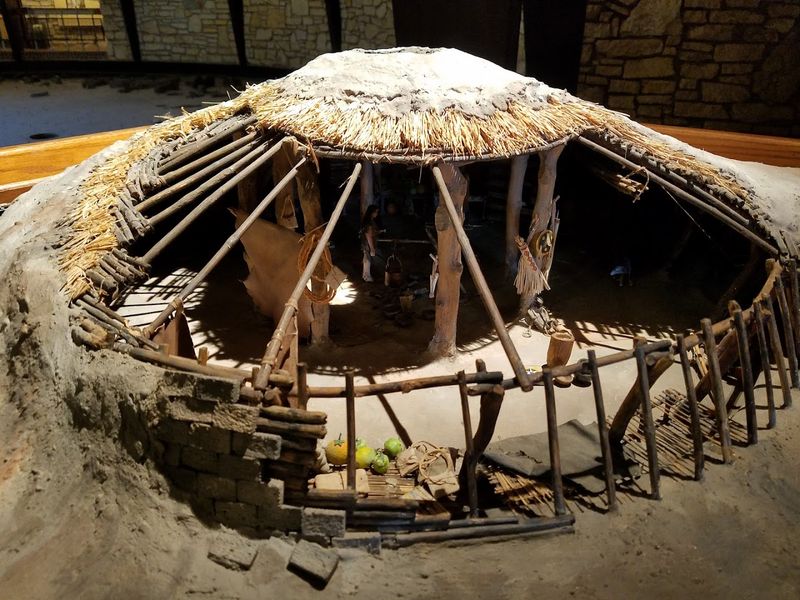
Built directly over the floor of a large Pawnee earth lodge, this museum offers one of the most direct connections to Native American history in the entire Great Plains region. The floor beneath the glass panels is the actual ground where Pawnee families lived roughly 200 years ago.
The site preserves the remains of a village that housed around 1,000 people during the early nineteenth century. Archaeological excavations uncovered tools, pottery, and other objects that are now displayed in the museum alongside detailed historical context.
Republic, Kansas is not exactly a major tourism hub, which means this site receives far fewer visitors than it deserves. The combination of genuine archaeology, thoughtful exhibits, and quiet surroundings makes it a rewarding stop for anyone interested in the people who shaped this landscape long before European settlers arrived.
8. Fort Larned National Historic Site, Larned, Kansas
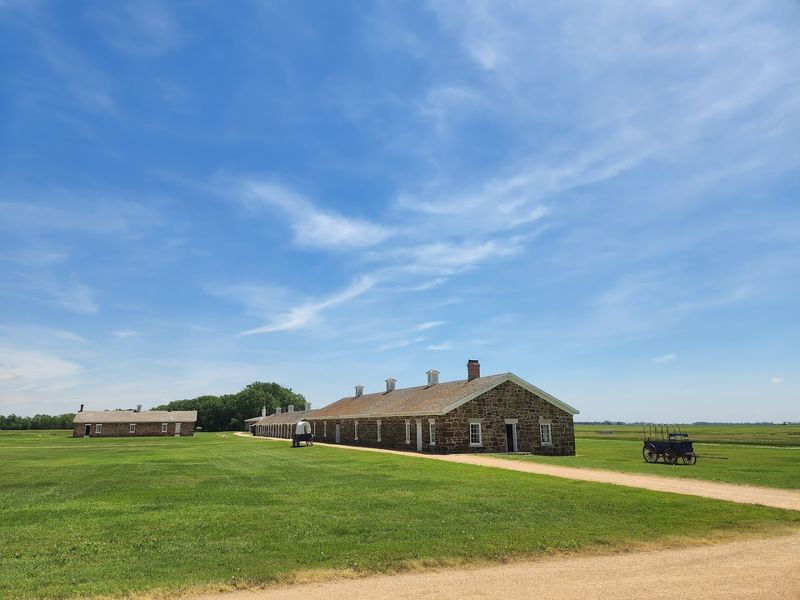
Fort Larned is one of the best-preserved frontier military posts in the American West, and yet it consistently flies under the radar of most history travelers. Nine original structures still stand on the grounds, including barracks, a commissary, and officer quarters that date to the 1860s.
The fort played a central role in protecting travelers and trade along the Santa Fe Trail during a period of intense activity on the southern Plains. Rangers in period clothing help bring the history to life with demonstrations and guided tours.
The National Park Service manages the site and admission is free. Walking the grounds takes about two hours and covers everything from military life to the broader story of westward expansion.
For anyone interested in the Santa Fe Trail era, this is one of the most authentic stops available anywhere along the route.
9. Point Of Rocks, Elkhart, Kansas
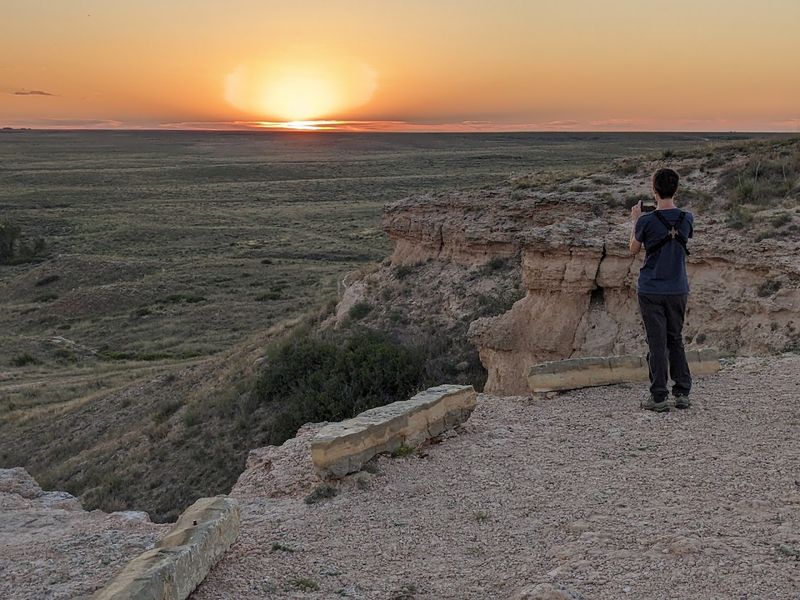
Way out in the southwestern corner of Kansas, where the state barely gets any tourist attention at all, Point of Rocks served as one of the most reliable landmarks on the entire Santa Fe Trail. Travelers crossing the Cimarron Route used the rocky outcrop to confirm their position across hundreds of miles of otherwise featureless terrain.
The overlook sits above the surrounding prairie and delivers views that stretch a very long way in every direction. A historical marker explains the site’s significance and connects it to the broader story of nineteenth-century trade and migration.
Visitor numbers here are genuinely low, which means the experience feels completely unfiltered. No gift shop, no crowds, and no noise.
Just open sky, deep history, and the quiet satisfaction of visiting a place that most people drive right past without ever knowing it exists.
10. Cedar Bluff State Park, Ellis, Kansas
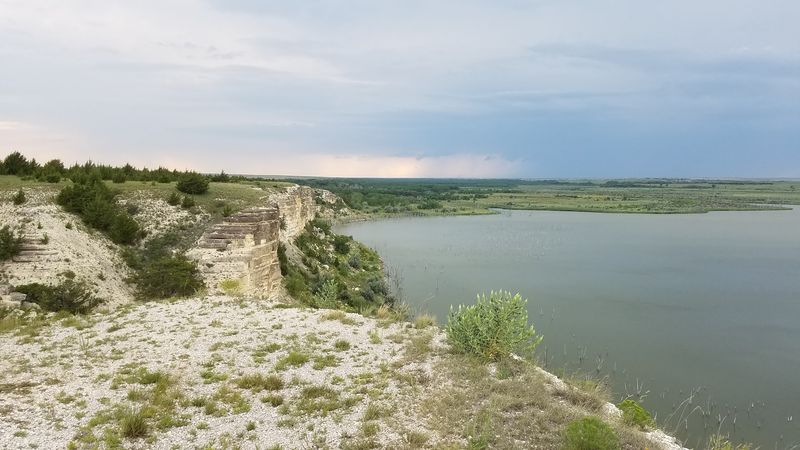
Western Kansas surprises a lot of first-time visitors, and Cedar Bluff State Park is a big reason why. The park surrounds a 6,000-acre reservoir flanked by red and tan bluffs that rise sharply from the waterline in a landscape that looks far more rugged than people expect from this part of the state.
Boating, fishing, hiking, and camping are all available, making this a practical destination as well as a scenic one. The reservoir supports populations of walleye, bass, and catfish, drawing anglers from across the region throughout the warmer months.
The bluffs themselves are the visual highlight. Their layered colors shift noticeably depending on the time of day and the angle of the light.
Cedar Bluff is the kind of park that earns a return visit almost automatically once you have seen it the first time.
11. Tallgrass Prairie National Preserve, Strong City, Kansas
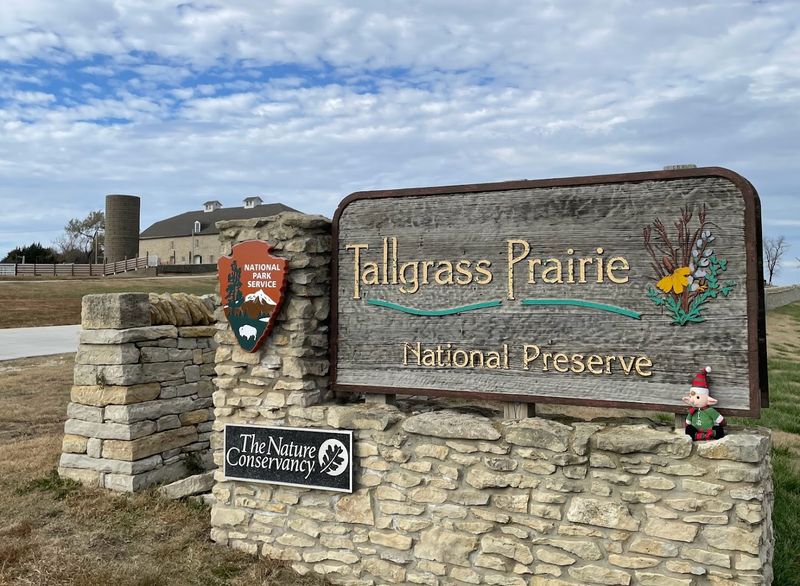
Fewer than four percent of the original tallgrass prairie ecosystem still exists, and a large portion of what remains is protected right here in the Flint Hills. The Tallgrass Prairie National Preserve stretches across nearly 11,000 acres of rolling hills and native grassland that has never been plowed.
A herd of bison roams the preserve, and spotting them on a hike adds an element of genuine wildness to the experience. The trails range from short and easy to longer routes that take visitors deep into the landscape away from roads and parking areas.
The National Park Service operates the site, and admission is free. A historic ranch complex near the visitor center adds historical context to the natural setting.
This is one of those places where the sheer scale of the open landscape does most of the talking.
12. Keystone Gallery, Scott City, Kansas
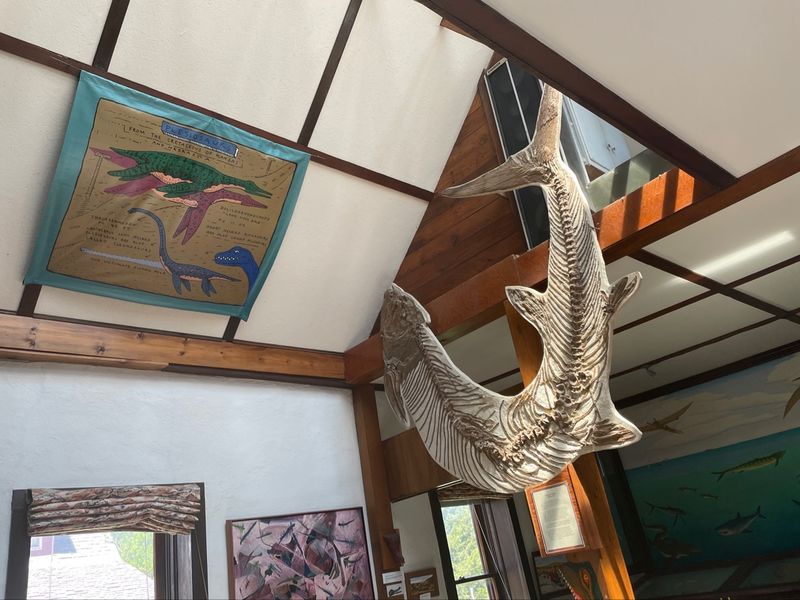
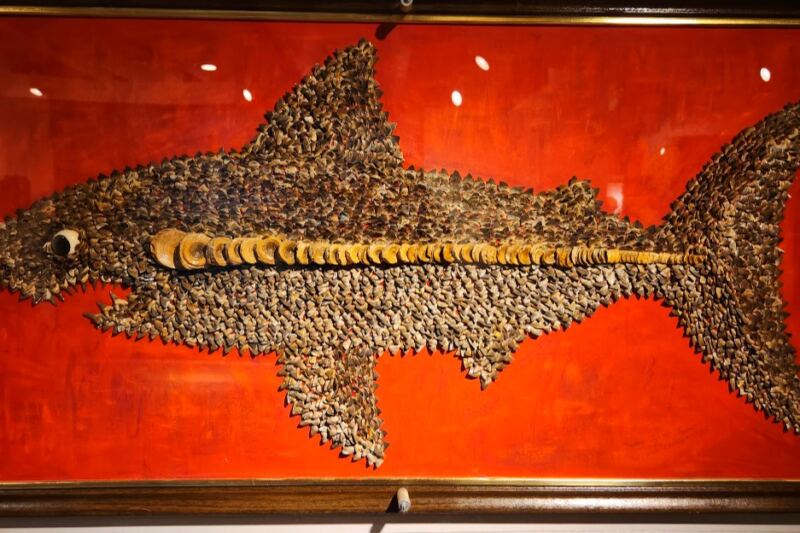
Part fossil museum, part art gallery, and entirely unexpected, Keystone Gallery in Scott City is one of the most interesting small institutions in western Kansas. The collection focuses on the creatures that swam above this land during the Cretaceous period, when a shallow sea called the Western Interior Seaway covered much of the continent.
Fossils on display include mosasaurs, ancient fish, and flying reptiles, many of which were collected directly from the surrounding chalk formations. The gallery’s owners are both artists and fossil enthusiasts, which gives the space a personal, curated quality that larger institutions rarely achieve.
Admission is modest, and the staff are genuinely knowledgeable and happy to talk through the collection. For road-trippers crossing western Kansas, this is one of the most rewarding stops between the Colorado border and Wichita.
13. Big Basin Prairie Preserve, Ashland, Kansas
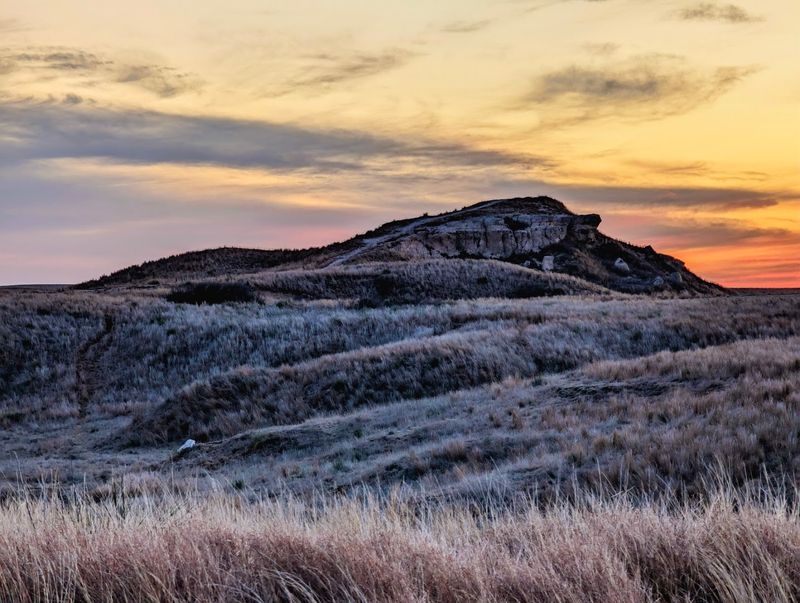
A natural sinkhole roughly a mile wide and 100 feet deep sits at the center of this preserve, forming one of the most unusual landforms in the entire state. Big Basin formed when underground salt and gypsum deposits dissolved and caused the surface above to collapse inward over thousands of years.
The basin floor supports a different plant community than the surrounding upland prairie, which creates habitat diversity and attracts a wider variety of wildlife. Bison once roamed this area in enormous numbers, and the landscape still carries the character of that era.
A smaller sinkhole called St. Jacob’s Well sits within the preserve and holds water even during dry periods. The whole area sees very little foot traffic, which makes it an appealing destination for anyone who prefers their natural spaces quiet and uncrowded.
14. Lucas, Kansas
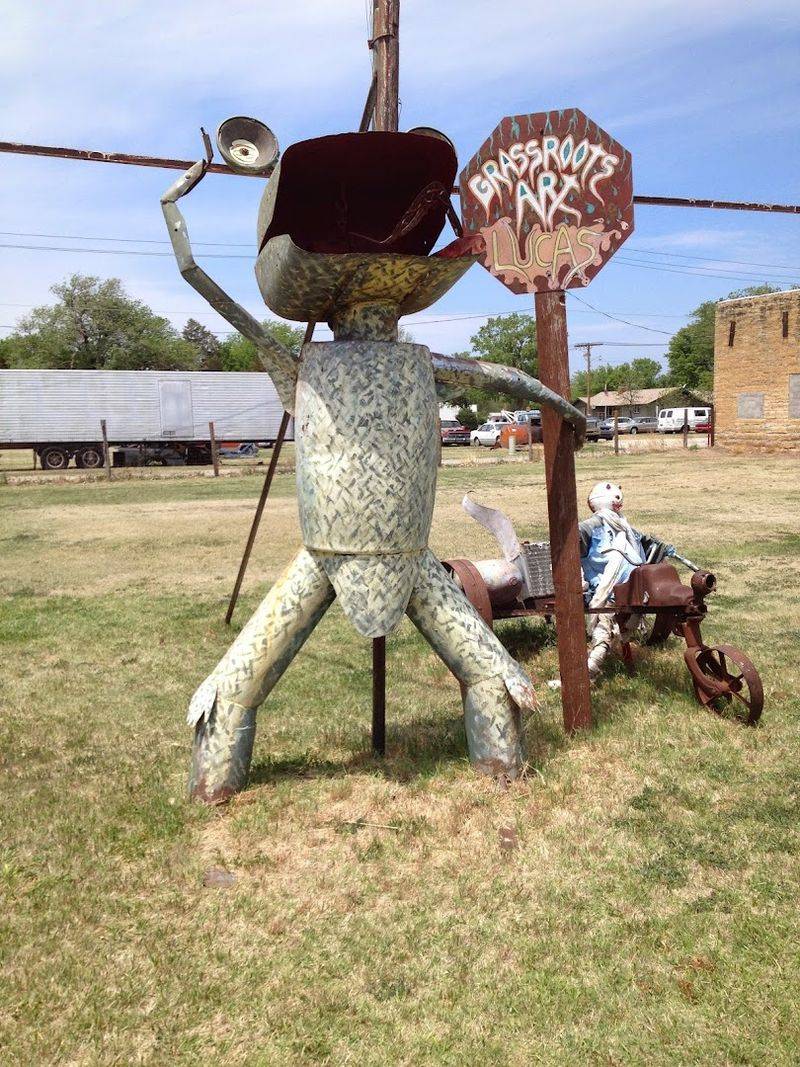
Lucas, Kansas has a population of around 400 people and more weird public art per square foot than almost anywhere else in the country. The town earned its nickname as the Grassroots Art Capital of Kansas through decades of accumulating folk art environments, outsider sculptures, and creative landmarks that range from fascinating to completely baffling.
The Garden of Eden is the anchor attraction. S.P.
Dinsmoor spent 22 years building an elaborate concrete sculpture environment around his home, covering the yard with biblical scenes, political commentary, and figures that are impossible to categorize neatly.
The town also hosts the World’s Largest Collection of Smallest Versions of World’s Largest Things, which is exactly what it sounds like. Lucas rewards slow exploration, and the combination of history, creativity, and genuine oddity makes it one of Kansas’s most entertaining small-town destinations.
15. Lake Scott State Park, Scott City, Kansas
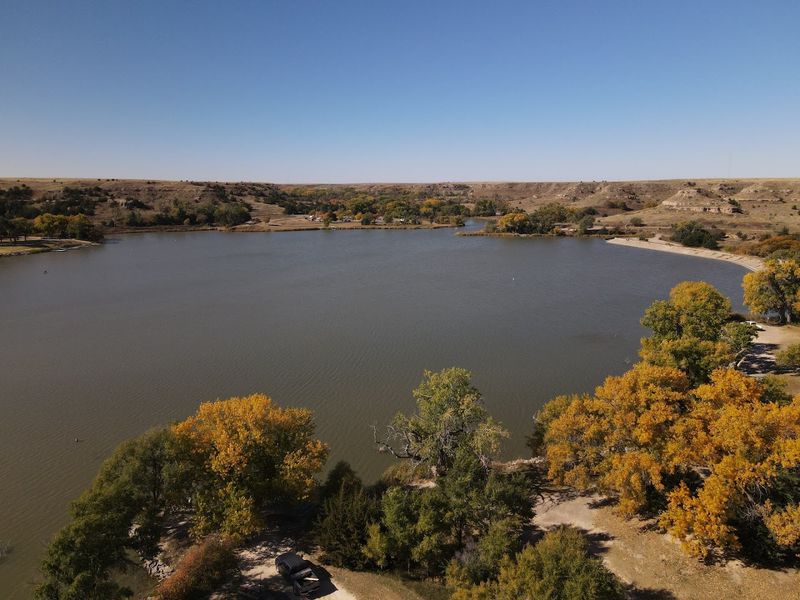
Most people drive through Scott City without stopping, which means most people miss one of the genuinely surprising state parks in Kansas. Lake Scott sits in a canyon carved by natural springs, surrounded by rugged bluffs and native cottonwood trees that create a setting nothing like the surrounding prairie.
The park includes a historic Native American pueblo ruin called El Quartelejo, the northernmost pueblo ever discovered in North America. That alone makes the park worth a visit for anyone interested in history alongside outdoor recreation.
Fishing, camping, hiking, and wildlife watching are all available within the park boundaries. White-tailed deer, wild turkeys, and a variety of waterfowl are common sightings.
Lake Scott manages to pack an impressive amount of variety into a relatively compact area, which is exactly why it keeps surprising the people who finally decide to stop.
Share this story