Our planet is full of surprises, and some of its most jaw-dropping locations look like they were lifted straight out of a science fiction movie. From glowing caves to neon-colored acid pools, Earth has corners that even seasoned travelers struggle to believe are real.
I still remember the first time I saw a photo of Bolivia’s salt flats and genuinely thought it was digitally altered. Buckle up, because this list of 15 extraordinary places will make you question everything you thought you knew about our world.
Salar de Uyuni, Bolivia
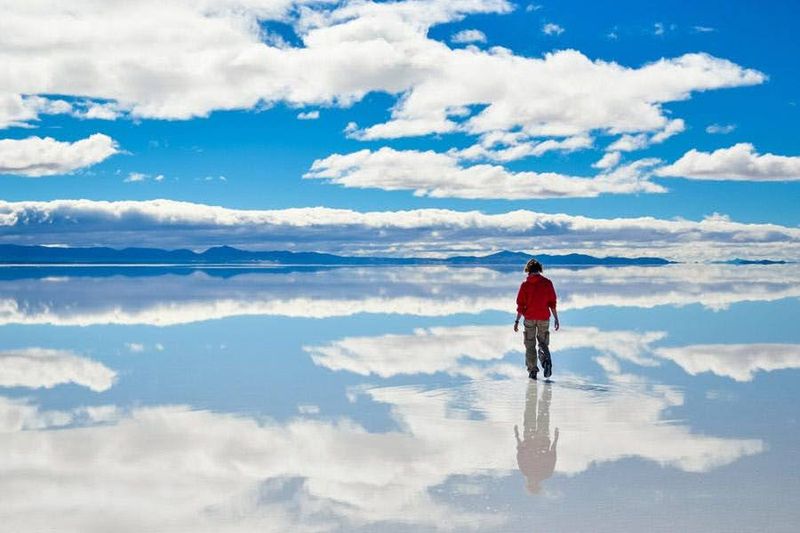
The world’s largest salt flat sits at over 3,600 meters above sea level in Bolivia, and it refuses to be boring. During the rainy season, a thin layer of water turns the entire surface into a flawless mirror.
The sky reflects so perfectly that you genuinely cannot tell where the ground ends and the clouds begin.
Covering roughly 10,000 square kilometers, Uyuni was once part of a prehistoric lake that dried up and left behind an impossibly flat crust of salt. The flatness is so extreme that NASA uses it to calibrate satellites.
That’s right, space agencies use this place as a reference point from orbit.
The best time to visit is between January and April. Tours depart from the nearby town of Uyuni.
Bring waterproof boots, strong sunscreen, and a camera with a fully charged battery because you will not stop shooting photos.
Socotra Island, Yemen
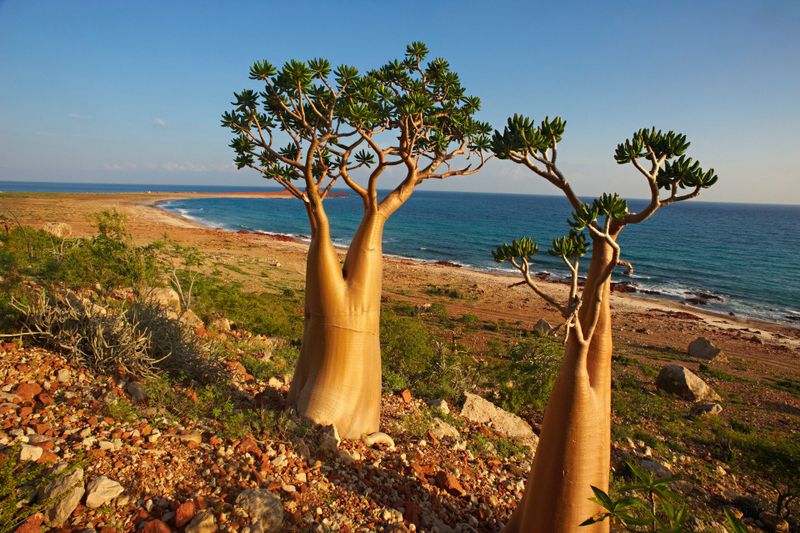
Socotra has been isolated from mainland Africa and Arabia for so long that evolution basically did its own thing here. The result is an island that looks like it was designed by someone who had never seen a normal tree.
Dragon’s Blood Trees dominate the landscape with their upturned umbrella shapes and deep crimson sap.
More than a third of the island’s plant species exist nowhere else on the planet. That level of endemism is extraordinary, even by island standards.
Walking through a grove of Dragon’s Blood Trees feels less like hiking and more like trespassing on another world.
Getting to Socotra is not easy, which is honestly part of the appeal. Limited flights and political instability in Yemen have kept mass tourism at bay.
The island remains raw, remote, and genuinely unlike anything else on Earth. If you ever get the chance to go, take it without hesitation.
Wadi Rum, Jordan
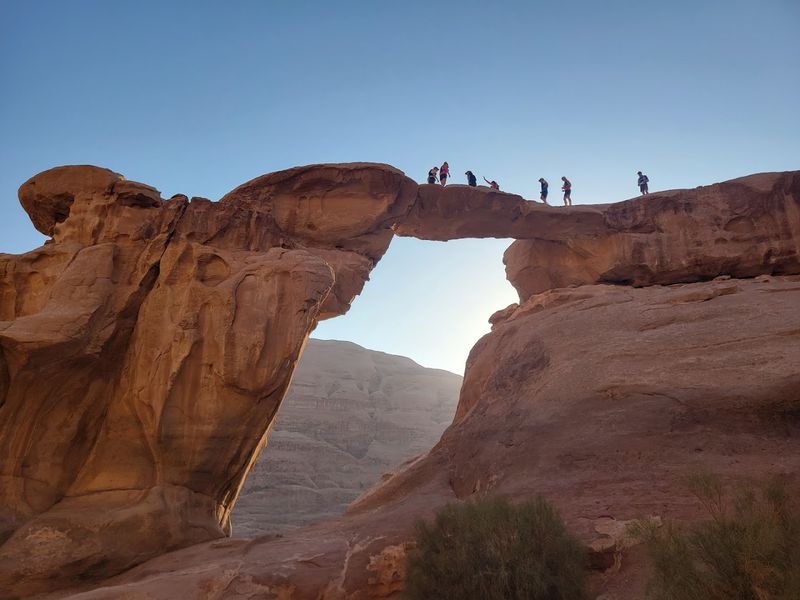
Hollywood keeps coming back to Wadi Rum for one very good reason: it looks exactly like Mars. The Martian, Dune, and several Star Wars films were all shot here, and the film crews barely needed set dressing.
The towering sandstone cliffs, rust-red sand, and eerie silence do all the heavy lifting.
Local Bedouin communities have called this desert home for thousands of years. They offer jeep tours, camel rides, and overnight stays in traditional camps under a sky absolutely packed with stars.
Spending a night in the desert here is one of those experiences that quietly rewires your brain.
The valley stretches across roughly 720 square kilometers, so there is plenty of space to wander without feeling crowded. Early morning and late afternoon light turns the sandstone formations into shades of deep orange and purple.
Go in spring or autumn to avoid the brutal summer heat. Your phone camera will be working overtime.
Danakil Depression, Ethiopia
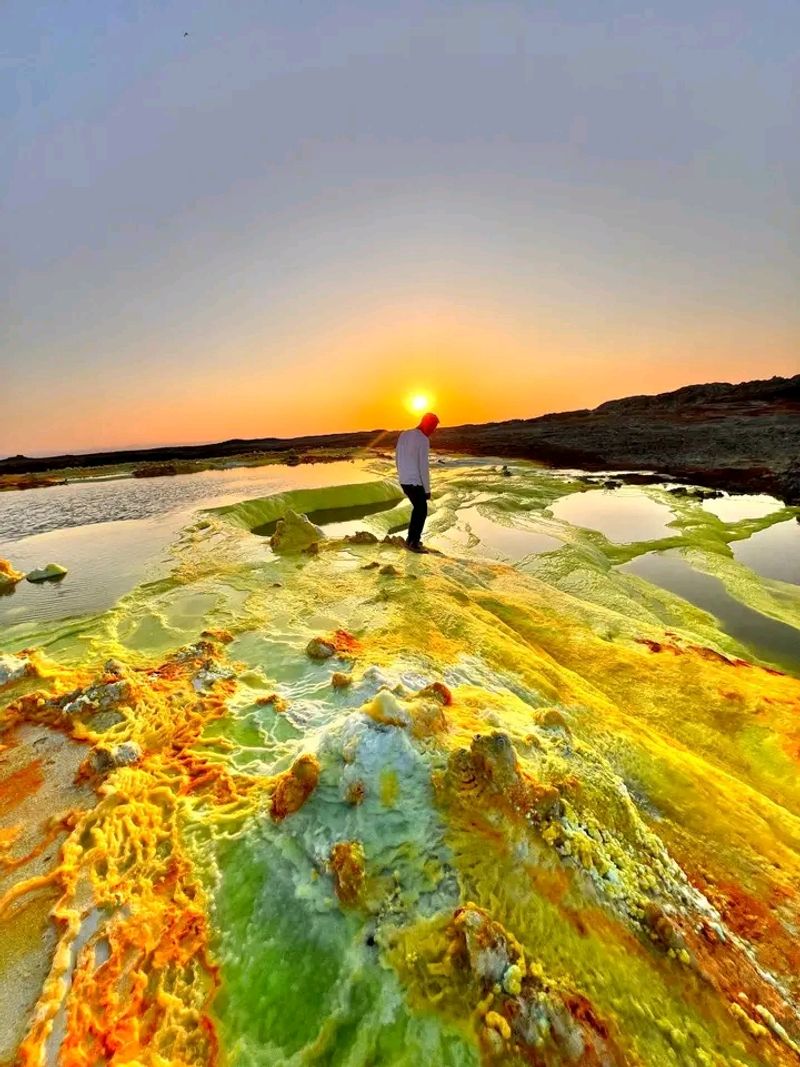
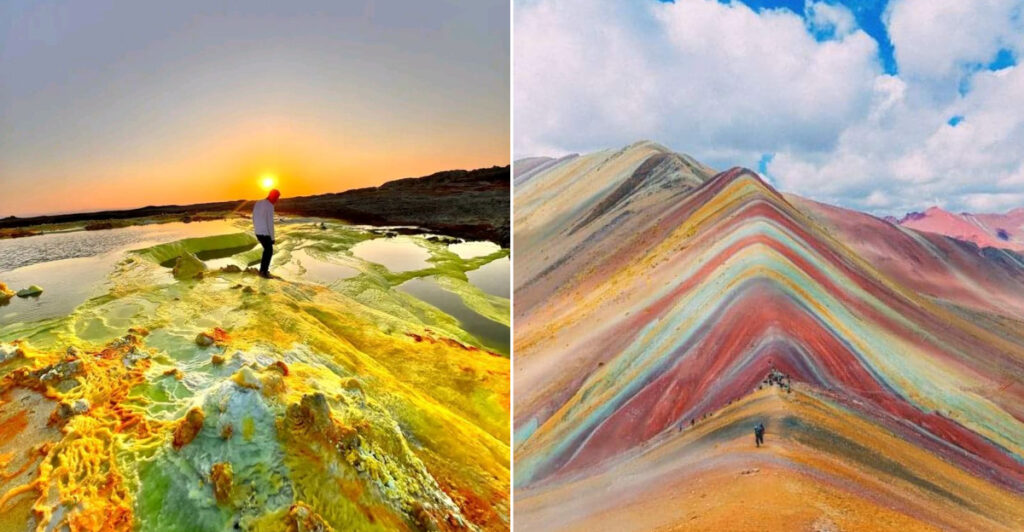
The Danakil Depression holds the record for one of the hottest places on Earth, with average temperatures hovering around 34 degrees Celsius year-round. It also sits roughly 100 meters below sea level.
Combine those two facts and you get a landscape that most living things have wisely chosen to avoid.
Hydrothermal activity has created pools of neon-green, yellow, and orange acid that bubble and hiss constantly. Salt formations spike up from the ground like frozen fountains.
The colors are so vivid they look digitally enhanced in photos, but they are completely real and completely terrifying up close.
Organized tours depart from the town of Mekele, and armed guides are required for safety reasons. This is not a weekend getaway for the faint-hearted.
However, for travelers who want to see something genuinely unlike anywhere else on Earth, the Danakil Depression delivers in the most dramatic way possible. Pack serious heat protection.
Zhangjiajie National Forest Park, China
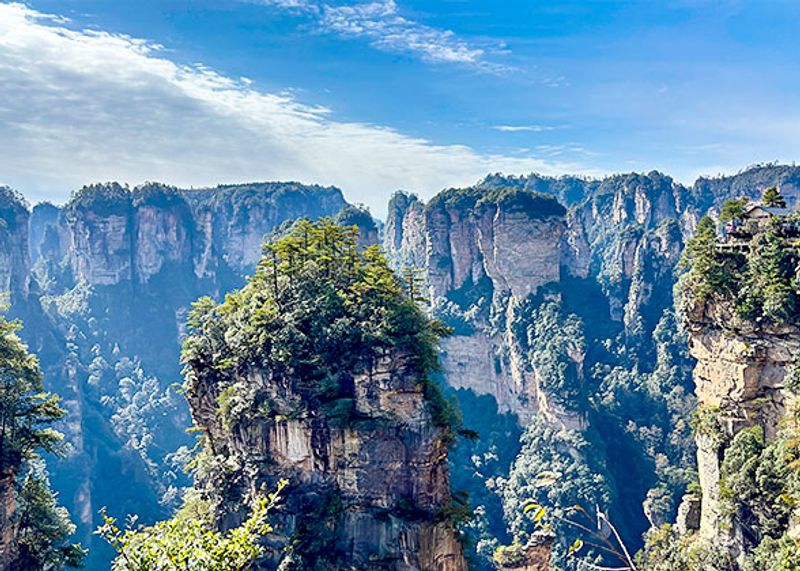
James Cameron did not pull the floating mountains of Avatar from thin air. He pulled them from Zhangjiajie, a national park in Hunan Province where thousands of sandstone pillars shoot straight up from the forest floor.
Some of these columns rise over 200 meters high, which is genuinely unreal to witness in person.
The pillars formed over hundreds of millions of years through a combination of water erosion and the natural fracturing of quartz sandstone. Mist frequently rolls through the valleys between them, which only cranks up the otherworldly atmosphere.
On foggy mornings, the pillars seem to float above the clouds below, just like in the film.
A glass-bottomed bridge stretches across one of the scenic areas for those who enjoy mild terror with their sightseeing. The park also has cable cars and an outdoor elevator cut into the cliff face.
Visit during weekdays to avoid the busiest crowds and get the clearest views of the pillars.
Lake Natron, Tanzania
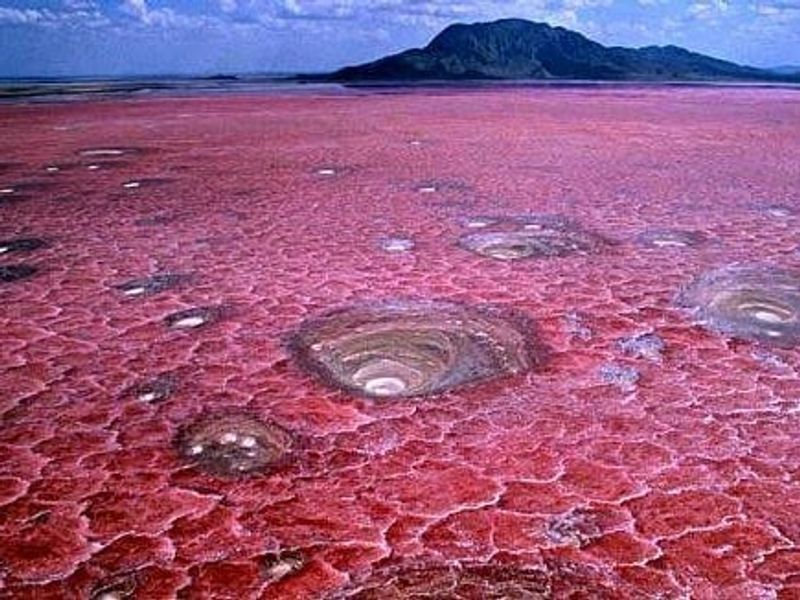
Lake Natron in northern Tanzania is not a place you want to accidentally swim in. The water is so alkaline it can calcify animals that die in it, preserving them like statues.
The lake’s pH can reach 10.5, which is close to ammonia. And yet, somehow, it is absolutely stunning.
The red and orange colors come from salt-loving microorganisms called haloarchaea, which thrive in the extreme conditions. During the dry season, the colors deepen and the salt crusts on the surface create abstract patterns that look like modern art painted at planetary scale.
Flamingos, weirdly, love it here.
Over a million lesser flamingos breed at Lake Natron, making it one of the most important flamingo breeding sites on Earth. The alkalinity that repels most predators actually protects the flamingo chicks.
So what looks like a hostile, alien environment is actually a thriving, if very niche, ecosystem. Nature has a funny sense of humor.
Waitomo Glowworm Caves, New Zealand
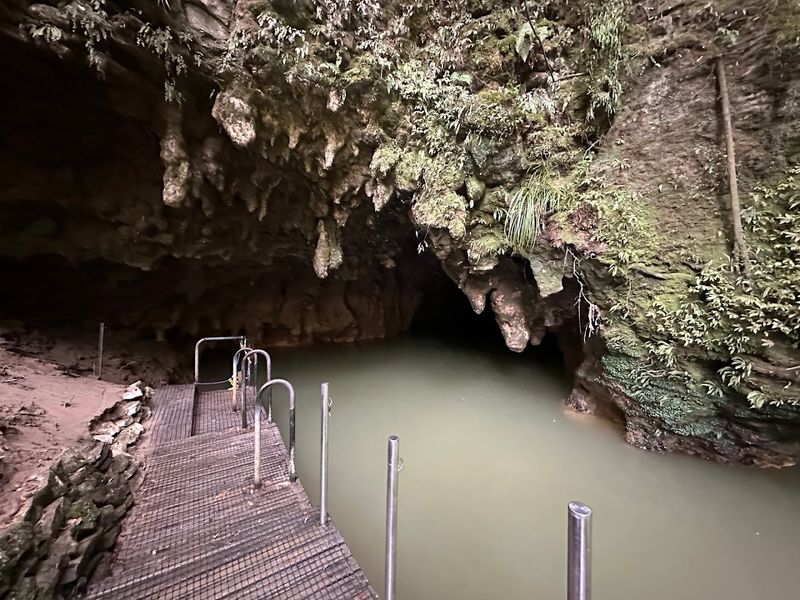
Deep beneath the green hills of New Zealand’s Waikato region, thousands of tiny creatures are quietly putting on one of the best light shows on Earth. Waitomo’s glowworm caves are home to Arachnocampa luminosa, a species of fungus gnat found only in New Zealand.
The larvae produce a soft blue bioluminescent glow to attract prey.
The cave ceilings look exactly like a clear night sky packed with stars. Visitors board small boats and drift silently through the dark water while the ceiling glows above them.
The guides ask everyone to stay quiet so the glowworms are not disturbed, which adds an almost meditative quality to the whole experience.
Tours run daily and last around 45 minutes for the standard cave visit. More adventurous options include abseiling and black water rafting through other cave systems in the area.
I went on the basic boat tour and came out genuinely speechless. Few places on Earth earn that reaction so effortlessly.
The Wave, Arizona-Utah, USA
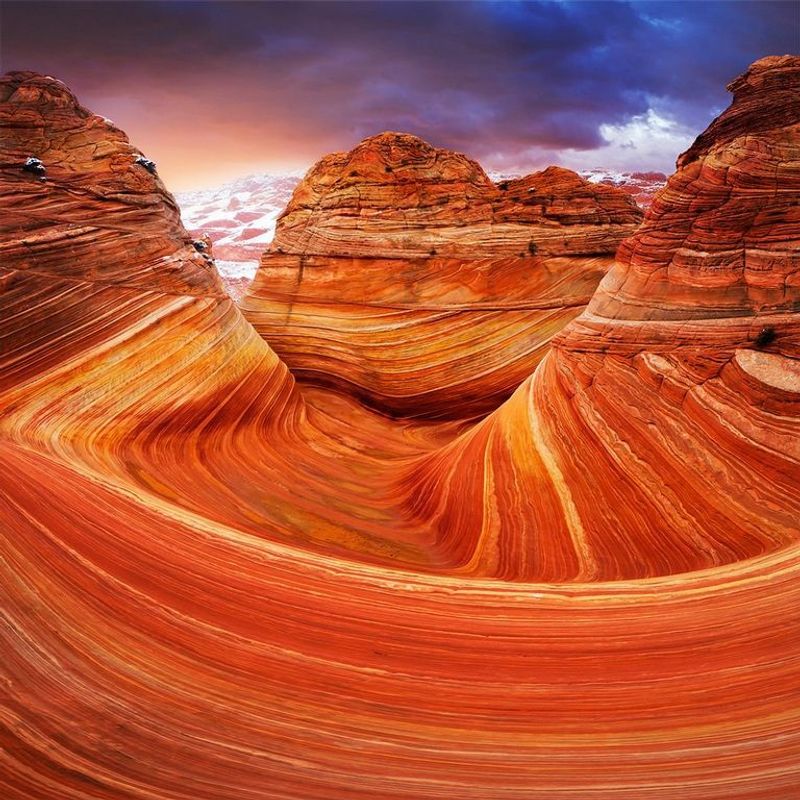
Somewhere on the border of Arizona and Utah, wind and water spent millions of years carving a sandstone formation so beautiful it almost feels like a prank. The Wave is a sweeping, swirling mass of layered rock in shades of red, orange, and cream that curves and flows like a frozen ocean wave.
No filter needed.
Getting there requires winning a permit lottery, which accepts applications online through the Bureau of Land Management. Only 64 people are allowed to visit per day to protect the fragile surface.
The limited access is frustrating but also the reason it still looks this good.
The hike to The Wave is about 6 kilometers round trip across unmarked terrain in the Coyote Buttes North area. There are no trail markers and no shade.
Bring more water than you think you need, a downloaded offline map, and a permit confirmation. Going without a permit is a hefty fine and a wasted trip.
Rio Tinto Mining Park, Spain
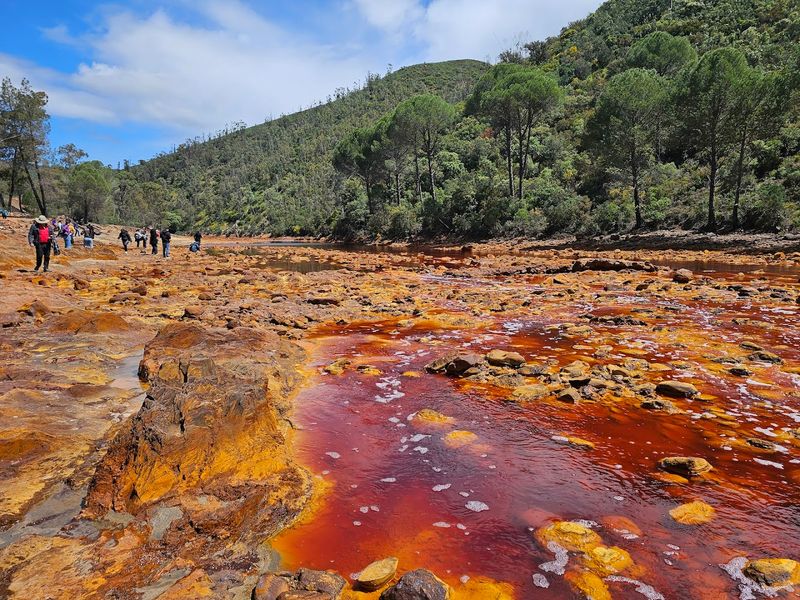
The Rio Tinto river in southwestern Spain runs a deep, rusty red that looks less like water and more like something from a fantasy novel. The color comes from iron and sulfuric acid leaching from ancient mining operations that have been active here for over 5,000 years.
This is one of the oldest continuously mined sites in the world.
NASA and the European Space Agency have studied the Rio Tinto extensively because its extreme acidic conditions mirror what scientists believe existed on ancient Mars. Microbes living in the river thrive without oxygen and in highly acidic water, which raises genuinely exciting questions about life on other planets.
The Rio Tinto Mining Park offers guided tours through the landscape and a museum covering the area’s geological and human history. The contrast between the blood-red river and the pale, stripped terrain around it is visually arresting.
It is not a pretty landscape in a conventional sense, but it is absolutely unforgettable and scientifically fascinating.
Lencois Maranhenses National Park, Brazil
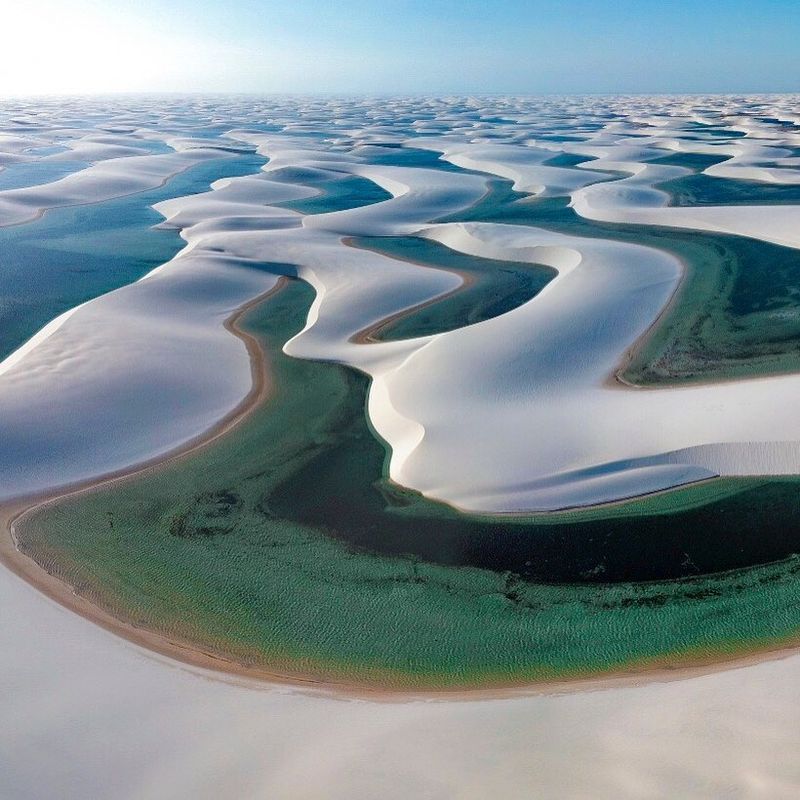
White sand dunes stretching to the horizon sounds like a standard desert. Add hundreds of crystal-clear blue lagoons tucked between the dunes and you have something that makes people stop scrolling.
Lencois Maranhenses sits in northeastern Brazil and technically receives too much rain to qualify as a desert, which is exactly why those lagoons exist.
Between July and September, rainwater collects in the valleys between the dunes and creates lagoons that can reach several meters deep. The water is surprisingly clean because the sand filters it naturally.
Swimming in a turquoise lagoon surrounded by white dunes while the sun hammers down is a genuinely surreal afternoon activity.
The nearest town is Barreirinhas, which serves as the main base for tours into the park. Quad bikes, jeeps, and guided walks are all available.
The lagoons shrink and disappear during the dry season, so timing your visit matters. Go between June and September for the fullest, most photogenic lagoons and the least muddy hiking conditions.
Kawah Ijen, Indonesia
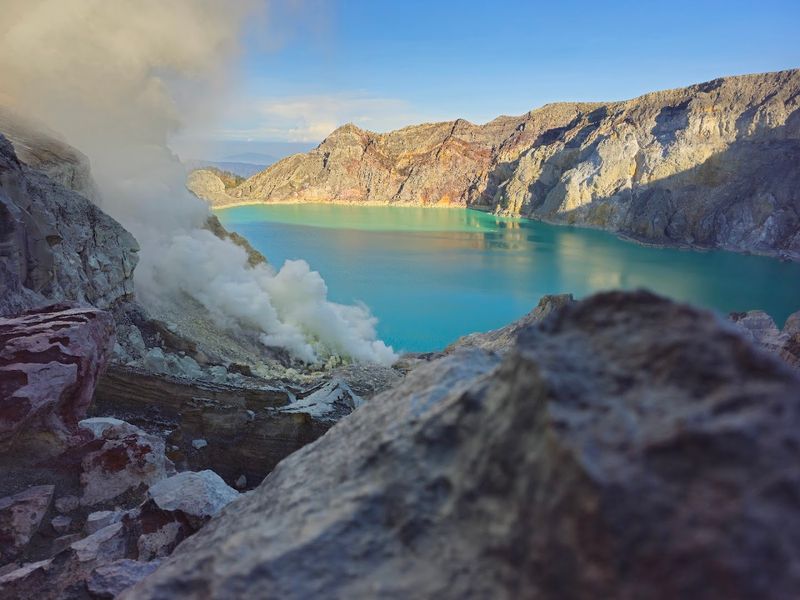
Kawah Ijen on the island of Java is home to one of the world’s largest highly acidic crater lakes, and the water is a color of turquoise so vivid it looks artificially tinted. The lake’s pH sits around 0.5, which is roughly the acidity of battery acid.
Beautiful and terrifying, which is a combination this volcano has fully committed to.
The real showstopper happens at night. When sulfuric gases ignite as they emerge from vents in the crater, they burn with an electric blue flame that glows against the dark rock.
The blue fire effect is rare globally and absolutely spectacular. Miners work the crater at night collecting sulfur, making the scene even more surreal.
The hike to the crater rim takes about 90 minutes from the parking area and gains significant elevation. A gas mask is strongly recommended because the sulfur fumes are intense.
Start the hike around 1 or 2 in the morning to reach the crater in time for the blue flames and sunrise.
Vinicunca (Rainbow Mountain), Peru
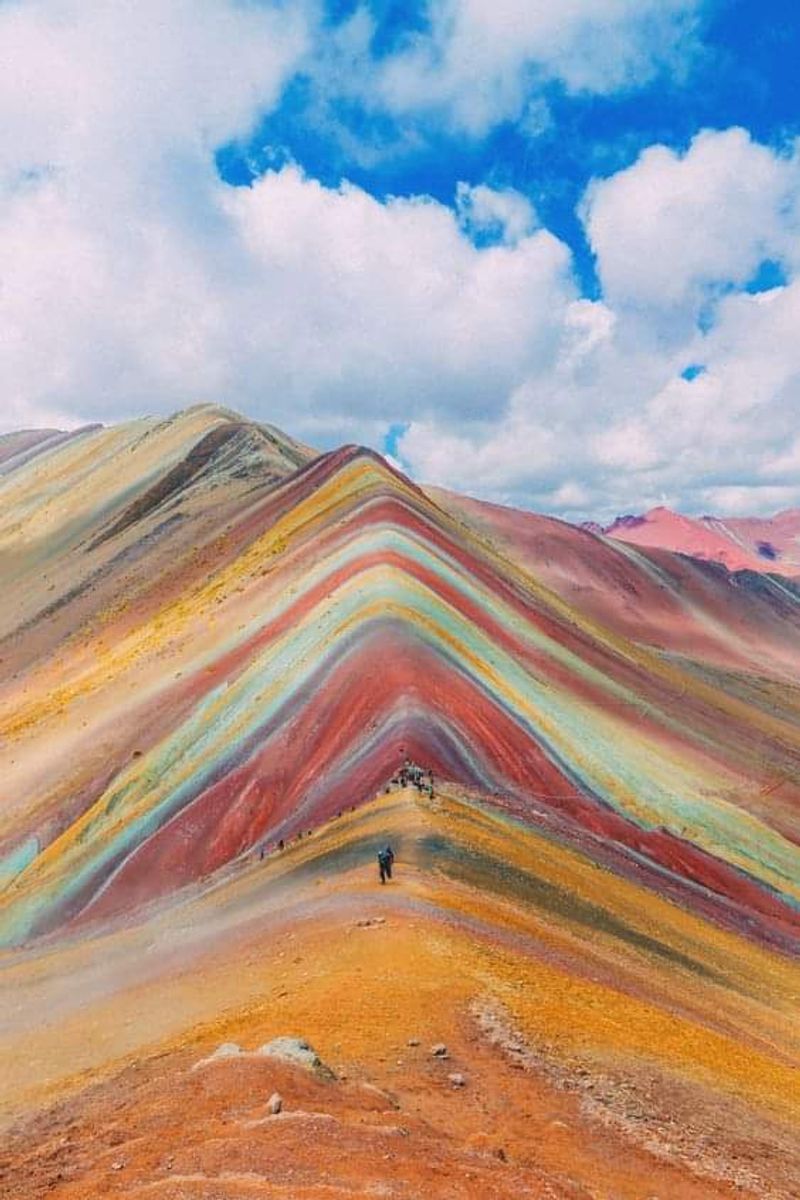
Vinicunca sat hidden under glaciers for centuries, and when the ice retreated due to climate change, it revealed one of the most colorful mountains on Earth. The bands of red, yellow, green, and turquoise running across its slopes come from different mineral deposits, including chlorite, iron sulfide, and iron oxide.
It looks like a geology textbook exploded in the Andes.
Located at around 5,200 meters above sea level in the Cusco region of Peru, the altitude hits hard. Many visitors experience headaches or dizziness on the hike up.
Acclimatizing in Cusco for at least two days before attempting the trek is genuinely important, not just a cautious suggestion.
Day tours depart from Cusco early in the morning to beat crowds and afternoon weather. The round trip hike is about 12 kilometers and takes three to four hours depending on fitness and altitude tolerance.
Horses are available for sections of the trail. The colors are most vivid in the morning light, so an early start pays off.
Tsingy de Bemaraha, Madagascar
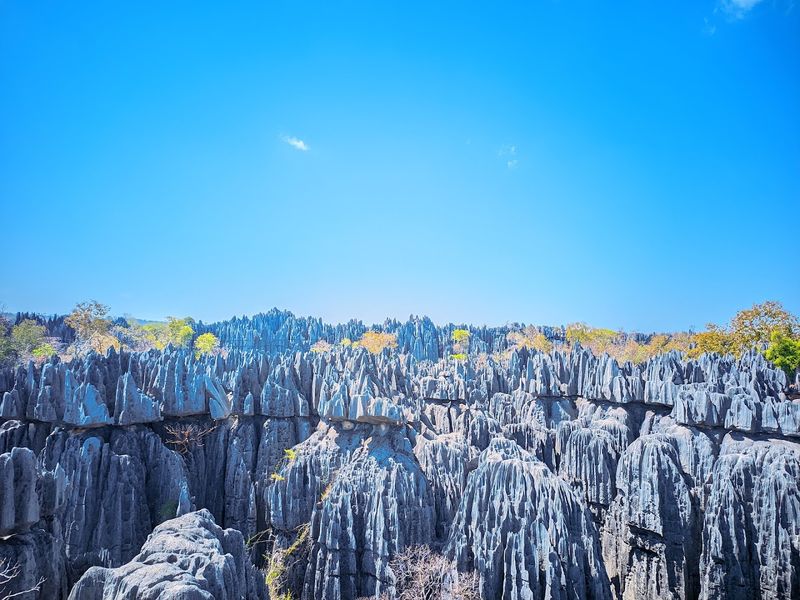
Tsingy de Bemaraha is the kind of place that makes you grateful for solid, boring, flat ground. The UNESCO World Heritage site in western Madagascar is covered in a dense field of razor-sharp limestone spikes that locals call tsingy, meaning where one cannot walk barefoot.
That is an understatement of impressive proportions.
The formations were carved over millions of years by rainwater dissolving the limestone from above while groundwater eroded it from below. The result is a jagged stone forest of vertical blades, some reaching 30 meters high.
Specialized wildlife has adapted to thrive among the spikes, including endemic lemurs and chameleons found nowhere else.
Visiting requires a guided tour through the national park, and some routes involve crossing rope bridges and using harnesses to navigate the formations. It is not a casual stroll.
The effort is absolutely worth it. Few landscapes on Earth feel as genuinely alien and untouched as Tsingy, and the biodiversity hiding among those lethal-looking rocks is extraordinary.
Lake Hillier, Australia
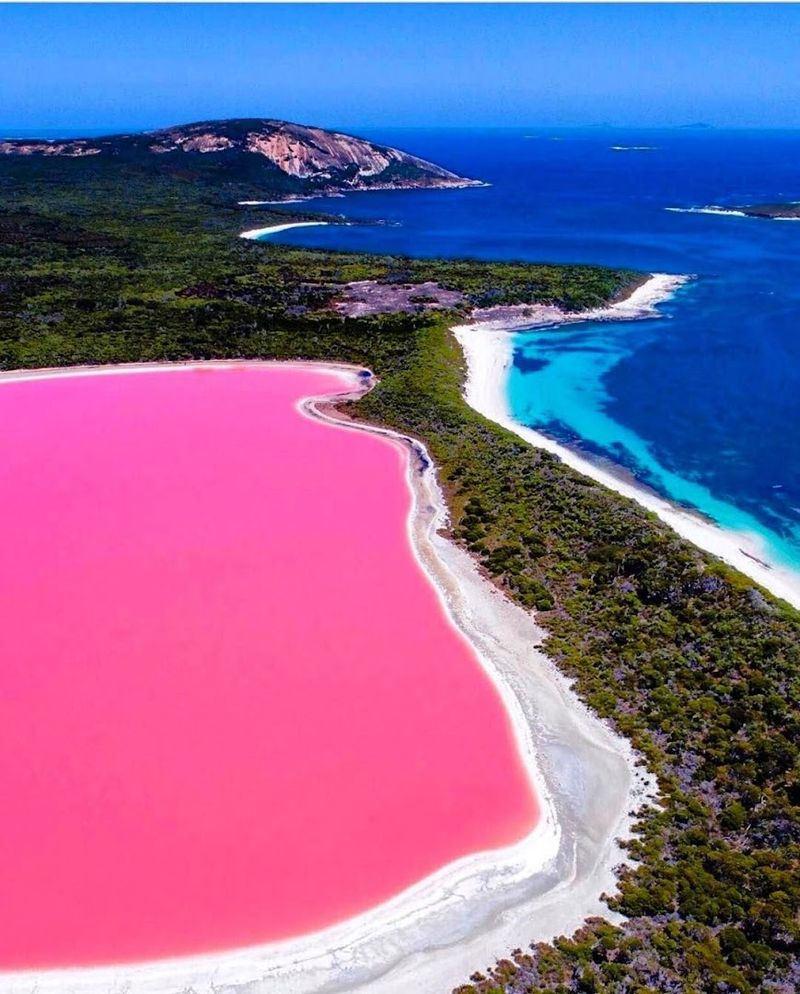
Lake Hillier on Middle Island off Western Australia is the color of bubblegum, and it stays that way every single day of the year regardless of weather or season. The first time I saw an aerial photo of it, I was completely convinced someone had run it through a photo editing app.
They had not.
Scientists believe the pink color comes from a combination of halophilic bacteria and a pink-pigmented algae called Dunaliella salina, which thrives in the lake’s extreme saltiness. The lake is about ten times saltier than the ocean.
Unlike some other pink lakes that change color with seasons, Hillier is consistent and reliable in its flamboyance.
The lake is best viewed from the air, and scenic flights from Esperance are available. There is no public access to the island itself, so a flight or boat tour is your best option.
The contrast between the pink lake, white salt rim, green eucalyptus trees, and deep-blue Southern Ocean is genuinely one of Earth’s most spectacular color palettes.
Flinders Ranges, Australia
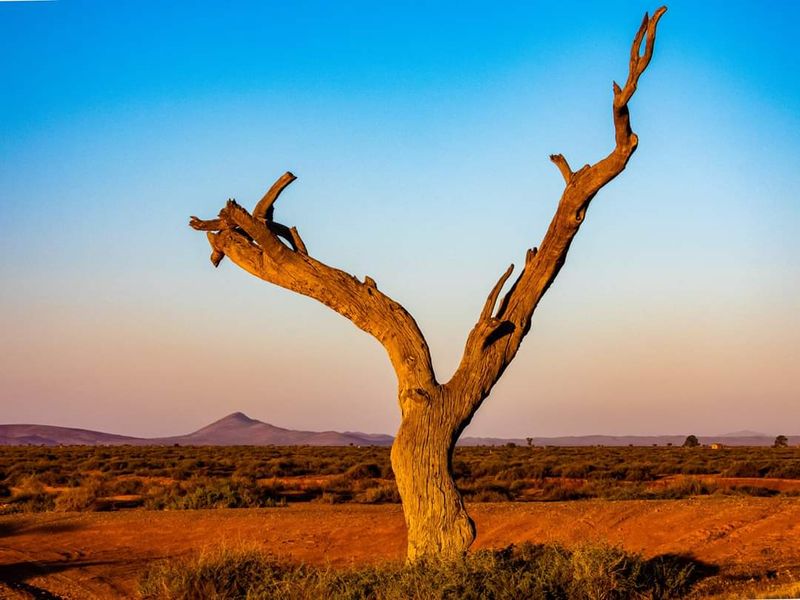
The Flinders Ranges in South Australia look like the kind of landscape a geologist would design if given unlimited time and no budget restrictions. These mountains are ancient in the truest sense, with some rock formations dating back over 800 million years.
That is older than complex animal life on Earth, which puts a regular Monday morning in perspective.
The dominant colors are deep red, burnt orange, and pale cream, created by iron-rich quartzite and sandstone that has been folded, tilted, and eroded across geological time. The centerpiece is Wilpena Pound, a natural amphitheater of curved ridgelines that looks like a giant bowl pressed into the earth by something enormous.
The Adnyamathanha people have lived in and around the Flinders Ranges for thousands of years and offer cultural tours that bring the landscape’s deep history to life. The best hiking is in autumn and spring when temperatures are reasonable.
Stargazing here is outstanding due to minimal light pollution and exceptionally clear outback skies.
Share this story