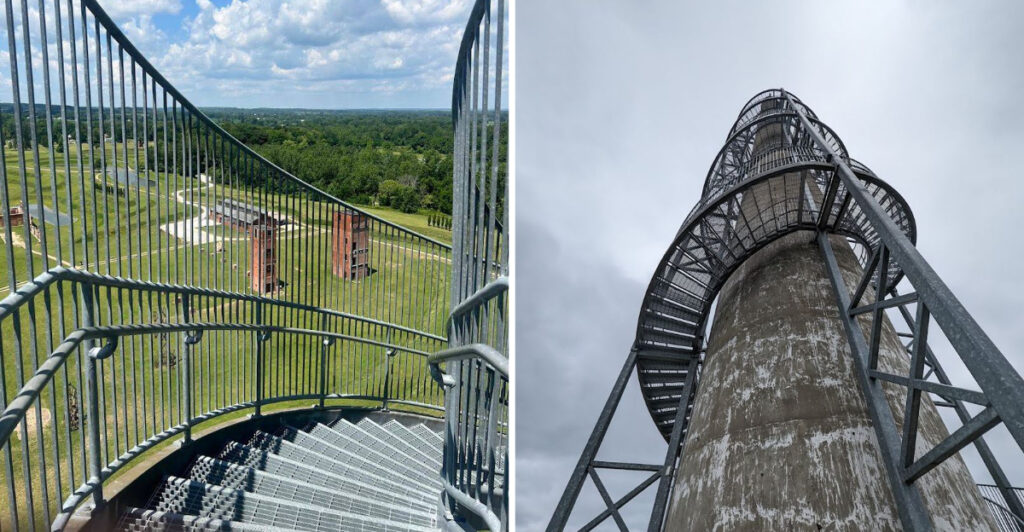
There is a 140-foot smokestack in a small Ohio town that has been turned into something you would never expect from a former industrial site. It once billowed smoke from a glass factory, and now it invites visitors to climb all the way to the top for a 360-degree view that stretches across the entire county.
The park surrounding it features reflection ponds, tiered landscaping, and public art that make the whole experience feel more like a living gallery than a city park. If you have never heard of this place before, you are not alone, but once you see it lit up in red, white, and blue against the night sky, it tends to stick with you.
Keep reading, because this one is genuinely worth the climb.
A Smokestack Reborn as a Landmark
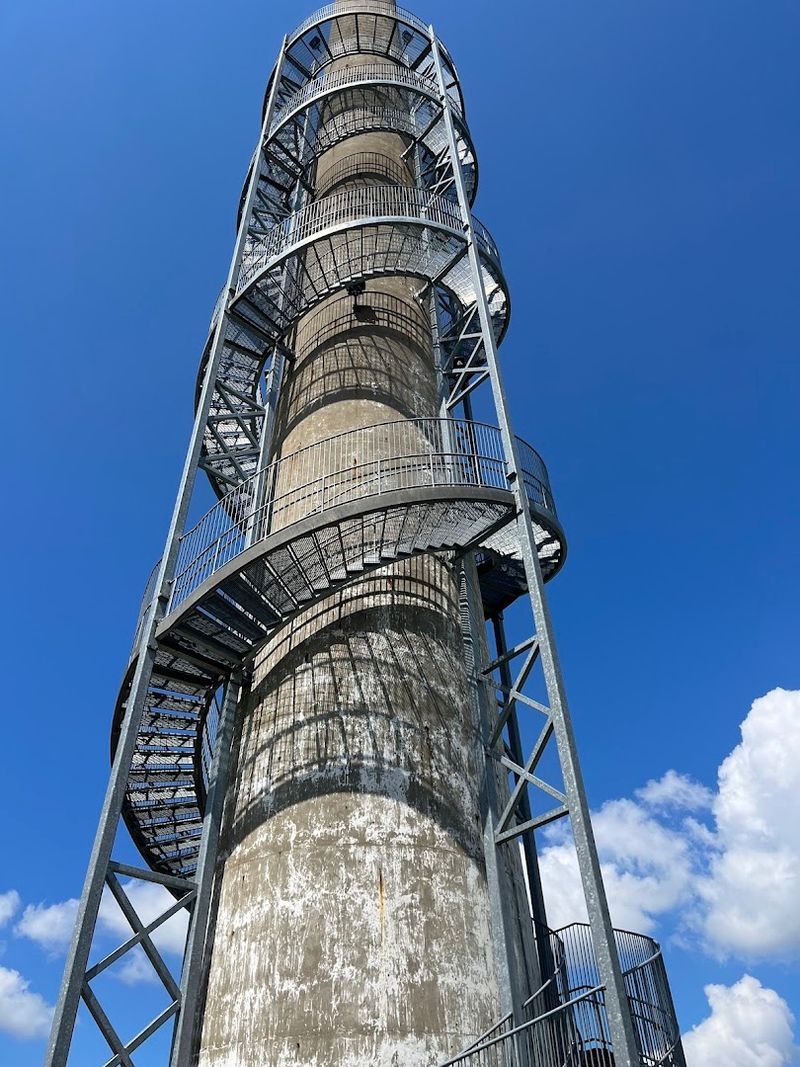
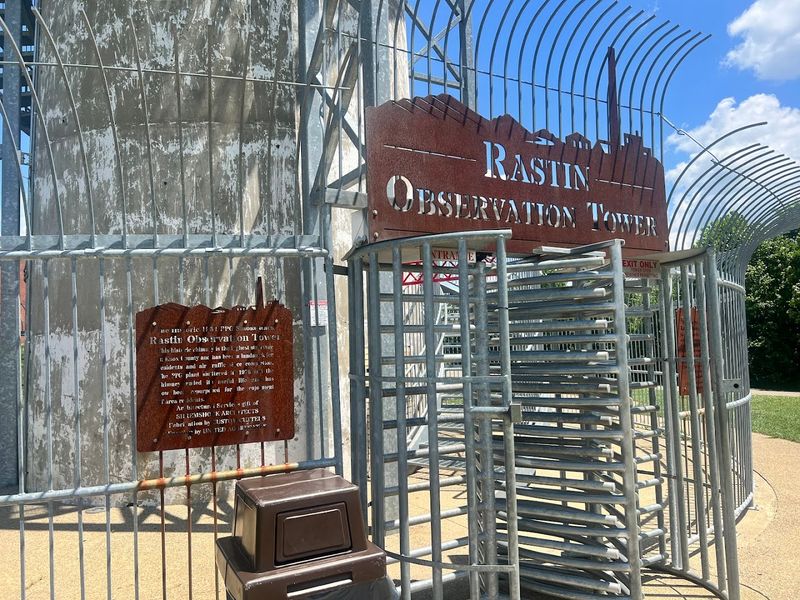
Not every industrial relic gets a second act this dramatic. The Rastin Observation Tower in Mount Vernon, Ohio, is a repurposed smokestack from what was once a working glass factory, and the transformation it has undergone is remarkable by any measure.
The original structure was part of the Pittsburgh Plate Glass Company plant, which operated in Mount Vernon for decades before closing. Rather than tearing it down, the community found a way to honor its history while giving it a brand-new purpose.
An enclosed staircase was built inside the smokestack, allowing visitors to climb to the 140-foot observation level safely. The fact that a piece of industrial history became a public landmark says a lot about what Mount Vernon values.
History here is not just preserved behind glass; it is something you can physically climb and experience from the inside out.
Where Exactly You Will Find It
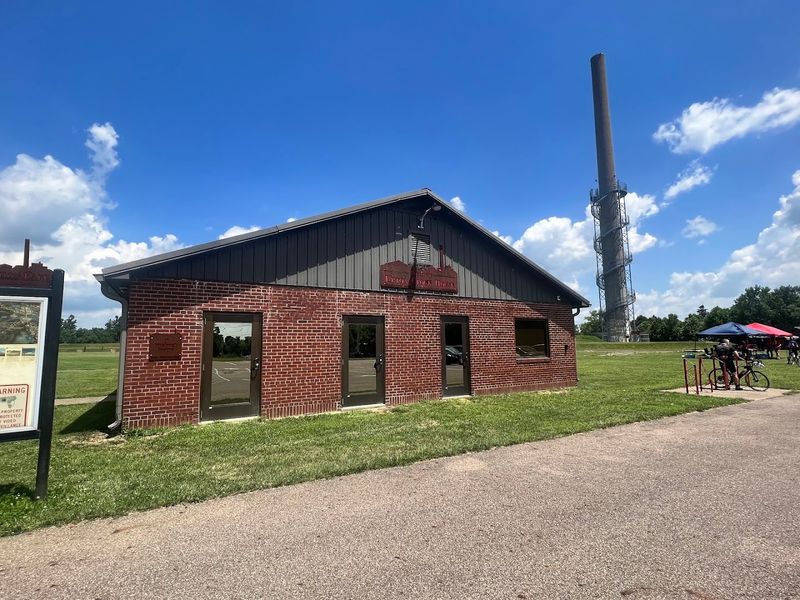
The tower is part of Ariel Foundation Park, which sits right in Mount Vernon, Ohio 43050, along the Heart of Ohio Trail corridor. The park is hard to miss if you are approaching from the south, because the towering smokestack rises well above the surrounding landscape and serves as a natural landmark.
Mount Vernon is the county seat of Knox County, located in central Ohio, roughly an hour northeast of Columbus. The town has a charming, small-city character with a walkable downtown and strong community pride.
Ariel Foundation Park itself covers a large area and was developed on the former Pittsburgh Plate Glass Company site. Getting there is straightforward whether you are driving in from a nearby highway or rolling in on two wheels along the Ohio to Erie Trail.
It is one of those places that feels genuinely rewarding to arrive at, no matter how you get there.
The Climb to 140 Feet
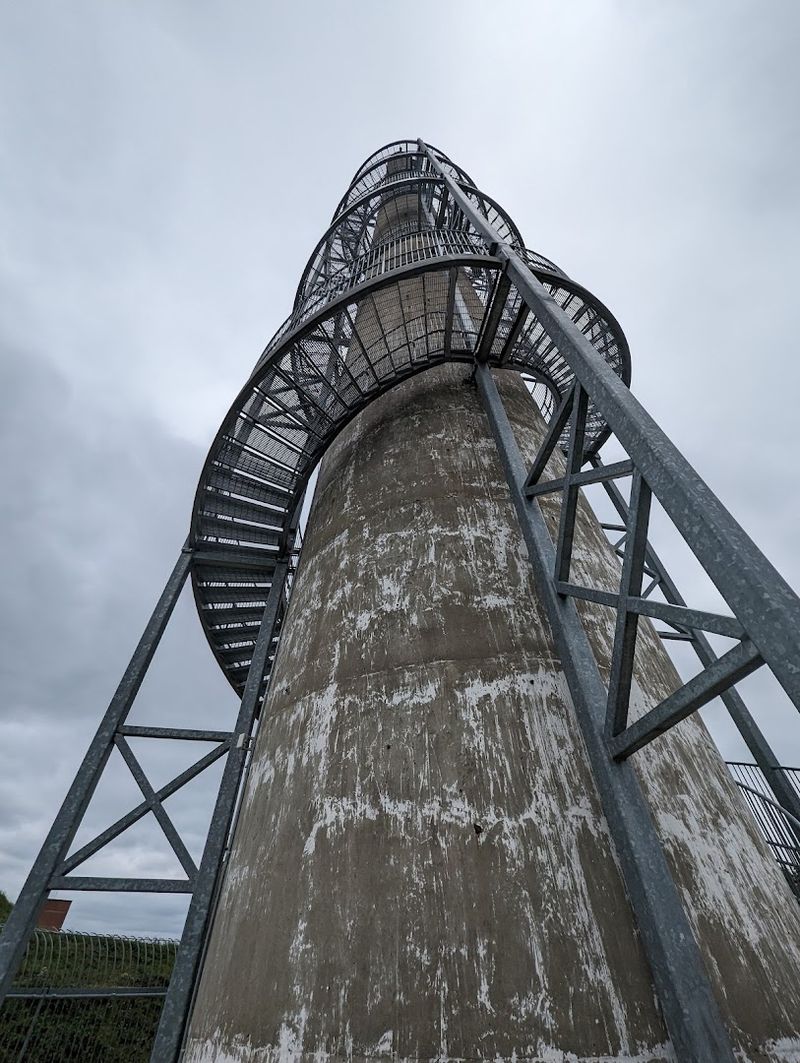
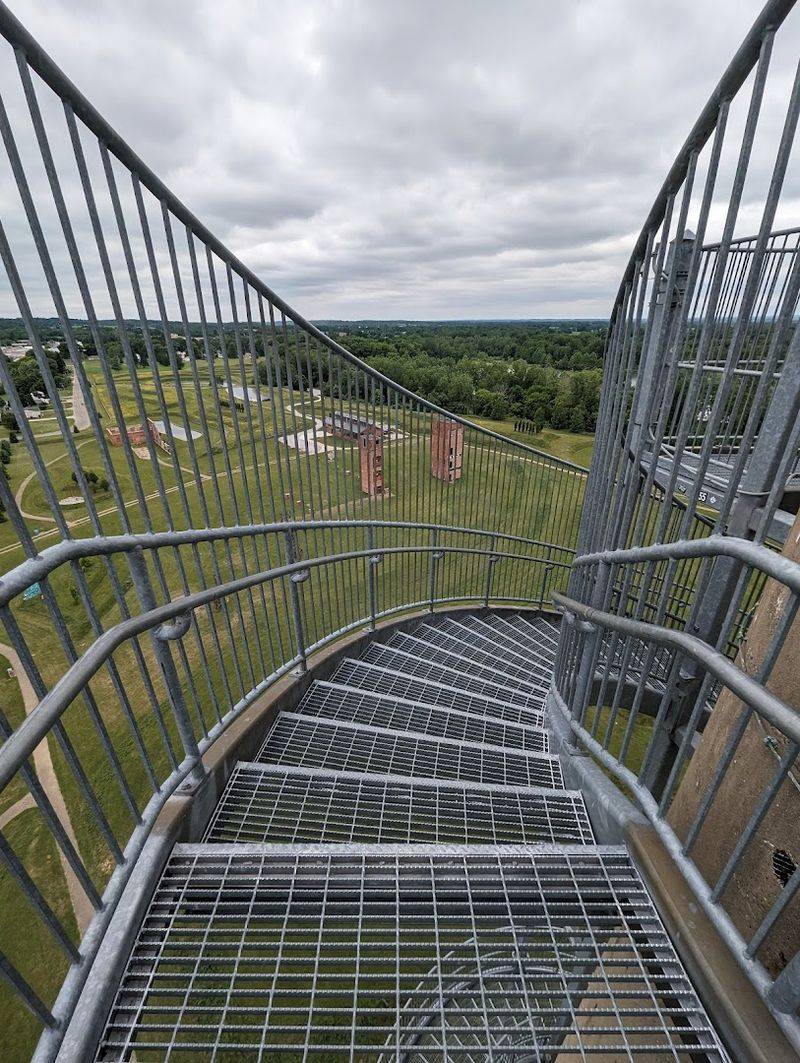
There is something unexpectedly thrilling about climbing the inside of a brick smokestack. The staircase is fully enclosed, which means the climb itself has a tunnel-like quality before the view at the top opens everything up in an instant.
The steps wind upward to the 140-foot observation level, and by the time you get there, you are higher than the buzzards circling overhead on a warm afternoon. That is not a figure of speech; on calm days, you can genuinely find yourself at eye level with soaring birds.
The wind at the top can be noticeable, especially on breezy days, which adds a little extra adrenaline to the experience. Some visitors describe it as mildly spooky in the best possible way.
The climb is manageable for most people, but take your time on the stairs and enjoy the anticipation of what waits at the top.
The View From the Top
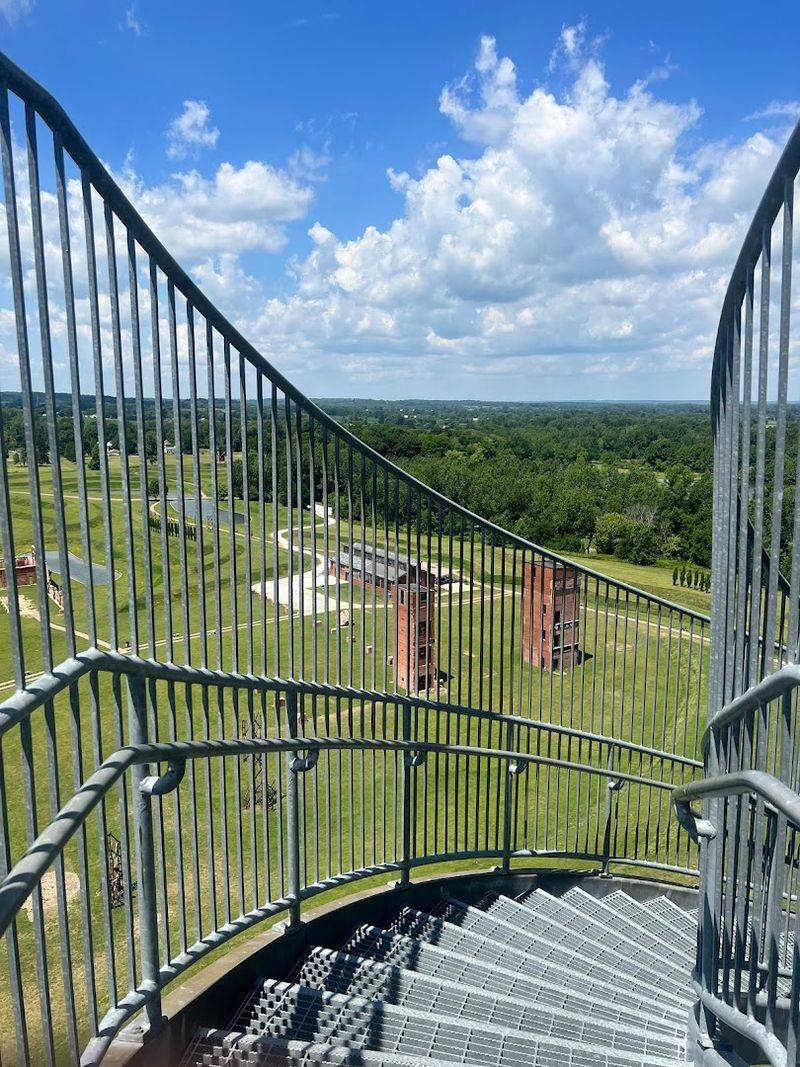
The payoff at the top of the Rastin Observation Tower is genuinely breathtaking. A full 360-degree panorama of Mount Vernon and the surrounding Knox County region spreads out in every direction, giving you a perspective on this part of Ohio that most people never get to see.
The tower is the tallest structure in Knox County, which means there is nothing blocking the view. You can see the town’s rooftops, church steeples, tree lines, and rolling countryside all at once.
On a clear day, the visibility stretches far beyond the city limits, and the sense of scale you get from up there makes the modest climb feel like a much bigger adventure. Bring a camera, because the photos from this height have a quality that smartphone panoramas rarely capture in a single shot.
This is the kind of view that makes people stop mid-sentence just to take it all in.
History Turned Into Art
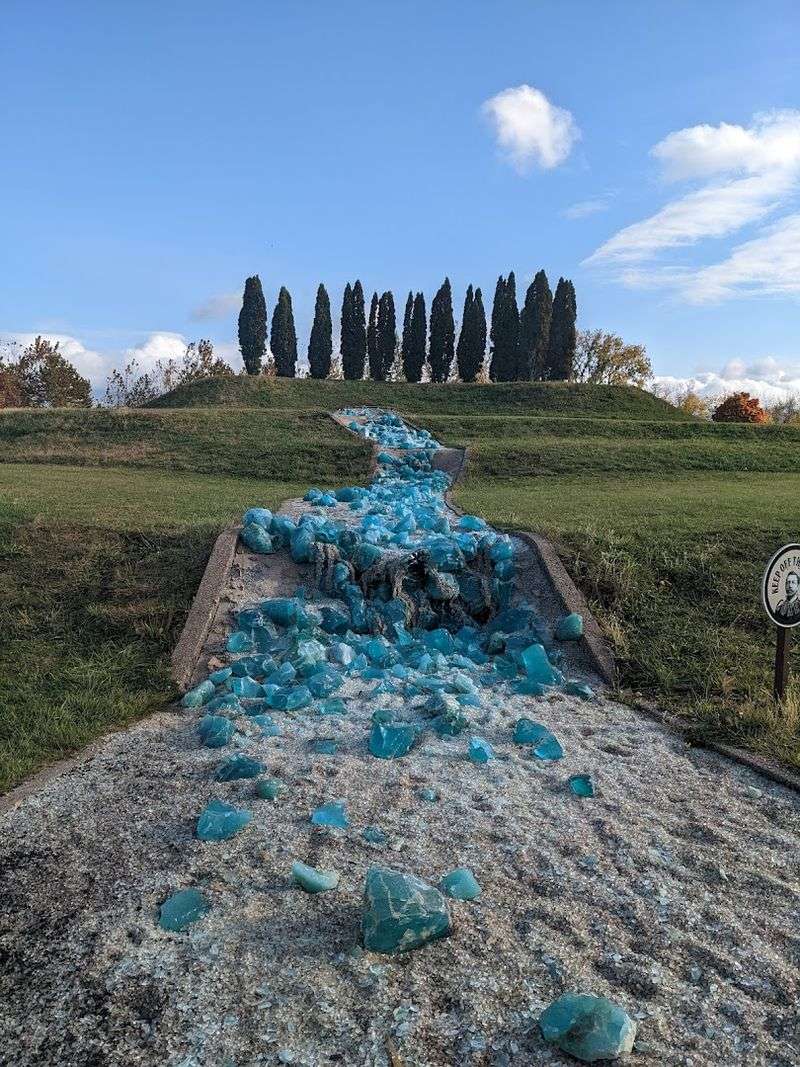
What makes this park stand out beyond just the tower is how intentionally the entire site has been designed to blend industrial history with public art. The Pittsburgh Plate Glass Company left behind more than just a smokestack, and the park development team used that legacy creatively.
Throughout the grounds, you will find art installations, sculptures, and design elements that reference the glass-making past of the site. The artistic choices feel thoughtful rather than decorative, giving the park a layered quality that rewards curious visitors who take time to explore.
The transformation of a factory site into a cultural and recreational space is something more cities are attempting, but few pull it off as cohesively as Ariel Foundation Park has. The result is a place where you can read history in the landscape itself, without needing a museum or a guided tour to understand what happened here.
Reflection Ponds and Tiered Landscaping
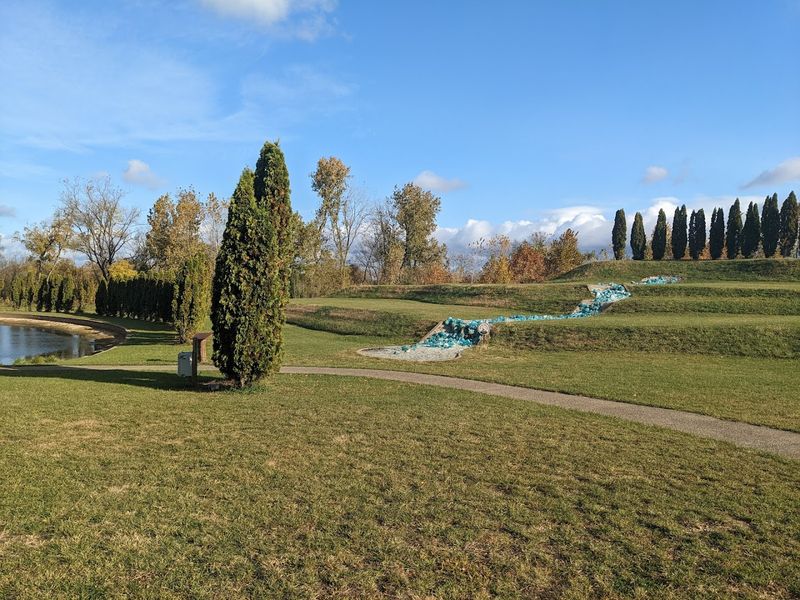
The tower gets most of the attention, but the grounds around it are genuinely worth slowing down for. Ariel Foundation Park features beautifully designed reflection ponds that create a calm, almost meditative atmosphere at the base of the towering smokestack.
The tiered landscaping adds visual depth to the park, with different levels of plantings and pathways that guide visitors naturally through the space. It does not feel like a standard city park layout; the design has a deliberate, artistic quality that makes wandering through it feel intentional rather than aimless.
On a quiet weekday morning, the ponds reflect the sky and surrounding trees in a way that makes the whole park feel larger and more serene than it actually is. Whether you are there for the tower or just looking for a peaceful place to sit and think, the landscaping offers something genuinely restorative at every turn.
A Cyclist’s Favorite Stop
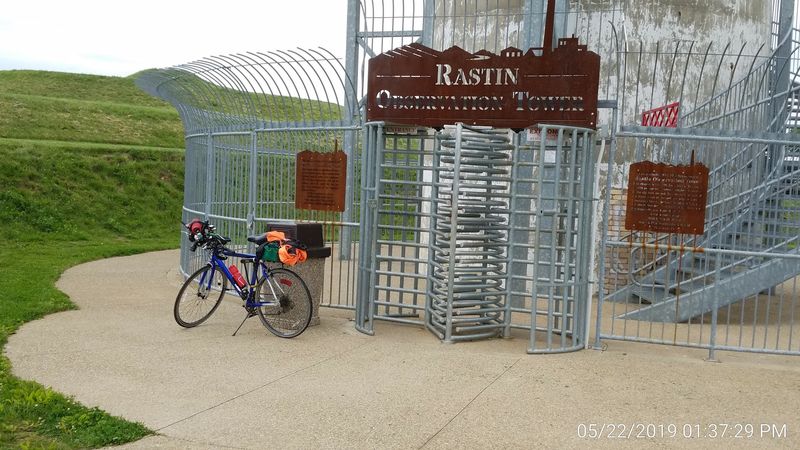
Cyclists who travel the Heart of Ohio Trail, which is part of the larger Ohio to Erie Trail network, often count the Rastin Observation Tower as one of the trail’s best highlights. The tower comes into view as you roll in from the south, acting like a finish-line beacon that signals your arrival in Mount Vernon.
The park has bike racks right at the entrance, making it easy to lock up and take a break without worrying about your gear. Many cyclists use the stop as a natural rest point before continuing along the trail in either direction.
Climbing the tower after a long stretch of pedaling adds a satisfying physical challenge to what is already an active day. The trail community has embraced this spot enthusiastically, and it shows in how well the park accommodates visitors arriving on two wheels rather than four.
Illuminated at Night
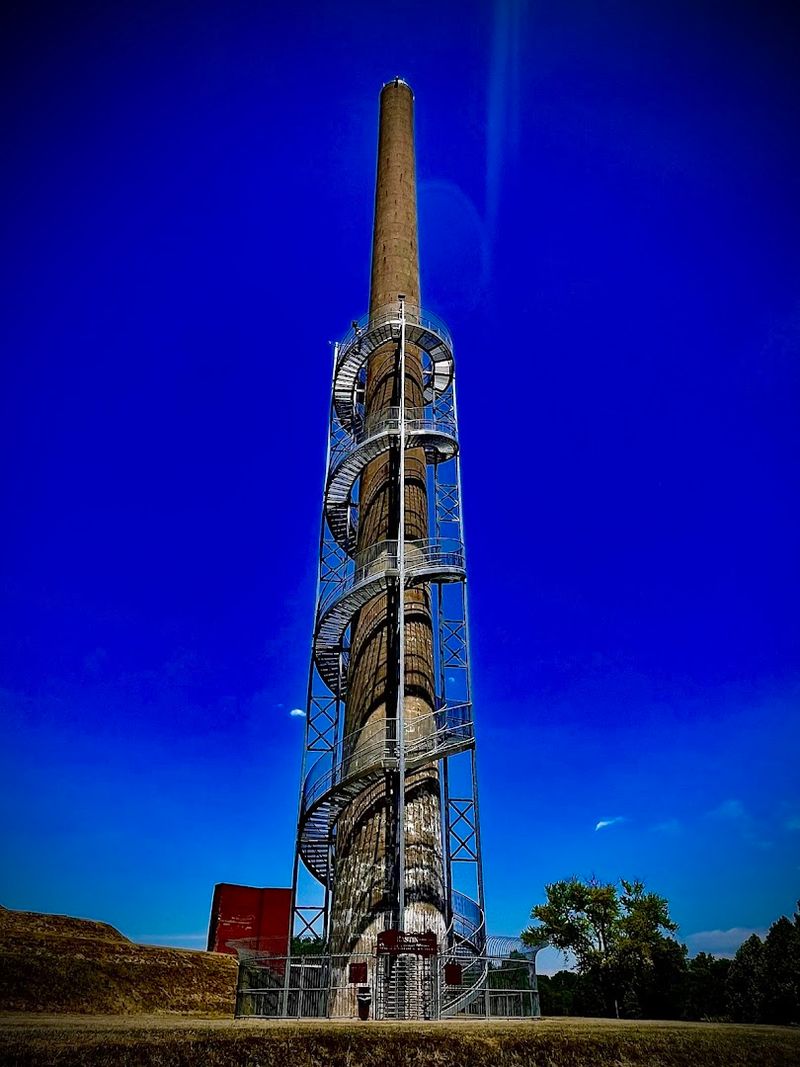
Seeing the tower during the day is one experience, but catching it after dark is something else entirely. The structure is illuminated at night, and on certain occasions it glows in red, white, and blue, turning an already striking landmark into something that feels almost otherworldly against the night sky.
The lighting transforms the old smokestack into a beacon that can be seen from a considerable distance, giving the whole park a festive and slightly surreal atmosphere after sunset. Cyclists who pass through Mount Vernon at night have described the sight as unexpectedly moving.
If you are planning a visit and have any flexibility in your schedule, trying to time an evening walk through the park is worth the extra effort. The nighttime version of the tower has a completely different energy from the daytime climb, and it makes for photography that looks almost too dramatic to be real.
The Tallest Point in Knox County
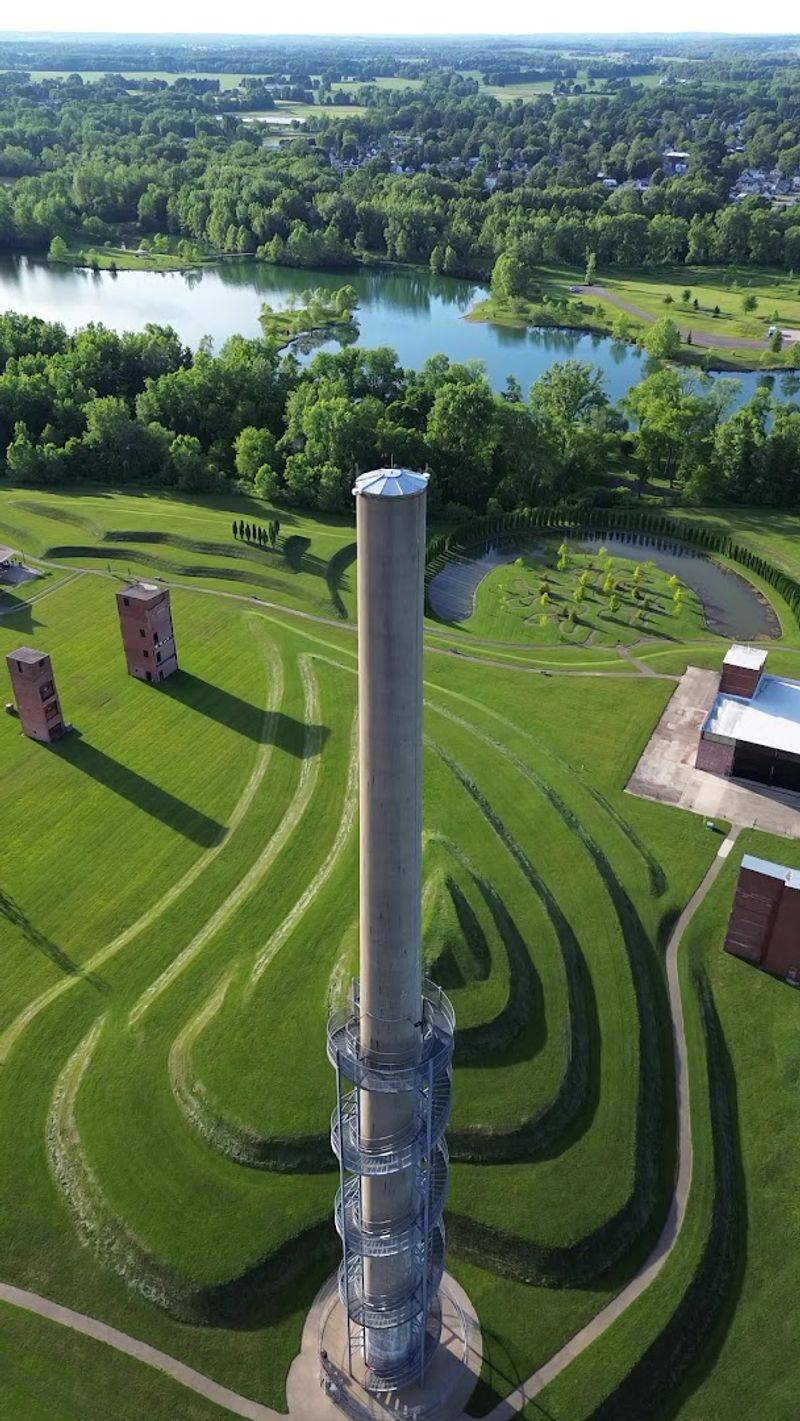
Standing at 140 feet tall, the Rastin Observation Tower holds the distinction of being the tallest structure in Knox County. That might sound like a modest title until you are actually standing at the top and realize just how much of the county you can see in every direction.
Knox County is a mix of small-town life and rural farmland, and the tower gives you a rare bird’s-eye appreciation for both. The church steeples, water towers, and tree canopy that define Mount Vernon’s skyline suddenly look very small from up there.
For locals, the tower is a point of genuine civic pride, and it is easy to understand why. Very few communities can point to a single structure that offers this kind of unobstructed, elevated perspective on their hometown.
For visitors, it is simply one of the most rewarding viewpoints in central Ohio, full stop.
Paths, Art, and Open Space
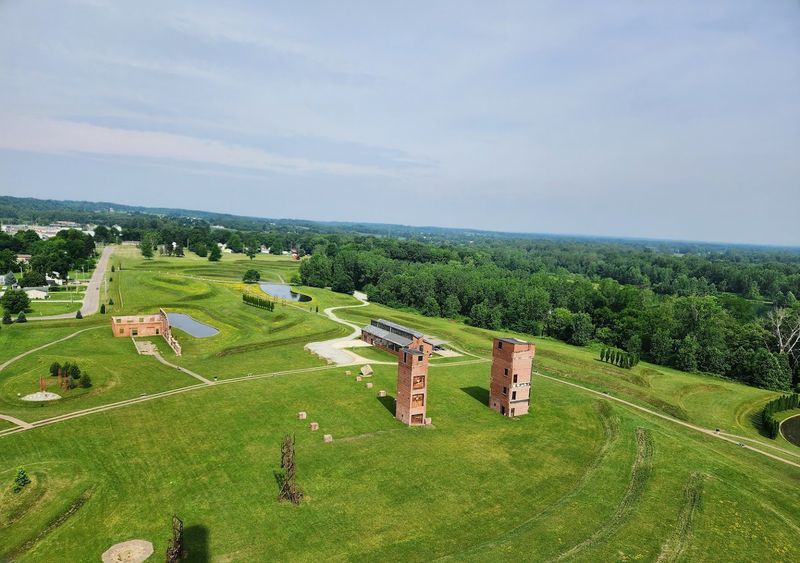
Beyond the tower and the ponds, the park has a network of walking paths that connect different sections of the grounds in a way that encourages exploration. The layout is well-planned enough that you can wander for a while without feeling like you are going in circles.
Public art pieces are scattered throughout, some large and sculptural, others more subtle and integrated into the landscape design. The combination of art and open space gives the park a creative energy that you do not always find in a public park setting.
Families with kids, solo walkers, and couples all seem equally at home here, which says something about how versatile the space is. The paths are easy to navigate, the terrain is generally accessible, and there is enough variety in what you encounter along the way to keep the experience feeling fresh from one end of the park to the other.
Best Times to Visit and What to Expect
The park is at its best on clear days when visibility from the top of the tower is at maximum range. Spring and fall offer particularly comfortable conditions for climbing, with mild temperatures and colorful surroundings that make the views even more photogenic.
Summer visits are popular, especially among cyclists on the trail, but the tower can get warm inside during peak afternoon heat, so earlier morning visits tend to be more comfortable. Winter visits are possible on milder days, and the bare trees actually open up longer sightlines across the countryside.
One thing worth keeping in mind is that the tower does have posted hours, and occasional closures have been reported, so checking ahead before a long drive is a smart move. Arriving with some flexibility in your schedule means you can spend time in the park even if the tower itself happens to be closed on a given day.
Why This Place Deserves More Attention
Few places in Ohio manage to combine industrial history, public art, natural beauty, and genuine adventure in a single visit the way this park does. The Rastin Observation Tower is not a polished tourist attraction with a gift shop and an entry fee; it is a real community space that happens to be extraordinary.
The fact that it started as a glass factory smokestack and became a 140-foot public viewpoint is the kind of origin story that deserves to be told more widely. Central Ohio has a lot of parks, but very few with this kind of vertical drama and historical depth built into their core structure.
Whether you are a trail cyclist checking it off your route, a history enthusiast tracing Ohio’s industrial past, or just someone who enjoys a view that earns its payoff, this tower delivers every single time. Some places just have a way of making you glad you showed up.
Share this story