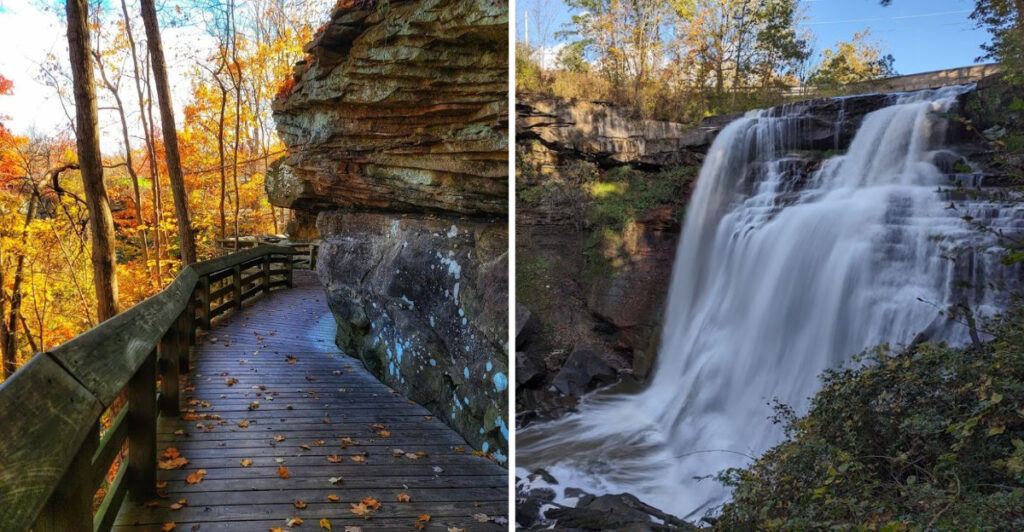
There is a waterfall in northeastern Ohio that drops 65 feet into a rocky gorge, and most people driving through the Cleveland suburbs have no idea it exists. This is not a quiet trickle over mossy rocks.
It is a full, roaring cascade with a history that stretches back to the early 1800s, when a small but ambitious village grew up around its power. The falls once turned mill wheels, shaped a local economy, and gave an entire community its reason for being.
Today, a pair of boardwalks lets you stand close enough to feel the mist on your face while you look up at the same water that fueled a forgotten industrial age. This article walks you through everything worth knowing about one of Ohio’s most underrated natural landmarks, from its geological backstory to practical tips for your visit.
A Waterfall With a Real Past
Most waterfalls just exist. Brandywine Falls actually did something.
Long before it became a popular hiking destination inside Cuyahoga Valley National Park, this 65-foot cascade was the engine behind a working 19th-century village called Brandywine.
Settlers arrived in the early 1800s and immediately recognized the power of that falling water. They built a sawmill, then a gristmill, and eventually a woolen mill, all powered by the same current that still rushes over the sandstone ledge today.
The village that grew around those mills had a post office, homes, and a real community identity tied directly to the falls. When industrial technology moved on and the mills became obsolete, the village faded.
But the waterfall kept going, completely indifferent to the passage of time, still pouring over the same ancient rock it always has.
Finding the Falls: Address and Access
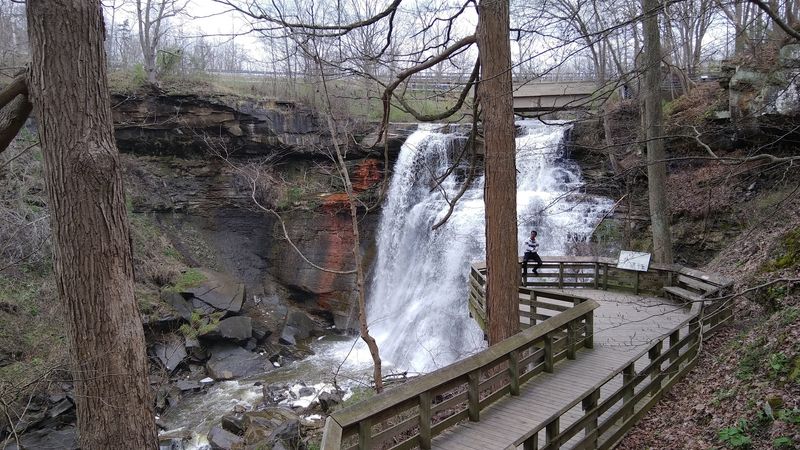
The official address for the Brandywine Falls trailhead is 8176 Brandywine Rd, Northfield, OH 44067. The parking lot sits right off Brandywine Road and is easy to find using any standard navigation app.
Brandywine Falls is part of Cuyahoga Valley National Park, which stretches between Cleveland and Akron. That means no entry fee, which is a genuinely pleasant surprise when you pull in and realize how well-maintained everything is.
The lot itself is spacious, paved, and comes with clean restroom facilities on site. On busy weekend mornings, those spots fill up fast, so arriving early gives you a clear advantage.
Weekday afternoons tend to be noticeably quieter. If the main lot is full, a secondary lot nearby connects to the same trail network, adding a bit of extra walking but keeping the experience just as rewarding from start to finish.
The Geology Behind the Drop
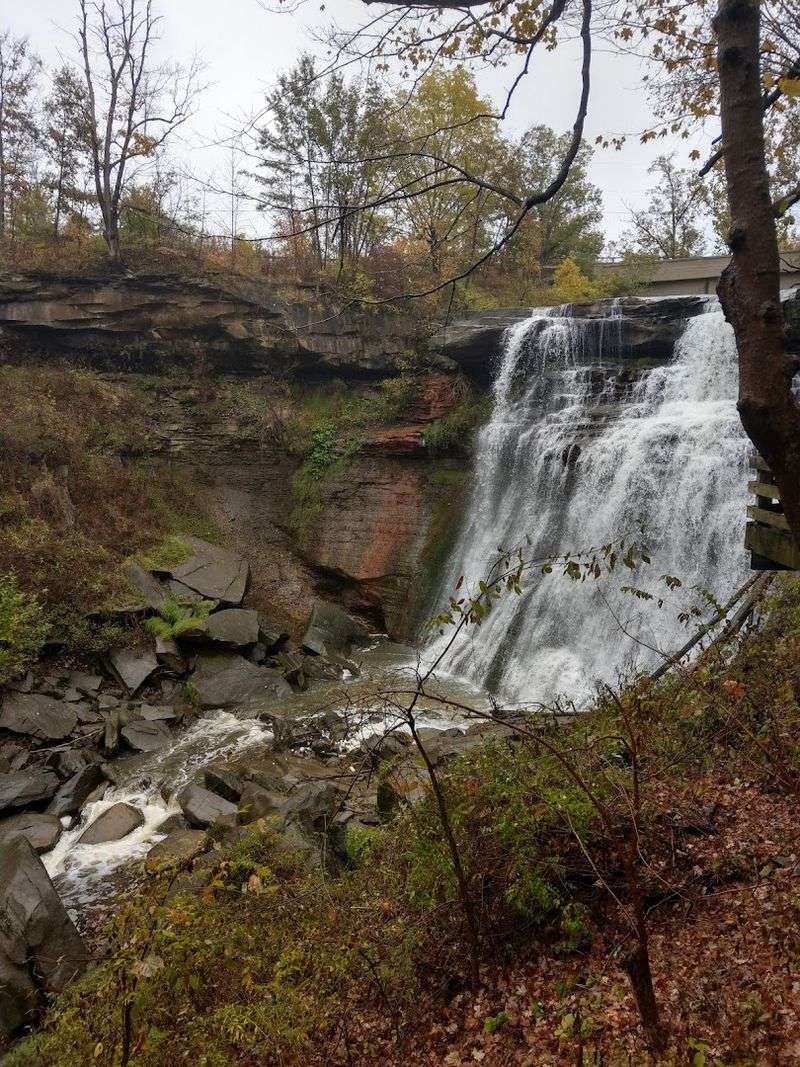
That 65-foot drop does not happen by accident. The geology here is the real architect.
Brandywine Falls owes its dramatic plunge to a combination of Sharon conglomerate on top and softer Bedford shale underneath.
Over thousands of years, the Brandywine Creek eroded the softer shale faster than the harder conglomerate above it, creating the sharp ledge that water now launches off of. The rocky gorge below is the result of that slow, relentless process still playing out today.
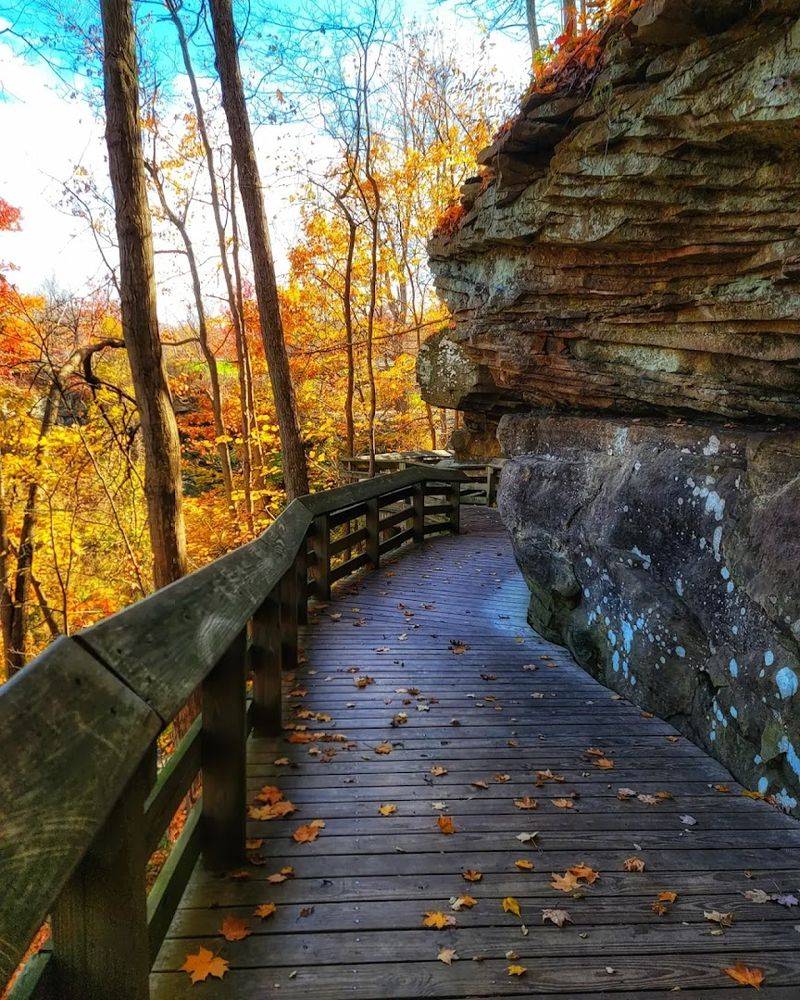
You can actually see the layered rock faces from the lower boardwalk, where the different strata are clearly visible in the gorge walls. Some of those formations are hundreds of millions of years old, which puts the entire village history into a humbling kind of perspective.
The falls are young by geological standards, but they have already outlasted every human project built in their shadow.
Upper and Lower Boardwalks: Two Very Different Views
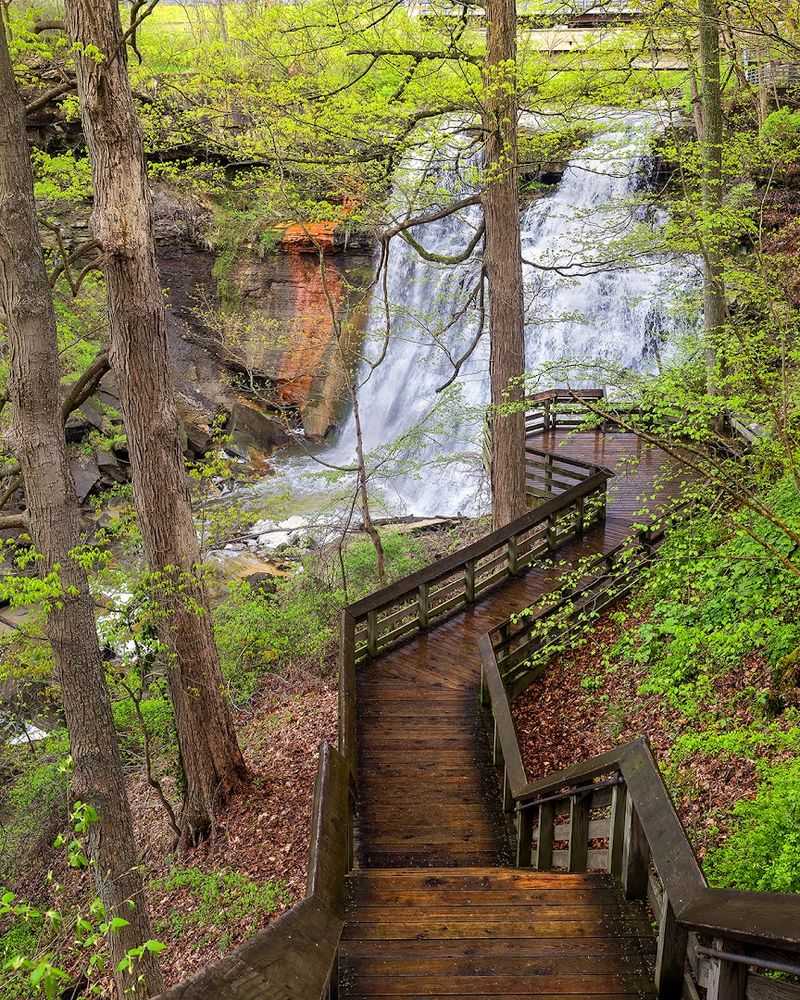
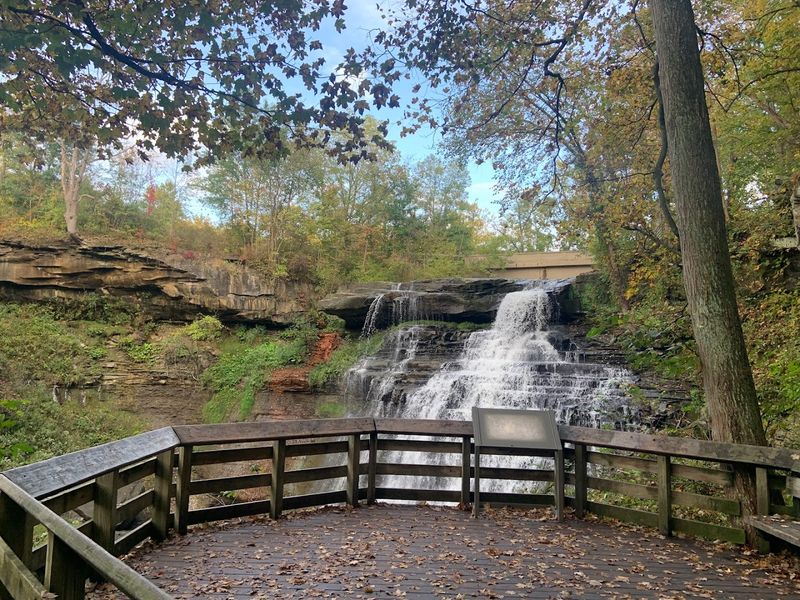
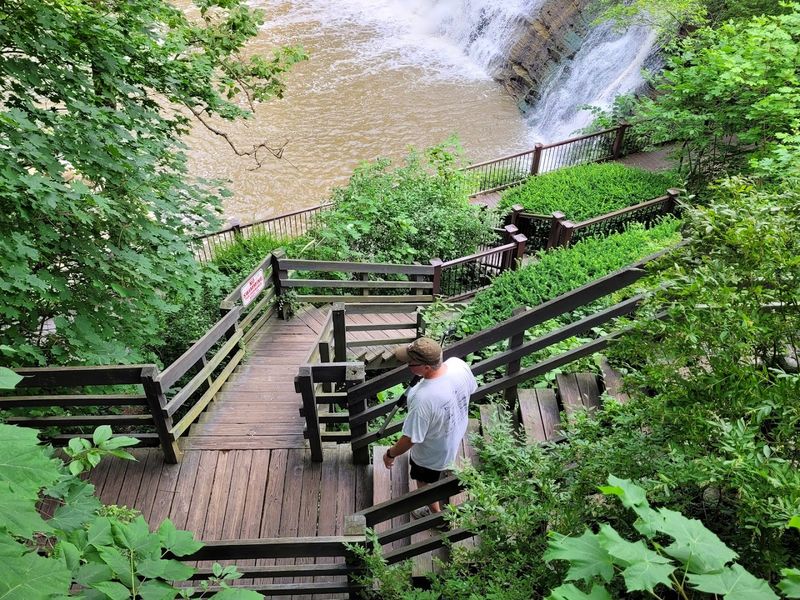
Two boardwalks serve the falls, and they offer genuinely different experiences rather than just different angles of the same thing. The upper boardwalk gives you a bird’s-eye look down into the gorge, with the full curtain of water visible below you and the creek winding away into the trees.
The lower boardwalk requires navigating two sets of stairs, roughly 32 steps each, but the payoff is standing at eye level with the base of the falls. The sound is louder down there, the mist is real, and the scale of the drop becomes much more apparent when you are looking up at it instead of down.
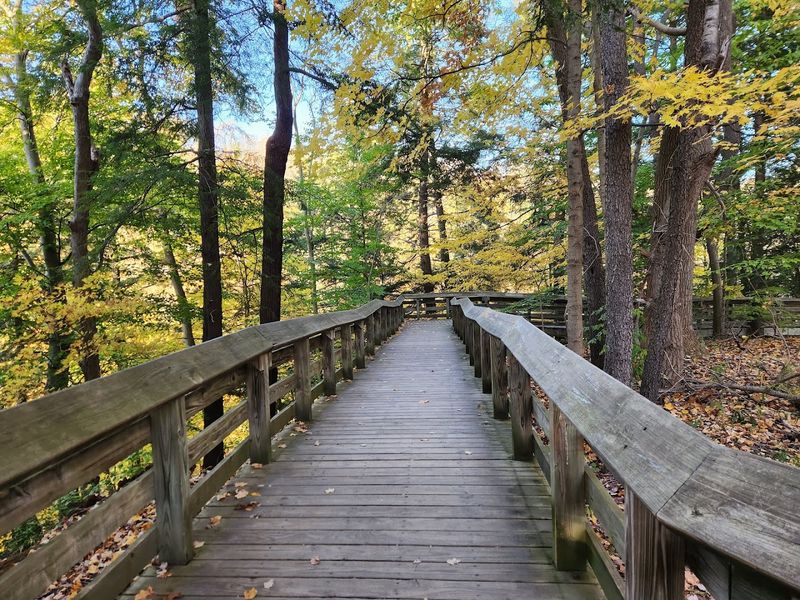
Both platforms have solid railings and are well-maintained by the National Park Service. The trail connecting them is a short loop, so most visitors naturally see both without much extra effort.
Comfortable, closed-toe shoes are a smart call since the wooden boards can get slippery.
The Mills That Made the Village Run
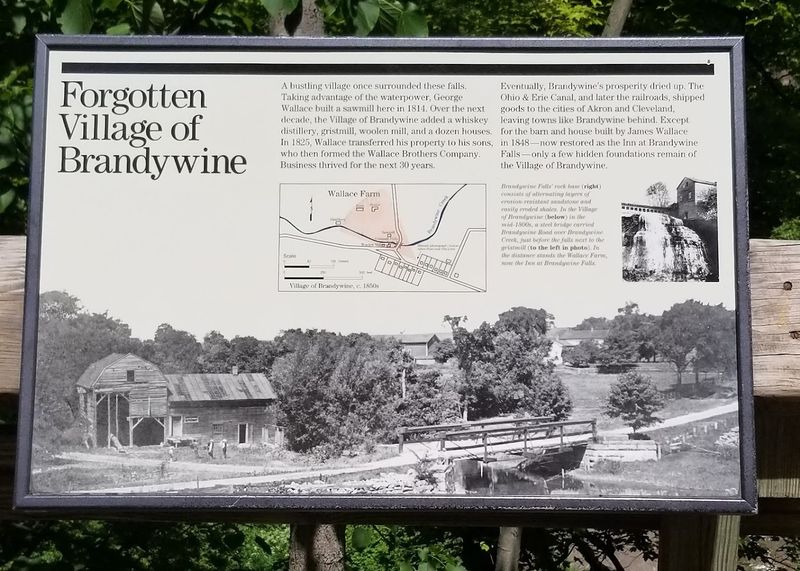
When James Wallace built the first sawmill at Brandywine Falls in 1814, he was betting that the water’s energy could support a growing community. That bet paid off, at least for a while.
The sawmill was followed by a gristmill, which ground grain for local farmers, and later by a woolen mill that processed raw wool into fabric.
Each new mill represented a step up in the village’s economic ambition. At its peak, the settlement had everything a self-sufficient 19th-century community needed, and the falls were the reason all of it was possible.
By the late 1800s, improved transportation and industrial competition had made small water-powered mills less viable. The buildings were eventually gone, but the creek kept flowing.
Today, interpretive signs along the trail explain this history clearly, so the visit feels like more than just a pretty walk through the woods.
What the Trail Actually Looks Like
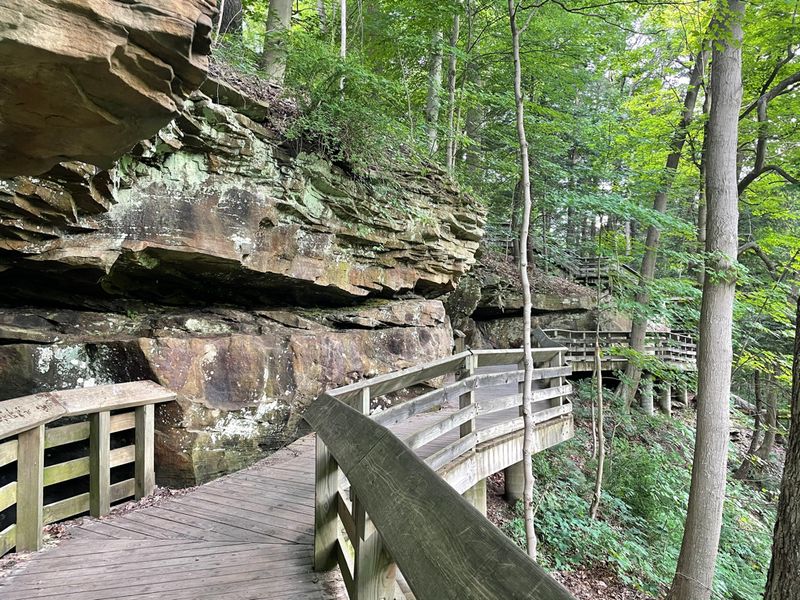
The hike to Brandywine Falls is short enough that calling it a hike almost feels generous, but that is not a criticism. The main loop from the parking lot to the falls and back covers roughly 1.5 miles of well-marked trail through a forested gorge.
The path starts flat and easy before transitioning to the boardwalk sections and stairs. Along the way, the creek runs beside you in places, and in warmer months, kids often wade in the shallower stretches upstream from the falls.
The tree canopy overhead is dense enough to provide real shade in summer.
Fall is widely considered the best season for this trail because the leaf color transforms the entire gorge into something that looks almost unreal. Winter visits are quieter and have their own appeal, though the wooden steps can be icy, so traction-friendly footwear becomes less optional and more essential during cold months.
A National Park in the Cleveland Suburbs
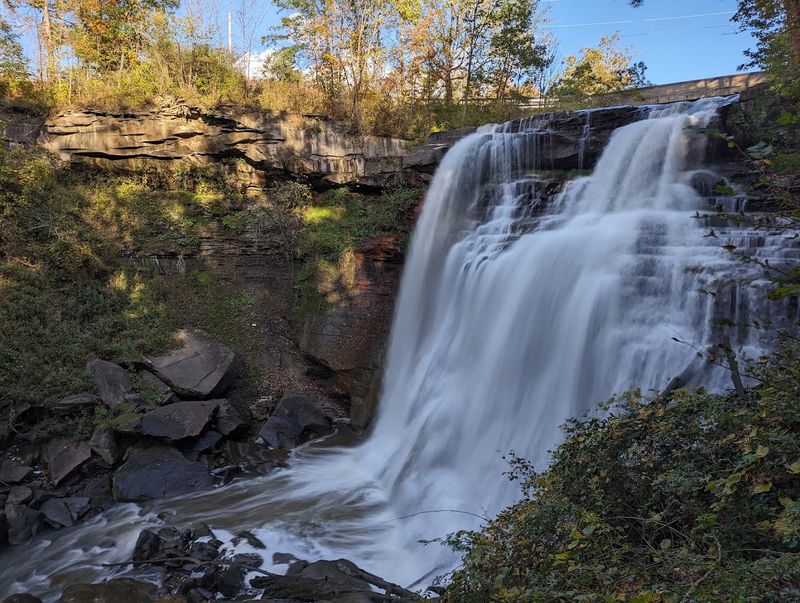
Cuyahoga Valley National Park regularly surprises first-time visitors who do not expect a federally protected wilderness to exist between two major Ohio cities. The park covers more than 33,000 acres between Cleveland and Akron, and Brandywine Falls sits near its northern edge.
What makes the park unusual is how it coexists with the surrounding suburbs. Roads pass through it, historic towns border it, and the Cuyahoga Valley Scenic Railroad runs right along the river.
It does not feel remote in the way that western national parks do, but that accessibility is actually part of its appeal.
For families, day-trippers, and anyone without the time or budget for a cross-country trip, Cuyahoga Valley delivers a legitimate outdoor experience close to home. Brandywine Falls serves as the park’s most photogenic single attraction, which is why it consistently draws visitors from well outside the immediate Cleveland area.
Best Times to Visit for the Full Effect
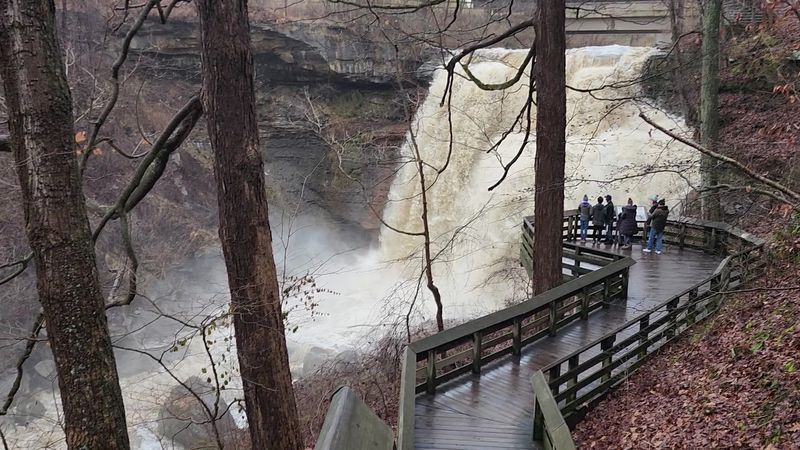
Spring is when Brandywine Falls puts on its most powerful show. Snowmelt and spring rains push water volume to its highest levels, and the falls become genuinely thunderous.
The gorge fills with mist, and the roar is audible well before you reach the viewing platform.
Summer brings the fullest green canopy and the warmest conditions for families with young children who want to explore the creek. Fall delivers the famous leaf color that makes every photo look professionally edited.
Winter visits are the quietest and have a stark, dramatic quality, though the water can run lower and the boardwalk steps require extra caution.
Weekday mornings are the least crowded across all seasons. Weekend afternoons in summer and fall can fill the parking lot quickly, sometimes before 10 a.m.
Arriving at or just after sunrise on a weekend gives you the falls mostly to yourself, which is an experience worth planning around.
Photography Tips Worth Knowing Before You Go
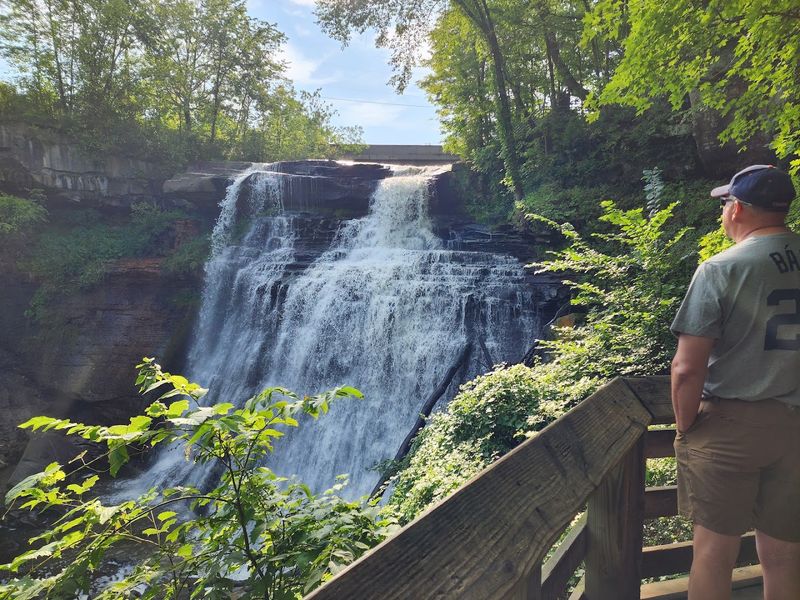
Brandywine Falls is one of the most photographed spots in Ohio, and the boardwalk design actually works in a photographer’s favor. Both viewing platforms offer clear sightlines to the falls without obstructions at the center of the frame.
For the smoothest, silkiest water effect, a slow shutter speed works best, which means a tripod and either early morning or overcast light. Bright midday sun creates harsh shadows in the gorge that flatten the texture of the rock and water.
Cloudy days are genuinely better for waterfall photography here.
The lower platform gets you closest to the spray and gives a dramatic upward angle that emphasizes the full height of the drop. Smartphone cameras do surprisingly well from the upper deck when the light is soft.
After a recent rain, the water volume increases significantly, and that extra flow adds energy and visual depth to any shot you take.
Kid-Friendly Without Being Boring for Adults
Not every natural attraction manages to work equally well for a seven-year-old and a curious adult, but Brandywine Falls pulls it off without much effort. The trail is short enough that younger kids can handle it without complaint, and the payoff at the end is dramatic enough to hold everyone’s attention.
The creek upstream from the falls has shallow sections where children can safely wade during warmer months, which adds an interactive element that keeps the outing from feeling like a passive sightseeing stop. The boardwalk itself is sturdy and well-railed, making it manageable even for very young visitors.
Clean restrooms at the trailhead eliminate one of the most common logistical headaches of outdoor family trips. The whole visit, from parking to falls and back, typically takes between 45 minutes and an hour and a half depending on how much time you spend exploring along the creek.
The Inn at Brandywine Falls: History Still Standing
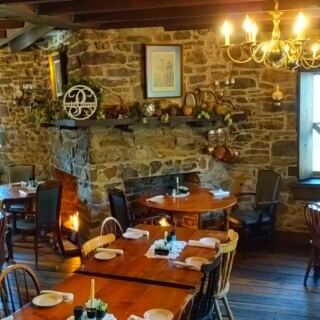
Just steps from the trailhead, the Inn at Brandywine Falls is one of the few surviving structures that connects directly to the village’s 19th-century history. The Greek Revival farmhouse was built in 1848 by George Hale, and it has operated as a bed and breakfast for many years.
The building is listed on the National Register of Historic Places, which gives the surrounding area a layered quality that most waterfall stops simply do not have. You are not just visiting a pretty natural feature.
You are standing in the footprint of a real community that once thrived here.
Even if you are not staying overnight, the presence of the inn adds historical texture to the walk. It is a tangible reminder that the falls were once the center of something larger than a scenic overlook, and that the story of this place goes well beyond geology and trail maps.
Practical Tips Before You Head Out
A few practical details can make the difference between a smooth visit and an unnecessarily frustrating one. The parking lot at Brandywine Falls fills up on weekends, sometimes as early as mid-morning, so earlier is always better if you have flexibility in your schedule.
Wear shoes with grip. The wooden boardwalk sections can become slippery from mist and rain, and the stairs to the lower platform require a bit of confidence on wet days.
Light layers work well in spring and fall when gorge temperatures can feel cooler than the surrounding area due to shade and water spray.
No entry fee is required since the falls are part of Cuyahoga Valley National Park, a fee-free site. Dogs are welcome on leash.
The trail is not fully accessible for wheelchairs due to the stairs, but the upper boardwalk area is reachable without them and still offers a strong view of the falls.
Share this story