Some of the most memorable gardens begin with an unexpected story. In Sidney, Nebraska, this community landmark was created in the shell of a former swimming pool, transforming an unused space into a destination filled with flowers, public art, and local history.
Decades of volunteer effort have helped shape the garden into a peaceful retreat where visitors can stroll among seasonal blooms, spot butterflies, and enjoy a setting that reflects the pride of the surrounding community. More than just a beautiful place to visit, it stands as a reminder of what can happen when people come together with a shared vision.
For anyone exploring the Nebraska Panhandle, it’s one of Sidney’s most rewarding hidden gems.
A Garden Born From an Old Swimming Pool
Not every garden starts with seeds and soil. This one started with a concrete swimming pool that had been sitting unused since 1978, when Sidney opened a new municipal facility and the old pool on the south side of Legion Park quietly went out of service.
The transformation did not happen overnight. In 1982, a local art teacher named Jane Beran proposed the idea of converting the space into a living memorial garden, and the community latched onto that vision with real enthusiasm.
The first memorial dedication took place on July 4, 1983, a fitting date for a space that would go on to honor both personal and patriotic remembrance.
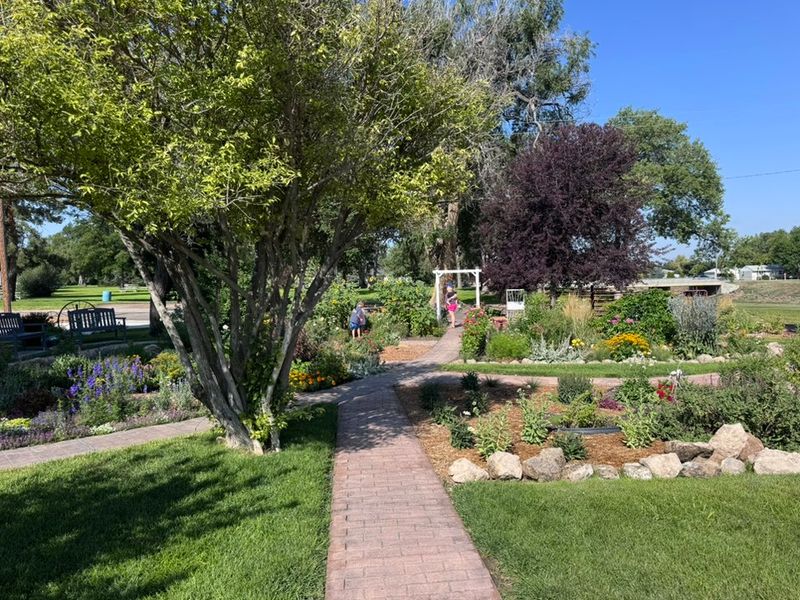
What was once a place for summer splashing became a place for quiet reflection, blooming flowers, and community pride. The bones of the old pool gave the garden its distinctive sunken layout, which you can still sense as you walk through it today.
That origin story makes every flower feel a little more meaningful.
Finding the Gardens Inside Legion Park
The garden sits at 2200 Legion Park Rd, Sidney, NE 69162, on the south side of Legion Park, a well-kept public space that offers far more than just flowers.
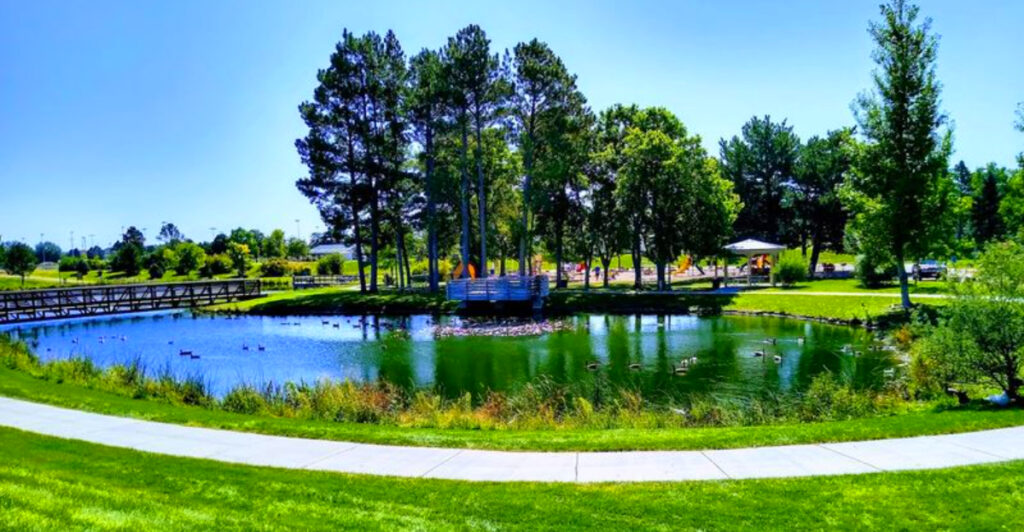
Legion Park itself is a sprawling green area with a fishing pond, docks, a playground, a shelter house, a baseball field, and a walking path that winds through the whole property. The gardens are nestled within this larger setting, which means your visit can easily turn into a full afternoon outing.
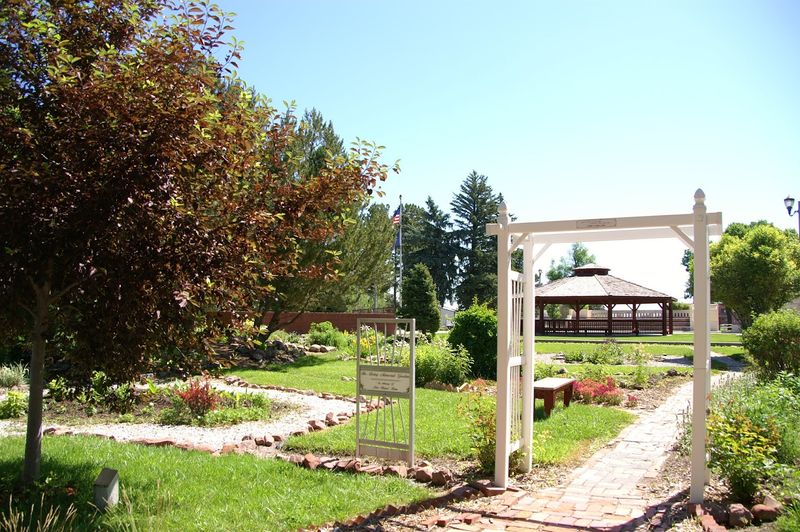
Parking is plentiful, and the layout is easy to navigate even on your first visit. The garden area is clearly visible from the park road, and the tall flagpole near the war memorial acts as a natural landmark that guides you right to it.
Sidney is a small city in the western Nebraska Panhandle, and Legion Park reflects the community’s commitment to maintaining beautiful public spaces. The garden feels like the park’s quiet heart, and once you find it, you will understand why locals keep coming back.
The Angel of Hope: Nebraska’s First Christmas Box Angel
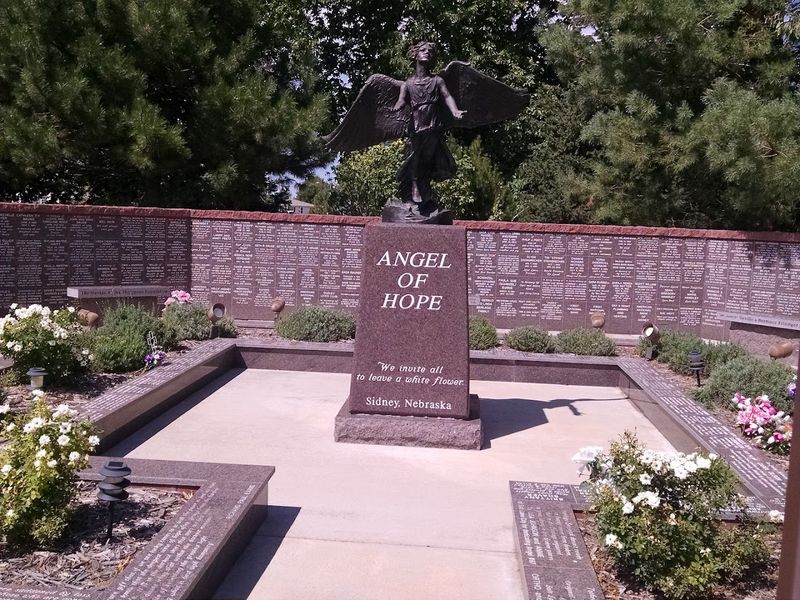
The centerpiece of the entire garden is a statue that carries a lot of weight in a small frame. The Angel of Hope stands as Nebraska’s first Christmas Box Angel, a recognition tied to the beloved book and the broader movement it inspired around the country.
The statue depicts a young angel girl, and her presence in the garden gives the space a tone that is both tender and uplifting. Visitors often pause here longer than anywhere else in the garden, and it is easy to understand why.
The Angel of Hope has become something of a local landmark, drawing people who are simply curious and others who arrive with a deeper personal reason for visiting. Either way, the statue holds its ground with quiet dignity.
Surrounded by seasonal flowers and maintained garden beds, the angel feels like she belongs exactly where she is. Her placement in the garden is deliberate and thoughtful, and she serves as a gentle focal point for anyone seeking a moment of stillness.
She is worth seeking out first.
A War Memorial That Reaches for the Sky
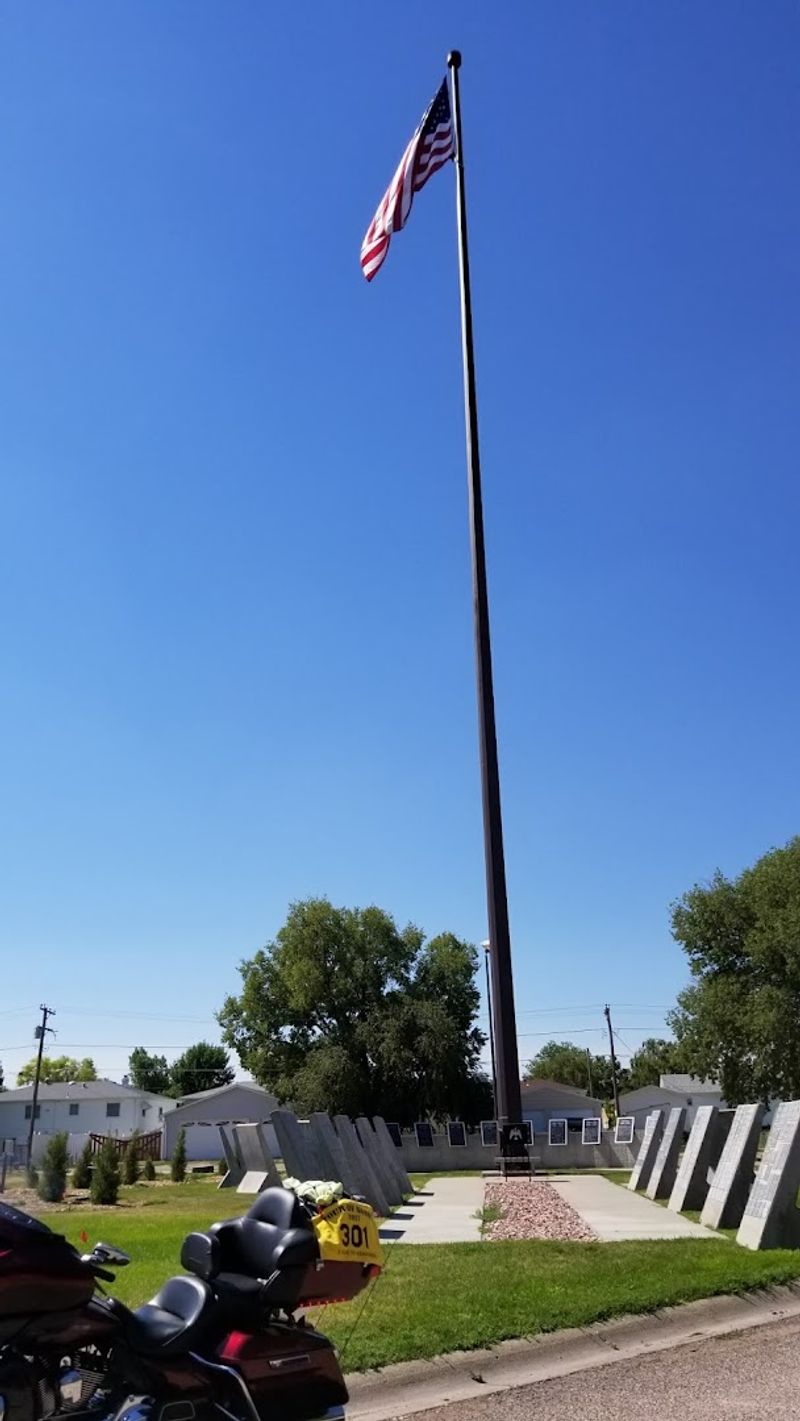
Right alongside the garden stands a war memorial that commands attention the moment you spot it. The flagpole here is recognized as one of the tallest in the entire state of Nebraska, and when the prairie wind catches the flag, the effect is genuinely striking.
The memorial honors local veterans who served the country, and it adds a layer of historical weight to what is already a meaningful space. This is not a monument tucked in a corner; it is front and center, unapologetic in its purpose.
Standing near the flagpole and looking up, you get a sense of scale that puts the whole garden in context. This community chose to make its tribute visible, literally rising above the treeline of the park.
The war memorial and the garden work together in a way that feels natural rather than forced. One honors those who served in uniform; the other honors the broader community of people remembered and missed.
Together, they create a space that speaks to both public history and private feeling. That combination is rare and worth experiencing in person.
The American Legion Gazebo: Where Community Gathers
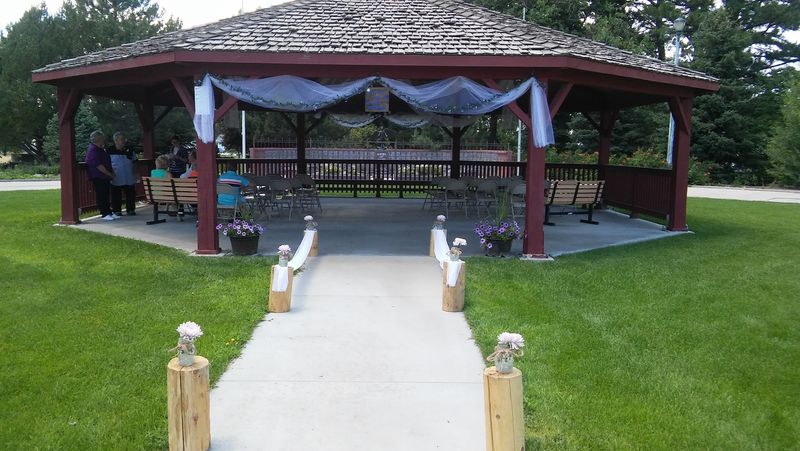
Dedicated in the year 2000, the American Legion Gazebo is one of the most versatile features of the garden. It sits in a sunken area that echoes the original pool’s lower elevation, giving it a cozy, enclosed feeling even though it is completely open to the sky.
The gazebo is fitted with bench seating and provides a shaded spot that invites you to sit, slow down, and take in the surrounding flower beds. On warm afternoons, it becomes a natural gathering point for visitors of all ages.
Beyond casual visits, the gazebo has hosted weddings and community events over the years, making it a functional part of Sidney’s social life rather than just a decorative structure. Couples have exchanged vows here with the garden blooming all around them.
The combination of the sunken layout and the gazebo’s architecture creates a sense of being gently held by the landscape, which is a hard feeling to manufacture and an easy one to appreciate. If you visit on a quiet weekday morning, you might have the whole gazebo to yourself, which is its own kind of treat.
Jane Beran’s Vision and the Community That Built It
Every great public space has a person behind it who saw the potential before anyone else did. For this garden, that person was Jane Beran, an art teacher in Sidney who looked at an unused concrete pool in 1982 and imagined something far more beautiful.
Her proposal set the wheels in motion, and the community responded with the kind of collective energy that small towns often surprise you with. Volunteers stepped up to plant, maintain, and expand the garden plots over the following decades.
That volunteer spirit is not just a historical footnote. The garden continues to rely on community members who donate their time and energy to keep the flower beds thriving through each growing season.
By December 2024, the gardens had received over $190,000 in donations and commitments for facility and walkway improvements, a number that reflects just how seriously Sidney takes this space.
Jane Beran’s original idea grew into something that now anchors an entire park. The garden is a collective achievement, and that shared ownership shows in how carefully it is tended year after year.
A Map of the United States Hidden in the Garden’s Past
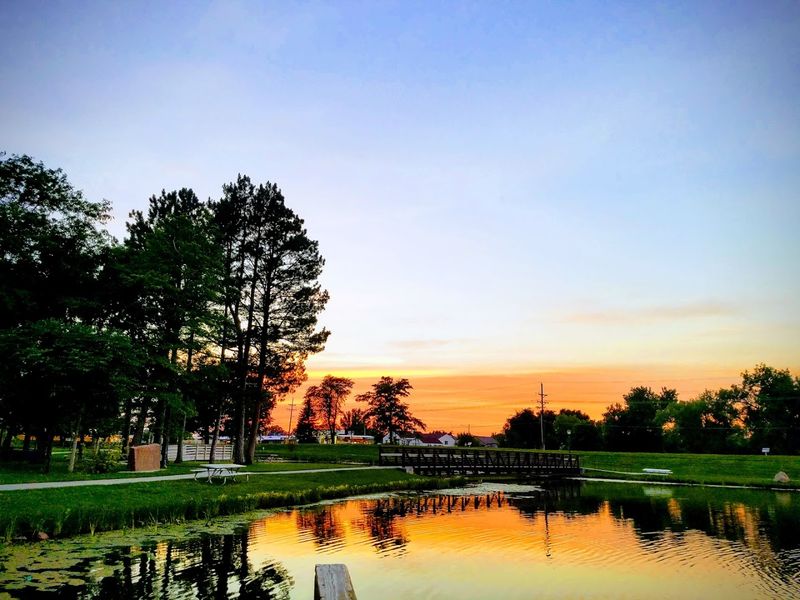
One of the more surprising details in the garden’s early history is that developers laid out part of the space as a map of the United States. It is an unusual design choice, but it fits perfectly with the garden’s broader mission of honoring American history and community identity.
This geographical element connected the local to the national in a very literal way, giving visitors a sense that Sidney’s story was part of a larger American story. The garden was never just about this one town; it was always about belonging to something bigger.
While the map design is part of the garden’s origin story rather than its current layout, knowing it existed changes how you look at the space. There is a thoughtfulness to the planning that goes beyond simply planting pretty flowers.
Details like this one remind you that the people who built this garden were thinking carefully about meaning, not just aesthetics. That intention is what separates a memorable public space from a forgettable one, and the Living Memorial Gardens in Sidney clearly falls into the memorable category.
More surprises await around each corner.
Blooms, Butterflies, and the Sound of Quiet
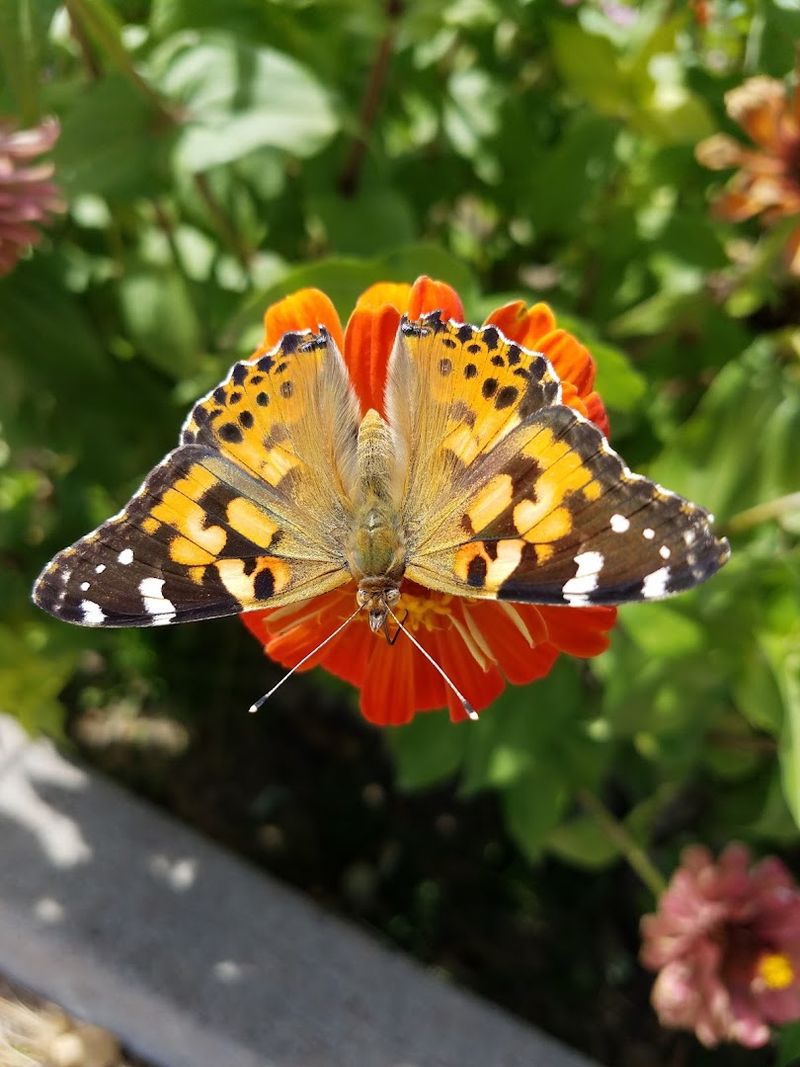
There is a particular kind of quiet that settles over this garden on a calm morning, the kind where you can actually hear bees moving between flowers and butterflies drifting overhead without a sound. It is the sort of sensory experience that city noise usually drowns out completely.
The garden features a wide variety of plants and flowers that change with the seasons, so a spring visit looks entirely different from a midsummer one. The color palette shifts from soft pastels in early spring to bold, saturated hues by July.
Visitors often bring a book or a journal and find a bench to settle into, letting the garden work its quiet magic without any agenda. There is no fee to enter, no schedule to follow, and no pressure to move quickly through the space.
The natural sounds here are part of what makes the experience so restorative. Bees, birdsong, and the occasional rustle of leaves in the Nebraska breeze create a gentle soundtrack that the garden provides for free.
You do not have to be a plant enthusiast to appreciate what is growing here.
The New Photo Board: A Modern Touch on a Classic Space
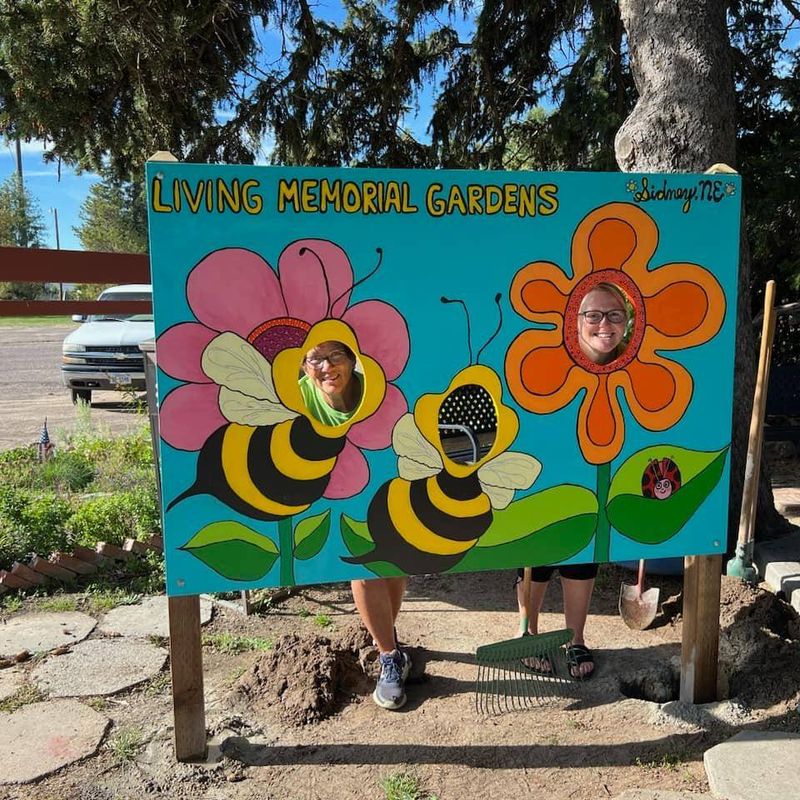
In 2023, the garden added something new to its collection of features: a photo board designed to give visitors a more interactive experience. It is a thoughtful upgrade that brings a personal, human element to a space that already carries a lot of emotional resonance.
The photo board allows the garden to connect the abstract idea of remembrance with actual faces and stories. Rather than simply reading names on a plaque, visitors can engage with images that bring the memorial’s purpose to life in a more immediate way.
This kind of addition shows that the garden is not frozen in time. The people who care for it continue to look for ways to make the experience richer and more meaningful without losing the contemplative atmosphere that defines the place.
Small updates like this one matter more than they might seem. They signal that a community is actively investing in a space rather than simply maintaining it, and that active care is something you can feel when you walk through the garden.
The next section reveals another feature that has been drawing visitors for decades.
Legion Park’s Wider World: Fishing, Playgrounds, and Walking Trails
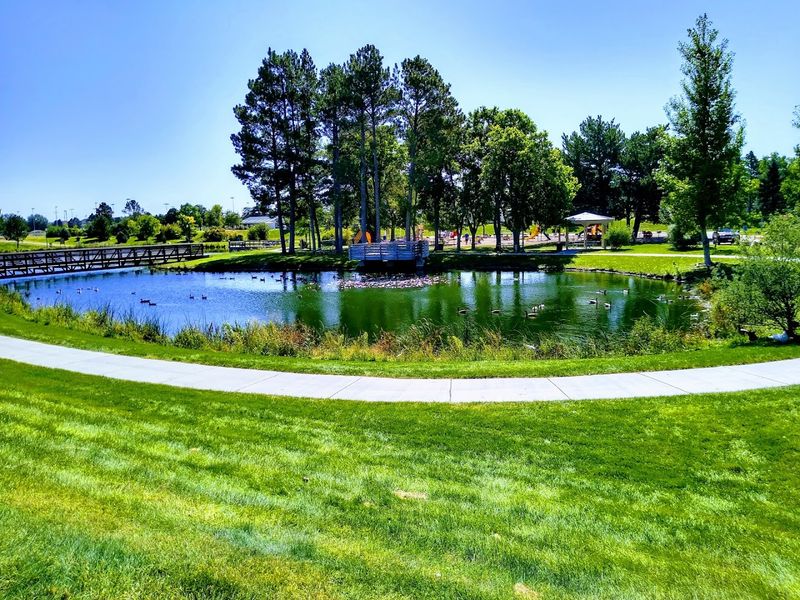
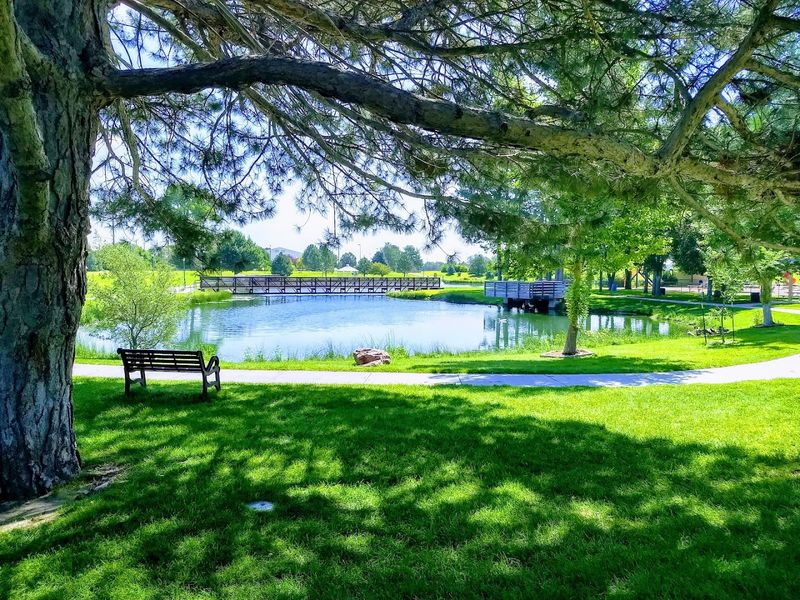
The garden sits within a park that has a lot going on around it, and that wider context is worth exploring before or after your visit to the memorial area. A fishing pond with several docks sits nearby, and it is the kind of spot where kids can cast a line while adults enjoy the surrounding scenery.
Ducks and geese are regulars at the pond, and feeding them is a reliable crowd-pleaser for younger visitors. The playground equipment is close enough that families can split their time between the garden and the play area without much effort.
A walking path loops through the park and connects the various features, making it easy to cover the whole space at a comfortable pace. Visitors have walked from the garden all the way to the Deadwood Trail pathway, which extends the outing considerably for those who want more mileage.
Legion Park works well as a half-day destination because it offers enough variety to keep different kinds of visitors happy at the same time. The garden is the reflective anchor, but the surrounding park keeps the energy balanced and lively.
Visiting Through the Seasons: What to Expect Year-Round
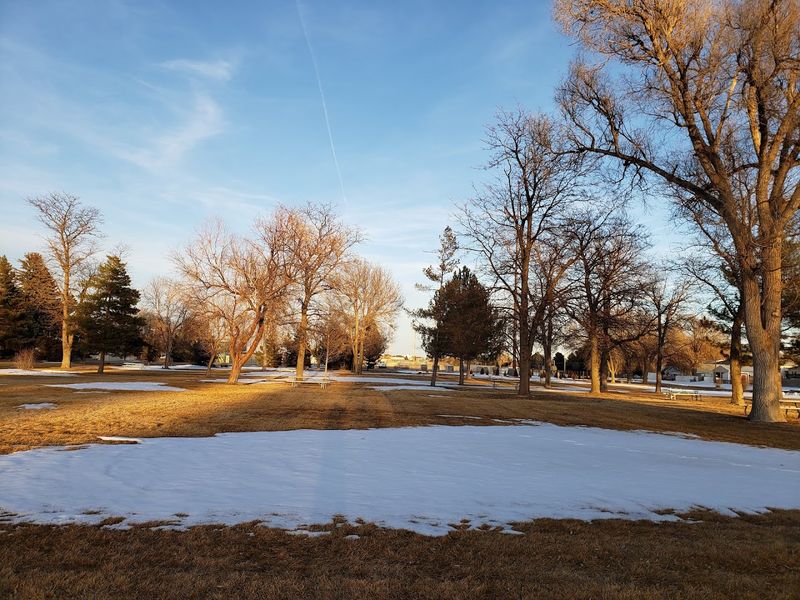
The garden changes its personality depending on when you show up. Spring brings the first tentative blooms and a sense of renewal that fits the memorial’s themes of hope and new beginnings.
By early summer, the flower beds are at full strength and the colors are hard to ignore.
Midsummer is peak season for both the blooms and the butterflies, making it the most photogenic time to visit if you want to capture the garden at its most vivid. The gazebo provides shade during the hottest part of the day, which is a practical bonus.
Fall brings a different kind of beauty as the colors shift and the garden begins to wind down for the year. Even in quieter months, the structure of the garden, its pathways, its statues, and its flagpole, remains visually interesting.
The garden is a public park with no admission cost, so there is no financial barrier to visiting multiple times throughout the year. Each season offers a genuinely different experience, and regular visitors often develop a favorite time that feels like their own personal version of the garden.
Share this story