Arkansas’s first capital is not a grand government building or a preserved downtown district. Instead, it survives as a fascinating archaeological site where steel outlines mark the locations of structures that once stood at the center of a growing frontier territory.
Today, visitors can walk among the remains of courthouses, homes, and public buildings that played a key role in Arkansas’s earliest years. The site offers a rare opportunity to explore the place where many of the state’s first institutions took shape while learning about a chapter of history that is often overlooked.
For anyone interested in Arkansas history, this quiet park delivers a surprisingly memorable look at the state’s beginnings.
A Frontier Town Frozen in Time
The address reads 8047 AR-166, Pocahontas, AR 72455, and it sits in southern Randolph County, tucked into a peaceful bend near the Black River in northeastern Arkansas. Getting there feels like leaving the modern world behind one mile at a time.
Davidsonville Historic State Park spans 163 acres and preserves the archaeological remains of the town of Davidsonville, one of the very first organized frontier settlements in what became the Arkansas Territory. The town was established in 1815, which means this ground was being walked by settlers more than 200 years ago.
What makes this park so unusual is that the original town was never built over. When Davidsonville was abandoned in the 1830s, the land simply sat, which means artifacts and soil layers remained largely undisturbed for archaeologists to study much later.
That kind of historical preservation is genuinely rare, and it makes every step through the park feel like walking through a living timeline.
How a Thriving Hub Became a Ghost Town
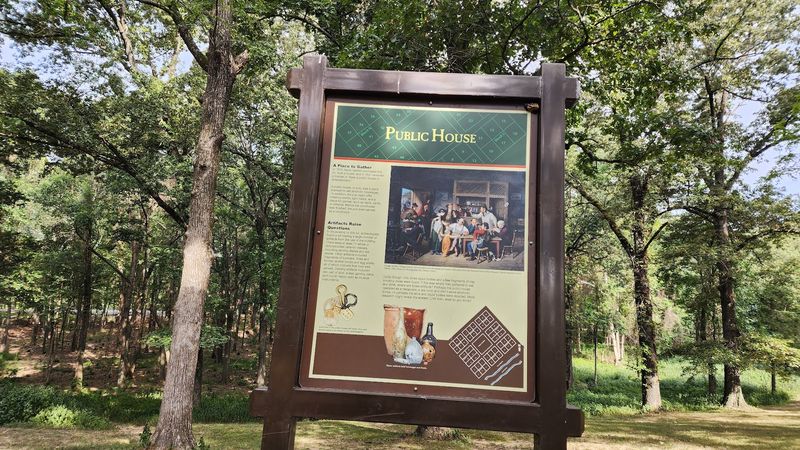
Davidsonville’s rise was fast and impressive. By the time it was formally platted in 1816, it already held the first post office, the first courthouse, and the first federal land office in what would become Arkansas.
For a brief stretch, this nine-block town was the most important place in the entire territory.
Its location on the Black River made it a useful river port, and its position along the Southwest Trail meant steady traffic from travelers and traders moving across the frontier. The town even served as the county seat of Lawrence County, which was the first county organized in the Arkansas Territory.
Then things started slipping away. The Southwest Trail was rerouted to higher ground, and the new path bypassed Davidsonville entirely.
The federal land office moved to Batesville in 1829, and the courthouse followed shortly after. Without that foot traffic and government business, the town lost its reason to exist, and by the 1830s, it had quietly faded into the trees.
The rise and fall happened in less than two decades.
Ghost Structures That Bring the Past Back to Life
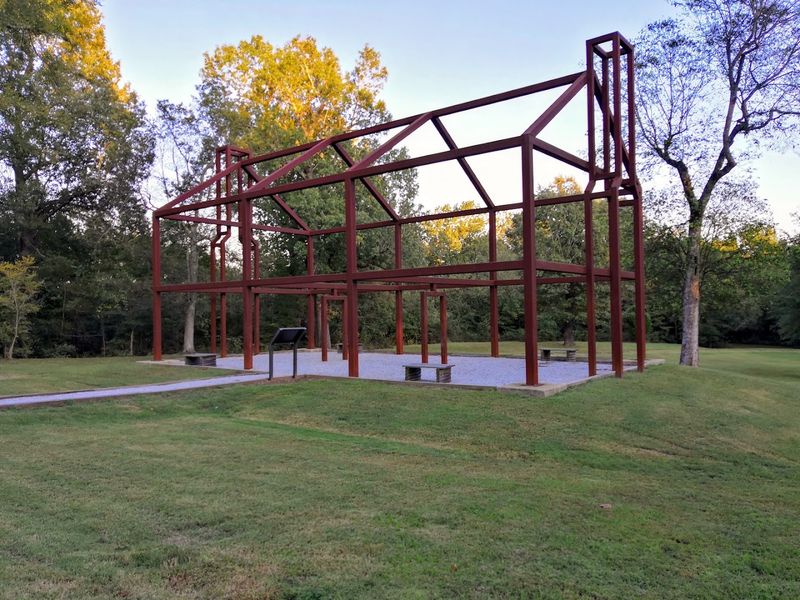
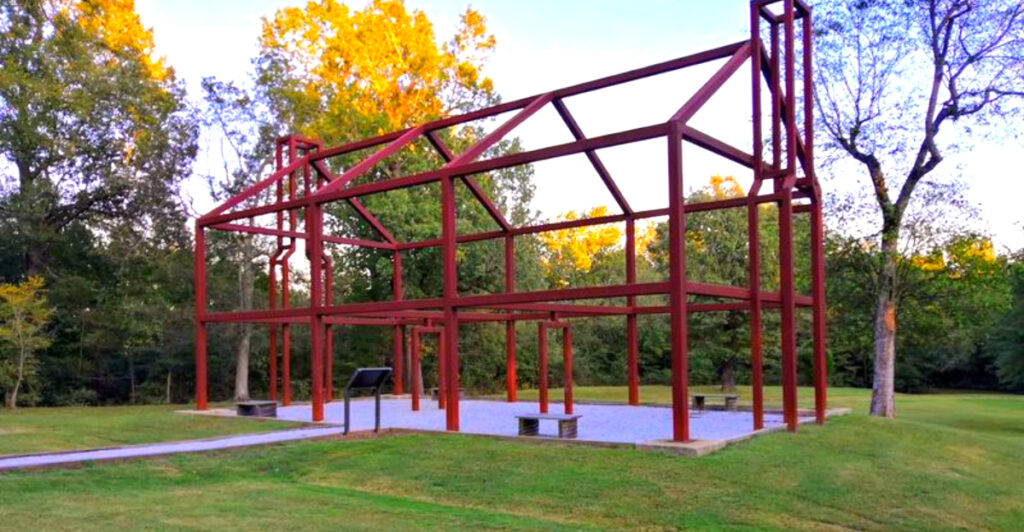
One of the most visually striking features of the park is something you have probably never seen at any other historic site: ghost structures. These are steel frameworks, welded into the exact footprints and shapes of buildings that once stood here, so you can walk up to what was once a two-story dogtrot-style dwelling and actually see its outline rising from the ground.
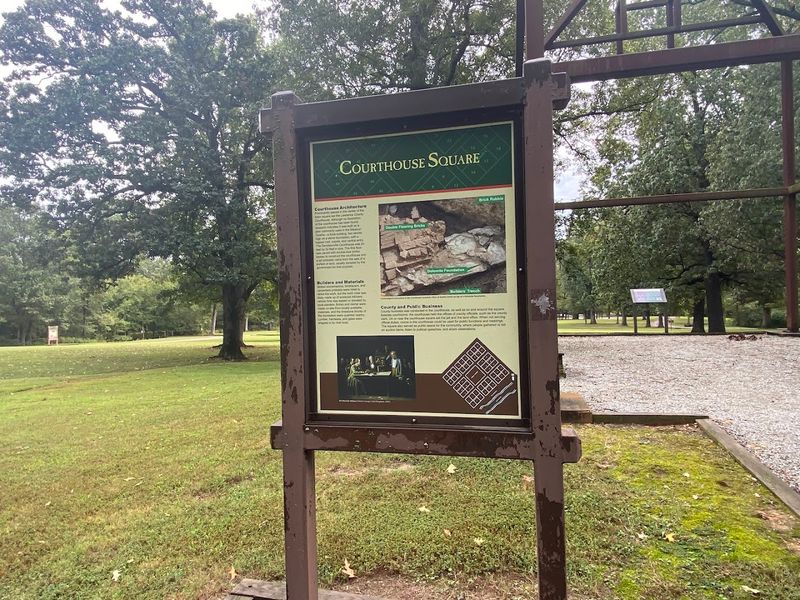
There is also a ghost structure for the 1822 courthouse, which adds an extra layer of intrigue because that building was constructed directly on top of an ancient Native American mound. The steel frames do not try to recreate the original buildings in full detail, but they give your imagination just enough to work with.
Children seem to love these structures in particular, and it is easy to see why. Each framework comes with informational signs that explain what the building was used for and who might have worked or lived inside.
The combination of visual outline and written context creates a surprisingly effective way to connect with a place that otherwise exists only in historical records.
Layers of History That Go Back Thousands of Years
Most people think of Davidsonville as an early 1800s frontier story, and that part is absolutely true. But the land itself holds a much older history that stretches back roughly 6,000 years.
Evidence shows that Native Americans used this site as early as 4,000 BC, long before European explorers had any idea this part of the continent existed. French colonists later moved through the region before the 1803 Louisiana Purchase transferred the territory to the United States.
That layered past gives archaeologists a lot to work with, and it gives visitors an even richer sense of just how long humans have found this particular stretch of land worth settling near.
The fact that the 1822 courthouse was built on top of an ancient Native American mound is one of those details that stops you mid-step when you first read it on the interpretive sign. It suggests that the early settlers recognized the elevated ground as a practical building site, probably without fully understanding what they were building on.
That intersection of two very different eras of human history, separated by thousands of years, is quietly remarkable.
The Visitor Center Holds Some Real Surprises
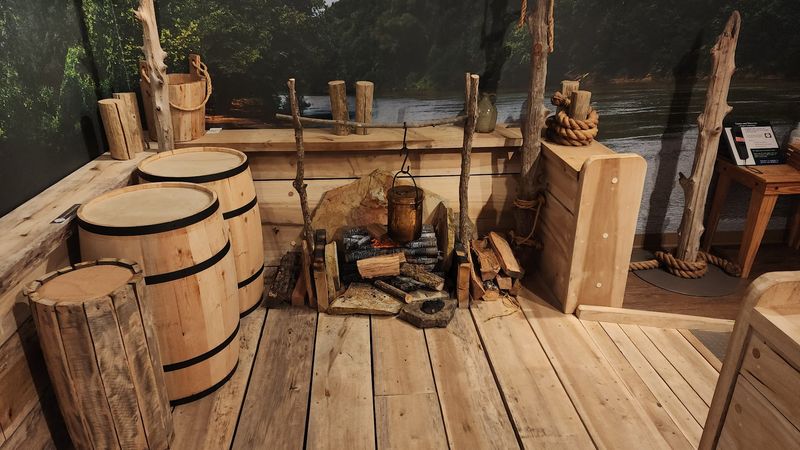
The visitor center is small but genuinely well put together. The exhibits do a solid job of explaining the timeline of Davidsonville, from its founding through its decline, using maps, artifacts pulled from archaeological digs, and clear written panels that do not overwhelm you with jargon.
The standout piece is a full replica of an 1820s hunter-trapper flatboat that you can actually step inside and explore. Flatboats were the workhorses of frontier river travel, used to carry goods, furs, and supplies along waterways like the Black River.
Getting a close-up look at how compact and practical these vessels were makes the daily reality of frontier life feel surprisingly tangible.
A small gift shop is also on-site, selling books, souvenirs, and snacks. One detail worth knowing: the visitor center keeps afternoon hours, so plan your arrival accordingly if you want to catch it open.
During winter months, the campground restroom is the only facility available, so check the schedule before your trip. The staff and park rangers are consistently friendly and happy to answer questions.
Walking the Old Village Layout on Foot
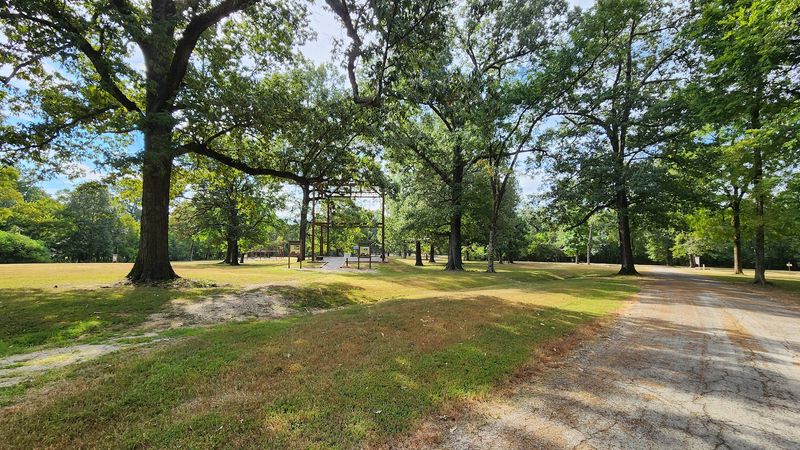
A walking trail winds through the original village plot, and it is one of those paths that rewards slow, curious walkers far more than anyone moving at a brisk pace. The trail is mostly shaded by large, mature trees, which makes it pleasant even on warmer days.
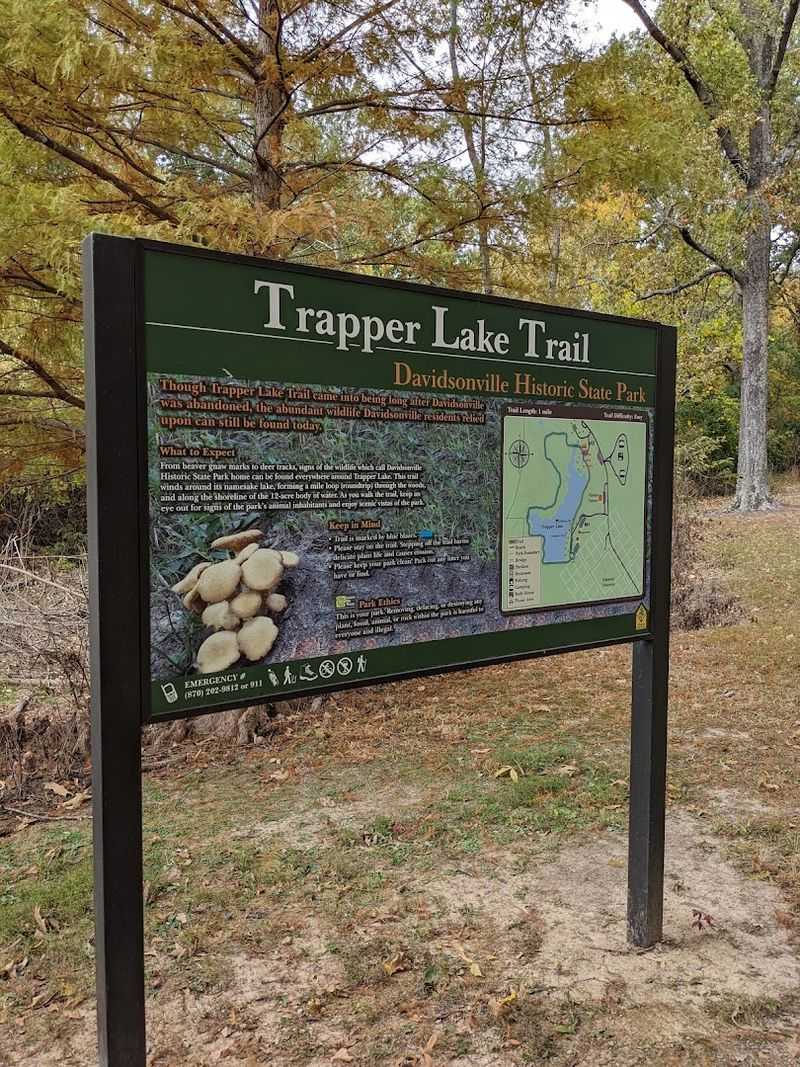
Historical markers appear at regular intervals along the route, each one explaining what once stood at that spot or what happened in that general area. You pass the outlines of homes, public buildings, and gathering spaces, and the combination of the physical markers and the ghost structures gives you a surprisingly clear mental picture of how the nine-block town was organized.
The trail is easy enough for kids and older visitors, with no significant elevation changes or difficult terrain. Two pioneer cemeteries are also part of the park, and they add a quiet, reflective quality to the experience that is hard to describe but easy to feel once you are standing in front of the old headstones.
The whole loop does not take long, but most people find themselves lingering much longer than they planned.
Fishing, Paddling, and Outdoor Recreation
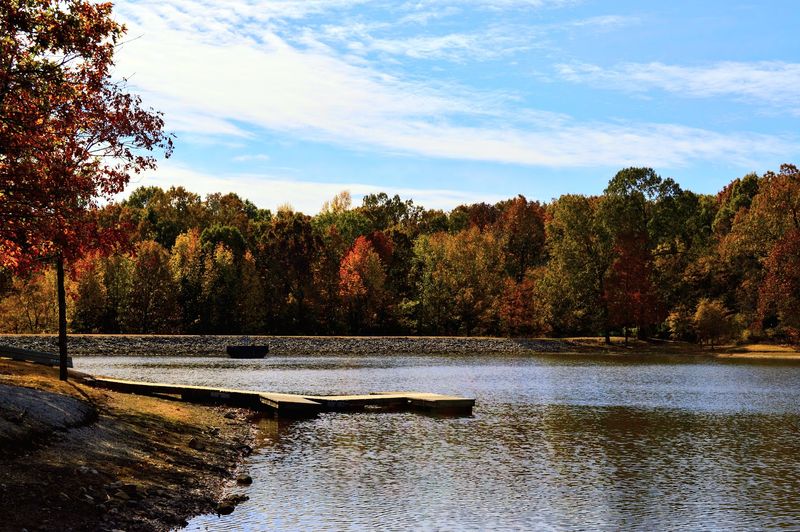
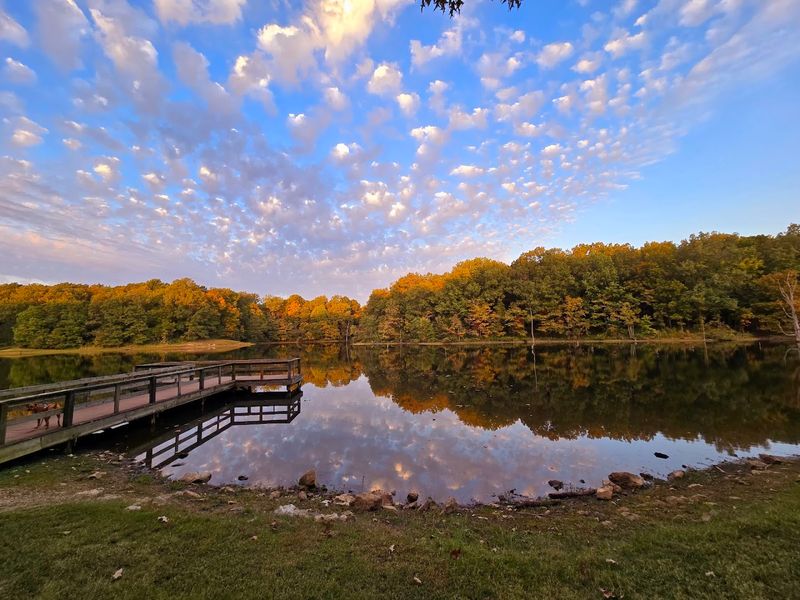
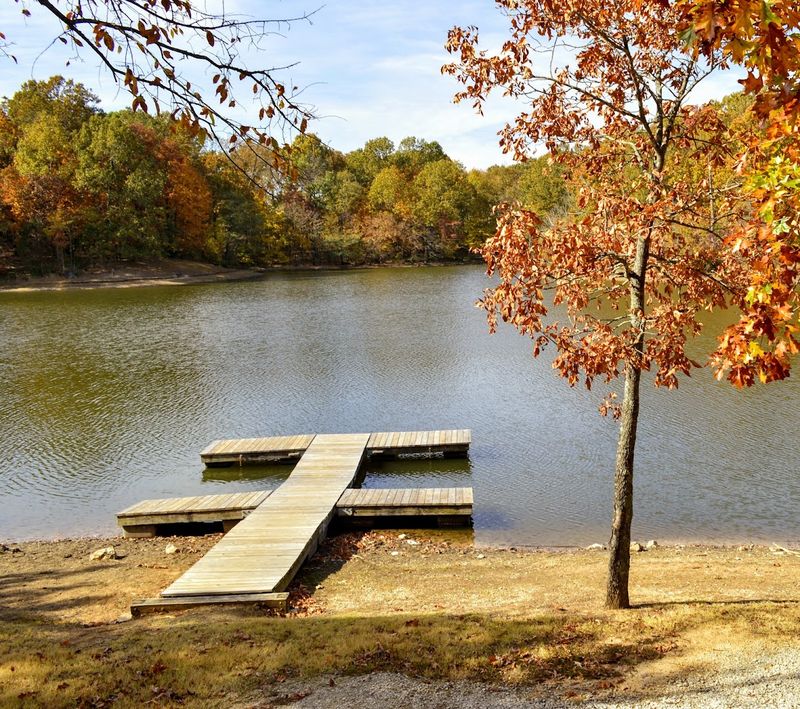
History is the main draw here, but the park delivers a solid outdoor recreation experience as well. A 12-acre fishing lake sits within the park grounds, calm and quiet, with fish regularly visible near the surface.
No swimming is allowed in the lake, but fishing is popular, and the peaceful setting makes it easy to spend an hour or two just watching the water.
The Black River runs nearby and provides additional fishing opportunities for those who want to cast a line in moving water. Pedal boat and canoe rentals are available during the appropriate seasons, which adds a fun layer of activity for families or anyone who wants to get out on the water without bringing their own equipment.
Kayaking is also possible during certain times of year. The combination of a quiet lake and river access gives the park a recreational depth that surprises first-time visitors who came mainly for the history.
And honestly, sitting beside that lake after a walk through the old village plot is one of the more relaxing ways to end an afternoon in this part of Arkansas.
Camping Under the Trees at a Surprisingly Well-Equipped Site
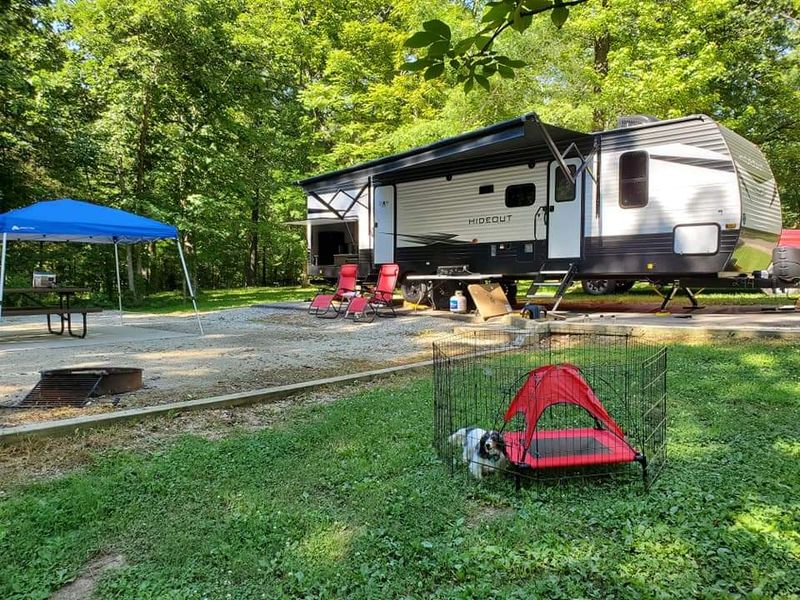
The campground at this park punches well above its size. With only 17 campsites, it is a small operation, but roughly half of those sites offer full hookups, and the paved pads can accommodate larger rigs, including fifth wheels, though tight squeezes are possible depending on the site layout.
Drainage is well-designed, which matters more than people realize when an unexpected rainstorm rolls through overnight. The dump station is available on-site, though it sits on uneven ground, so some campers prefer to use their own site connection instead.
Two playgrounds are nearby, which makes the campground genuinely family-friendly rather than just technically allowing children.
The overall atmosphere is quiet and clean, with good tree coverage providing natural shade across most sites. Park rangers will even deliver firewood directly to your campsite if you purchase it on-site, which is both convenient and environmentally responsible since bringing outside wood risks introducing invasive insects.
The campground is close enough to Pocahontas for a quick supply run but far enough away that you never hear city traffic once you settle in.
Why Archaeologists Consider This Site So Valuable
Most historic towns from the early 1800s were built over, expanded, and rebuilt so many times that the original archaeological layers are essentially gone. Davidsonville is a rare exception, and that exception is exactly why researchers have found it so significant.
Because the town was abandoned relatively quickly and never redeveloped, the artifacts left behind stayed put. Soil layers remained intact.
Building footprints survived beneath the surface in ways that allow archaeologists to map the original layout with unusual accuracy. The 1822 courthouse site, sitting on top of an ancient mound, alone represents multiple overlapping periods of human activity that can be studied without the interference of later construction.
The site was added to the National Register of Historic Places in 1974, recognizing its importance not just as a local curiosity but as a nationally significant archaeological and historical resource. For anyone interested in how early American settlements were organized, what daily frontier life actually looked like, and how Native American history intersects with European settlement patterns, this park offers a depth of context that few sites can match.
Practical Tips for Planning Your Visit
The park is open every day of the week from 8 AM to 5 PM, which gives you a comfortable window for a half-day or full-day visit depending on how much time you want to spend on the trails, at the lake, or inside the visitor center. The phone number to call ahead is +1 870-892-4708, and the official website is arkansasstateparks.com/parks/davidsonville-historic-state-park.
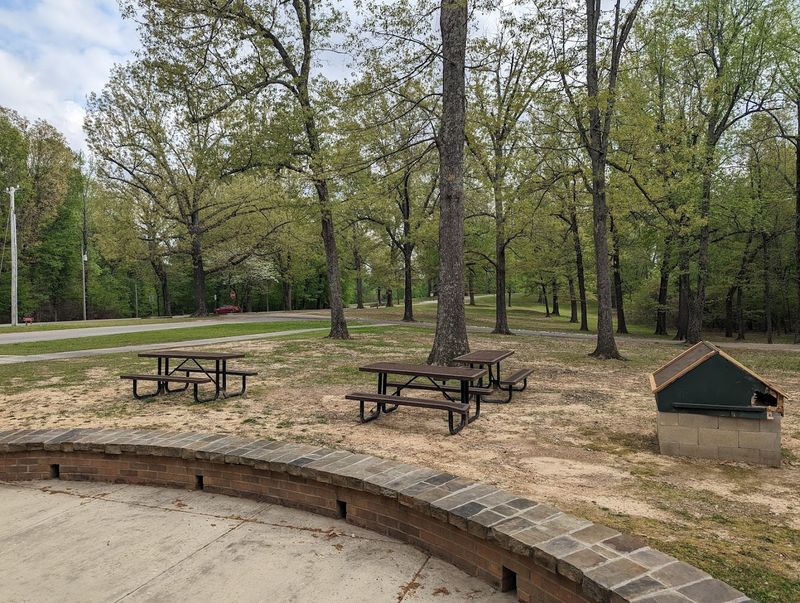
The park earns a 4.7-star rating across more than 450 reviews, which reflects a consistent visitor experience rather than one-off luck. Picnic tables and grills are spread throughout the grounds, making it easy to pack a lunch and spend the better part of a day without needing to leave for food.
Handicap-accessible parking and restrooms are available, and the trails are generally manageable for a wide range of mobility levels. One heads-up worth passing along: during winter months, only the campground restroom remains open, so plan accordingly.
The park sits close enough to Pocahontas that a quick errand run is always an option if needed.
A Place That Deserves Far More Attention Than It Gets
Honestly, this park should be on a lot more Arkansas road trip itineraries than it currently is. The combination of deep historical significance, hands-on interpretive features like the ghost structures and the flatboat replica, outdoor recreation, and a well-maintained campground makes it a genuinely complete destination rather than a quick roadside stop.
The rangers here clearly care about the place. The grounds are tidy, the exhibits are thoughtfully curated, and the overall atmosphere feels welcoming without being overcrowded.
That last part is actually one of the park’s quiet advantages: you can walk the old village trail, stand inside a ghost structure, and look out over the fishing lake without fighting through crowds.
Davidsonville was once the most important place in the Arkansas Territory, a bold little town that briefly held every major civic institution the region had. It lost that status within two decades, but the land kept its story intact, and this park makes sure that story does not disappear.
That is worth a visit, and probably a second one too.
Share this story