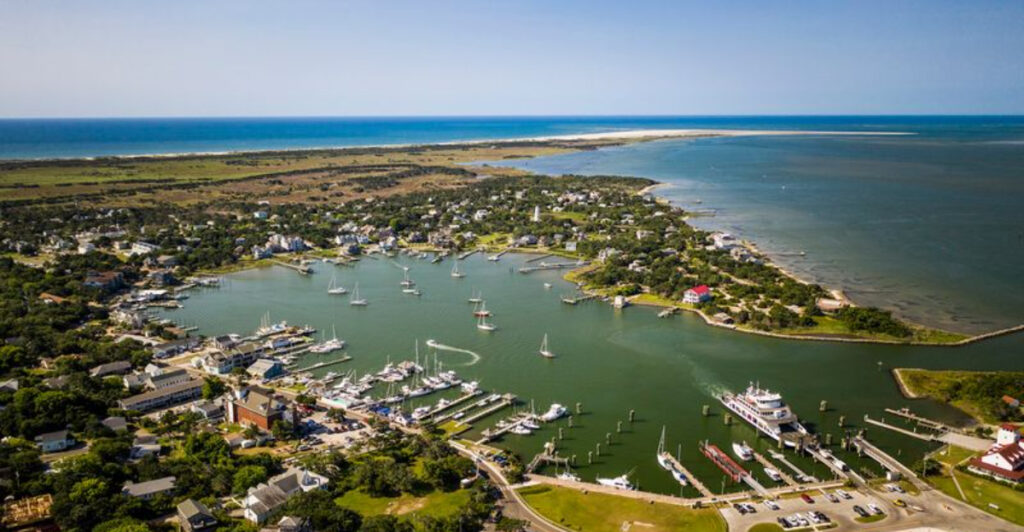
There is a small island off the coast of North Carolina that most people drive right past without knowing it exists. You cannot get there by car alone.
The only way in is by ferry, which already tells you something about how different this place feels from the rest of the world. Ocracoke Island sits tucked inside the Outer Banks, a long chain of barrier islands where the Atlantic Ocean meets Pamlico Sound, and it carries centuries of history in its salt-worn streets.
Pirates once anchored here. Lighthouse keepers once climbed the same narrow stairs that visitors climb today.
The village is small, quiet, and genuinely charming in a way that does not feel performed for tourists, and once you arrive, you will understand immediately why people keep coming back.
Getting to Ocracoke Island: The Ferry Ride That Sets the Tone
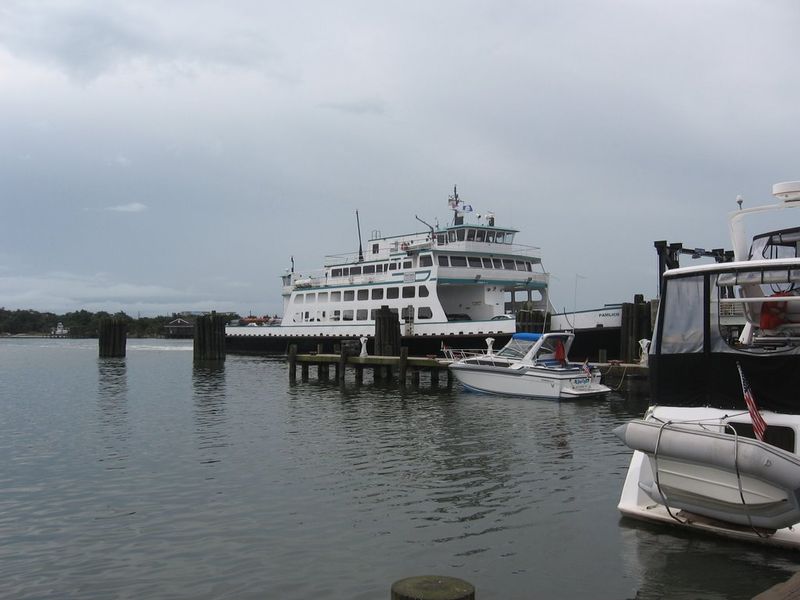
The ferry ride to Ocracoke is not just transportation. It is the official beginning of the experience, and the moment the mainland or Hatteras Island shrinks behind you, something shifts in your mood.
Ocracoke Island is located on the southern end of the Outer Banks in Hyde County, North Carolina 27960, accessible by ferry from three points: Cedar Island, Swan Quarter, and Hatteras Island. The Hatteras ferry is free and takes about 40 minutes, while the Cedar Island and Swan Quarter routes are toll ferries that take closer to two and a half hours.
I took the Cedar Island ferry on my first visit, and those two-plus hours on open water with nothing but pelicans and the occasional dolphin fin breaking the surface were worth every minute. You can stay in your car or walk the deck, and the salt air hits differently when there is no bridge or road connecting you to anywhere else.
The ferry schedule changes by season, so checking the North Carolina Ferry System website before you go is genuinely important. Missing a ferry on this island is not a minor inconvenience.
It is a whole new plan.
Blackbeard’s Last Stand: The Pirate History That Defines the Island
Ocracoke and pirates are practically the same story told in different fonts. The island’s most famous historical chapter involves Edward Teach, better known as Blackbeard, one of the most notorious pirates of the early 1700s.
Blackbeard used Ocracoke Inlet as a base of operations, taking advantage of the shallow, maze-like waterways that larger naval ships could not easily navigate. In November 1718, British naval forces under Lieutenant Robert Maynard cornered Blackbeard in these very waters, and a fierce battle ended with Blackbeard’s capture.
The inlet where that confrontation happened is still called Teach’s Hole, and it sits just off the southern tip of the island. There is a small attraction called Teach’s Hole Blackbeard Exhibit near the village where you can learn the full story, including details about the battle that are surprisingly dramatic even by modern action-movie standards.
What makes this history feel so alive on Ocracoke is that the landscape has barely changed. The same shallow inlets, the same winding channels, the same low horizon that Blackbeard would have known are still very much present, and standing at Teach’s Hole makes that era feel genuinely close.
The Ocracoke Lighthouse: A Living Piece of American History
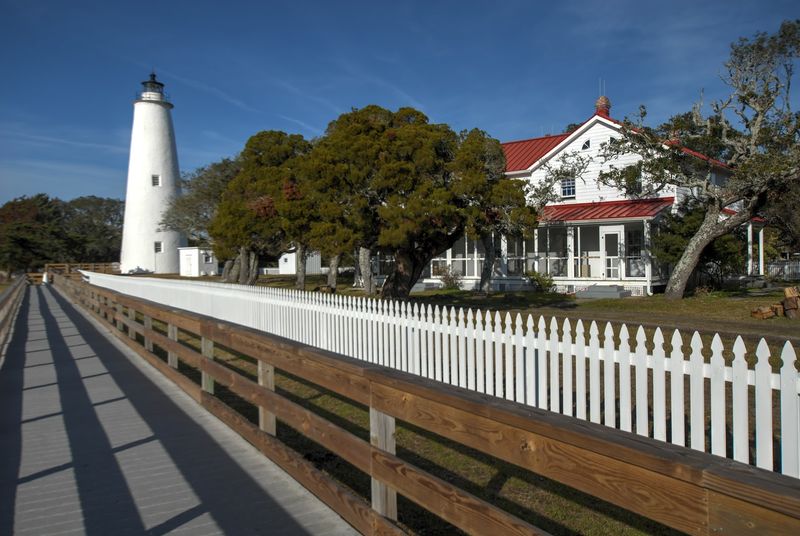
At 75 feet tall and painted a clean, bright white, the Ocracoke Lighthouse is the oldest operating lighthouse in North Carolina and one of the oldest in the entire country. Built in 1823, it has been guiding ships through the tricky shoals of Ocracoke Inlet for over two centuries without a single significant structural failure.
The lighthouse is not open for climbing, which I will admit was a small disappointment, but standing at its base and looking up at that thick, tapered brick tower still delivers a real sense of awe. The keeper’s quarters next door have been preserved, and the whole grounds feel like a quiet outdoor museum that nobody has tried too hard to commercialize.
The light itself still functions, flashing a fixed white beam every few seconds after dark. Watching it blink from the harbor at night, with Silver Lake reflecting the glow, is one of those simple travel moments that somehow lands harder than any ticketed attraction.
The lighthouse grounds are free to visit and open daily. Early morning is the best time to go, before the day-trippers arrive on the ferry and the small parking area fills up with bicycles and golf carts parked at every angle imaginable.
Silver Lake Harbor: The Heart of the Village
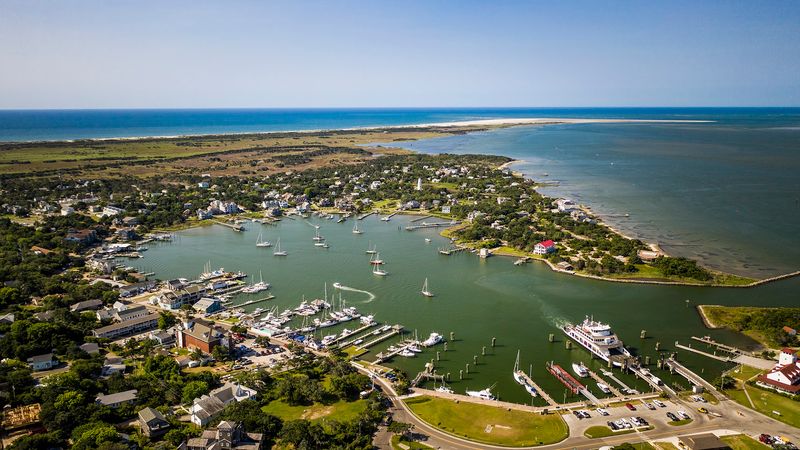
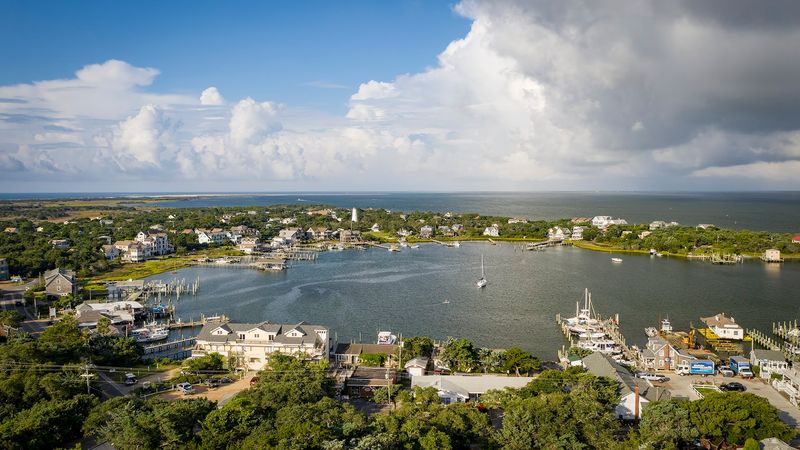
Silver Lake is the natural harbor that sits right at the center of Ocracoke village, and it functions as the social and commercial heartbeat of the entire island. The water is calm and sheltered, ringed by docks where fishing boats, sailboats, and small ferries tie up throughout the day.
Restaurants and shops line the harbor’s edge, and the combination of fresh seafood smells, boat fuel, and salt air creates a sensory atmosphere that is immediately recognizable as a working waterfront. This is not a manufactured marina built for resort guests.
It is a real harbor that real fishermen have used for generations.
I spent one full afternoon just sitting at a waterfront picnic table with a bowl of clam chowder, watching the boats come and go. The pace of life around Silver Lake is genuinely slow in the best possible way, and nobody seems to be in a hurry to get anywhere.
At sunset, the harbor turns a deep amber and the reflections on the water are the kind of thing that makes you reach for your camera even if you are not normally a photographer. The whole scene feels almost too picturesque to be real, but it absolutely is.
The Ocracoke Preservation Society Museum: Stories in a Small House
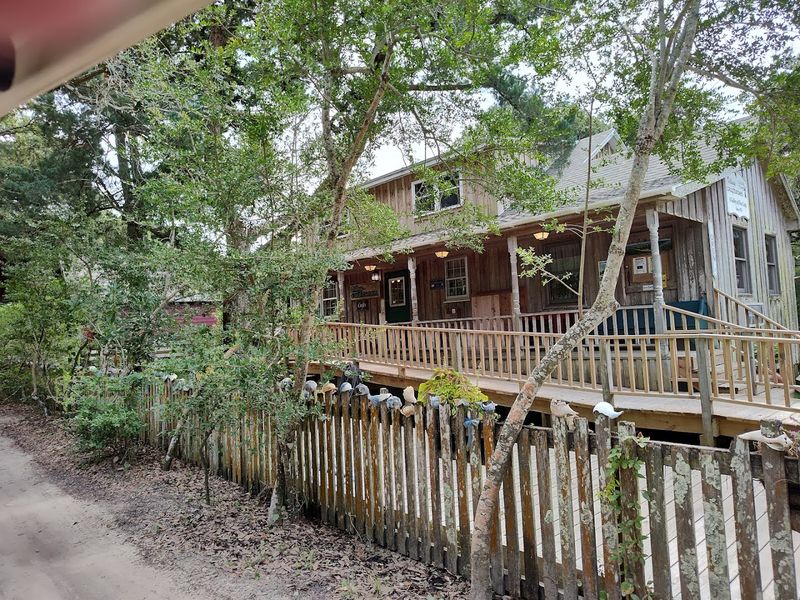
History museums on small islands tend to punch well above their weight, and the Ocracoke Preservation Society Museum is a perfect example of that pattern. Housed in a charming early 1900s home on the edge of the village, the museum traces the full arc of island life from its earliest maritime roots through the twentieth century.
The exhibits cover everything from the island’s fishing and boating traditions to its role in World War II, the unique Ocracoke brogue dialect spoken by longtime residents, and the daily realities of living on an isolated barrier island before modern infrastructure arrived. The brogue section alone is worth the visit.
Locals here developed a distinct accent that linguists have studied for decades, and hearing recordings of it feels like discovering a tiny linguistic island within the geographic one.
Admission is free, though donations are warmly encouraged and genuinely go toward preservation work. The staff and volunteers are knowledgeable and happy to answer questions, and the whole visit takes about 45 minutes at a relaxed pace.
The museum also sells a small collection of local history books and guides that make excellent souvenirs, especially if you want to keep reading about the island long after the ferry has carried you back to the mainland.
The British Cemetery: A Quiet Memorial With a Remarkable Story
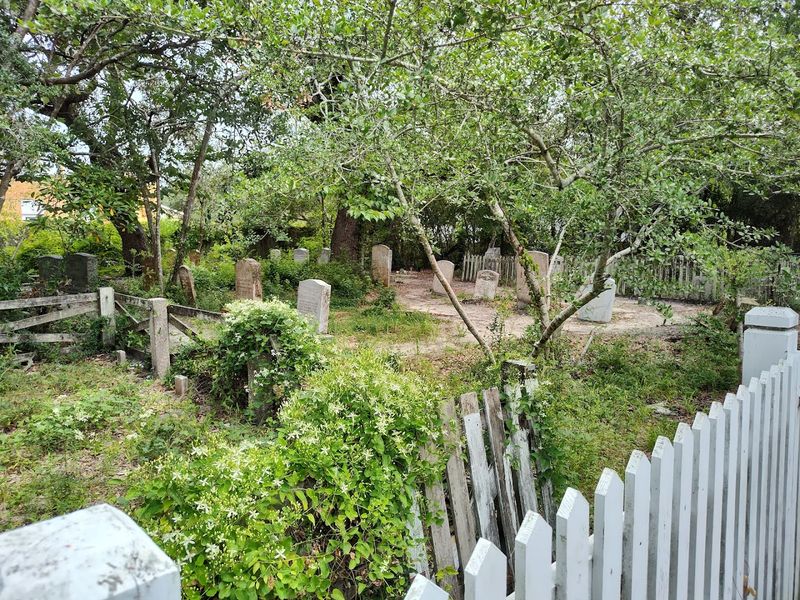
Tucked behind a white picket fence on a narrow lane near the village center, the British Cemetery is one of the most unexpectedly moving spots on the entire island. It holds the graves of four British Royal Navy sailors who lost their lives in May 1942 when their vessel, HMS Bedfordshire, was torpedoed by a German submarine off the North Carolina coast.
The bodies washed ashore on Ocracoke, and the island’s residents buried them with full honors. Because no suitable British soil was available, the United States government officially transferred a small parcel of land to the United Kingdom, which means this tiny cemetery is technically British territory on American soil.
The British government maintains the site through its consulate, and a formal ceremony is held every year in May to honor the sailors. A Union Jack flies above the graves year-round, which creates a quietly striking visual against the backdrop of low coastal trees and sandy island soil.
The cemetery is open and free to visit at any time. It is a short walk or bike ride from the main harbor area, and the combination of its small size and significant story makes it one of those places that stays with you long after you leave.
Getting Around the Island: Golf Carts, Bikes, and No Traffic Lights
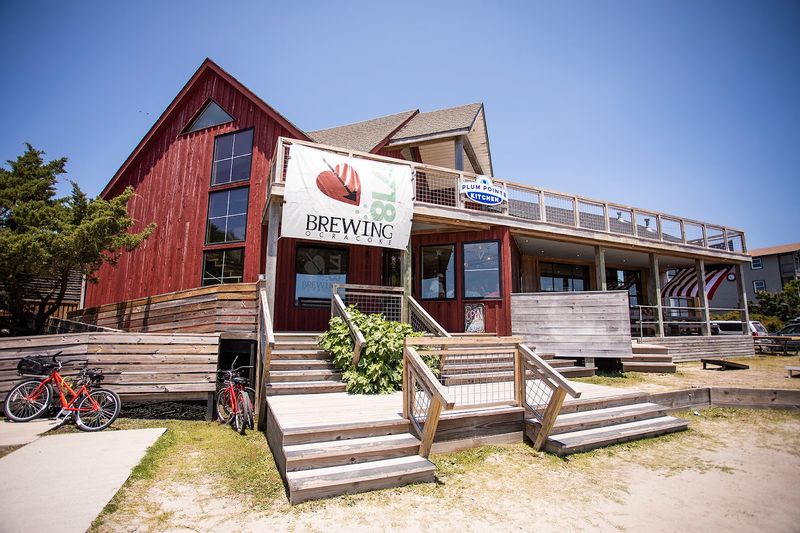
Ocracoke village covers a relatively small area, and the absence of traffic lights anywhere on the island tells you a lot about the pace of life here. The most popular ways to get around are bicycles and golf carts, both of which can be rented from several shops near the harbor for reasonable daily rates.
Bikes are my personal preference because the island is flat enough that even casual cyclists can cover a lot of ground without breaking a real sweat. The main roads through the village are paved, and several sandy paths cut through the maritime forest that feels like a completely different world from the harbor just a few minutes away.
Golf carts are a good option if you are traveling with young kids or have a lot of gear to carry. They are slow, quiet, and easy to park anywhere, which fits the island’s general philosophy about not rushing anywhere unnecessarily.
Cars are allowed on the island, and there is a state highway that runs through, but driving a full-sized vehicle through the narrow village lanes feels slightly absurd once you realize that a bicycle gets you everywhere faster and with considerably more charm attached to the journey.
Ocracoke Beach: Wide, Wild, and Almost Empty
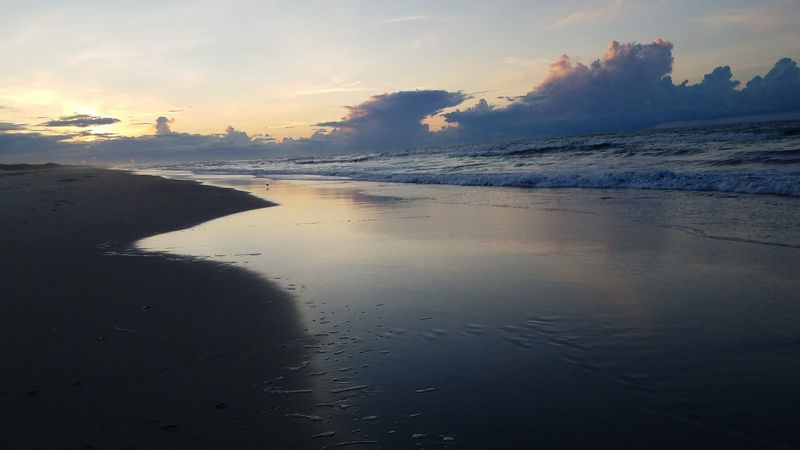
The beach on the ocean side of Ocracoke Island is the kind that reminds you what beaches looked like before development arrived with its parking lots and souvenir stands. Miles of undeveloped shoreline stretch along the Atlantic side of the island, managed as part of the Cape Hatteras National Seashore.
There are no hotels directly on the beach, no boardwalks, and no vendors selling overpriced snacks. What you get instead is clean sand, strong waves, and a horizon with absolutely nothing on it.
On weekdays, especially in the shoulder seasons of spring and fall, you can walk for long stretches without passing another person.
The water is warm enough to swim in comfortably from late May through September, and the waves have enough energy to make bodyboarding genuinely fun without being dangerous for average swimmers. Surfers also make use of the beach when swells cooperate.
Beach access is free, and several pulloffs along the highway provide parking for those who drive. Bringing your own chairs, umbrellas, and food is the standard approach since facilities are minimal by design.
That minimalism is not a flaw. It is precisely what makes this stretch of coast feel like a reward for the effort of getting here.
Local Food and the Fresh Seafood Scene
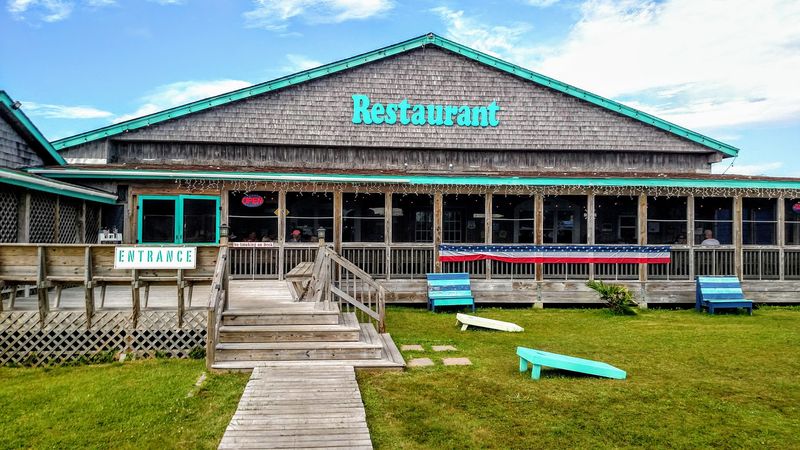
Eating well on Ocracoke requires very little effort because the island’s restaurants are almost universally focused on the seafood that comes directly from the surrounding waters. Shrimp, blue crab, clams, and fresh fish show up on nearly every menu in forms ranging from casual fish tacos to more carefully plated dinner plates.
The clam chowder at several spots around the harbor is thick, creamy, and loaded with clams in a way that chain restaurants have never successfully replicated. The local shrimp, caught in the nearby sounds and inlets, have a sweetness and texture that frozen shrimp simply cannot match, and you notice the difference immediately.
Most restaurants are small, independently owned, and operating on island time, which means service is relaxed and hours can shift depending on the season and the ferry schedule. Checking hours before you walk over is a habit worth developing quickly.
A few casual spots near the harbor also do excellent breakfast, with biscuits, eggs, and local fish that make a strong case for starting your day slowly with a harbor view. The whole food culture here is unfussy and generous, which suits the island’s personality perfectly and leaves you feeling genuinely well fed rather than just full.
Best Time to Visit and What to Expect Each Season
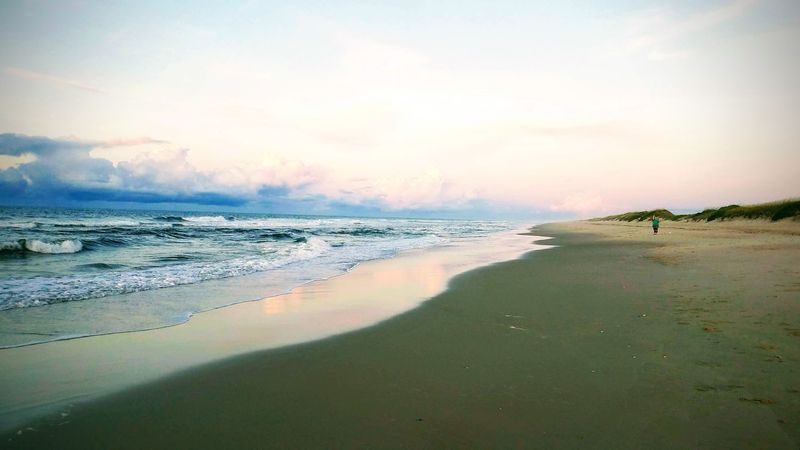
Timing your visit to Ocracoke matters more than it does for most destinations because the island’s small size means that the difference between a crowded summer weekend and a quiet October Tuesday is enormous. Summer, from late June through August, brings the largest crowds, the warmest water, and the longest waits for the ferry.
Spring and fall are the seasons that regular Ocracoke visitors tend to guard like a secret. From April through early June and again from September through November, the weather is mild, the beaches are nearly empty, and the restaurants are fully operational without the summer wait times.
Fall in particular brings a quality of light and a quietness to the village that feels almost theatrical in how perfect it is.
Winter is quiet to the point of being sparse, with some restaurants and shops closing entirely from December through February. That said, a small number of visitors specifically seek out the winter island for its near-total solitude, and the lighthouse and cemetery are accessible year-round regardless of season.
Hurricane season runs from June through November, and being on a barrier island means paying attention to weather forecasts more seriously than you might elsewhere. Flexibility in your travel plans is not optional here.
It is simply part of the deal.
Share this story