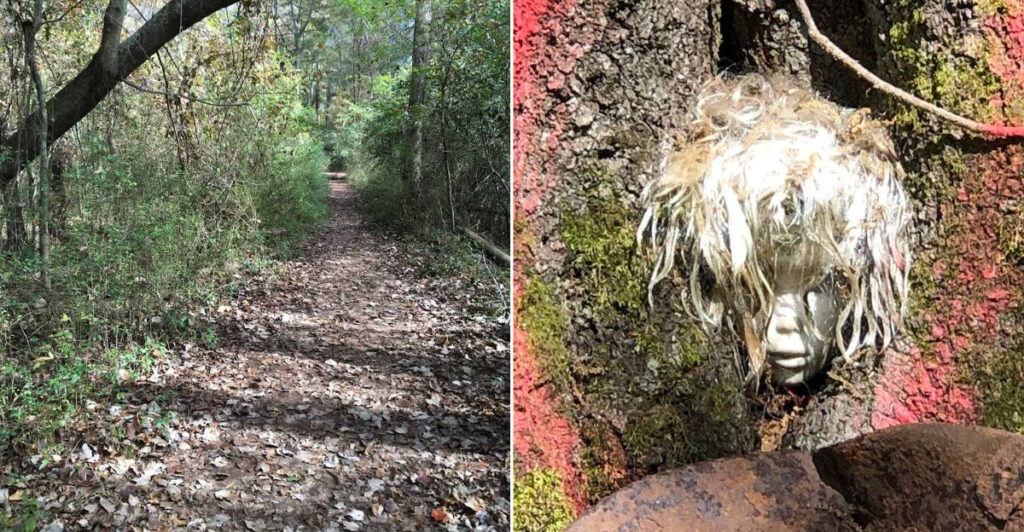
Somewhere in Atlanta, tucked inside a city park most people drive right past, there is a trail decorated with the hollow stares of old doll heads mounted on sticks, nailed to trees, and arranged along the forest floor. It is not a Halloween installation.
It is not a horror film set. This place is a genuine, year-round outdoor art experience built entirely from objects found at the site, and it has been quietly drawing curious walkers for years.
The trail blends wetland scenery, local wildlife, and found-object art into something that genuinely has no comparison anywhere else in Georgia. Whether you find it unsettling or brilliant probably depends on your relationship with old toys, but either way, you will not forget it.
The Story Behind the Doll Heads
The Doll’s Head Trail did not arrive with a city planning grant or an arts commission budget. It grew organically from one person’s decision to do something creative with the debris that kept washing up along the lakeshore.
Joel Slaton, a regular at Constitution Lakes Park, began collecting discarded objects he found in and around the water and arranging them into sculptures along the trail.
Old doll heads, toy parts, broken household items, and other weathered debris became the raw material for an outdoor gallery that nobody officially approved but nobody could bring themselves to remove either. The project caught on, and over time other trail users began contributing their own found-object arrangements.
What started as one person’s quirky habit became a community art tradition that now defines the entire trail experience. The history behind it gives every mounted doll head a kind of quiet backstory, turning a simple walk through the woods into something that rewards curiosity at every turn.
What the Art Actually Looks Like

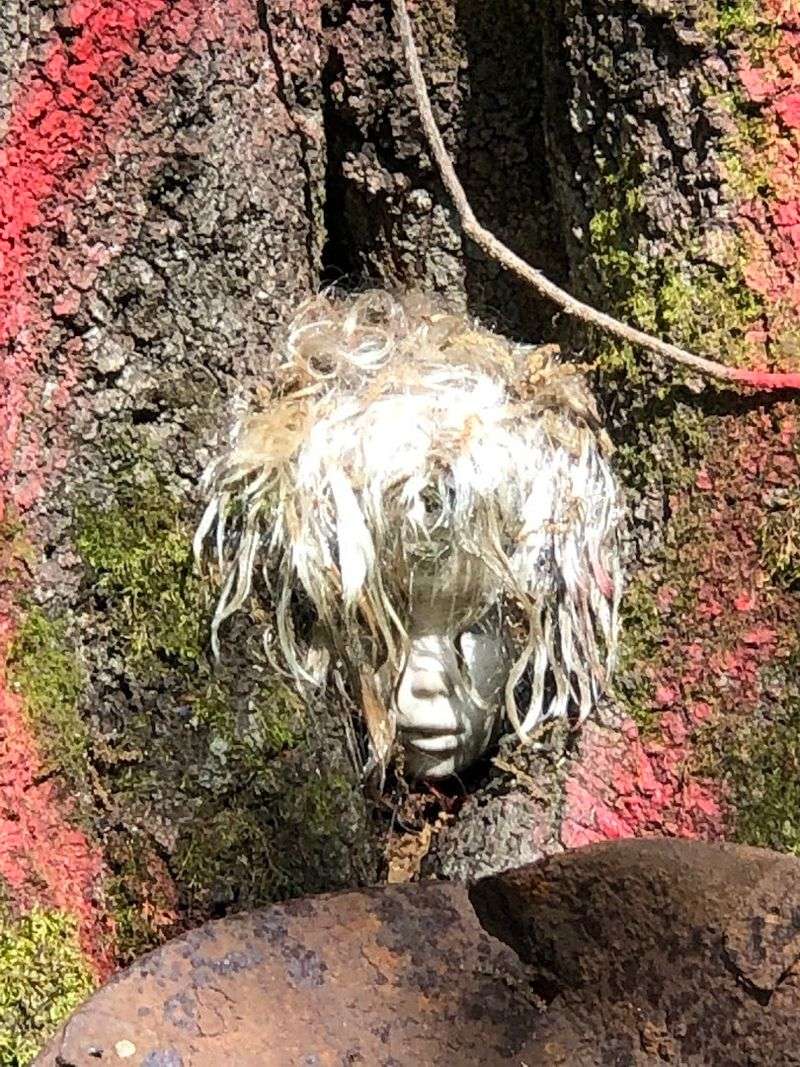
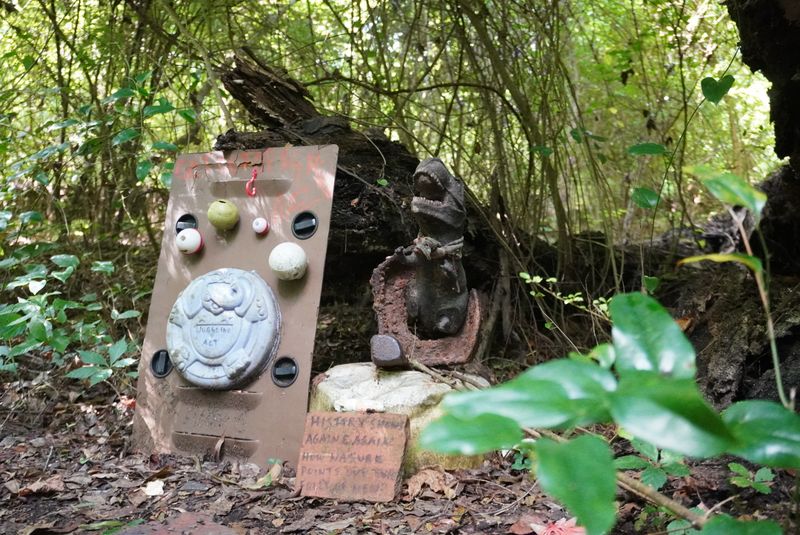
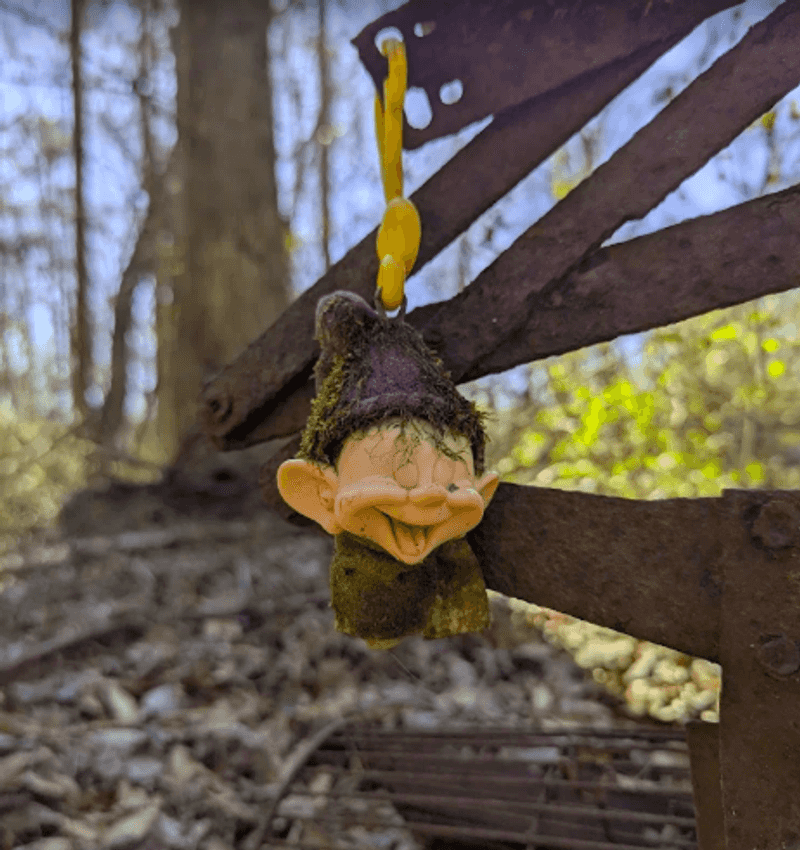
The sculptures along the Doll’s Head Trail are not polished gallery pieces. They are arrangements of weathered plastic, cracked porcelain, rusted metal, and faded fabric, stacked and mounted in ways that range from playful to genuinely unsettling depending on the light and your imagination.
Doll heads are the most iconic element, often placed on stakes or attached to tree trunks at eye level so they face the path directly. Some have been there long enough that the forest has started to grow around them, with moss and bark slowly claiming the plastic edges.
Beyond the doll heads, the trail features toy trucks, kitchen tools, wire figures, and assemblages that look like they belong in a contemporary art museum but happen to be sitting in the middle of a Georgia wetland. Each piece is different, and returning visitors consistently report finding new arrangements they had not noticed before, which keeps the trail feeling fresh across multiple visits.
How Long the Trail Actually Takes
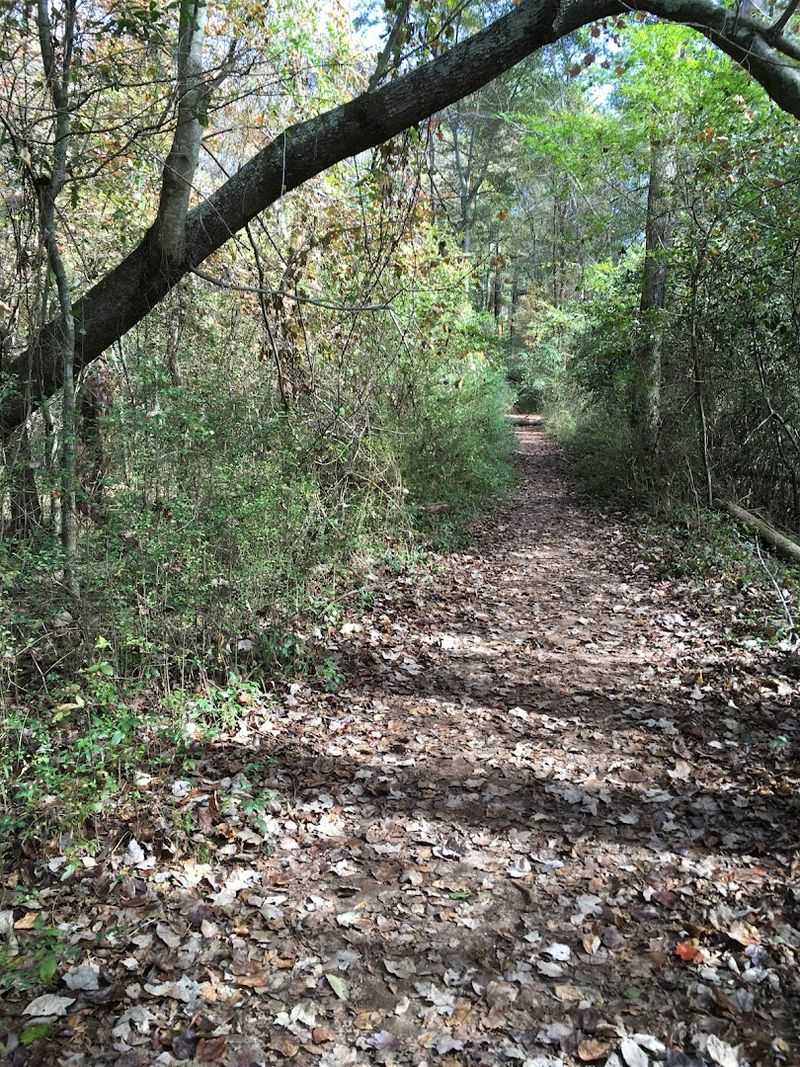
The Doll’s Head Trail is part of a loop that covers roughly 2.5 miles in total when combined with the broader Constitution Lakes trail system. Most people complete the full loop in about an hour, though that estimate stretches considerably if you stop to look at every sculpture, which most first-time visitors end up doing.
The terrain is not demanding. The path is relatively flat, with a mix of dirt trail, gravel sections, and a boardwalk that crosses over marshy areas near the lake.
The boardwalk has experienced some damage over the years and can be uneven in spots, so watching your footing there is a good habit.
After heavy rain, sections of the trail can turn muddy, especially the unpaved stretches closer to the water. Wearing shoes you do not mind getting dirty is a practical move.
The overall difficulty level makes the trail accessible to most ages and fitness levels, which is part of why it draws such a wide range of people throughout the week.
The Wetland Setting That Frames Everything
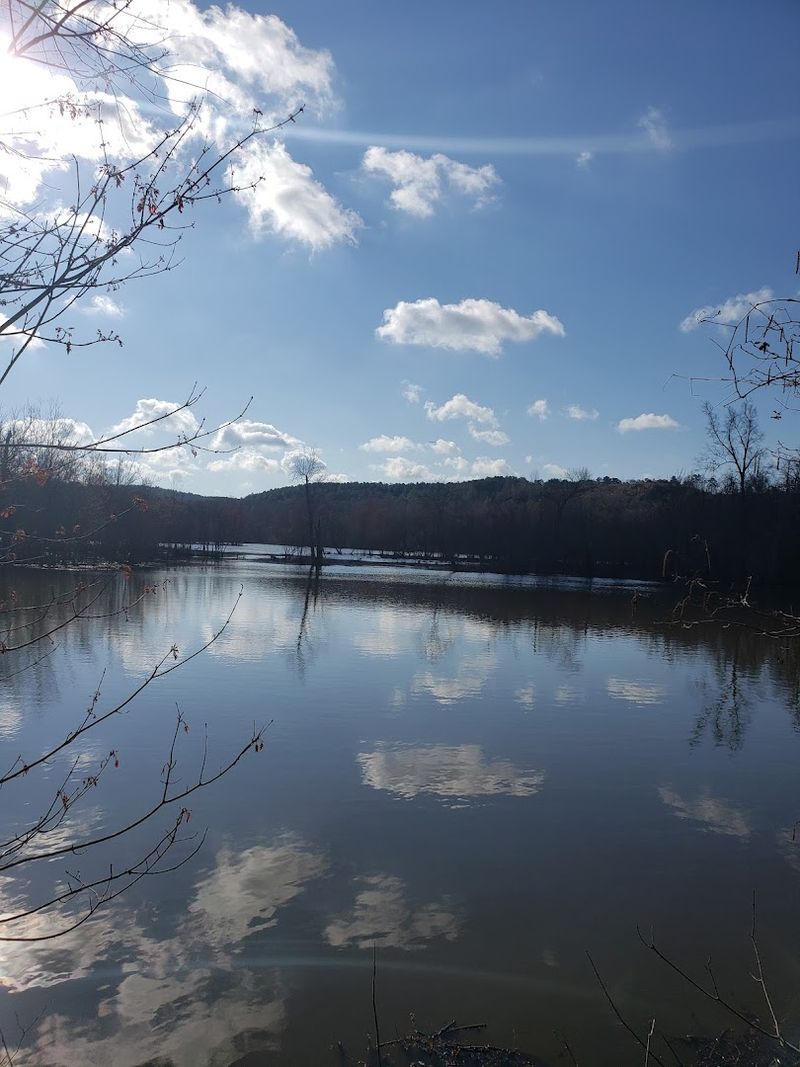
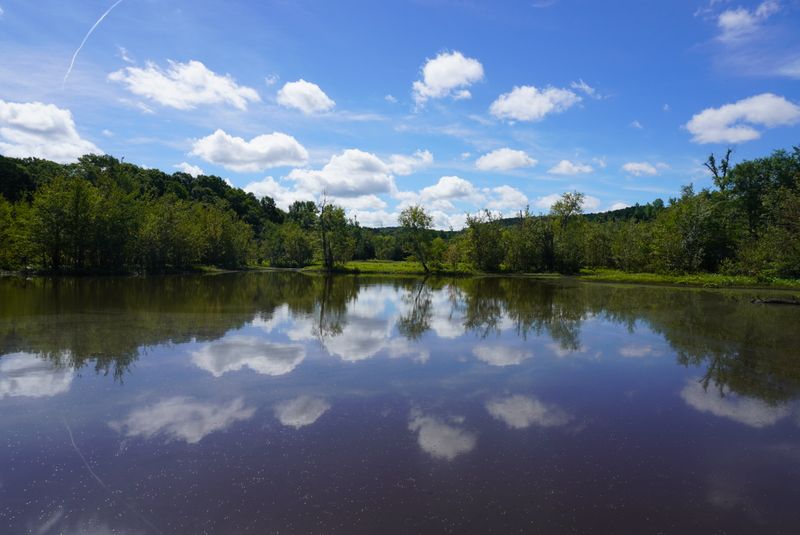
The art gets most of the attention, but the natural setting of Constitution Lakes Park is genuinely worth the trip on its own. The park sits on a former brick quarry site that has since filled with water and been reclaimed by Georgia’s native wetland ecosystem, creating a landscape that feels more like coastal marshland than anything you would expect to find inside Atlanta’s city limits.
Great blue herons are a common sight along the water’s edge. Turtles surface near the boardwalk, and fish can be spotted moving through the shallower sections of the lake on clear days.
Lizards dart across rocks and tree roots along the trail, and the tree canopy overhead provides thick coverage that makes the walk comfortable even in warmer months.
The combination of urban art installation and functioning wetland habitat is what makes the trail genuinely unique. Very few places in any American city offer that particular pairing, and Constitution Lakes pulls it off without either element competing with the other.
The Political Edge Hidden in the Art
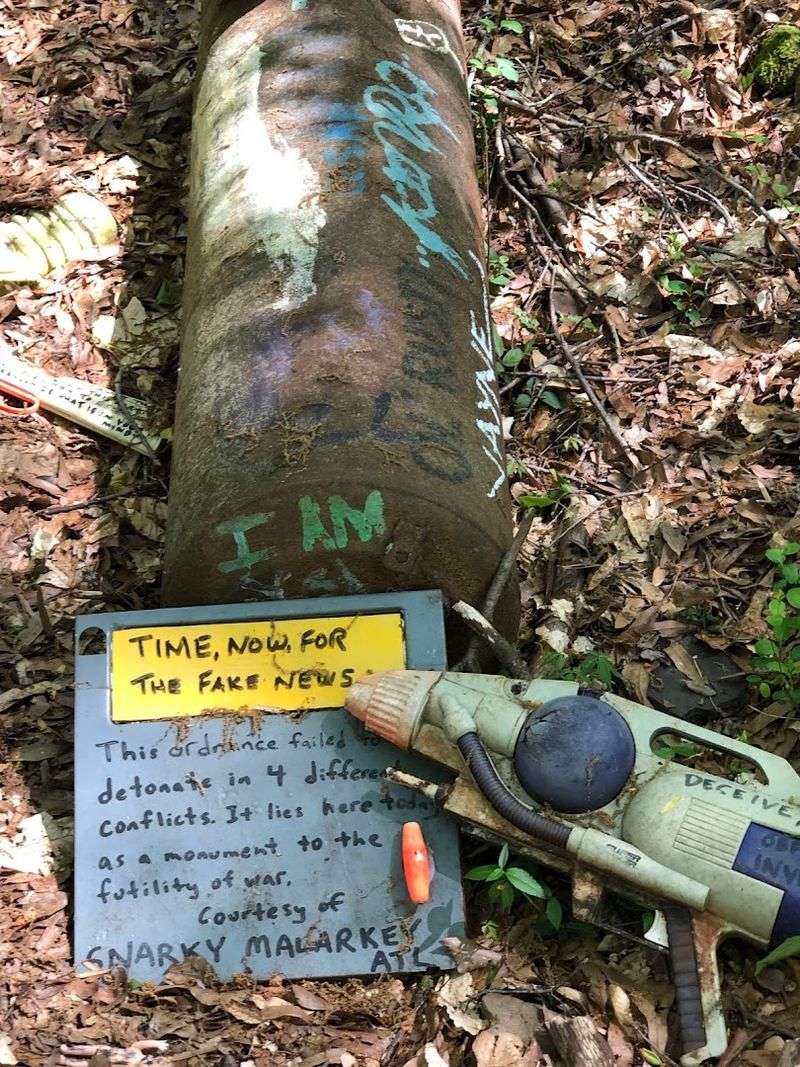
Not every piece along the Doll’s Head Trail is purely decorative. Some of the hand-assembled works carry messages, and a fair number of the handmade signs posted along the route touch on social and political themes.
The signage is direct, sometimes pointed, and clearly the work of people who see the trail as more than just a place to display old toys.
This layer of the trail has divided opinions among regular walkers. Some find the commentary refreshing and see it as a natural extension of the found-art concept, since using discarded objects to make a point about consumption and community is a coherent artistic statement.
Others prefer to focus on the more neutral sculptural elements and treat the political signs as background noise.
Either way, the presence of that commentary gives the trail a dimension that most nature walks completely lack. It reflects the fact that the art here was never meant to be comfortable or universally appealing, and that tension is actually a big part of what makes the Doll’s Head Trail worth discussing long after the walk is over.
Best Time of Day to Visit

The trail operates during daylight hours and the experience shifts noticeably depending on when you arrive. Midday visits in summer can feel warm under the tree canopy, though the coverage does help keep the temperature more manageable than open paths would.
Morning visits tend to be quieter and cooler, with more wildlife activity near the water.
Late afternoon is widely considered the most atmospheric time to walk the Doll’s Head Trail, particularly as the light drops lower through the trees and the shadows around the sculptures deepen. The combination of fading daylight and the fixed stares of the doll heads creates an effect that the midday sun simply does not produce.
Weekday visits are noticeably less crowded than weekends, which matters if you want time to examine the sculptures without other groups moving through at the same pace. The trail is open year-round, and even winter visits have their appeal, since the bare trees open up views of the lake that the summer canopy hides completely.
Getting There Without Getting Lost

Navigation to the Doll’s Head Trail has tripped up more than a few first-time visitors. Standard map searches for the trail name or the park name sometimes route drivers to access points that have no connection to the lake or the trail itself.
The address that actually works is 1305 S River Industrial Blvd SE, Atlanta, GA 30315, which brings you to the correct parking area with proper access to the park.
Searching for Constitution Lake directly in a mapping app also tends to produce more accurate results than searching for the trail by name. The parking lot is gravel, the driveway entrance is rough, and the setup is not what most people expect from a city park, but that is part of the character of the place.
From the parking area, a paved walking path leads toward the lake, and from there the trail signs guide the rest of the journey. Following those signs rather than guessing at forks in the path will save time and keep the visit on track from the start.
How the Trail Changes With Every Visit

One of the more unusual qualities of the Doll’s Head Trail is that it is not a fixed installation. The sculptures evolve continuously as new objects are added, old pieces deteriorate or are rearranged, and the surrounding vegetation grows around or through the existing works.
A visit in spring will look different from a visit in autumn, and a visit this year will not be identical to one from three years ago.
Regular walkers at Constitution Lakes Park have described finding pieces they were certain were not there on their previous trip, even when visiting as frequently as once a week. The living, shifting quality of the art gives the trail a character that no static museum exhibit can replicate.
This ongoing evolution also means the trail rewards repeat visits in a way that most outdoor attractions do not. There is always something that has changed, something new to notice, or a familiar piece that now sits in a different relationship to the plants growing around it.
The trail essentially updates itself on its own schedule.
The Community That Keeps It Going
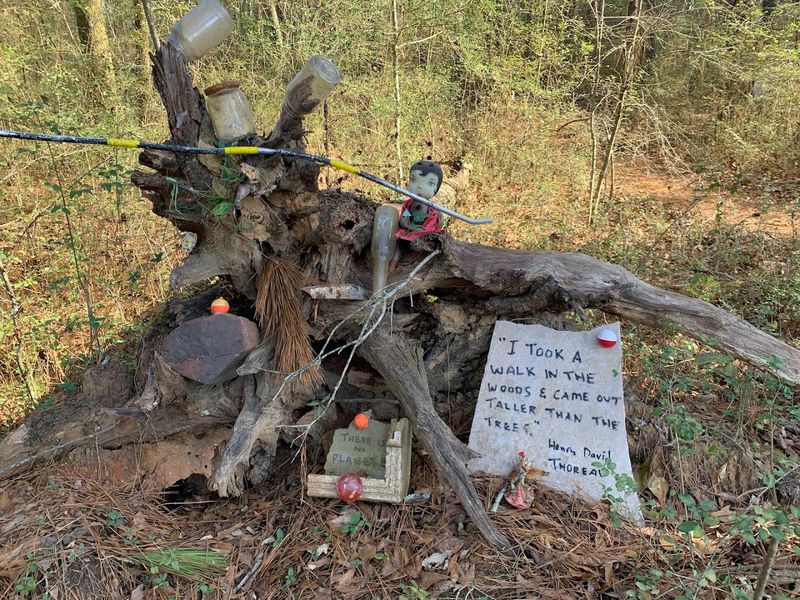
The Doll’s Head Trail exists because of community investment, not municipal funding. The people who built it, maintain it, and continue adding to it are regular park users who have developed a collective ownership of the space over years of informal participation.
That grassroots foundation is visible in everything from the handmade signs to the way new sculptures appear without any announcement.
Friends of Constitution Lakes is the volunteer organization that supports the park more broadly, helping with trail maintenance, boardwalk repairs, and general stewardship of the wetland habitat. Their work keeps the park accessible and functional in ways that the city’s parks budget alone would not sustain.
The trail has also developed a loose etiquette among regular visitors. The general understanding is that adding to the art is welcome, but removing or damaging existing pieces is not.
That informal agreement has held the community together around a shared creative project for long enough that the Doll’s Head Trail now has a genuine legacy behind it, one that keeps growing with each new contribution left along the path.
The Boardwalk and What It Crosses
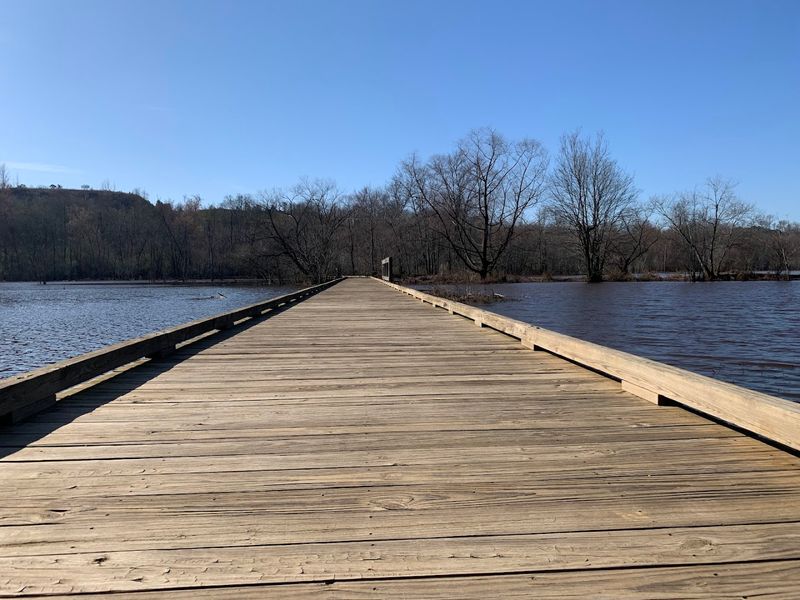
The boardwalk section of the Constitution Lakes trail system passes directly over the marshy areas that connect different parts of the lake. It is one of the more visually distinctive parts of the walk, offering close-up views of the water and the plants growing up through it that the dirt sections of the trail cannot match.
The boardwalk has had its share of weather damage over the years and certain planks require careful footing. The structure remains walkable and the views it provides are worth the extra attention underfoot.
On calm days, the reflection of the tree canopy on the water below the boardwalk makes the crossing feel more remote than the surrounding city would suggest possible.
Wildlife activity tends to be highest near the boardwalk, since it extends directly into the habitat rather than running alongside it. Turtles, fish, and wading birds are all commonly spotted from the railing.
For visitors who are combining the nature walk with the art trail, the boardwalk section serves as a natural pause point between the two experiences.
Why This Trail Stands Apart From Other Atlanta Hikes
Atlanta has a solid collection of urban trails, greenways, and parks, but nothing else in the city offers the particular combination that the Doll’s Head Trail delivers. The BeltLine provides connectivity and community programming.
Piedmont Park offers open green space and lake views. Stone Mountain gives you a dramatic geological landmark.
None of them have an evolving found-art installation built from decades of collected debris arranged by neighborhood artists with no institutional backing.
The trail’s location inside I-285 also makes it more surprising. Most people associate that kind of raw, unpolished natural environment with destinations much farther from the city center.
Finding a functioning wetland with herons, turtles, and a forest art installation within Atlanta’s urban boundary is the kind of discovery that resets expectations about what a city park can actually be.
The Doll’s Head Trail does not compete with Atlanta’s more polished outdoor attractions. It occupies its own category entirely, one that rewards the visitors who are willing to follow a gravel driveway to a handmade sign pointing left at the lake.
A Few Final Notes Before You Go
A handful of practical details will make the visit go more smoothly. The correct parking address is 1305 S River Industrial Blvd SE, and avoiding the Kenton Place area entirely is strongly recommended since that access point does not connect to the park.
Arriving with bug spray already applied rather than discovering you need it halfway around the loop is a simple move that pays off quickly.
The trail is free to access, which makes it one of the better no-cost outdoor experiences in Atlanta. There are no formal operating hours listed at the trailhead, but visiting during daylight is the standard approach and aligns with when the art is actually visible.
Bringing a camera or keeping your phone charged for photos is worth the small effort, since the sculptures change and what you see today may be arranged differently the next time around.
The Doll’s Head Trail is the kind of place that is genuinely difficult to describe to someone who has not been there, which is reason enough to go find out for yourself.
Where Exactly is This Trail
The trail sits inside Constitution Lakes Park in southeast Atlanta, Georgia, at the address 1305 S River Industrial Blvd SE, Atlanta, GA 30316. That specific address is worth saving to your phone before you go, because mapping to the general area can land you at spots with no lake access at all.
The park is located off Moreland Avenue, inside the perimeter of I-285, which makes it surprisingly accessible for a place that feels so removed from city life. A rough gravel driveway leads to a parking area, and from there a wide paved path guides you toward Constitution Lake itself.
Once you reach the lake, the Doll’s Head Trail branches off to the left. The signage is handmade and fits the character of the trail perfectly.
First-timers should follow the signs carefully and resist the urge to freelance a route, since the park has multiple paths that can pull you in the wrong direction.
Share this story