Some buildings refuse to retire, and these ancient theaters are perfect proof. Long after emperors, poets, and crowds in sandals disappeared, the shows somehow kept going.
Today, opera, concerts, festivals, and drama still light up these stone stages, giving you a front row seat to history that feels thrillingly alive. If you like your culture with a side of goosebumps, this list delivers.
Ancient Theatre of Epidaurus – Greece
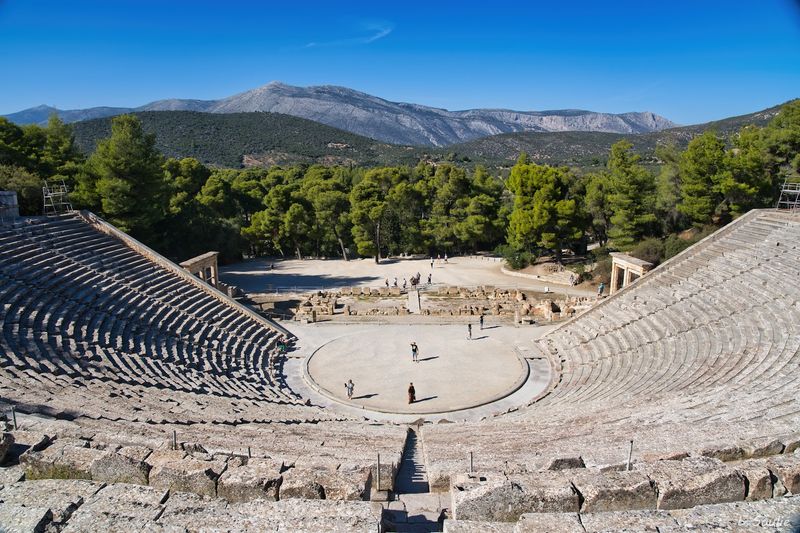
Whisper a line here and the whole hillside seems to lean in. The Ancient Theatre of Epidaurus is famous for acoustics so crisp that even modern visitors leave slightly suspicious.
Built in the 4th century BC, it still feels less like a ruin and more like a venue patiently waiting for the next cue.
The design is wonderfully disciplined, with perfectly arranged limestone seats stepping across the slope in a calm, confident curve. During the Athens and Epidaurus Festival, classical drama returns to the stage where it feels utterly at home.
You are not just watching a performance here – you are stepping into a setting that still understands timing, silence, and applause.
What makes Epidaurus special is its balance of grandeur and restraint. Nothing looks flashy, yet everything works beautifully, from the proportions to the way the landscape frames the theater.
The surrounding sanctuary atmosphere adds a quiet sense of occasion before the first actor even appears.
By the time evening settles in, the place becomes almost ridiculously atmospheric. Cicadas fade, the crowd hushes, and the stones seem to wake up.
Plenty of historic sites impress you, but Epidaurus somehow invites you to listen, stay longer, and imagine the encore never really ended.
Odeon of Herodes Atticus – Athens, Greece
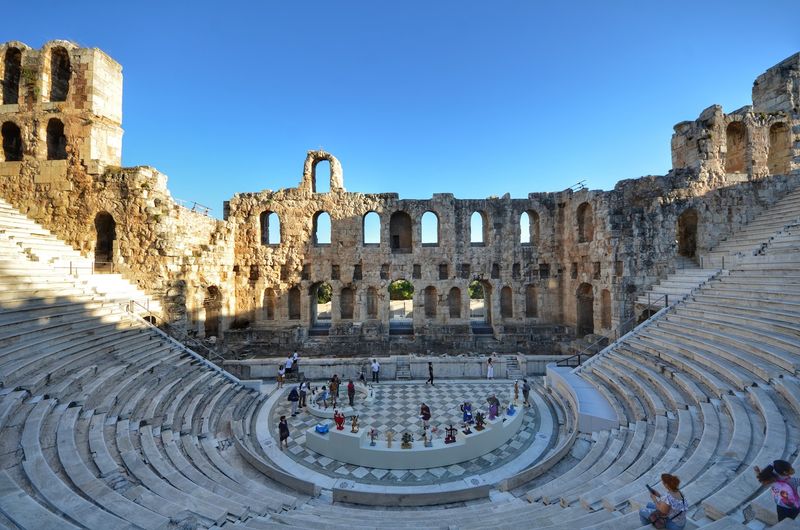
Few venues can compete with a backdrop that casually includes the Acropolis. The Odeon of Herodes Atticus sits on Athens’ southwestern slope looking impossibly photogenic, yet it is far more than a pretty face.
This Roman theater has been welcoming audiences for centuries, and it still knows how to make an entrance.
Originally built in the 2nd century AD, the odeon now hosts concerts, opera, dance, and theater during the Athens Epidaurus Festival. The stone seating rises steeply, creating an intimate sense of focus despite the grand setting.
When performers step onto the stage, the atmosphere feels ceremonial without becoming stiff.
Part of the venue’s magic comes from timing. Visit at dusk, and the fading light turns the old masonry honey gold while the city hums below.
Then the first notes begin, and suddenly ancient Athens feels startlingly present rather than safely locked behind museum glass.
I like that the Odeon does not coast on history alone. It remains active, glamorous, and surprisingly versatile, able to hold a symphony one night and a major contemporary concert the next.
If any place proves that old stones can still throw a memorable evening, this one absolutely does.
Verona Arena – Italy
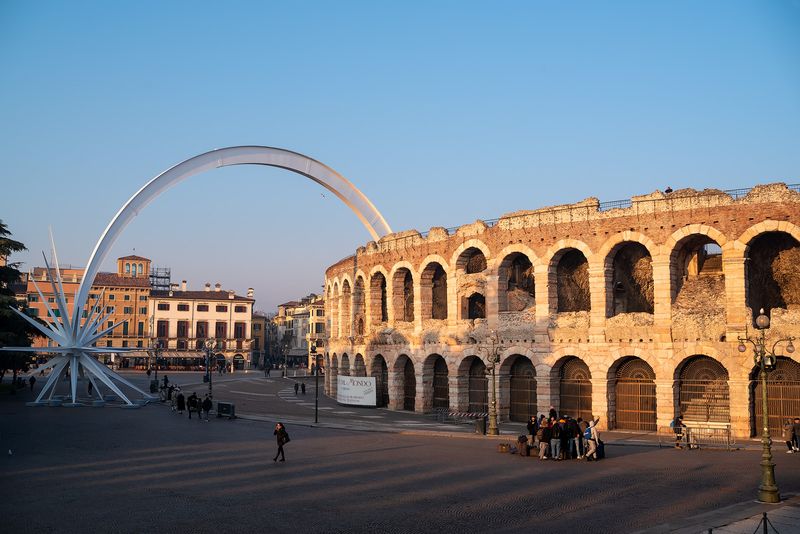
Opera under Roman arches sounds like the sort of idea someone invents to sell tickets, except Verona Arena really does it. Built around AD 30, this enormous amphitheater is one of the best-preserved Roman arenas anywhere.
It remains gloriously busy, especially when summer transforms it into one of the world’s great open-air opera destinations.
The scale is the first thing that hits you. From the outside, its curved stone shell looks sturdy enough to outlast several more centuries of standing ovations.
Inside, the vast seating bowl creates a communal thrill, as if everyone has agreed that grand drama deserves an equally grand home.
During festival season, the arena leans fully into spectacle. Costumes shimmer, orchestras swell, and the night air helps every scene feel slightly bigger than life.
Even if you arrive thinking you are only here for the architecture, there is a good chance the music changes your plans.
What I enjoy most is the venue’s confidence. Verona Arena does not need gimmicks when it already offers history, acoustics, and a setting that turns a simple evening out into an event.
It feels both monumental and welcoming, which is a rare trick for a building that once entertained ancient crowds and still absolutely can.
Roman Theatre of Orange – France
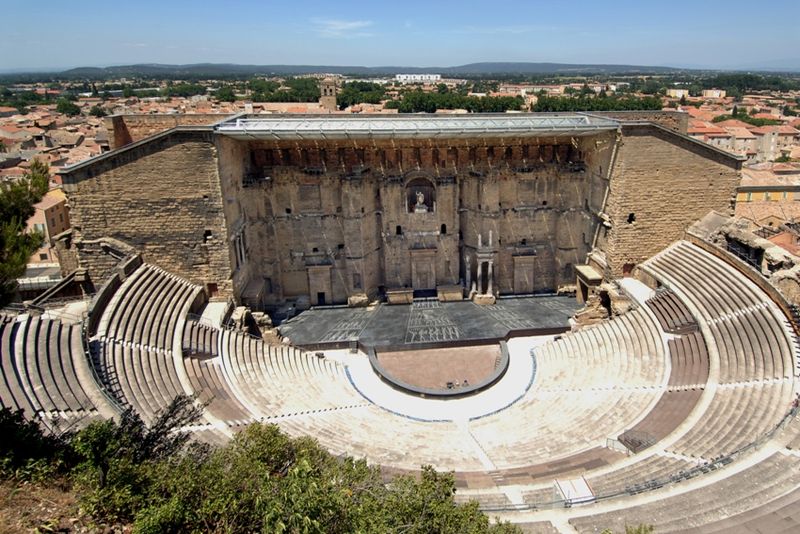
That towering stage wall is not subtle, and honestly, it does not need to be. The Roman Theatre of Orange delivers one of antiquity’s most impressive surviving backdrops, and it still knows how to command attention.
In a world full of fragments, this theater feels thrillingly complete.
Built in the early Roman imperial period, Orange is celebrated for preserving its monumental scaenae frons with remarkable integrity. The structure gives performances an immediate sense of drama before a single note is sung.
Today, the venue serves as the home of the prestigious Chorégies d’Orange opera festival, which is a very elegant way of saying the place still puts on a show.
The acoustics and setting work together beautifully. Stone seating faces that immense wall, creating a focused, almost cinematic sense of anticipation.
When evening settles over Provence and the lights rise, the whole site feels less archaeological and more alive than many modern performance spaces.
I appreciate Orange because it refuses to be merely impressive from a distance. Once you are inside, the scale becomes intimate in a strange, memorable way, as if the architecture is leaning closer.
Historic venues often ask for admiration, but this one earns something better – genuine excitement about what happens when the curtain rises.
Aspendos Theatre – Turkey
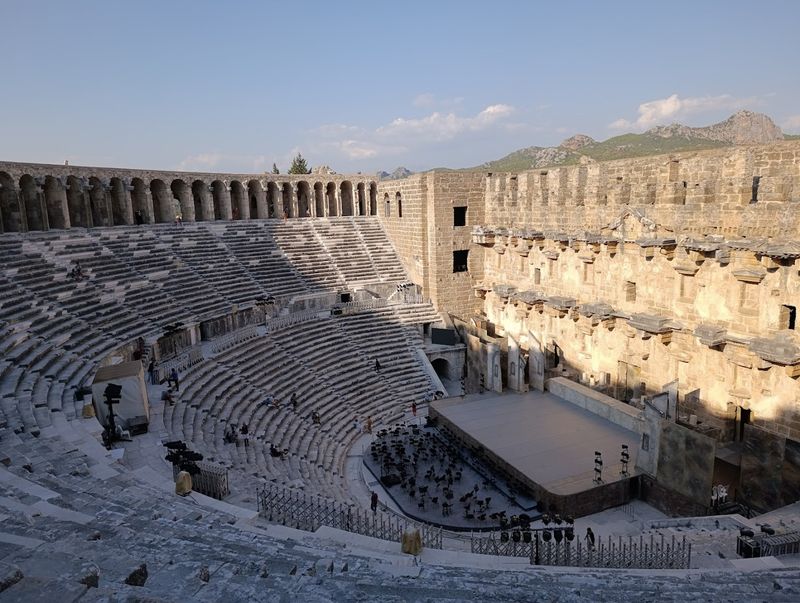
Some ruins whisper about the past, but Aspendos practically clears its throat and begins the performance. Often called the best-preserved Roman theater in the world, it looks astonishingly ready for use.
You can see why concerts and festivals still gravitate here instead of treating it like a silent relic.
Built during the reign of Marcus Aurelius, Aspendos has survived with a completeness that feels almost unfair to lesser ruins. The seating, stage building, and overall form remain strikingly legible, which makes the ancient engineering easy to admire.
Better yet, the theater’s acoustics continue to impress audiences who arrive with phones and leave talking about Roman know-how.
The site also benefits from a dramatic sense of setting without feeling overproduced. Sunlight sharpens every line in the stone, and the high cavea offers a view that makes the structure seem even more commanding.
During an event, the place gains a fresh pulse that fits naturally rather than feeling staged for tourists.
What I like most about Aspendos is its straightforward brilliance. It does not need a heavy sales pitch, because the architecture does the talking with calm confidence.
If you want proof that practical design can become timeless beauty, this theater makes the argument in one very convincing evening.
Pula Arena – Croatia
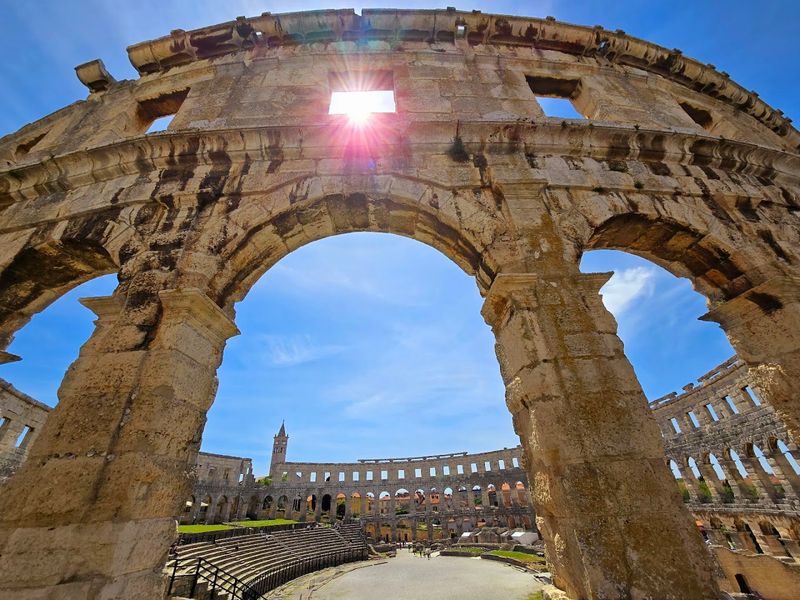
There is something delightfully bold about a Roman arena turning up beside the Adriatic and still being the coolest venue in town. Pula Arena is one of the six largest surviving Roman amphitheaters, and it wears that distinction with easy confidence.
It also remains wonderfully active, hosting concerts, film festivals, and cultural events inside its ancient shell.
The exterior is especially memorable, with pale limestone arches rising cleanly against the Croatian sky. Unlike many historic sites that feel fenced off from modern life, Pula Arena stays connected to the city’s rhythm.
When crowds gather for an event, the old structure suddenly feels less distant and much more like a civic living room with very impressive masonry.
The mix of uses gives the arena extra charm. One evening might bring a film screening, another a major concert, and both somehow suit the setting.
The architecture retains its gravity, but the mood can shift from reflective to festive without strain.
I enjoy Pula because it balances spectacle and approachability so well. It is grand, yes, but it never feels overly solemn or museum quiet.
If you want an ancient venue that can handle cultural prestige and a lively summer night with equal ease, Pula Arena absolutely understands the assignment.
Arènes de Nîmes – France
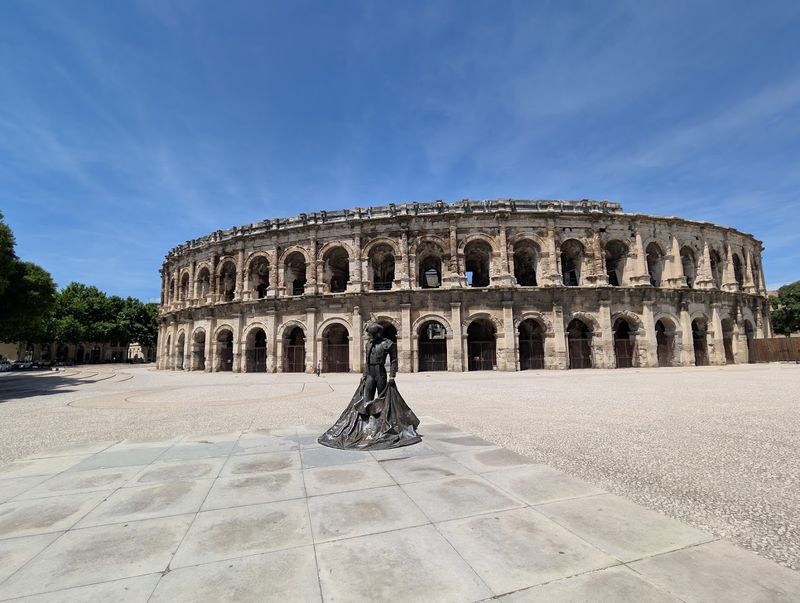
At Arènes de Nîmes, the Romans built big and France kept the calendar busy. This amphitheater, dating to around AD 100, remains one of the country’s most active historic venues.
That means the old oval still fills with energy instead of just admiration.
Architecturally, Nîmes is a beauty. Its outer arcades are clean, rhythmic, and satisfyingly intact, giving you a clear sense of Roman ambition without requiring much imagination.
Step inside during a concert or festival, and the arena reveals another strength: it can still gather a crowd with almost suspicious ease.
What stands out is the venue’s adaptability. Cultural events continue to animate the space, proving that an amphitheater designed for ancient mass entertainment still understands audience dynamics.
The stone seating and enclosed form create a focused atmosphere that makes modern performances feel a little more ceremonial.
I like Nîmes because it never feels trapped in one identity. It is a major archaeological monument, yes, but it is also an active part of contemporary cultural life.
That combination gives it real personality. Some places preserve the past behind barriers, while Arènes de Nîmes puts the past to work and lets you enjoy the results from a very memorable seat.
Amphitheater of Arles – France
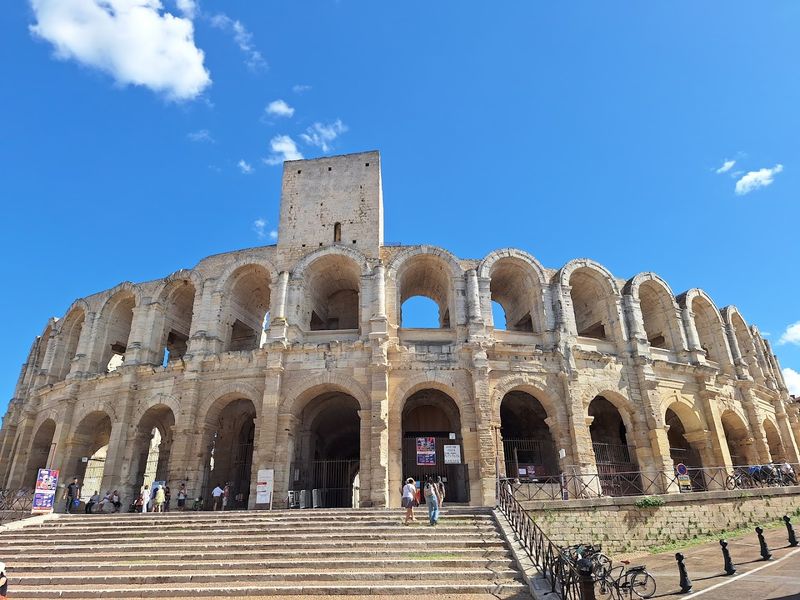
The Amphitheater of Arles looks like it has seen everything, because frankly it almost has. This UNESCO-listed Roman arena has stood for nearly two thousand years and still refuses to become irrelevant.
Concerts, cultural festivals, and traditional events continue to keep the old stones busy.
Built in the Roman era, the amphitheater carries its age with impressive composure. The layered arcades and compact oval form give it a strong visual presence, while the later history of adaptation adds another fascinating layer.
It has been many things over the centuries, yet as a venue it still feels completely natural.
Arles also benefits from the city’s artistic reputation and warm Provençal atmosphere. When an event is underway, the arena feels connected not only to antiquity but also to the living cultural life around it.
That overlap gives the place an appealing sense of continuity instead of nostalgia.
What stays with me is how effortlessly Arles blends endurance and charm. It is undeniably historic, but not frozen, and that makes all the difference.
You can admire the masonry, the engineering, and the sheer persistence of the site, then settle in for a performance that reminds you these arenas were built for crowds, noise, excitement, and a little theatrical flair.
Roman Theatre of Mérida – Spain
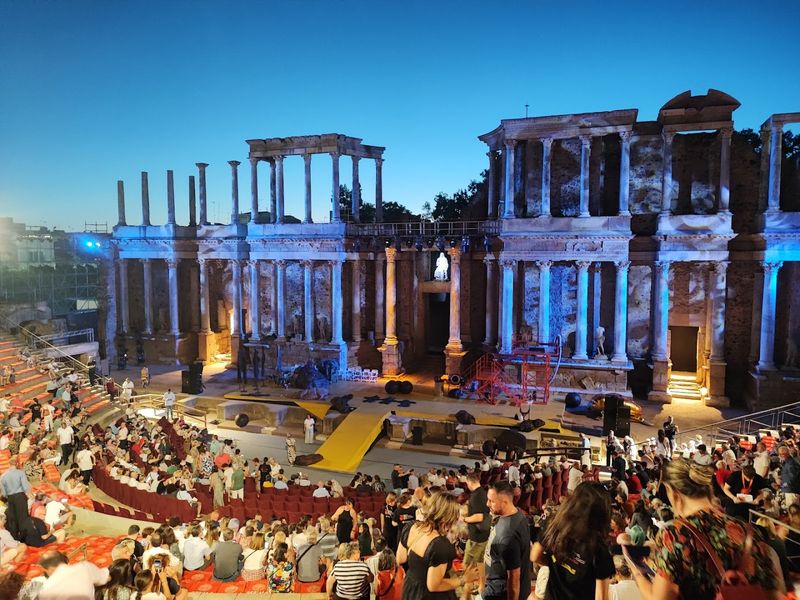
Here, the stage set comes with actual Roman columns, which feels like a strong opening move. The Roman Theatre of Mérida is one of Spain’s great archaeological treasures and still serves as the heart of the city’s celebrated Classical Theatre Festival.
It is hard to imagine a better place for ancient drama to reclaim the spotlight.
The theater forms part of a wider Roman archaeological complex, yet it never gets lost in the ensemble. Its elegant stage architecture, tiered seating, and clear historical presence give it both beauty and authority.
During performances, that authority turns into atmosphere, making each production feel rooted rather than merely themed.
Mérida is especially compelling because the programming suits the venue so well. Classical works resonate here with an added sense of place, as if the surroundings are quietly collaborating with the actors.
Even modern audiences, armed with bottled water and glowing screens, tend to surrender to the mood.
I find Mérida particularly satisfying because it offers more than visual drama. It demonstrates how archaeology and performance can strengthen each other without one overwhelming the other.
You can spend the day exploring Roman remains, then return after dark for a play that makes the whole site feel connected, coherent, and vividly alive in the present tense.
Roman Theatre of Plovdiv – Bulgaria
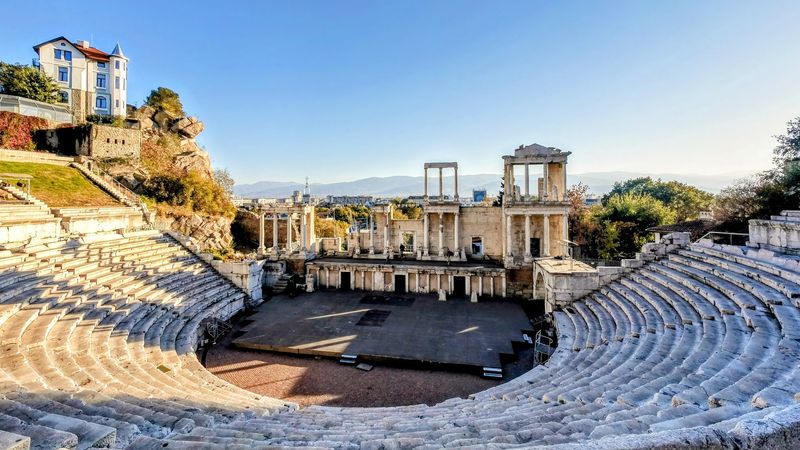
Perched above one of Europe’s oldest cities, the Roman Theatre of Plovdiv has excellent views and no reason to be modest about them. Originally built in the 1st century AD, this beautifully restored theater remains an active venue for concerts, opera, and drama.
It proves that a strong comeback can last for centuries.
The restoration allows visitors to grasp the theater’s form with unusual clarity. Marble seating, stage elements, and the dramatic setting come together in a way that feels both refined and approachable.
Because the site overlooks Plovdiv, every performance gains a subtle urban backdrop that links antiquity with the city’s present life.
The atmosphere here has a special kind of elegance. It is historic without feeling heavy, scenic without becoming distracting, and intimate despite its open setting.
Cultural events fit comfortably into the space, giving it a lived-in quality that many ancient venues spend years trying to recapture.
What I like most is the sense of continuity. Plovdiv is proud of its layers, and this theater makes those layers visible in the best possible way.
You can appreciate Roman architecture, Bulgarian cultural life, and a genuinely memorable evening all at once, which is a pretty efficient use of one very good seat.
El Djem Amphitheater – Tunisia
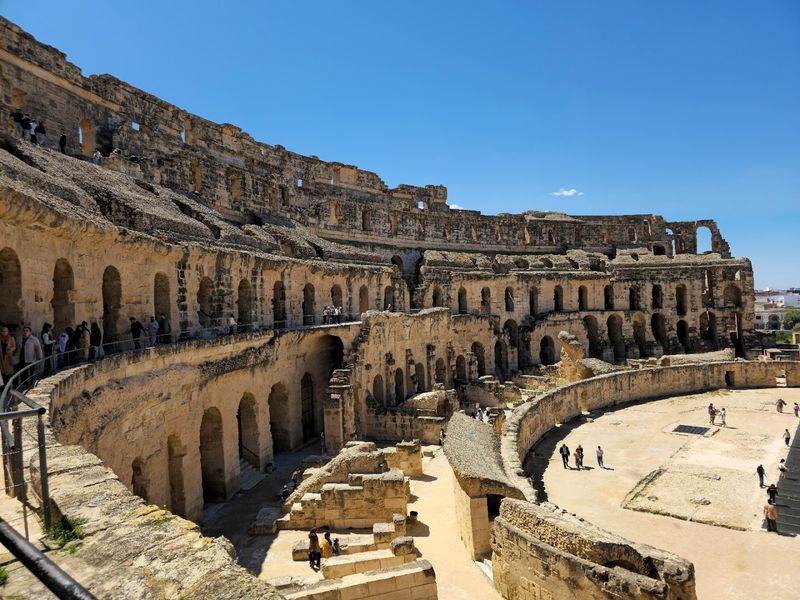
El Djem does not do understated, and that is part of the fun. Often compared to Rome’s Colosseum, this vast amphitheater is one of North Africa’s most extraordinary Roman monuments.
Even before an event begins, the place carries the kind of scale that makes casual conversation stop for a second.
Its honey-colored stone and massive arcades give the structure a powerful presence against the Tunisian light. You can feel the engineering ambition in every level, every opening, every carefully calculated curve.
While it is best known as a monument, El Djem has also served as a venue for international music festivals, which feels entirely appropriate for a building this theatrical.
When music enters the arena, the ancient form takes on new energy. The contrast between Roman masonry and modern performance creates a memorable tension without feeling forced.
Instead, the venue seems to absorb contemporary culture and return it with extra drama.
I admire El Djem because it feels both monumental and strangely direct. There is no need for interpretive overkill when the architecture already makes such a strong case for itself.
If you want a cultural hotspot that combines ancient muscle, striking beauty, and a touch of showbiz confidence, El Djem steps forward like it has been expecting you.
Roman Theatre of Amman – Jordan
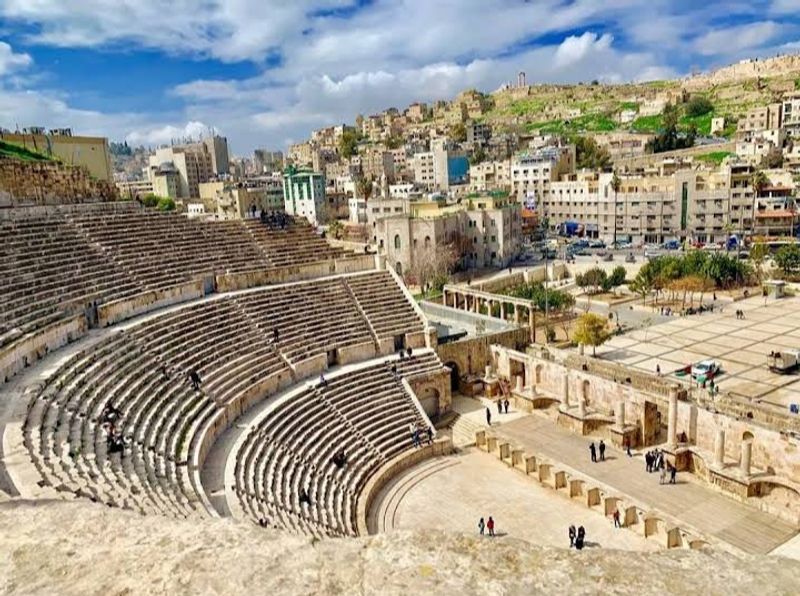
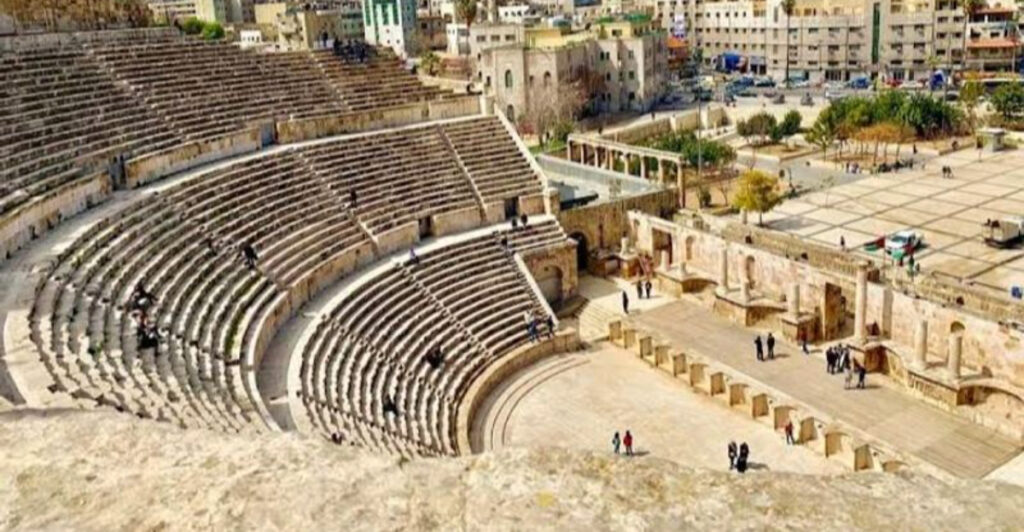
Carved into a hillside in the middle of a modern capital, the Roman Theatre of Amman makes everyday city life look unusually historic. Built in the 2nd century AD, it remains a focal point for performances and cultural events in Jordan’s capital.
That ongoing use gives the site a practical kind of dignity.
The theater’s steep arrangement immediately catches your eye. Rows of stone seats climb the slope with purposeful precision, creating a dramatic geometry that still works for audiences today.
Because the venue sits within the living fabric of Amman, it feels less isolated than many ancient sites and more integrated into contemporary civic life.
That closeness matters. A performance here does not feel tucked away in a distant archaeological zone but woven into the pulse of the city.
The surrounding urban energy adds texture, while the ancient structure provides scale, order, and a welcome sense of continuity.
I appreciate the Roman Theatre of Amman because it balances monumentality with accessibility. You can visit, admire its engineering, and quickly understand why people still gather here.
It reminds you that ancient theaters were never meant to be silent trophies. They were social spaces, public stages, and community landmarks, and this one still plays those roles with admirable ease.
Bosra Roman Theatre – Syria
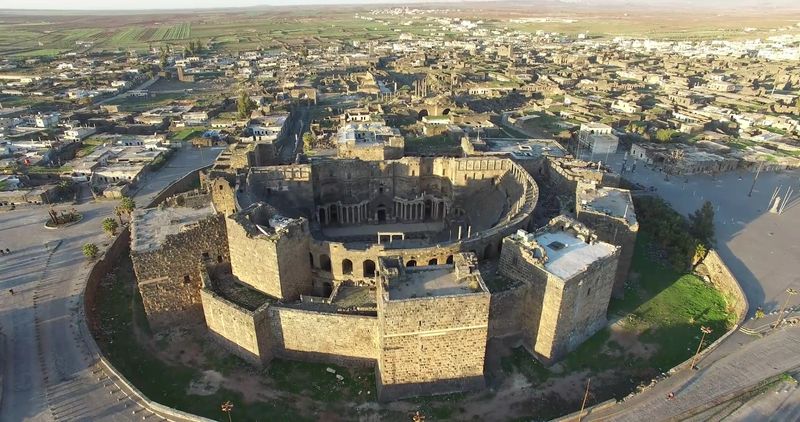
Made of dark basalt and built on an epic scale, Bosra Roman Theatre has instant main-character energy. It is one of the best-preserved Roman theaters anywhere, and its massive form remains unforgettable even in photographs.
In person, the structure feels even more commanding, as if permanence were the original design brief.
Once able to host festivals and performances for thousands, the theater stands as a remarkable example of Roman engineering in the region. The black stone gives it a distinct visual identity, setting it apart from the lighter tones many travelers expect from classical sites.
Its preservation is especially striking, because the architectural coherence still reads so clearly across the whole building.
Modern challenges have complicated the theater’s role as an active venue, yet its cultural significance remains profound. Bosra continues to symbolize Syria’s rich heritage and the enduring power of public architecture.
Even when performances are absent, the place carries a strong sense of gathered memory.
What stays with me is the theater’s resilience. Bosra is not just impressive because it survived; it matters because it still represents possibility, artistry, and civic life.
Some cultural hotspots are loud, while this one speaks with gravity, scale, and a quiet insistence that history deserves both protection and an audience.
Teatro Romano di Ostia Antica – Italy
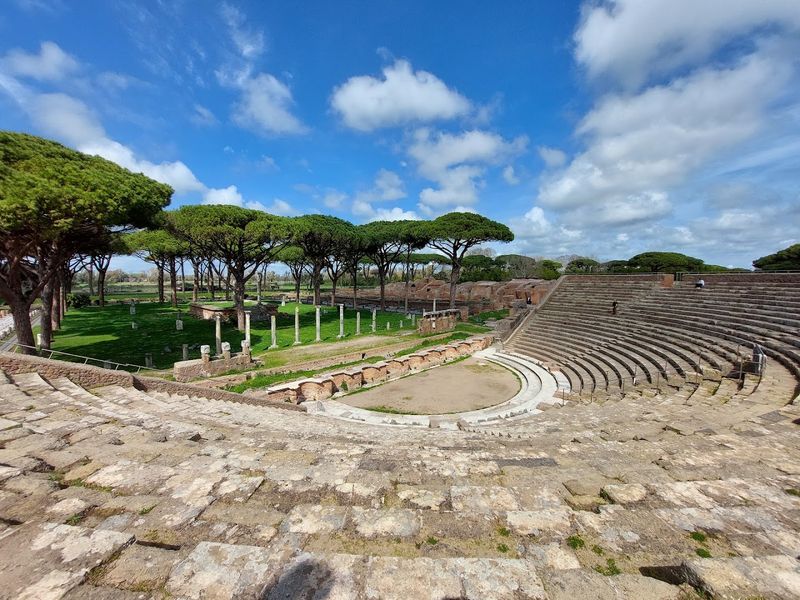
Tucked inside one of Italy’s most fascinating archaeological parks, Teatro Romano di Ostia Antica feels like a very good secret that somehow fits thousands. This Roman theater, in the ancient port city of Ostia, still welcomes audiences for summer performances.
The result is a venue where history and atmosphere arrive as a package deal.
The theater sits within a wider urban landscape of ruins, which makes the experience especially rewarding. You are not visiting a single monument in isolation but a former city where trade, movement, and entertainment once intertwined.
That setting gives the theater extra context and turns an evening performance into the final scene of a much larger story.
Architecturally, the space is graceful rather than overpowering. Its surviving cavea, stage area, and surrounding greenery create an inviting mood that feels distinctly Roman yet pleasantly relaxed.
When the summer season begins, the venue comes alive without losing the reflective quality that makes Ostia Antica so absorbing during the day.
I like this theater because it offers a slightly different kind of excitement. Instead of pure monumental drama, you get immersion, texture, and the pleasure of seeing performance return to a city built for public life.
It is cultured, atmospheric, and just a little bit smug about how good the setting is.
Roman Theatre of Verona – Italy
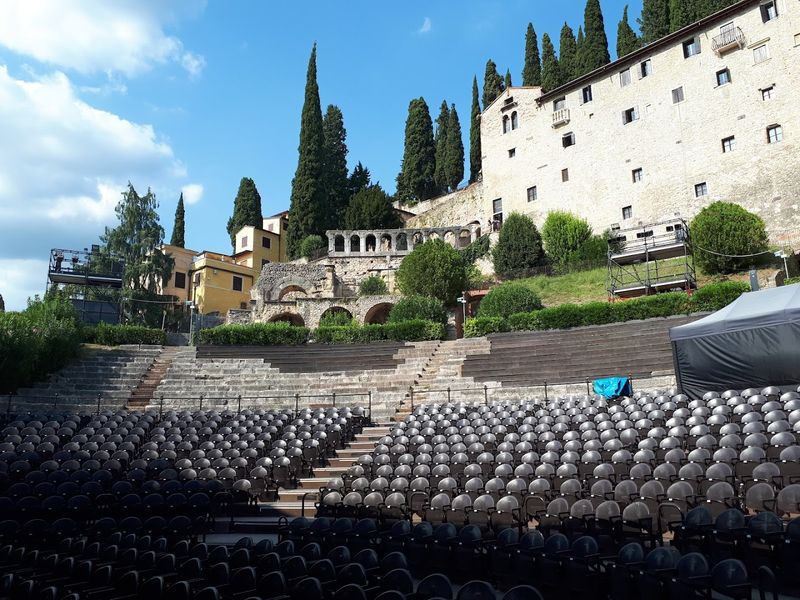
Verona has another ancient showstopper, and this one prefers hillside charm to arena swagger. The Roman Theatre of Verona may live in the shadow of the famous Arena, but it rewards anyone willing to look twice.
Seasonal performances and cultural events keep the site lively while the Adige River and city views do the rest.
Built into the slope above the river, the theater offers a setting that feels immediately intimate. The ascending seats, remnants of the stage, and layered urban backdrop create a rich visual mix without trying too hard.
It is an appealing example of how Roman builders worked with the landscape rather than simply dominating it.
During performance season, the venue takes on a warm, almost local energy. You still get the thrill of antiquity, but the mood is less overwhelming than at larger arenas.
That makes the experience feel personal, as if the city were letting you in on one of its better evening plans.
I enjoy the Roman Theatre of Verona because it balances fame and understatement so gracefully. It may not shout as loudly as its colossal neighbor, but it has plenty to say through setting, history, and continued use.
If you like ancient venues with character, views, and a little insider appeal, this theater is an easy favorite.
Share this story