Some places on Earth remind us that human beings are not in control. These are landscapes shaped by volcanic eruptions, massive waterfalls, tectonic forces, glaciers, storms, and geothermal energy on a scale that can seem almost unbelievable.
Whether you are a seasoned traveler or an armchair explorer, these ten destinations will leave your jaw on the floor. If you want to witness nature at its most dramatic, these spots absolutely belong on your bucket list.
Yellowstone National Park, United States
Beneath your feet at Yellowstone, a supervolcano is very much awake. The park sits atop one of the world’s largest volcanic systems, and the ground here is literally breathing.
Roughly two-thirds of all known geysers on Earth are found within its borders, including Old Faithful and the record-breaking Steamboat Geyser.
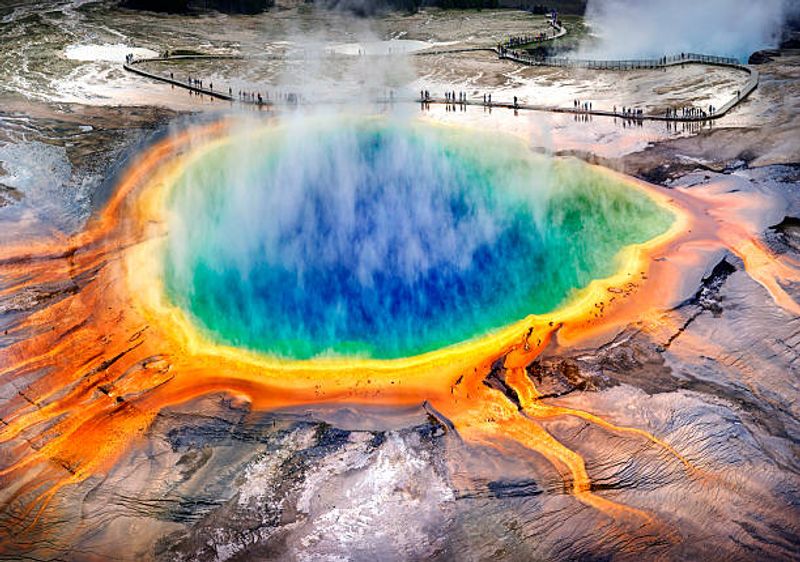
More than 10,000 geothermal features bubble, hiss, and erupt across the park every single day. The colorful hot springs get their vivid hues from heat-loving microorganisms called thermophiles.
Grand Prismatic Spring, the largest hot spring in the United States, glows in rings of orange, yellow, and deep blue that look almost too wild to be real.
Yellowstone also shelters wolves, bison, grizzly bears, and elk in impressive numbers. Bison still roam in herds across the Lamar Valley, a sight that feels genuinely prehistoric.
Visiting Yellowstone is a full sensory experience of rumbling earth, sulfur-scented air, and scenery that belongs on another planet.
Hawaiʻi Volcanoes National Park, United States
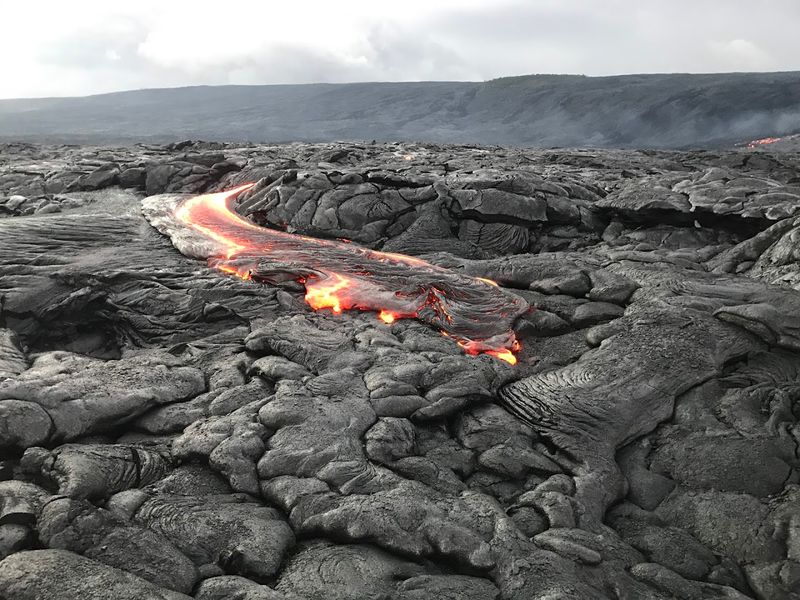
Nowhere else on Earth can you legally stand a few hundred feet from actively flowing lava. Hawaiʻi Volcanoes National Park is home to Kīlauea, one of the most continuously active volcanoes on the planet, and Mauna Loa, the largest shield volcano in the world measured by volume.
These two giants have been reshaping the Big Island for hundreds of thousands of years.
When lava pours into the Pacific Ocean, it creates a violent steam explosion called laze, which is both spectacular and genuinely dangerous. New land is literally being born here, adding acres to the island over time.
The park also features lava tubes, craters, and ancient petroglyphs carved into hardened lava fields.
Visitors can hike across cooled lava fields that look like cracked black glass and peer into the glowing Halemaʻumaʻu crater after dark. The smell of sulfur hangs in the air as a constant reminder that the ground below is not stable.
Kīlauea has been erupting almost continuously since 1983, making this one of the most dynamic places to visit on Earth.
Victoria Falls, Zambia and Zimbabwe
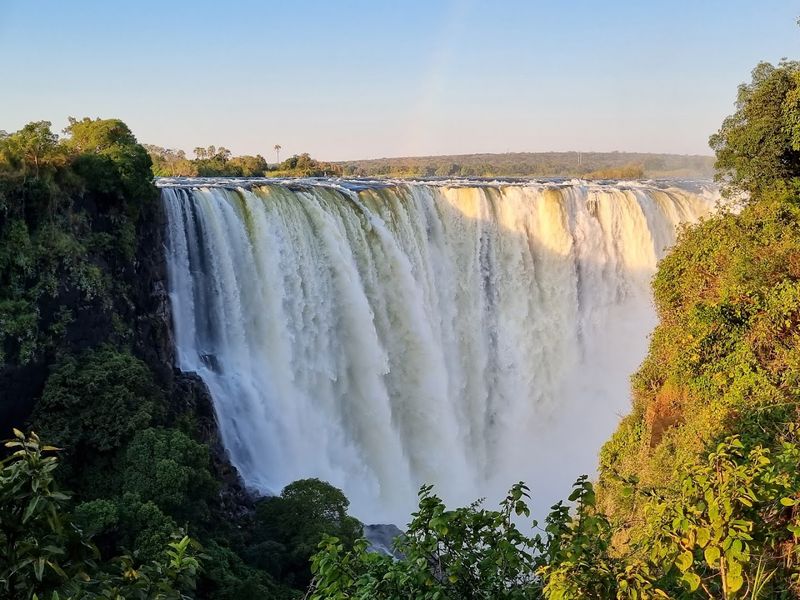
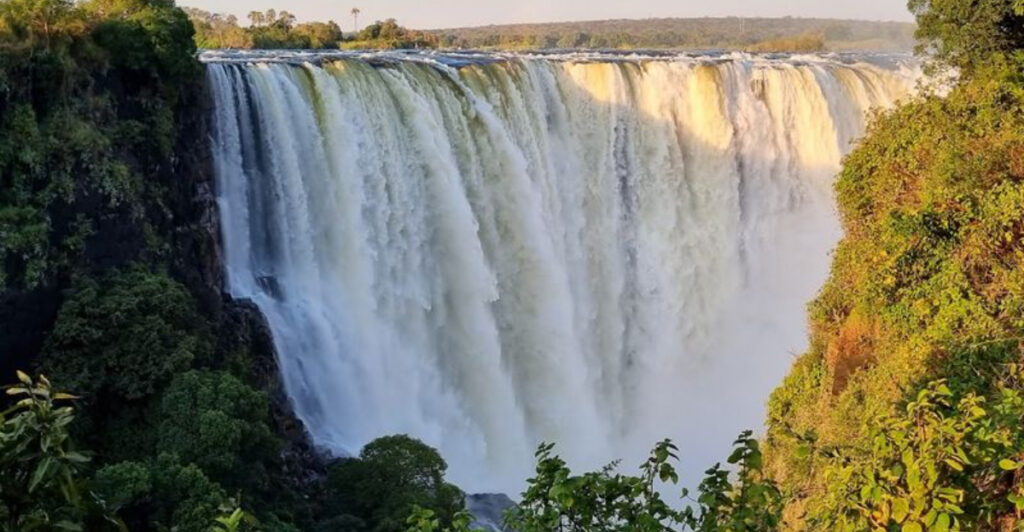
Locals call it Mosi-oa-Tunya, which translates to “The Smoke That Thunders,” and that name earns every syllable. Victoria Falls is one of the largest waterfalls on Earth, stretching more than a mile wide and dropping over 350 feet into a narrow basalt gorge.
During peak flow in April and May, the roar can be heard from 25 miles away.
The mist generated by the falls rises so high that it creates its own microclimate, supporting a strip of lush rainforest in an otherwise dry landscape. Rainbows appear constantly, sometimes forming full circles when conditions are right.
At full flood, the falls push around 500,000 cubic meters of water per minute over the edge.
Adventure seekers can swim in Devil’s Pool, a natural infinity pool right at the rim of the falls, during the dry season when water levels drop. Standing at the edge with nothing but a thin rock lip between you and a 350-foot drop is one of the most thrilling experiences nature offers.
The falls sit on the border of Zambia and Zimbabwe, making it a destination you can experience from two countries at once.
Grand Canyon, United States
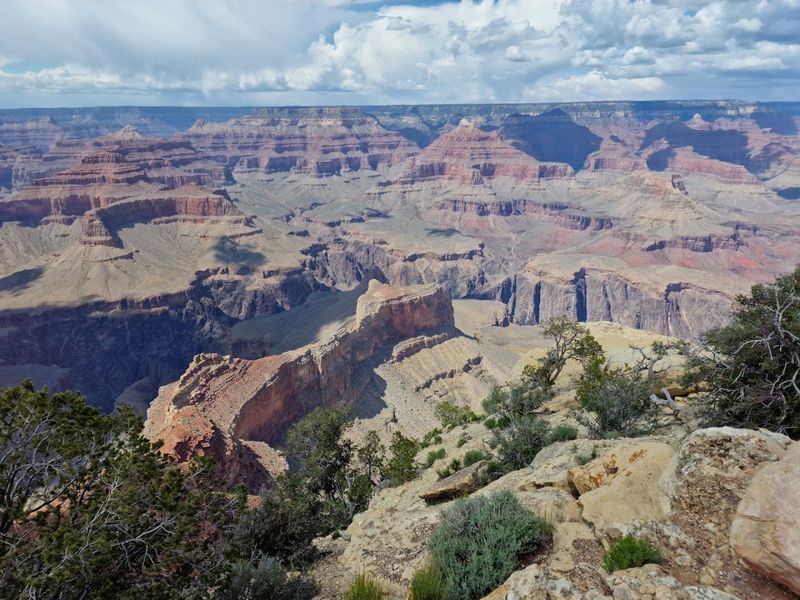
Nearly two billion years of Earth’s geological history are stacked in the walls of the Grand Canyon, visible in colorful horizontal layers of rock like pages in a very old book. The Colorado River carved this massive trench over five to six million years, and the results are staggering.
At its deepest, the canyon plunges over a mile below the rim.
The sheer scale of the place plays tricks on your brain. What looks like a short hike down to the river can actually take two full days round trip.
Temperatures at the bottom can be 20 degrees hotter than at the rim, which catches unprepared hikers off guard every single year.
The canyon is 277 miles long and up to 18 miles wide at certain points, making it one of the most dramatic landscapes in North America. Condors, one of the rarest birds in the world, soar on thermals above the canyon walls.
Rafting the Colorado River through the canyon is considered one of the great wilderness adventures on the planet, offering rapids, ancient ruins, and walls of layered stone towering overhead.
Volcanoes of Kamchatka, Russia
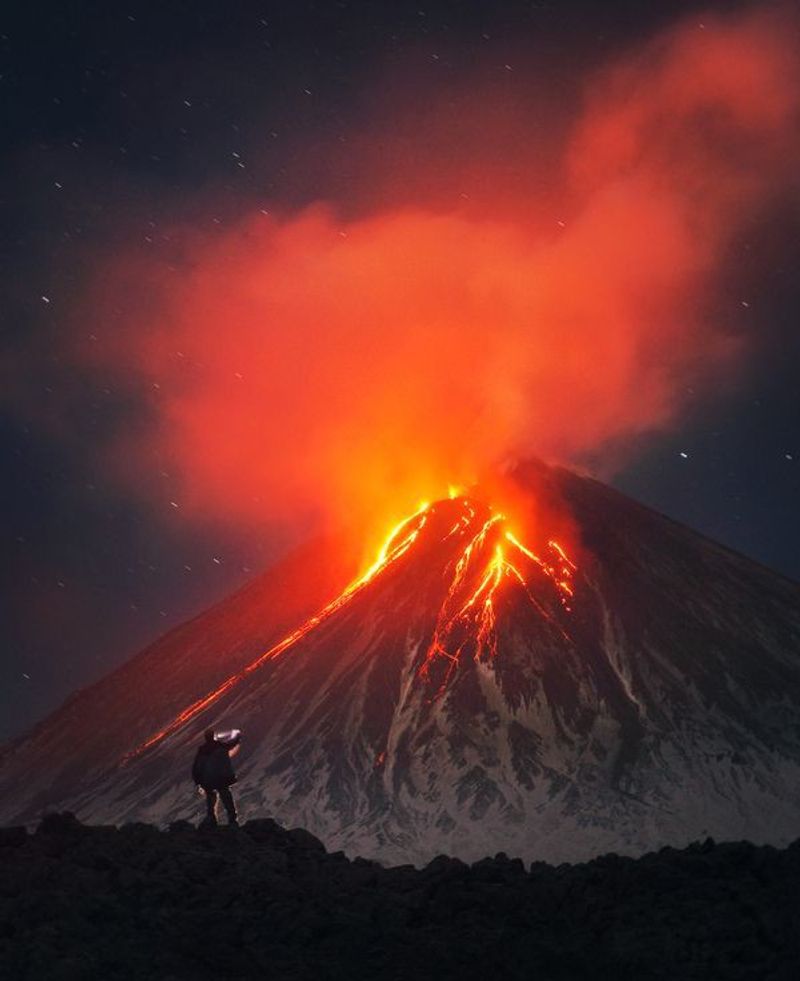
Kamchatka is so remote that bears outnumber people, and the volcanoes outnumber everything else. This peninsula in Russia’s far east contains 29 active volcanoes and sits on the Pacific Ring of Fire, one of the most geologically violent zones on Earth.
Eruptions here are frequent, sometimes happening several times a year across different peaks.
The landscape looks like it was designed by someone who wanted to make Earth seem as alien as possible. Boiling mud pots, fumaroles venting toxic gas, and lava fields stretch across a region that few travelers ever reach.
Klyuchevskaya Sopka, the tallest active volcano in Eurasia at nearly 16,000 feet, is almost always smoking.
Getting to Kamchatka requires a flight to Petropavlovsk-Kamchatsky, and from there most exploration is done by helicopter because the terrain is simply too rugged for roads. Brown bears fish for salmon in rivers that run through volcanic valleys, creating one of the most spectacular wildlife scenes on the planet.
The peninsula was closed to outsiders until 1990, which is part of why it remains one of the least-visited wilderness areas in the world.
Vatnajökull National Park, Iceland
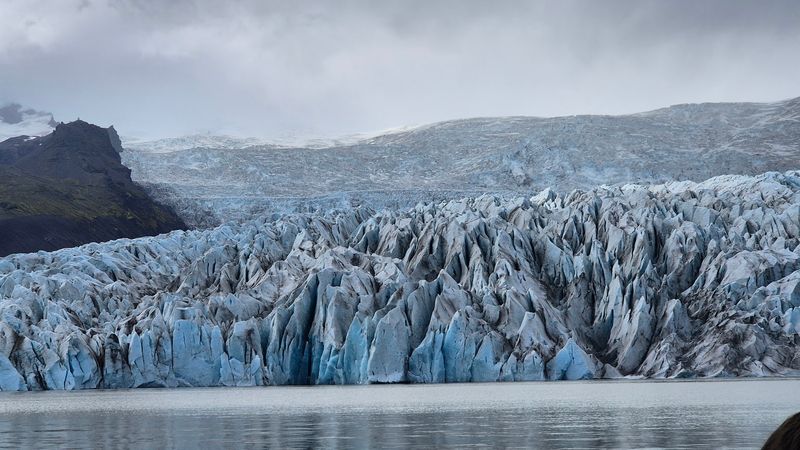
Iceland has a flair for dramatic contradictions, and Vatnajökull National Park is the ultimate proof. Europe’s largest glacier sits directly on top of several active volcanoes, creating a landscape where fire and ice are constantly wrestling for dominance.
When a subglacial eruption occurs, it can melt billions of gallons of ice in hours, unleashing catastrophic glacial floods called jökulhlaups.
The glacier covers about eight percent of Iceland’s total land area, and beneath it hides a world of ice caves with walls that glow an otherworldly shade of electric blue. The caves form differently each year as meltwater carves new tunnels, so no two seasons offer the same experience.
Some tunnels are wide enough to walk through standing upright.
Skaftafell and Jökulsárgljúfur are the two main nature reserves within the park, each offering a completely different kind of wild scenery. Waterfalls cascade off the glacier’s edge, including Svartifoss, which drops over columns of hexagonal black basalt.
The park is also a key habitat for Arctic foxes and nesting seabirds. Vatnajökull is one of the few places on Earth where you can witness volcanic activity and glacial landscapes happening side by side.
Dettifoss, Iceland
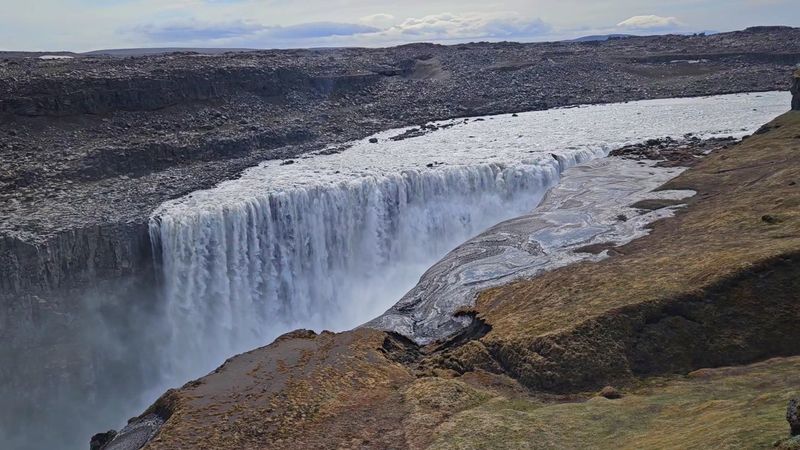
Dettifoss does not care about being pretty. It is purely, brutally powerful.
Often called the most powerful waterfall in Europe, it sends around 193 cubic meters of water per second crashing into the canyon below, generating a roar and vibration you can feel in your chest from a quarter mile away. The water has a grayish tint from the glacial silt it carries, which only adds to its raw, untamed look.
The falls are about 330 feet wide and drop nearly 150 feet into the Jökulsá á Fjöllum river canyon. There are no guardrails on the east bank approach, which means visitors stand at the very edge with nothing between them and the spray.
The mist is so thick on windy days that you can get completely soaked before you even see the falls clearly.
Ridley Scott chose Dettifoss as the opening scene for the film Prometheus because the location looks genuinely alien. The surrounding canyon of dark basalt and the churning gray water create an atmosphere that feels prehistoric and slightly threatening.
Reaching the falls requires a drive across Iceland’s remote highland roads, making the journey itself part of the adventure. Dettifoss rewards the effort spectacularly.
Mount Everest and the Himalayas, Nepal
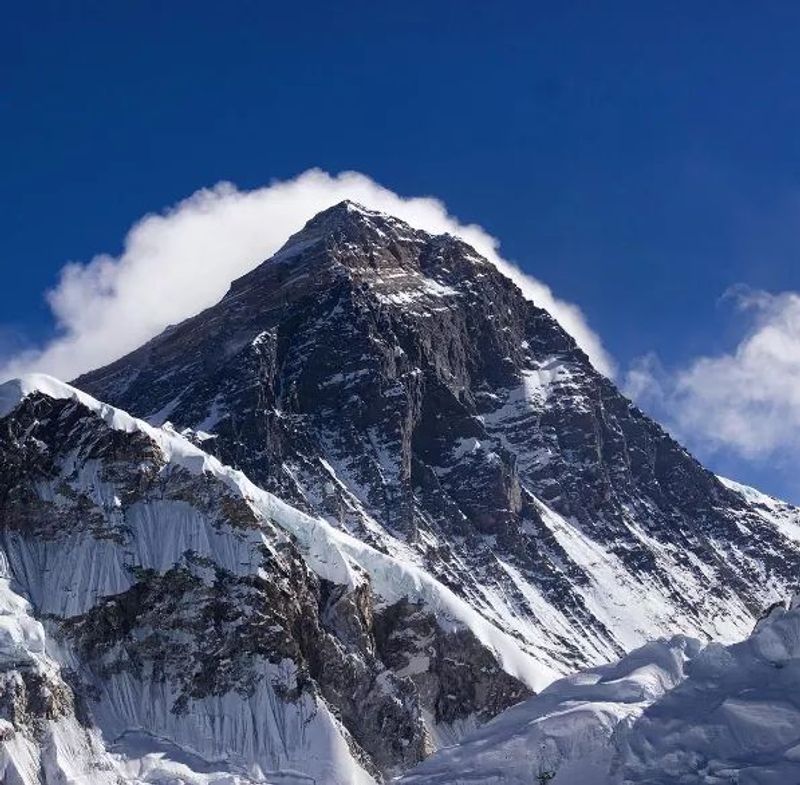
The Himalayas exist because two massive pieces of the Earth’s crust decided to collide, and they are still colliding right now. The Indian tectonic plate continues pushing northward into the Eurasian plate at a rate of about two inches per year, which means the mountains are technically still growing.
Mount Everest, at 29,032 feet, is the tallest point on Earth above sea level, and the forces that built it show no signs of stopping.
Wind speeds near the summit can exceed 175 miles per hour during the jet stream season, and temperatures drop to minus 80 degrees Fahrenheit at the peak. The air at the summit contains only about one-third the oxygen available at sea level, which is why climbers spend weeks acclimatizing before attempting the final push.
The mountain’s weather can shift from calm to lethal in under an hour.
The Himalayas also contain more than 15,000 glaciers, feeding major river systems that provide fresh water to over a billion people across South Asia. The range creates its own weather patterns, blocking monsoon moisture and shaping the climate of the entire region.
Standing at Everest Base Camp at 17,600 feet and looking up at what remains above you is a genuinely humbling experience.
Iguazú Falls, Argentina and Brazil
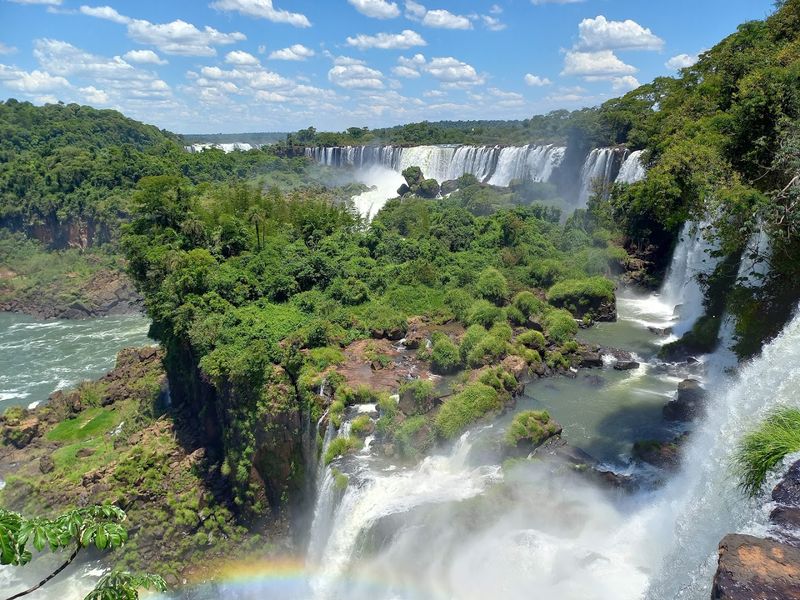
Eleanor Roosevelt reportedly took one look at Iguazú Falls and said, “Poor Niagara.” That reaction makes complete sense when you see it. Iguazú is made up of roughly 275 individual waterfalls spread across nearly two miles of the Iguazú River, making it wider than Victoria Falls and more dramatic than almost anything else on the continent.
The crown jewel is a U-shaped section called Devil’s Throat, where 14 separate falls converge in a roaring, misty spectacle.
At peak flow, Iguazú pushes around 450,000 cubic feet of water per second over its edge. The constant mist creates a permanent rainbow above the gorge and keeps the surrounding rainforest dense and dripping with moisture.
Toucans, coatis, and giant otters live in the national parks on both sides of the falls.
Argentina and Brazil each offer different viewing angles, and both are worth visiting. The Argentine side puts you right on top of the falls via elevated walkways where the spray soaks you instantly.
Brazil’s side offers the wide panoramic view that makes the full scale of Iguazú finally click. UNESCO designated both national parks as World Heritage Sites, recognizing this as one of the most spectacular natural wonders anywhere on Earth.
Serengeti Ecosystem, Tanzania
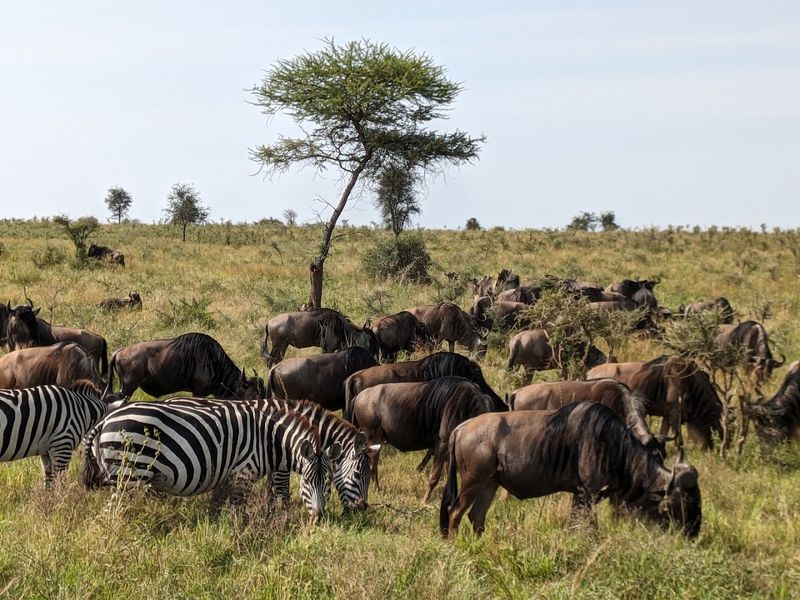
Nature’s power is not always measured in lava or waterfalls. Sometimes it shows up as an unstoppable river of hooves stretching to the horizon.
Every year, nearly two million wildebeest, along with hundreds of thousands of zebras and gazelles, complete a circular migration across the Serengeti ecosystem in Tanzania and into Kenya’s Masai Mara, covering over 1,800 miles in pursuit of fresh grass and water. It is the largest overland animal migration on Earth.
The most dramatic moments happen at the river crossings, where massive herds must plunge into crocodile-filled waters to continue their journey. The Mara River crossings are chaotic, loud, and genuinely dangerous, with crocodiles targeting stragglers and strong currents pulling animals downstream.
Yet the herds keep coming, driven by instinct stronger than fear.
The Serengeti also supports the highest concentration of large predators on the planet, including lions, cheetahs, leopards, hyenas, and wild dogs. This ecosystem functions as a living, breathing machine where every species plays a role.
Witnessing the migration in person, with dust rising from thousands of hooves and the rumble of the herd shaking the ground, is a reminder that wild nature operates on its own schedule, completely indifferent to human timelines.
Share this story