There is a cave in Virginia where the walls literally play music. Not a recording, not a speaker system tucked behind a rock, but an actual instrument built from the cave itself, certified by Guinness as the world’s largest musical instrument.
The Great Stalacpipe Organ at Luray Caverns uses stalactites spanning 3.5 acres to produce tones that echo through cathedral-sized chambers, and that is just one reason people drive hours out of their way to get here. From 140-foot natural columns to a mirror-perfect underground lake that will make you question what is real, this place delivers the kind of experience that sticks with you long after you have driven back out into the sunlight.
Keep reading to find out everything you need to know before your visit, including what to wear, what to expect, and why one trip is rarely enough.
The Great Stalacpipe Organ: A Musical Marvel Underground
No instrument in the world sounds quite like this one. The Great Stalacpipe Organ was invented by mathematician Leland Sprinkle in 1954, and it took him three years to find and tune the exact stalactites needed across 3.5 acres of cave.
Rubber mallets tap the formations at precise points, and each one produces a distinct musical tone that resonates through the surrounding chambers.
The result is a sound that feels less like a performance and more like the cave itself is breathing music. Guinness World Records officially recognizes it as the world’s largest musical instrument, which means there is genuinely nothing else like it on the planet.
The organ plays periodically during your visit, so pay attention as you near the Cathedral room. The sound carries far and arrives before you even see the instrument, which makes the moment of discovery all the more striking.
Getting There: Address, Location, and What to Expect on Arrival
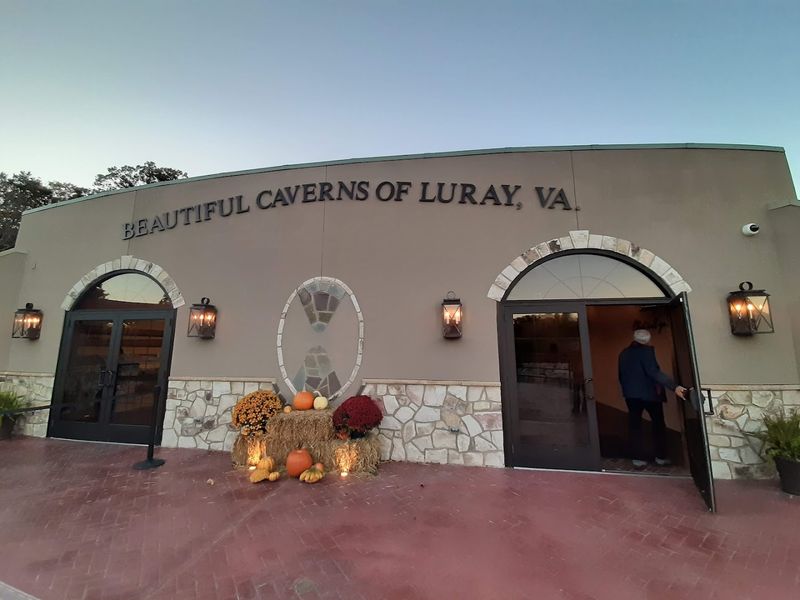
Luray Caverns sits at 101 Cave Hill Rd, Luray, VA 22835, right in the heart of the Shenandoah Valley. The drive in from the main road winds through rolling green hills and farmland, and the setting alone is worth the trip before you even go underground.
The caverns are open daily from 9 AM to 7 PM, making it easy to plan a morning arrival and still have time to explore the surrounding complex afterward. Parking is free and the lot is large, though weekends in peak season fill up fast.
The updated entrance now uses a gently sloping outdoor path rather than the old staircase entry, which makes it much more accessible for seniors, young children, and anyone with mobility concerns. Tickets are priced at a mid-range cost, and the admission covers more than just the cave, which we will get to shortly.
The Scale of the Cave Will Catch You Off Guard
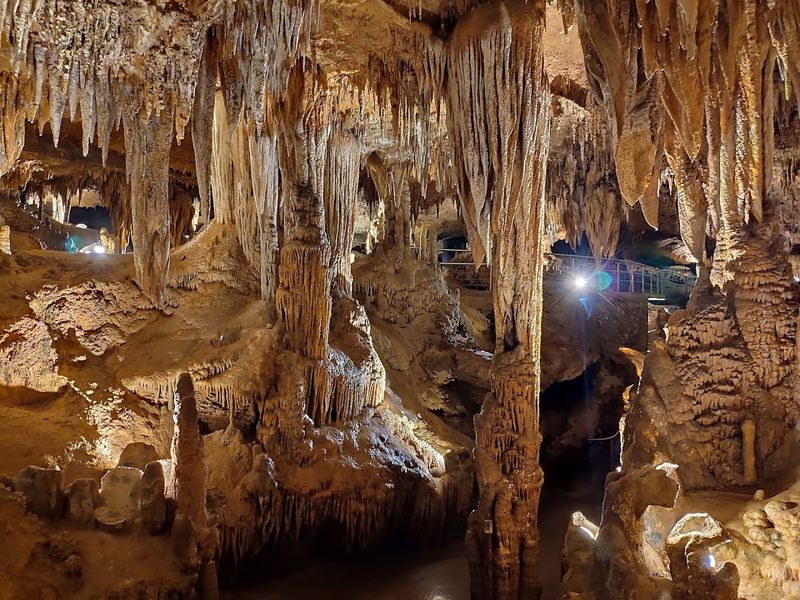
Most people expect a cave to feel tight and narrow. Luray has the opposite effect.
The moment you step inside, the ceiling shoots upward and the walls open into chambers so wide you could park a small fleet of vehicles in some of them.
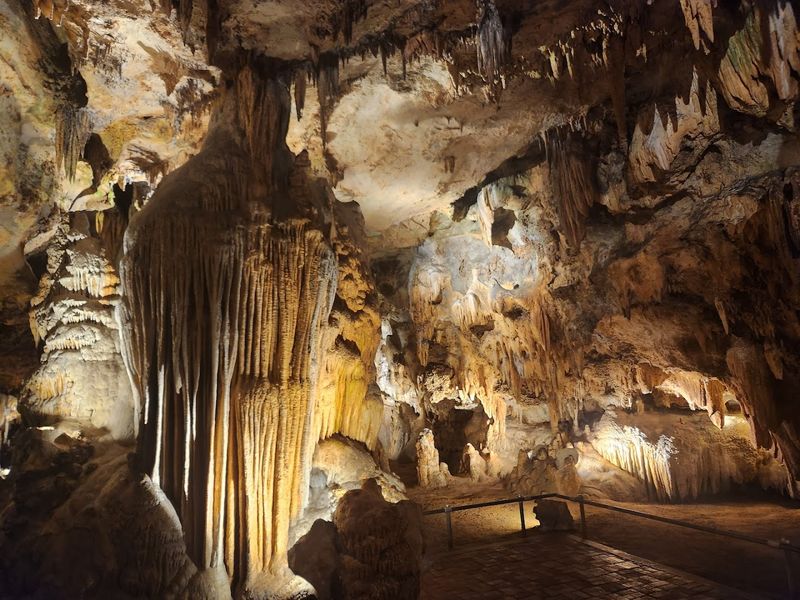
The caverns stretch over 64 acres underground, with some formations reaching 140 feet in height. These are not delicate little drips on a ceiling but full columns, curtains, and towers that have been building themselves for millions of years.
The self-guided tour covers roughly 1.25 miles of well-lit brick walkways, and most visitors take between one and two hours to complete it. That pace gives you enough time to stop, stare upward, and genuinely process what you are looking at.
First-timers almost always underestimate how long they will want to linger in certain rooms.
Dream Lake: The Underground Illusion You Have to See Yourself
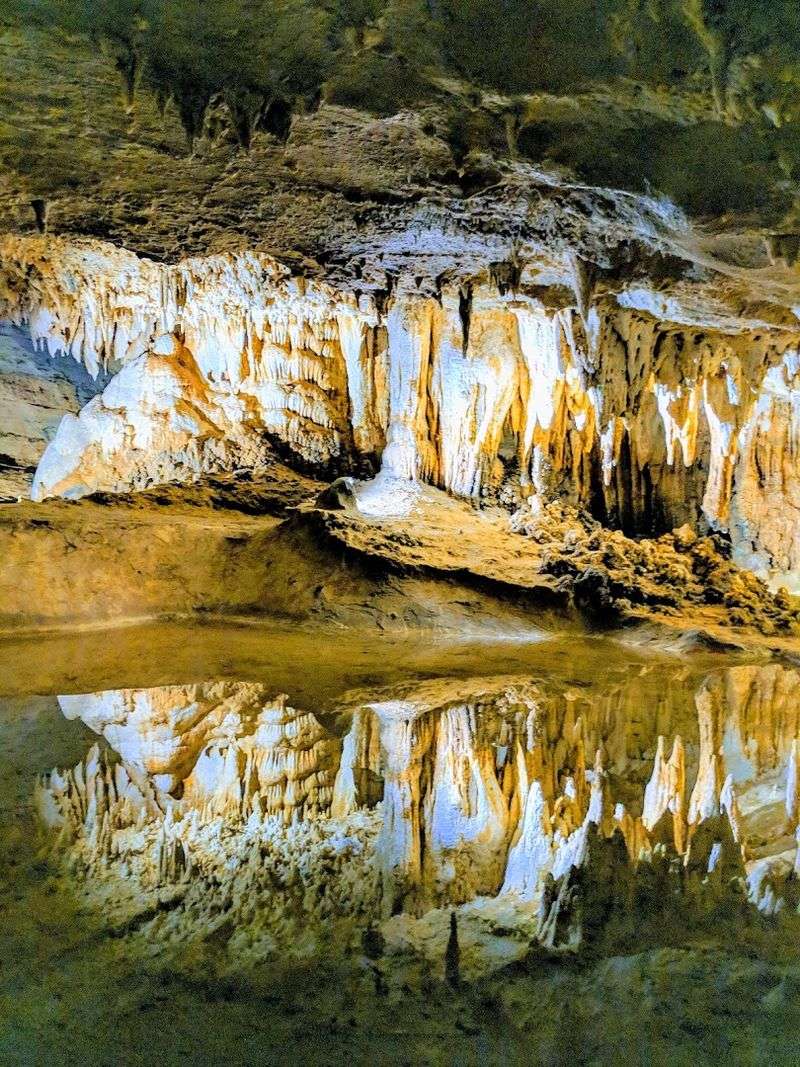
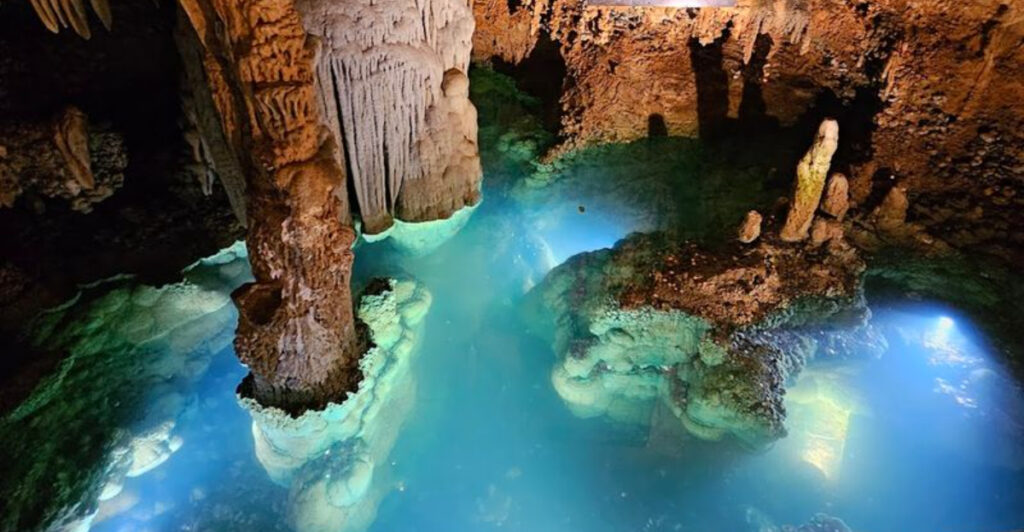
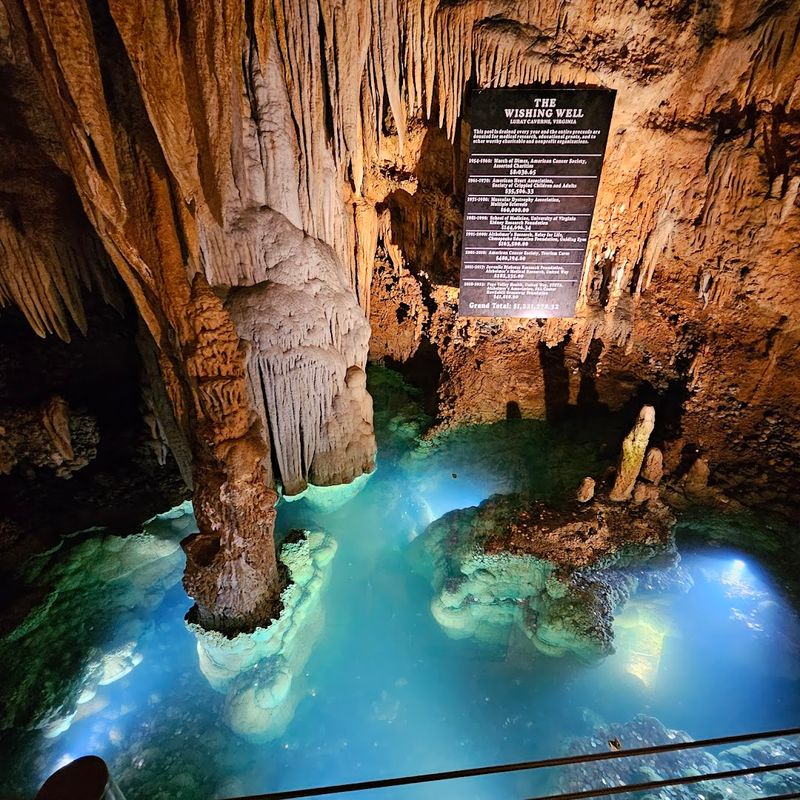
Dream Lake is one of those places that photographs cannot fully prepare you for. The water is so still and so clear that the stalactites above it are reflected perfectly on the surface, creating the appearance of a much deeper pool filled with formations growing both up and down.
The lake is actually only a few inches deep in most places, but the reflection makes it look like it drops twenty feet or more. Visitors regularly stop here longer than anywhere else on the trail, trying to figure out where the real formations end and the reflection begins.
The lighting team at the caverns has done a particularly good job at this spot, using soft directional lights that enhance the mirror effect without washing it out. It is the kind of natural optical trick that feels almost too good to be accidental, even though it absolutely is.
The Self-Guided Tour Format Gives You Total Control
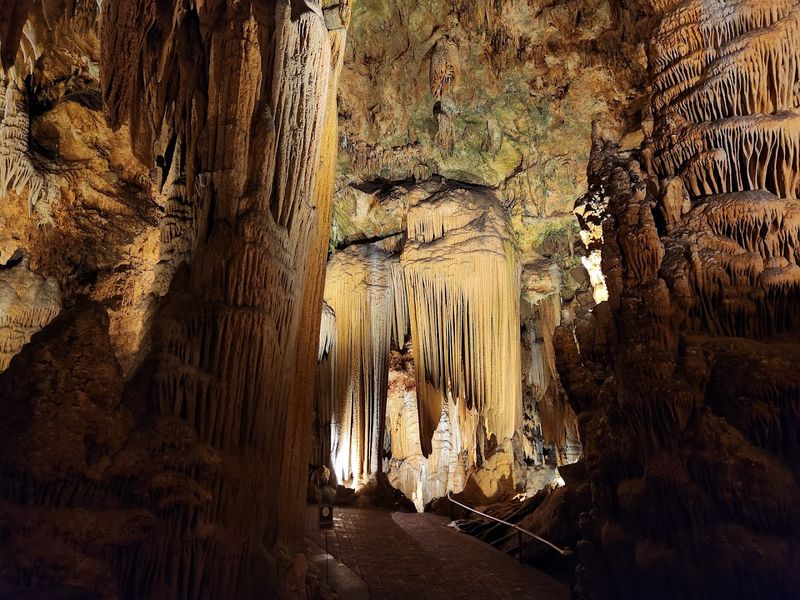
One of the best decisions the caverns made was switching to a primarily self-guided format. At the entrance, you pick up a numbered brochure that corresponds to marked stops throughout the cave, and you move at whatever pace suits your group.
Tour guides are stationed at various points along the trail, ready to answer questions or share details, but they are not herding you through on a schedule. That freedom makes a real difference, especially for families with young kids or anyone who wants to spend ten minutes at a single formation without feeling rushed.
There is one guided tour offered each morning for those who prefer a more structured experience, and that option includes more historical background than the brochure alone provides. Either way, the cave rewards patience.
The visitors who slow down and read each stop tend to leave with a much richer understanding of what they actually saw.
What to Wear and How to Prepare Before You Go
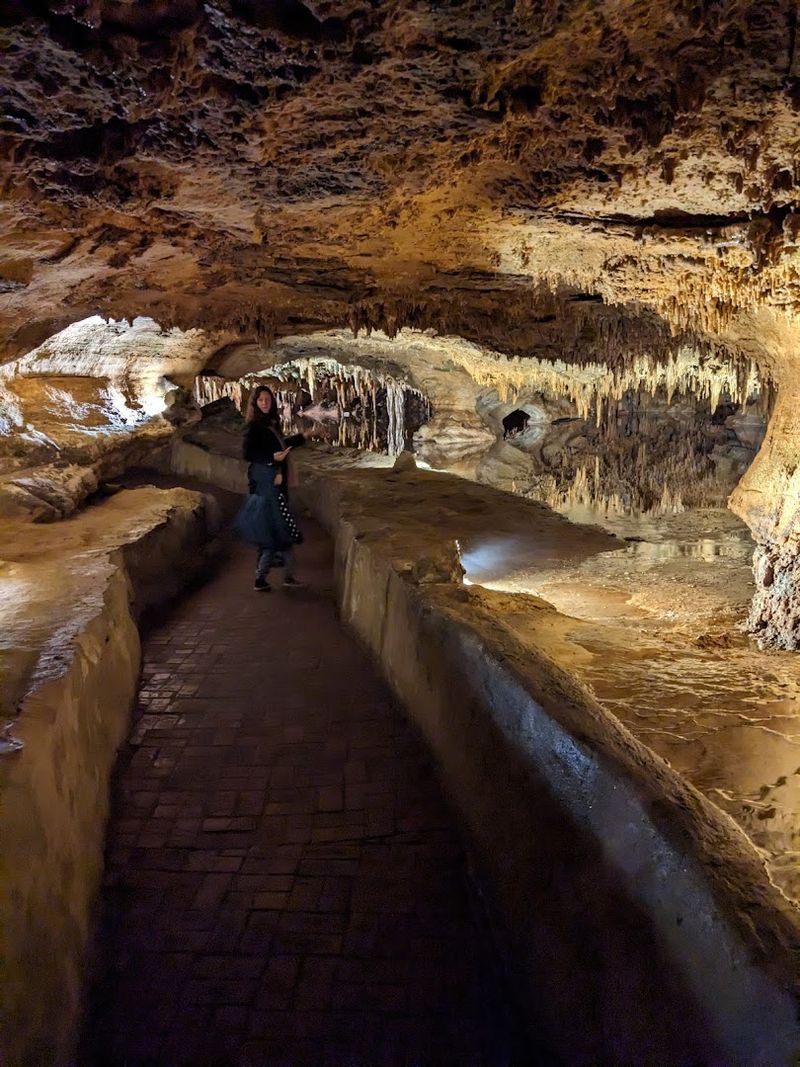
The temperature inside Luray Caverns stays at a consistent 54 degrees Fahrenheit year-round. That means a light jacket or layer is worth bringing no matter what month you visit, especially if you plan to spend a full hour or two inside.
Footwear matters more than most people expect. The brick walkways are well-maintained, but moisture from the cave environment creates slick surfaces in spots.
Shoes with grip are strongly recommended, and sandals or flip-flops are a poor choice for this particular outing.
Beyond layers and shoes, there is not much else required. The walkways are stroller-friendly in most sections, the lighting is excellent throughout, and the path is largely level with only gentle inclines.
Bringing a small backpack with water is a smart move for longer visits, and arriving early on weekends saves you from the midday crowds that tend to bottleneck near the most popular formations.
The Cathedral Room: Where the Cave Earns Its Name
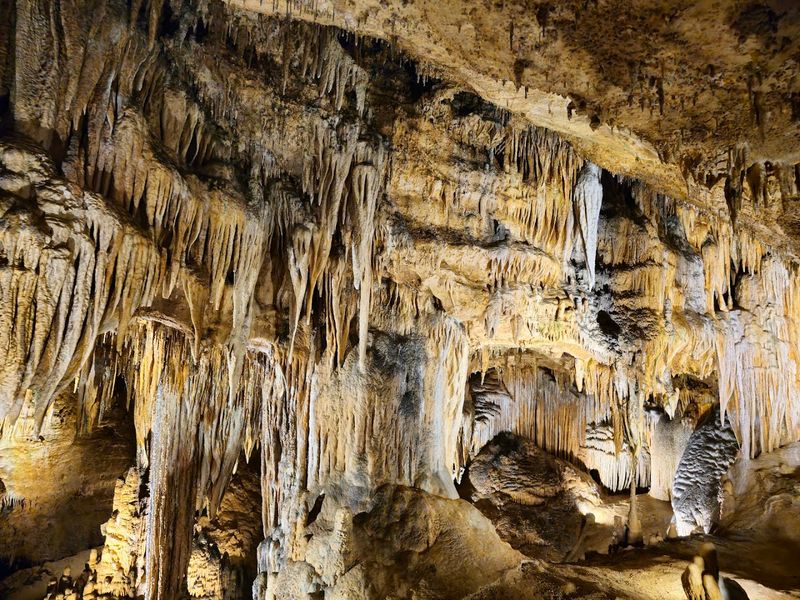
There is a specific room inside the caverns that earns every bit of its name. The Cathedral room features a ceiling so high and formations so dramatic that the space genuinely resembles the interior of a grand stone church, the kind built over centuries with the intention of inspiring awe.
This is also where the Great Stalacpipe Organ is housed, which only adds to the atmosphere. When the organ plays in this room, the acoustics carry the sound in a way that feels completely different from hearing music above ground.
The color variation in the formations here is remarkable. Iron oxides and other minerals create streaks of rust, amber, white, and gray across the columns, and the lighting is calibrated to highlight those natural gradients.
It is the kind of room where people instinctively lower their voices without anyone asking them to, which says something about the effect it has.
The On-Site Complex Goes Well Beyond the Cave

Your admission ticket to Luray Caverns covers more than just the underground tour. The surface complex includes a handful of additional attractions that can easily fill an entire afternoon if you are willing to explore beyond the cave entrance.
The Car and Carriage Caravan Museum is a genuine standout. It houses a collection of late 1800s and early 1900s automobiles, carriages, and coaches that would feel at home in a major city museum.
The collection is specific enough to be interesting even for visitors who do not consider themselves car enthusiasts.
Beyond the vehicle museum, the complex also includes Toy Town Junction, the Shenandoah Heritage Village, a large hedge maze, a ropes course, gem mining activities, and multiple gift shops and a cafe. The breadth of it surprises most first-time visitors who showed up expecting only a cave tour and nothing else.
The Hedge Maze and Outdoor Activities Worth Your Time

The hedge maze at Luray Caverns is the kind of attraction that sounds modest on paper but delivers a lot of fun in practice. The goal is to find a hidden message encoded within the maze, and watching kids sprint through dead ends trying to crack it is genuinely entertaining for the adults following behind them.
The ropes course adds another option for visitors with energy to burn after the cave tour. It is a solid activity for older kids and teenagers who need something more physically engaging than walking and observing.
Gem mining is available as well, and it tends to be a hit with younger children who love the hands-on sifting process. None of these activities feel tacked on or low-effort.
The complex as a whole has been developed thoughtfully, with enough variety that different members of a group can each find something that genuinely appeals to them.
How the Formations Actually Grow and Why It Takes So Long
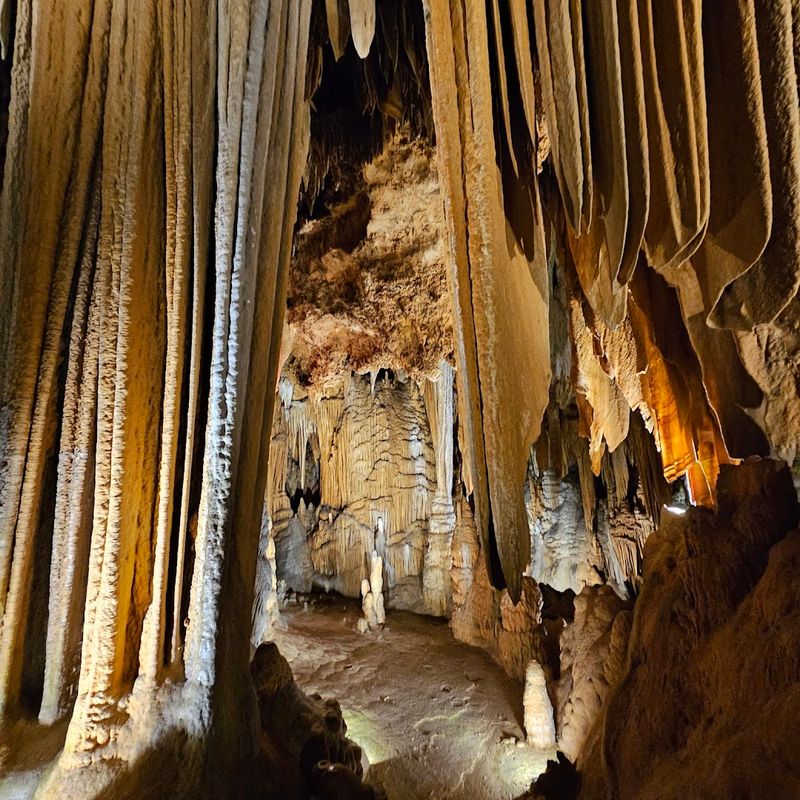
Every stalactite and stalagmite in Luray Caverns grew at a pace that is difficult to fully comprehend. On average, these formations grow about one cubic inch every 120 years, meaning the largest columns you see in the cave have been building for millions of years without interruption.
The process begins when slightly acidic rainwater filters through limestone rock above the cave, dissolving calcium carbonate along the way. When that mineral-rich water drips into the cave and meets air, it deposits a tiny ring of calcite.
Repeat that process over geological time and you get the towering columns, delicate soda straws, and flowing draperies that fill every room.
The brochure at the entrance explains this process at several numbered stops, and understanding the science makes the formations feel even more impressive. What looks like sculpture was never shaped by any tool, just water, minerals, time, and patience on a scale humans rarely encounter.
Best Time to Visit and How to Avoid the Crowds
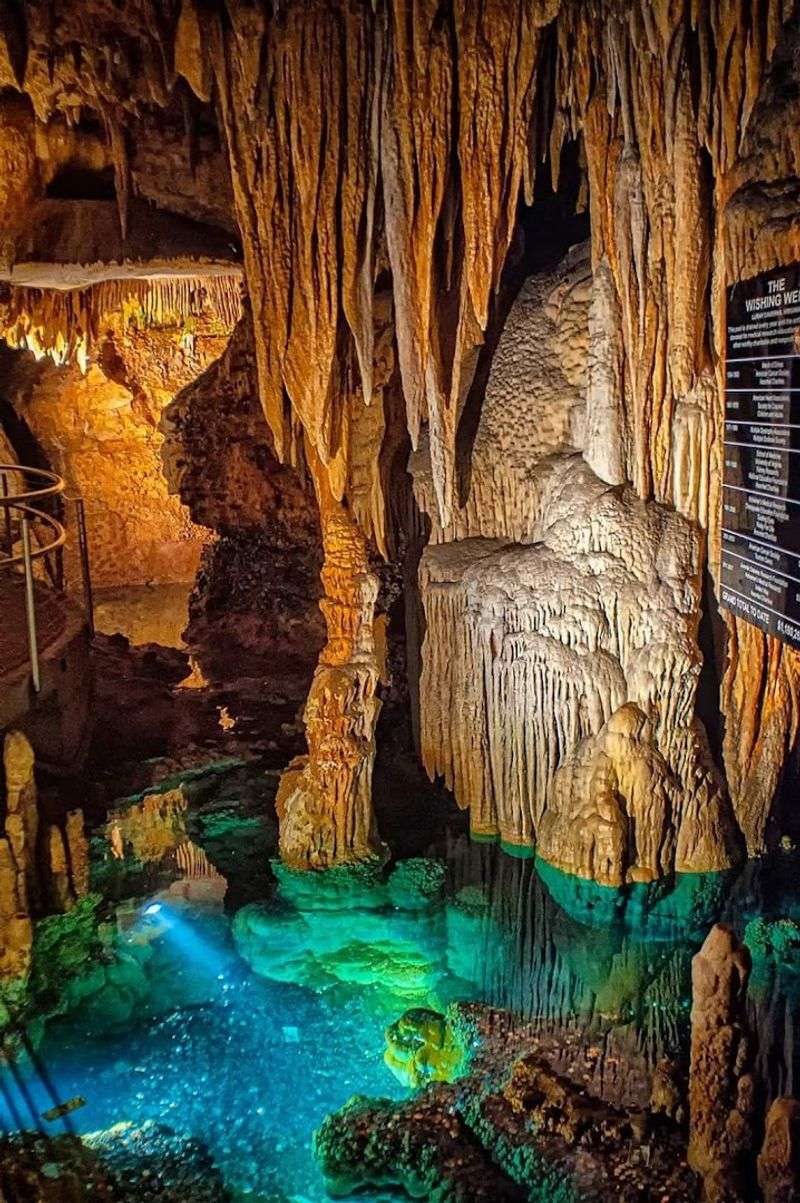
Weekends between Memorial Day and Labor Day are the busiest periods at Luray Caverns, and the difference between a crowded visit and a relaxed one comes down almost entirely to timing. Arriving right at opening on a weekday morning is the single most effective way to experience the cave without bottlenecks.
Midday on Saturdays in July and August can get particularly packed, with groups clustering at the most popular formations and slowing the flow of the whole trail. The cave is large enough that crowds rarely feel dangerous, but they do interrupt the sense of quiet wonder that makes the experience special.
Fall weekdays offer a particularly good window. The Shenandoah Valley foliage is stunning from late September through October, the summer crowds have thinned, and the constant 54-degree cave temperature feels refreshing rather than chilly.
Spring mornings work equally well for visitors who want the cave mostly to themselves.
Why Luray Caverns Stays With You Long After You Leave
There are tourist attractions that check a box and tourist attractions that genuinely change how you see the world for a few hours. Luray Caverns falls into the second category, and the reason is hard to articulate until you have actually been inside.
The scale does something to your sense of perspective. You walk in thinking you know what a cave looks like, and within five minutes you are standing in a room the size of an auditorium, surrounded by formations that predate human civilization by an almost incomprehensible margin.
People who visited as children return as adults and bring their own kids, and the reaction is the same across generations. The cave does not age, it does not change, and it does not disappoint.
That kind of consistency is rare in any travel experience. If you are within a reasonable drive of the Shenandoah Valley, this is one stop that genuinely earns the detour.
Share this story