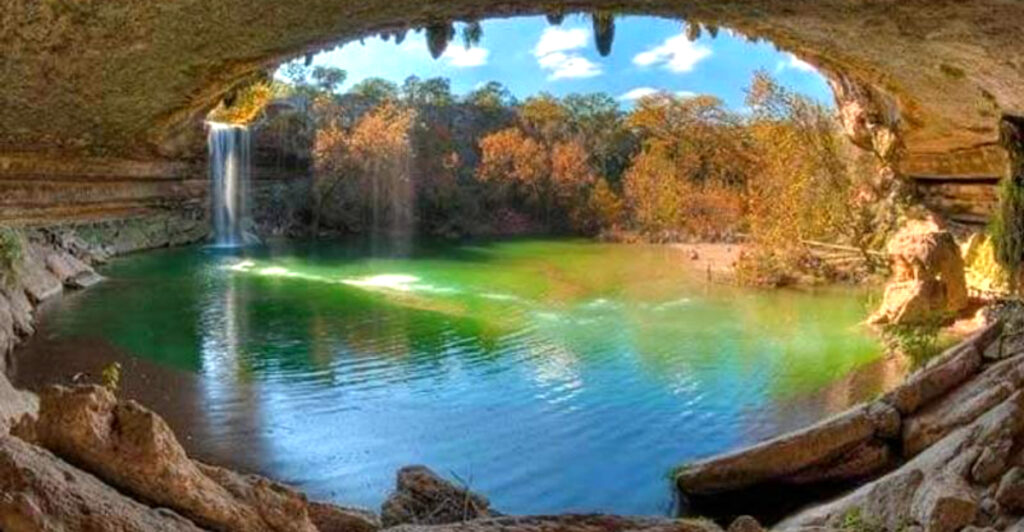
There is a swimming hole in the Texas Hill Country that looks like it belongs on a movie set, and the backstory behind how it formed is even more jaw-dropping than the view itself. Thousands of years ago, an underground cave dome gave way, and what collapsed became one of the most photographed natural pools in the entire state.
The result is a jade-green pool cradled by a curved limestone cliff, fed by a waterfall that trickles down from above. Every summer, Texans and travelers from across the country make the drive out to see it in person, and most of them leave wondering why it took them so long to visit.
This article covers everything you need to know before you go, from the geology and history to parking fees, trail conditions, and what to realistically expect when you arrive.
How a Cave Ceiling Became a Swimming Pool
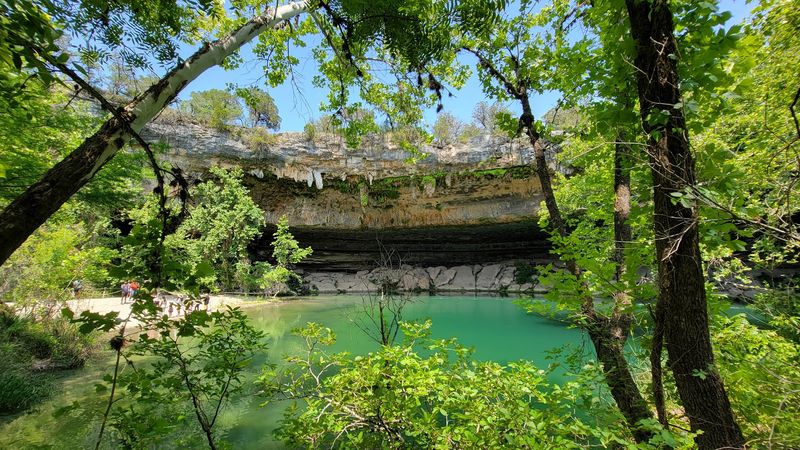
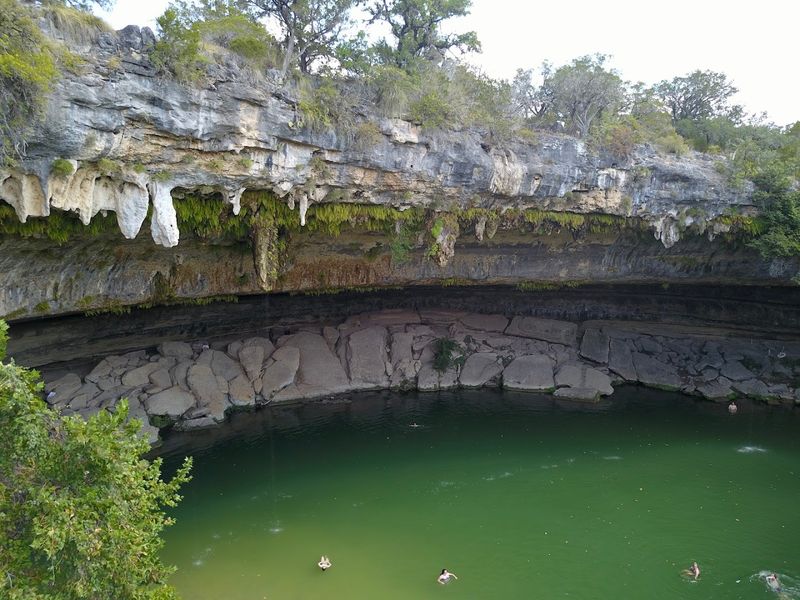
The origin story of this place reads more like geology fiction than Texas fact. Hamilton Pool formed when the dome of an underground river cavern collapsed under its own weight thousands of years ago, leaving behind a natural amphitheater of curved limestone walls and a pool of cool, blue-green water at the bottom.
The Pedernales River once flowed through this area and carved the cave system over millions of years. When the ceiling finally gave way, the exposed grotto became what visitors see today.
What makes this formation so visually striking is the horseshoe shape of the remaining cliff walls, which arc around the pool like a natural stage. Layers of limestone, draped with maidenhair ferns and moss, frame the whole scene in a way that feels almost too perfect to be real.
This is pure geology doing the decorating.
Where Exactly You Are Going
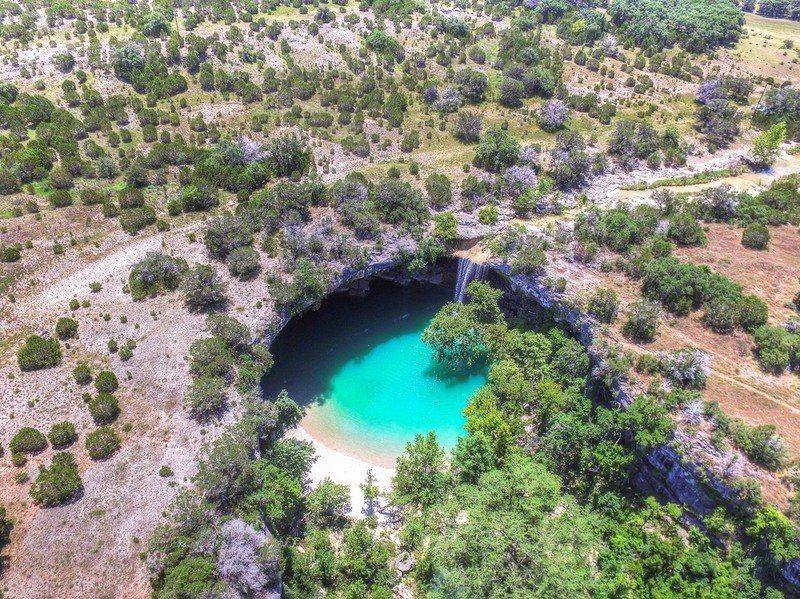
Hamilton Pool Preserve is located at 24300 Hamilton Pool Road, Dripping Springs, Texas 78620, roughly 30 miles west of downtown Austin. The drive takes about 45 minutes from the city, winding through the scenic Texas Hill Country on Hamilton Pool Road.
The preserve sits within Travis County and is managed by Travis County Parks. It borders the Pedernales River corridor, which adds another layer of natural beauty to the surrounding landscape.
Getting here requires a car, as there is no public transit option out to this stretch of Hill Country. The road leading to the preserve is mostly two-lane and passes through ranchland and cedar-covered hills.
If you are coming from Austin, the drive itself is part of the experience. Rolling terrain, open skies, and the occasional deer sighting make the journey feel like a proper escape from city life before you even park the car.
The Reservation System You Cannot Ignore
Booking a visit to Hamilton Pool is not optional, it is the only way in. The preserve requires advance reservations through the Travis County Parks online portal, and spots fill up months ahead, especially during summer weekends.
Reservations are split into AM and PM time slots, with each group allowed a set number of hours at the pool. Only around 30 visitors are permitted at the pool at any given time, which keeps the experience from feeling like a crowded public pool.
The parking reservation costs $12 per vehicle and must be made online before arrival. On top of that, each adult pays $8 in cash at the gate, so bring paper bills because cards are not accepted on-site.
Planning ahead is non-negotiable here. If you show up without a reservation hoping to get lucky, the gate attendant will turn you right back around.
The Trail Down to the Pool
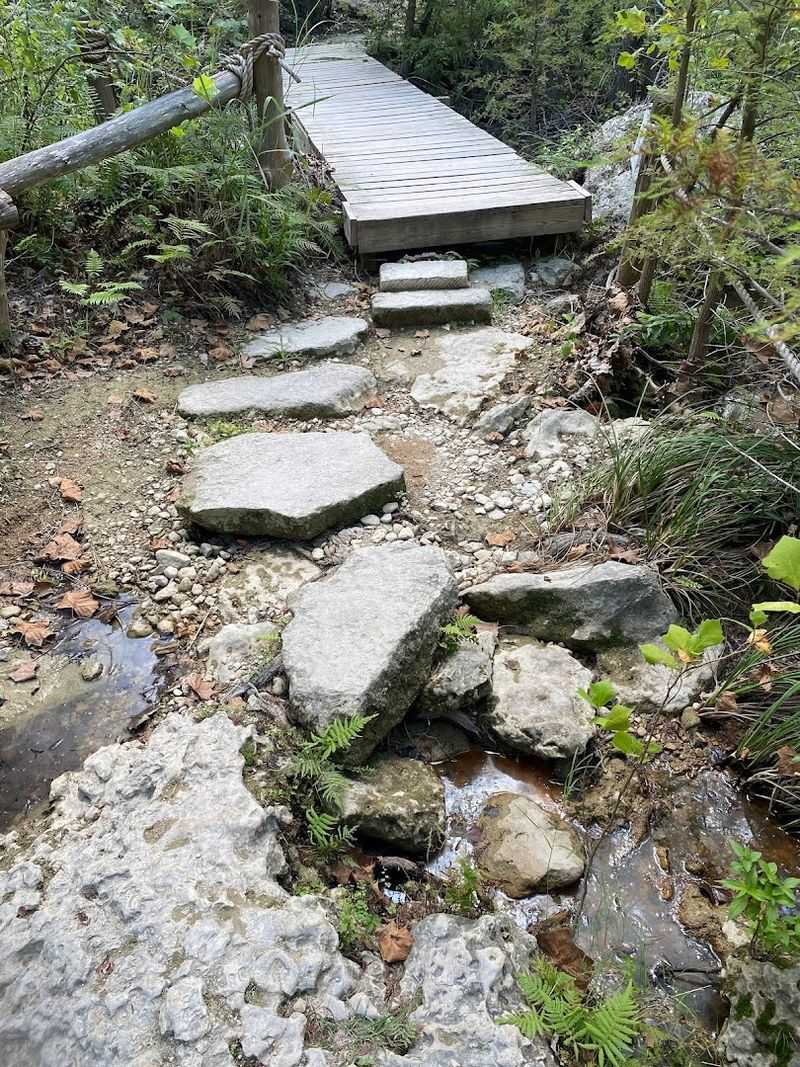
The hike from the parking area to the pool is short, just about a quarter mile, but do not let the distance fool you into thinking it is a stroll. The trail is unpaved, rocky in sections, and slopes downhill toward the grotto, which means the return walk back up will feel noticeably harder, especially in summer heat.
Wear proper footwear. Flip-flops work for some people on the way down, but sneakers or water shoes are the smarter choice, particularly if the ground is damp.
The trail can get slippery after rain, and the rocks near the pool edge are often wet from spray.
Walking sticks are available at the entrance if you need extra support. The whole hike takes about 10 minutes at a comfortable pace.
Once you round the final bend and the grotto comes into view for the first time, the effort immediately feels worth every rocky step.
What the Pool Actually Looks Like Up Close
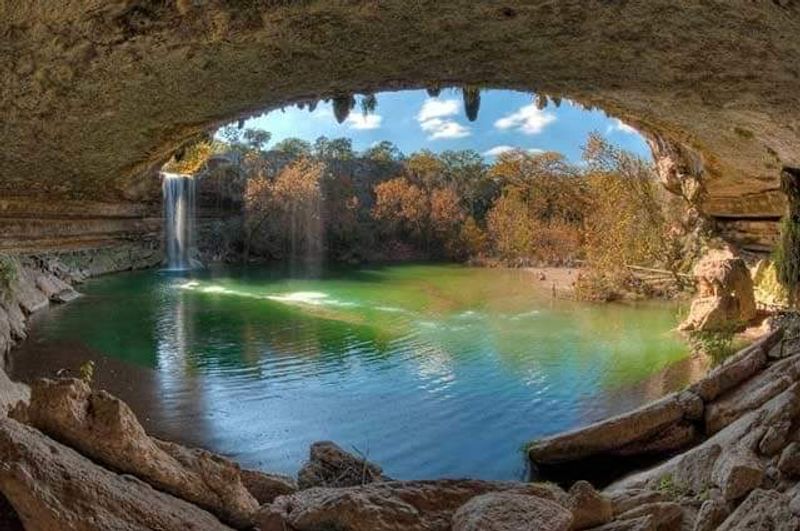
No photograph fully prepares you for the moment the pool comes into view. The water is a deep jade green, cool and clear, ringed by a curved limestone cliff that rises dramatically on three sides.
The grotto walls are layered with maidenhair ferns, dripping with moisture and glowing in the filtered light.
A waterfall tumbles down from the top of the cliff, though its flow varies significantly depending on recent rainfall. In wet seasons, it is a proper cascade.
In dry periods, it slows to a gentle trickle, but even then, the sound of water echoing off the rock walls adds to the atmosphere.
The pool itself is roughly circular, with a small sandy and rocky beach area where visitors can set down towels and gear. The water temperature stays around 68 to 72 degrees Fahrenheit year-round, making it a genuinely refreshing swim on a hot Texas afternoon.
Swimming Rules and Water Quality Checks
Swimming at Hamilton Pool is not guaranteed on any given day. The preserve monitors water quality regularly, and if bacteria levels are too high, swimming is closed until conditions improve.
You will not know whether swimming is allowed until the day of your visit.
This is one of the more frustrating realities of visiting a natural swimming hole. Bacteria levels can spike after heavy rain, during algae blooms, or simply due to high visitor volume.
The preserve posts daily water quality updates on their website and social media channels, so check before you leave home.
Even when swimming is open, the grotto overhang area and the trail directly beneath the cliff are closed due to the risk of falling rocks. This means you swim in the open pool area rather than directly under the waterfall.
It is a real restriction, but it exists to protect visitors from genuine geological hazard.
The Overhang and Grotto Closure
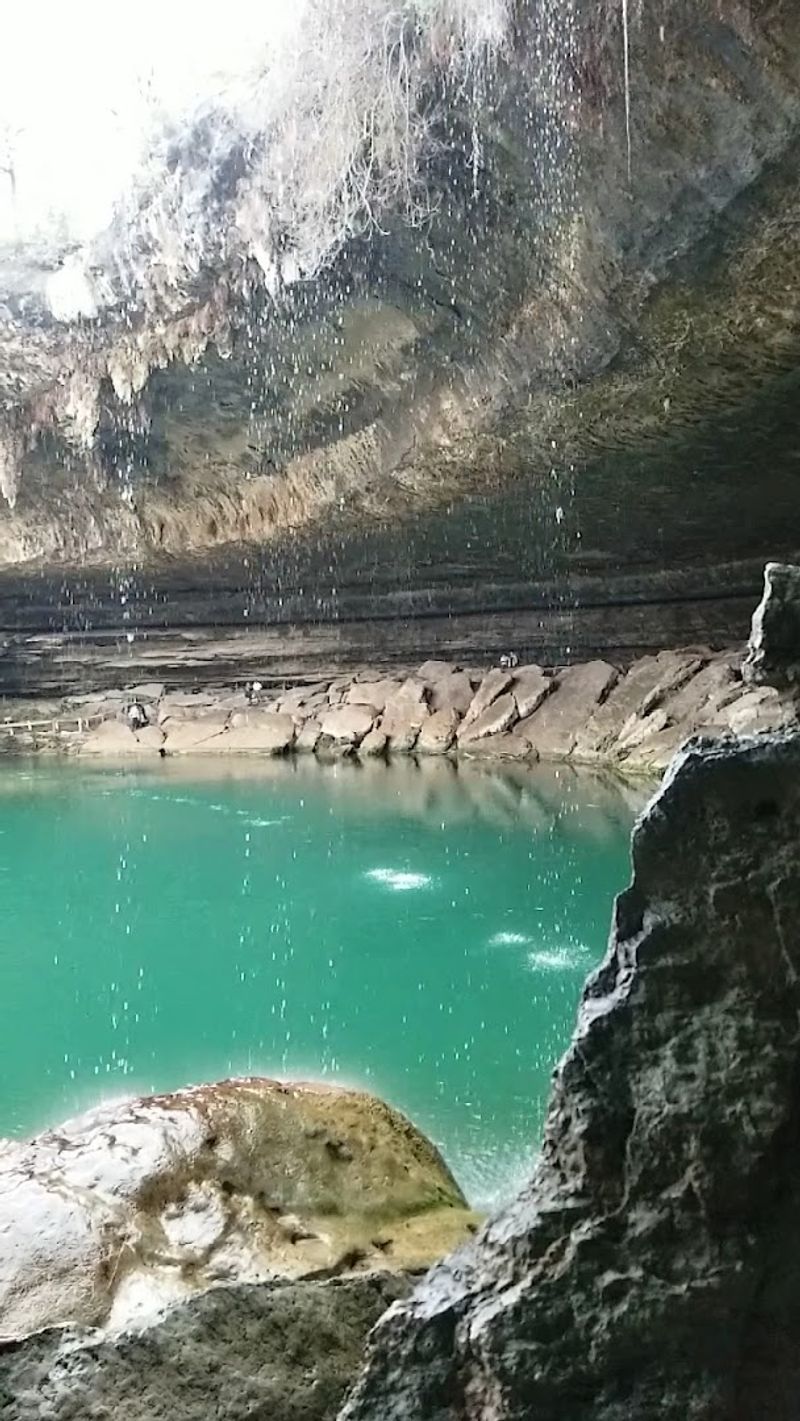
One of the most talked-about changes at Hamilton Pool in recent years is the permanent closure of the overhang area. The massive limestone ledge that once allowed visitors to walk directly beneath the waterfall and behind the curtain of falling water is now off-limits.
Geologists and park officials determined that the rock formations in that section pose a serious risk of collapse, and access has been restricted indefinitely. For longtime visitors who remember walking under the grotto in its fully open state, this is a genuine loss.
That said, the pool itself remains accessible, and the views from the open beach area are still spectacular. The waterfall is still visible from a safe distance, and the overall atmosphere of the grotto has not disappeared.
First-time visitors who arrive without the expectation of walking under the overhang tend to be far more impressed than those who come expecting the experience of years past.
The River Walk Trail
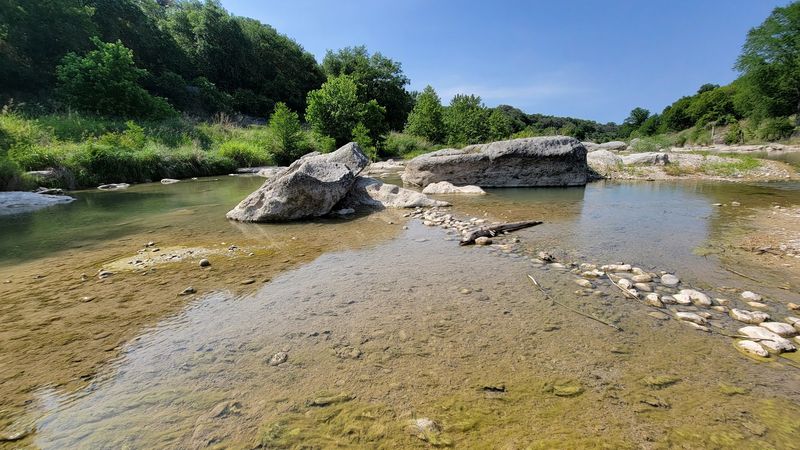
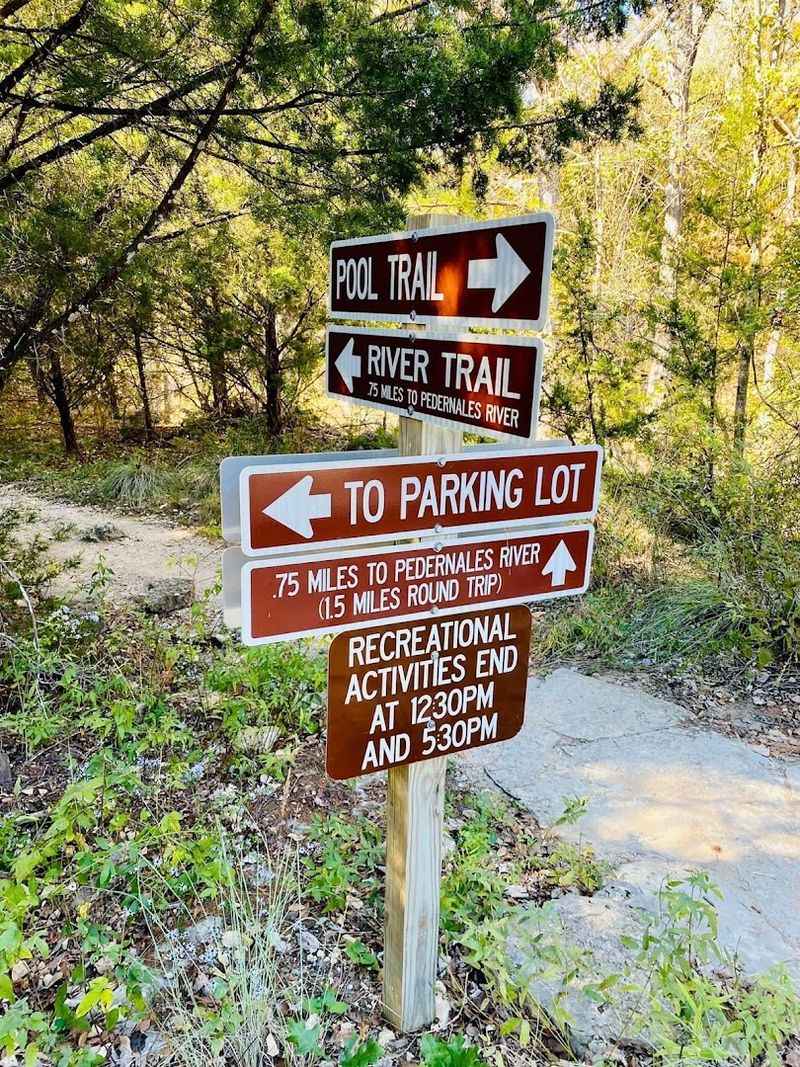
Beyond the pool itself, Hamilton Pool Preserve offers a second trail that follows the Pedernales River for about 0.8 miles. This path is quieter than the main pool area and gives visitors a chance to see the broader natural landscape of the Texas Hill Country.
The river trail winds through cedar and oak woodland, passing exposed limestone banks and occasional shallow pools. Wildlife sightings are common here, including herons, turtles, and various bird species.
The trail is mostly flat and easy to walk, though rocky in places.
Water levels along the river vary considerably by season. During spring and after periods of rainfall, the river runs with more volume and color.
In summer and fall, sections can run low or nearly dry. Even when the water is minimal, the trail itself is a pleasant walk through genuinely beautiful terrain, and the solitude compared to the busy pool area is a welcome contrast.
Wildlife and Nature Worth Noticing
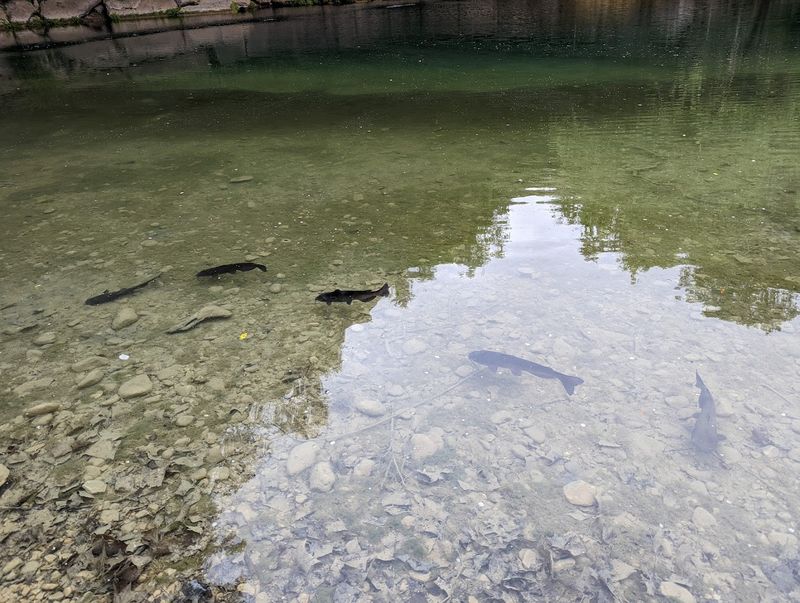
The water at Hamilton Pool is home to a small community of fish, including catfish, perch, and the occasional trout. They tend to gather near the shallower edges of the pool, and on a clear day you can spot them cruising along the bottom.
The preserve rules ask that visitors not feed the fish, though enough people have done so over the years that the catfish in particular have grown fairly comfortable around humans. They are not aggressive and will not bother swimmers, but they will absolutely investigate your ankles if you stand still long enough.
Beyond the water, the grotto walls support a rich ecosystem of ferns, mosses, and lichens that thrive in the constant moisture and shade. Vultures are commonly spotted circling the cliffs above.
The preserve also occasionally hosts educational programs where rangers share information about local fossils and animal history found along the trails.
Best Time of Year to Visit
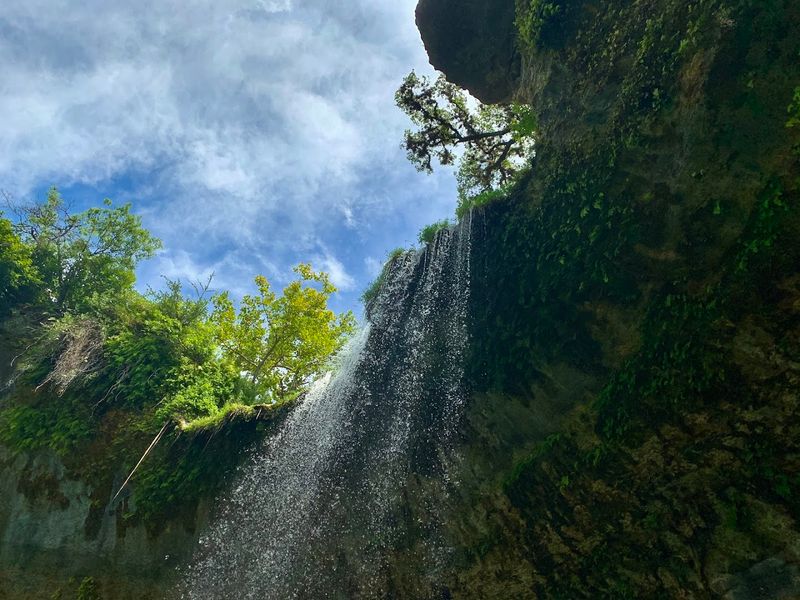
Spring is widely considered the best season to visit Hamilton Pool, and for good reason. Rainfall through winter and early spring feeds the waterfall and keeps the pool full and beautifully colored.
The ferns on the grotto walls are at their most vibrant, and temperatures are comfortable for both hiking and swimming.
Summer brings the largest crowds and the highest demand for reservations. Water temperatures are refreshing against the Texas heat, and swimming is often permitted, though bacteria levels need to be checked.
Weekends in June, July, and August book out almost instantly when the reservation window opens.
Fall visits offer a quieter experience with cooler air and fewer visitors, though the waterfall may slow considerably if summer has been dry. Winter is the least visited season, and swimming is rarely comfortable given water temperatures around 49 degrees Fahrenheit, but the grotto scenery remains striking year-round.
Practical Tips Before You Pack the Car
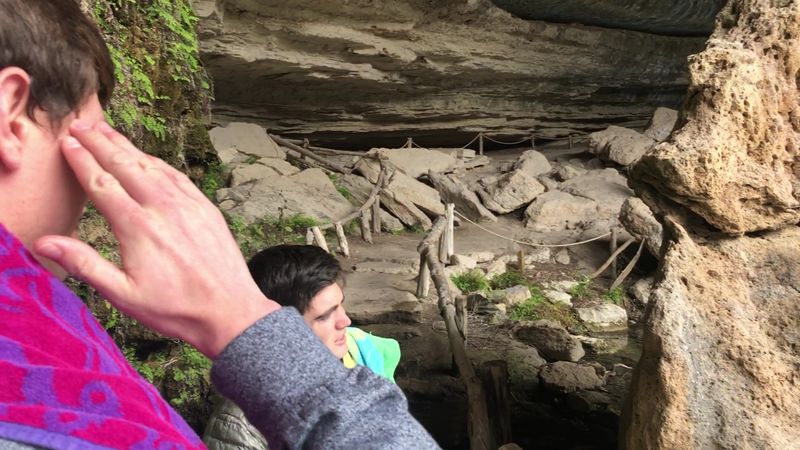
A few practical details will make or break your visit, so pay attention here. Bring cash, specifically small bills, because the $8 per person entry fee is collected at the gate and cards are not accepted.
ATMs are not available at the preserve.
Pack water and snacks because the preserve does not have a concession stand. The short trail in the heat can dehydrate you faster than expected, especially in summer.
A reusable water bottle and light snacks will keep your energy up for the full visit.
Pets are not allowed at Hamilton Pool Preserve, even if left in the vehicle. Large coolers and strollers are extremely difficult to manage on the rocky trail, so keep gear minimal.
Sunscreen is essential since parts of the pool area receive direct sun. Walking sticks are available at the trailhead for those who want extra stability on the uneven path.
Why Hamilton Pool Still Belongs on Your Texas Bucket List
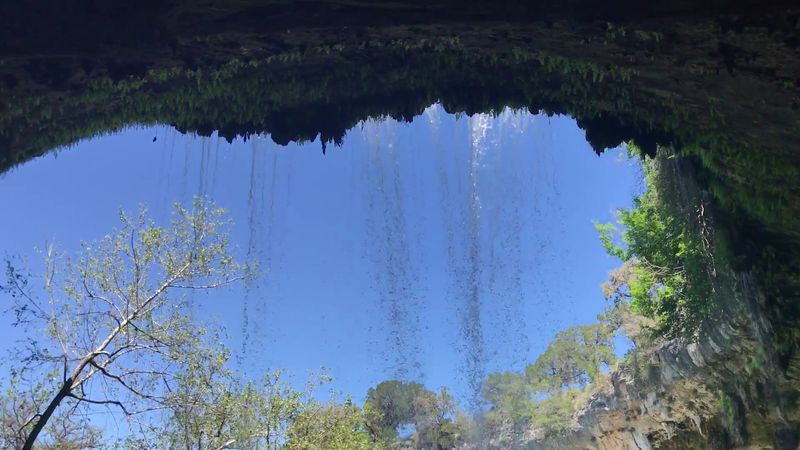
Even with its restrictions, its reservation requirements, and the closure of the overhang, Hamilton Pool remains one of the most genuinely impressive natural sites in Texas. The combination of geological drama, cool water, and lush greenery is rare in a state that more often delivers flat plains and scorching pavement.
The pool’s origin story alone earns it a place on any Texas nature list. A cave ceiling collapsing thousands of years ago to create a perfect swimming grotto is the kind of thing that sounds made up until you are standing at the edge of the water looking up at curved limestone walls.
Go in with realistic expectations, book your reservation early, bring cash, and check water quality the morning of your visit. Do all of that, and Hamilton Pool will likely deliver one of the more memorable afternoons you have spent outdoors in the Lone Star State.
Share this story