Nature has many admirable qualities. Subtlety is not always one of them.
For every familiar animal like a deer, dolphin, or eagle, there seems to be another creature that looks as though evolution got carried away with a sketchbook. Some have transparent heads.
Others sport bizarre noses, impossible-looking teeth, or colors that seem borrowed from a science fiction movie. Yet these strange beings aren’t products of fantasy novels, video games, or Hollywood special effects.
They’re very real, and many have been puzzling scientists for decades.
The most surprising part is that these animals often thrive in environments where their unusual features serve a practical purpose. What appears ridiculous at first glance usually turns out to be a clever adaptation for survival.
Still, that doesn’t make them any less astonishing to look at.
The following creatures prove that reality can be every bit as imaginative as fiction. If someone described these animals without photographic evidence, most people would assume they were making the whole thing up.
1. Saiga Antelope
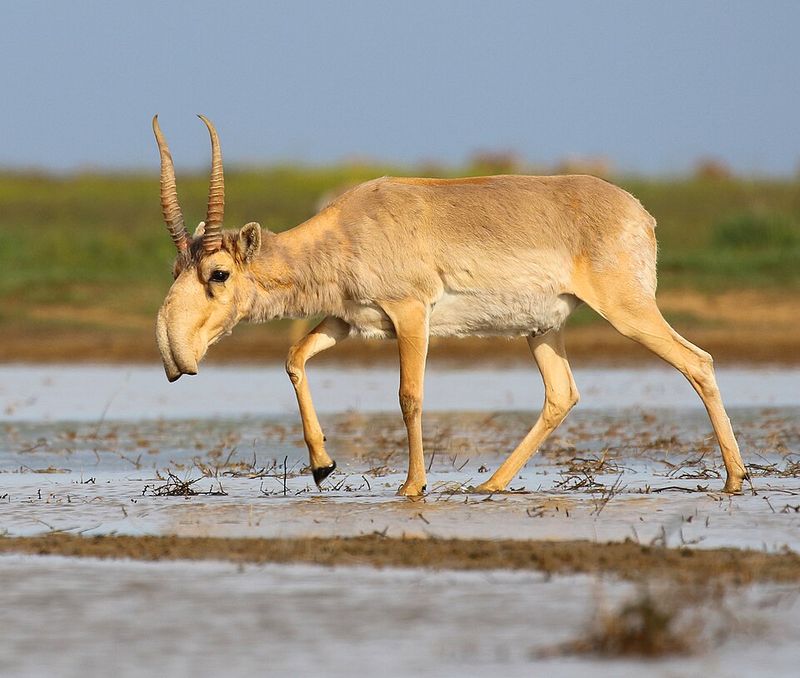
That oversized nose looks like it belongs on a completely different animal.
The saiga antelope roams the grasslands of Central Asia and immediately stands out thanks to its unusual snout, which resembles a flexible trunk more than a typical antelope nose. At first glance, the design seems like a biological prank, but it serves several important purposes.
Scientists believe the enlarged nose helps filter dust during the dry summer months while also warming cold air before it reaches the lungs during harsh winters. In other words, the feature that makes the saiga look so strange is actually a highly effective survival tool.
Males also develop impressive ridged horns that add even more character to an already distinctive appearance. Historically, vast herds crossed the Eurasian steppes, though modern populations are much smaller due to habitat pressures and other challenges.
Seeing a saiga for the first time often produces a double take. It looks like an antelope assembled from spare parts, yet it remains one of nature’s most remarkable examples of adaptation.
2. Dumbo Octopus
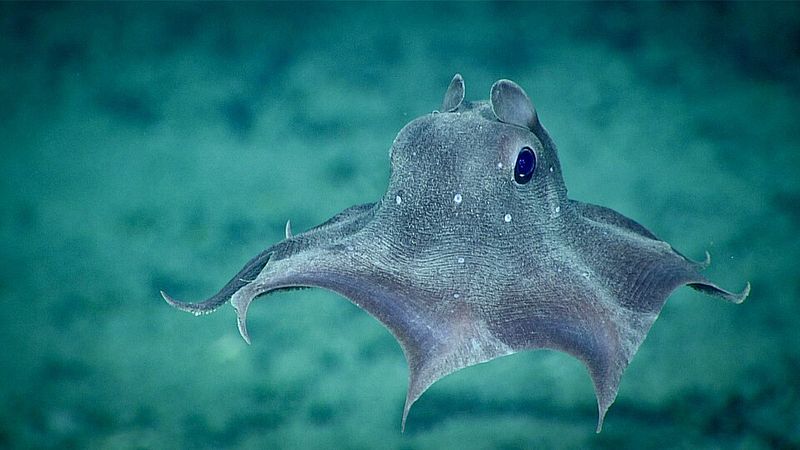
Disney fans may recognize the nickname long before they see the animal.
Dumbo octopuses earned their name because of the ear-like fins protruding from either side of their heads. These fins bear a striking resemblance to the famous animated elephant’s oversized ears, creating one of the ocean’s most charming visual coincidences.
Unlike many octopus species that inhabit shallow waters, dumbo octopuses live at extraordinary depths, often thousands of feet beneath the ocean surface. Their remote habitat explains why humans rarely encounter them in the wild.
Rather than relying primarily on jet propulsion, these octopuses gracefully flap their fins to move through the water. The result is a swimming style that appears more like floating than traditional marine locomotion.
Scientists continue learning about these elusive animals because observing them in their natural environment requires specialized deep-sea equipment. Every new encounter provides additional insight into one of the ocean’s most unusual residents.
3. Glass Frog
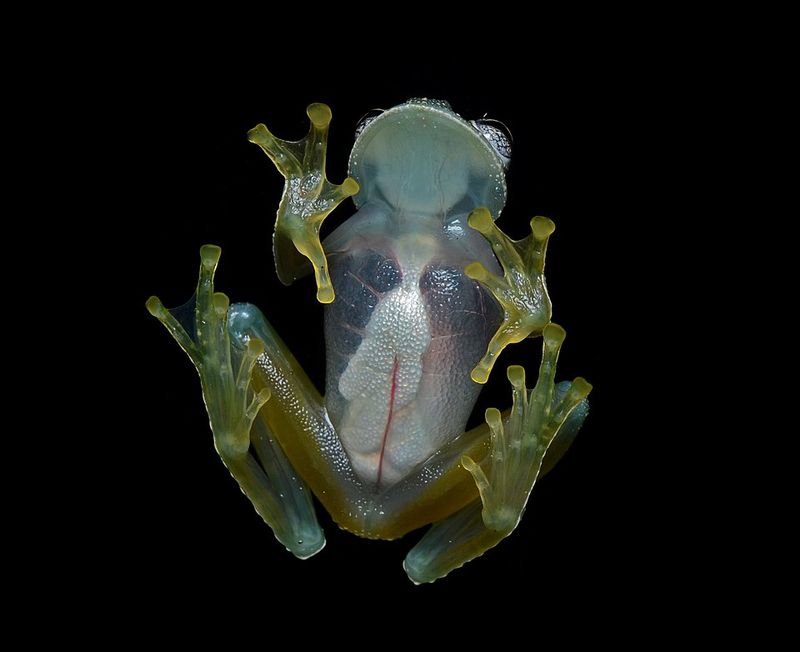
Transparency sounds like a superpower until you realize some frogs already have it.
Glass frogs, found primarily in Central and South America, possess skin so translucent that many of their internal organs can be seen through their undersides. Their hearts, digestive systems, and other structures are often visible without any special equipment.
This remarkable transparency helps the frogs blend into leaves and vegetation. Predators searching for a typical frog silhouette may overlook an animal that appears partially invisible.
Most glass frogs are relatively small, often measuring only a few inches in length. Their bright green coloration on top further assists with camouflage among forest foliage.
The combination of visible internal anatomy and delicate appearance makes glass frogs seem more like creatures from a science exhibit than living amphibians. Yet they continue thriving in rainforests across the Americas.
4. Goblin Shark
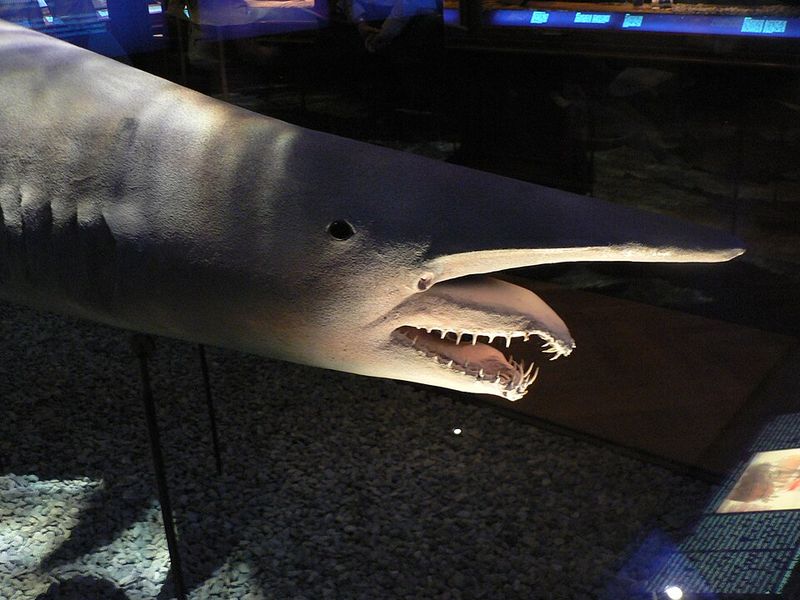
Some sharks inspire admiration. This one inspires questions.
The goblin shark inhabits deep ocean waters and possesses a face unlike anything most people associate with sharks. Its elongated snout extends forward dramatically, giving it an appearance that many describe as downright bizarre.
The real surprise arrives during feeding. The shark’s jaws can rapidly project outward from its face to seize prey, creating one of the most unusual hunting mechanisms in the marine world.
Scientists consider goblin sharks living representatives of an ancient lineage that stretches back millions of years. Their unusual features have remained effective enough to survive vast spans of evolutionary history.
Fortunately for swimmers, goblin sharks inhabit deep environments far beyond typical recreational waters. Most people will encounter them only through photographs, which is more than enough to appreciate their extraordinary appearance.
5. Shoebill
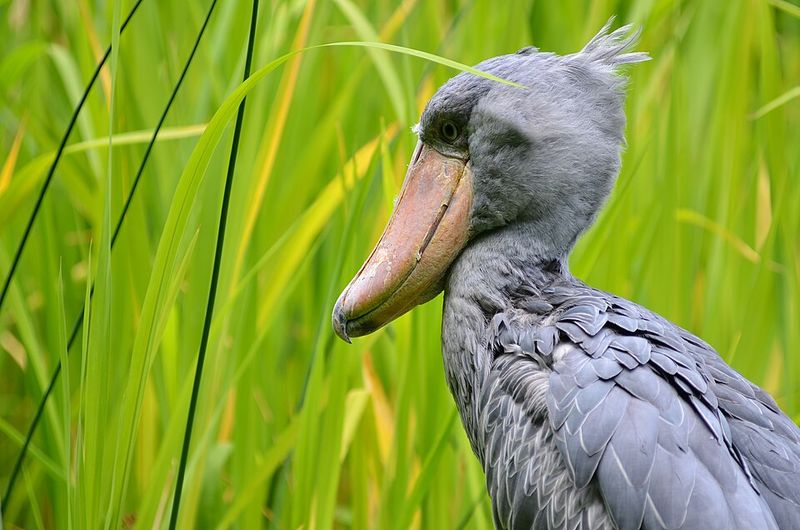
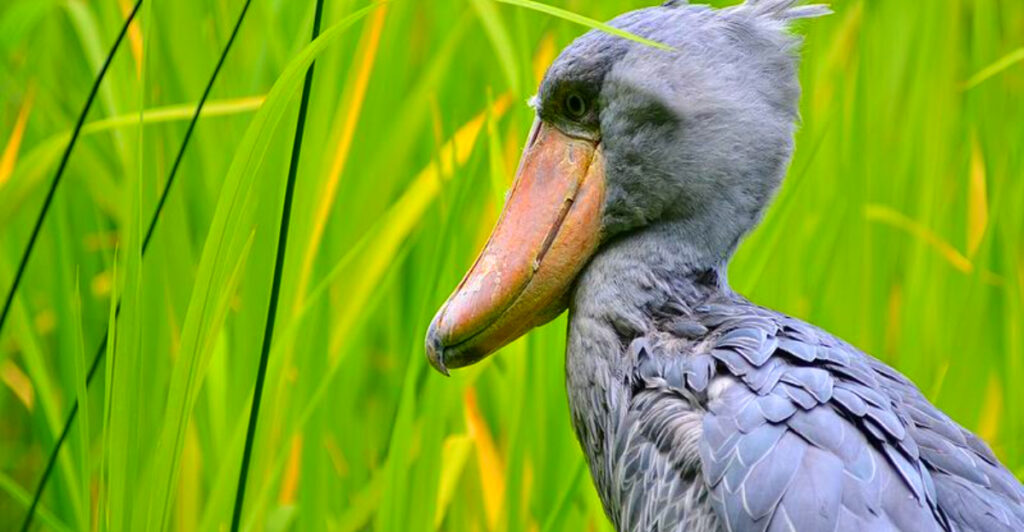
Few birds manage to look simultaneously prehistoric and mildly annoyed.
The shoebill, found in parts of eastern and central Africa, is famous for its enormous bill, which resembles a wooden clog or shoe. That distinctive feature gives the bird its memorable name and contributes to its intimidating appearance.
Standing up to five feet tall, the shoebill often remains motionless for long periods while hunting. This patient strategy allows it to ambush fish, amphibians, and other prey with remarkable efficiency.
Its eyes face forward more than those of many birds, creating an intense stare that has become legendary among wildlife photographers. Combined with its massive bill, the effect can be surprisingly dramatic.
Although the shoebill looks as though it belongs in a dinosaur documentary, it is very much a modern species. It simply happens to possess one of the most unforgettable faces in the animal kingdom.
6. Leafy Sea Dragon
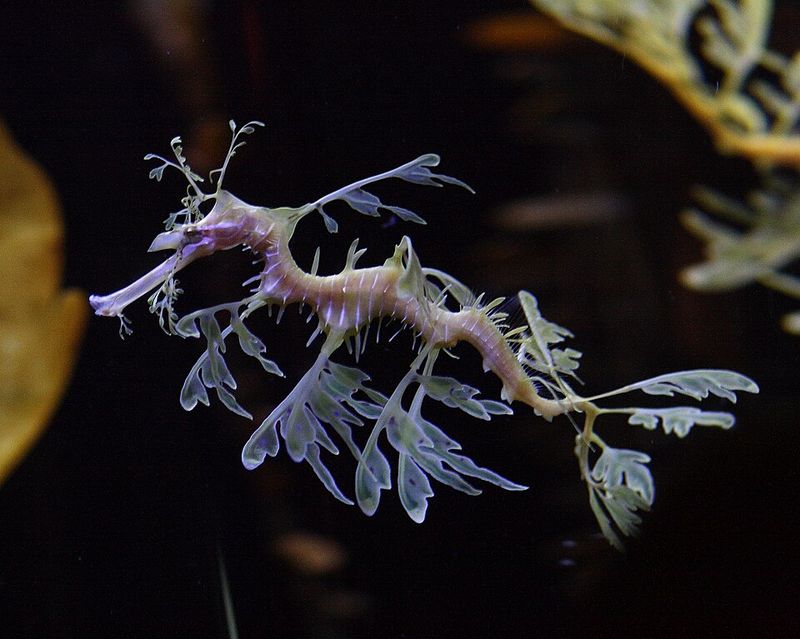
Camouflage reaches artistic levels with this remarkable fish.
Native to the coastal waters of southern Australia, the leafy sea dragon appears less like a fish and more like a drifting piece of seaweed. Elaborate leaf-shaped appendages extend from its body, creating an astonishing disguise.
Unlike actual leaves, these structures do not assist with swimming. Instead, they serve almost entirely as camouflage, helping the animal blend seamlessly into underwater vegetation.
Closely related to seahorses, leafy sea dragons share several family traits, including a unique approach to reproduction in which males carry fertilized eggs until they hatch.
Their appearance is so extraordinary that many first-time observers assume images have been digitally altered. In reality, the leafy sea dragon is simply one of nature’s finest examples of disguise.
7. Aye-Aye
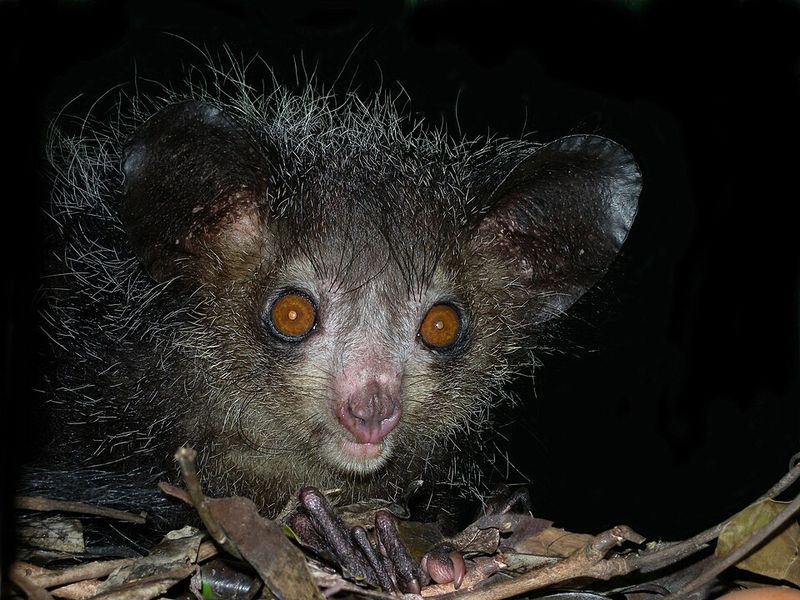
Even among lemurs, this one stands in a category of its own.
The aye-aye lives in Madagascar and possesses a combination of features that seems deliberately designed to surprise people. Large eyes, oversized ears, and an unusually elongated middle finger create an appearance unlike any other primate.
That famous finger serves a practical purpose. The aye-aye taps on tree bark, listening for hollow spaces that may contain insect larvae.
Once it locates a target, it uses the finger to extract food from narrow openings.
This feeding technique is known as percussive foraging and is relatively rare among mammals. The aye-aye’s specialized anatomy allows it to exploit food sources that many other animals cannot access.
Its unusual appearance has inspired myths and superstitions throughout parts of Madagascar, but scientists view it as a fascinating example of evolutionary specialization.
8. Red-Lipped Batfish
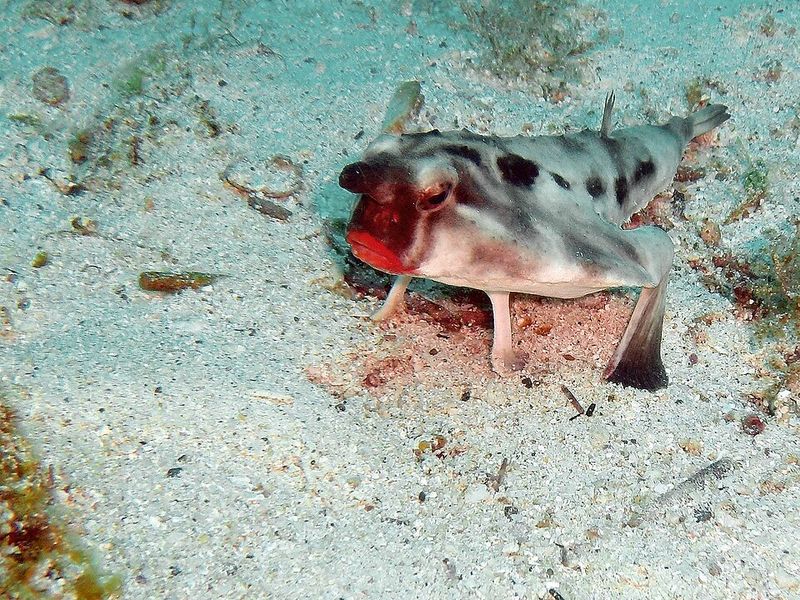
Fashion trends come and go. This fish committed to one look and never looked back.
The red-lipped batfish inhabits waters around the Galápagos Islands and attracts immediate attention thanks to its bright red lips. The coloration is so striking that it appears almost cosmetic.
As unusual as the lips may be, they are only part of the story. The fish also possesses modified fins that allow it to “walk” along the seafloor rather than swim efficiently like most fish.
Adding further oddity, the species carries a small structure on its head called an illicium, which functions as a lure to attract prey. This feature is more commonly associated with anglerfish.
The combined effect creates one of the most peculiar appearances in marine biology, proving that underwater life often follows its own design principles.
9. Okapi
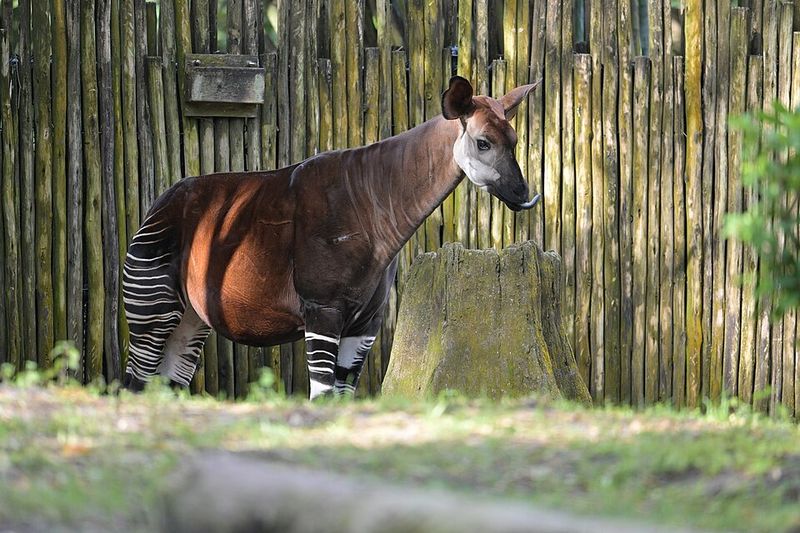
At first glance, someone appears to have combined several different animals.
The okapi lives in the dense forests of the Democratic Republic of the Congo and remained unknown to Western science until the early twentieth century. Its appearance helps explain why early reports were met with skepticism.
The animal has a body shape resembling a giraffe, striped legs reminiscent of a zebra, and a face entirely its own. Despite the zebra-like markings, the okapi is actually the giraffe’s closest living relative.
Its striped hindquarters help break up its outline in forest environments, providing camouflage among shadows and vegetation. The markings also assist young calves in following their mothers through dense habitat.
Few mammals demonstrate so clearly that evolution occasionally produces combinations no one would dare invent.
10. Star-Nosed Mole
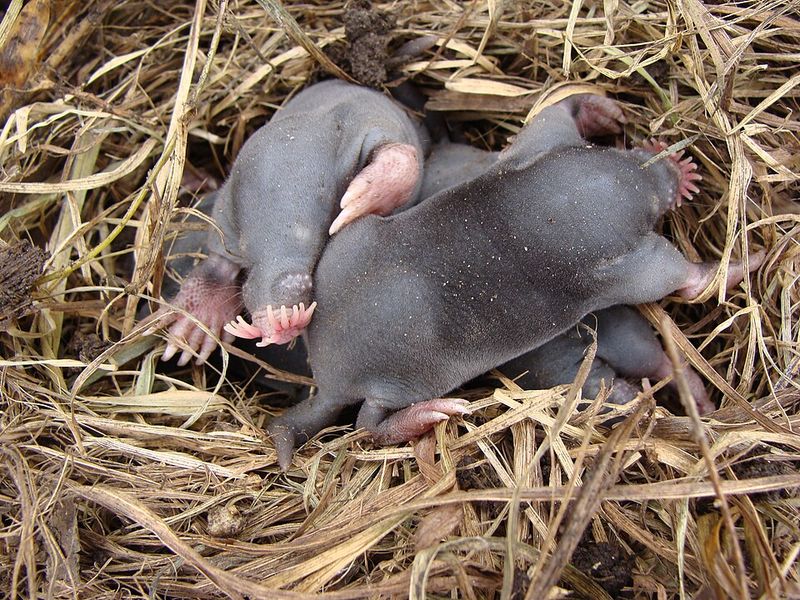
The world’s strangest nose belongs to an animal most people will never see.
Found in parts of North America, the star-nosed mole possesses 22 fleshy appendages arranged in a circular pattern around its snout. Together, they create the distinctive star shape responsible for the animal’s name.
These appendages contain thousands of sensory receptors, making the mole’s nose one of the most sensitive touch organs known in nature. It allows the animal to identify and evaluate food with astonishing speed.
Living largely underground or in wet environments, star-nosed moles rely heavily on touch rather than vision. Their unusual anatomy helps compensate for limited visibility.
The result may look bizarre, but it is also one of the most effective sensory systems evolution has produced.
11. Pink Fairy Armadillo
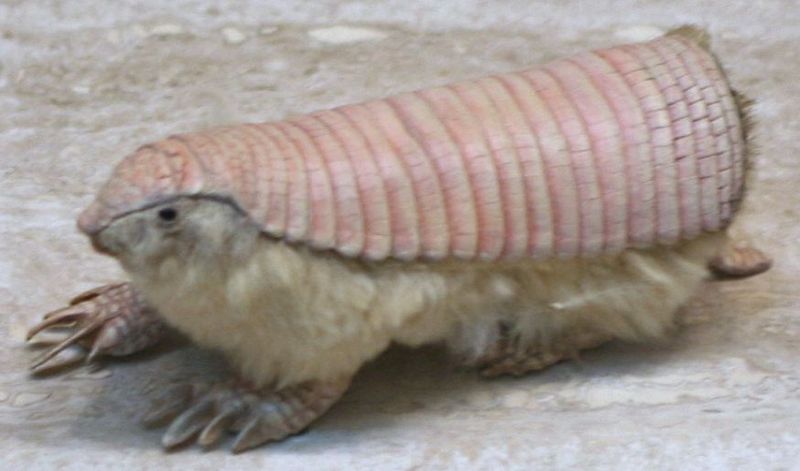
The name sounds fictional. The animal somehow looks even more fictional.
Native to Argentina, the pink fairy armadillo is the smallest armadillo species in the world. Its pale pink shell and compact size make it appear almost toy-like.
Adapted for life underground, the animal uses powerful claws to move through loose soil with remarkable efficiency. Its streamlined body allows it to disappear beneath the surface in surprisingly little time.
Because it spends so much of its life hidden underground, sightings are relatively rare. Many people living within its range never encounter one in the wild.
The combination of unusual coloration and elusive behavior has helped the pink fairy armadillo achieve near-legendary status among wildlife enthusiasts.
12. Blue Dragon Sea Slug
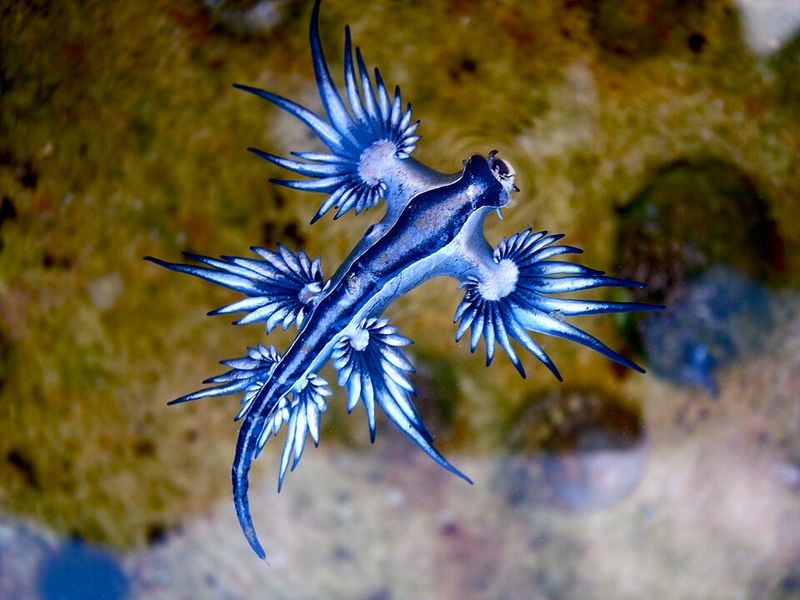
Some marine creatures seem determined to prove that color palettes have no limits.
The blue dragon sea slug drifts through warm ocean waters displaying brilliant blue and silver coloration. Its elaborate body structure resembles an ornate piece of artwork more than a typical sea slug.
Despite its delicate appearance, this tiny animal possesses a remarkable defense strategy. It consumes venomous prey such as Portuguese man o’ war and stores the stinging cells for its own protection.
The slug’s striking coloration serves as a warning to potential predators. Bright colors often indicate that touching the animal would be a poor decision.
Photographs of blue dragons frequently circulate online because many viewers assume the images have been manipulated. They have not.
Nature simply decided to get creative.
13. Gerenuk
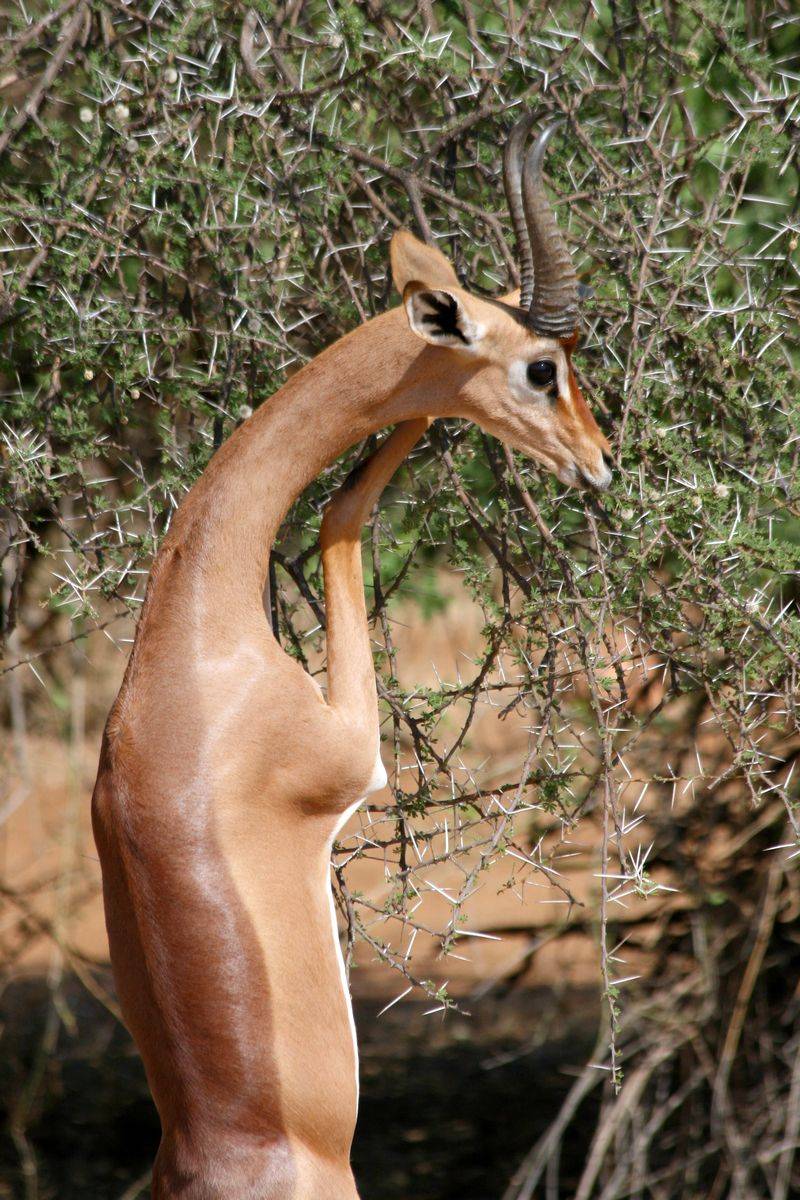
Most antelopes graze. This one prefers standing at the buffet.
The gerenuk, found in parts of East Africa, possesses an exceptionally long neck and a unique feeding style. Unlike most antelope species, it frequently stands upright on its hind legs to reach vegetation beyond the grasp of competitors.
This behavior gives the animal a silhouette unlike almost any other antelope. Its slender body and elongated neck create an appearance that seems more suited to animation than reality.
The ability to browse higher vegetation provides access to food sources unavailable to many neighboring herbivores. In dry environments, that advantage can be significant.
Watching a gerenuk balance upright while feeding is enough to convince many observers that they are seeing something entirely invented.
14. Barreleye Fish
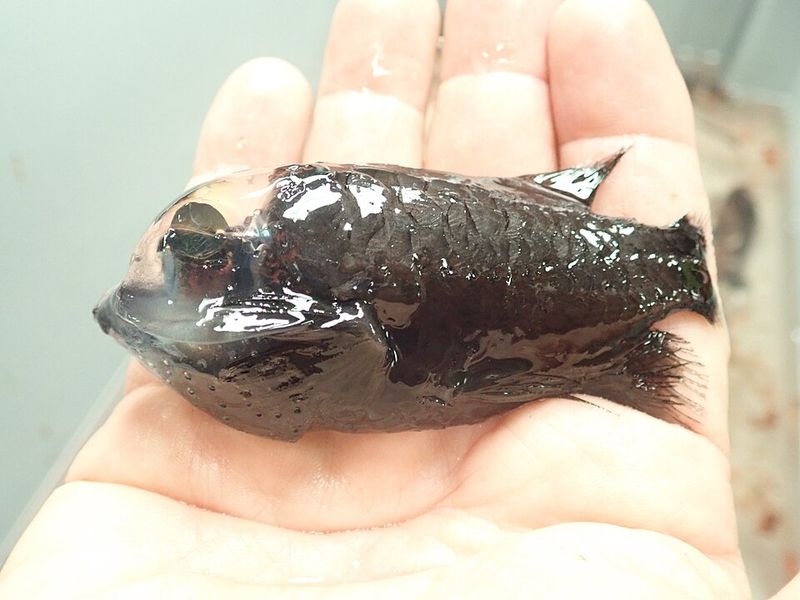
The final entry saves perhaps the most unbelievable feature for last.
The barreleye fish lives in the deep ocean and possesses a transparent head. Yes, an actual transparent head.
Through this clear dome, scientists can observe the fish’s internal eye structures.
Its unusual eyes can rotate, allowing the fish to look upward for prey while maintaining awareness of its surroundings. This adaptation helps it survive in the dimly lit depths where sunlight barely penetrates.
For years, researchers misunderstood how the fish’s eyes functioned because preserved specimens distorted important anatomical details. Modern observations finally revealed the true nature of its remarkable design.
The barreleye fish serves as a perfect reminder that the deeper scientists explore the natural world, the stranger reality becomes. If someone had invented this creature for a science fiction story, readers might have accused them of trying too hard.
Share this story