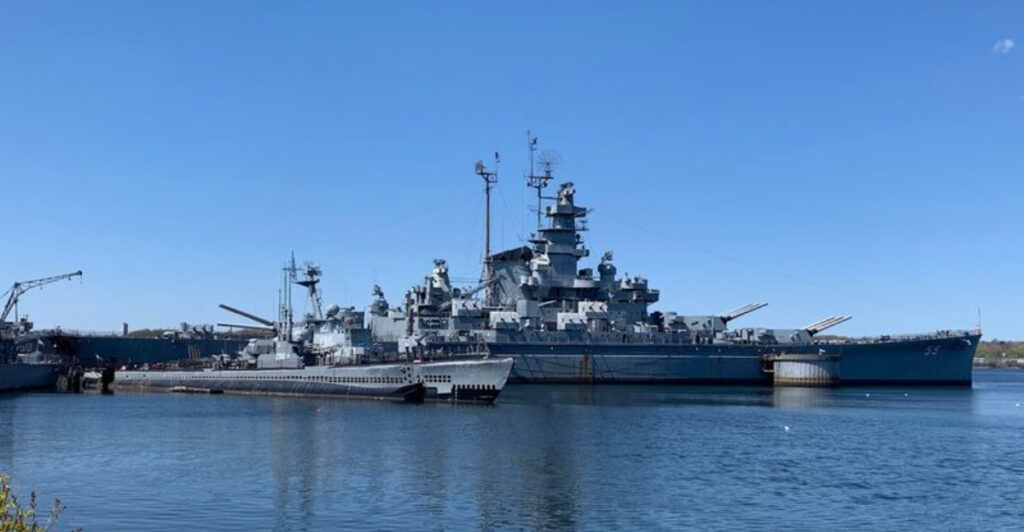
There is a place in southeastern Massachusetts where the Taunton River meets an extraordinary chapter of American military history, and it is hard to believe it all fits in one spot. A massive battleship, a submarine, a destroyer, and PT boats are all sitting right there, open to the public, preserved in remarkable condition.
This is not a replica or a model exhibit behind glass. These are the real ships, with real history, and you can walk through all of them.
Fall River, Massachusetts has quietly become one of the most compelling destinations for history enthusiasts in the entire country, and the collection anchored along its waterfront is unlike anything else in the world. Whether you are a lifelong military history fan or someone who just wants to spend a genuinely unforgettable day with family, this place delivers in ways that are hard to put into words.
A Record That Stands Alone
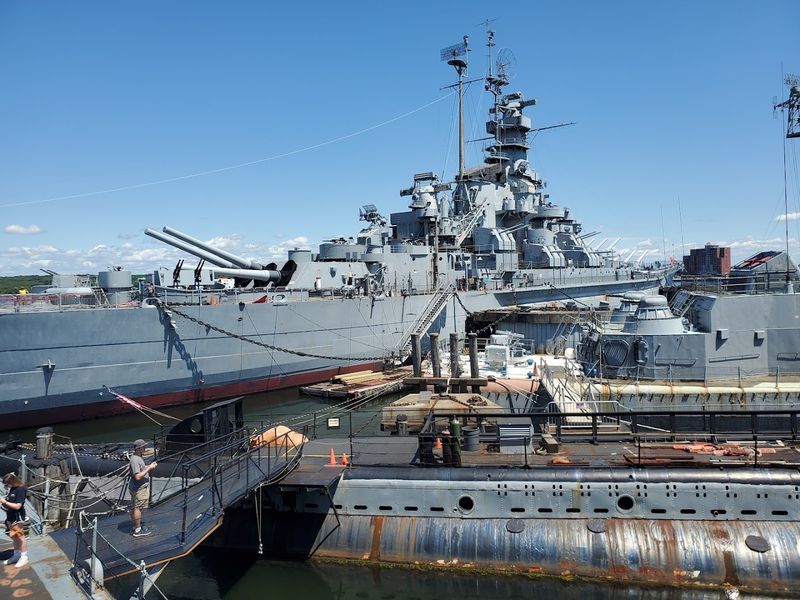
Battleship Cove holds the title of the world’s largest collection of preserved U.S. naval ships, and that is not a casual claim. The collection includes the USS Massachusetts, the USS Joseph P.
Kennedy Jr., the USS Lionfish, and several PT boats, all of which are original vessels from the World War II era or the Cold War period.
No other museum on the planet has assembled this many authentic, full-scale naval ships in a single accessible location. Most maritime museums focus on one vessel, maybe two.
Battleship Cove has built an entire fleet you can physically explore.
The scope of the collection becomes clearer when you realize each ship represents a completely different type of naval warfare. From the raw power of a battleship to the tight quarters of a submarine, the range of experiences packed into one visit is genuinely hard to match anywhere else in the United States.
Big Mamie: The Star of the Show
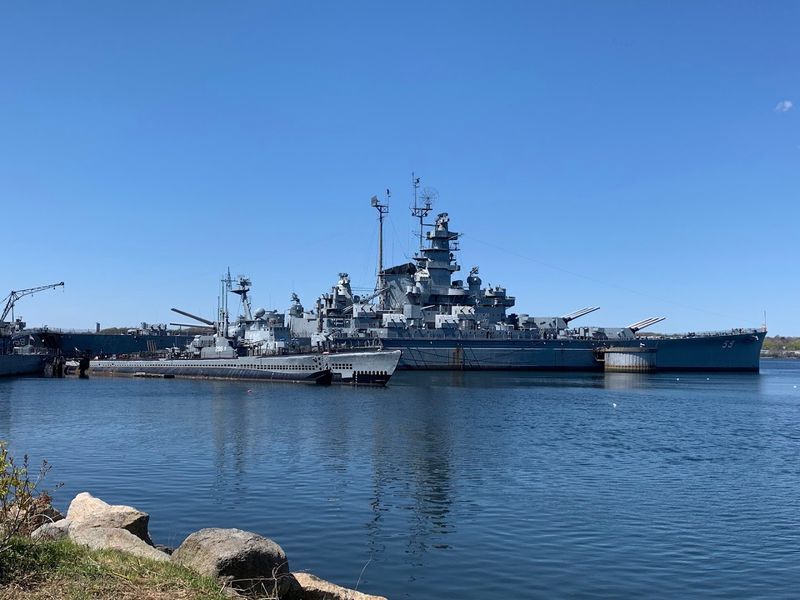
The USS Massachusetts, affectionately known as Big Mamie, is the undisputed centerpiece of Battleship Cove. She is a South Dakota-class battleship that served in World War II and fired the first and last American 16-inch shells of the war in the European theater.
At over 680 feet long and weighing more than 35,000 tons, the scale of the ship is almost hard to process from the dock. Once you are on board and walking through the gun turrets, the engine rooms, and the crew quarters, the sheer size becomes even more apparent.
The self-guided tour includes informational placards throughout the ship that walk you through different areas at your own pace. There are also multiple levels to explore, from the main deck all the way down to the lower engineering spaces.
Plan on spending at least two hours on Big Mamie alone if you want to see everything she has to offer.
The Submarine That Changes Your Perspective
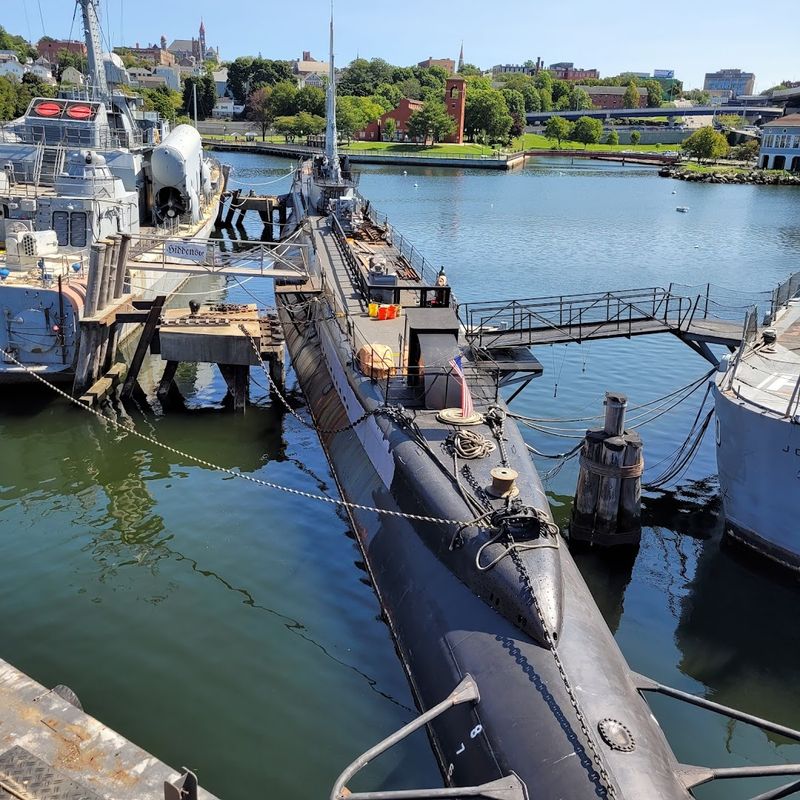
The USS Lionfish is a Balao-class submarine that served in World War II, and touring it completely reframes how you think about naval service. The interior is extraordinarily compact, with narrow corridors, low ceilings, and bunks stacked so tightly that personal space was essentially a foreign concept.
Walking through the Lionfish gives a very clear picture of what life was like for the men who served aboard submarines during the war. Every piece of equipment, every valve, and every gauge is still in place, giving the tour an authenticity that no exhibit in a traditional museum building can replicate.
Volunteers working to preserve the Lionfish are sometimes on site and are happy to answer questions about the restoration process. The torpedo room at the front of the sub is a particular highlight, offering a close look at the weapons and mechanics that defined underwater warfare during the WWII era.
This is one part of the visit that tends to leave a lasting impression.
The Destroyer with a Famous Name
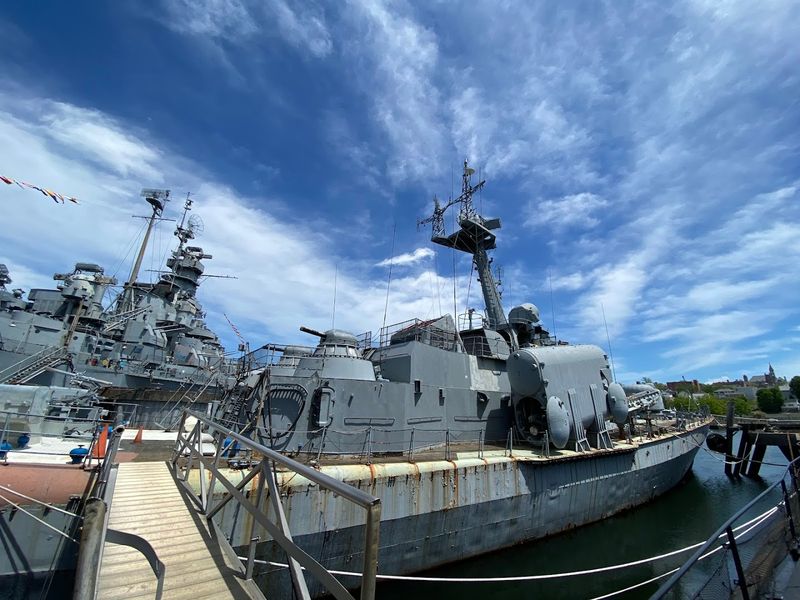
The USS Joseph P. Kennedy Jr. is a Gearing-class destroyer named after the eldest Kennedy brother, who was a naval aviator who did not return from a mission over Europe during World War II.
The ship itself served through multiple conflicts, including the Cuban Missile Crisis blockade of 1962.
Touring the Kennedy offers a very different experience from the massive battleship. Destroyers were built for speed and agility, and the layout of the ship reflects that purpose.
The spaces are tighter than the Massachusetts but more open than the Lionfish, making it a middle ground that is fascinating in its own right.
The Kennedy also has a strong connection to the Cold War era, which gives it historical weight beyond just WWII. Staff members stationed throughout the ship are knowledgeable and genuinely enthusiastic about sharing the vessel’s story.
The combination of the ship’s famous name, its combat history, and its well-preserved condition makes it a highlight that deserves plenty of time.
PT Boats: Small but Mighty
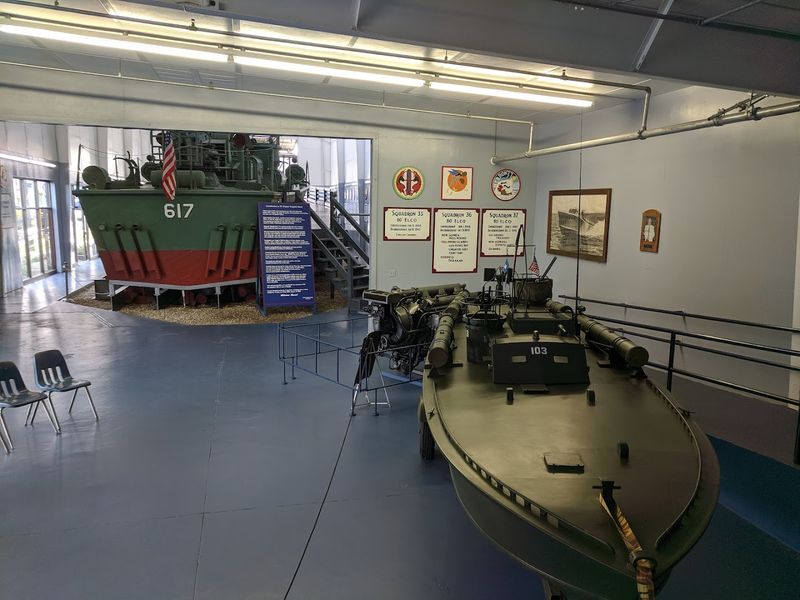
Most people arrive at Battleship Cove focused on the big ships, but the PT boats on display are worth a careful look. Patrol torpedo boats were small, fast wooden vessels used during World War II for coastal attacks and reconnaissance missions, and they played a surprisingly significant role in the Pacific theater.
PT Boat 617 is one of the preserved examples at the museum. These boats were famous partly because President John F.
Kennedy commanded PT-109 during the war, giving the entire class of vessels a prominent place in American popular history.
Up close, the PT boats look almost too small for the missions they were sent on, which makes them all the more compelling. The craftsmanship of the wooden hull and the mounted weapons give you a clear sense of how these agile little vessels operated.
They are a reminder that naval warfare was not just about massive firepower but also about speed, precision, and nerve.
A War Memorial with Real Weight
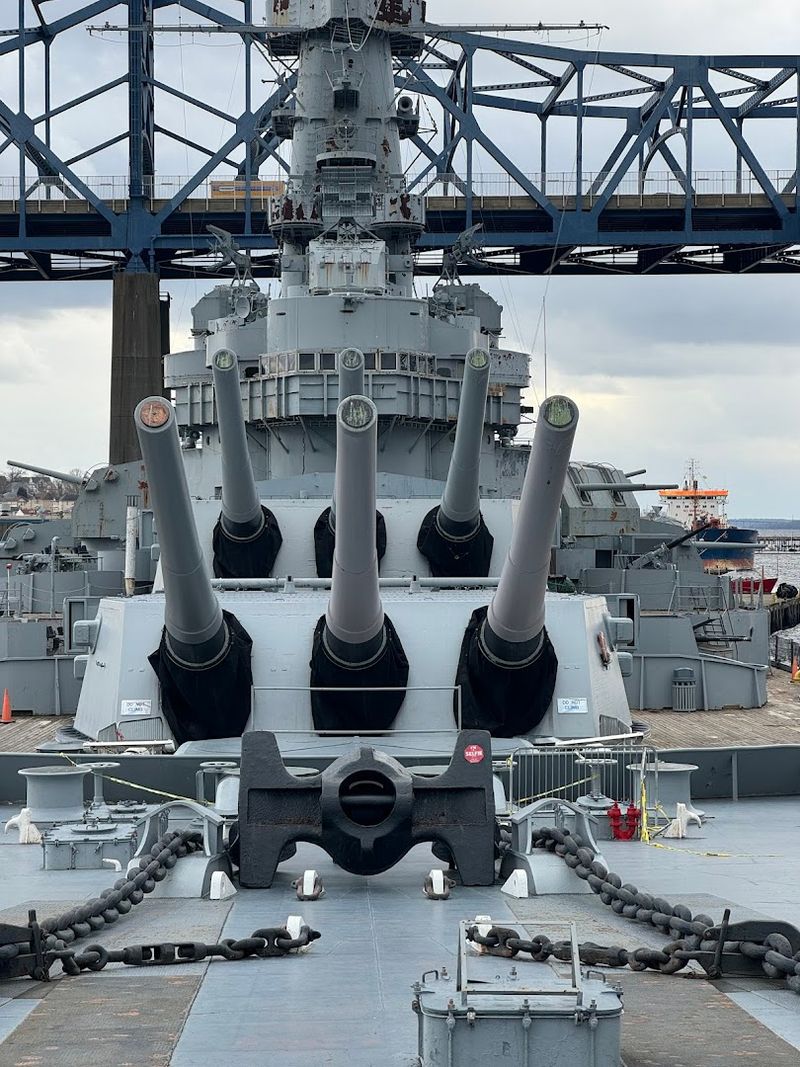
Battleship Cove is not just a museum. It is officially designated as a war memorial, and that distinction shapes the entire atmosphere of the place.
The ships are preserved not only as historical artifacts but also as tributes to the men and women who served aboard them.
Throughout the grounds and on board the ships, there are plaques, flags, and dedications honoring veterans from various branches and eras of U.S. military service. The memorial aspect adds a layer of gravity to every part of the visit that goes beyond simple historical curiosity.
For families with relatives who served in the Navy during World War II or the Cold War, the experience can be especially meaningful. Seeing the actual spaces where sailors lived and worked, understanding the conditions they endured, and reading the personal accounts posted throughout the ships creates a connection to that history that is genuinely hard to find anywhere else.
The memorial mission is central to everything Battleship Cove does.
Exhibits Inside the Ships
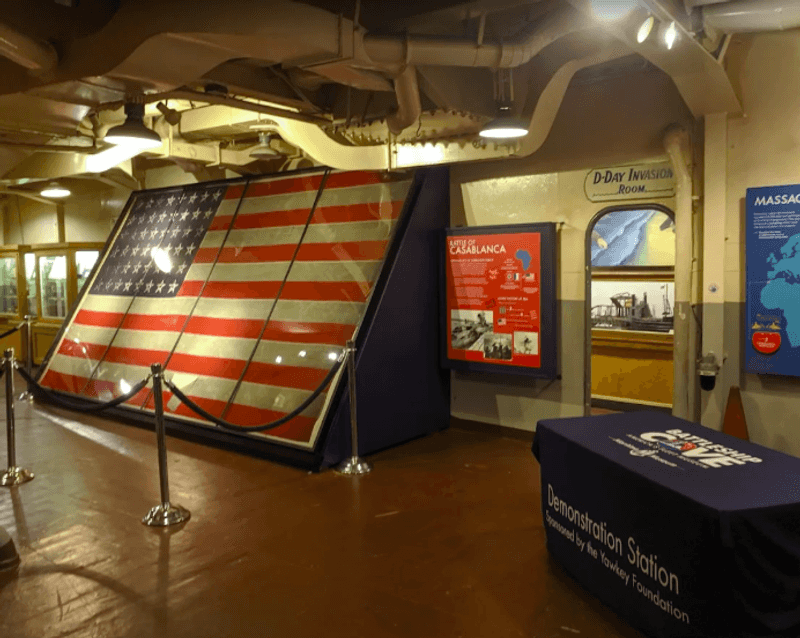
Beyond the ships themselves, Battleship Cove has developed substantial exhibit spaces within the vessels, particularly aboard the USS Massachusetts. The lower decks of Big Mamie contain museum-style displays covering naval history, the technology of the era, and the personal stories of the sailors who served.
The exhibits are well-organized and include a mix of artifacts, photographs, written accounts, and informational videos. Some of the videos feature veterans speaking about their time on the very ship you are standing in, which adds a personal dimension that printed text alone cannot provide.
The displays cover topics ranging from the mechanics of the 16-inch guns to the daily routines of life at sea during wartime. There is enough material here to keep a genuinely curious visitor occupied for hours without ever leaving the battleship.
Children tend to respond well to the hands-on and visually engaging nature of the exhibits, making this portion of the visit work well for mixed-age groups.
Overnight Programs That Are Truly Unique
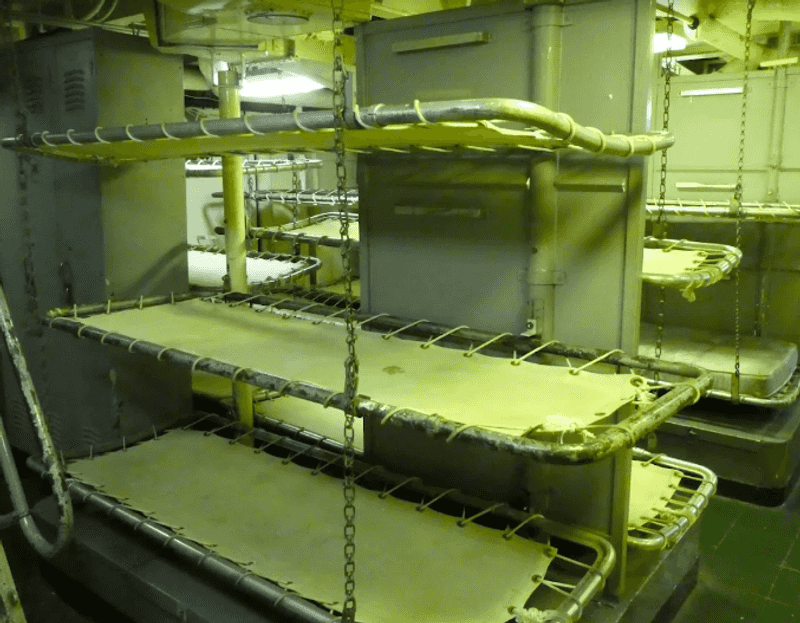
One of the most distinctive things Battleship Cove offers is the ability to sleep on board the USS Massachusetts. Overnight programs are available for groups including Scout troops, school groups, and other organized organizations, and participants actually bunk down in the original sailor sleeping quarters.
Waking up aboard a WWII battleship is not something most people ever get the chance to do, and the programs are structured to be both educational and entertaining. Groups explore the ships after hours, participate in guided activities, and gain a much deeper appreciation for what life at sea actually looked like.
The overnight experience has become especially popular with Cub Scout and Girl Scout troops, and the museum staff who run the programs are consistently praised for being well-prepared and engaging. For kids who have toured the ships during a regular visit and want more, the overnight option takes the whole experience to a completely different level.
Advance booking is essential as spots fill up quickly.
What the Guns Actually Looked Like
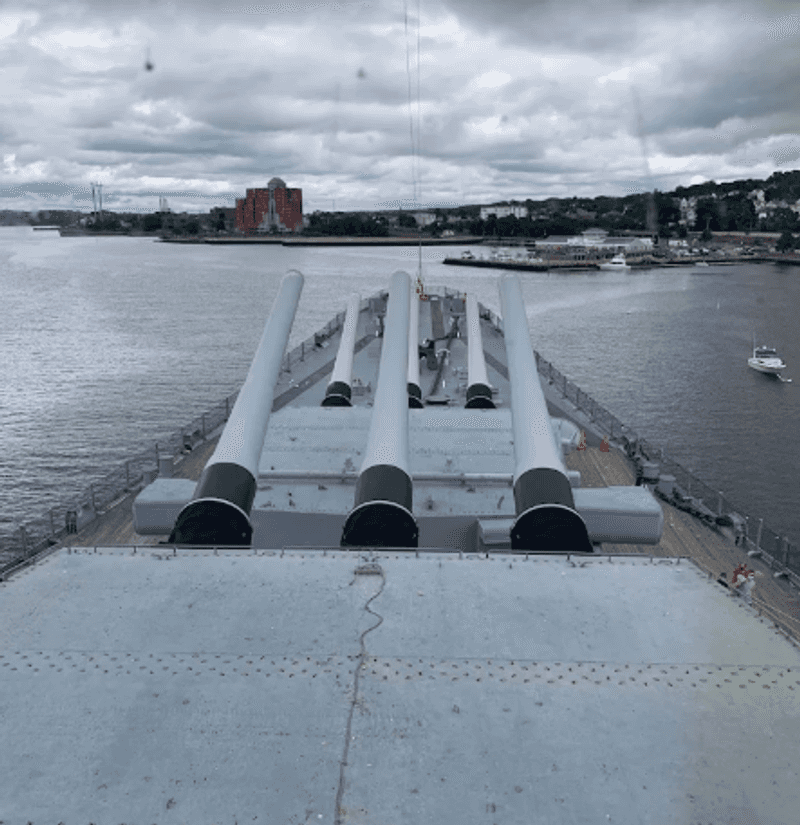
One of the most striking moments during a visit to the USS Massachusetts comes when you get up close to the 16-inch gun turrets. Each barrel is roughly 66 feet long, and the turrets themselves are enormous mechanical structures that required entire teams of sailors to operate.
Visitors can enter the turret areas and get a real look at how the guns were loaded, aimed, and fired. The scale of these weapons is genuinely difficult to grasp from photographs, and standing next to one changes your understanding of naval firepower completely.
Big Mamie fired the first American 16-inch shells of the war in the European theater during the November 1942 landings in North Africa, and she also fired the last. That historical footnote becomes much more vivid when you are standing inside the turret where it happened.
The gun rooms are among the most popular stops on the self-guided tour for visitors of all ages.
The Heritage Trail Connection
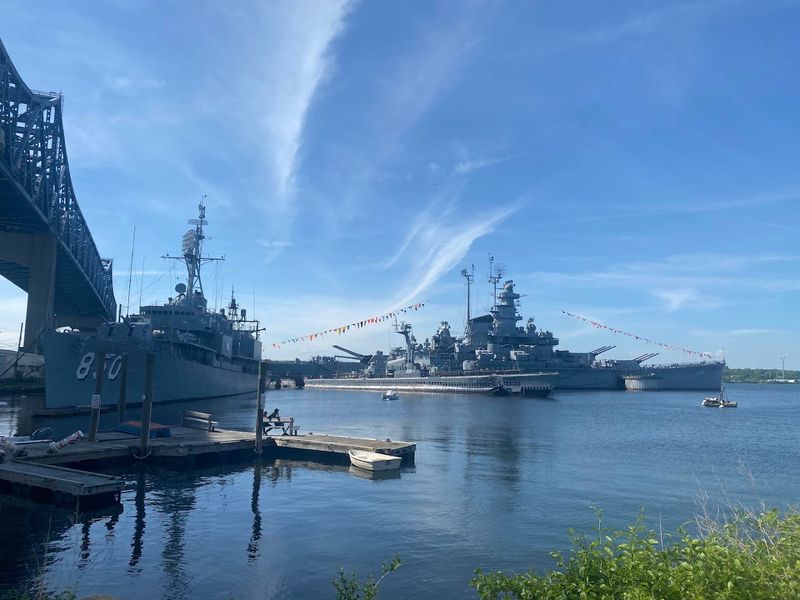
Battleship Cove sits along the Fall River Heritage State Park trail, which means even visitors who arrive after the last ticket has been sold can still get a meaningful experience from the waterfront path. The ships are visible from outside the gates, and the surrounding area has informational signs with historical context about the collection and the city.
The Heritage Trail connects several points of interest in Fall River, making Battleship Cove a natural anchor for a broader day of exploration in the city. The waterfront setting along the Taunton River also provides a pleasant backdrop for walking and taking in views of the ships from different angles.
For those who do make it inside, the views from the deck of the USS Massachusetts looking out over the river and the surrounding bridges are among the more memorable moments of the visit. The combination of maritime history and New England waterfront scenery makes the location feel especially well-chosen for a collection of this scale and significance.
Great for Kids and Adults Equally
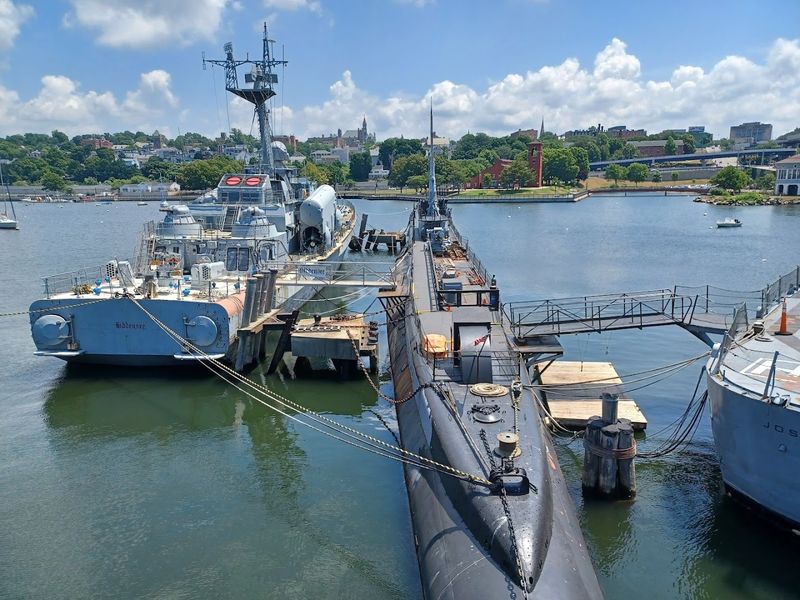
Battleship Cove works unusually well as a destination for mixed-age groups because the ships offer different things to different people. Younger kids are drawn to the sheer size of everything, the guns, the ladders, the tight corridors, and the sense of adventure that comes with exploring a real warship.
Older visitors and adults tend to engage more deeply with the historical exhibits, the veteran accounts, and the technical details of how the ships operated. There is genuinely enough content here to hold the attention of a curious adult for an entire day without any repetition.
The self-guided format also helps, because each person can move at their own pace and focus on whatever interests them most. Families with very young children should be aware that the steep staircases and narrow passages can be challenging for small kids, but many families with children as young as four have navigated the ships successfully with a little patience and preparation.
Worth Every Penny and Then Some
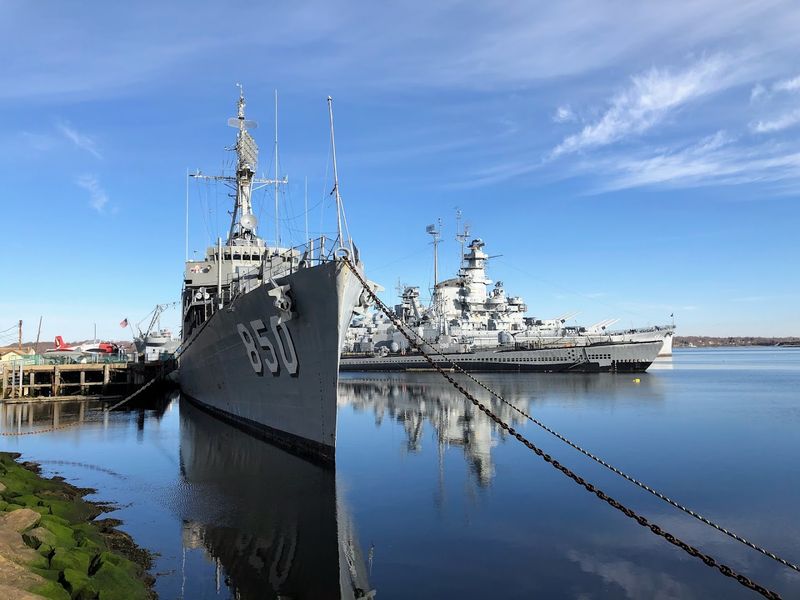
Admission to Battleship Cove is considered very reasonable given the scope of what is included. A single ticket grants access to all the ships, the onboard exhibits, and the surrounding grounds, which together represent hours of genuinely engaging content.
There are few places where the value of admission feels this clearly justified.
The pricing is structured to accommodate families, with different rates for adults, children, and seniors. The free parking adds to the overall value, removing one of the common friction points of visiting attractions in the Northeast.
For a destination that holds a legitimate world record, charges reasonable admission, offers free parking, and delivers a full day of hands-on historical exploration, Battleship Cove punches well above its weight. It does not rely on flashy technology or expensive production value.
The ships themselves are the attraction, and they are more than enough. This is the kind of place that people visit once and immediately start planning a return trip to see everything they missed.
Where the Ships Call Home
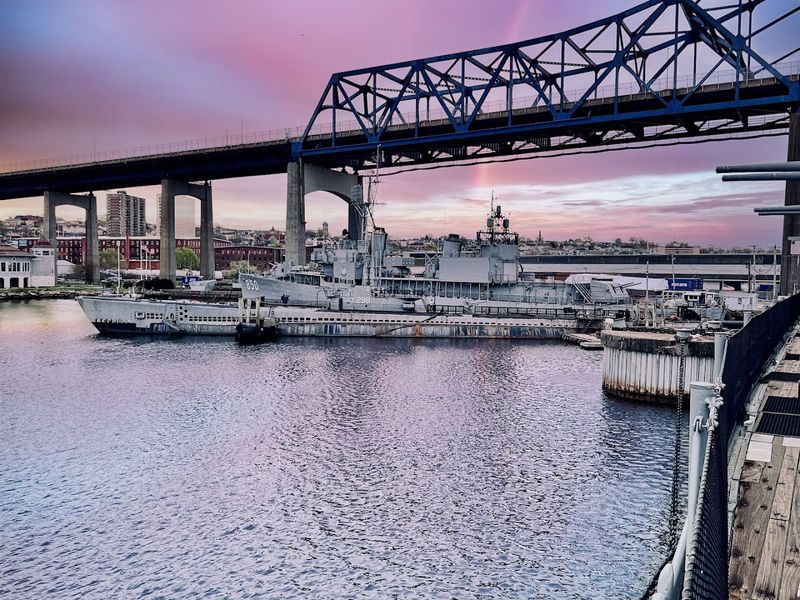
Battleship Cove sits at 5 Water Street in Fall River, Massachusetts 02721, right along the banks of the Taunton River. The location is easy to reach and the parking is free, which is already a win before you even set foot on a ship.
Fall River is in Bristol County in the southeastern corner of Massachusetts, not far from the Rhode Island border. The city has a deep industrial and maritime heritage, making it a fitting home for the most significant collection of preserved WWII-era naval vessels in the world.
The museum is open every day from 9 AM to 5 PM, with the last tickets sold well before closing, so arriving early is strongly recommended. The waterfront setting means you get a dramatic view of the ships from the parking area long before you even buy your ticket, which sets the tone for everything that follows.
Share this story