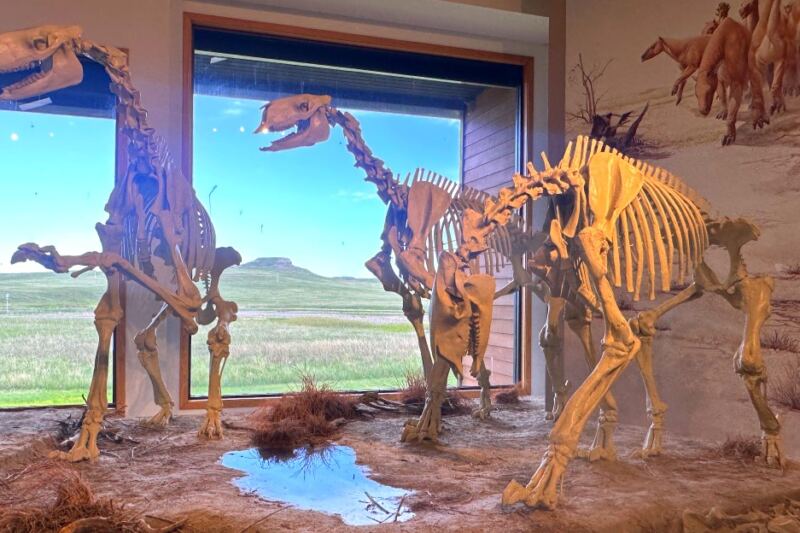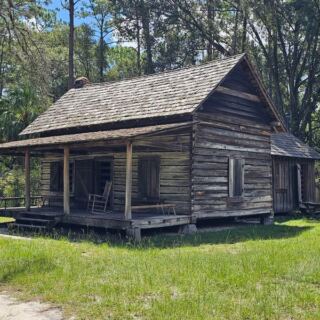
Just off Interstate 80, this eastern Nebraska park offers a surprising mix of outdoor adventure, natural history, and family-friendly activities. Visitors can explore wooded trails, cross a suspension bridge, view fossil exhibits, and learn about local wildlife through interactive displays and aquarium tanks.
With a nature center, fish hatchery museum, and hands-on educational programs, the park provides far more than a typical roadside stop. It’s a destination that rewards curious travelers and outdoor enthusiasts alike.
Where Exactly You Will Find This Place
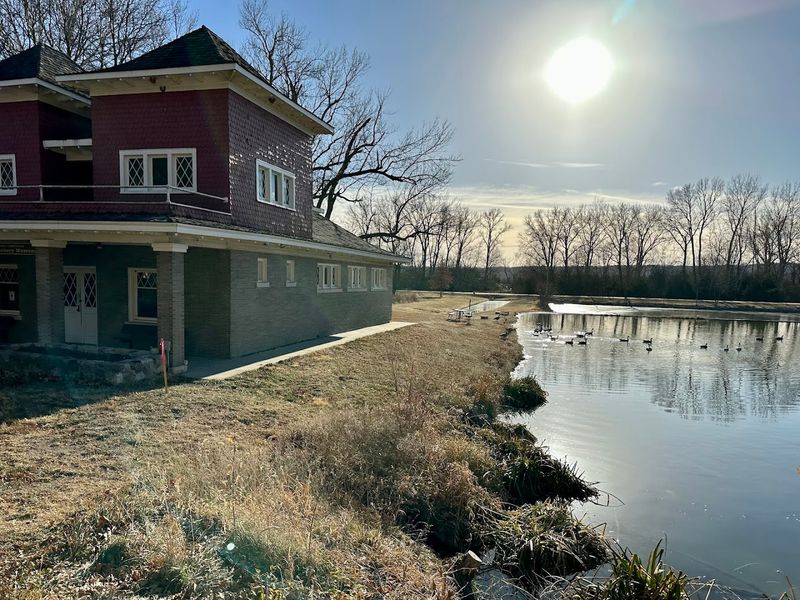
Before you can enjoy any of it, you have to find it, and the good news is that Schramm Park State Recreation Area is surprisingly easy to reach. The park sits at 21502 NE-31, Gretna, NE 68028, right along the north side of the Platte River in Sarpy County, Nebraska.
From Interstate 80, take the Gretna exit and follow the signs toward NE-31 south. The drive takes just a few minutes, and the park entrance appears quickly on your right.
It is part of the Venture Parks Complex, a cluster of outdoor recreation areas in the region.
The park covers 331 acres of woodland, bluffs, river frontage, and open meadow. A daily vehicle permit is required, and the cost is modest.
You can reach the park office at 402-332-3901 or visit outdoornebraska.gov/schramm for current hours and program schedules before your trip.
The Story Behind This Stretch of Nebraska Riverbank
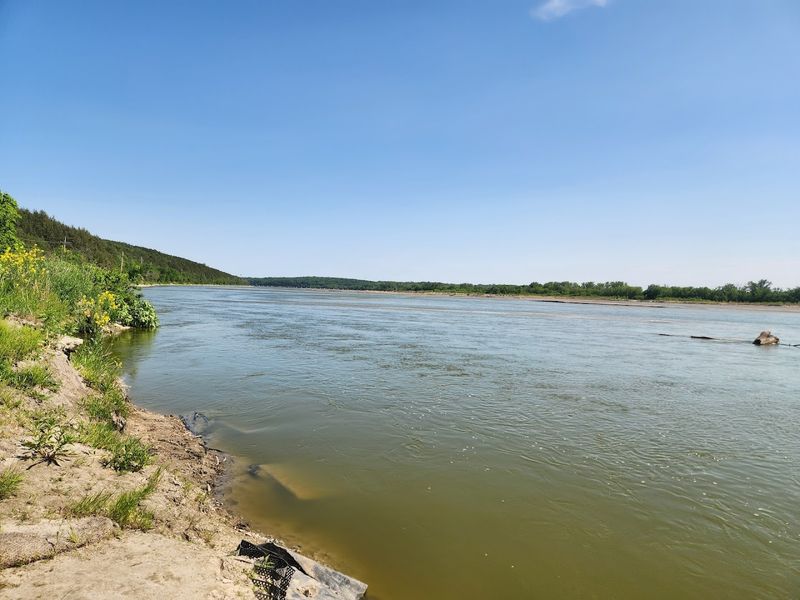
Few state parks in Nebraska carry as much historical weight as this one does quietly in the background. The Gretna State Fish Hatchery, which sits within the park boundaries, was established in 1882, making it the oldest fish hatchery in Nebraska.
That date is worth pausing on. The hatchery predates most of the state parks system and has been operating in some form for well over a century.
Today it functions as a fish hatchery museum rather than an active production facility, but the original stone structures and equipment give you a real sense of what early conservation efforts looked like on the Great Plains.
The park itself has grown considerably around that historic core, expanding to include education facilities, trail networks, and renovated visitor amenities. The Schramm Education Center, formerly known as the Ak-Sar-Ben Aquarium, received a major renovation and expansion in 2019.
History and modern outdoor education coexist here in a way that feels organic rather than forced, and that contrast is part of what makes the park so layered and interesting to explore.
A Trail System That Earns Its Scenery
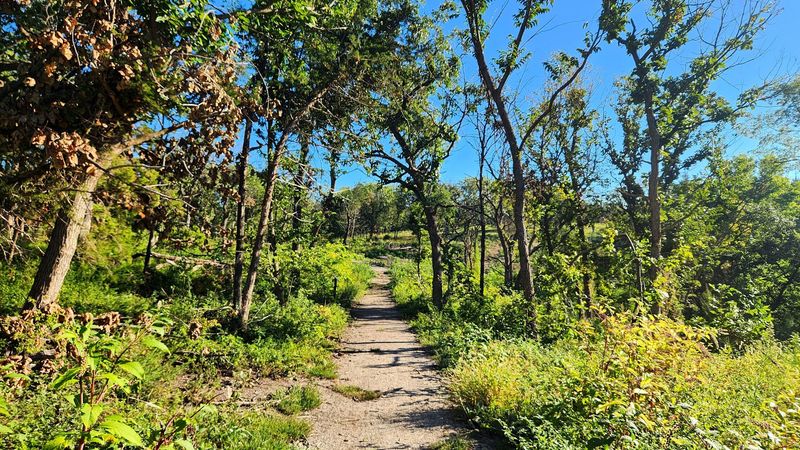
The trail network here totals approximately 3 miles, which sounds modest until you actually get out on the paths and realize how much variety is packed into that distance. The 2.4-mile Schramm Park Nature Loop is the main attraction for most hikers, winding through wooded areas, over gentle hills, and along bluffs with open views of the Platte River valley below.
The terrain mixes packed gravel, packed dirt, and tree-root sections that keep things interesting without becoming technical. There are short steep sections in a few spots, but nothing that would slow down a casual hiker for long.
The trails are wide enough that passing other visitors feels comfortable even on busy weekends.
Dogs on leashes are welcome on all trails, and benches appear regularly along the route for anyone who wants to sit and take in the view. A bike repair station near the pond trailhead includes tools and a pump, which is a thoughtful touch that shows the park genuinely cares about the people using it.
The Suspension Bridge That Stops Everyone Mid-Stride
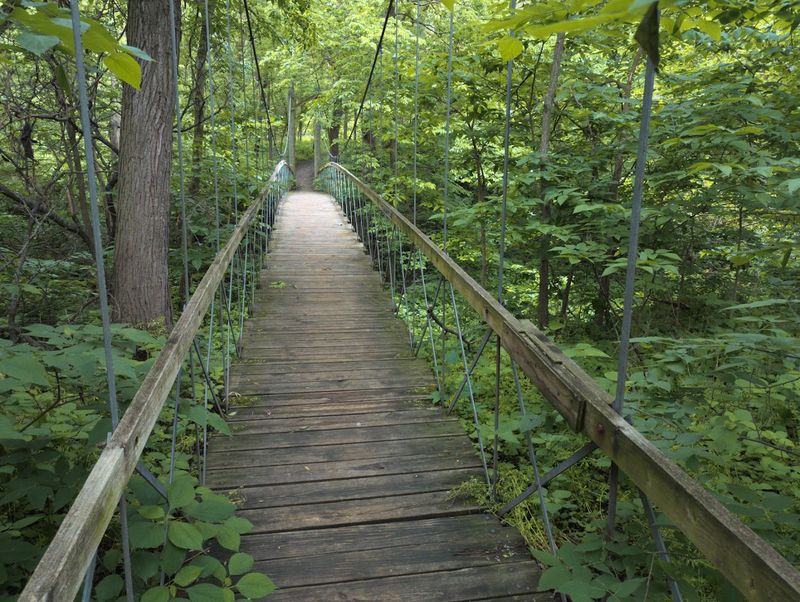
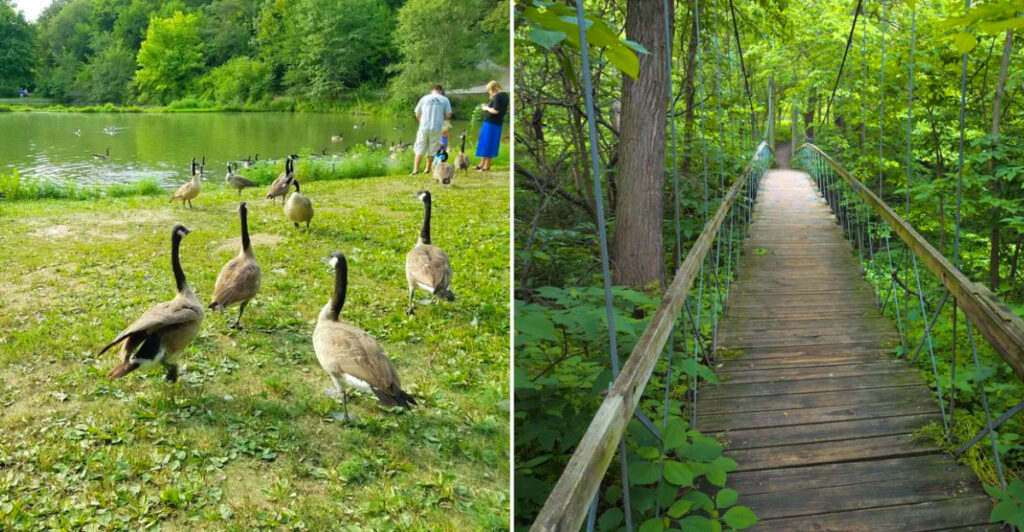
There is one feature on the trail that almost every visitor mentions when they talk about this park, and it is a suspension bridge that crosses a ravine along the Nature Loop. It sways just enough to feel like an experience rather than just a crossing.
The bridge is sturdy and well-maintained, but that slight movement underfoot makes it genuinely fun, especially for children who immediately want to bounce on it and adults who pretend they do not. The views from the bridge look out over a wooded gully with a canopy of trees stretching in both directions.
It has apparently become something of a romantic spot as well, which is charming. The park also features a couple of smaller bridges at other points along the route, but none of them quite match the drama of this one.
If you are hiking with kids, they will almost certainly want to cross it at least twice, and honestly, that impulse is completely understandable. More surprises wait around the next bend in the trail.
The Geological Trail and Its Fossil Beds
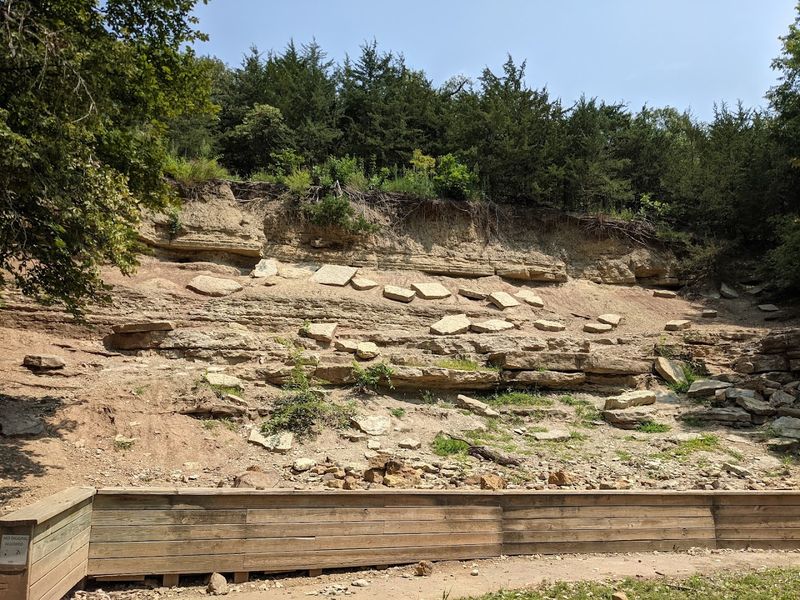
Not every park offers a trail that doubles as a geology lesson, but the 1.4-mile Geological Trail here does exactly that. The path takes hikers past unusual rock outcroppings featuring limestone, shale, and marine fossils that date back millions of years to when this part of the continent sat beneath an inland sea.
Interpretive signs along the route explain what you are looking at in plain language that does not require a science degree to follow. The fossil beds are visible from the trail itself, and the rock layers tell a slow-moving story about the deep history of the Great Plains landscape.
The trail also offers river views that open up at several points, giving you a clear sightline toward the Platte River below the bluffs. The combination of paleontology, geology, and river scenery in a single 1.4-mile walk is genuinely rare.
It is the kind of trail that makes you feel smarter at the end of it, and that is not a bad way to spend a morning outdoors.
Inside the Schramm Education Center and Its Aquarium Tanks
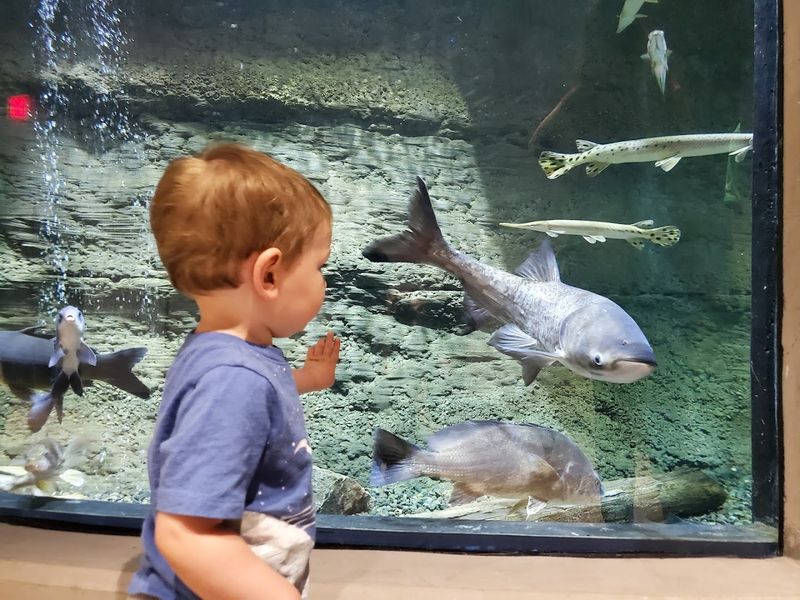
The Schramm Education Center is the indoor heart of the park, and it delivers far more than the word “aquarium” might suggest. The facility was renovated and expanded in 2019, and the result is a bright, well-organized space that feels current without losing its connection to the natural world outside.
Multiple large viewing tanks hold native Nebraska fish species, including catfish, bass, and other freshwater residents of the Platte River ecosystem. One particular catfish in the tank apparently developed a habit of resting in an unusual position that alarmed visitors enough that staff posted a sign reassuring everyone that the fish was simply resting.
That kind of small, human detail tells you something about the character of this place.
Beyond the fish tanks, the center also features terrariums housing reptiles, amphibians, and insects, giving visitors a broader look at Nebraska’s terrestrial ecosystems. The exhibits are interactive and clearly designed to engage both children and curious adults.
The Natural Stream
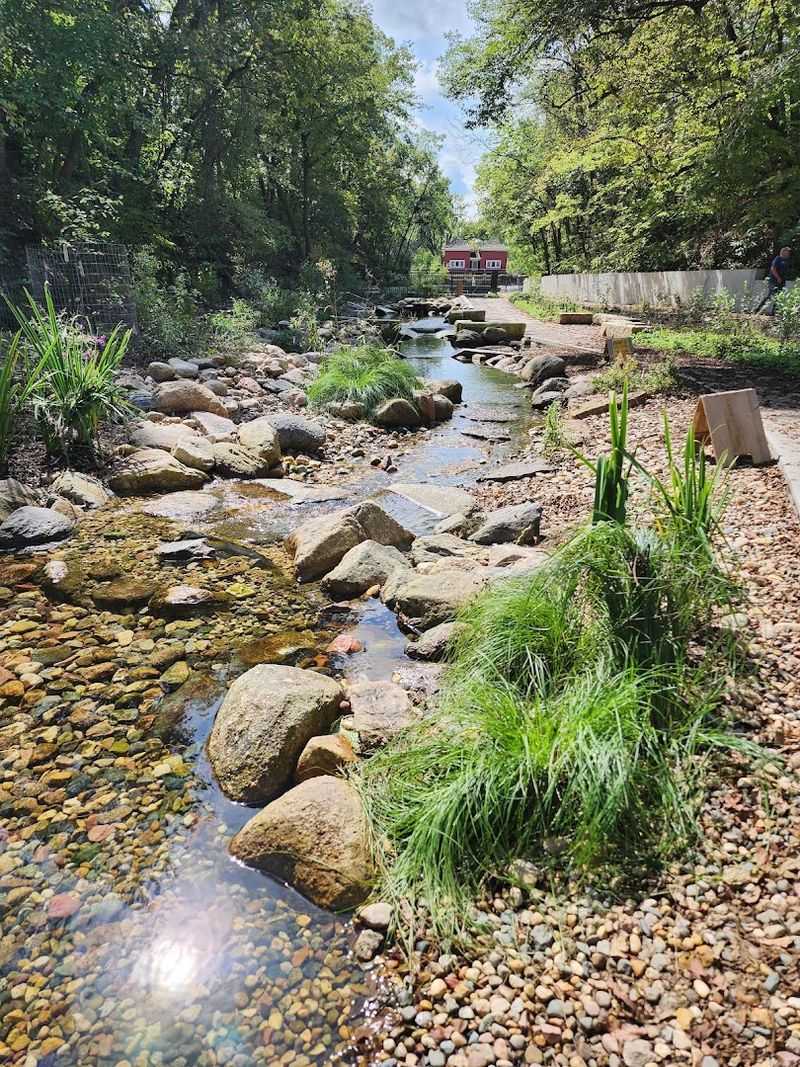
One of the most recent additions to the park is also one of its most popular, and it costs nothing extra once you are inside. A constructed natural stream fed by a nearby spring runs through a shaded area near the education center, and visitors are actively encouraged to wade in and explore it.
The water is clear and cold, and the streambed is shallow enough for young children to splash around safely while older kids look for minnows, tadpoles, and other small aquatic creatures. In spring, the surrounding ponds fill with hundreds of tadpoles, which adds another layer of discovery to the experience.
A boardwalk runs alongside the stream area, and a section of clean water in the adjacent pond allows fish feeding for a quarter per handful of feed. The whole setup is relaxed and unhurried, designed for families who want to slow down and actually interact with nature rather than just observe it from a distance.
The treehouse classroom nearby adds even more to this corner of the park.
The Treehouse Classroom That Earns Its Own Visit
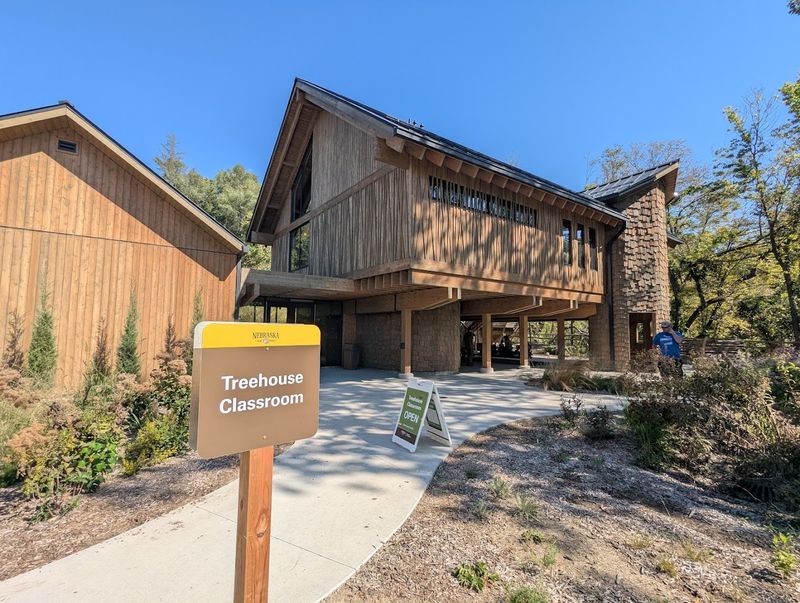
A two-story treehouse classroom sounds like something from a children’s book, but this one is a real, functioning educational facility built within the park. The structure sits among the trees near the stream area and is available for programs on Saturdays, Sundays, and Mondays.
The building blends into the surrounding woodland in a way that feels deliberate rather than decorative. From the upper level, the tree canopy surrounds you on three sides, and the view down through the branches gives you a perspective on the forest that you simply cannot get from a trail.
The boardwalk leading to the structure runs alongside the clean stream section, making the approach part of the experience.
Families with younger children consistently mention the treehouse as a highlight of the visit, and it is easy to understand why. It turns a passive walk through the woods into something participatory and memorable.
If you are planning a visit specifically to use the treehouse, checking the park schedule in advance will save you a wasted trip on a day it is closed.
Educational Programs for Every Age Group
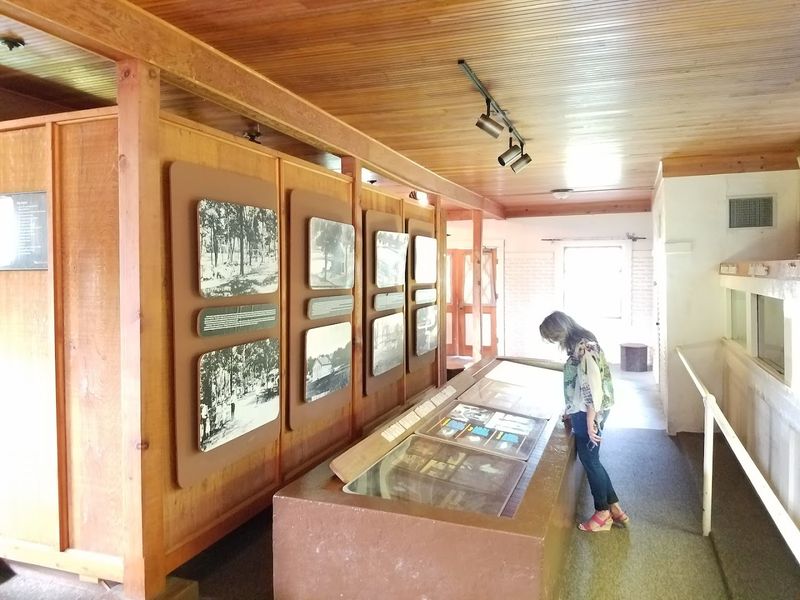
The Schramm Education Center runs a genuinely broad range of programs that go well beyond the typical nature walk. The lineup includes structured field trips for school groups, naturalist programs for general visitors, and dedicated sessions targeting specific audiences and topics.
“Little Saplings” is an early childhood program designed for young children and their caregivers, focusing on sensory-based nature discovery that does not require any prior knowledge or equipment. On the other end of the spectrum, “Homeschool Hikes” cover topics like amphibians, snakes, and local ecosystems in a format that works as a supplement to home curriculum.
The park also hosts seasonal programming tied to migration patterns, geological features, and aquatic ecosystems, so the calendar of offerings changes throughout the year. Booking in advance is recommended for group visits, especially during spring and fall when school field trips fill the schedule quickly.
The depth of programming here is what separates this park from a simple recreation area and pushes it into genuine outdoor education territory.
Birdwatching and the Magic of Spring Migration
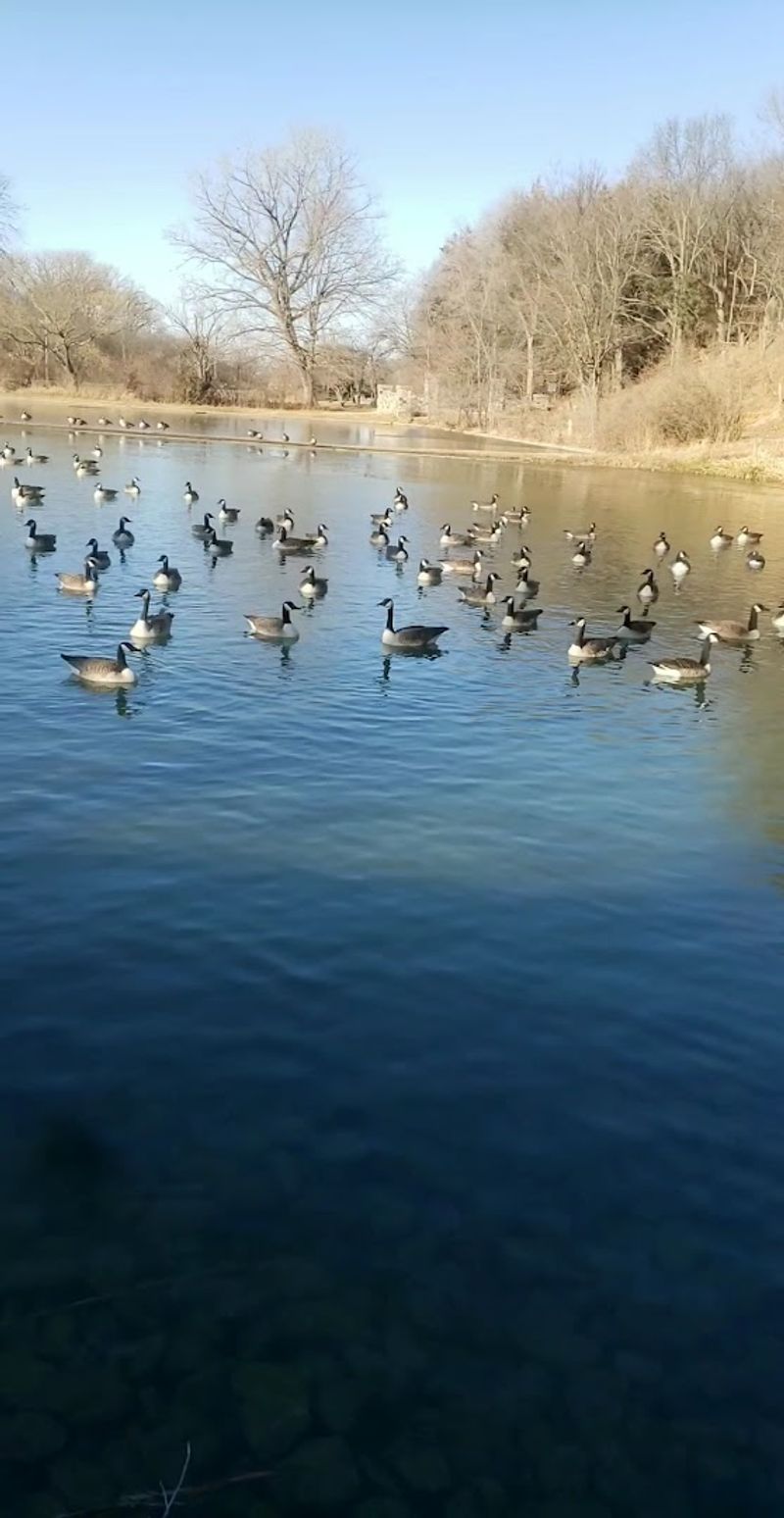
The park’s position along the Platte River corridor makes it a natural stopping point for migratory birds, and the spring migration season transforms the experience here into something that birdwatchers plan trips around. The river valley is one of the most significant bird migration corridors in North America, and the park sits right in the middle of it.
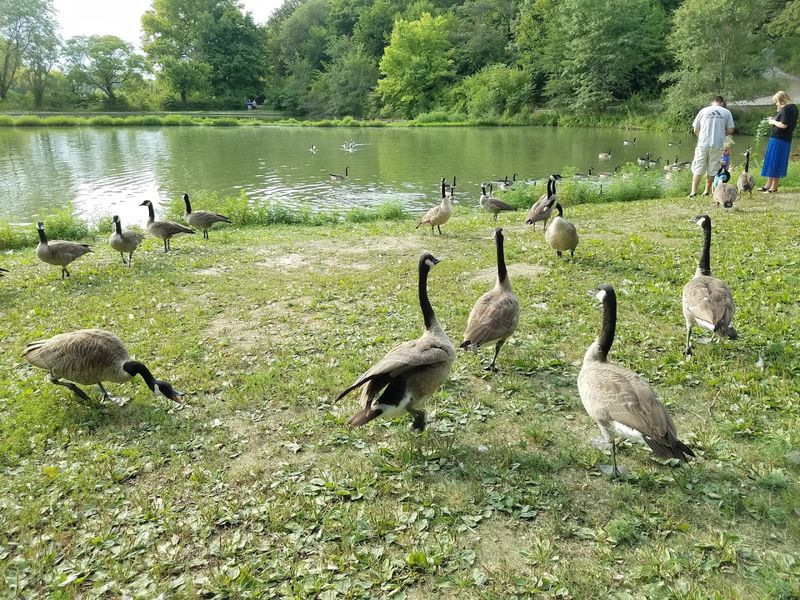
Sandhill cranes, waterfowl, and various songbirds pass through in large numbers between late February and April, and the bluff trails offer elevated vantage points that make observation easier. Even outside of peak migration, resident species including geese, herons, and woodland birds are reliably present throughout the year.
Interpretive signs along the trails identify common species and explain the ecological role of the river corridor in supporting migratory populations. You do not need expensive gear or expert knowledge to enjoy the birdwatching here.
A basic pair of binoculars and a willingness to stand quietly for a few minutes is usually enough to spot something worth remembering. The geological trail section is particularly productive for early morning birding.
Picnic Areas, Playgrounds, and Practical Amenities
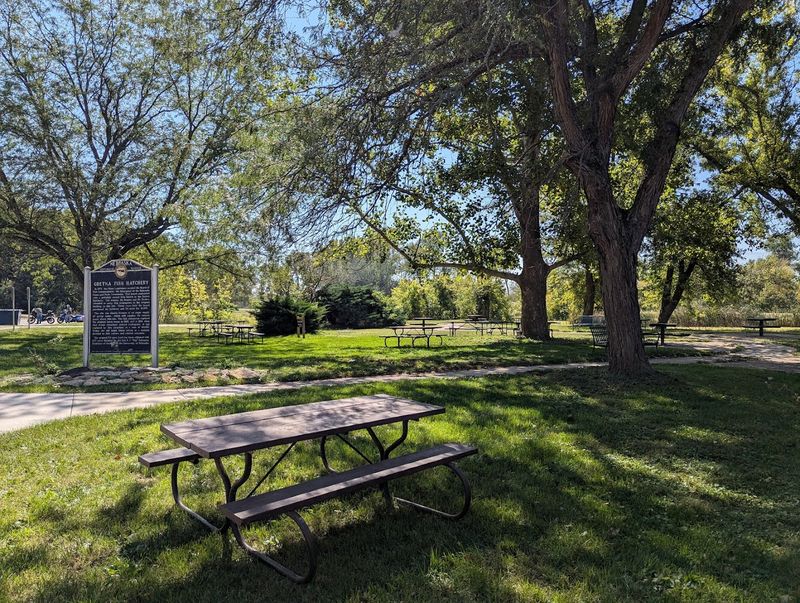
Beyond the trails and education programs, the park is genuinely well-equipped for a full day out with family. Picnic tables are spread throughout the park in both open and shaded areas, and the density of mature trees means that shade is almost always available even on hot summer afternoons.
Clean restrooms are located near the main parking area and the education center, and a water bottle filling station is available at the education center building. A playground area designed more for climbing than traditional swings and slides gives older children something physical to tackle while younger ones enjoy the water stream nearby.
Parking is plentiful, which matters more than it sounds on busy weekend days when popular parks can turn into frustrating experiences before you even start your hike. The park is also increasingly accessible, with ongoing improvements to wheelchair access around the pond areas.
One practical note worth knowing: tick awareness is recommended during warmer months, so checking clothing and skin after trail time is a sensible habit here.
Why This Park Rewards a Return Visit
Some parks give you everything in a single visit and leave you feeling satisfied but not necessarily eager to come back. This one operates differently.
The combination of seasonal changes, rotating educational programs, evolving trail conditions, and ongoing facility improvements means there is almost always something new to experience.
Spring brings migration and tadpoles. Summer fills the stream with wading children and the picnic areas with families.
Fall shifts the woodland into color while the trails thin out and the bluff views open up. Winter offers a quiet version of the park that feels almost entirely different from its summer personality.
The park holds a 4.6-star rating across nearly 500 reviews, which reflects consistent quality rather than a single memorable visit by a handful of enthusiasts. For a park that charges only a modest daily vehicle fee, the range of experiences on offer is genuinely remarkable.
Schramm Park State Recreation Area is the kind of place that grows on you quietly, and before long, you find yourself planning the next trip before the current one is even finished.
Share this story