Deep in the hills of Sevierville, Tennessee, there is a cave that has been keeping secrets for thousands of years. Long before tourists lined up for guided tours, Native American hunters used this underground space as shelter, and later, local bootleggers found it to be the perfect hiding spot.
The cave has more layers of history than most people expect from a roadside attraction in the Smokies. It draws curious travelers from across the country who want to see its dramatic rock formations, underground stream, and the legendary hideout where illegal operations once took place.
This is the kind of place where geology and local folklore meet underground, and the combination makes for one genuinely unforgettable stop on any East Tennessee road trip.
Thousands of Years Before the Tour Groups Arrived
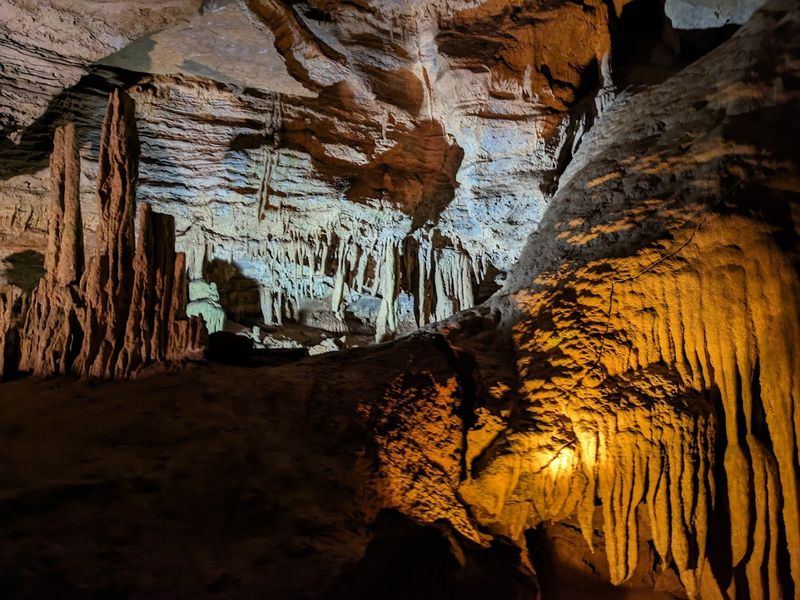
Long before there were guided tours or electric lighting, this cave served a very different purpose. Archaeological evidence suggests that Native American hunters used the cave as a shelter, taking advantage of its natural protection from the elements during hunting expeditions in the surrounding hills.
The cave sits in a region that was long inhabited by Cherokee people, and the Smoky Mountain foothills provided rich hunting grounds for generations. A natural underground space like this one would have been a practical and reliable refuge, keeping hunters dry and protected during their time in the field.
That layer of human history adds real depth to what might otherwise be a straightforward geology tour. Knowing that people sought shelter in the same passages now lit up with colorful lights gives the whole experience a grounded, tangible connection to the past that no gift shop souvenir can replicate.
When the Cave Became a Bootlegger’s Best Friend
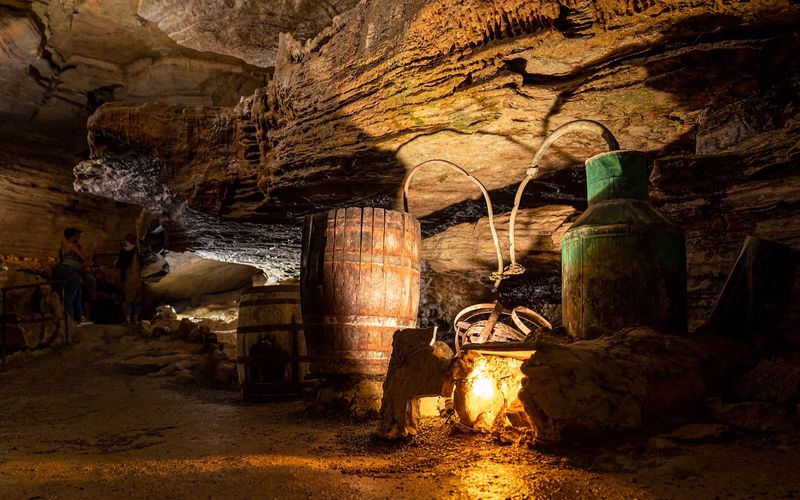
The cave’s most notorious chapter came during the Prohibition era and the years that followed, when the remote location and cool, stable underground environment made it an ideal hiding spot for bootleggers operating in the Tennessee hills. The cave was used to conceal illegal operations, and that history is still a highlight of the guided tour today.
Tour guides point out the specific area of the cave where the bootleg hideout was located, and the story they tell around it is one of the most engaging parts of the whole experience. It connects the geology of the cave to the colorful, sometimes lawless culture of Appalachian mountain life.
East Tennessee has a well-documented history of moonshining, and finding physical evidence of that culture inside a natural cave formation makes the story feel concrete rather than mythologized. It is the kind of detail that sticks with you long after you have driven back down the hill.
What the Geology Actually Looks Like Down There
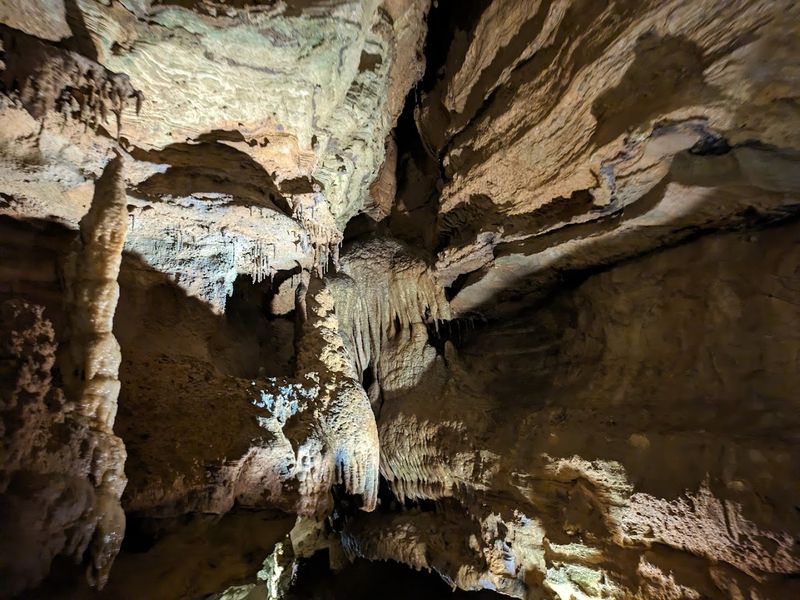
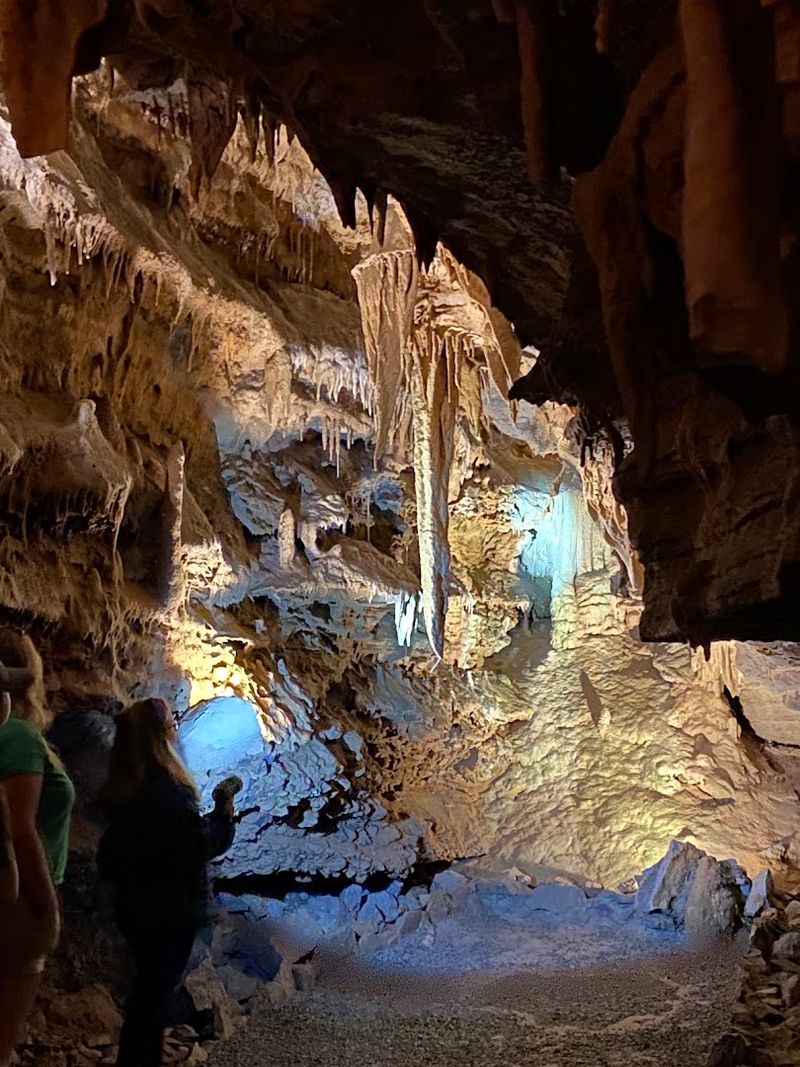
The formations inside Forbidden Caverns are genuinely impressive, and the cave is larger than most first-time visitors expect. Some of the chambers reach heights of 30 to 60 feet, with ceilings that tower overhead in a way that makes the underground space feel almost cathedral-like in scale.
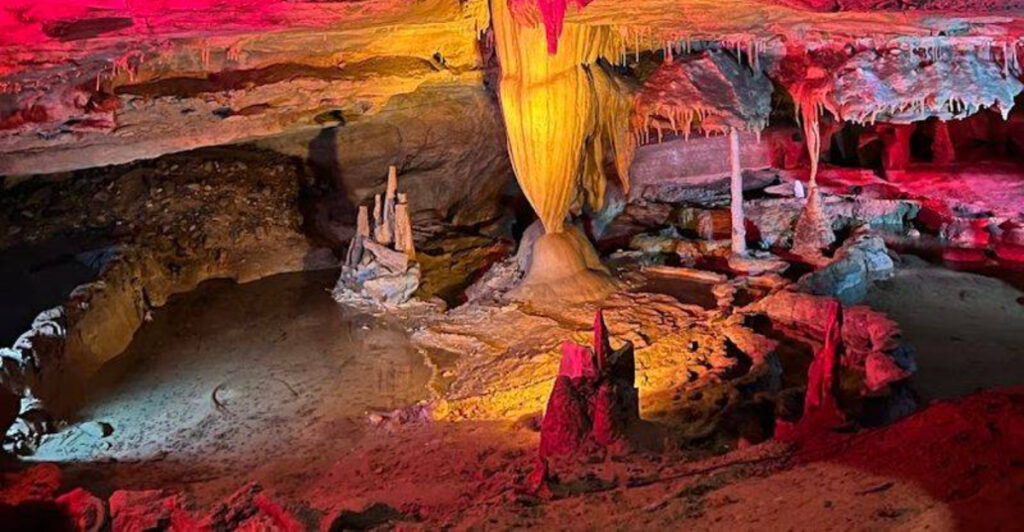
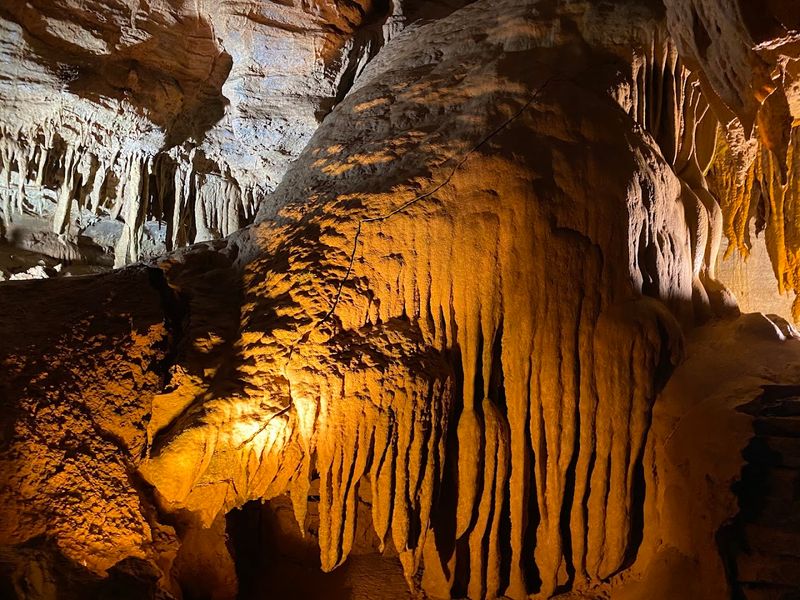
Stalactites and stalagmites appear throughout the cave in a wide variety of shapes and sizes, formed over thousands of years by slow mineral deposits from dripping water. The cave also features an underground stream, which adds movement and sound to the otherwise still underground environment.
The formations are fragile, and guides are clear about the rule against touching the walls, ceilings, or any cave structures. Natural oils from human hands can disrupt the mineral growth process that has been happening for millennia.
Keeping your hands to yourself here is not just a courtesy request, it is a matter of genuine preservation for future generations to appreciate.
The Underground River Running Through It All
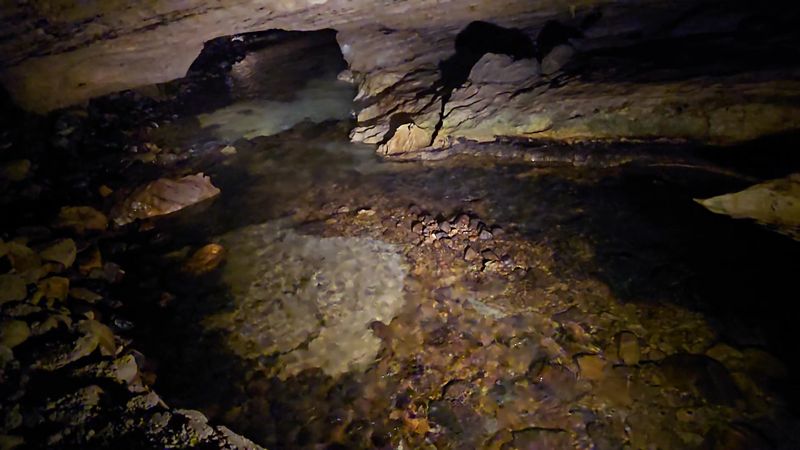
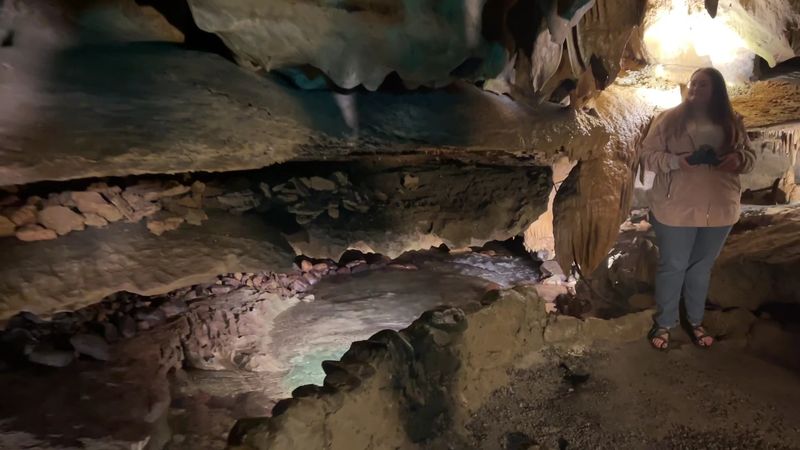
One of the most distinctive features of Forbidden Caverns is its active underground stream, which runs through portions of the cave system. Unlike dry caves where formations are the only attraction, the presence of moving water here gives the space an active, living quality that is hard to describe without actually being there.
The stream has played a significant role in shaping the cave over thousands of years, carving out passages and depositing minerals that created the formations visitors now walk past on the guided tour. Water continues to work on the cave today, meaning the space is still slowly changing.
Tour guides explain the relationship between the water and the geology in clear, accessible terms that make sense even if you have never taken an earth science class. The underground river is not just a backdrop, it is a central character in the story of how this cave came to be what it is today.
The Lighting Effects That Change Everything
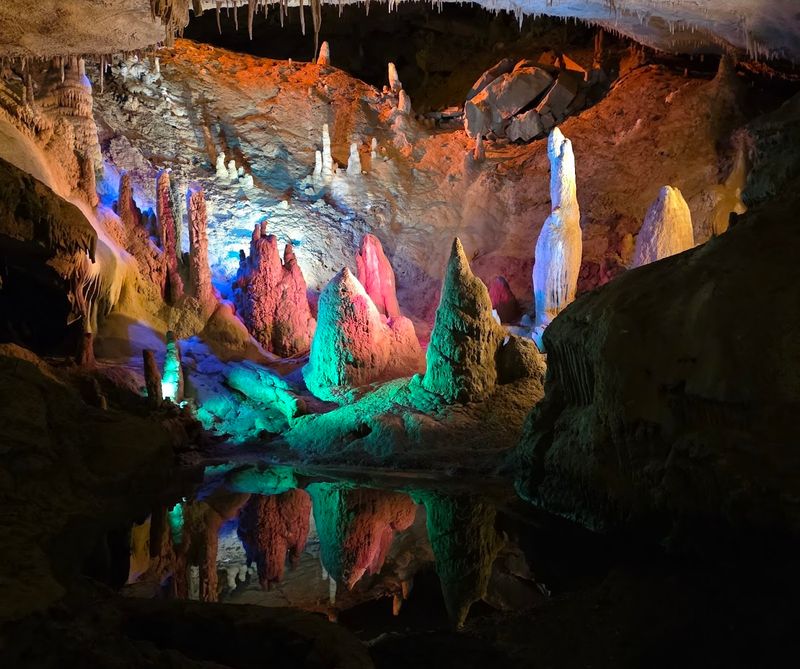
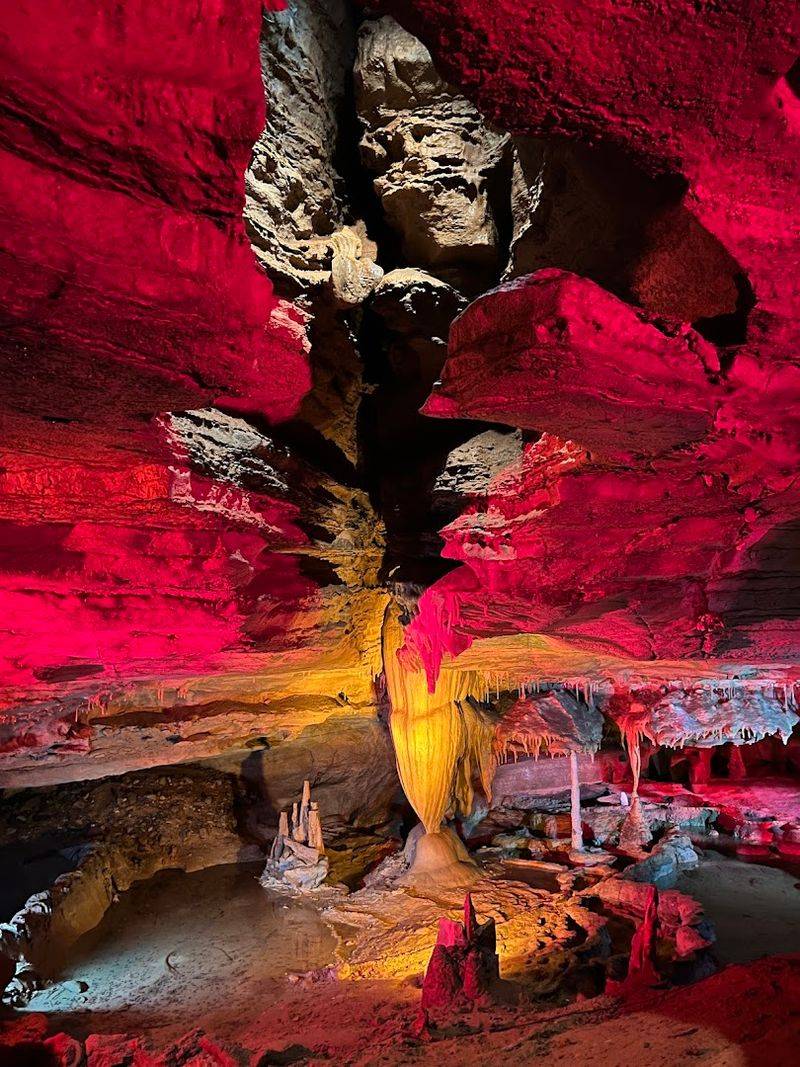
The lighting setup inside Forbidden Caverns is one of the details that separates it from a basic cave walkthrough. Different areas of the cave are lit with different colors, and guides control the lights as the group moves through, turning them on and off to reveal formations dramatically and create a shifting visual experience throughout the tour.
At one point during the tour, all lights are turned off completely, giving visitors a brief experience of total underground darkness. It is a disorienting but memorable moment that helps put the cave’s natural environment into perspective.
The colored lights do not feel gimmicky in context because they are used to highlight actual geological features rather than distract from them. They make it easier to photograph the cave as well, and guides actively encourage stopping to take pictures throughout the tour.
The combination of natural formations and thoughtful lighting makes for a visually dynamic underground experience that photographs well at almost every turn.
How Long the Tour Takes and What to Expect
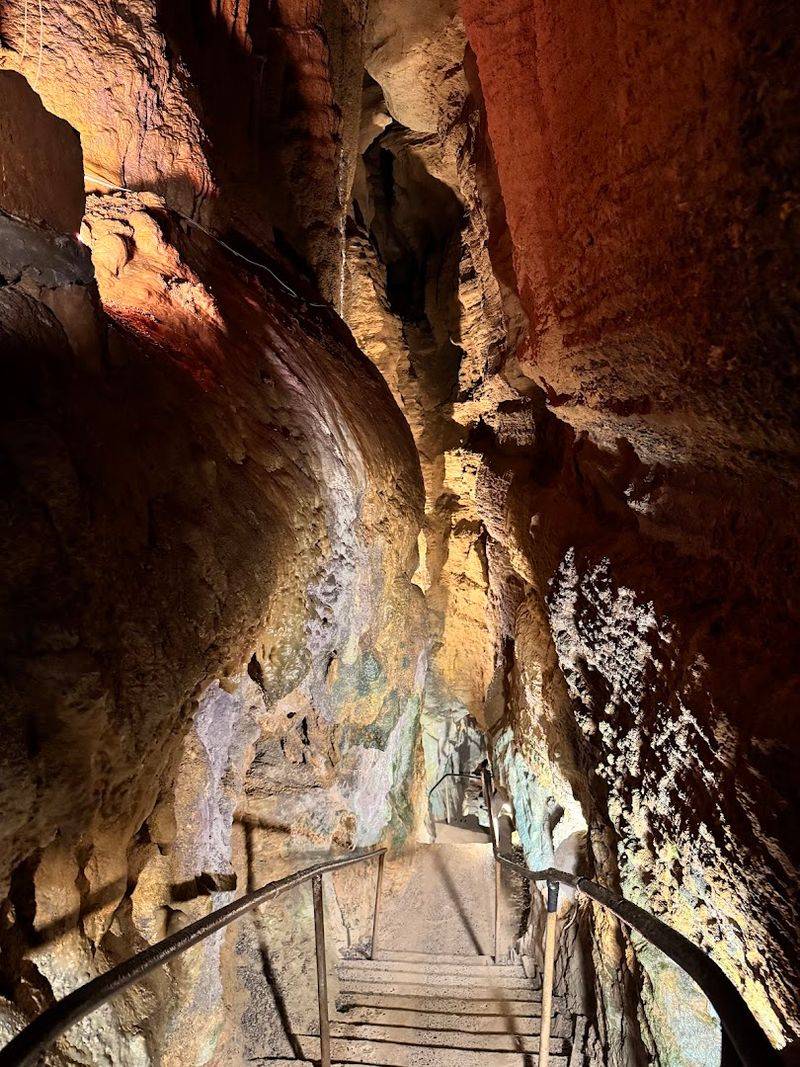
The guided tour at Forbidden Caverns runs just under an hour, which hits a comfortable middle ground for most visitors. It is long enough to cover a substantial portion of the cave system and absorb a good amount of historical and geological information, but short enough that younger kids and older adults do not feel worn out by the end.
The group descends about 200 feet into the cave, and the path includes some uneven ground and a set of stairs. The terrain is damp in certain sections, and the floor can be slippery, so closed-toe shoes with decent grip are a practical choice.
One section of the cave is notably narrow, which is worth knowing in advance for anyone who is uncomfortable in tight spaces.
Tour groups can range from small to fairly large depending on the time of day, and guides manage the pacing well, pausing at key points to explain formations and share historical context before moving the group along to the next section.
The Temperature Inside Never Wavers
One of the most practically useful facts about Forbidden Caverns is that the temperature inside stays at a constant 58 degrees Fahrenheit year-round. That consistency is a natural property of caves at this depth, where the earth insulates the space from seasonal temperature changes happening above ground.
In the summer months, that 58-degree interior is a genuine relief for visitors who have been spending time in the heat of a Tennessee July. In winter or on cooler days, the cave temperature is actually quite comfortable for people dressed in layers.
The practical advice that comes up repeatedly is to bring a light jacket or sweatshirt regardless of what the weather is doing outside. Shorts and a t-shirt are fine for the parking lot but can feel chilly once you are 200 feet underground for an extended stretch.
A single extra layer is all it takes to stay comfortable for the full duration of the tour without any issues.
Who Leads the Tour and Why It Matters
The quality of a guided cave tour depends heavily on the person holding the flashlight, and the guides at Forbidden Caverns have built a strong reputation for being both knowledgeable and entertaining. They cover a lot of ground in under an hour, explaining geological processes, sharing the cave’s human history, and keeping the group engaged throughout.
Humor is a consistent part of the experience, with guides finding natural ways to keep the atmosphere light without turning the tour into a comedy show. The balance between education and entertainment is well-maintained, which makes the tour accessible for a wide age range.
Guides also encourage questions and take time to point out specific formations that might be easy to miss without direction. The bootlegger hideout section, in particular, tends to generate a lot of discussion, and guides handle those questions with the kind of detail that suggests genuine familiarity with the cave’s full history rather than a scripted response repeated tour after tour.
A Good Fit for Families With Kids
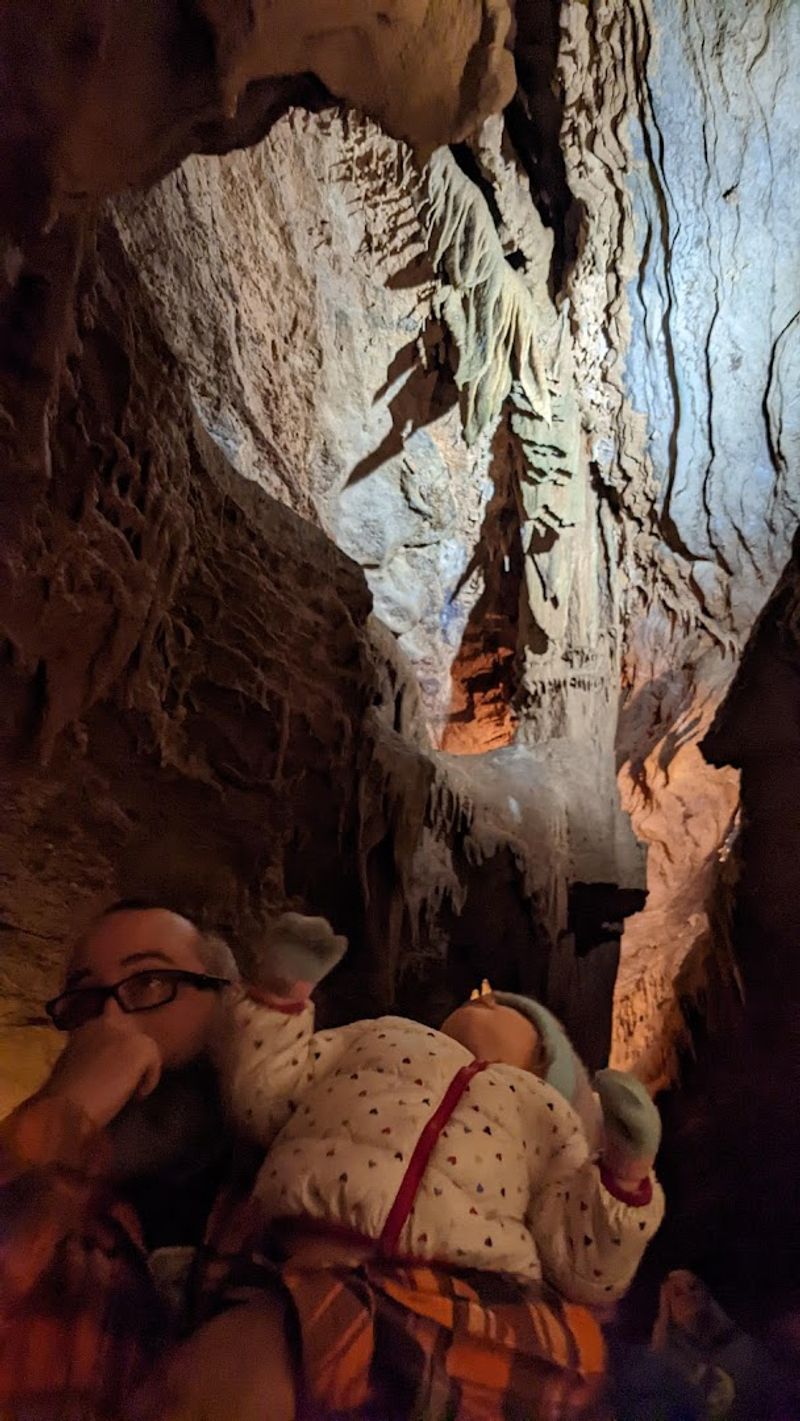
Forbidden Caverns works well as a family outing, partly because the tour does not require a high level of physical fitness and partly because the content is genuinely interesting for kids. The combination of dramatic rock formations, an underground stream, colorful lighting, and a bootlegger story gives younger visitors plenty to stay curious about.
The path does not have any sections that are particularly steep or difficult to manage, which makes it accessible for toddlers and older family members alike. The uneven ground and occasional wet patches are worth watching for, but they are not serious obstacles for most groups.
The moment when all the lights go out is one that tends to stick with kids long after the tour ends. Rather than causing panic, it usually lands as one of the more memorable parts of the whole experience, giving children a concrete understanding of what true underground darkness actually feels like compared to just turning off a bedroom light.
Photography Tips for Getting the Best Shots
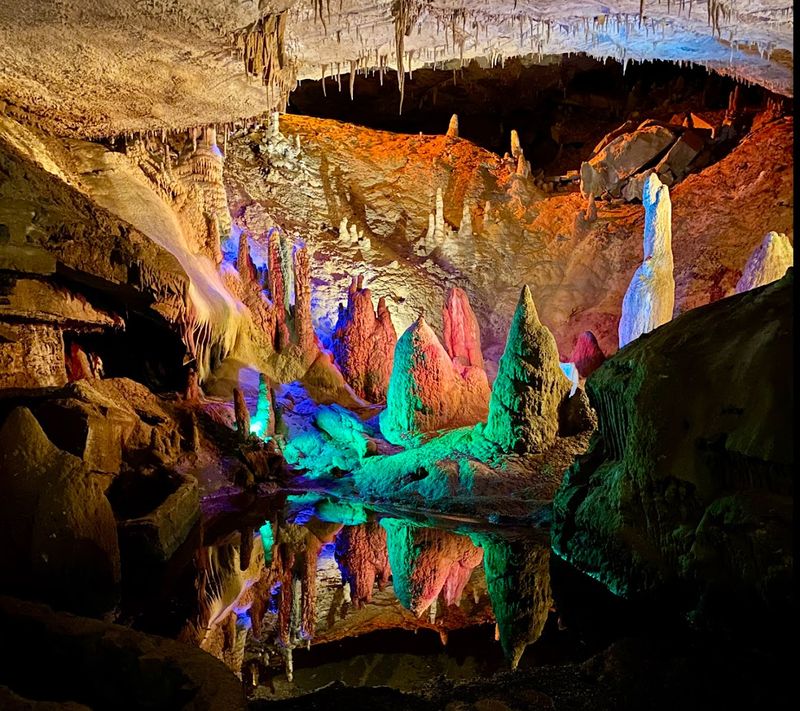
Forbidden Caverns is one of those places where having a camera ready actually pays off, and guides actively encourage stopping to take pictures throughout the tour. The combination of dramatic formations and colored lighting creates a lot of visually interesting moments that are worth capturing.
A smartphone camera handles the cave lighting reasonably well in most sections, though a camera with manual settings gives more control in the darker areas. Keeping the flash off and letting the cave’s existing lighting do the work usually produces better results than trying to overpower the atmosphere with artificial light.
The most photogenic sections tend to be the taller chambers where formations are backlit with colored lights, and the areas near the underground stream where water adds texture and reflection to the scene. Guides are generally patient about allowing time for photos at key stops, so there is no need to rush through shots.
Bring extra storage space because the cave tends to generate more keepers than most people expect.
Why This Cave Deserves a Spot on Your Tennessee Itinerary
Forbidden Caverns sits close enough to the Pigeon Forge and Gatlinburg tourist corridor to make it an easy addition to any Smoky Mountains trip, but far enough off the main drag to feel like a genuine discovery rather than another commercial attraction. The drive out to Blowing Cave Road takes visitors through a quieter side of Sevierville that most people never see.
The tour covers history, geology, and local folklore in a package that holds up well for adults and kids alike. At under an hour, it fits naturally into a full day of Smokies-area activities without consuming the whole schedule.
What makes this cave worth the stop is the layered story it tells. Native hunters, mountain bootleggers, and millions of years of geological activity all share the same underground space, and the guides connect those threads in a way that makes the whole experience feel cohesive.
That combination of natural wonder and human history is genuinely hard to find anywhere else in the region.
Where to Find This Underground World
Tucked away on a quiet stretch of road in the foothills of the Great Smoky Mountains, Forbidden Caverns sits at 455 Blowing Cave Rd, Sevierville, TN 37876. The drive out to the cave feels like a gradual departure from the busy tourist corridors of nearby Pigeon Forge, trading neon signs for tree-lined roads and rolling hills.
The cave entrance is set on private property, and the site is well-maintained with free parking, a gift shop, and vending machines near the entrance. Tours are guided, so there is no wandering off on your own, which actually works in the favor of most visitors.
The structure of the visit is straightforward: arrive, purchase a ticket, and wait for the next tour group to form. The whole setup feels relaxed and unhurried, which is a refreshing contrast to some of the more hectic attractions in the Sevierville area.
Share this story