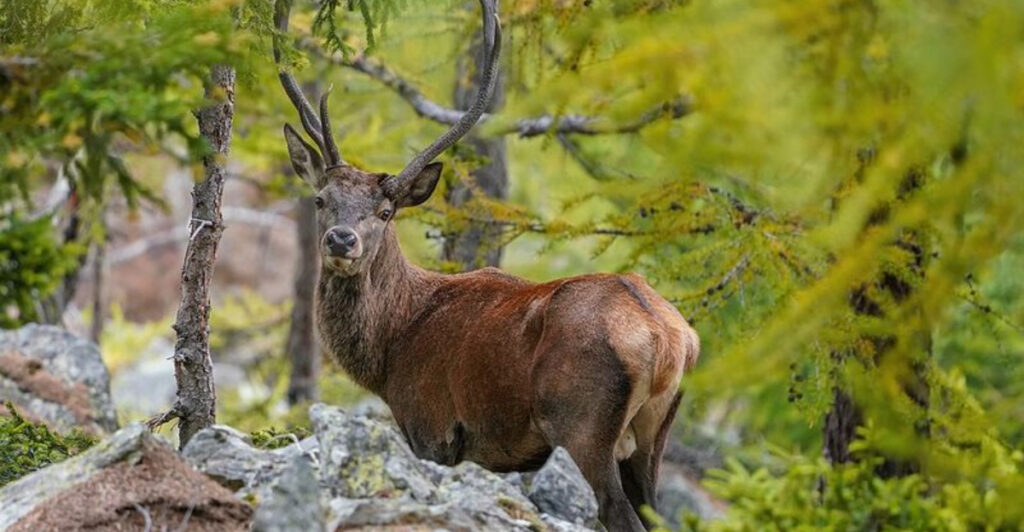
Not every wild animal is out to cause harm. In fact, many of the world’s most fascinating creatures are known for their calm, peaceful behavior around humans.
From the cheerful quokka of Australia to the slow-moving tortoise, these animals remind us that nature has a gentler side worth exploring. Get ready to meet 15 wild animals that are more likely to make you smile than run for cover.
1. Capybara
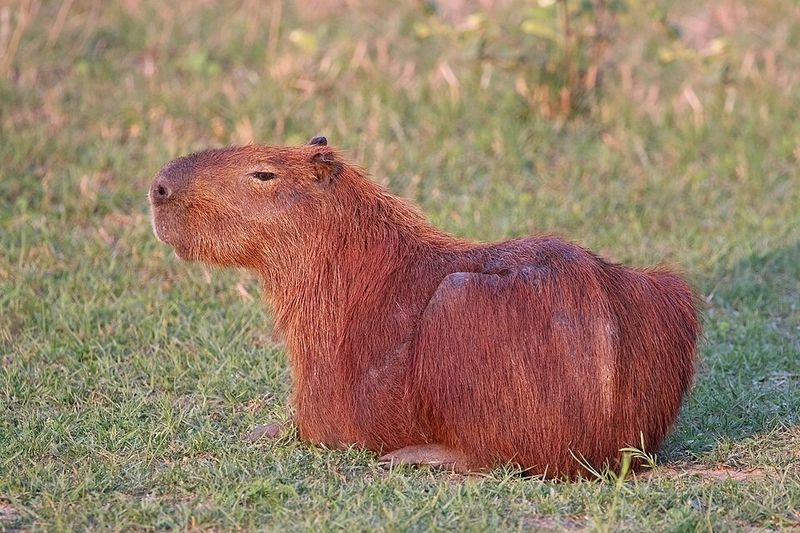
Picture a giant, friendly rodent lounging by a riverbank without a care in the world. That is pretty much the capybara in a nutshell.
Native to South America, the capybara holds the title of the world’s largest rodent, and it wears that crown with total ease.
These social animals love company, whether it is other capybaras, birds perching on their backs, or even other species entirely. They spend their days grazing on grasses and cooling off in rivers and lakes.
Capybaras are semi-aquatic, meaning water is basically their happy place.
When it comes to humans, capybaras are remarkably relaxed. They rarely show aggression and are known to let people get surprisingly close.
Wild capybaras should still be given space and respect, but encounters with them tend to be calm and almost magical. They truly are the easygoing ambassadors of the animal kingdom.
2. Quokka
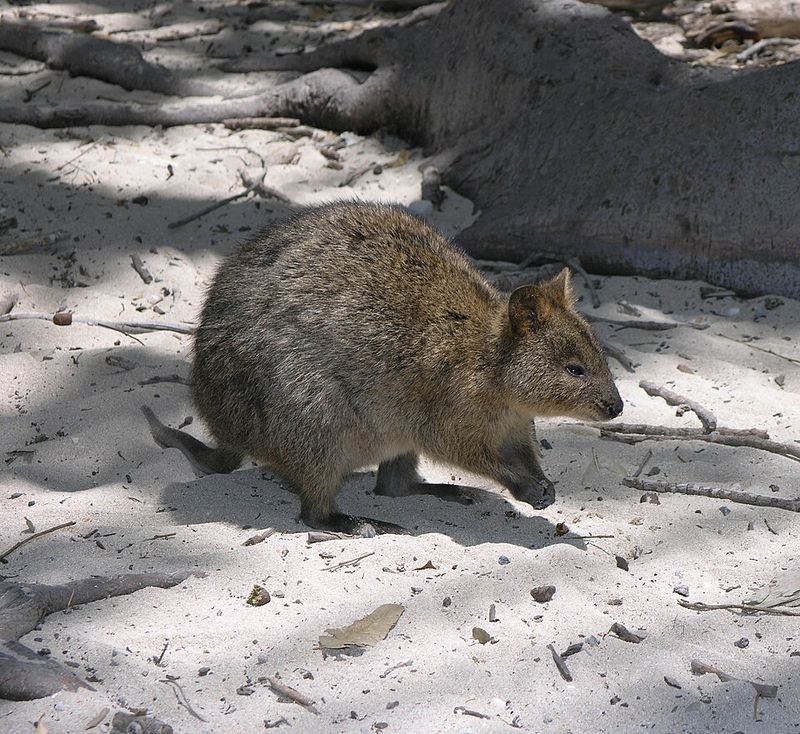
Few animals on Earth look as genuinely happy as the quokka. This small marsupial from Western Australia has earned the nickname “world’s happiest animal” thanks to its upturned mouth that gives the impression of a permanent, cheerful grin.
Tourists travel specifically to Rottnest Island just to catch a glimpse of one.
Quokkas are curious by nature. Rather than bolting at the sight of a human, they often wander closer to investigate.
They are herbivores, munching on leaves, grasses, and bark throughout the day and night.
Despite their approachable personality, feeding or handling wild quokkas is illegal in Australia and can actually harm them. Admiring them from a respectful distance is the best approach.
What makes them so charming is that they seem completely unbothered by the world around them, going about their day with what can only be described as pure, unhurried contentment.
3. Manatee
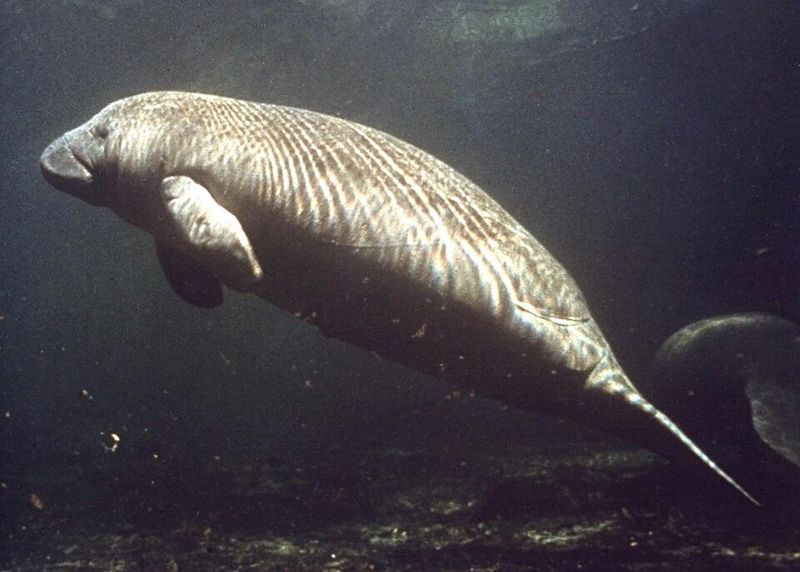
Manatees are the slow-moving, soft-eyed gentle giants of the sea. Often called sea cows, these massive marine mammals can weigh up to 1,200 pounds, yet they spend their days doing little more than drifting through warm coastal waters and munching on aquatic plants.
There is something wonderfully unhurried about the way they move through life.
Found along the coasts of Florida, the Caribbean, and West Africa, manatees are completely harmless to humans. They have no natural weapons and no territorial instincts toward people.
Swimmers who have encountered manatees often describe the experience as surprisingly moving.
However, manatees face serious threats from boat propellers and habitat loss, which is why many are protected by law. Swimmers are asked not to chase or touch them.
These peaceful herbivores deserve all the protection they can get, and spotting one in the wild is a genuinely rare privilege.
4. Giant Panda
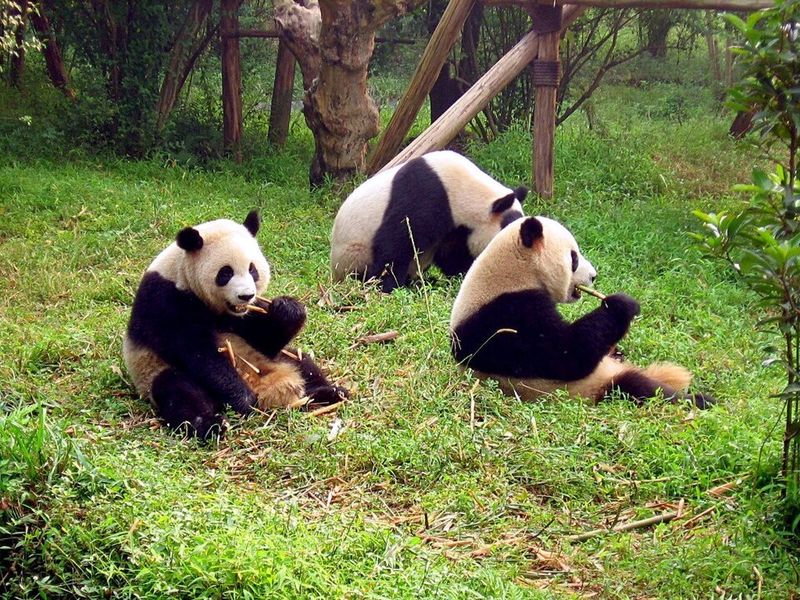
At first glance, the giant panda looks like a stuffed animal that somehow came to life. With its bold black-and-white markings and round, sleepy face, it is one of the most recognizable animals on the planet.
It also happens to be one of the calmest members of the entire bear family.
Giant pandas spend up to 16 hours a day eating bamboo. Their digestive systems are not particularly efficient at breaking it down, so they have to eat enormous amounts just to stay nourished.
This bamboo-focused lifestyle leaves little time or energy for conflict.
In the wild, giant pandas are solitary and prefer to avoid contact with people altogether. They are not naturally aggressive, though like any large wild animal, they deserve plenty of space and respect.
Conservation efforts have helped their numbers recover in recent years, which is a genuinely encouraging story for wildlife fans everywhere.
5. Red Panda
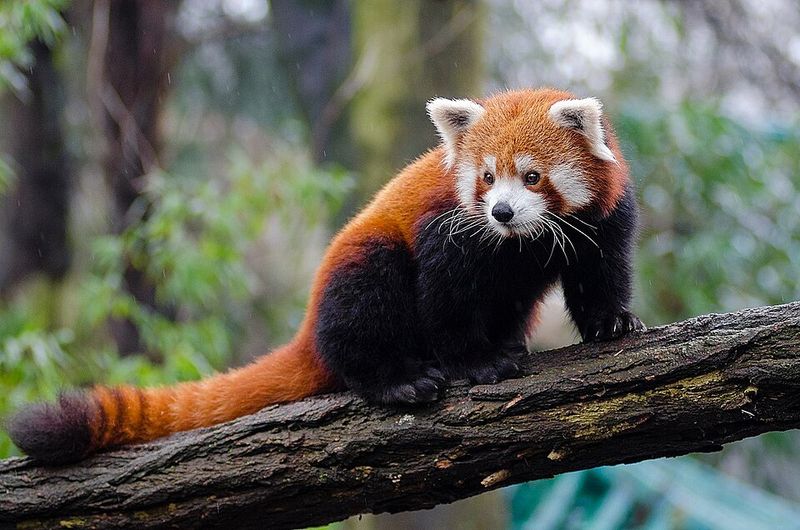
With its rust-colored fur, masked face, and ringed tail, the red panda looks like it was designed by someone who combined a fox, a raccoon, and a teddy bear into one adorable package. These small mammals live in the cool mountain forests of the Himalayas and southwestern China, spending most of their time up in the trees.
Red pandas are shy and elusive. Spotting one in the wild is considered a lucky event, as they tend to stay hidden among branches and dense foliage.
Their diet consists mainly of bamboo, along with berries, blossoms, and the occasional insect.
When threatened, red pandas do not fight back aggressively. They prefer to climb higher or flee entirely.
They are classified as endangered, with fewer than 10,000 estimated to remain in the wild. Their quiet, unassuming lifestyle makes them one of the most endearing animals you could ever hope to encounter.
6. Three-Toed Sloth
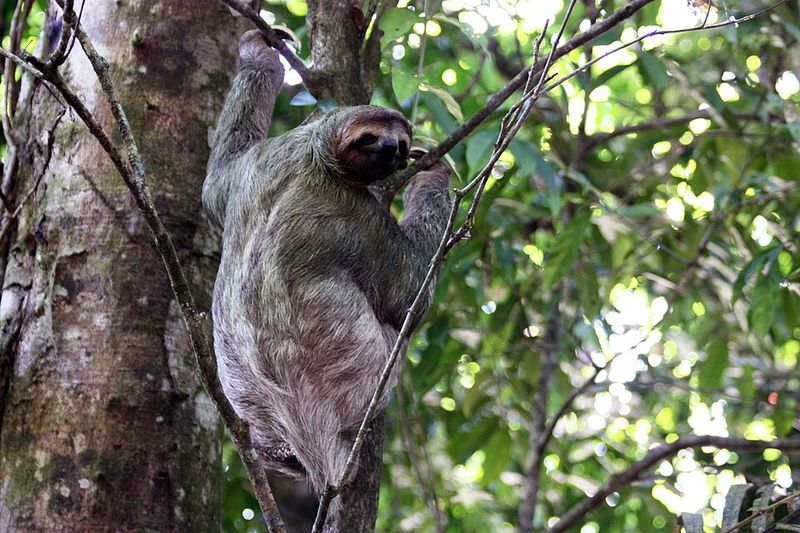
The three-toed sloth has turned slow living into an art form. Hanging from branches in the rainforests of Central and South America, these unhurried mammals move so little that algae actually grows on their fur, giving them a greenish tint that helps them blend into the treetops.
Nature, it turns out, rewards patience.
Sloths survive on a diet of leaves, which are low in nutrients and hard to digest. Their sluggish metabolism is an adaptation to this low-energy diet, not laziness.
They descend to the forest floor only about once a week, usually to relieve themselves or switch trees.
Toward humans, sloths pose almost no threat. They have long claws used for gripping branches, and if cornered, they might swipe defensively.
But aggression is genuinely rare. Their calm, slow-blinking demeanor has made them internet favorites, and seeing one in the wild is a surprisingly peaceful, almost meditative experience.
7. Wild Rabbit
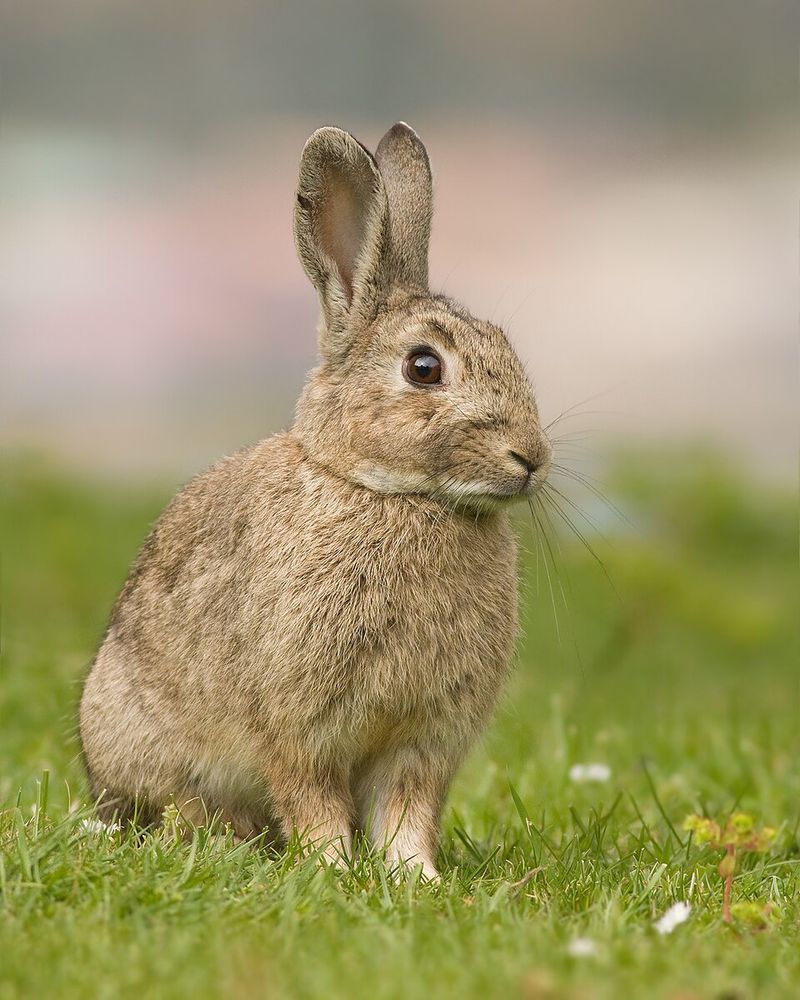
Wild rabbits are masters of the disappearing act. One moment they are there, nibbling on clover in a sun-drenched field, and the next they have vanished into a burrow or hedgerow.
Speed and stealth are their greatest survival tools, and they rely on both rather than any kind of confrontation.
Found across Europe, North America, and parts of Asia, wild rabbits feed on grasses, herbs, bark, and root vegetables. They are crepuscular, meaning they are most active at dawn and dusk, which is when you are most likely to spot them darting across a field.
Rabbits are not aggressive animals. When startled, their instinct is to bolt, not bite.
They play an important role in their ecosystems, serving as prey for foxes, hawks, and other predators. Watching a group of wild rabbits graze peacefully at sunrise is one of those simple, quietly joyful moments that nature offers for free.
8. Deer
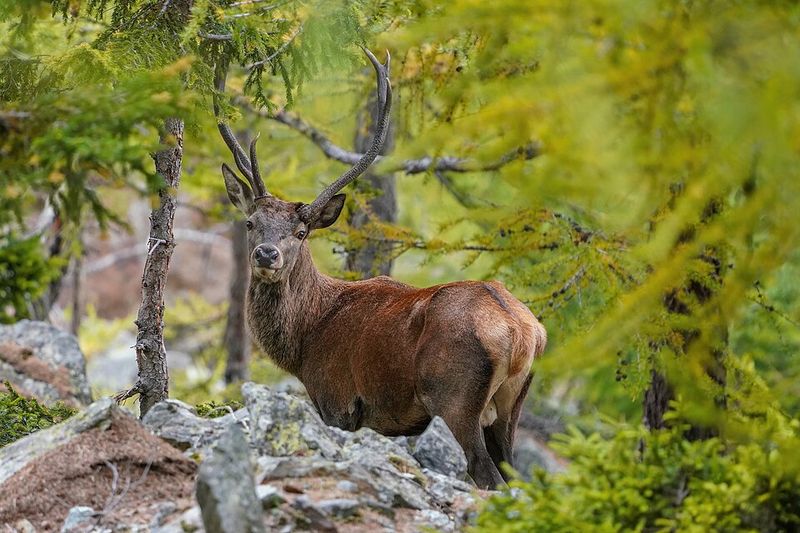
There is something almost dreamlike about spotting a deer in the wild. Whether it is a white-tailed deer pausing in a forest clearing or a roe deer stepping quietly through tall grass, these animals carry a natural grace that is hard to describe but easy to feel.
They are among the most widely recognized wild animals in the world.
Deer are herbivores through and through, feeding on leaves, twigs, fruits, and grasses depending on the season. Most species live in woodland edges and meadows where food and cover are both available.
While male deer can become more assertive during the breeding season, they generally steer clear of human contact. Deer are skittish by nature and will typically bound away at the first sign of a person.
They remind us that wild animals can be both beautiful and cautious, living quietly alongside human communities without causing harm.
9. Hedgehog
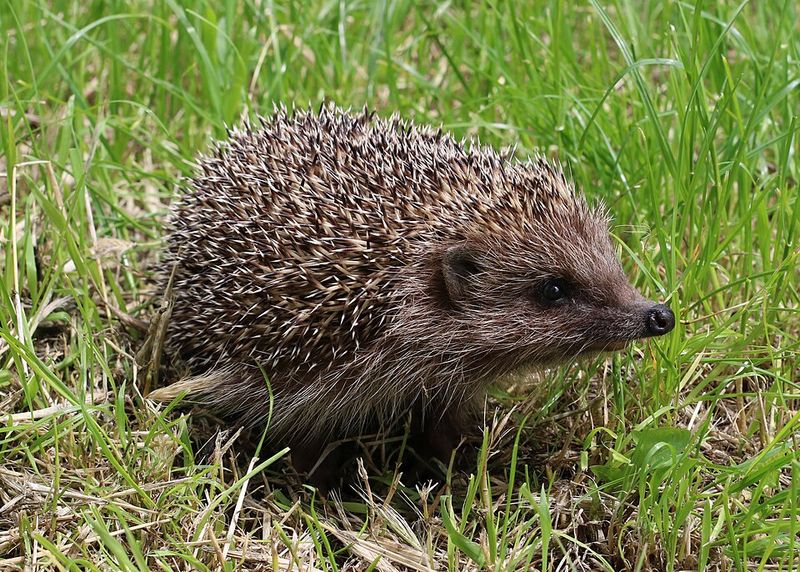
Hedgehogs have one of the most effective defense strategies in the animal kingdom, and it does not involve claws, venom, or speed. When threatened, they simply curl into a tight, spiny ball and wait.
That is it. Patient, prickly, and perfectly unbothered.
Wild hedgehogs are nocturnal insectivores, spending their nights foraging for beetles, worms, slugs, and caterpillars. They are common in European gardens and woodlands, and many homeowners are delighted to find one rustling through the leaves near their compost heap.
These small mammals pose no real danger to people. They do not bite unless seriously provoked and have no venom or harmful secretions.
Their spines are designed for predator deterrence, not human interaction. Hedgehog populations have declined in parts of Europe due to habitat loss, making each garden sighting a welcome reminder of the small, quiet wildlife that shares our neighborhoods.
10. Sea Otter
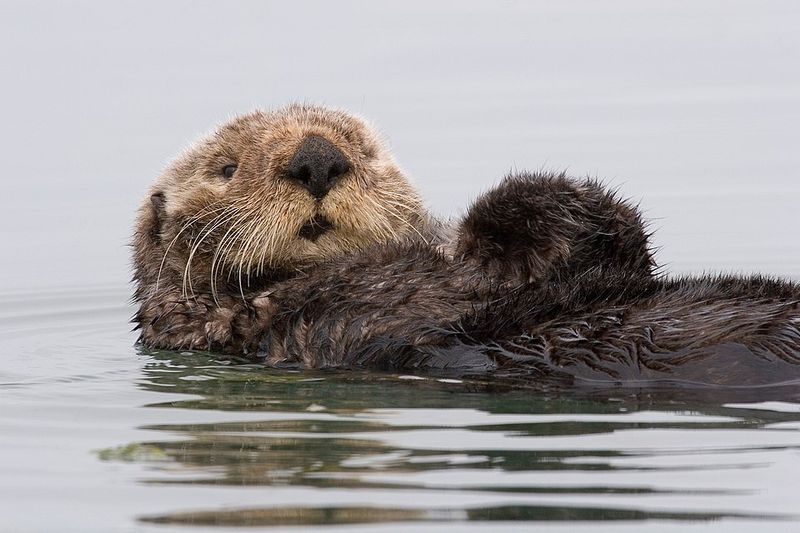
Few animals look as effortlessly content as a sea otter floating on its back, cracking open a clam on its belly while the waves gently rock it. These playful marine mammals live along the coasts of the North Pacific Ocean and are widely considered one of the most charming animals in the sea.
Sea otters are highly intelligent and use tools, specifically rocks, to crack open hard-shelled prey like sea urchins, mussels, and crabs. They also hold hands with other otters while sleeping so they do not drift apart.
That behavior, called a raft, is exactly as sweet as it sounds.
Toward humans, sea otters are not naturally aggressive. That said, they are wild animals and should not be approached or fed in the wild, as this disrupts their natural behavior.
Conservation efforts have helped their numbers recover after they were nearly hunted to extinction for their extraordinarily dense fur.
11. Tortoise
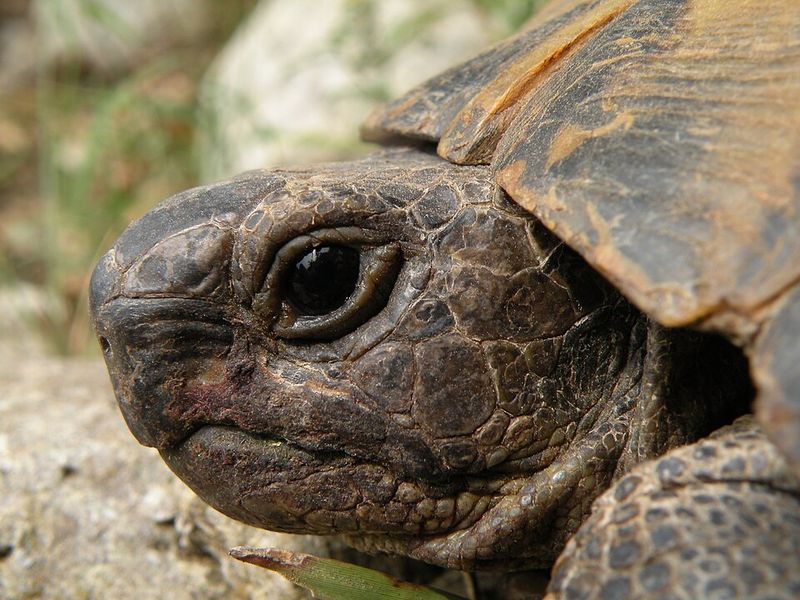
The tortoise has been around for more than 200 million years, which means it has outlasted dinosaurs, ice ages, and just about every major extinction event in Earth’s history. Clearly, slow and steady really does win the race.
These ancient reptiles are among the most peaceful animals on the planet.
Wild tortoises graze on grasses, flowers, succulents, and fallen fruit. They move at their own unhurried pace, and their primary response to danger is simply retreating into their shell and waiting for the threat to pass.
No drama, no aggression, just patience.
Giant tortoises found on the Galapagos Islands can live for over 100 years and weigh more than 500 pounds, yet they are completely harmless to people. Smaller species found in deserts and grasslands around the world are equally easygoing.
Watching a tortoise go about its day is a surprisingly calming experience, like witnessing nature in its most unhurried state.
12. Wombat
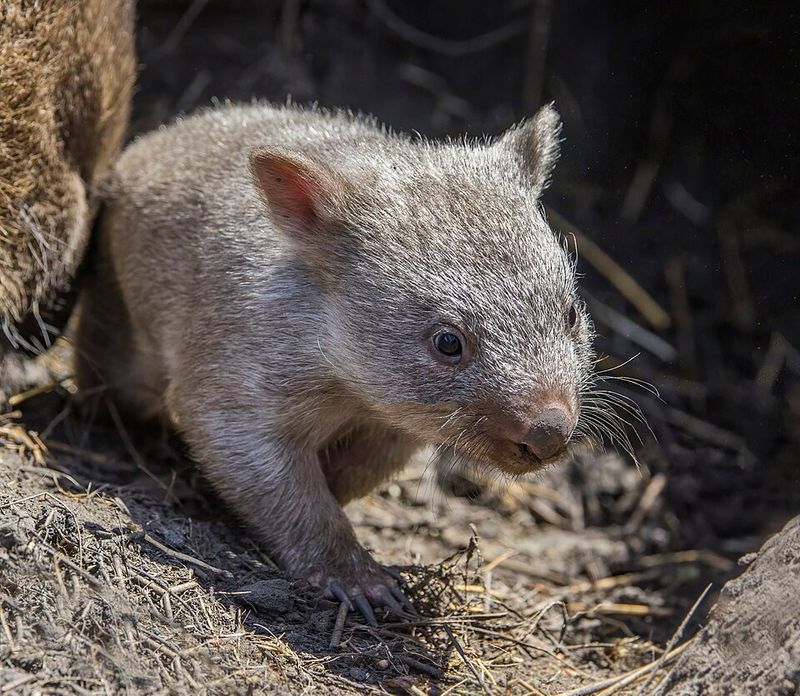
Wombats look like someone tried to build a small bear out of spare parts and ended up with something wonderfully unique. Squat, stocky, and surprisingly fast when they want to be, these Australian marsupials are fascinating animals that most people outside Australia rarely get to see up close.
They are champion diggers, creating extensive burrow systems that can stretch up to 30 meters long. Wombats are herbivores, feeding on grasses, roots, and bark.
Their cube-shaped droppings are one of the animal kingdom’s more unusual quirks, used to mark territory without rolling away on uneven ground.
Wombats are not aggressive toward humans by default, though they can deliver a powerful charge if they feel cornered or threatened. Under normal circumstances, they prefer to disappear into their burrows rather than confront anyone.
In some wildlife sanctuaries, hand-raised wombats have been known to follow their caretakers around like loyal, low-key companions.
13. Tree Kangaroo
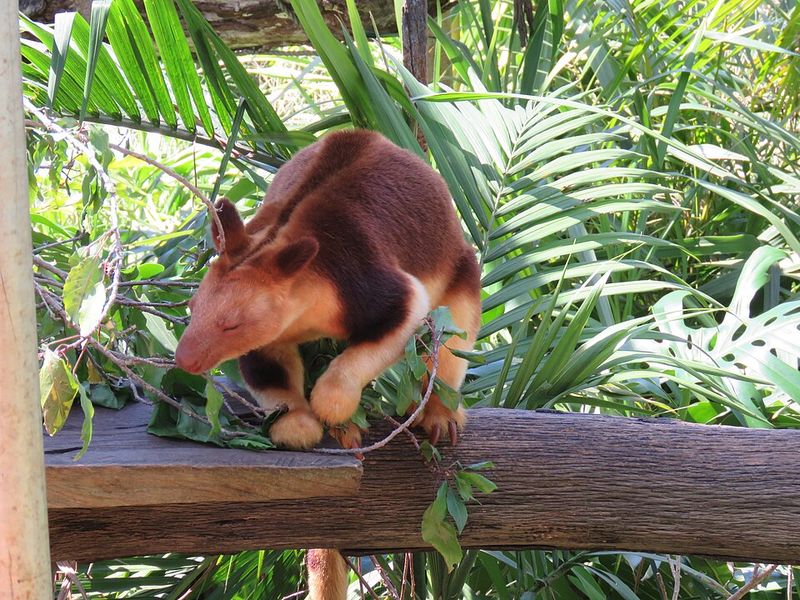
Most people picture kangaroos bounding across open Australian plains, but tree kangaroos have taken a completely different approach to life. These remarkable marsupials have adapted to living in the rainforest canopy, spending their days resting on thick branches high above the forest floor in Papua New Guinea and northeastern Australia.
Tree kangaroos are stockier and have stronger forelimbs than their ground-dwelling relatives, which helps them grip branches and climb with surprising agility. They feed on leaves, flowers, and fruit found in the treetops.
Their movements are slow and deliberate rather than the bounding leaps most people associate with kangaroos.
Around humans, tree kangaroos are shy and withdrawn. They are not aggressive and will retreat deeper into the canopy if they sense a person nearby.
Several species are endangered due to hunting and deforestation, making conservation efforts in their rainforest habitats especially critical for their survival in the coming decades.
14. Muntjac Deer
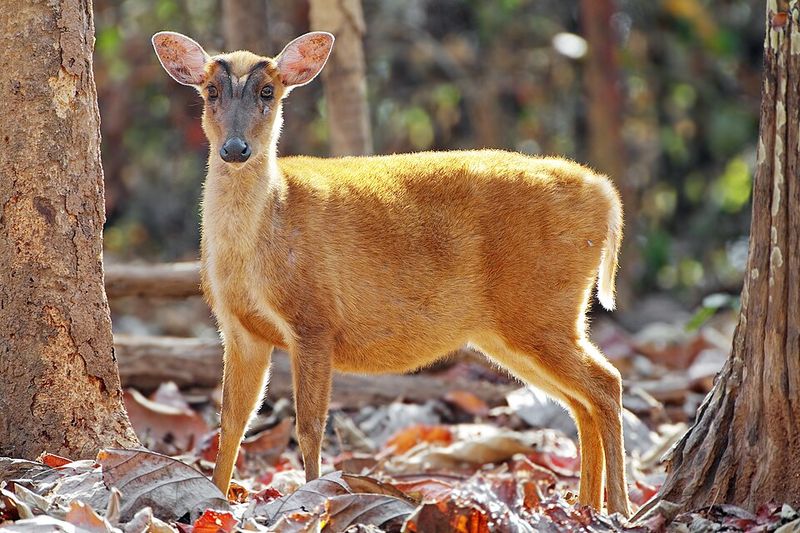
Muntjac deer are sometimes called barking deer, and if you have ever heard one call out in the forest, you understand why. Their sharp, dog-like bark can be startling if you are not expecting it, echoing through the trees in a way that sounds completely out of place for such a small, delicate animal.
Originally from Asia, muntjacs have also established populations in the United Kingdom after escaping from deer parks in the early 20th century. They are small, standing only about 18 inches at the shoulder, and feed on grasses, berries, bark, and fungi.
They tend to be solitary and secretive, preferring dense woodland cover.
Muntjacs are cautious around humans and will typically freeze before quietly slipping back into the undergrowth. Males have small antlers and short tusks used during interactions with rivals, but toward people, they are reliably non-confrontational.
Spotting one peering through the trees feels like discovering a shy little secret hidden in the woods.
15. Bighorn Sheep
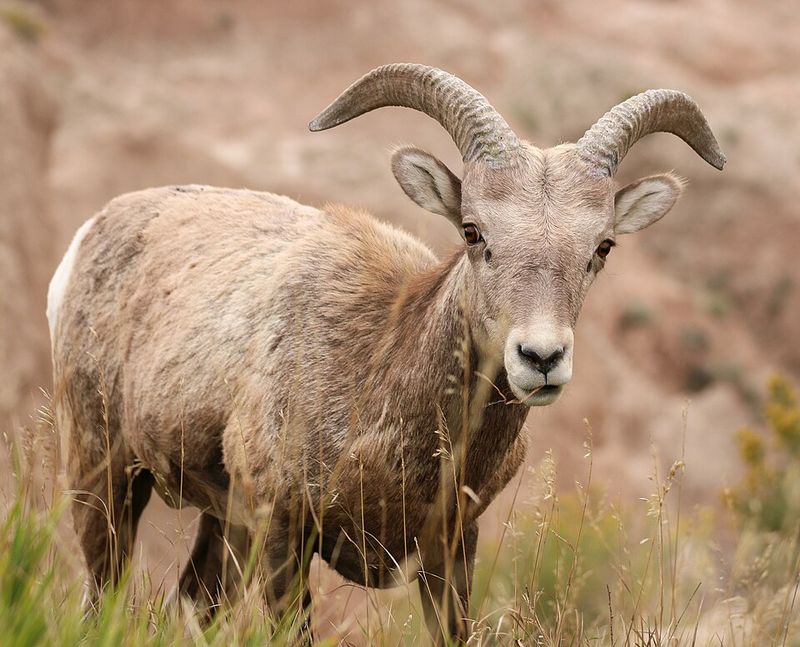
Watching two male bighorn sheep crash their massive curved horns together during breeding season is one of the most dramatic spectacles the natural world has to offer. The impact can be heard from a mile away, and the sheep walk away from it seemingly unfazed.
Outside of those impressive contests, though, bighorn sheep are remarkably calm animals.
Found throughout the Rocky Mountains and desert regions of North America, bighorn sheep are agile climbers that navigate steep, rocky terrain with ease. They graze on grasses, shrubs, and sedges, and live in herds led by experienced females called ewes.
When humans approach, bighorn sheep typically move away to higher ground rather than standing their ground. They are wary and alert, relying on their excellent eyesight and sure-footed agility to stay safe.
Observing a herd picking their way across a sheer cliff face is a reminder of just how extraordinary wild animals truly are.
Share this story