There is a hot dog stand on the west side of Chicago that has been sparking strong opinions since 1954. Some people call it the best Chicago dog they have ever tasted.
Others walk away shaking their heads, wishing they had ordered something different. I made the trip out to find out what all the fuss was about, and what I found was a place that is genuinely hard to forget, whether you end up loving it or not.
The counter is no-frills, the menu is short, and the rules about ketchup are strictly enforced. Every visit feels like a small piece of Chicago history handed to you wrapped in paper, and that alone is worth the drive.
The Corner That Started It All
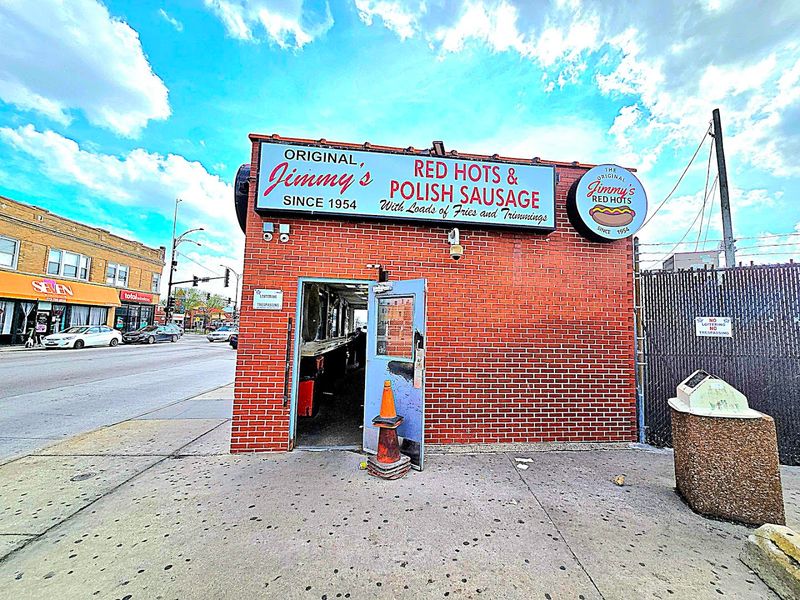
Right at the intersection of Grand Avenue and Pulaski Road on the west side of Chicago, a small stand has been feeding the neighborhood since 1954. Jimmy’s Red Hots sits at 4000 W Grand Ave, Chicago, IL 60651, and the address alone tells you something about the place.
This is not a trendy food hall or a downtown tourist spot. It is a working-class corner stand that has outlasted dozens of restaurants that came and went while it kept steaming hot dogs and slicing fresh fries.
The building is modest, the signage is old-school, and the parking lot is handled in-house, which feels like a very Chicago thing to do. When you pull up and see the line of regulars already waiting, you start to understand why this place has earned over 5,500 reviews and a 4.6-star rating on Google.
The neighborhood has changed around it over the decades, but the stand itself feels like it has barely moved an inch. That kind of staying power does not happen by accident, and first-timers quickly pick up on why locals treat this corner like a landmark.
A Menu Built on Simplicity and Confidence
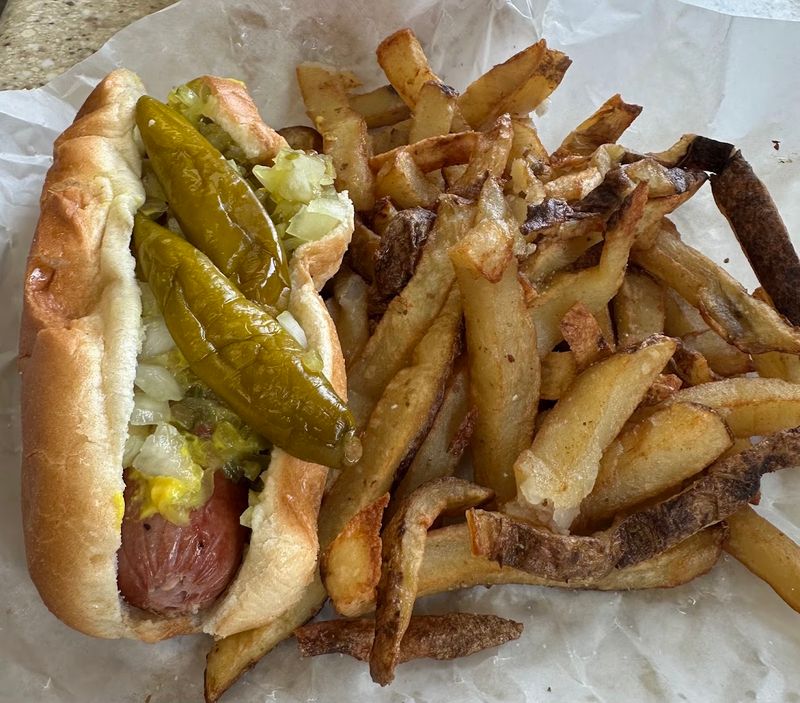
The menu at Jimmy’s Red Hots is refreshingly short. Hot dogs, Polish sausages, tamales, and fresh-cut fries make up the core of what you will find here, and there is no long list of specialty items competing for your attention.
The hot dogs are pure Vienna Beef, steamed to order, and served on a poppy seed bun with whatever toppings you choose. The classic Chicago-style build includes yellow mustard, neon green relish, onions, tomato slices, a dill pickle spear, sport peppers, and celery salt.
What you will not find is ketchup. Asking for it is considered a genuine offense here, and the staff will let you know that with zero hesitation.
One visit is enough to understand that this is not a joke or a gimmick; it is a matter of pride.
Every hot dog and Polish sausage comes with fries included in the price, which makes the value genuinely hard to beat. A bag of eight hot dogs with all the trimmings and fries runs around forty-four dollars, a price point that feels almost impossible to find anywhere else in the city today.
The Snap That Sets the Dog Apart
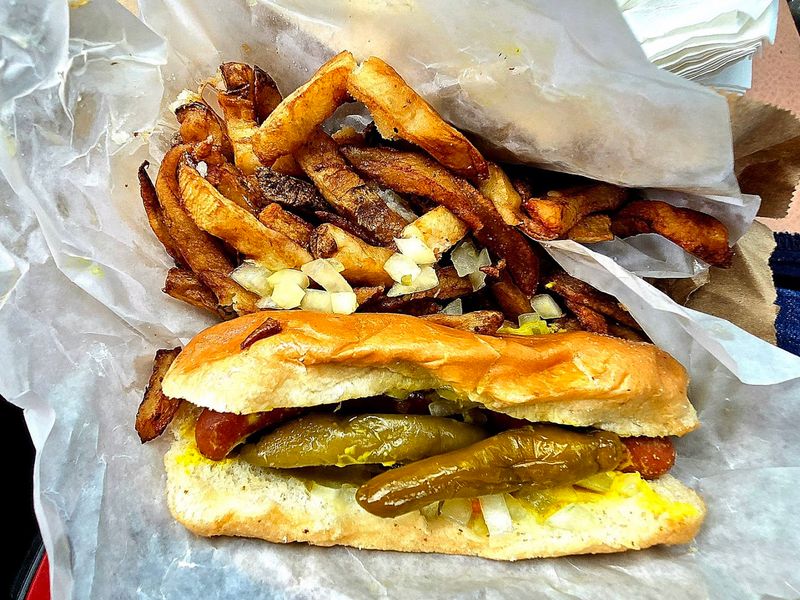
A lot of hot dog stands in Chicago use Vienna Beef franks, but not all of them produce the same result. The frank at Jimmy’s has a distinct snap to the casing when you bite into it, which is the kind of detail that separates a good hot dog from a great one.
That snap comes from the natural casing on the frank, and it is something regulars talk about with real enthusiasm. The bun is steamed just enough to be soft without turning soggy, and the combination creates a texture that feels balanced from the first bite to the last.
Some visitors have noted that the franks run on the thinner side, which is a fair observation. If you are used to a thick, meaty sausage, the classic red hot might surprise you.
The Polish sausage is a heartier option and tends to satisfy people who want more substance.
The frying oil is reportedly a blend of beef tallow and vegetable oil, which adds a richness to the fries that is hard to replicate with standard cooking oil. That detail alone has turned first-time visitors into committed regulars who make the trip back regularly.
Fresh-Cut Fries That Steal the Show
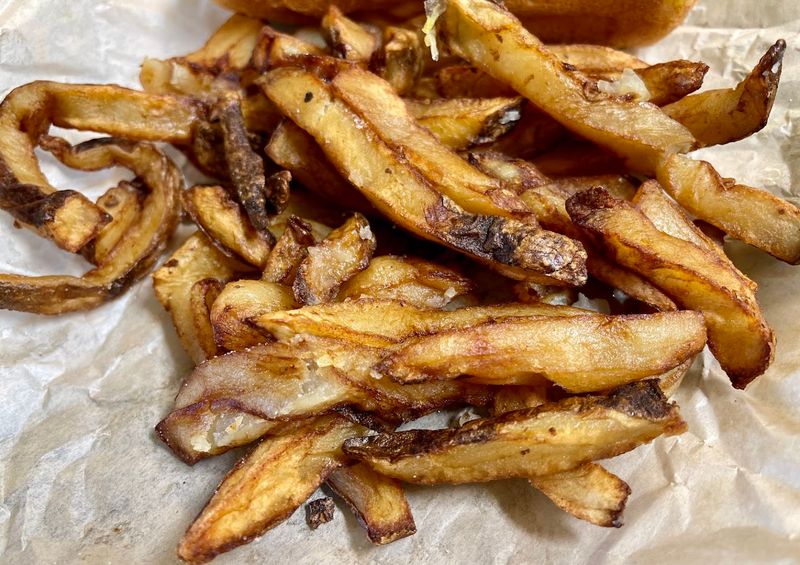
Here is something that surprises a lot of first-timers: the fries at Jimmy’s Red Hots might actually outshine the hot dogs for some people. They are cut fresh in-house, fried until golden and crispy, and served hot alongside every order.
The fries come piled generously with each dog or sausage, which means you are not paying extra for a side that feels like an afterthought. Finding a place where the fries are this fresh and this plentiful at this price point is genuinely rare in any major city.
The house-made habanero hot sauce is the condiment worth ordering alongside your fries. It has a thick consistency and a heat level that builds slowly, and it pairs with the fries in a way that makes the combination hard to put down.
Ketchup is not offered, so do not bother asking.
Some visitors have mentioned that the fries could use a bit more salt, which is a fair note. Seasoning to taste is easy enough once you have them in hand.
The crinkle of the brown paper bag as you dig through it for the fries at the bottom is a small moment that longtime fans describe as part of the whole experience.
The Tamale That Divides Opinions
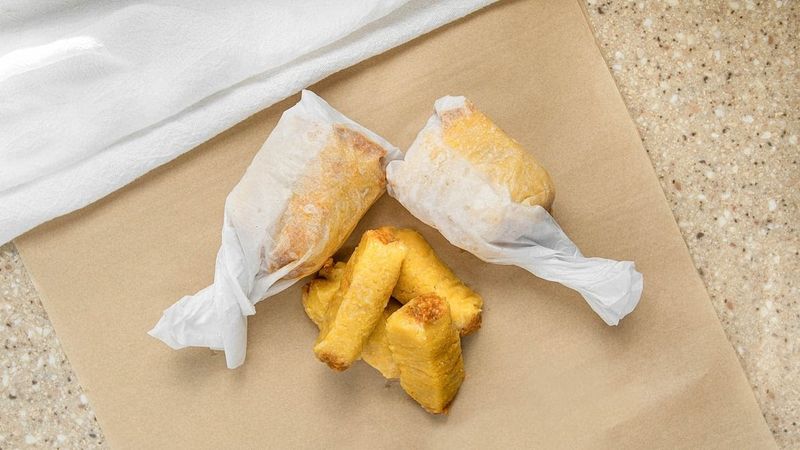
Chicago has its own tamale tradition, and it is nothing like what you would find in a Mexican restaurant. The city-style tamale is smaller, softer, and steamed in a way that gives it a texture completely different from the masa-heavy versions found elsewhere in the country.
Jimmy’s Red Hots has been serving tamales alongside their hot dogs for decades, and they are one of the more polarizing items on the menu. Fans of the Chicago-style tamale consider them a nostalgic treat that belongs right next to the dogs.
Critics find them too small and too far from what they expect a tamale to be.
The truth is that the Chicago tamale is its own category, and judging it by the standards of a traditional tamale is a bit like judging a deep-dish pizza by the standards of a New York slice. They are simply different things.
If you have never tried a Chicago-style tamale before, Jimmy’s is as good a place as any to have your first one. Order it with an open mind, and you might find yourself understanding why this city developed its own version of the dish in the first place.
The Polish Sausage Worth Knowing About
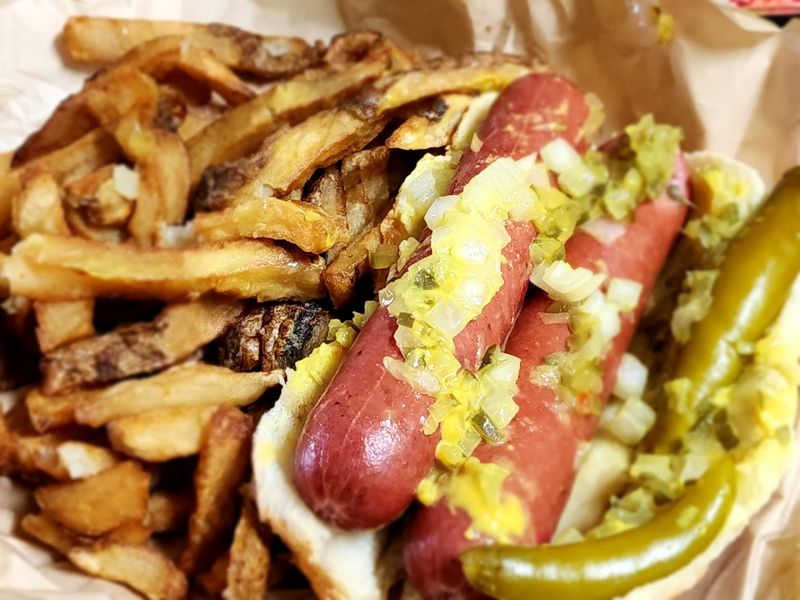
The Polish sausage at Jimmy’s Red Hots deserves its own spotlight, and it tends to get overlooked by first-timers who come in with their eyes set on the classic red hot. That is understandable, but it is also a missed opportunity.
The Polish is thicker, meatier, and has a smokier flavor profile than the standard frank. Served with mustard and onions, it is a satisfying meal that holds up well against anything you might find at a more upscale sausage spot in the city.
Several regulars specifically recommend the Polish as the better order if you want something more substantial.
The combination of a well-made Polish sausage and a pile of fresh-cut fries for a few dollars is the kind of value that feels increasingly hard to find as food prices keep climbing everywhere else. Jimmy’s has held its pricing in a range that still feels accessible, which is part of why the loyalty runs so deep here.
Whether you go for the red hot or the Polish, the experience of eating at the counter and watching the staff work quickly and efficiently is a small but genuine pleasure that adds to the overall visit.
The No-Ketchup Rule and What It Really Means
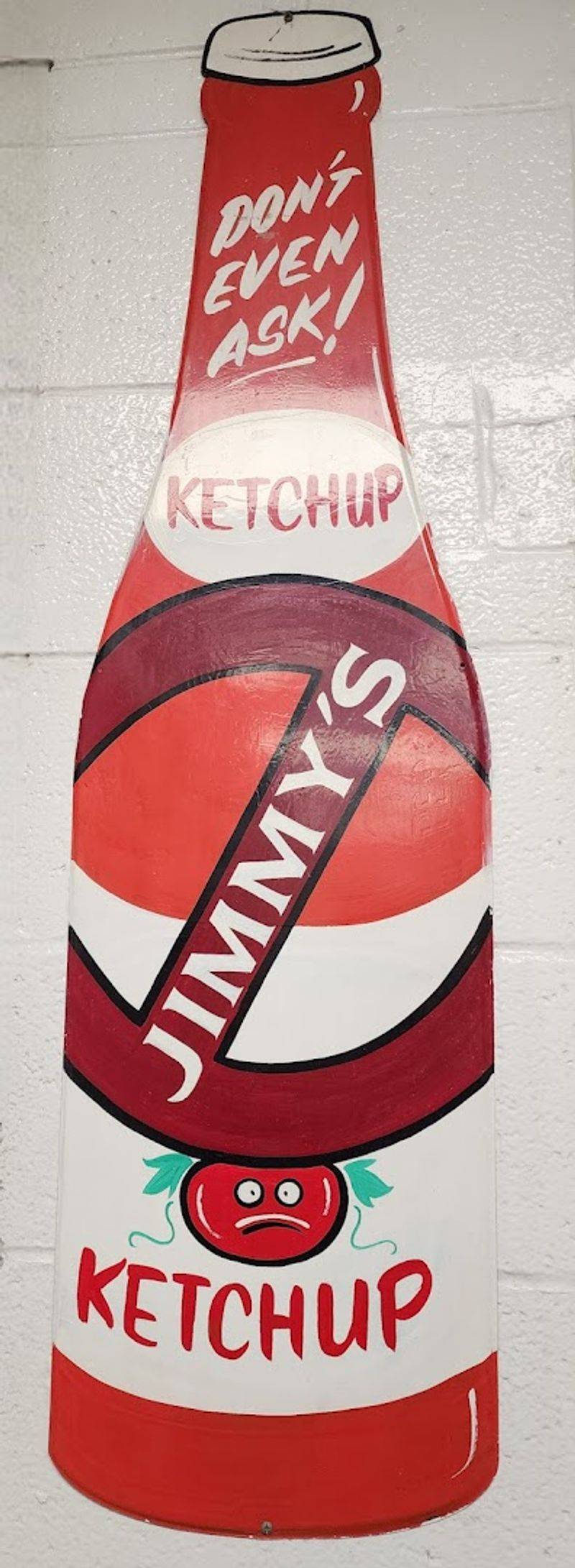
The no-ketchup rule at Jimmy’s Red Hots is not just a quirky policy. It is a direct expression of how seriously this stand takes the Chicago-style hot dog tradition, and it is one of the things that makes a visit here feel like a real cultural experience rather than just a fast food stop.
In Chicago, putting ketchup on a hot dog is widely considered a violation of the classic preparation. The argument is that the combination of mustard, relish, onions, tomato, pickle, sport peppers, and celery salt already creates a balanced, complex flavor, and ketchup would overpower and muddy the whole thing.
Visitors who ask for ketchup at Jimmy’s report getting a reaction that ranges from a firm refusal to a genuinely incredulous look from the staff. One person asked for ketchup on their fries and received hot sauce instead, which turned out to be a happy accident.
Whether you agree with the rule or not, there is something refreshing about a place that has a clear point of view and sticks to it after more than seventy years. The no-ketchup rule is as much a part of the Jimmy’s identity as the Vienna Beef franks themselves.
Open Late and Worth the Trip
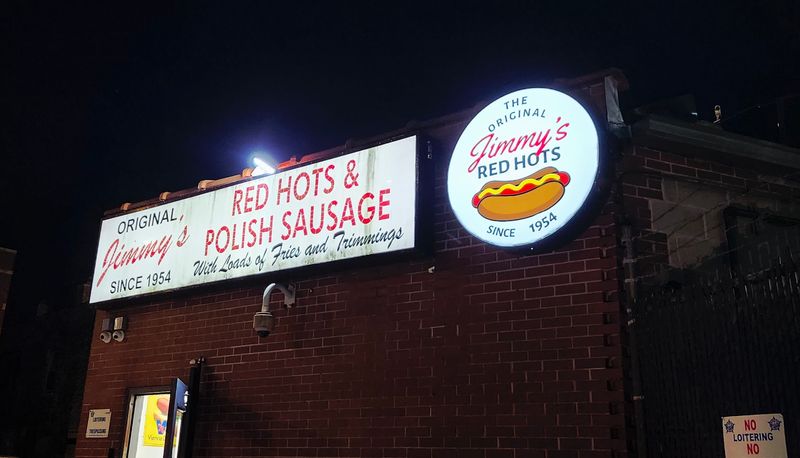
One detail about Jimmy’s Red Hots that does not get enough attention is the hours. The stand is open every single day of the week from 10 AM all the way to 1 AM, which means it is one of the few places in the city where you can get a genuinely good hot dog at midnight without resorting to a gas station.
That late-night availability makes it a go-to spot after events, long work shifts, or just those evenings when hunger hits at an inconvenient hour. The kitchen keeps the same quality standards regardless of what time you show up, and the fresh-cut fries taste just as good at 11 PM as they do at noon.
The stand is cash only, so make sure you have bills on you before you arrive. There is nothing worse than waiting in line, building your order in your head, and then realizing your wallet is empty except for a debit card.
An ATM trip before you visit saves a lot of frustration.
The phone number is 773-384-9513 and the website is jimmysredhotschicago.com if you want to check anything before heading over. Planning ahead makes the visit smoother, especially if you are coming from outside the neighborhood.
A Neighborhood That Adds to the Experience
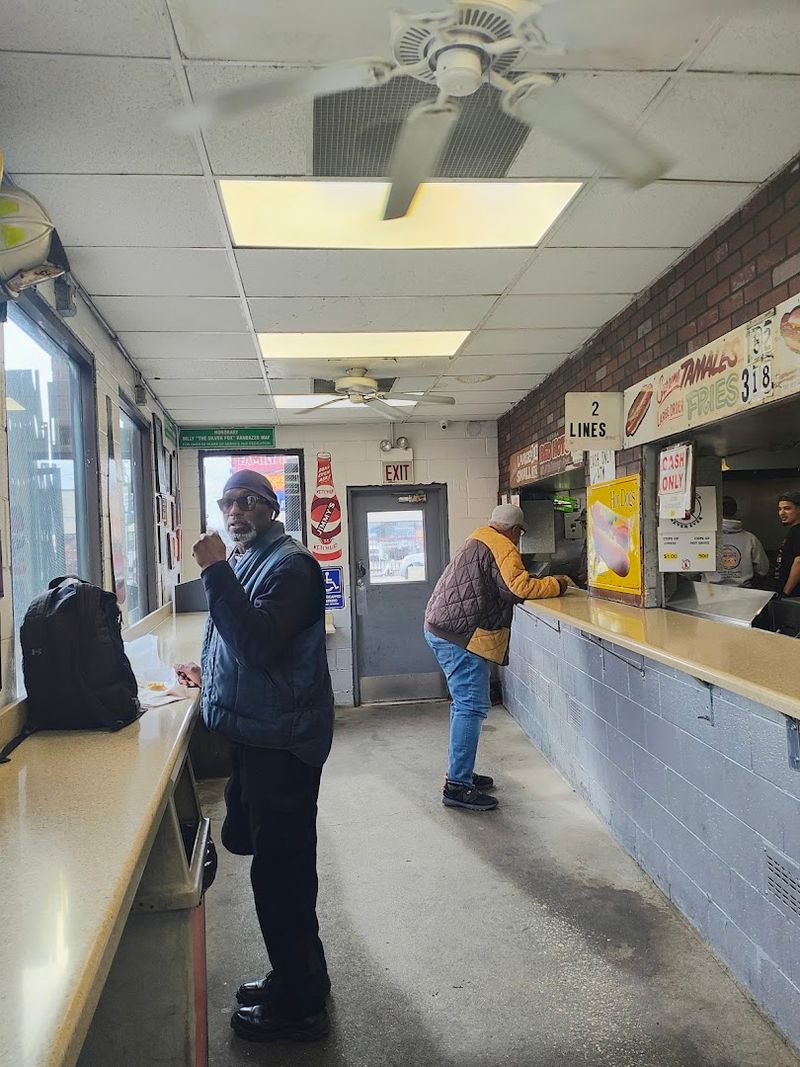
The location of Jimmy’s Red Hots on the west side of Chicago is part of what makes it feel authentic in a way that a downtown tourist-friendly version never could. The neighborhood is honest, working-class, and not particularly polished, and that context matters when you are eating a hot dog that has been feeding locals for over seventy years.
Several longtime fans have noted that the area feels a bit rough around the edges, and that is a fair description. The surroundings are not the kind of thing that would land on a travel magazine cover, but they do give the visit a sense of place that feels genuinely Chicago rather than a curated version of it.
The parking situation is handled directly by the stand, which is an unusual touch that regulars appreciate. The staff manages their own lot, including snow removal in winter, which is the kind of self-sufficient operation that earns real respect in a city that takes its winters seriously.
First-timers who might be tempted to skip Jimmy’s because of the location are missing the point entirely. The setting is not a drawback; it is part of what makes the experience feel real and earned rather than packaged for an audience.
Decades of Loyal Customers and Childhood Memories
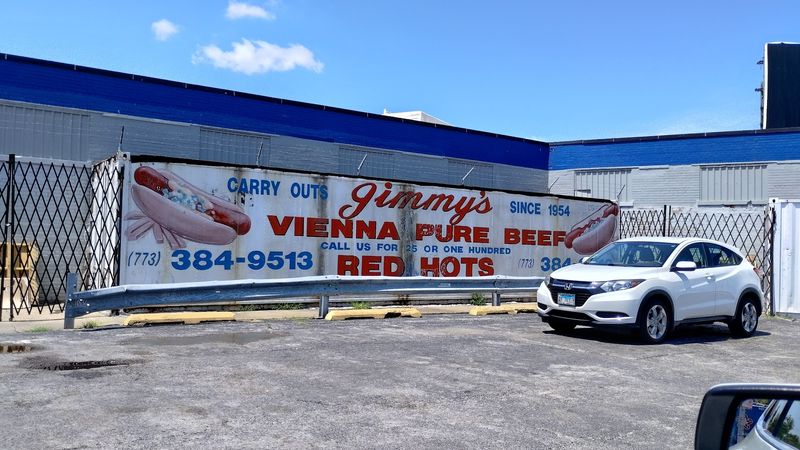
Few food spots in any city can claim the kind of multigenerational loyalty that Jimmy’s Red Hots has built since 1954. There are people who started coming here as children in the 1970s who still make the trip today, sometimes bringing their own kids or grandkids along for the first time.
That nostalgia is a real part of what keeps the line moving. The crinkle of a brown paper bag, the smell of fresh fries, the first bite of a frank with sport peppers that kick harder than you expected, these are sensory details that stick with people for decades.
The staff and ownership have stayed consistent enough over the years that regulars feel a genuine connection to the place. That kind of continuity is rare in the restaurant world, where turnover is constant and the character of a spot can change completely with new management.
Some visitors do note that the quality has shifted slightly from its peak years, which is a common feeling about any beloved place that has been around long enough. But the consensus is clear: Jimmy’s still delivers a solid, honest meal that earns its reputation every single day it opens its window.
What the Divided Reviews Actually Tell You
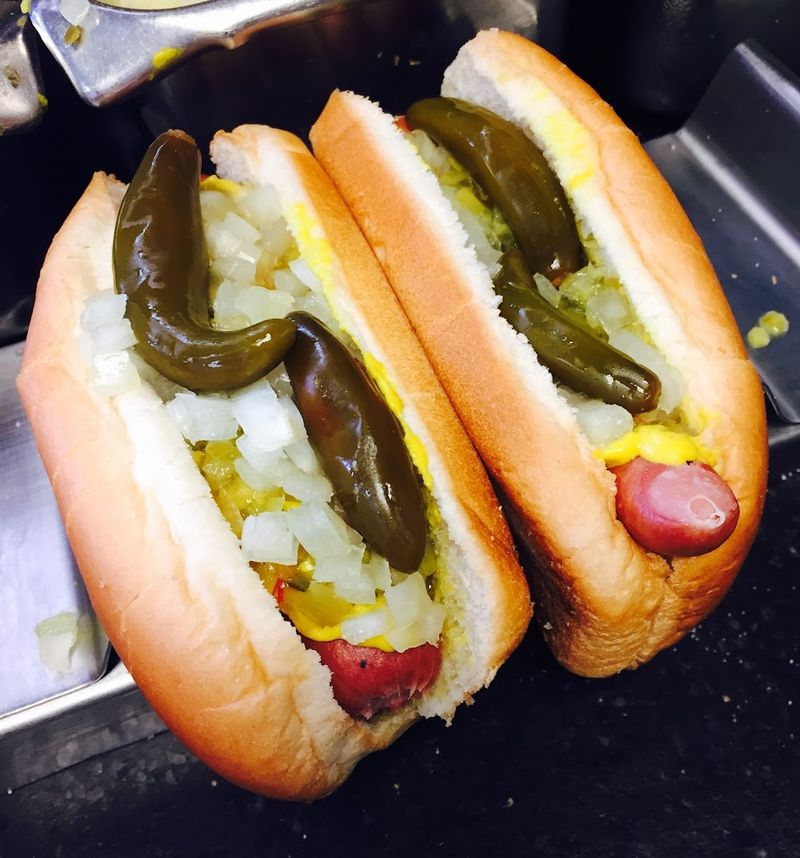
A 4.6-star rating across more than 5,500 reviews tells one story, but reading through the individual comments tells a richer one. The opinions on Jimmy’s Red Hots fall into two clear camps, and the divide is genuine rather than manufactured.
On one side are the devoted fans who consider this the best Chicago dog in the city, full stop. They talk about the snap of the casing, the freshness of the fries, the consistency of the preparation, and the feeling of eating something that connects them to a version of Chicago that is harder and harder to find.
On the other side are visitors who found the frank too thin, the tamales too small, or the service too brusque for their taste. These are not unreasonable complaints.
The hot dog is on the slender side, and the staff does not have time for long conversations when there is a line out the door.
What the reviews actually tell you is that Jimmy’s Red Hots is not trying to be everything to everyone. It is a specific kind of place with a specific point of view, and it has been that way for over seventy years.
That consistency, more than anything else, is what makes it worth visiting.
Why This Stand Still Matters in Modern Chicago
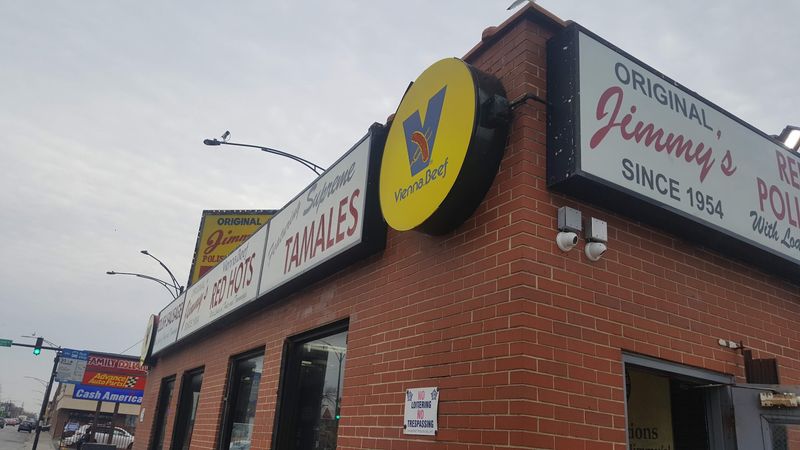
In a city that has seen food trends come and go at a dizzying pace, a hot dog stand that has been operating the same way since 1954 is a genuine rarity. Jimmy’s Red Hots is not just a place to eat; it is a living record of how Chicago fed itself before craft everything and artisan everything became the dominant language of food culture.
The stand represents a version of Chicago that values straightforwardness over spectacle. The menu is short, the prices are fair, the preparation is consistent, and the product speaks for itself without needing a backstory printed on a chalkboard.
For visitors to the city who want to understand Chicago beyond its famous skyline and deep-dish pizza, a stop at Jimmy’s offers something that a restaurant guide cannot fully capture. The experience of standing at a counter on the west side with a paper bag of fries and a perfectly built Chicago dog is as close to the city’s working-class soul as most people will ever get.
Whether you end up in the love-it camp or the hate-it camp after your visit, one thing is certain: Jimmy’s Red Hots is exactly what it has always been, and in a world that keeps changing, that is worth something real.
Share this story