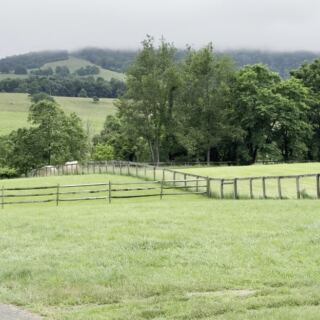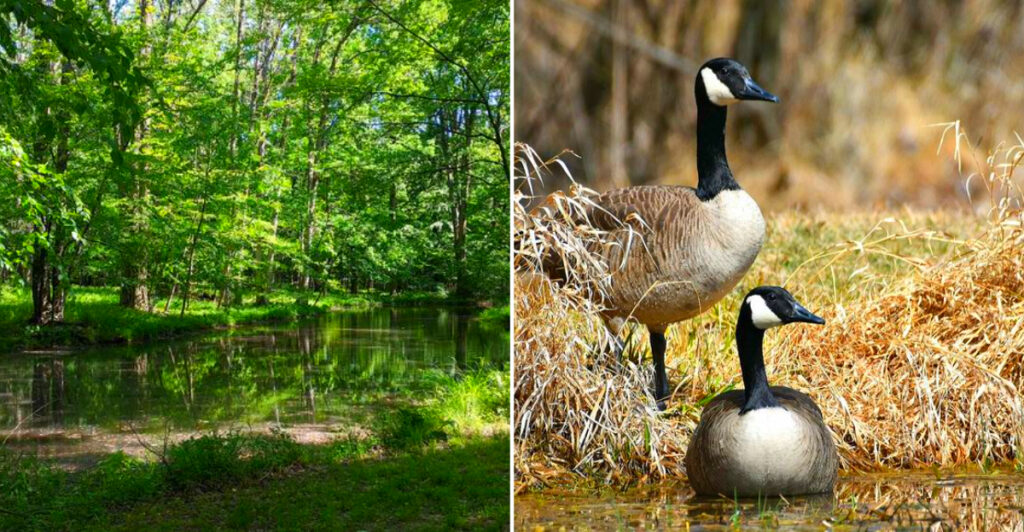
Hidden behind an unassuming entrance in eastern Pennsylvania is a 63-acre arboretum with miles of walking trails, ponds, native trees, and one of the region’s most peaceful outdoor escapes. Created over more than four decades, it serves as both a public nature preserve and an outdoor classroom dedicated to conservation and education.
What makes this place especially remarkable is the story behind it. Two lifelong gardeners transformed the property into a living collection of trees and plants before donating it so future generations could enjoy it. Keep reading to discover what makes this little-known arboretum one of Pennsylvania’s most rewarding hidden destinations.
Where the Forest Begins: Address, Location, and Getting There
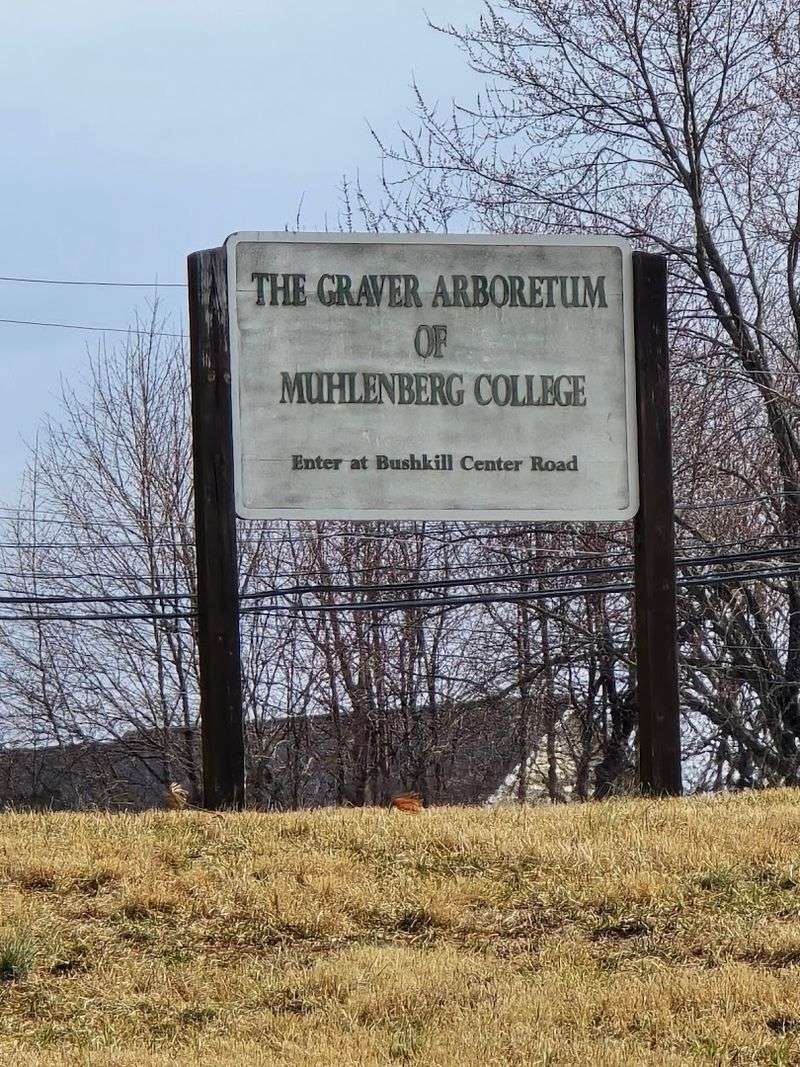
The entrance to the Graver Arboretum of Muhlenberg College sits at 1581 Bushkill Center Rd, Bath, PA 18014, tucked along a rural stretch of road in Northampton County, Pennsylvania.
The sign is modest and easy to miss, which is part of what makes arriving here feel like a small discovery. Most visitors describe the first glance at the entrance as looking more like a private driveway than a public arboretum, so slow down and keep your eyes open.
Bath is a borough in the Lehigh Valley region, and the arboretum sits in a peaceful, semi-rural pocket of the area that feels far removed from the busier roads nearby. You can reach it easily by car, and the parking area is free, well-maintained, and typically uncrowded. Trail maps are available right at the entrance, making it simple to plan your walk before you even take your first step into the trees.
Sixty-Three Acres of Solitude: What the Property Actually Feels Like
Sixty-three acres sounds like a lot on paper, but walking through the Graver Arboretum, it feels even larger than the numbers suggest.
The tree canopy is dense enough in many areas to block out most of the sky, creating that particular kind of quiet that only exists deep inside a mature forest. The air smells different here, cooler and earthier, and the sounds from any nearby road fade quickly once you move past the first bend in the trail.
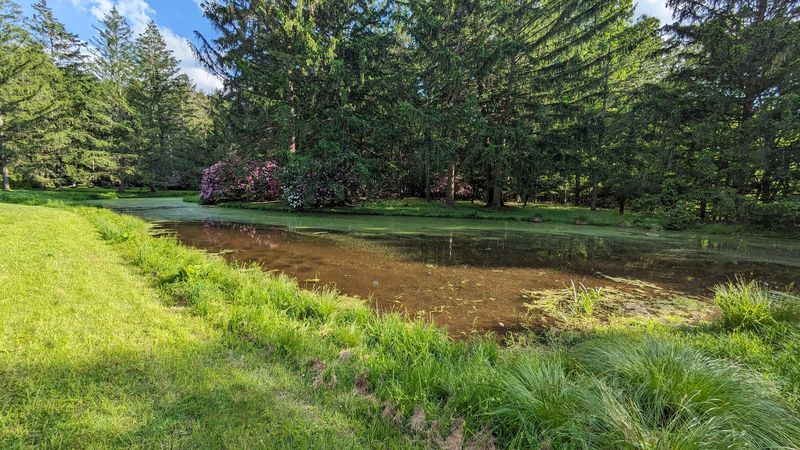
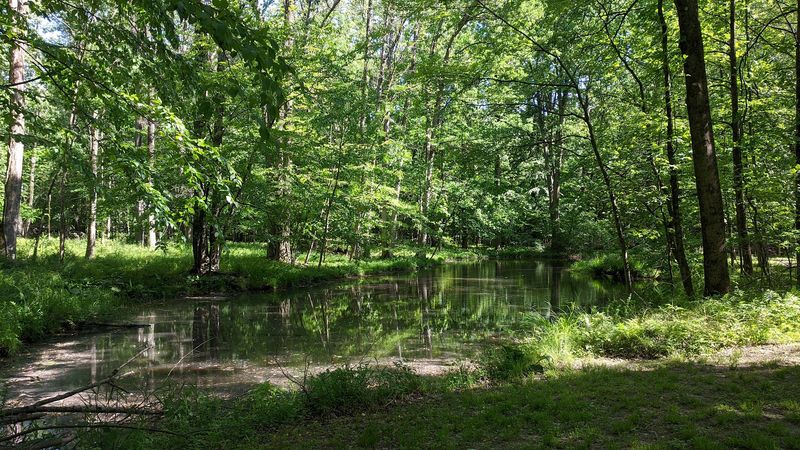
Five ponds are scattered throughout the property, each one adding a reflective stillness to the landscape that makes the whole place feel almost dreamlike on a calm morning. Benches and picnic tables appear at thoughtful intervals along the paths, including some sheltered under an awning, so you can sit and actually absorb the surroundings without rushing.
The arboretum rarely feels crowded, and on most visits you can walk for a full hour without passing another soul, which is increasingly rare and genuinely refreshing.
The Three Trails and How to Choose the Right One for Your Visit
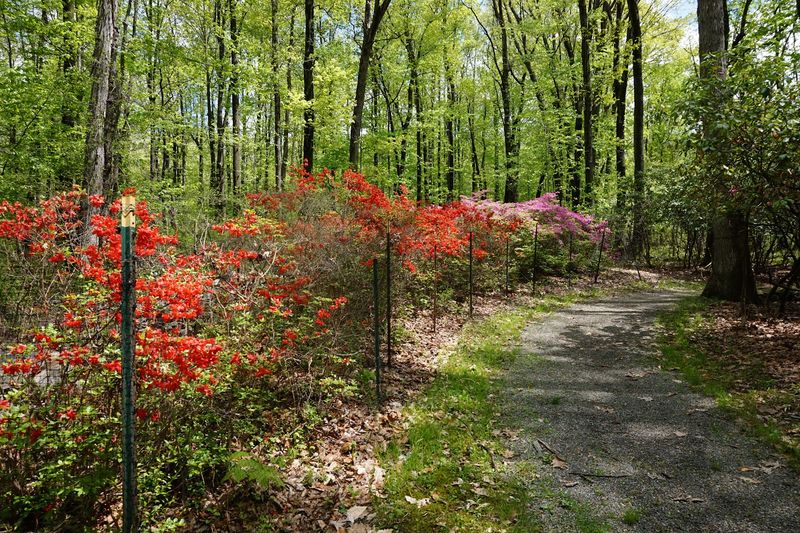
Three marked trails run through the arboretum: the white, the green, and the blue, each offering a slightly different experience depending on how long you want to walk and what kind of terrain you prefer.
The white trail is the shortest and easiest, making it a solid choice for visitors who want a quick, gentle introduction to the property. The green trail is the most popular and is marked with color-coded arrows that are easy to follow, though it does include some muddy spots and rocky sections depending on recent rainfall.
The blue trail runs flatter but is less clearly marked, so it rewards walkers who are comfortable with a bit of informal navigation. One of the nicest quirks of the trail system is that the paths intersect in ways that let you naturally extend or shorten your walk without backtracking.
Trail maps are available at the entrance, and the well-maintained paths make it easy to adjust your route on the fly if your legs or your schedule demand it.
More Than 150 Conifer Species: A Tree Lover’s Unexpected Paradise
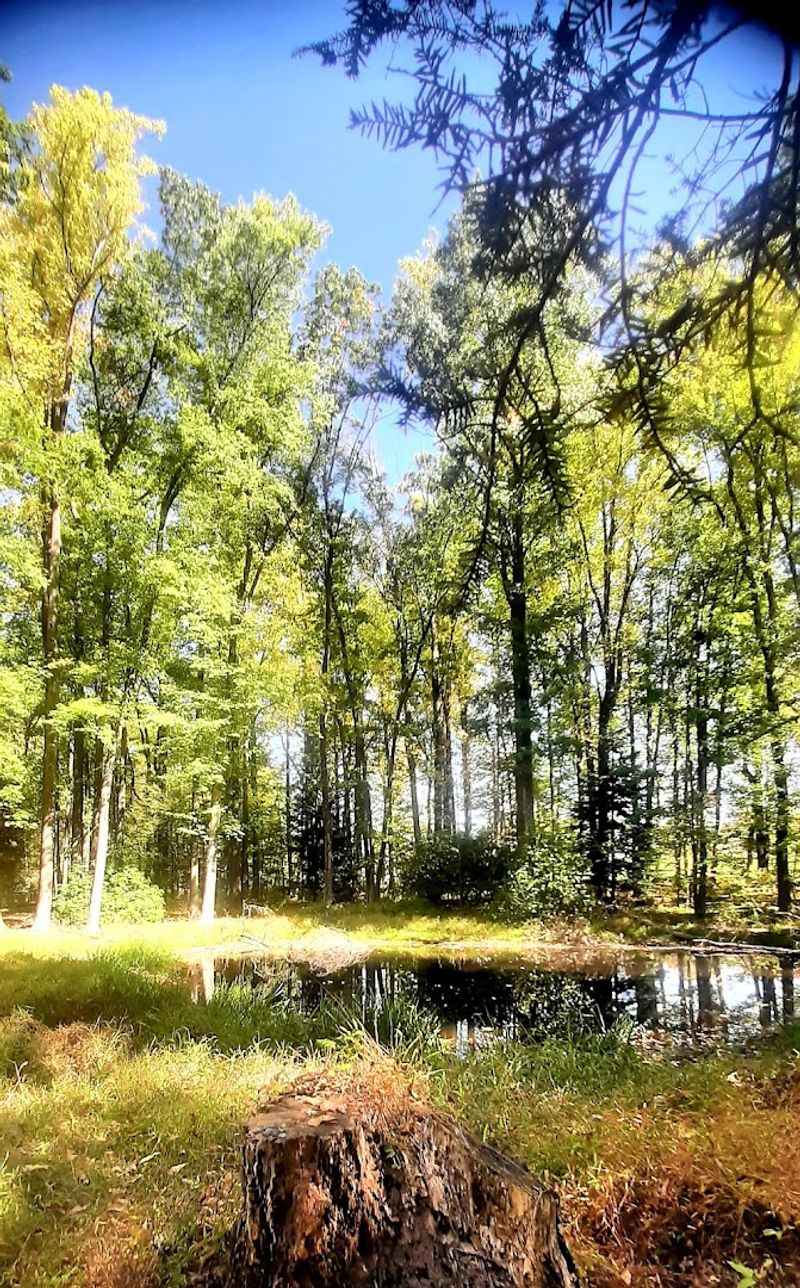
Most people do not associate Pennsylvania with world-class conifer collections, but the Graver Arboretum holds over 150 species that would impress even a serious botanist.
The collection includes genera such as Abies, Cedrus, Chamaecyparis, Juniperus, Metasequoia, Picea, Pinus, Taxodium, Thuja, and Tsuga, which is a range that covers everything from classic North American natives to rarer species that feel almost out of place in a mid-Atlantic setting. Walking among them, you start to notice how differently each species holds light, how the needles vary in texture, and how the bark tells its own quiet story.
The Metasequoia, or dawn redwood, is a particular standout: a tree once thought to be extinct and only known from fossils before living specimens were discovered in China in the 1940s. Spotting one here, thriving in a Pennsylvania forest, is the kind of small surprise that makes a walk feel genuinely memorable.
Rhododendron Season: When the Arboretum Truly Steals the Show
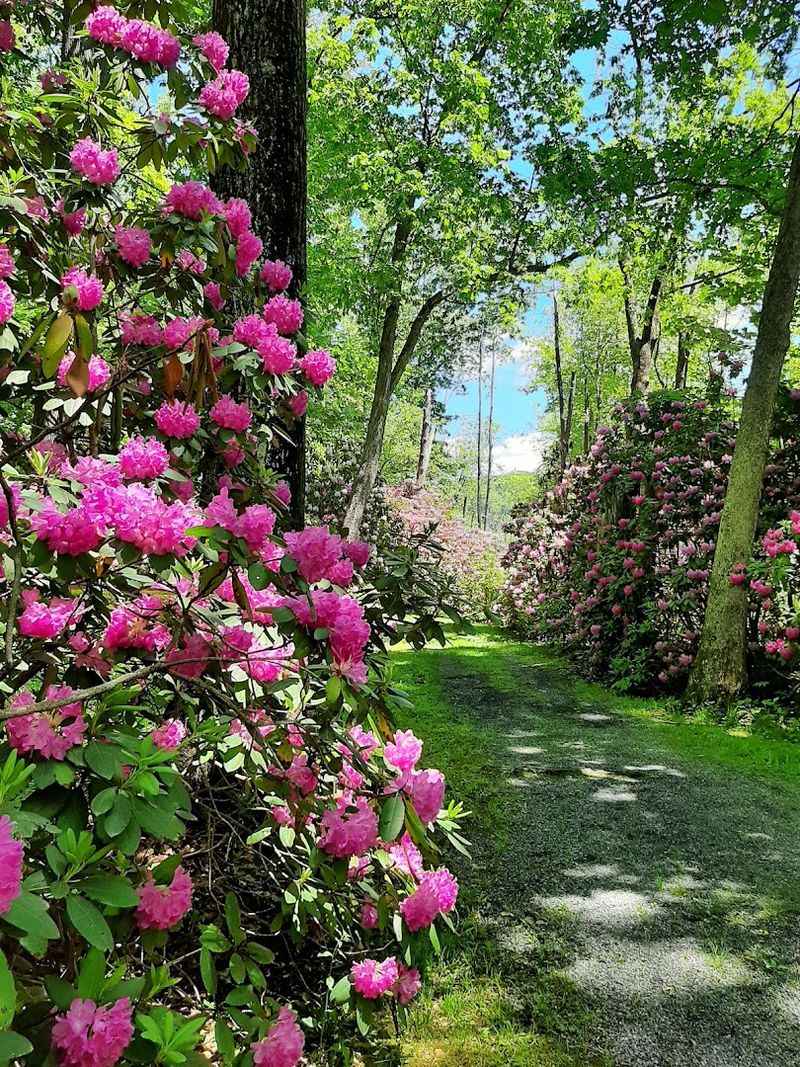
Ask anyone who has visited the Graver Arboretum in late spring, and the first word out of their mouth will almost certainly be rhododendrons.
Rhododendrons grow throughout the property in generous clusters, and when they bloom, typically in late May to early June, the transformation is dramatic. Trails that look pleasant but ordinary in March become corridors of deep pink, lavender, and white blossoms that arch overhead and spill down the hillsides toward the ponds.
Early June is widely considered the peak window for rhododendron viewing, and the combination of blooming shrubs, reflective pond surfaces, and filtered forest light makes the arboretum one of the most photogenic spots in the Lehigh Valley during that brief period. Photographers, families, and casual walkers all tend to converge during peak bloom, though the crowds never reach the levels you would find at a more publicized destination.
If you can only visit once a year, timing that visit to rhododendron season is genuinely worth planning around, and the colors do not disappoint.
Five Ponds and the Wildlife That Calls Them Home

Water changes everything in a landscape, and the five ponds distributed across the Graver Arboretum are central to both its beauty and its ecological function.
Muhlenberg College students use these ponds for research on aquatic ecosystems and amphibian reproduction, which means the water here is not just decorative but actively studied and monitored. Frogs, turtles, and various aquatic insects are regular residents, and patient visitors who pause at a pond’s edge are often rewarded with small, unhurried wildlife encounters that feel entirely unscripted.
One pond sits near the caretaker’s cottage and is particularly striking in autumn, when the surrounding trees drop color onto the water’s surface and the whole scene takes on the quality of a painting. The wetland plant collections surrounding several of the ponds include both obligate and facultative wetland species, adding another layer of botanical interest for anyone curious enough to crouch down and look closely at what grows at the water’s edge.
An Outdoor Classroom Unlike Any Other: The Academic Connection
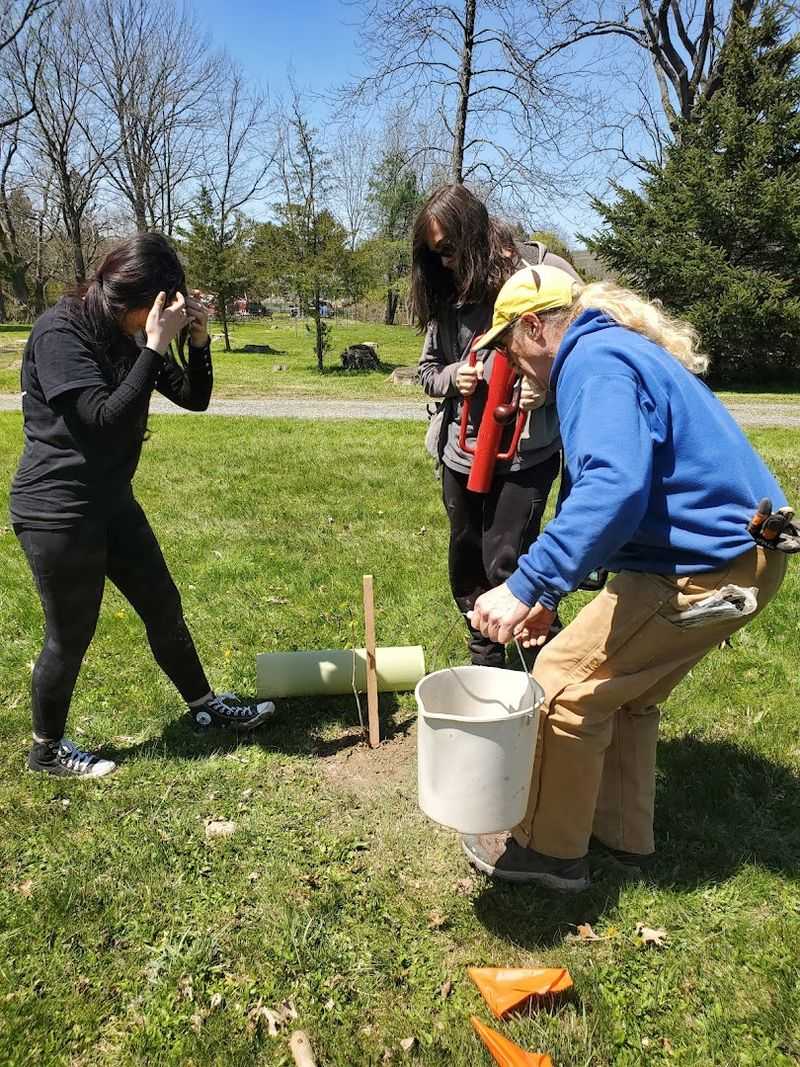
The Graver Arboretum is not just a pretty place to walk. It functions as a genuine outdoor laboratory for Muhlenberg College’s biology and environmental studies programs.
Students come here to study plant and insect interactions, observe aquatic ecosystems firsthand, and conduct research on amphibian reproduction in the ponds. That academic purpose gives the arboretum a depth that purely recreational parks sometimes lack, because every plant label, every pond, and every maintained trail represents an intentional decision rooted in both education and conservation.
The endowment fund established by the Gravers in 1995 helps ensure that this educational mission continues without interruption, funding maintenance and programming that keeps the arboretum accessible and functional as a research site. For visitors who are not students, that academic backdrop adds an interesting layer to the experience. You are not just walking through a nice forest; you are walking through a place that is actively teaching people how the natural world works, one semester at a time.
Wildflowers, Ferns, and the Understory Worth Slowing Down For
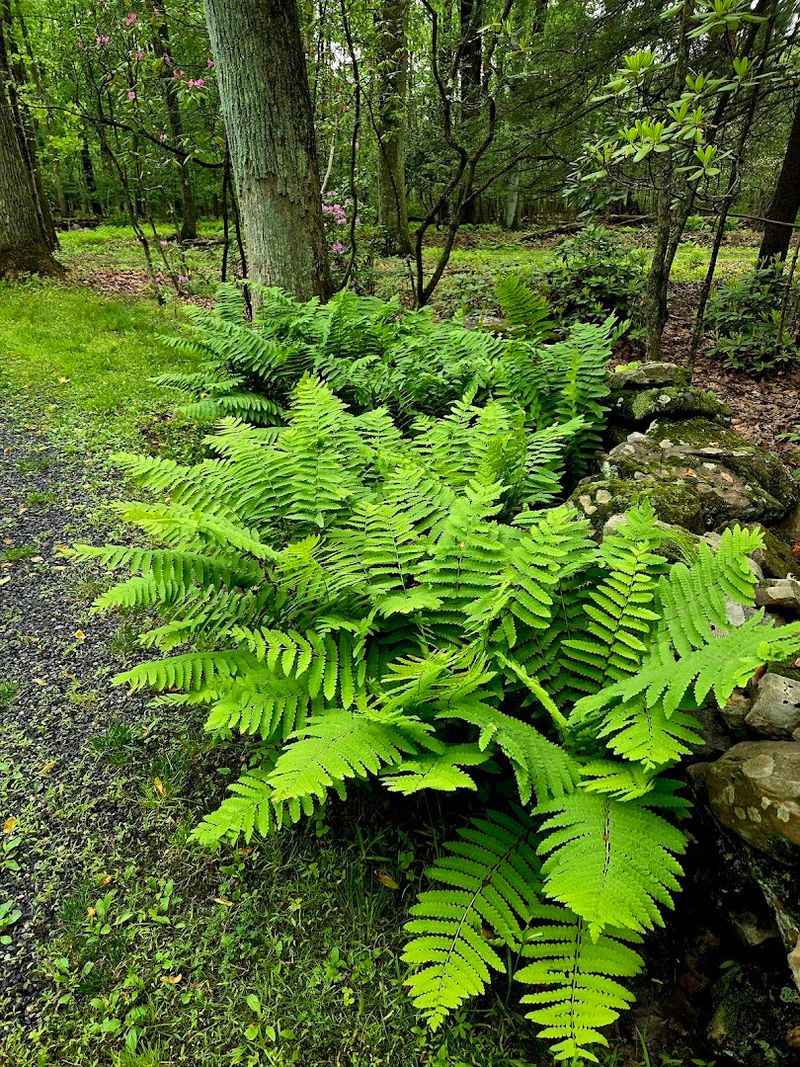
The conifers and rhododendrons get most of the attention, but the real charm of the Graver Arboretum often lives closer to the ground.
Native wildflowers bloom in waves throughout the spring and early summer, appearing along trail edges and in the clearings between larger tree stands. Ferns are everywhere, carpeting the shadier sections of the forest floor in a way that gives the understory a lush, layered texture that photographs beautifully and feels even better in person.
The variety of fern species alone is worth pausing for, especially if you take the time to notice the differences in frond shape and color between species growing just a few feet apart. Spring is the obvious highlight for wildflower seekers, but the fern coverage remains impressive well into late summer, and the combination of green ground cover and filtered canopy light makes even a mid-July walk feel cool and visually interesting.
The arboretum rewards slow walkers who look at what is happening below knee height, not just above the treeline.
Fall Colors and the Arboretum’s Quieter Second Season
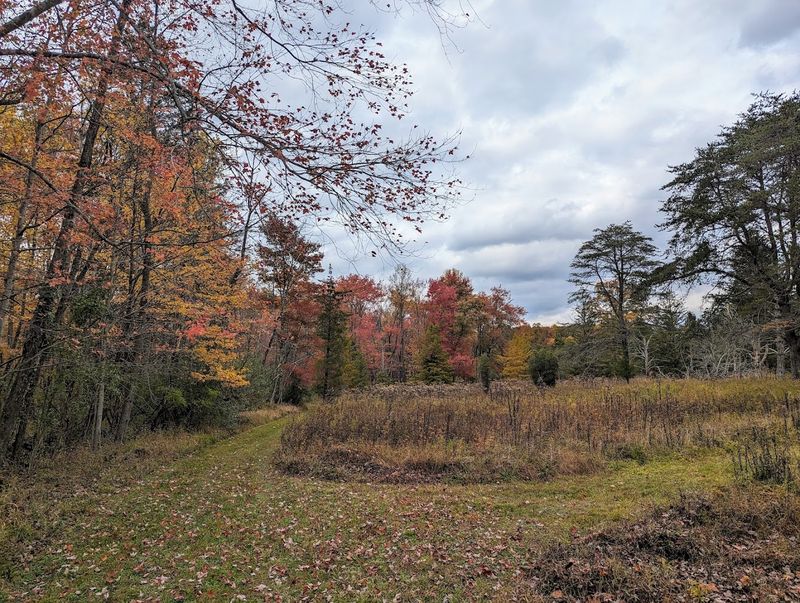
Spring gets the glory, but autumn at the Graver Arboretum is a season that deserves far more credit than it typically receives.
The mix of deciduous and evergreen trees creates a layered color display in October and November that is genuinely striking. While the conifers hold their green, the surrounding hardwoods shift through yellow, orange, and deep red, creating contrast that makes the whole landscape feel more vivid than a single-species forest ever could.
The pond near the caretaker’s cottage becomes a favorite spot for photographers during fall, with the reflected colors doubling the visual impact of every tree along the bank. Trails that feel shaded and cool in summer open up slightly as leaves drop, offering new sightlines into parts of the forest that were hidden just weeks earlier.
Visitor numbers tend to thin out in November, which means the arboretum returns to its quietest, most contemplative state just as the landscape reaches one of its most dramatic seasonal moments, a combination well worth experiencing firsthand.
Practical Tips for Your First Visit: What to Know Before You Go
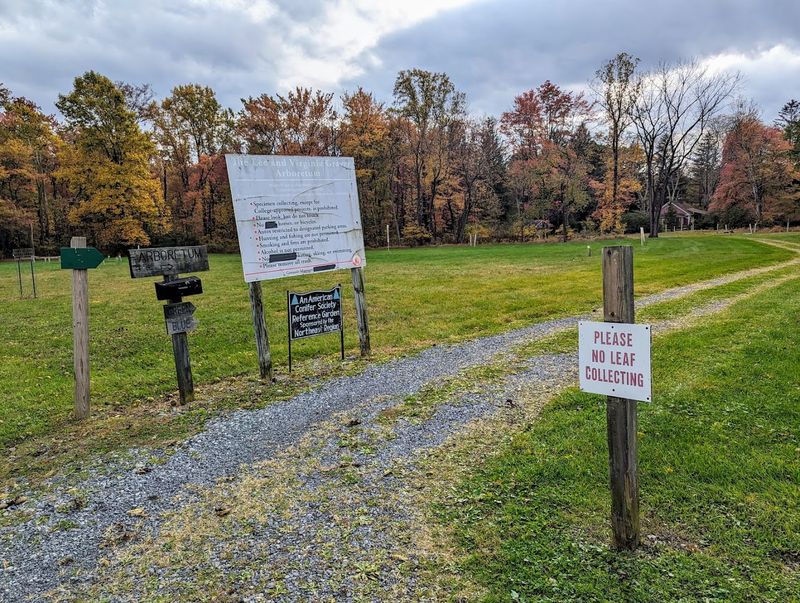
A few practical details can make your visit to the Graver Arboretum significantly more enjoyable, starting with footwear.
The trails transition between gravel, packed dirt, and larger stones, so sturdy shoes or light hiking boots are a genuinely better choice than sneakers, especially after rain when some sections of the green trail get muddy. The arboretum is open Monday through Saturday from 7 AM to 8 PM and on Sundays from 8 AM to 6 PM, giving you plenty of daylight options across most seasons.
There is no entrance fee, which makes it one of the most accessible outdoor destinations in the Lehigh Valley. Dogs are welcome on leash, though bikes are not permitted on the trails. Trail maps are available at the entrance kiosk, and the paths are well-maintained enough that getting seriously lost is unlikely, though the intersecting routes can send you on a longer loop than planned if you are not paying attention.
You can reach the arboretum by phone at 1-610-342-6783 for any specific questions before your visit.
A Living Legacy Worth Returning To: Why This Place Stays With You
Some places are pleasant to visit once and easy to forget. The Graver Arboretum is not one of them.
There is something about the combination of its history, its botanical depth, and its genuine quietness that tends to leave a lasting impression. The fact that it exists at all, because two people spent four decades building it and then gave it away, adds a layer of meaning that you carry with you long after the walk is over.
The arboretum is recognized as a natural resource by the Lehigh Valley Planning Commission and is included in several municipal open space preservation plans, which means its future is protected in ways that go beyond a single institution’s goodwill. Returning in a different season reveals a completely different arboretum, one that rewards repeat visits with new blooms, new colors, and new surprises hiding in familiar corners of the trail.
Whether you come for the conifers, the rhododendrons, the ponds, or simply the silence, the Graver Arboretum has a quiet way of making you feel glad you came, and even gladder when you come back.
Share this story