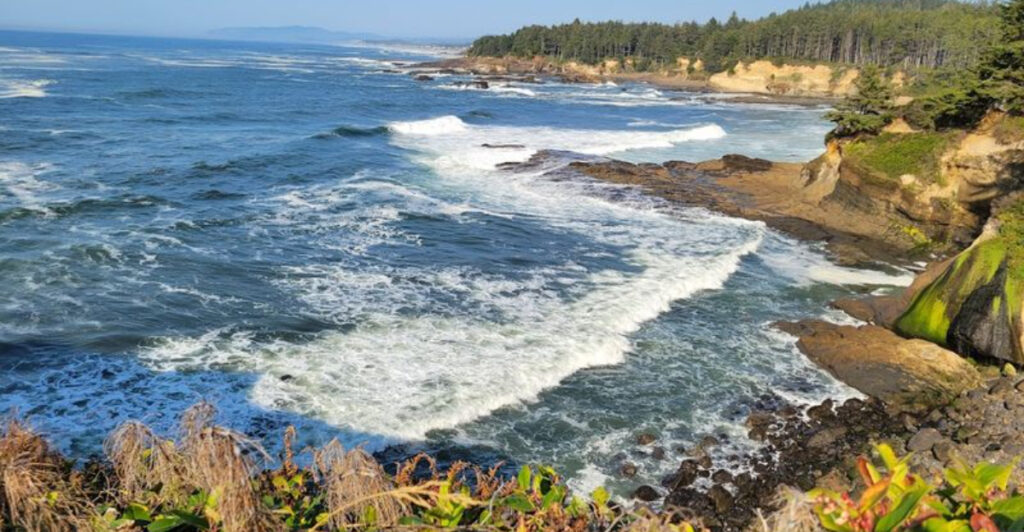
There is a stretch of the Oregon Coast where the Pacific does not play nice, and the evidence has been sitting in the sand for over a century. A rugged 1.7-mile trail winds down to a bay where the remains of a 1913 steam schooner still poke out from the shoreline, half swallowed by time and tide.
The spot is called Boiler Bay State Scenic Viewpoint, and it earns every word of that name. Gray whales breach offshore, waves thunder against black basalt cliffs, and the salty wind makes it clear that nature is firmly in charge here.
Whether you come for the history, the whale watching, or just to feel genuinely small next to the ocean, this place delivers every single time.
Where Exactly You Are Going
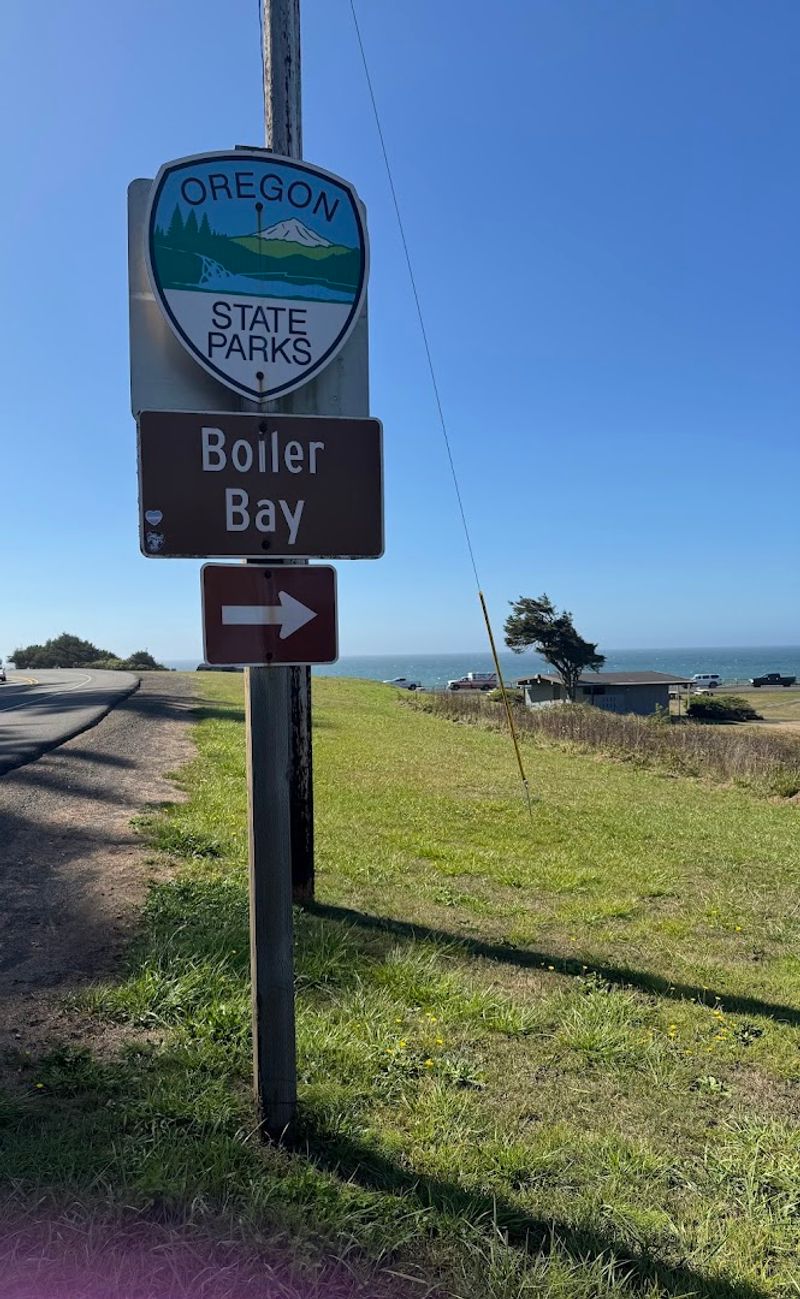
The full address for this stop is Boiler Bay State Wayside, Depoe Bay, OR 97341, right along US-101 on the central Oregon Coast. The viewpoint sits just north of the tiny town of Depoe Bay, which is already famous for having the world’s smallest navigable harbor.
Boiler Bay adds a whole different layer of drama to that stretch of highway.
The parking lot is large, well-maintained, and free to use, which is a genuine relief on a coastline where parking can feel like a competitive sport. Restrooms and picnic tables are available on-site, making this more than just a quick pull-off.
The park is open daily from 7 AM to 9:30 PM, giving you plenty of daylight hours and even some golden-hour evening time to work with.
The Oregon State Parks system manages this location, and you can reach them at 1-800-551-6949 for up-to-date conditions. The site consistently earns a 4.8-star rating from over 2,100 visitors, which is not an accident.
Few roadside stops on the West Coast pack this much scenery and history into one pull-off.
The Story Behind the Name
Back in May 1910, a steam schooner called the J. Marhoffer was making its way along the Oregon Coast when a boiler explosion rocked the vessel and sent it drifting helplessly toward shore.
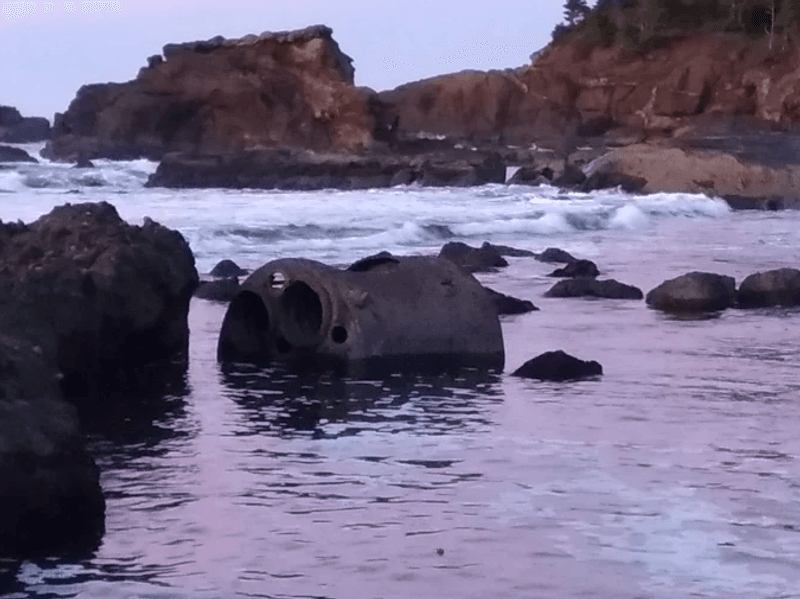
The ship grounded in the bay, and while the crew survived, the boiler did not go anywhere. It stayed put, half buried in the sand, and the bay quietly took on the name of its most famous resident.
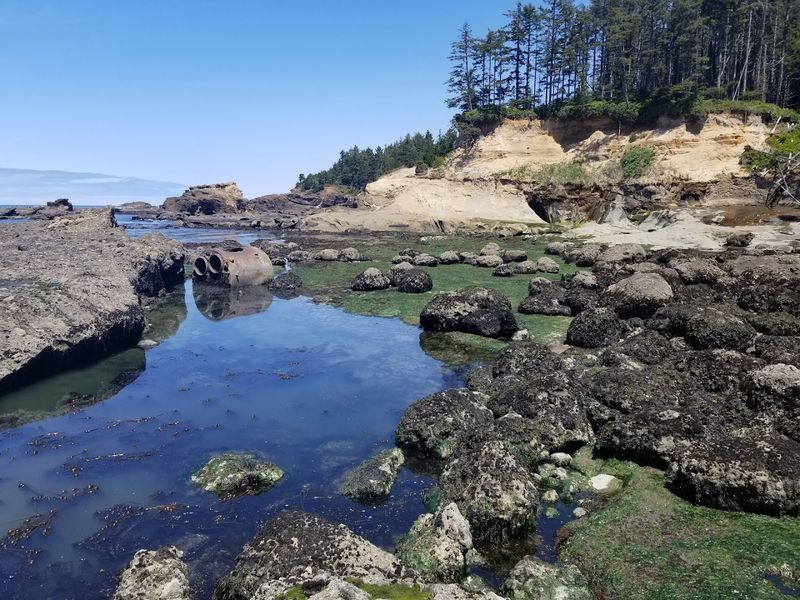
That boiler is still there today. At low tide, you can actually see it from the viewpoint or, if you are feeling adventurous, make your way down the trail to get a closer look.
It has been sitting in that bay for well over a hundred years, slowly becoming part of the landscape rather than a relic sitting apart from it.
There is something quietly remarkable about a place that names itself after a wreck and then wears that history with zero apology. The boiler has outlasted the ship, the era, and probably a few guidebooks too.
Knowing what caused the name makes every glance down at that rocky shoreline feel a little more charged with meaning.
The Trail Down to the Wreck
The trail to the actual boiler is not a Sunday stroll, and that is part of its appeal. The path winds down through trees, drops steeply in places, and has sections where ropes have been tied to help hikers navigate the more challenging bits.
After any rainfall, it gets muddy in a serious way, so boots with grip are not just a suggestion.
The round trip clocks in at roughly 1.7 miles, which sounds modest until the terrain reminds you that distance and difficulty are two very different measurements. The descent is manageable for most reasonably active adults, but the climb back up earns its reputation.
Take your time, watch your footing, and do not let the goal of reaching the boiler turn the hike into a hurried scramble.
At the bottom, the reward is real. The bay opens up, the boiler sits in the sand like a stubborn artifact from another century, and the sound of the ocean fills everything around you.
Hikers who take it slow and stay aware of their surroundings consistently call it one of the more memorable short trails on the entire Oregon Coast.
What the Viewpoint Looks Like From Above
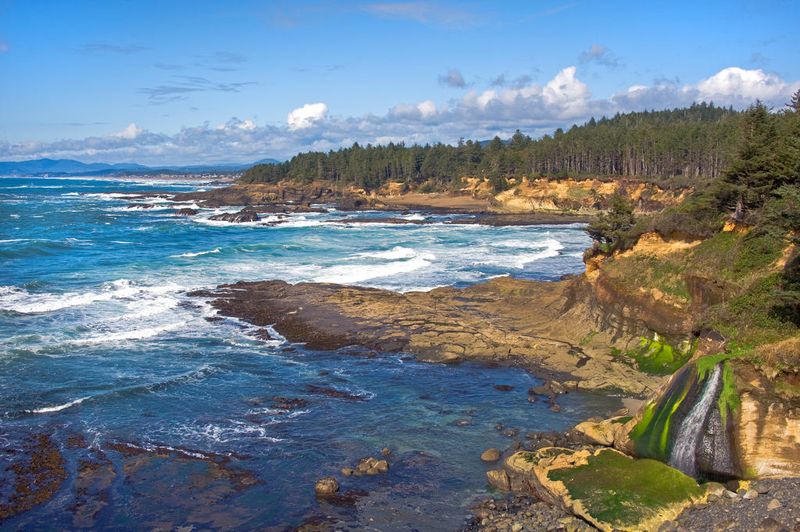
Before you ever set foot on the trail, the viewpoint itself is worth serious time. The platform overlooks a wide arc of rugged coastline where basalt cliffs drop sharply into the churning Pacific.
On a clear day, the visual range stretches far enough that the horizon feels like a hard line drawn with a ruler.
The waves here do not politely lap at the shore. They build offshore, gather speed, and then slam into the rocks with a force that sends spray shooting upward in white curtains.
The sound that comes with it has been compared to a low-frequency rumble, almost like distant thunder that never fully fades. Standing at the railing and watching a particularly large set roll in is the kind of experience that recalibrates your sense of scale.
The fencing and guardrails at the viewpoint are there for good reason. The edges are not forgiving, and sneaker waves on the Oregon Coast are a real hazard that locals take seriously.
Stay behind the barriers, get your photos from the designated areas, and let the ocean do its thing from a safe and still deeply impressive distance.
Gray Whale Sightings and Wildlife
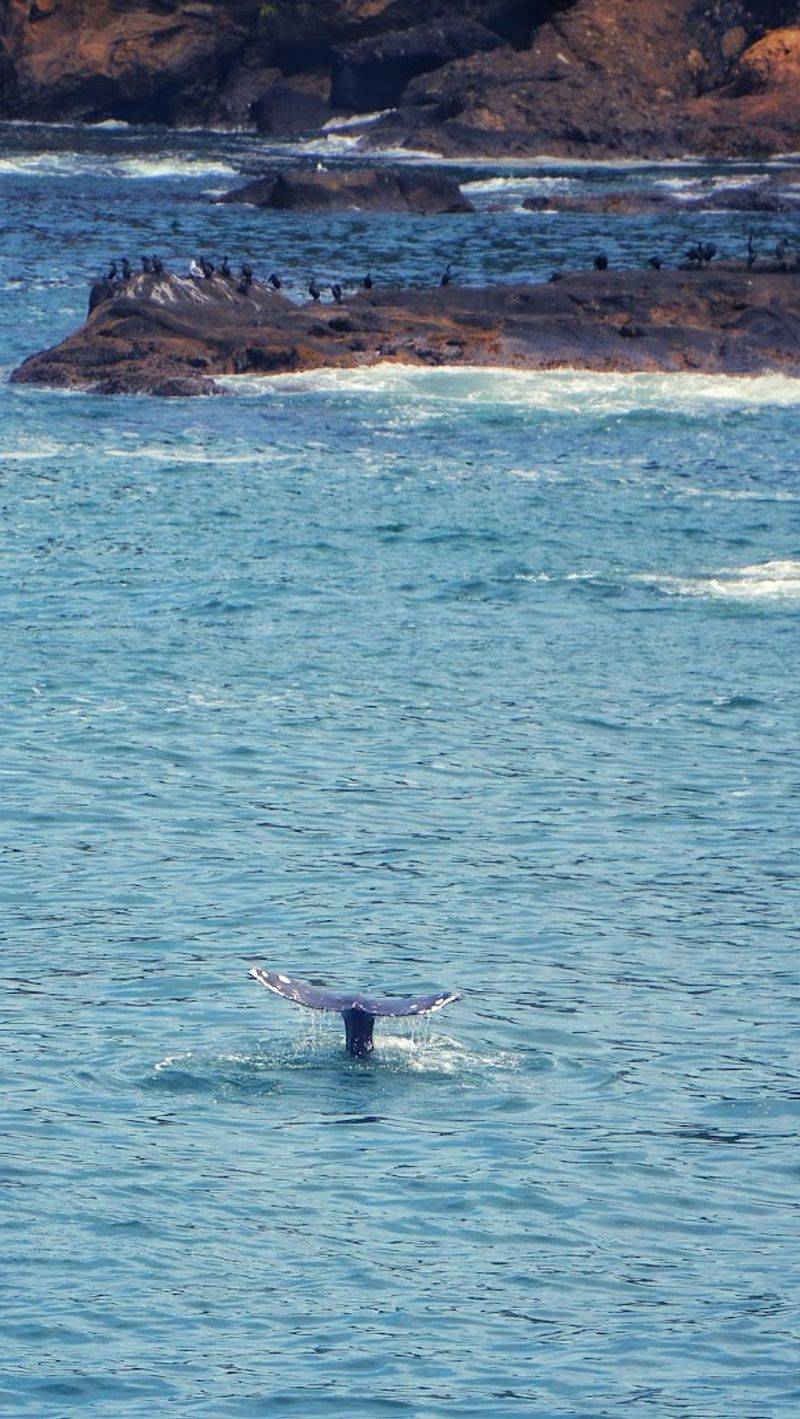
One of the most talked-about features of this stop is the whale watching, and the bay genuinely delivers. Gray whales migrate along the Oregon Coast twice a year, heading south from roughly December through January and returning north from March through May.
Boiler Bay sits right along that migration corridor, and the elevated viewpoint gives you an unobstructed angle over the water.
Spotting a whale here is not guaranteed, but the odds are better than most places along US-101. The key is patience and a slow scan of the surface rather than staring at one fixed point.
Look for the spout first, a small puff of mist above the waterline, and then track the movement from there. Binoculars make a real difference if you have them.
Beyond whales, the bay attracts a solid variety of seabirds, including cormorants, pigeon guillemots, and various gulls that treat the rock formations like a busy apartment complex. Some visitors have reported seeing harbor seals hauled out on the lower rocks during calmer tide conditions.
The wildlife here is not a side note; for many people, it becomes the whole reason they stop in the first place.
King Tides and Storm Watching Season
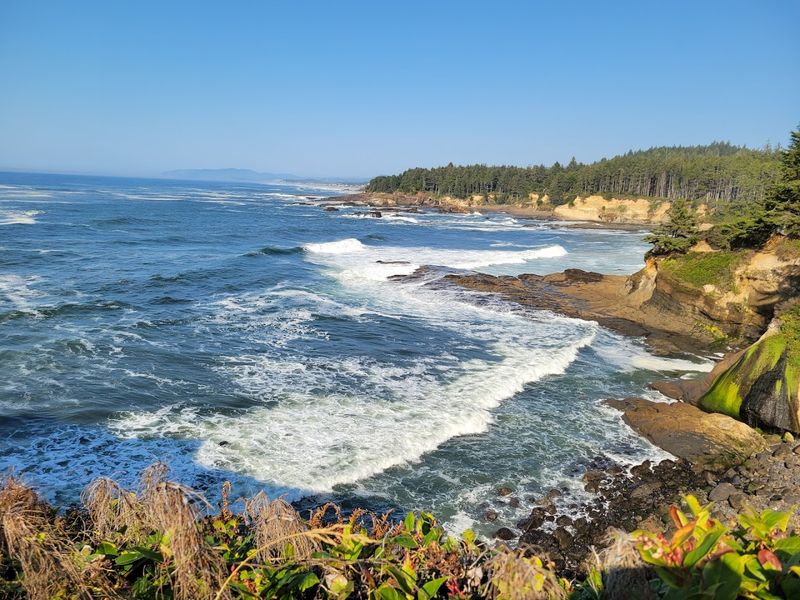
Come winter, Boiler Bay transforms into something close to a natural spectacle that most landlocked Americans never get to experience. King tides, which occur when the sun and moon align to pull the ocean to its highest levels, push enormous waves against the cliffs in a way that makes even seasoned coastal visitors stop and stare.
The combination of high tides and winter storm swells creates wave events that are genuinely jaw-dropping.
The Oregon Coast is one of the best places in the country for storm watching, and Boiler Bay is one of the better vantage points along that coast. The elevated position of the viewpoint keeps you safely above the action while still putting you close enough to feel the vibration of impact through the ground.
Even on days with double red flag wind warnings, visitors who bundle up and brave the elements come away talking about it for weeks.
That said, safety is not negotiable here. The Oregon State Parks service posts warnings when conditions become dangerous, and those warnings exist for very practical reasons.
The rocks below the viewpoint are not accessible during high-energy swells, and the ocean at Boiler Bay does not give second chances to those who underestimate it.
Best Times to Visit and Practical Tips
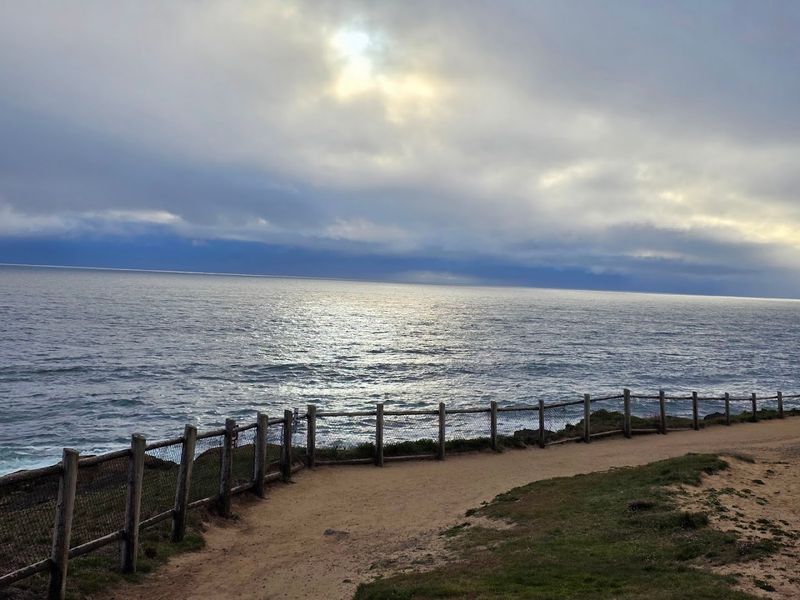
The park is open every day of the week from 7 AM to 9:30 PM, which means early risers can catch the bay in the soft morning light before the parking lot fills up. Summer weekends draw the biggest crowds, and the lot, while spacious, does fill up during peak hours.
Arriving before 10 AM or after 4 PM on busy days gives you a noticeably calmer experience.
Weather on the Oregon Coast is famously unpredictable, and Boiler Bay is no exception. Even in summer, the wind off the water can drop the felt temperature by ten degrees or more, so bringing a layer is always smart.
Rain gear is worth having in the car year-round, not just in winter. A clear day is beautiful here, but an overcast, moody day has its own visual appeal that photographers particularly love.
If you plan to hike down to the boiler, check the tide tables before you go. Low tide gives you the best view of the wreck and makes the lower portions of the trail safer and more accessible.
The National Oceanic and Atmospheric Administration posts free tide charts online, and a quick check before you leave can make the whole trip more rewarding.
Photography at Boiler Bay
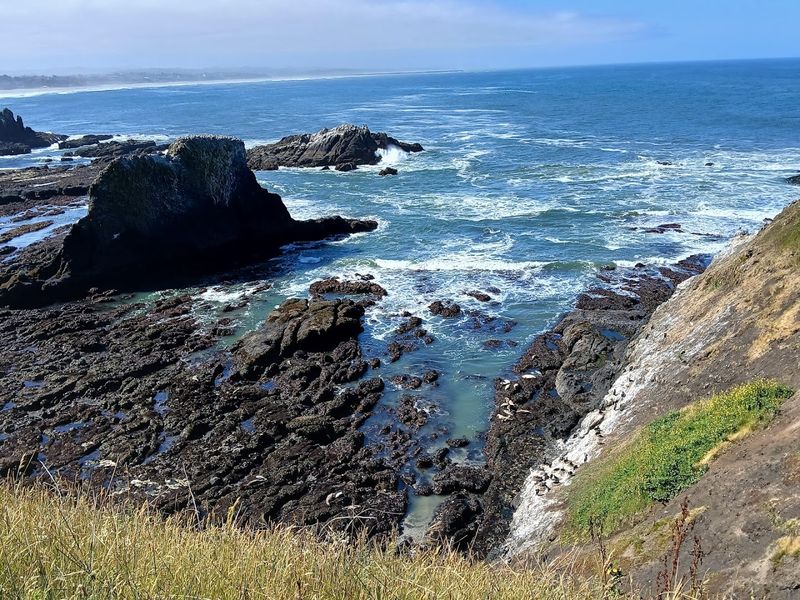
Few roadside stops on the West Coast give photographers this much material in one frame. The basalt cliffs, the churning surf, the occasional whale spout, and the rust-colored boiler visible at low tide all compete for attention in a way that makes choosing a single composition genuinely difficult.
Sunrise and sunset both produce outstanding light here, with the western exposure making evenings particularly rich.
The viewpoint railing gives a stable place to brace for longer exposures, which helps when shooting the silky wave blur effect that coastal photographers love. A polarizing filter cuts the glare off the water and brings out the deep greens and blues in the ocean color.
Wide-angle lenses capture the full sweep of the bay, while a longer lens lets you pull in distant wave action or isolate a whale spout against the horizon.
Storm days produce some of the most dramatic images, with the spray backlit against dark clouds creating a kind of natural contrast that is hard to replicate in post-processing. Visiting during king tide events specifically for photography has become a popular local tradition.
The combination of consistent natural drama and easy access from the parking lot makes Boiler Bay one of the most photogenic stops on the entire Oregon Coast Highway.
Family-Friendly Features and Accessibility
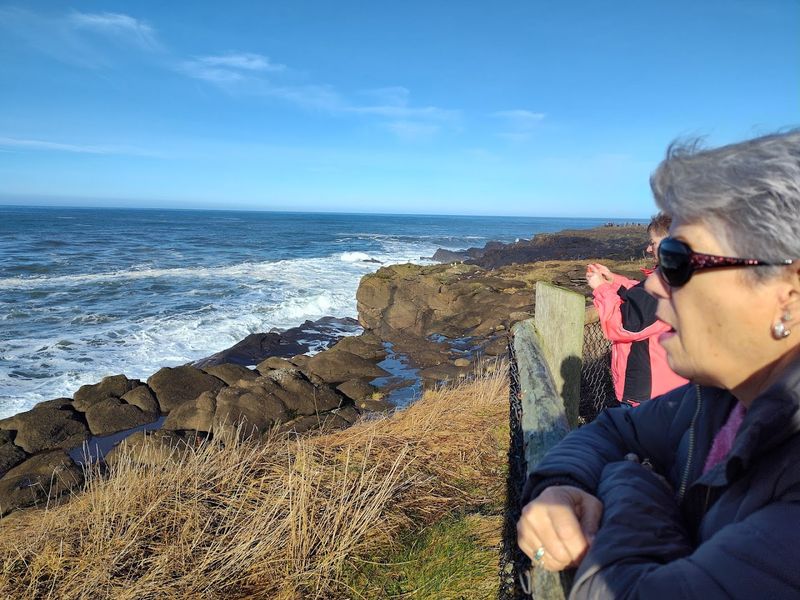
Not every dramatic coastal viewpoint is easy to navigate with kids or older family members in tow, but Boiler Bay has thought that part through reasonably well. The main viewpoint area is paved, flat, and accessible from the parking lot without any significant elevation change.
Guardrails line the edges, giving parents a clear physical boundary to point children toward and away from.
Picnic tables are scattered around the viewpoint area, making it genuinely practical to pack a lunch and spend an hour or two rather than just five minutes. Sitting at a table with the sound of the ocean as background noise and the occasional dramatic wave spray in the distance is the kind of simple pleasure that tends to stick in a kid’s memory.
Clean, maintained restrooms are on-site, which parents of young children will appreciate more than any scenic view.
The trail down to the boiler is not suitable for strollers or young children without close adult supervision, and that is an honest assessment rather than a discouragement. The viewpoint itself, though, is genuinely welcoming to all ages and mobility levels.
Dogs are welcome in most areas of the park as well, which makes this a natural stop for road-tripping families traveling with pets.
Why This Stop Deserves More Than Five Minutes
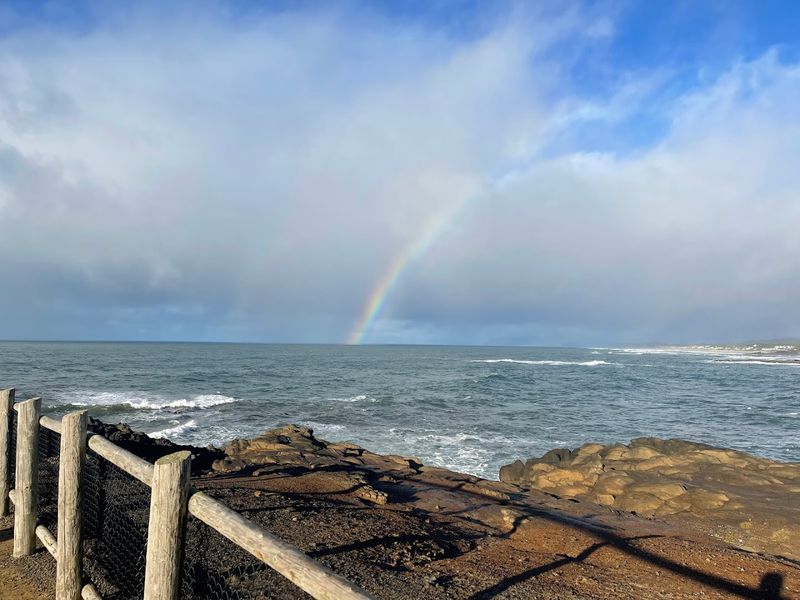
A lot of people pull into Boiler Bay, snap a photo from the car window, and pull back out onto US-101 within minutes. That is a reasonable choice if you are behind schedule, but it means missing most of what makes this place worth stopping for in the first place.
The full experience here rewards time spent, not time rationed.
Give yourself at least thirty minutes at the viewpoint, longer if the tide is low and the trail is calling. Watch a full set of waves cycle through the bay.
Let your eyes adjust to scanning the water for whale activity. Notice the birds working the updrafts off the cliffs.
The longer you stay, the more the place reveals itself, and that is true in almost every season and weather condition.
Boiler Bay sits on a coastline that has been drawing people for generations, and the fact that a wrecked boiler from 1910 still anchors the whole story makes it feel like a place with genuine character rather than just a pretty backdrop. The ocean here is loud, cold, and completely indifferent to schedules, which is exactly why spending time with it feels so good.
Some places earn their reputation honestly, and this is one of them.
Share this story