New Mexico is full of geological surprises, but few are as dramatic as finding a cave locked in a permanent deep freeze sitting right next to a volcano. Out in the high desert near Grants, a privately owned stretch of ancient lava fields holds two natural wonders that seem to contradict each other completely.
One trail leads to the rim of a cinder cone volcano, and another winds down into a cave where the temperature never climbs above 31 degrees Fahrenheit, no matter what month you visit. The same family has been welcoming curious travelers to this remarkable spot for nearly a century, and the trails, the history, and the geology all tell a story worth hearing.
Whether you are road-tripping along Route 66 or just looking for something genuinely unlike anything else in the Southwest, this place delivers on every level.
A Volcano and a Frozen Cave Under One Ticket
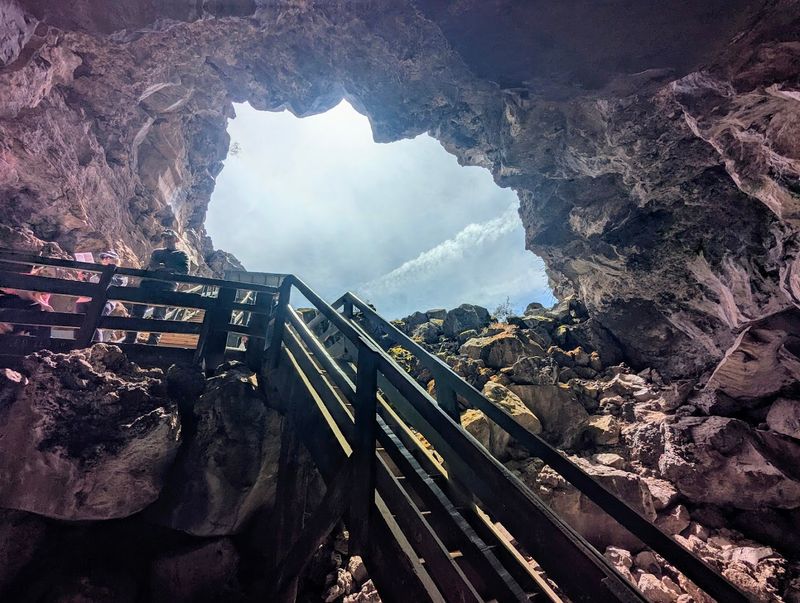
Getting two geological extremes for one admission price is a rare deal, and that is exactly what this site offers. Bandera Volcano is one of the largest cinder cone volcanoes in the region, and the Ice Cave is a lava tube where ice stays frozen all year round.
The trail system connects both features in a loop that covers roughly 1.5 miles total, so most people complete the full experience in about one to two hours. The self-guided format means you move at your own pace, stopping as long as you like at each numbered point of interest.
A printed pamphlet available at the trading post explains each numbered marker along the trail, covering everything from lava flow types to the cave’s unusual geology. The combination of fire and ice in one short walk is what makes this spot genuinely hard to match anywhere else in the American Southwest.
The Volcano Trail and What Waits at the Top
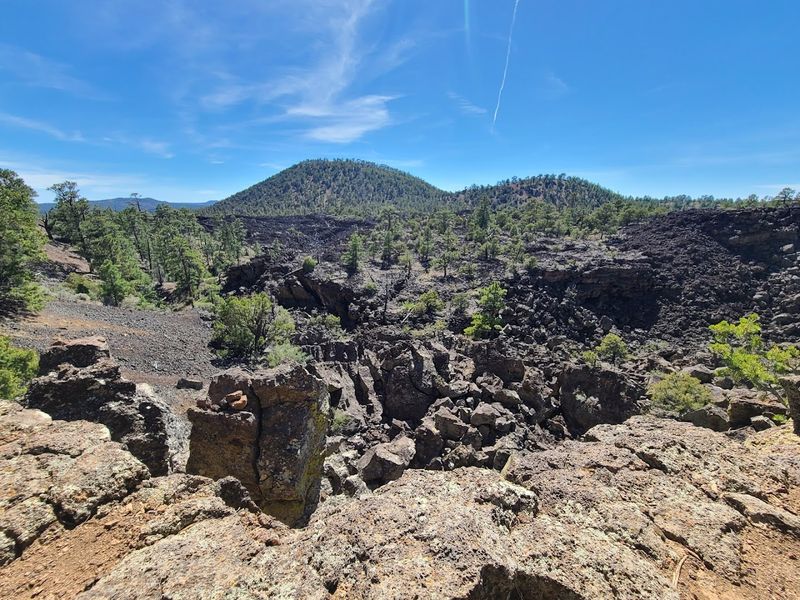
The hike to Bandera Volcano’s rim is about one mile each way, with a gradual incline that most people handle without much trouble. The trail surface is loose volcanic gravel and lava rock, so sturdy shoes or hiking boots make the climb noticeably more comfortable.
At the top, the crater opens up into a wide basin that offers a clear look into what a cinder cone volcano actually looks like up close. The scale is impressive, and the surrounding landscape of hardened black lava stretching out in every direction gives the whole scene a dramatic quality.
Benches are placed along the trail for anyone who wants to rest and take in the view without rushing. Three distinct types of lava rock appear along the path, and the pamphlet explains how each one formed during different stages of the eruption.
The volcano hike is typically recommended as the first stop before heading down to the cave.
The Ice Cave: A Permanent Deep Freeze in the Desert
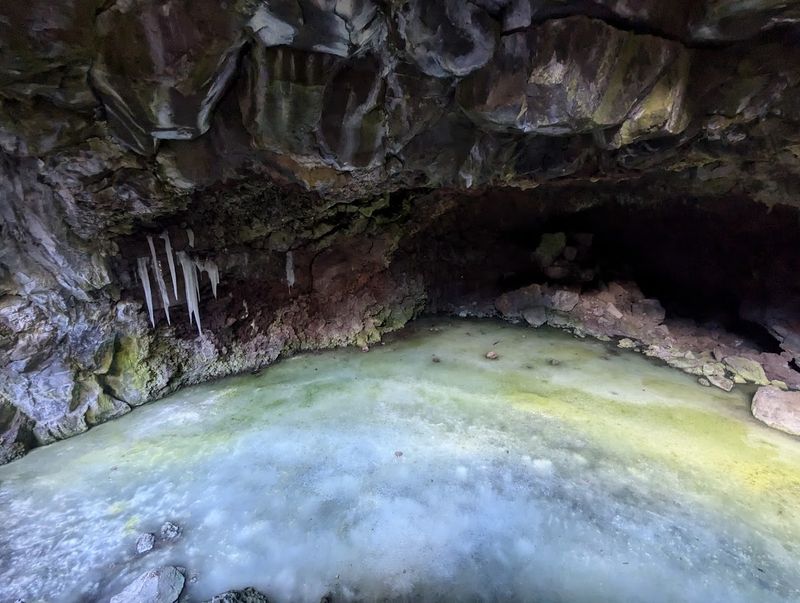
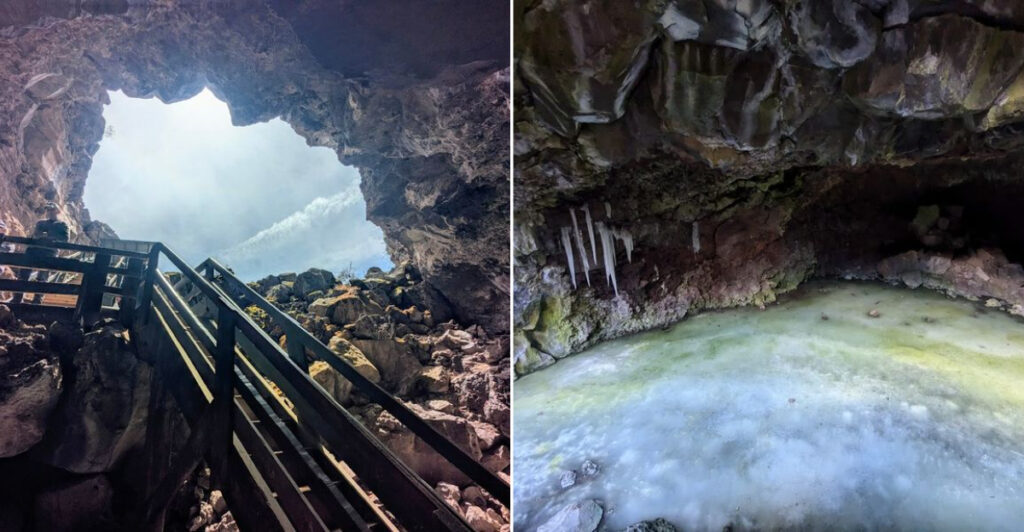
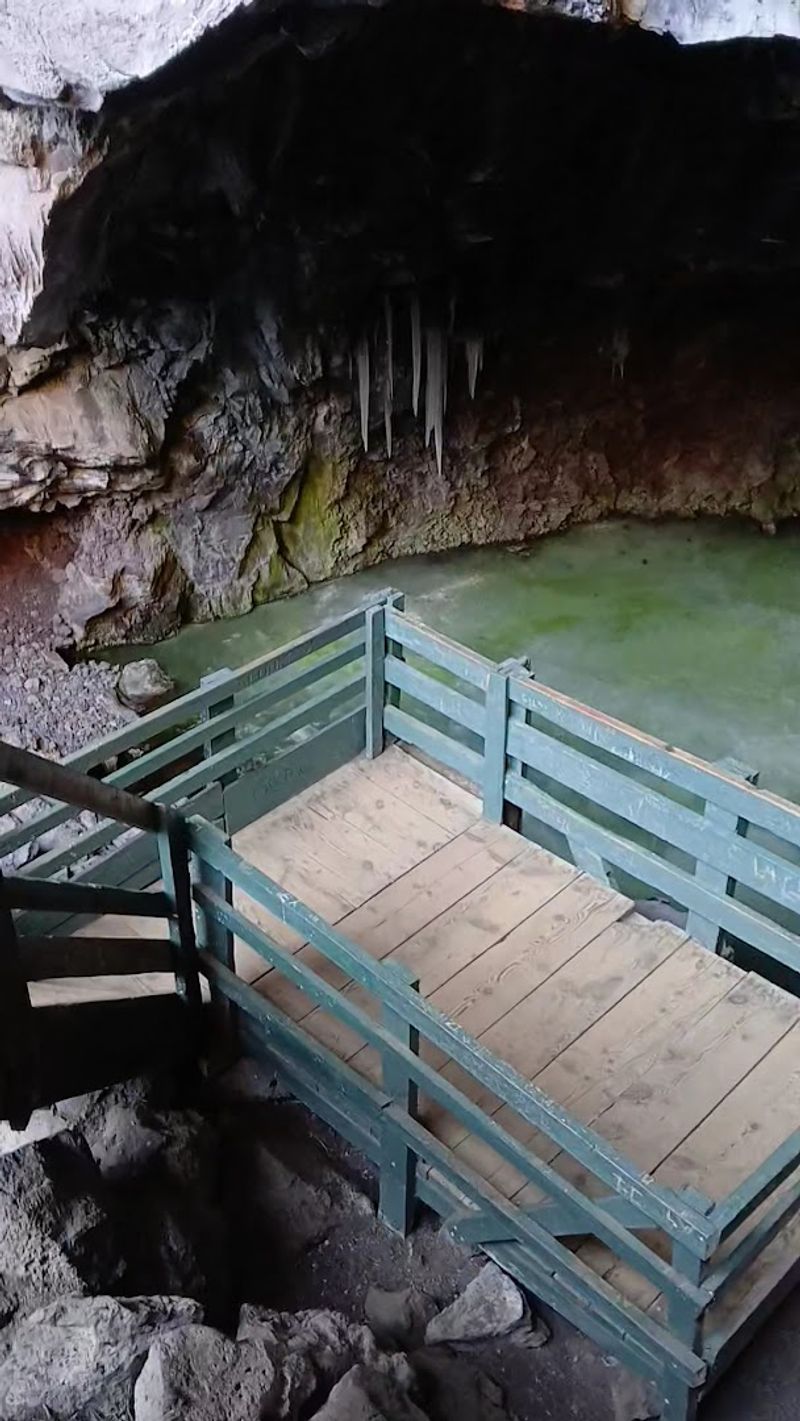
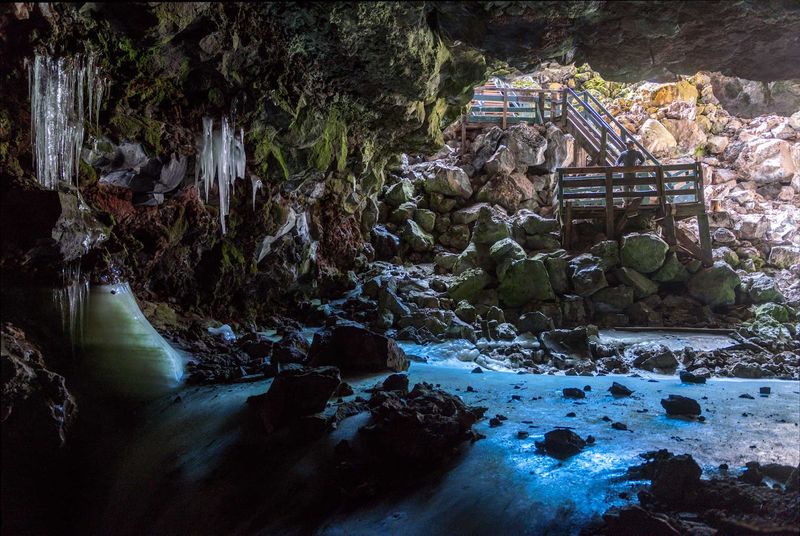
At the bottom of a steep staircase, past a noticeable drop in air temperature, sits one of the most unusual natural features in New Mexico. The Ice Cave is a lava tube where the temperature holds steady at 31 degrees Fahrenheit every single day of the year, regardless of what the thermometer reads outside.
The frozen pool inside the cave takes on a distinctive blue-green color from algae trapped beneath the ice surface, making it look almost otherworldly. Icicles form along the cave walls, and the contrast between the scorching desert air above and the frozen chamber below is genuinely striking.
The pool and ice formations are protected as a historically significant geological feature, so the viewing area keeps guests at a safe distance without allowing direct contact. Birds have been documented nesting in the cave walls, adding a biological layer to an already fascinating geological story.
The staircase down is steep, similar to ship stairs, so steady footing helps.
Why the Ice Never Melts No Matter the Season
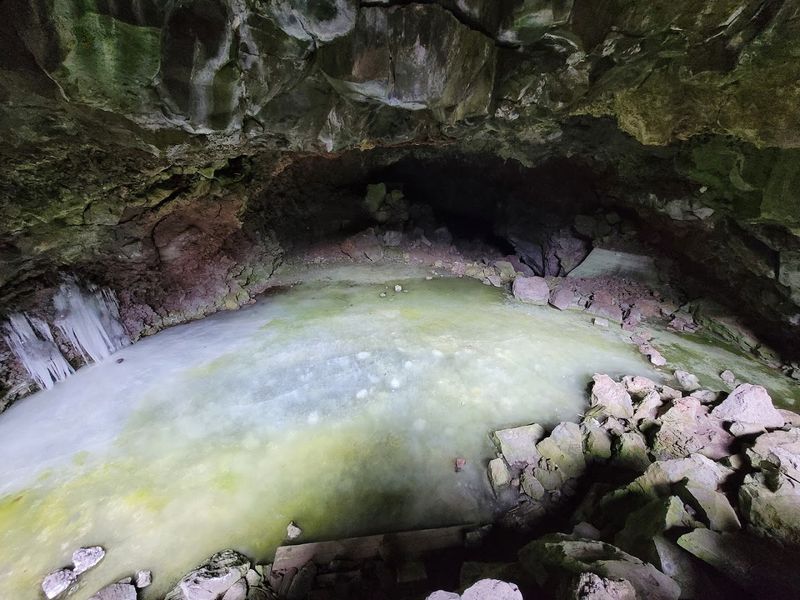
The science behind a cave that stays frozen in the New Mexico desert is rooted in a straightforward geological principle. Cold air is denser than warm air, so it sinks into the lava tube and becomes trapped.
The rock walls of the cave are thick enough to insulate the chamber from the heat above, keeping temperatures locked below freezing permanently.
Bandera Volcano last erupted roughly 10,000 years ago, and the lava tubes it created have been collecting and preserving cold air ever since. The ice inside the cave has built up over centuries, and the frozen pool is considered one of the few permanent natural ice features in the entire Southwest.
Outside temperatures in summer regularly climb into the 80s and 90s, which makes the 31-degree cave feel like stepping into a different climate zone entirely. The physics are simple, but the result is something that feels almost impossible until you are standing at the bottom of those stairs, watching your breath cloud in the frozen air.
The Lava Fields That Surround the Trails
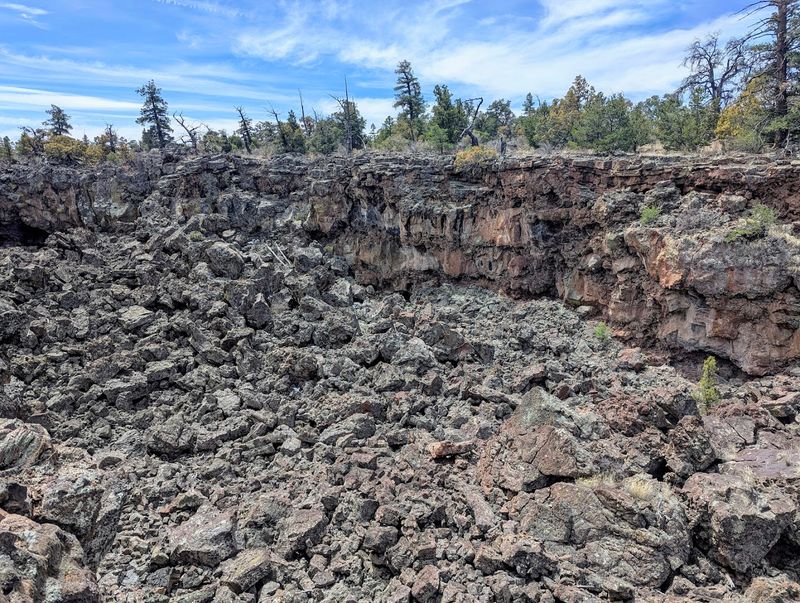
The trails at Ice Cave and Bandera Volcano wind through a vast lava field that covers the surrounding landscape in layers of dark, hardened rock. This is part of the El Malpais volcanic field, one of the most significant geological zones in the entire state of New Mexico.
Walking through the lava field puts the scale of the eruption into perspective. The black rock stretches as far as the eye can follow in every direction, broken up occasionally by scrubby vegetation that has slowly reclaimed the landscape over thousands of years.
Three different lava rock types appear along the trail, each one forming under different conditions during the volcanic event. The numbered pamphlet identifies each type and explains how geologists distinguish between them.
The rugged terrain is part of what makes the hike feel like real exploration rather than a manicured park walk, and the scenic loop section of the trail passes through some of the most visually striking sections of the field.
A Family-Owned Site With Nearly 100 Years of History
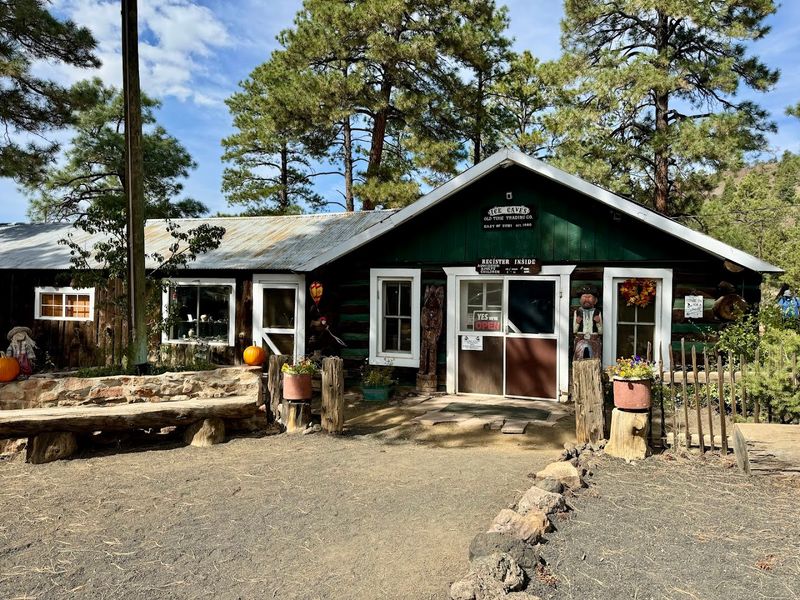
Few natural attractions in the American Southwest come with the kind of personal history that this site carries. The same family has owned and operated the Ice Cave and Bandera Volcano property for nearly a hundred years, and that continuity shows in how the place is run.
The original buildings are still standing on the property, and the main structure houses both a gift shop and a small museum filled with artifacts found directly on the land. Old pottery from indigenous peoples, geological specimens, and historical photographs make up a collection that no other attraction in the region could replicate.
The staff members are knowledgeable, approachable, and genuinely enthusiastic about the site’s history. The family dog has become something of a local celebrity among repeat visitors, and the overall atmosphere feels more like a visit to a working ranch than a commercial tourist stop.
That authenticity is rare, and it is one of the strongest reasons people recommend the detour so consistently.
The Trading Post, Gift Shop, and On-Site Museum
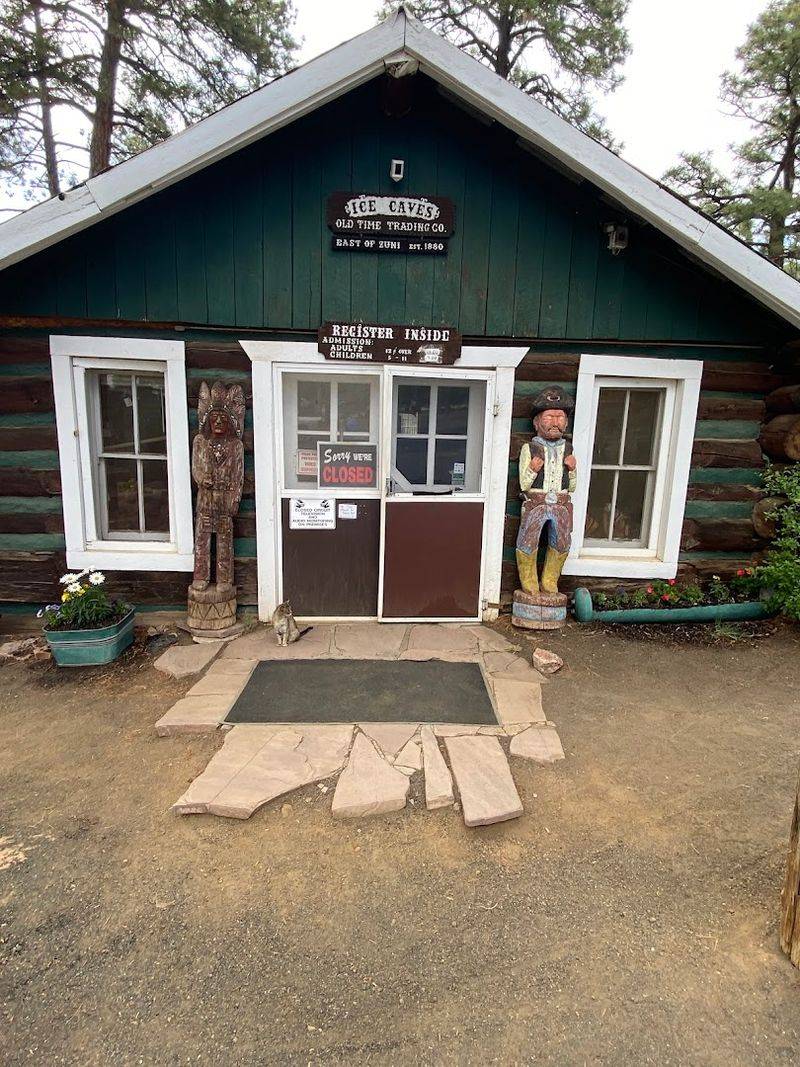
Before hitting the trails, most people spend a few minutes in the main building, and it is worth more time than that. The trading post at Ice Cave and Bandera Volcano functions as the ticket counter, gift shop, snack bar, and museum all under one roof.
The museum section displays artifacts that were actually recovered from the property itself, including pottery pieces connected to indigenous peoples who lived in the region long before the site became a tourist destination. Everything on display has a direct connection to the land, which gives the collection a grounded, authentic quality.
The gift shop carries a solid range of souvenirs, local crafts, and New Mexico-themed items. A snack bar on site means you can grab something before or after the hike without needing to drive back to town.
The staff at the counter is typically happy to answer questions about the trails, the geology, or the history of the property before you head out.
How Long the Visit Actually Takes
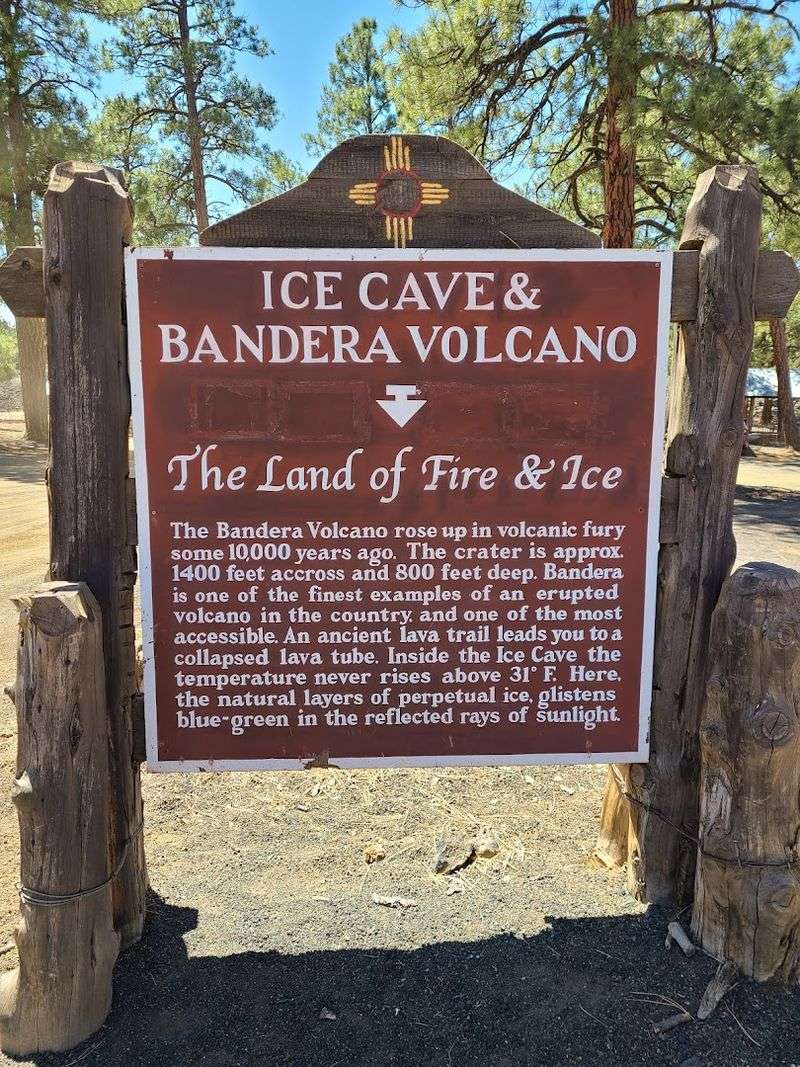
Planning your time at Ice Cave and Bandera Volcano is straightforward because the trail system is compact and well-organized. Most people complete the full loop, including the volcano hike and the ice cave, in about one to one and a half hours at a comfortable pace.
If you stop frequently to read the numbered trail markers, take photos, or sit on the benches along the way, budget closer to two hours. The total trail distance is approximately 1.5 miles, with the volcano trail running about one mile each way and the ice cave spur adding another half mile.
The site opens at 9 AM every day of the week and closes at 6 PM, giving plenty of daylight for a relaxed visit. Arriving earlier in the day tends to mean cooler outside temperatures and fewer people on the trail.
The site is self-guided, so there is no need to book a specific tour time in advance.
What to Wear and Bring on the Trail
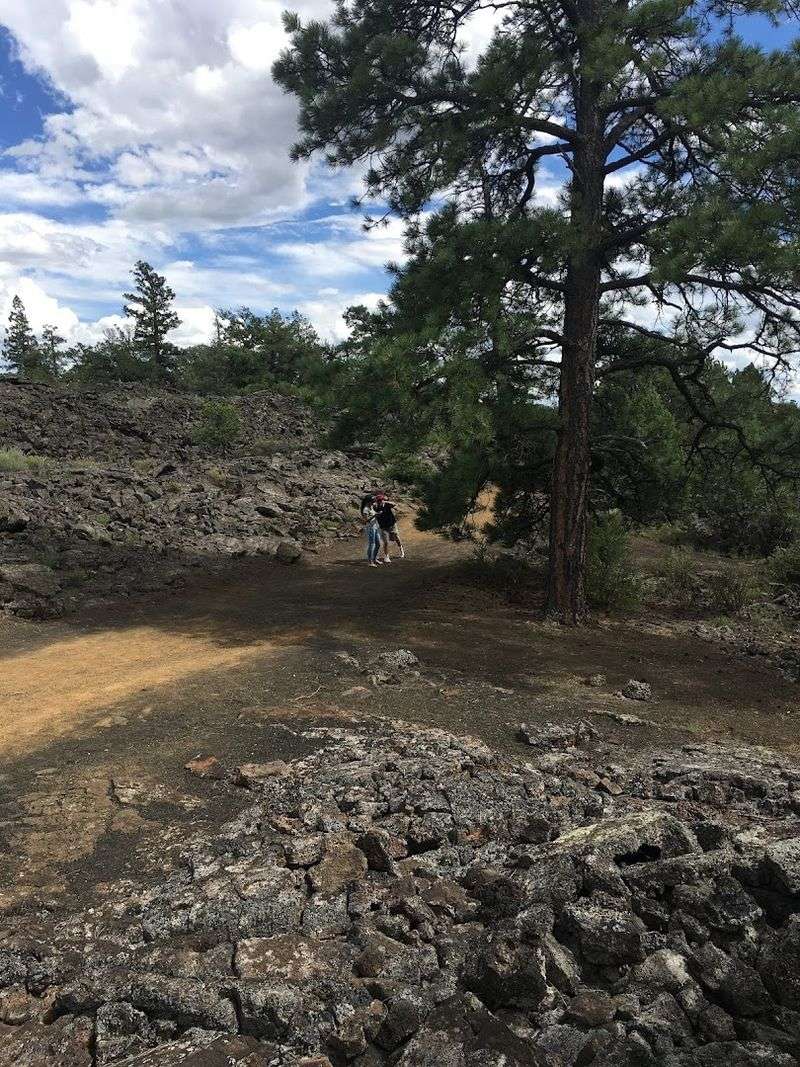
The trail surface at Ice Cave and Bandera Volcano is composed of loose volcanic gravel and uneven lava rock throughout most of the loop. Hiking boots or sturdy sneakers are strongly recommended, and sandals or flat-soled shoes make the rocky sections noticeably more difficult to navigate.
Bringing a water bottle is a practical necessity, especially during summer months when outside temperatures can push well into the 80s and 90s. The trail offers no shade along the volcanic sections, so sun protection in the form of a hat and sunscreen is worth packing as well.
The ice cave section requires a light jacket or layer, since the temperature inside drops to 31 degrees and the contrast from the hot trail above can feel sharp. The site is dog-friendly, so leashed pets are welcome on the trails.
The path is not accessible for wheelchairs, walkers, or strollers due to the uneven lava rock surface throughout the route.
Wildlife and Nature Along the Trail
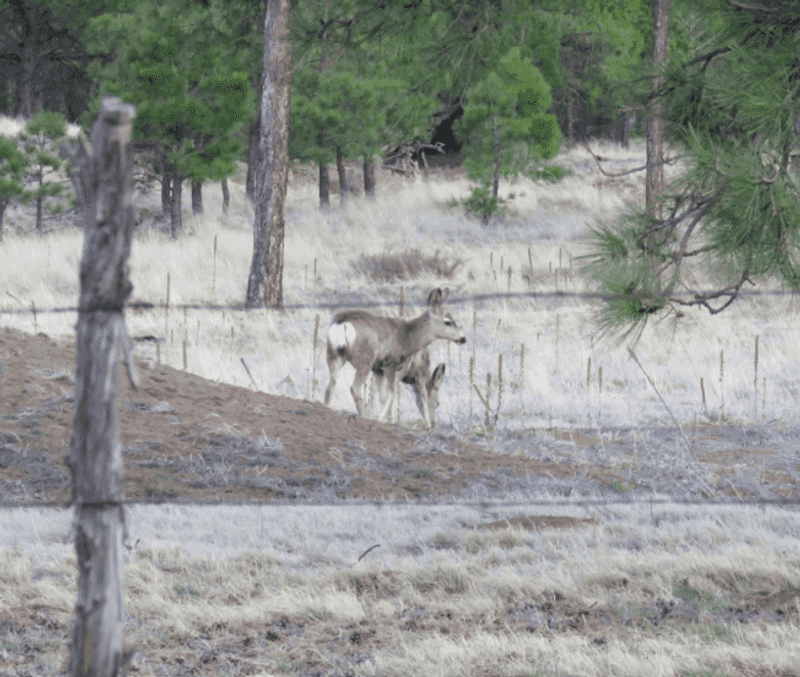
The lava fields around Bandera Volcano are not as barren as they might appear from a distance. Wildlife has adapted to the volcanic terrain over thousands of years, and the trails offer regular opportunities to spot animals going about their routines in the rugged landscape.
Coyotes have been spotted on the property, particularly during the late afternoon hours when the trails are quieter. Ground squirrels are common throughout the lava field sections, and birds of several species have been documented nesting in the walls of the ice cave itself, which adds an unexpected biological angle to an otherwise geological story.
The vegetation along the trail is sparse but varied, with different plant species finding footholds in cracks between lava rocks over centuries of slow recovery. The scenic loop section of the trail passes through areas where the landscape feels particularly remote and undisturbed, giving the hike a quality that feels closer to wilderness than a developed attraction.
Accessibility and Trail Difficulty Breakdown
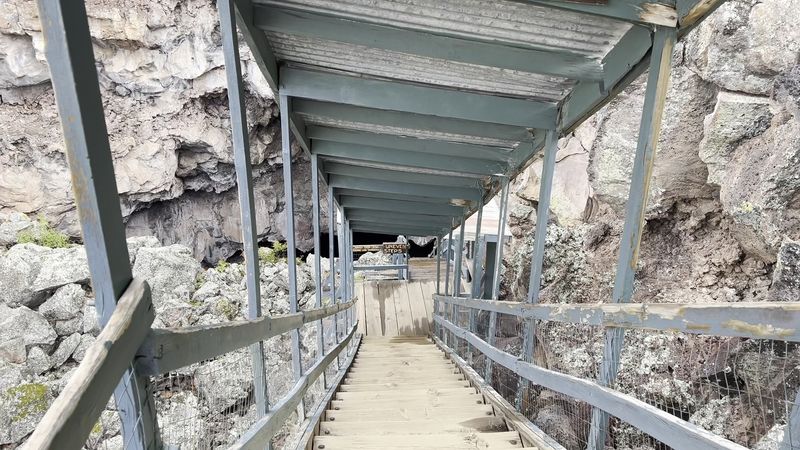
The trails at Ice Cave and Bandera Volcano are generally described as easy to moderate, with the volcano hike presenting the most elevation gain of the two main routes. The total distance of roughly 1.5 miles and the mild ups and downs make it accessible for most fitness levels, including older adults and older children.
The trail surface is the main challenge rather than the distance or elevation. Loose volcanic gravel and irregular lava rock require attention underfoot, and the staircase into the ice cave is notably steep, similar in pitch to a ship’s ladder.
Handrails are present, but the descent requires confidence on stairs.
The property is not accessible for guests using wheelchairs, walkers, or strollers due to the uneven terrain throughout. Benches are positioned at intervals along the trail for anyone who needs a rest.
The numbered markers along the path are clear and easy to match with the pamphlet, keeping navigation simple even for first-time visitors.
Why This Stop Belongs on Any New Mexico Road Trip
New Mexico has no shortage of natural attractions, but very few combine geological drama, personal history, and genuine accessibility the way Ice Cave and Bandera Volcano does. The site checks an unusual number of boxes in a very short visit, from ancient volcanic craters to a permanently frozen cave to a century-old family trading post.
The self-guided format respects the visitor’s independence, and the numbered trail system ensures that even first-time guests leave with a solid understanding of what they just walked through. The combination of a cinder cone volcano and a lava tube ice cave in a single 1.5-mile loop is simply not something most people encounter anywhere else.
Road trips along Interstate 40 through New Mexico pass dozens of roadside signs promising unique experiences, and most of them do not deliver. This one does.
The detour off the highway leads to something that stays with people long after they have driven back onto the interstate and continued on their way.
Where Exactly This Frozen Wonder Is Found
Most people drive right past the signs on Interstate 40 without giving them a second thought. The Ice Cave and Bandera Volcano sits at 12000 Ice Caves Road in Grants, New Mexico 87020, tucked into the high desert about 25 miles south of the highway in Cibola County.
The site is privately owned and has been in the same family for close to a hundred years, which gives it a character that state-run parks often lack. A friendly staff greets every guest at the entrance, and the whole operation feels personal rather than corporate.
Ice Caves Road also loops toward Gallup, New Mexico, making it a smart detour if you are already heading west. The location is far enough off the beaten path to feel like a discovery, but well-marked enough that getting there is straightforward.
The website at icecaves.com has current details on hours and admission.
Share this story