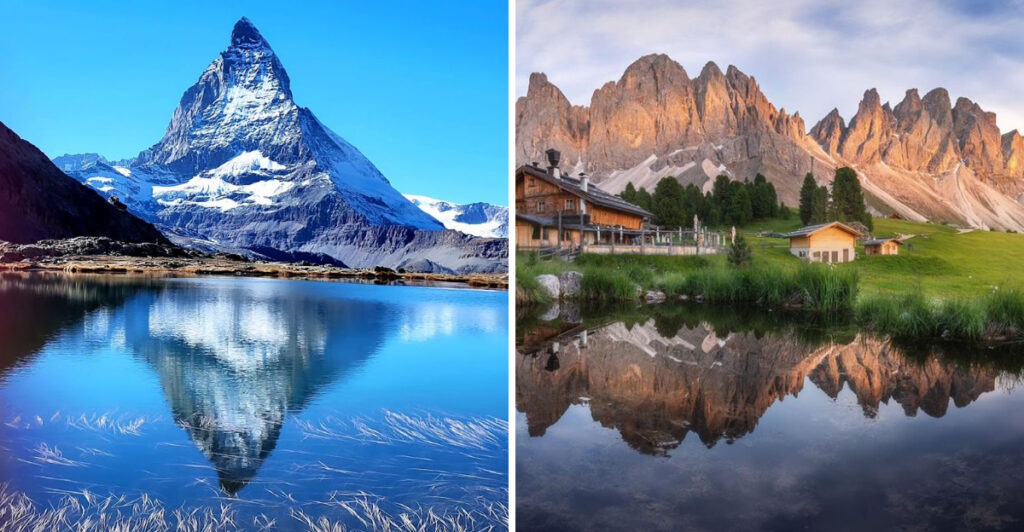
Europe is home to some of the most jaw-dropping mountains on the planet, stretching from the frozen peaks of Norway to the sun-baked ridges of Spain. These ranges are more than just pretty backdrops — they are playgrounds for hikers, havens for wildlife, and windows into centuries of culture and history.
Whether you are an experienced climber or someone who just loves a good scenic view, Europe’s mountains have something extraordinary to offer. Get ready to discover ten peaks and ranges that prove this continent is seriously wild.
Matterhorn — Switzerland and Italy
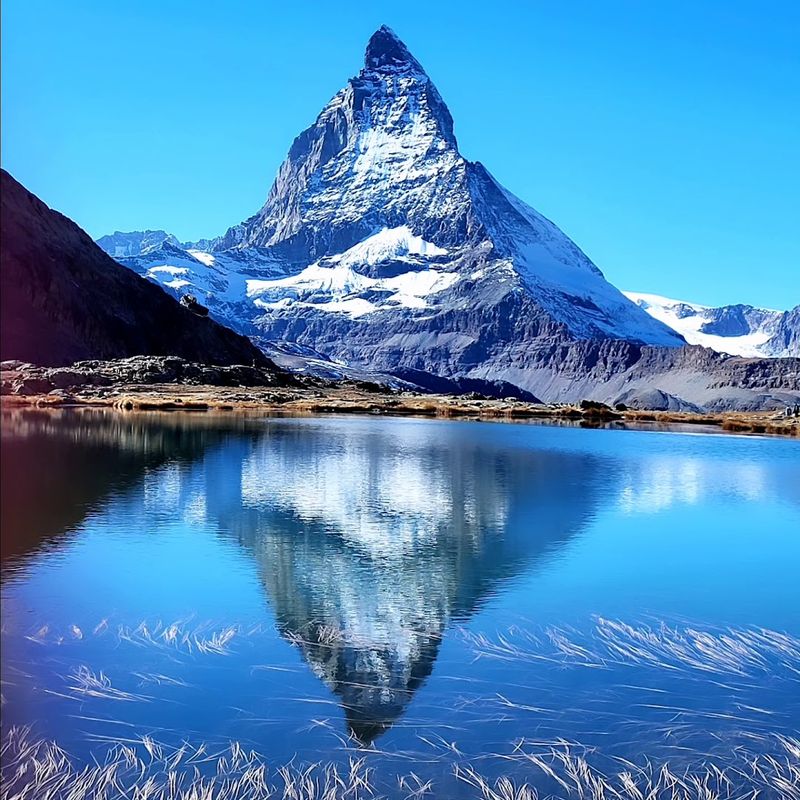
Few mountains on Earth stop people in their tracks quite like the Matterhorn. Standing at 4,478 meters above the Alps, its near-perfect pyramid shape is so striking that it inspired the logo for Toblerone chocolate.
That is right — this mountain is literally on a candy bar.
Located on the border between Switzerland and Italy, the Matterhorn towers above the charming Swiss town of Zermatt. The town itself is car-free, meaning you arrive by electric taxi or train, which adds a wonderfully old-fashioned alpine charm to the whole experience.
Zermatt is packed with cozy restaurants, mountain gear shops, and jaw-dropping views at every turn.
Hikers of all levels can enjoy the surrounding trails, even if summiting the peak requires serious climbing experience. The Hörnli Ridge is the most popular climbing route, but the Five Lakes Walk offers spectacular views without the danger.
Photographers flock here at sunrise when the mountain glows pink and orange. Whatever brings you to the Matterhorn, one thing is certain — no photograph truly captures how breathtaking it looks in real life.
Mont Blanc — France, Italy, and Switzerland
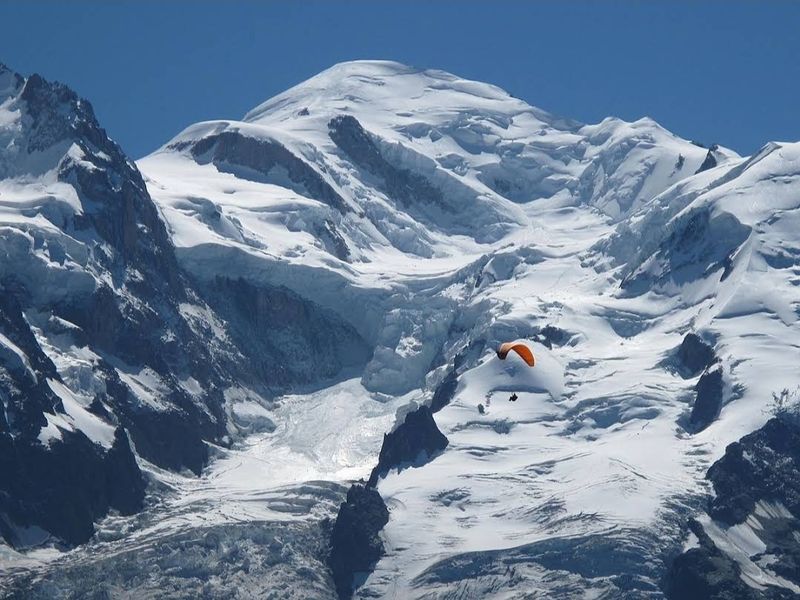
Western Europe’s tallest mountain does not mess around. At 4,805 meters, Mont Blanc lords over the Alps with the kind of confidence that only the highest peak on the continent can pull off.
Its name means “White Mountain” in French, and honestly, the name does all the heavy lifting.
The French town of Chamonix sits at its base and serves as the adventure capital of the Alps. Summer brings hikers chasing the famous Tour du Mont Blanc, a multi-day trail that loops through France, Italy, and Switzerland.
Cable cars lift visitors to staggering heights, offering views of glaciers that stretch as far as the eye can see.
The Mer de Glace, France’s largest glacier, is accessible by a historic mountain railway from Chamonix. It is a humbling sight, though scientists note it has shrunk significantly in recent decades due to climate change.
Visiting it feels both awe-inspiring and eye-opening. Whether you are hiking, skiing, or simply sipping coffee with a mountain view, Chamonix and Mont Blanc deliver an alpine experience that is hard to top anywhere in the world.
Dolomites — Italy
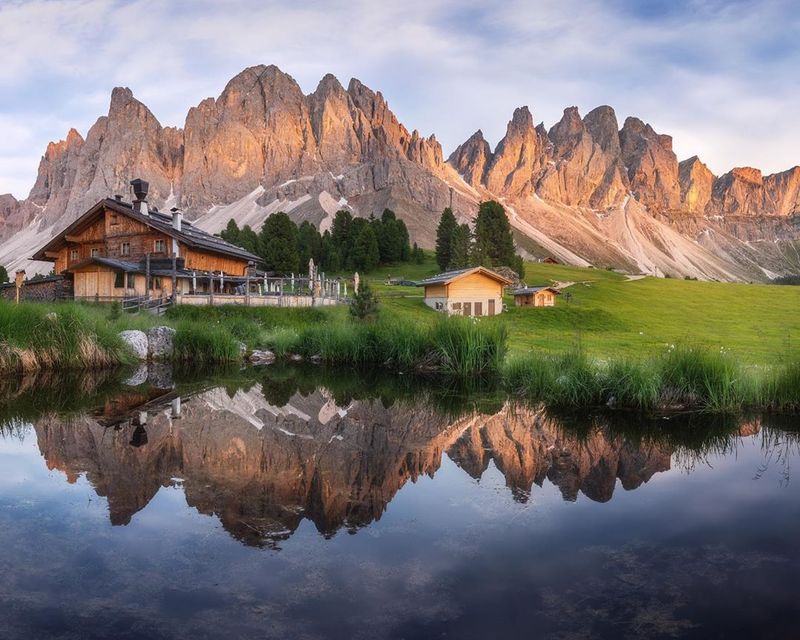
Imagine someone took a regular mountain range and cranked the drama dial all the way up — that is the Dolomites. These jagged limestone towers in northeastern Italy look almost too cinematic to be real, which is probably why they have appeared as backdrops in countless films and commercials.
Declared a UNESCO World Heritage Site in 2009, the Dolomites cover a vast area across the Trentino-Alto Adige and Veneto regions. The peaks glow a fiery orange-pink at sunset, a phenomenon locals call “enrosadira,” which roughly translates to “turning rosy.” Watching this happen from a mountain hut with a glass of local wine is a life upgrade.
Summer hiking here is world-class, with hundreds of miles of well-marked trails connecting mountain refuges where you can eat, sleep, and recover between walks. The Tre Cime di Lavaredo, three iconic rocky pinnacles, is one of the most photographed spots in all of Europe.
Cyclists also love the area, as the Dolomites host stages of the famous Giro d’Italia race. Charming South Tyrolean villages below the peaks offer a delicious blend of Italian and Austrian culture.
Jungfrau Region — Switzerland
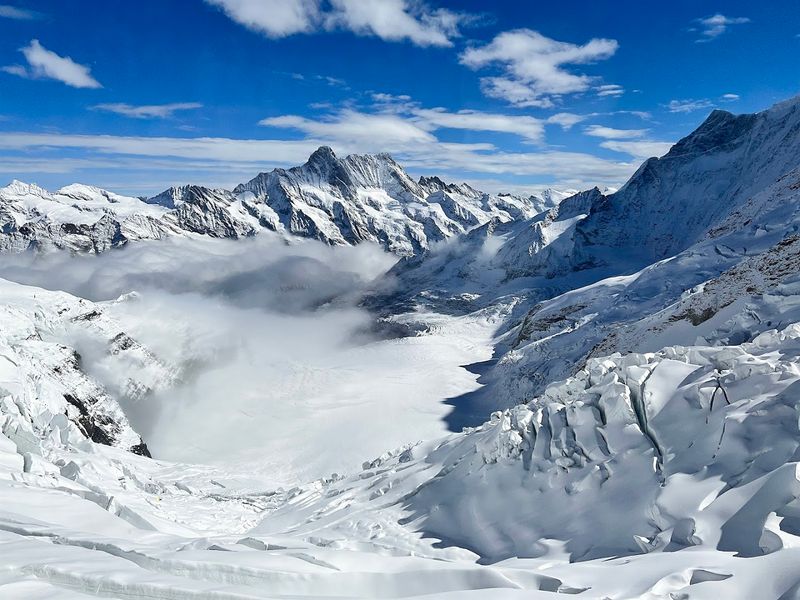
Switzerland’s Jungfrau Region is the kind of place that makes you question whether you accidentally walked into a screensaver. Towering peaks, cascading waterfalls, flower-filled meadows, and chocolate-box villages combine to create one of the most visually overwhelming landscapes in Europe.
The three iconic peaks — the Eiger, Mönch, and Jungfrau — dominate the skyline and have inspired mountaineers for generations. The Eiger’s north face is legendary in climbing circles, known for its brutal difficulty and the stories of daring ascents etched into alpine history.
Meanwhile, the Jungfraujoch train station sits at 3,454 meters, earning the title of highest railway station in Europe.
Below these giants, the valley villages of Lauterbrunnen, Grindelwald, and Wengen offer charming bases for exploration. Lauterbrunnen alone has 72 waterfalls tumbling down its sheer valley walls, including the spectacular Staubbach Falls.
Hiking trails connect the villages and viewpoints, while paragliders drift lazily overhead. In winter, the region transforms into one of Switzerland’s premier ski destinations.
Year-round, the Jungfrau Region delivers the kind of scenery that makes people seriously consider moving to Switzerland permanently.
Tatra Mountains — Poland and Slovakia
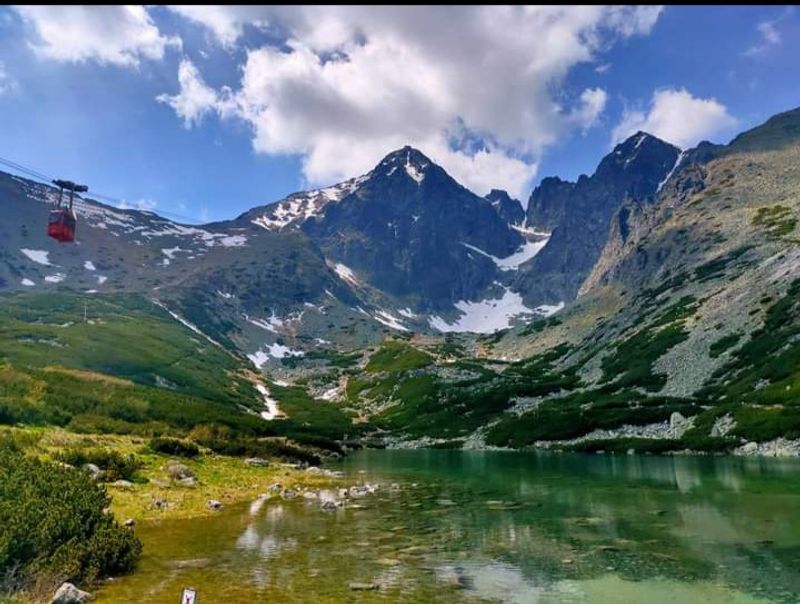
Tucked between Poland and Slovakia, the Tatra Mountains pack a serious punch for a range that many travelers outside of Central Europe overlook entirely. These are the highest peaks in the Carpathian chain, and they feel genuinely wild — the kind of wild where you might spot a brown bear or a lynx on the trail ahead.
On the Polish side, the lively mountain town of Zakopane serves as the main gateway. It has a distinct folk culture, unique wooden architecture, and a food scene centered around oscypek — a smoky sheep’s milk cheese that locals grill and serve with cranberry jam.
Do not leave without trying it. Slovakia’s side offers the High Tatras resort towns of Poprad and Tatranska Lomnica.
Morskie Oko, a stunning glacial lake surrounded by rocky peaks, is Poland’s most visited mountain destination and worth every step of the uphill walk to reach it. The trails here range from gentle forest paths to technical ridge scrambles that will test experienced hikers.
Wildlife spotting is a genuine thrill — chamois, marmots, and golden eagles are all regular residents. The Tatras reward those willing to explore beyond the well-known Alpine routes.
Picos de Europa — Spain
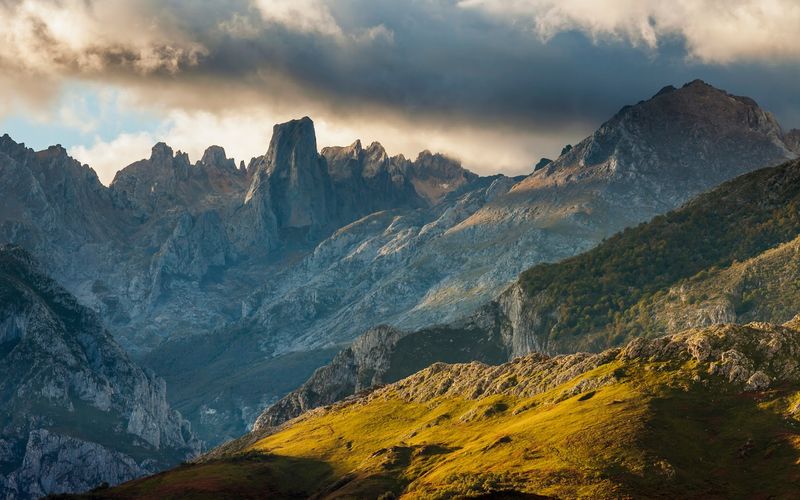
Spanish sailors returning from the Americas were supposedly so relieved to spot these peaks that they called them the Peaks of Europe — the first sign of home after months at sea. Whether or not the story is entirely accurate, it perfectly captures how dramatically these mountains announce themselves.
Located in northern Spain across the regions of Asturias, Cantabria, and Castile and Leon, the Picos de Europa form one of Spain’s oldest and most spectacular national parks. Limestone gorges slice through the landscape, the most famous being the Cares Gorge, a 12-kilometer trail carved into sheer cliff faces above a rushing river.
Walking it feels like something out of an adventure film.
The mountains here top out around 2,650 meters, making them far more accessible than the Alps while still offering serious scenery. Traditional mountain villages produce some of Spain’s finest cheeses, including the famous Cabrales blue cheese aged in natural mountain caves.
The area is also excellent for wildlife watching, with wolves, wild boar, and golden eagles all calling these mountains home. Compared to Spain’s more famous tourist hotspots, the Picos de Europa feel refreshingly authentic and uncrowded.
Julian Alps — Slovenia
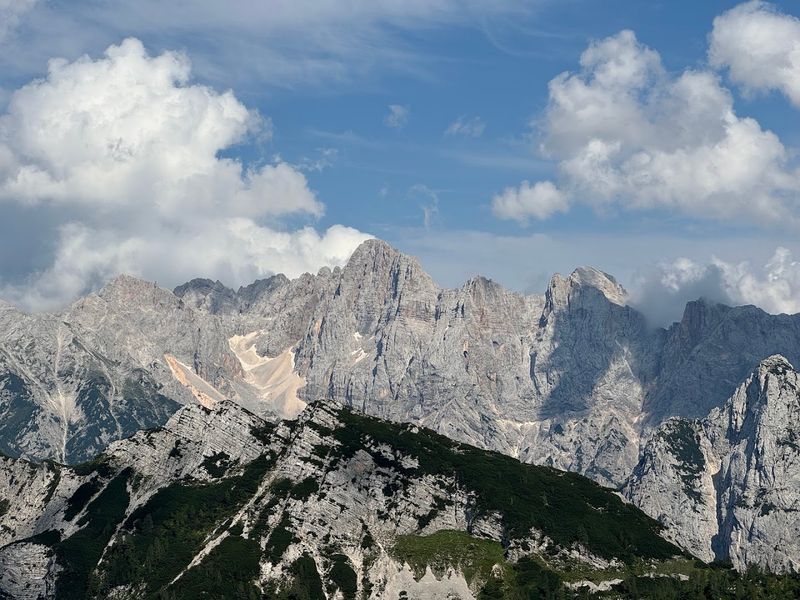
Slovenia might be one of Europe’s smallest countries, but its mountains are anything but small in terms of beauty. The Julian Alps stretch across the northwestern corner of the country, and they are home to Triglav, Slovenia’s highest peak at 2,864 meters and a symbol of national pride so significant it appears on the country’s flag.
Triglav National Park, the only national park in Slovenia, protects this entire mountain region. The Soca River flows through it in a shade of turquoise so vivid that first-time visitors often assume it has been digitally enhanced.
It has not. The river is genuinely that color, fed by glacial meltwater filtering through limestone rock.
Lake Bled and Lake Bohinj sit on the edges of the alpine region and are among the most photographed spots in all of Central Europe. Lake Bled features a fairytale island with a church and a medieval castle perched on a cliff above the water.
Bohinj, slightly less visited, offers a quieter and arguably more beautiful alternative. Hiking, kayaking, wild swimming, and cycling are all popular here.
The Julian Alps prove that extraordinary mountain scenery does not require crowds or a massive travel budget to enjoy.
Scottish Highlands — Scotland
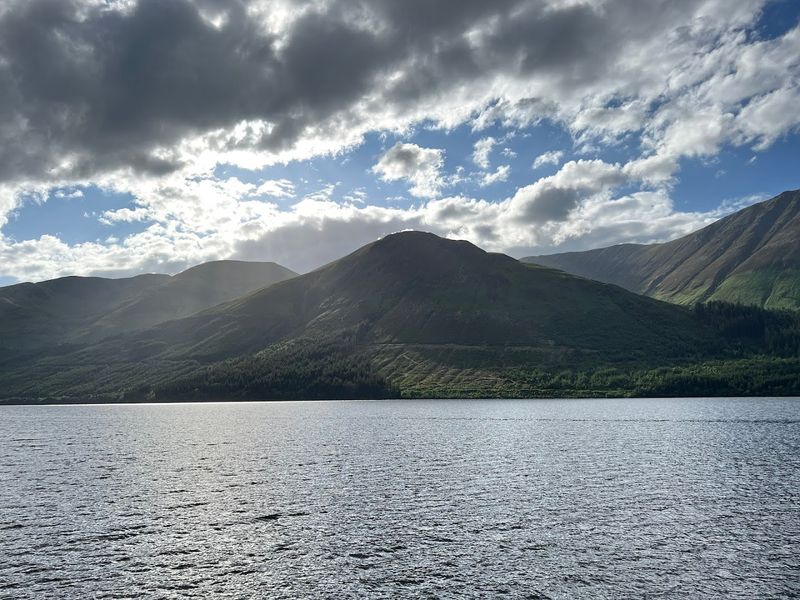
There is a particular kind of magic to the Scottish Highlands that is almost impossible to describe without sounding like you are writing a fantasy novel. Ancient glens, brooding lochs, mist-draped peaks, and skies that change from sunny to stormy in about ten minutes — it is wild, moody, and completely unforgettable.
Ben Nevis, at 1,345 meters, is the United Kingdom’s highest mountain and attracts around 125,000 hikers every year. The main path from Glen Nevis is challenging but manageable for fit walkers, and the summit views on a clear day stretch to Ireland.
Clear days are not guaranteed, of course — this is Scotland, after all.
Beyond Ben Nevis, the Highlands are vast and largely empty, offering some of Europe’s best wild camping and long-distance walking routes. The West Highland Way, stretching 154 kilometers from Milngavie to Fort William, is one of Scotland’s most beloved trails.
Red deer, golden eagles, red squirrels, and even wild otters can be spotted along the way. The region’s ruined castles, whisky distilleries, and remote pubs add a cultural richness that turns any mountain trip into something genuinely special.
Scotland rewards the adventurous and the patient in equal measure.
Lofoten Mountains — Norway
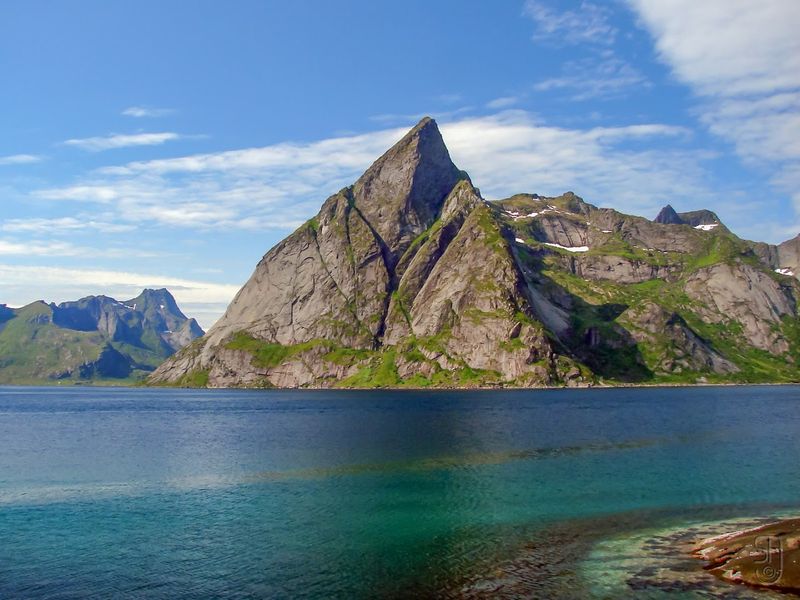
Nowhere else in Europe do mountains and ocean collide quite so spectacularly as in Norway’s Lofoten Islands. Jagged granite peaks shoot straight up from the sea with zero buildup, as if the landscape skipped the foothills and went straight to the dramatic finale.
The result is one of the most visually striking places on the continent.
The Lofoten archipelago sits above the Arctic Circle, which means summer brings the midnight sun — daylight around the clock for several weeks. Hiking at 2 a.m. in full sunshine while the sea glitters below is genuinely surreal.
In winter, the same mountains become a prime location for viewing the Northern Lights dancing across a dark sky.
Colorful red and yellow fishing cabins called rorbu dot the shoreline, many of which have been converted into cozy tourist accommodation. The fishing heritage here is deep — dried cod, or stockfish, has been produced in Lofoten for over a thousand years and still hangs on wooden racks along the coast.
Surfing, kayaking, and cycling are all popular summer activities. The combination of epic peaks, Arctic beaches with white sand, and Viking-era history makes Lofoten an unforgettable destination that feels unlike anywhere else in Europe.
Rila Mountains — Bulgaria
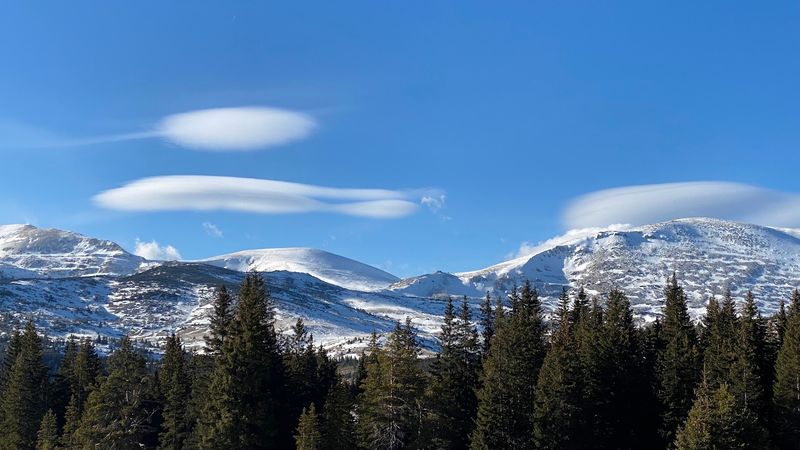
Bulgaria does not always make the top of European travel lists, which means the Rila Mountains remain one of the continent’s best-kept secrets. That is genuinely good news for those who do make the trip, because what awaits is a mountain landscape of remarkable beauty without the crowds that plague more famous ranges.
Musala Peak, at 2,925 meters, is the highest point in the Balkans and a satisfying day hike for fit walkers. The surrounding area features over 100 glacial lakes, with the Seven Rila Lakes being the crown jewel of the range.
Each lake sits at a different elevation, connected by trails that offer sweeping views of the rocky alpine terrain above and dense forests below.
The Rila Monastery, a UNESCO World Heritage Site founded in the 10th century, sits in a forested valley at the base of the mountains. Its colorful frescoes, medieval tower, and mountain setting make it one of the most beautiful religious sites in Eastern Europe.
Bears, wolves, and chamois still roam the higher slopes, and the wildflower meadows in June rival anything found in the Alps. For travelers willing to look beyond the obvious destinations, the Rila Mountains offer extraordinary rewards at a fraction of the cost.
Share this story