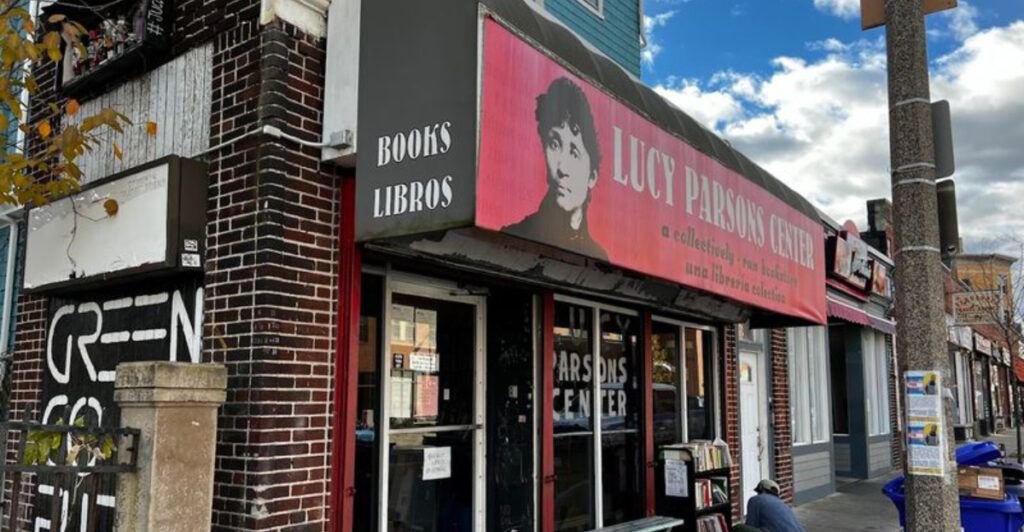
Somewhere in the lively neighborhood of Jamaica Plain, Massachusetts, a small bookstore has been quietly defying the odds for decades. Most independent bookshops struggle to survive even a few years, but this one has outlasted trends, economic shifts, and the rise of online retail giants.
It is one of the oldest continuously operating infoshops in all of North America, and it is still going strong today. An infoshop, for those unfamiliar, is a community space that combines a radical or progressive bookstore with resources, events, and organizing tools for local movements.
What keeps this place alive is not just the books on its shelves, but the community that shows up for it, runs it, and believes in what it stands for. This article takes a close look at what makes this spot so remarkable and why it continues to matter in today’s world.
What Exactly Is an Infoshop and Why Does It Matter
The word infoshop might sound like something from another era, but the concept is very much alive. An infoshop is a space that functions as both a bookstore and a community resource center, typically aligned with anarchist, socialist, or broadly progressive politics.
The idea is that information should be accessible to everyone, not just those who can afford university libraries or expensive subscriptions.
Infoshops became especially prominent in North America and Europe during the 1980s and 1990s, when grassroots organizing movements needed physical spaces to share literature, plan actions, and connect with one another. Many of those spaces have since closed, unable to sustain themselves financially or organizationally.
The Lucy Parsons Center is one of the rare survivors of that era, which makes it something of a landmark in the broader history of radical community spaces on this continent. Its continued existence is not an accident but the result of sustained collective effort over many years.
The Woman Behind the Name
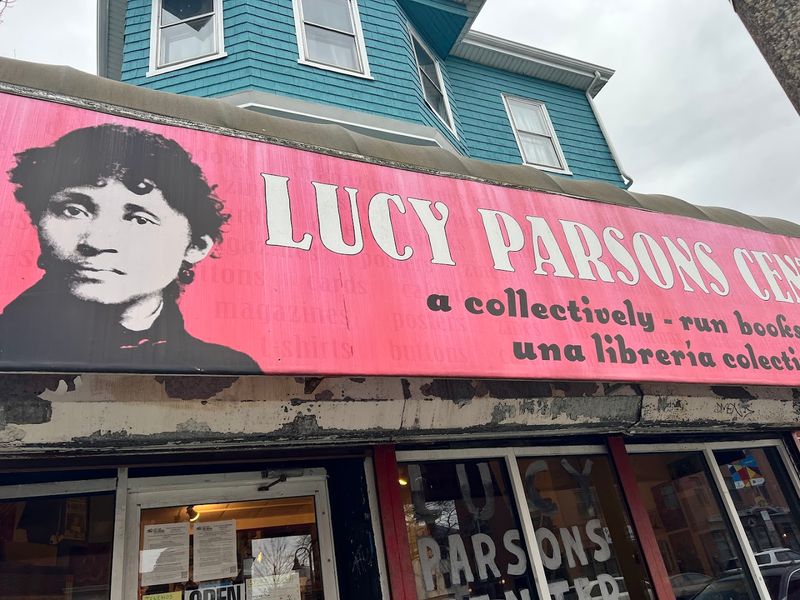
Lucy Parsons was a labor organizer, anarchist, and one of the most outspoken radical voices in American history. Born around 1851, she spent decades fighting for workers’ rights, free speech, and the rights of the poor at a time when doing so carried serious personal risk.
She was a founding member of the Industrial Workers of the World, also known as the IWW or the Wobblies, and remained politically active well into her eighties.
Naming a bookstore after her is a deliberate statement. It signals the kind of politics and history the space wants to honor and continue.
Parsons believed that ordinary working people deserved access to knowledge, organizing tools, and community solidarity, which is exactly what the center bearing her name tries to provide.
Her legacy is not just symbolic here. The values she championed, mutual aid, collective action, and free access to information, are woven into how the center operates on a daily basis.
Volunteer-Run From the Ground Up
One of the most distinctive features of the Lucy Parsons Center is that it runs entirely on volunteer labor. There are no paid employees clocking in and out.
Every person who opens the doors, shelves the books, organizes events, and assists people who walk in is giving their time freely because they believe in what the space does.
This model is both its greatest strength and its most visible challenge. Volunteer-run spaces bring genuine passion and commitment to everything they do, but they also depend on the availability and consistency of people who have jobs, families, and other obligations outside the center.
The result is a place that operates with real human texture. Hours can vary, and the energy shifts depending on who is in the room on any given day.
For people who appreciate spaces built on principle rather than profit, that trade-off feels entirely worth it. The center is proof that community-powered institutions can endure when the commitment is real.
The Book Selection That Sets It Apart
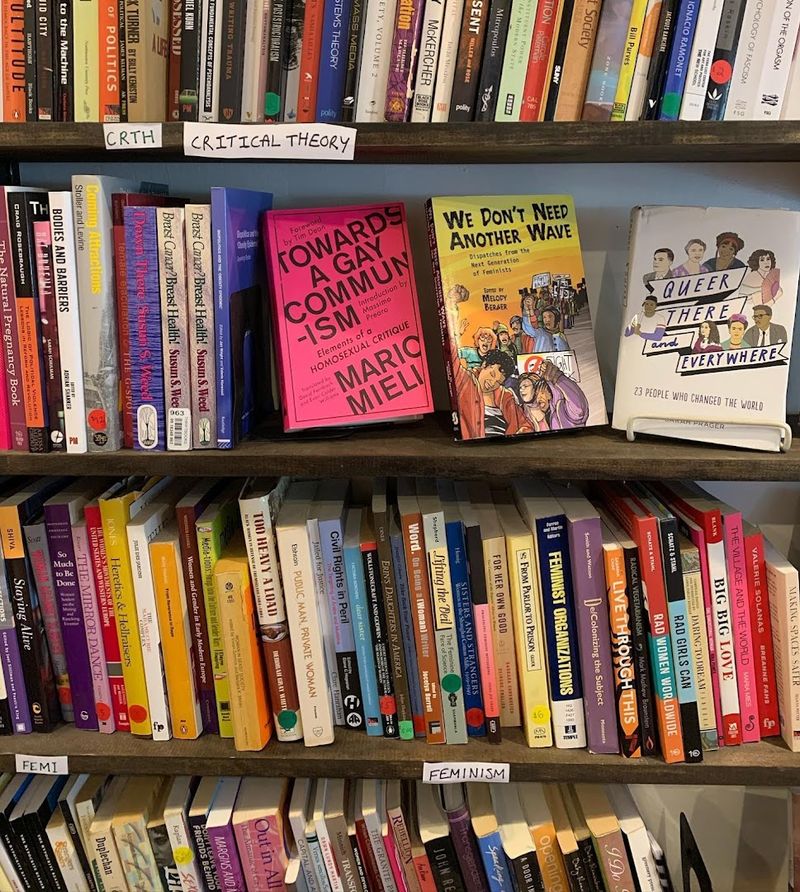
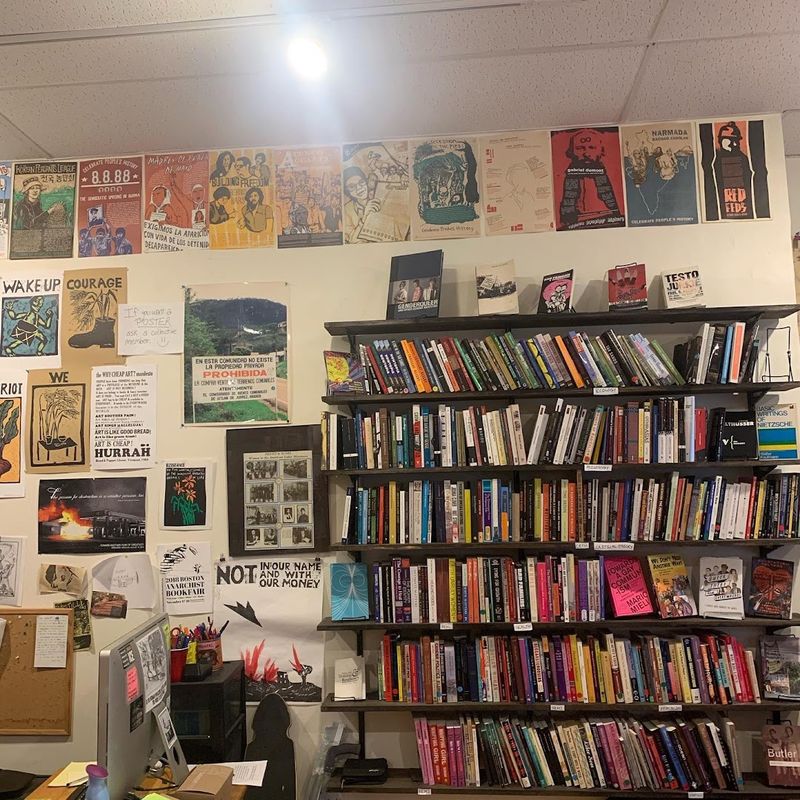
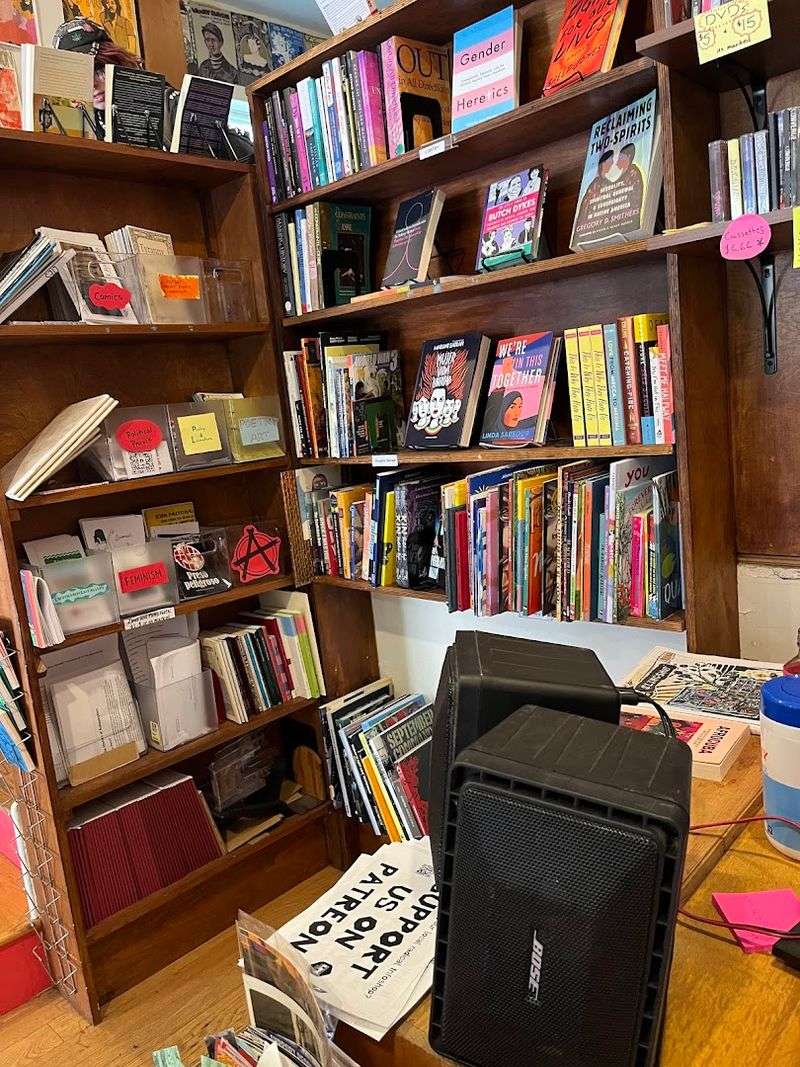
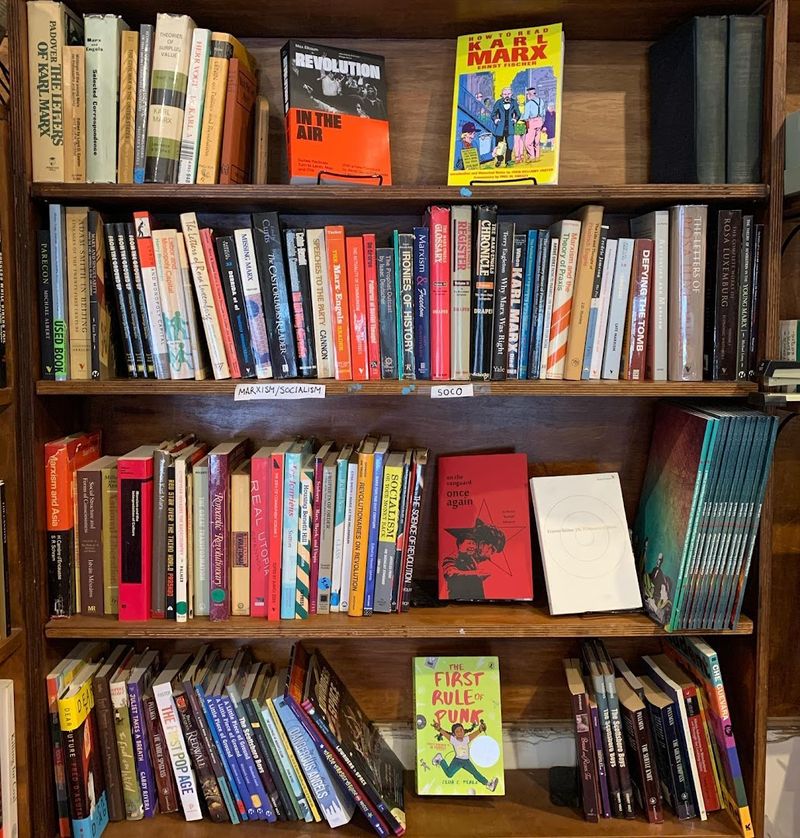
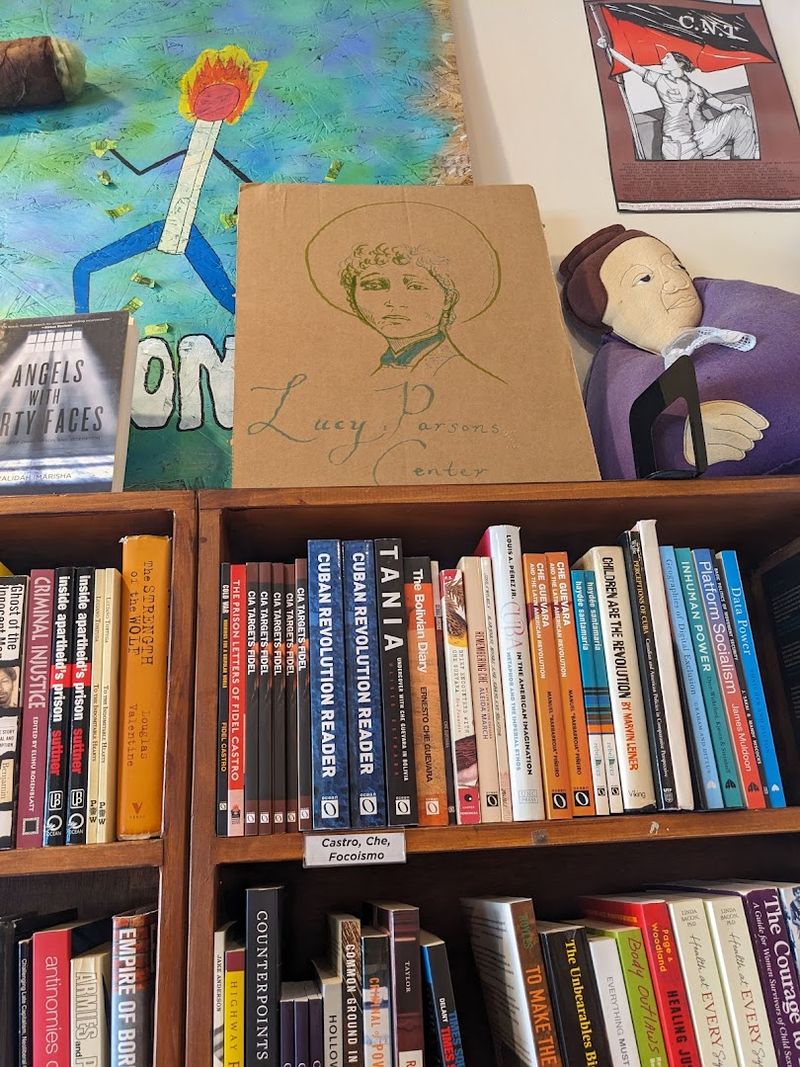
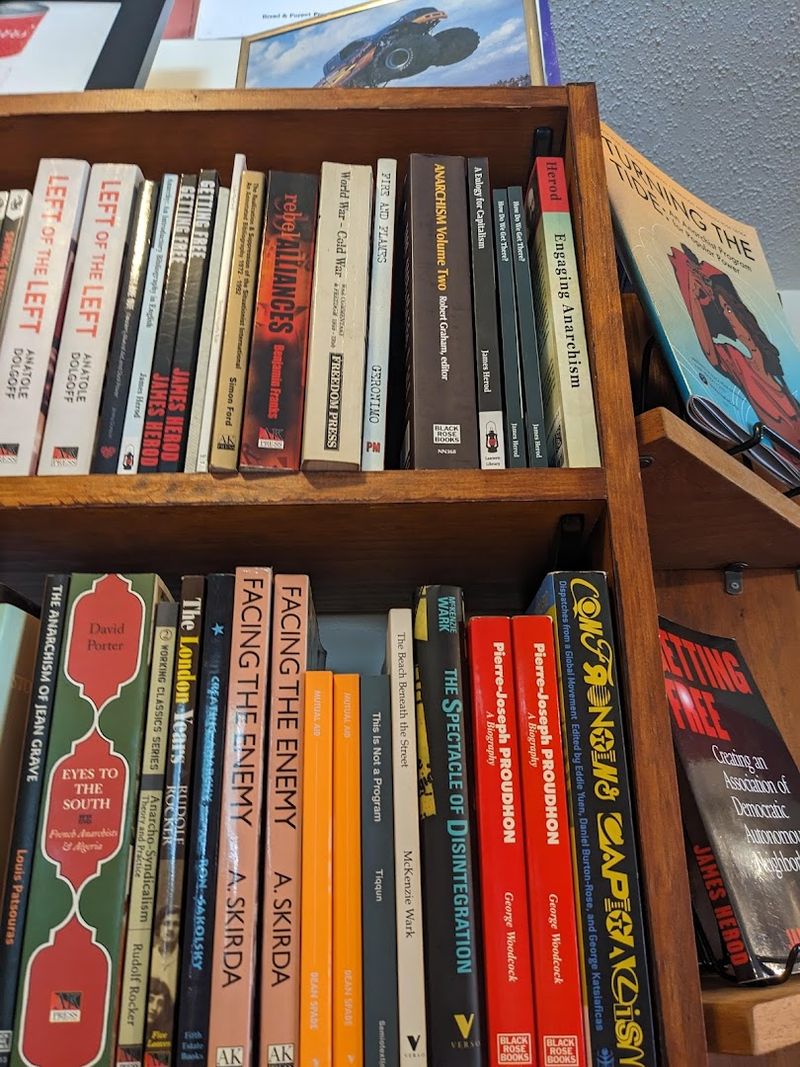
The collection at the Lucy Parsons Center is not your typical bookstore lineup. The shelves are stocked with titles covering labor history, anarchist theory, anti-racism, feminism, prison abolition, immigration rights, environmental justice, and much more.
These are books that rarely make it onto the bestseller lists but carry significant weight in academic and activist circles.
Both new and used books are available, which keeps the space accessible to people working with tight budgets. The used section in particular offers an opportunity to find titles that are out of print or difficult to locate through mainstream retailers.
The organization of the collection is thoughtful. Books are grouped by subject in a way that makes browsing productive rather than overwhelming.
For readers who already know what they are looking for, the layout helps. For those who are just starting to explore progressive literature, the shelves offer a well-curated entry point into a broad and rich body of work that spans more than a century of radical thought.
Zines, Pamphlets, and the Print Culture of Resistance
Beyond the standard book shelves, the Lucy Parsons Center maintains a zine section that reflects a whole other layer of political and creative culture. Zines are self-published, often handmade publications that have been a cornerstone of underground and activist communities for decades.
They cover everything from personal essays and poetry to detailed political analysis and how-to guides for community organizing.
The zine tradition is deeply connected to the infoshop model. Before the internet made information distribution easy, zines were one of the primary ways that radical ideas traveled between communities.
Many of the movements that shaped progressive politics in the late twentieth century ran on zine culture.
Finding a well-stocked zine section in a physical space today is increasingly rare, which makes the Lucy Parsons Center’s collection particularly valuable for anyone interested in that history or in supporting contemporary independent publishers. The section is a living archive of grassroots print culture that continues to grow with new contributions from local creators.
Rooted in Jamaica Plain’s Long History of Activism
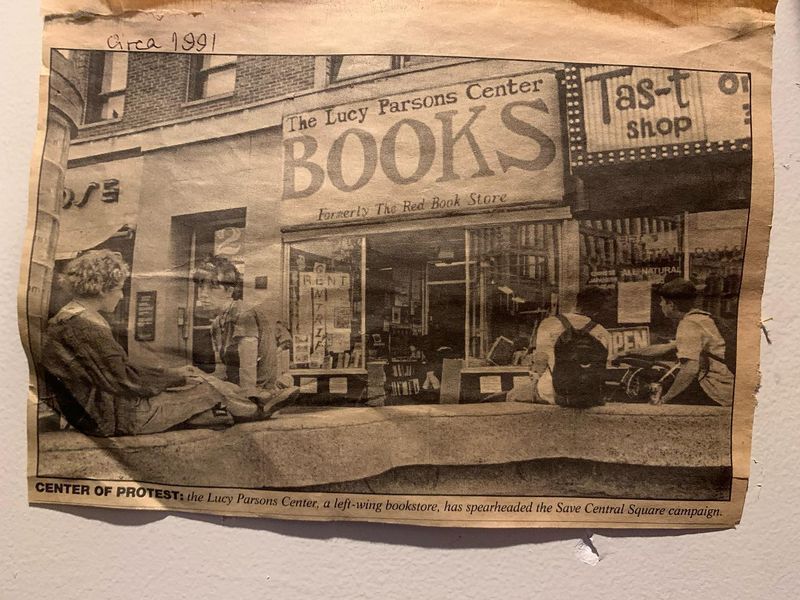
Jamaica Plain is not a random location for a space like this. The neighborhood has a documented history of community organizing that stretches back generations.
It has been home to Puerto Rican and Latino communities who fought displacement and advocated for housing rights, as well as environmental activists who successfully pushed back against highway expansion projects in the 1970s.
The neighborhood’s mix of working-class roots and progressive politics created the kind of environment where a space like the Lucy Parsons Center could not only exist but thrive. The local population has consistently supported grassroots institutions, mutual aid networks, and community-run organizations.
Over the decades, Jamaica Plain has also experienced significant gentrification, which has reshaped parts of the neighborhood and put pressure on longtime residents and community spaces alike. The Lucy Parsons Center exists within that tension, serving as both a resource for the community and a reminder of the neighborhood’s organizing history.
Its presence on Centre Street is itself a form of continuity in a rapidly changing urban landscape.
How the Center Supports Local Groups and Movements
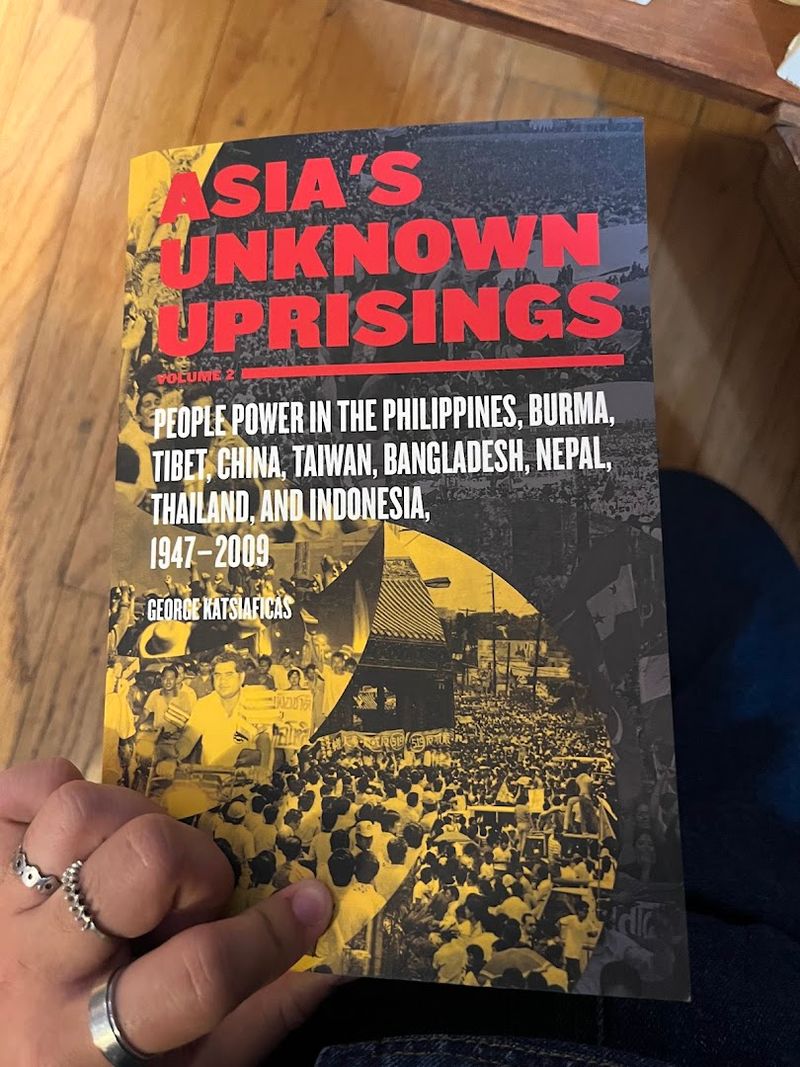
Support for local movements goes well beyond stocking the right books. The Lucy Parsons Center actively engages with community groups in Jamaica Plain and across Boston, offering its space for meetings, providing resources for organizers, and connecting people with networks and information they might not find elsewhere.
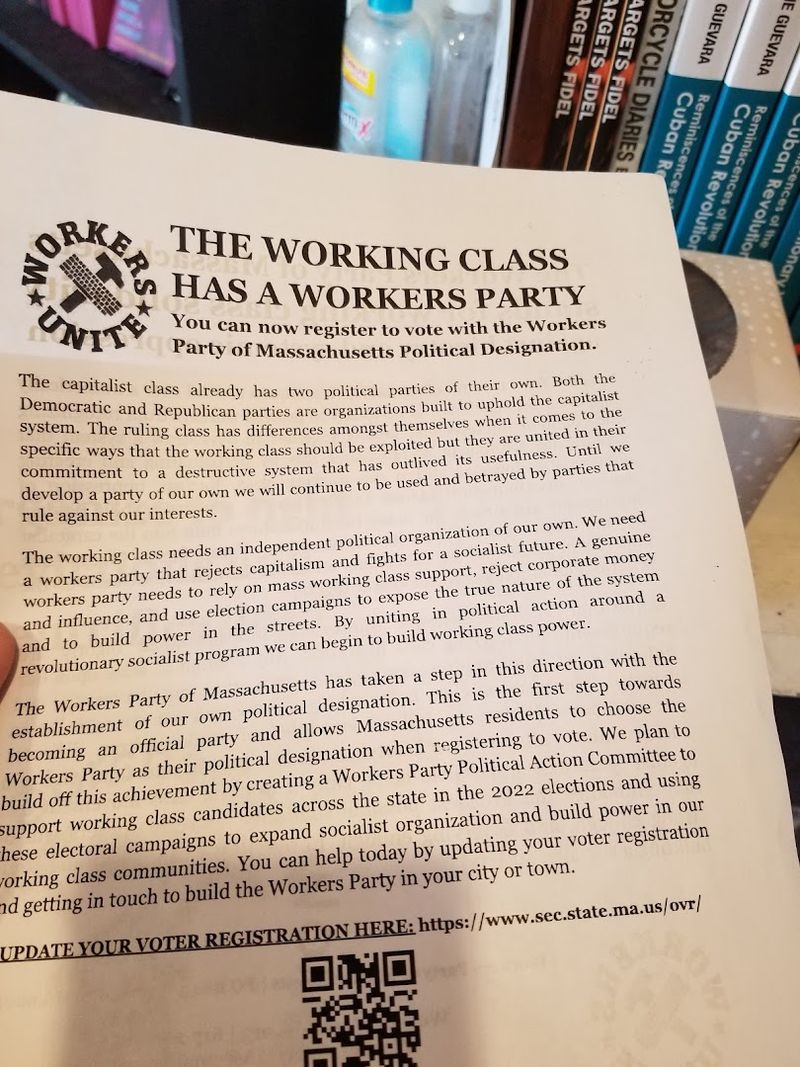
The bulletin boards inside the center function as a low-tech but highly effective communication tool, displaying flyers, event announcements, and calls to action from a wide range of local organizations. For community groups without large budgets, having a physical space to post information and reach a politically engaged audience is genuinely valuable.
The center also participates in broader solidarity efforts, supporting campaigns and causes that align with its values even when those efforts originate outside Jamaica Plain. This outward orientation keeps the space connected to movements happening at the city, state, and national level.
It is less a bookstore that occasionally hosts events and more a community institution that happens to sell books as part of a much larger mission.
New Books, Used Books, and Accessible Pricing

Carrying both new and used books is a practical decision that reflects the center’s values. New titles keep the collection current and support publishers producing progressive and radical work.
Used books bring down the cost barrier for readers who cannot afford full retail prices, ensuring that access to information does not depend on how much money someone has in their pocket.
The pricing structure is not uniform across all titles, and some books carry higher price tags than others, particularly newer academic works. That said, the used section consistently offers quality titles at lower prices, and the overall range of what is available means most people can find something within their budget.
For anyone building a personal library of progressive literature, the Lucy Parsons Center is a reliable source that combines curation with affordability in a way that large online retailers simply do not replicate. The act of browsing in person also tends to surface titles that a reader might never have discovered through an algorithm-driven search.
Hours, Accessibility, and Planning Your Visit
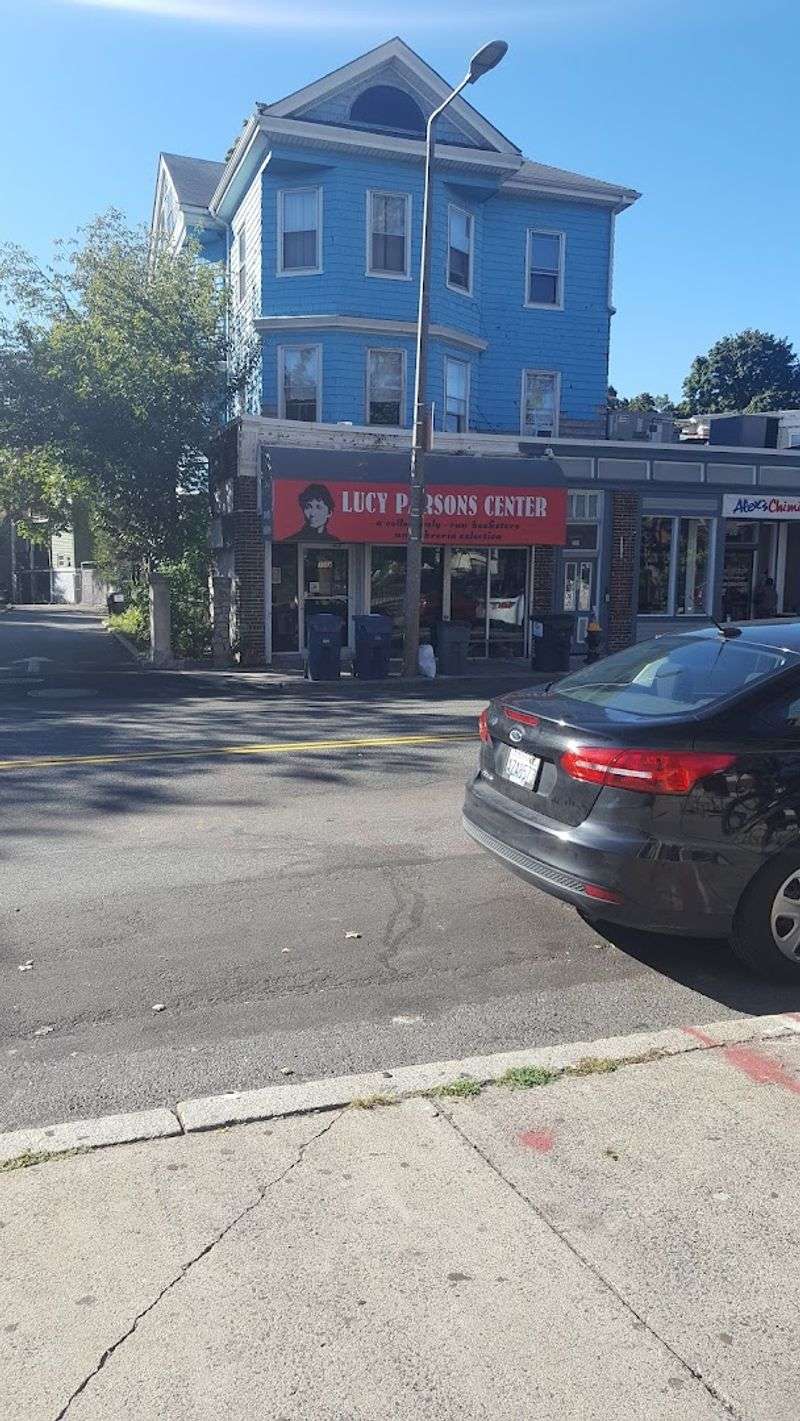
One practical note worth highlighting for anyone planning to visit: the hours at the Lucy Parsons Center are not always predictable in the way a corporate retailer’s hours would be. Because the space is volunteer-run, the schedule can shift, and the center may not always be open during posted hours if volunteers are unavailable on a given day.
The center’s Instagram account is the most reliable source for current hours and schedule updates. Checking there before making a trip is strongly recommended, especially if traveling from outside the neighborhood.
A quick look at their social media can save a wasted journey and also give a preview of upcoming events.
The address is 358 Centre St A, Jamaica Plain, MA 02130, and the space is accessible by public transit on the MBTA’s Orange Line, with the Green Street station nearby. For those coming from other parts of Boston or from out of town, the trip is straightforward and well worth the planning it requires.
One of the Oldest Surviving Infoshops in North America
The claim of being one of the oldest continuously operating infoshops in North America is not something the Lucy Parsons Center makes lightly. Infoshops emerged as a distinct type of space in the 1980s and early 1990s, and the vast majority that opened during that period have since closed.
Sustaining a volunteer-run, politically oriented community space for multiple decades is genuinely difficult.
What has kept the Lucy Parsons Center going is a combination of consistent community support, a clear sense of purpose, and the ability to adapt to changing circumstances without abandoning its core identity. The center has survived economic downturns, neighborhood transformation, and the broader decline of physical retail spaces.
Its longevity is a meaningful data point in any conversation about sustainable community institutions. The center demonstrates that spaces built around shared values rather than profit can endure when the community around them remains engaged and invested.
That track record is part of what makes it worth knowing about and worth visiting.
The Role of Mutual Aid in the Center’s Identity
Mutual aid is a concept central to the Lucy Parsons Center’s identity and operations. The idea, rooted in anarchist and socialist traditions, holds that communities thrive when people support one another directly rather than relying solely on government or market systems to meet their needs.
The center puts this philosophy into practice in several ways.
Offering free or sliding-scale access to events, maintaining a space where people can gather without being required to spend money, and actively supporting local organizations are all expressions of the mutual aid ethic. The center does not treat community engagement as a marketing strategy but as a core function of why it exists.
This orientation shapes everything from how the space is organized to how volunteers interact with people who walk in. The goal is not to maximize transactions but to build relationships and distribute resources as broadly as possible.
For anyone unfamiliar with mutual aid as a concept, spending time at the Lucy Parsons Center offers a practical, real-world illustration of how it works.
Why Physical Spaces Still Matter in a Digital Age
In an era when nearly any book can be ordered online and most information is technically available with a search query, the question of why a physical bookstore still matters is worth addressing directly. The Lucy Parsons Center offers an answer that goes beyond the simple pleasure of browsing shelves.
Physical spaces create conditions for encounter and conversation that digital platforms do not replicate. When someone walks into the center, they are not just accessing a catalog of books.
They are entering a space where they might meet an organizer working on a local campaign, discover a zine from an independent publisher they had never heard of, or attend an event that changes how they think about a particular issue.
The center functions as infrastructure for community life in a way that a website or online store simply cannot. That kind of infrastructure, a place where people can show up in person and connect around shared values, is increasingly rare and increasingly valuable in contemporary urban life.
A Destination Worth Supporting and Visiting
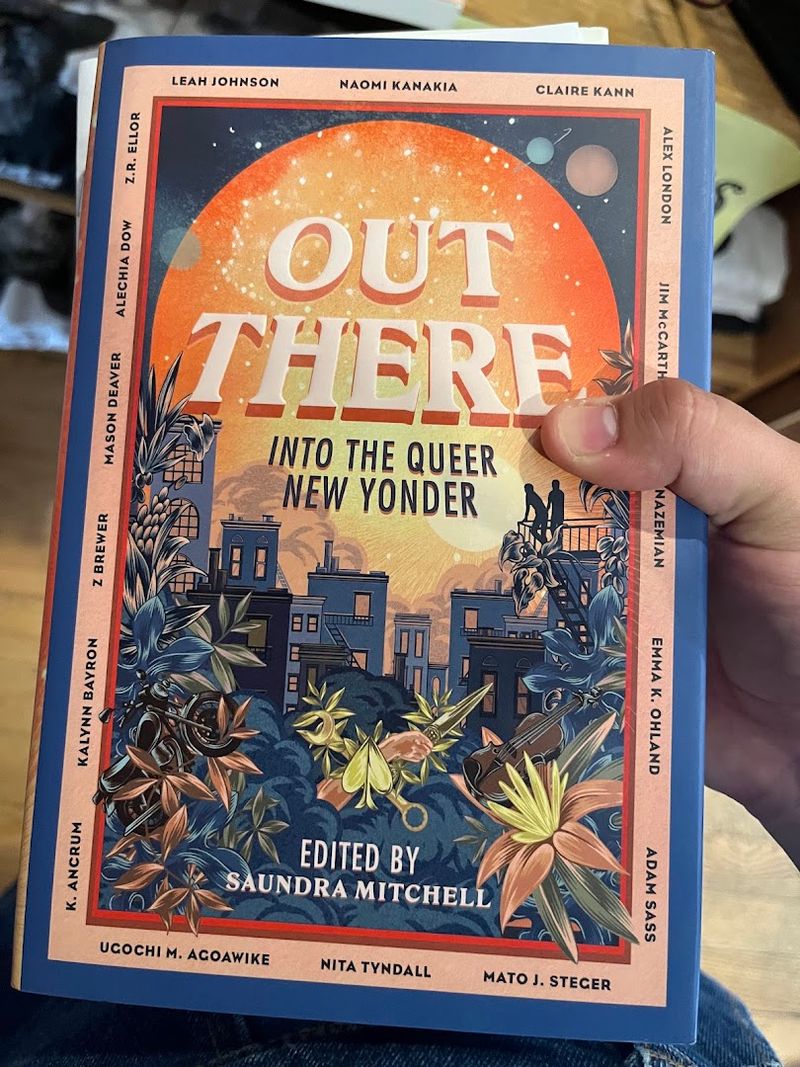
There are not many places left in North America where you can walk in, browse decades of curated progressive literature, pick up a locally made zine, learn about a community event happening that weekend, and leave feeling more connected to the world around you. The Lucy Parsons Center is one of them.
Supporting the center does not require a large financial commitment. Buying a book, attending an event, or simply showing up and spending time in the space contributes to its continued existence.
For those who cannot visit in person, the center’s website at lucyparsonscenter.org offers information about how to support its work from a distance.
In a landscape where independent bookstores and community spaces are under constant pressure, the Lucy Parsons Center’s survival across multiple decades is worth celebrating. It stands as evidence that communities can build and sustain institutions that reflect their values, and that the work of keeping those institutions alive is always worth the effort.
A Historic Address in the Heart of Jamaica Plain
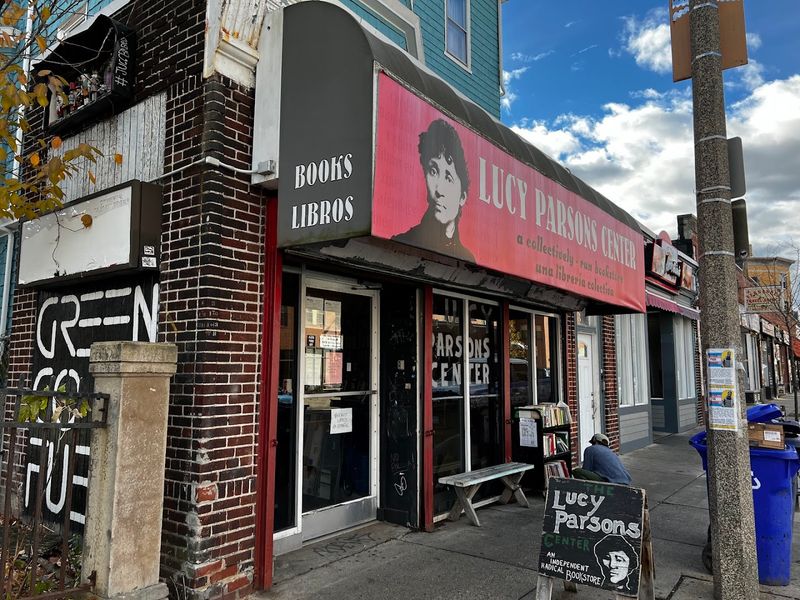
At 358 Centre St A, Jamaica Plain, MA 02130, the Lucy Parsons Center occupies a modest but meaningful space in one of Boston’s most politically active neighborhoods. Jamaica Plain has long been a hub for community organizing, immigrant rights movements, and progressive activism, making it a fitting home for a bookstore rooted in those same values.
The Centre Street location puts the store within walking distance of local parks, community gardens, and a dense network of neighborhood organizations. It is not a flashy storefront competing for attention with chain retailers.
The building itself blends into the urban fabric of JP, as locals call the neighborhood, without fanfare. What distinguishes it is not the exterior but what happens inside and what the space represents to the people who rely on it.
Few bookstores anywhere in the country carry this kind of historical and community weight in such a compact, unpretentious package.
Share this story