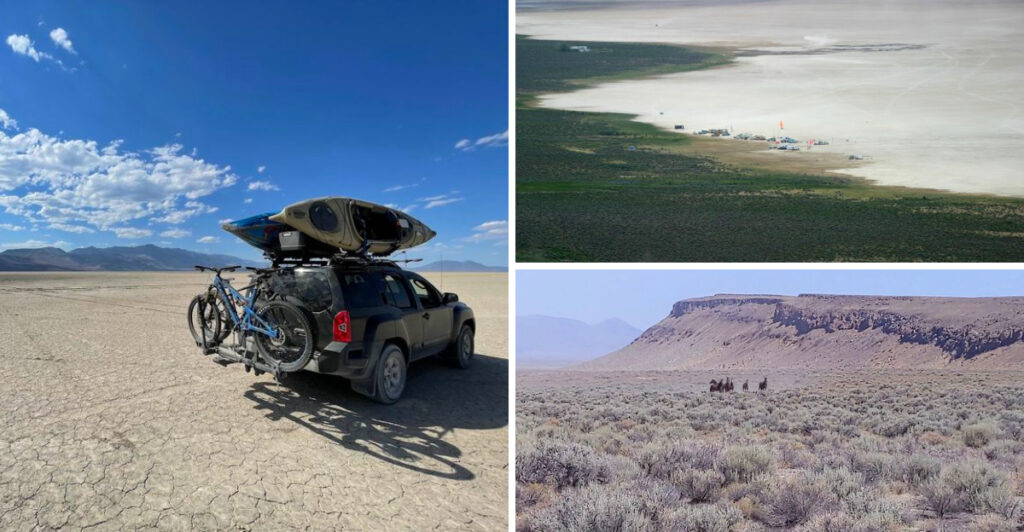
There is a corner of Oregon so remote and raw that most people never even know it exists. Out past the ponderosa pines, beyond the ranches, and well past the last gas station, a vast cracked lakebed stretches for miles under an enormous sky.
The Alvord Desert sits in the rain shadow of Steens Mountain in southeastern Oregon, and it is one of those places that quietly rewires your sense of what the world looks like. I have stood on that playa at midnight with the Milky Way overhead and felt like I was the only person left on the planet.
If that sounds like your kind of adventure, keep reading, because this place is worth every mile of that long drive.
Where Exactly You Will Find This Desert
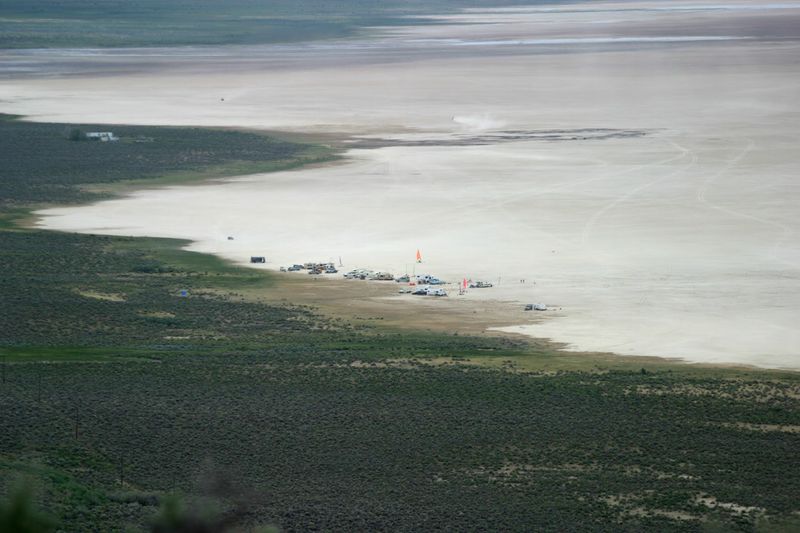
The Alvord Desert sits in Harney County in southeastern Oregon, at roughly GPS coordinates 42.5354, -118.4560, along Fields-Denio Road, Oregon 97721. To get there, most travelers head south from Burns on Oregon Route 78 for about 105 miles, then turn onto Folly Farm Road, which transitions into a dirt road leading to the playa.
The closest town is Fields, a tiny community with a population in the single digits, best known for its milkshakes at the Fields Station store. There is no gas station on the desert itself, so filling your tank before you leave Burns is non-negotiable.
The playa is tucked into the rain shadow cast by Steens Mountain to the west, which means the area receives very little precipitation annually, keeping the lakebed dry and firm enough to drive on for much of the year. Access points include the Frog Springs road, which is free but requires decent vehicle clearance, and the road through Alvord Hot Springs, which is privately managed and easier for sedans.
Either way, you are a long way from civilization, and that is precisely the point.
The Landscape That Looks Like Another Planet
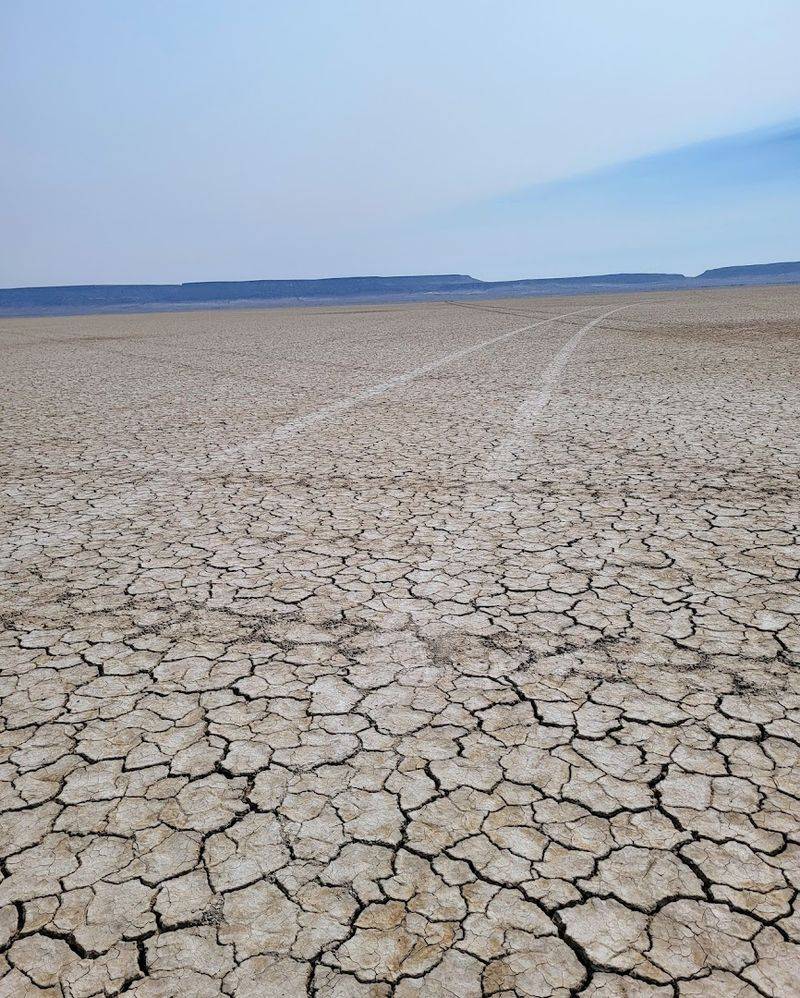
The first time you set eyes on the Alvord playa, your brain does a small double take. The surface is a mosaic of cracked, pale earth tiles stretching roughly twelve miles in length, and the flatness is so complete that you can see the curvature of the horizon in every direction.
This ancient lakebed was once covered by a prehistoric lake that dried up thousands of years ago, leaving behind a hardpan surface of silt and clay. During dry season the cracks form those distinctive polygon patterns that photographers travel hundreds of miles to capture.
Steens Mountain rises dramatically to the west, topping out at 9,733 feet, and the contrast between that jagged volcanic ridge and the perfectly flat desert floor below is genuinely striking. On hot summer days, heat mirages shimmer across the playa, creating the illusion of distant water, which is both beautiful and a little disorienting.
After a wet spring, shallow water can collect on parts of the playa, attracting shorebirds and reflecting the sky like a mirror. The whole scene feels less like Oregon and more like somewhere on a different continent entirely.
Stargazing So Good It Feels Unfair
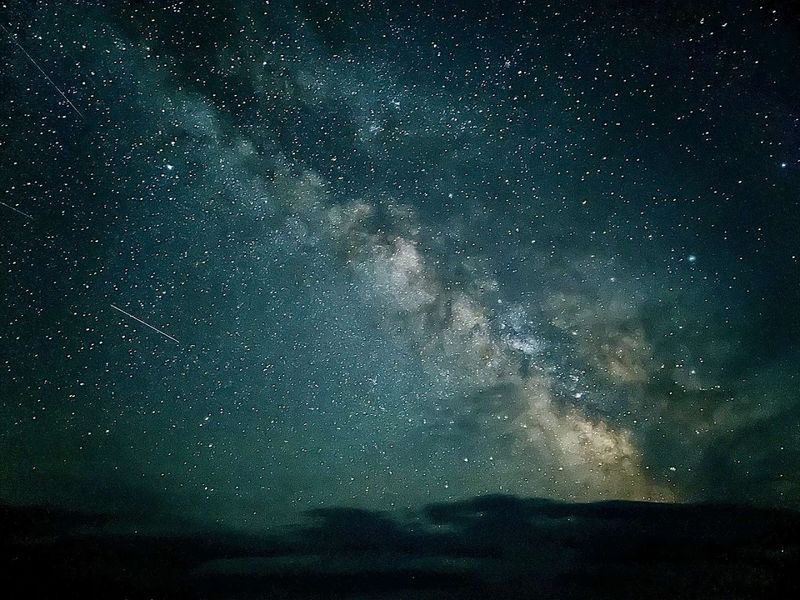
Few places in the continental United States can match the darkness of Alvord Desert after sunset. The nearest significant light pollution is hours away by car, and on a new moon night the sky overhead is so dense with stars that the Milky Way casts a faint shadow on the playa below.
I set up my sleeping bag on the playa one September night and spent two hours just lying flat on my back, watching satellites drift past and trying to count shooting stars. The constellations are so sharp and clear that even people who have never studied astronomy can pick out familiar shapes without any help.
The best strategy is to check the lunar calendar before planning your trip and aim for the nights closest to the new moon. Bring a red-light headlamp rather than a white-beam flashlight, since red light preserves your night vision far better.
Temperatures drop sharply after dark even in summer, so a warm sleeping bag rated below 40 degrees Fahrenheit is smart packing. The Alvord regularly ranks alongside Big Bend National Park as one of the darkest accessible spots in the lower 48 states.
Camping Directly on the Playa
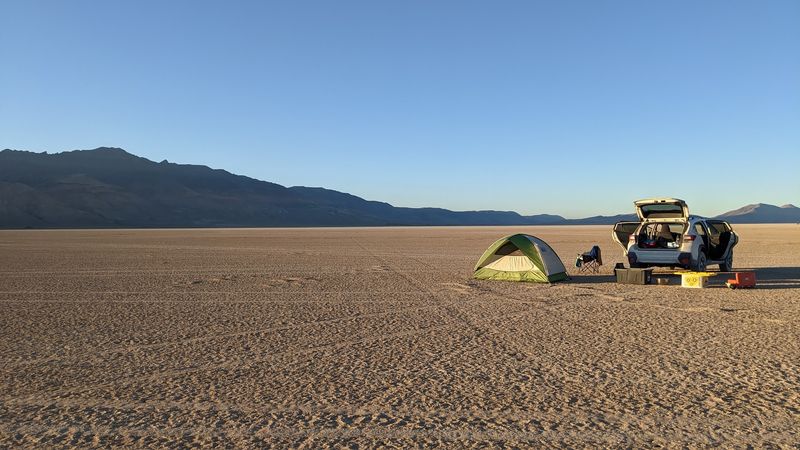
One of the most freeing things about the Alvord Desert is that you can camp anywhere on the playa for free. There are no designated sites, no reservation systems, and no rangers checking permits.
You simply drive out onto the cracked lakebed, pick a spot, and set up camp wherever you like.
That freedom is genuinely refreshing, but it comes with real responsibility. You need to bring absolutely everything with you: water, food, a portable toilet, and all your supplies, since there are zero facilities on the desert floor itself.
The Alvord Hot Springs campground just up the road offers a more structured experience with picnic tables and fire rings if you want a touch of comfort nearby.
Wind is the wild card here. Gusts can exceed 40 miles per hour, so staking down your tent or gazebo properly is not optional.
A weighted or well-anchored shade structure makes a huge difference during the day. The ground is hard-packed and stakes can be tricky to set, so bring the heavy-duty kind.
Mornings after a calm night are spectacular, with the rising sun painting Steens Mountain in shades of copper and pink while the playa glows beneath it.
Driving, Riding, and Moving Across the Playa
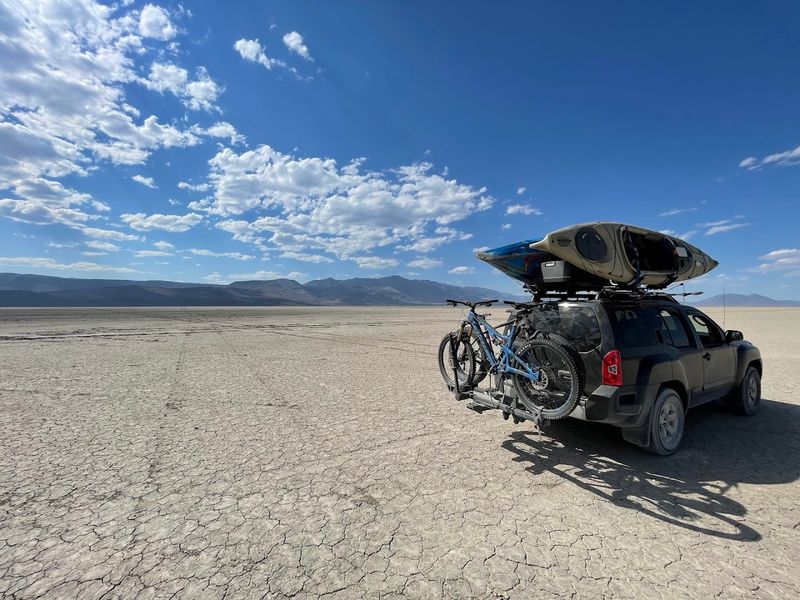
There is something deeply satisfying about driving onto a completely flat, open surface with no lanes, no signs, and no speed limits telling you what to do. The Alvord playa is firm enough during dry months for regular passenger vehicles in most areas, though four-wheel drive gives you more confidence on the rougher access roads leading in.
Beyond cars, the playa welcomes motorcycles, ATVs, mountain bikes, and even windsurfers who use the flat surface and reliable desert winds to skim across the cracked earth. It is one of the few places where a windsurfer and a sedan can share the same open space without anyone being in anyone else’s way.
One important caution: the area immediately around Alvord Hot Springs can have soft, wet ground due to spring runoff, and getting stuck there means a tow bill that reportedly runs around $1,500. Staying away from the visibly damp patches near the spring outflows is worth keeping in mind.
Early morning is a great time to drive the playa because the light is soft, the air is cool, and the surface tends to be at its firmest before the midday heat builds up.
Alvord Hot Springs and the Thermal Waters Nearby
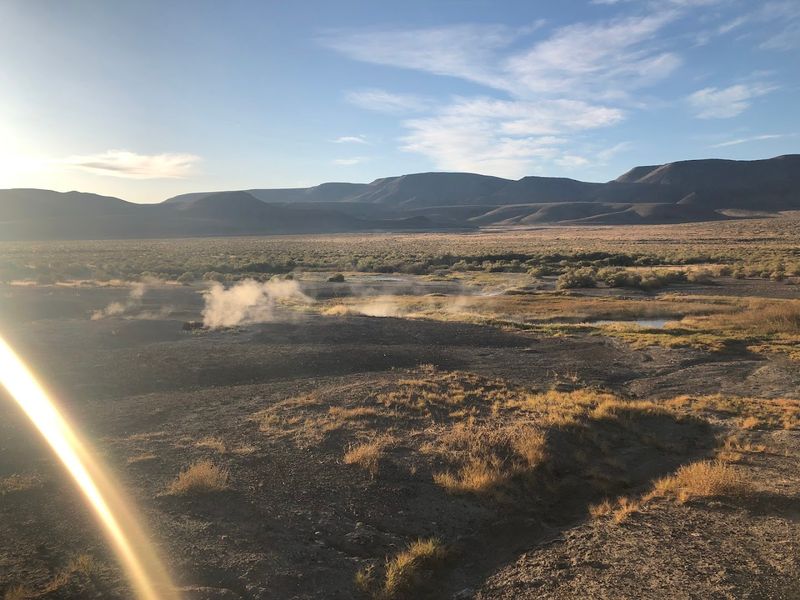
About a mile north of the main playa access, Alvord Hot Springs offers a genuinely satisfying reward after a long dusty drive. The springs are privately operated, and visitors pay a day-use fee or book an overnight stay to access the soaking pools, which are fed by geothermal water that reaches temperatures around 170 degrees Fahrenheit before being cooled to a comfortable soaking level.
The pools sit in a simple corrugated metal structure with open sides facing the playa and Steens Mountain, which means you soak while staring at one of the most dramatic landscapes in Oregon. It is a no-frills setup, but the views make up for any lack of luxury.
Beyond Alvord Hot Springs, the broader area has additional thermal features worth exploring. Borax Lake to the south has its own hot springs, and Mickey Hot Springs to the north is a more primitive and adventurous option for those willing to hike a bit.
The water at Mickey is extremely hot in spots, so caution around the edges is essential. Soaking in geothermal water after a night on the playa, with coyotes calling in the distance, is the kind of experience that stays with you long after you have driven back to the main road.
Sunsets and Sunrises That Earn Every Cliche
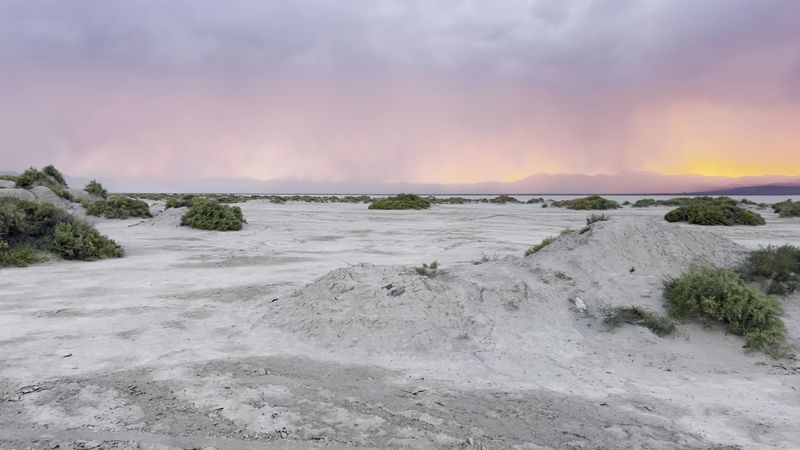
Sunsets at the Alvord Desert operate on a different scale than what most people are used to. Because the playa is so flat and the surrounding terrain drops away so completely, the sky fills your entire field of view from horizon to horizon, and when the sun starts dropping behind Steens Mountain, the colors that follow are genuinely worth planning a trip around.
Deep oranges bleed into purples, and the cracked surface of the playa picks up and reflects those colors in a way that makes the whole scene feel doubled. I arrived one evening in late August just as the sun was an hour from setting, and by the time darkness fell I had taken more photos than I had on the entire rest of the trip combined.
Sunrises are equally worth the early alarm. The eastern sky brightens slowly, and the first light catches the top of Steens Mountain before the playa below even begins to warm.
If you camp overnight on the desert floor, rolling out of your sleeping bag to watch the sunrise costs you nothing but a few minutes of warmth. The light during that first half hour after dawn is soft and golden, and the silence of the desert at that hour is something that genuinely needs to be experienced rather than described.
Wildlife and the Quiet Life of the Desert
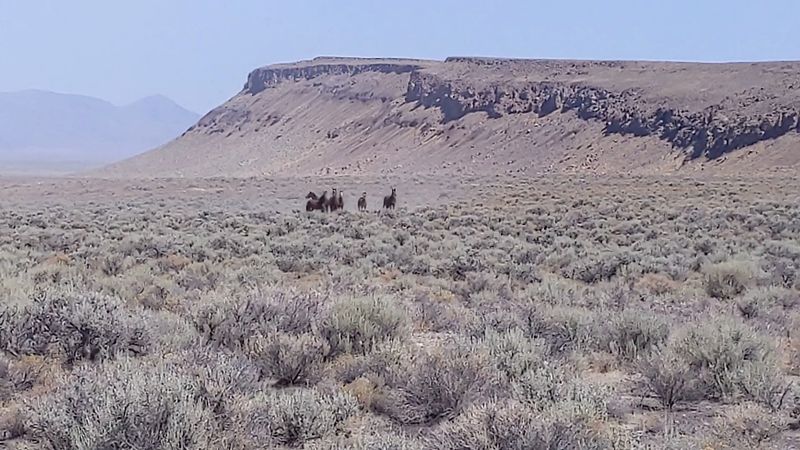
The Alvord Desert looks barren at first glance, but the surrounding landscape supports a surprising amount of wildlife once you start paying attention. Pronghorn antelope are regularly spotted near the edges of the playa, moving through the sagebrush flats with that distinctive bouncing gait that makes them look like they are always in a mild hurry.
Coyotes are heard more often than seen, especially at night when their calls echo across the playa and remind you that the desert is far from empty. Birds of prey, including red-tailed hawks and prairie falcons, patrol the thermals above the basin, and during wet springs shorebirds gather wherever shallow water pools on the lakebed.
The vegetation around the playa edges is dominated by greasewood and rabbitbrush, both of which are adapted to the alkaline soils left behind by the ancient lake. Cicadas fill the afternoon heat with their buzzing chorus, which is oddly comforting in a place so otherwise quiet.
Wind devils, which are small dust whirlwinds, spin up regularly on hot afternoons and march across the playa in erratic paths. Watching one approach and veer away at the last second is one of those small, unexpected pleasures the desert keeps tucked away for patient visitors.
Practical Tips for Surviving and Thriving Out Here
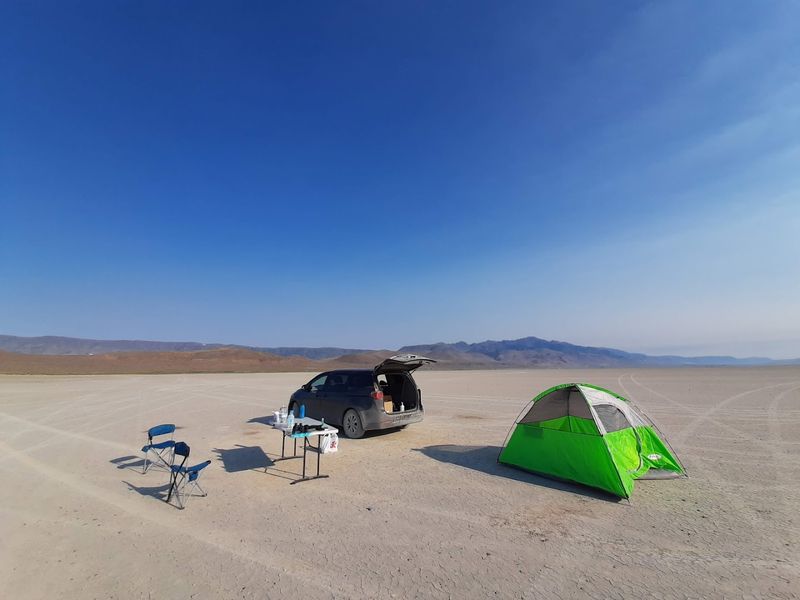
Getting the Alvord Desert experience right comes down almost entirely to preparation, because the nearest town with supplies is genuinely far away and there are no stores, no water taps, and no cell towers out on the playa itself. Water is the top priority: bring more than you think you need, and know that the camp host at Alvord Hot Springs may allow refills if you ask politely.
Sun protection is serious business here. The reflective surface of the playa bounces UV rays upward as well as downward, meaning you can burn even under a hat.
High-SPF sunscreen, UV-blocking clothing, and a quality pair of sunglasses are worth having on hand. The dry desert air also pulls moisture from your skin faster than you expect, so bringing a good moisturizer is a practical move rather than a luxury.
A portable toilet is strongly encouraged since there are no facilities on the playa itself, and Leave No Trace principles apply here just as they do anywhere in Oregon. A GPS unit or a saved offline map is smart since cell service is nonexistent and the flat playa can be disorienting once you are out in the middle of it.
Mark your camp location before wandering, and always let someone know your plans before heading out.
Why the Drive Is Part of the Experience
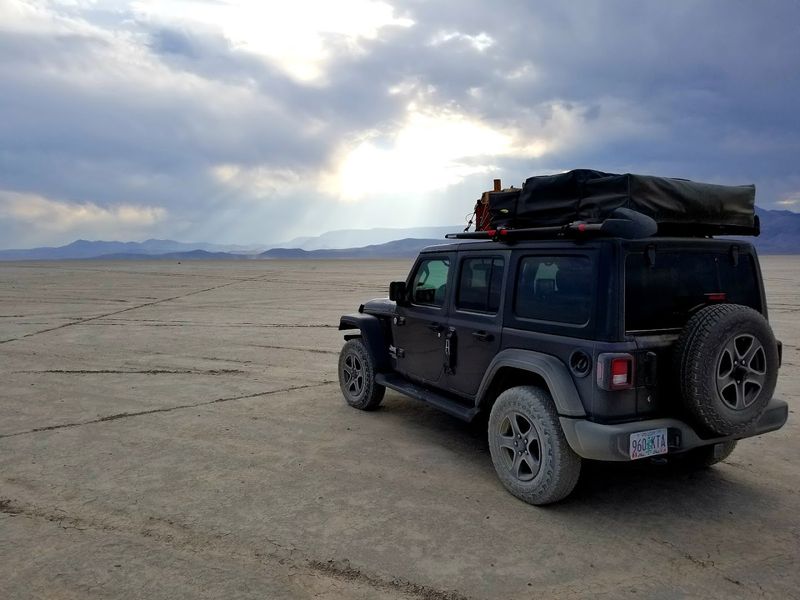
The route to the Alvord Desert from Burns covers about 105 miles of southeastern Oregon, and that drive is not just a means to an end. The road passes through high desert rangeland, volcanic rimrock country, and wide-open basins that feel completely different from the Oregon most people picture when they hear the state’s name.
Highway 78 east of Burns cuts through the Hart Mountain area and drops into the Alvord Basin with a gradual reveal that builds anticipation nicely. Small ranches and the occasional cluster of cottonwood trees mark the rare water sources, and the town of Fields sits at the base of the basin like a tiny outpost at the edge of a frontier.
The Fields Station store in Fields, Oregon is worth a stop. It serves food and is famous for its milkshakes, and after miles of empty highway a cold drink and a friendly face feel genuinely welcoming.
The final stretch of dirt road to the playa is bumpy and dusty, but by the time the lakebed opens up in front of you, the long drive feels like the best decision you made all week. The remoteness is not a drawback; it is the whole reason the place still feels this untouched.
Share this story