One of Pennsylvania’s most impressive public gardens is hidden in plain sight on the Penn State campus. The Arboretum at Penn State spans 370 acres of gardens, woodlands, and walking trails, offering free admission and a peaceful escape just minutes from the heart of State College.
Visitors can explore themed gardens, seasonal flower displays, a children’s garden built around a limestone cave, and miles of scenic paths that change throughout the year. Keep reading to discover why this overlooked destination has become one of central Pennsylvania’s most rewarding places to spend an afternoon.
Where the Gardens Begin: Address, Location, and First Impressions
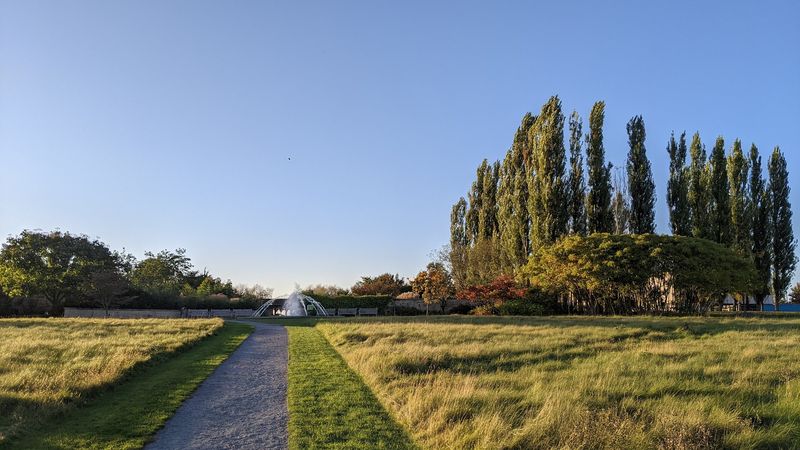
The Arboretum at Penn State sits at the corner of East Park Avenue and Bigler Road in State College, Pennsylvania, right at the edge of the University Park campus. The address is E Park Ave and Bigler Rd, State College, PA 16803, and it is easy to reach whether you are driving in from downtown or walking over from the main academic buildings.
My first visit happened on a weekday morning, and the quiet that greeted me felt almost surprising given how close the campus buzz was. The crushed limestone trail that winds through the property crunches pleasantly underfoot, and the transition from university sidewalks to open garden space happens quickly enough to feel like a genuine shift in mood.
Parking is available in the Lewis Katz Building lot nearby and costs just one dollar per hour, payable by credit card or through the ParkMobile app. That small fee is the only cost involved, since the arboretum itself is open daily from dawn until dusk with no admission charge.
370 Acres of Landscape That Refuses to Be Boring
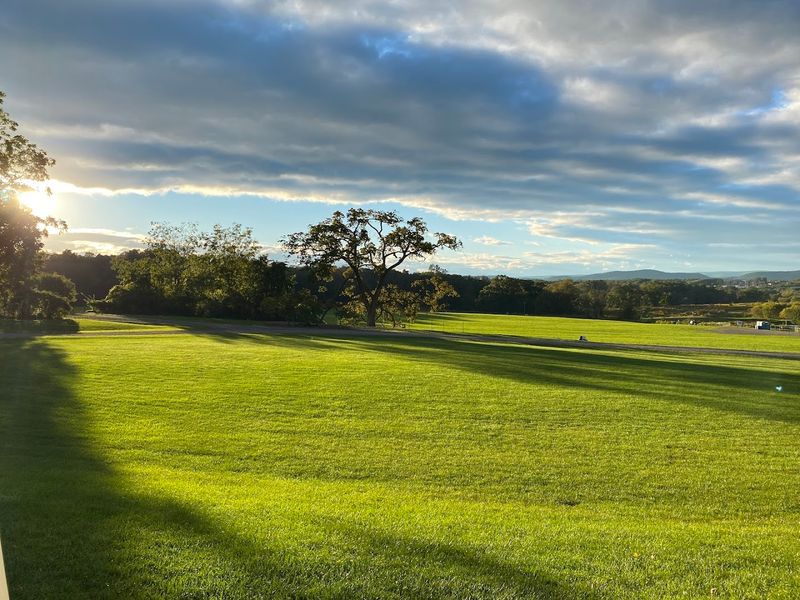
Most people picture a few flower beds and a couple of benches when they hear the word arboretum, so the sheer scale of this one tends to catch visitors off guard. The property covers 370 acres in total, and while the H.O. Smith Botanic Gardens make up the heart of the experience at 10 acres, the surrounding lands stretch far beyond what a single afternoon can fully cover.
Beyond the manicured gardens, the natural areas include Hartley Wood, which preserves a remnant of old-growth forest, the Gerhold Wildflower Trail, a Prairie Restoration Site, and an area called Big Hollow. The Ramage Marsh Meadow, filled with switchgrass, protects a sensitive groundwater recharge area and serves as a quiet reminder that conservation is woven into this place at every level.
Each zone feels distinct, so the walk never settles into monotony. One moment you are surrounded by sculpted rose beds, and the next you are under a canopy of trees that have been standing far longer than the university itself.
A Century in the Making: The Story Behind the Gardens
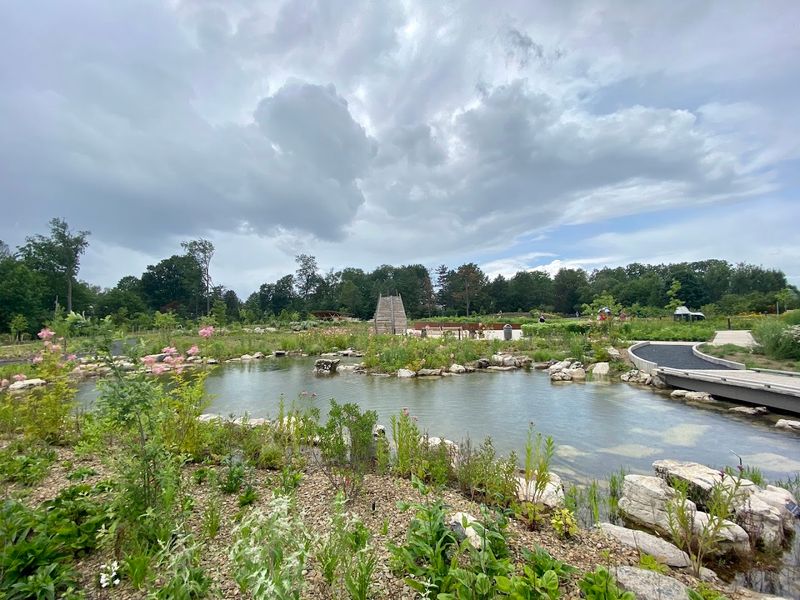
Penn State’s Board of Trustees first set aside land for an arboretum back in 1914, which means this project was more than a century in the making before it reached its current form. The master plan that shaped the modern gardens was developed between 1996 and 1999, but the real turning point came in 2007 when Charles H. Skip Smith donated ten million dollars to fund the project.
The H.O. Smith Botanic Gardens are named in honor of his father, and they officially opened to the public on April 25, 2010. That opening marked the moment when a long-held academic vision became a living, breathing landscape that anyone could walk through for free.
In 2020, the American Planning Association’s Pennsylvania chapter recognized the arboretum as one of three Great Places in Pennsylvania, and in 2016 it was designated as the heart of an Arboretum Cultural District. The newly opened Palmer Museum of Art, which welcomed visitors in June 2024, now stands adjacent to the grounds and adds another layer to the cultural story growing here.
Childhood’s Gate: The Children’s Garden That Earns Every Bit of Its Reputation
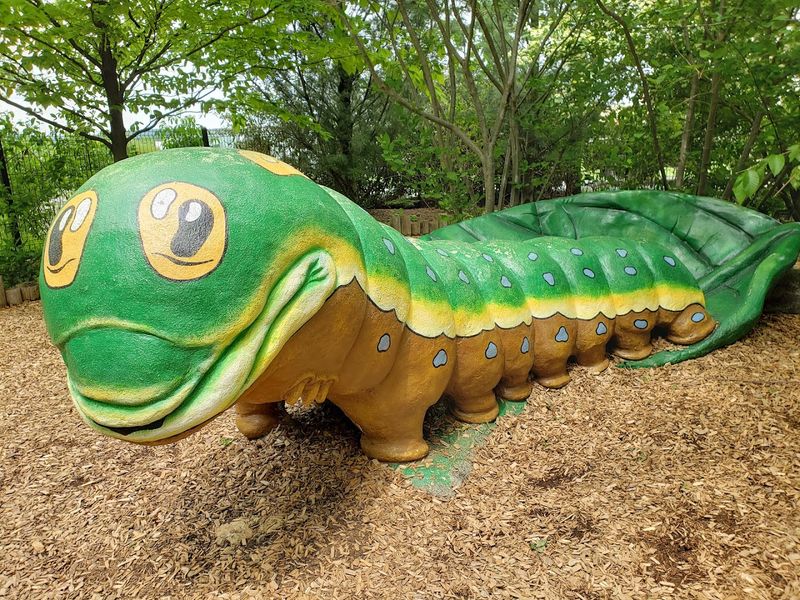
Opened in July 2014, Childhood’s Gate Children’s Garden is one of those places that makes adults secretly wish they were eight years old again. The entire space is modeled on the central Pennsylvania landscape, and the design team clearly put serious thought into making it interactive rather than just decorative.
A limestone cave runs through part of the garden, and a stone amphitheater provides a natural gathering spot for the kind of spontaneous performances that happen when kids find a stage. Sculptures of Pennsylvania animals are scattered throughout, and children can water plants, learn about how food grows, and play in sand and water features that somehow manage to be educational without feeling like homework.
Families visiting with young children consistently describe this area as the highlight of their trip, and it is easy to see why. The garden does not talk down to kids or keep them behind barriers. It hands them a watering can and trusts them to figure out the rest. The section just beyond this one might surprise you just as much.
The Pollinator and Bird Garden: Three Acres of Buzzing, Fluttering Activity
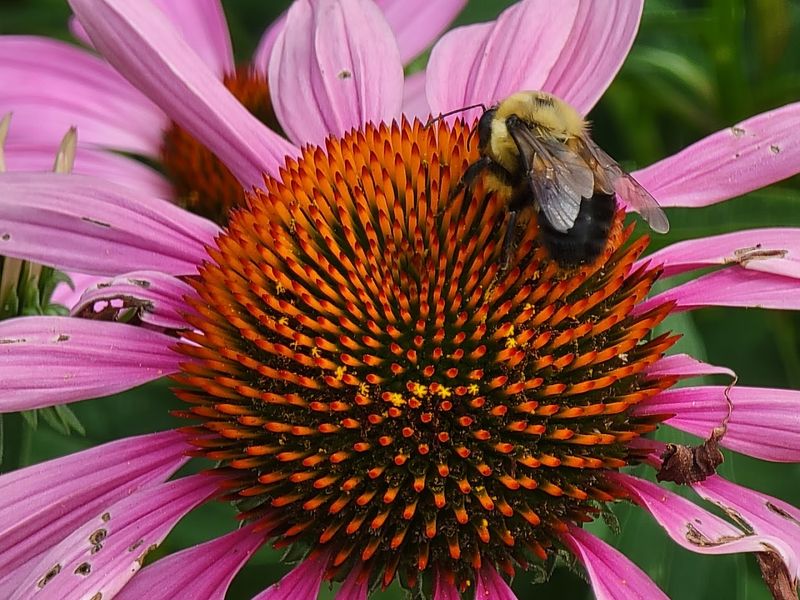
There is something genuinely mesmerizing about standing in the middle of a garden where the air itself feels alive. The Pollinator and Bird Garden, which opened in 2021, covers three acres and was designed specifically to attract the diverse range of pollinators and birds native to Pennsylvania.
The habitats packed into this space include meadows, woodlands, wetlands, and a pond, plus orchards, agricultural beds, and honeybee hives. Native bee hotels, which are small structures filled with tubes that solitary bees use for nesting, are tucked around the garden at regular intervals and never fail to draw curious visitors who stop to peer inside.
Butterflies and bees move through the plantings in numbers that feel almost theatrical during peak summer months. The combination of functional agriculture and wildlife habitat makes this section one of the most genuinely educational parts of the arboretum, even though nothing about it feels like a lecture. The Oasis Garden just around the corner offers a completely different kind of sensory reward.
The Oasis Garden and Its Show-Stopping Fountain
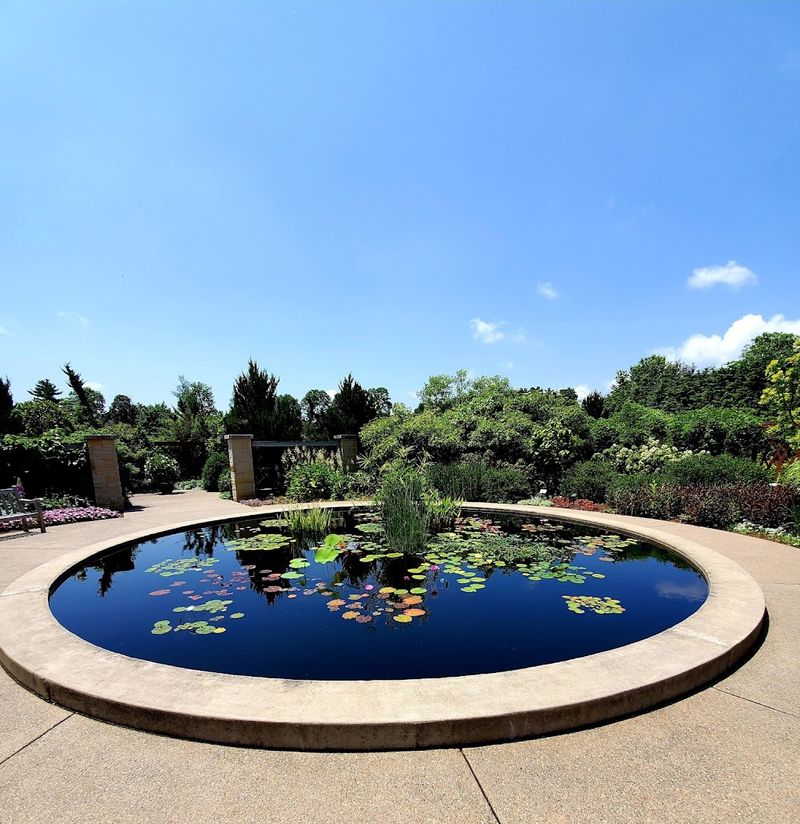
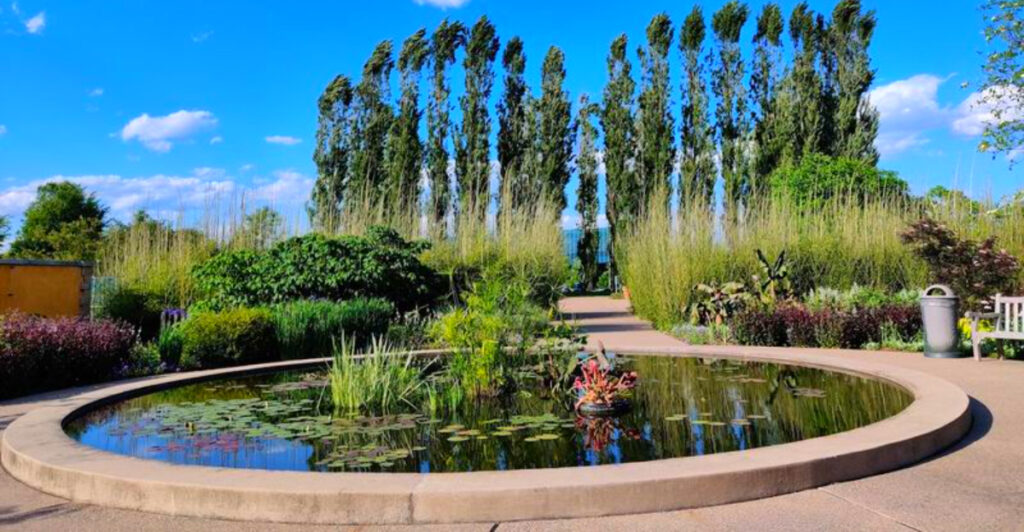
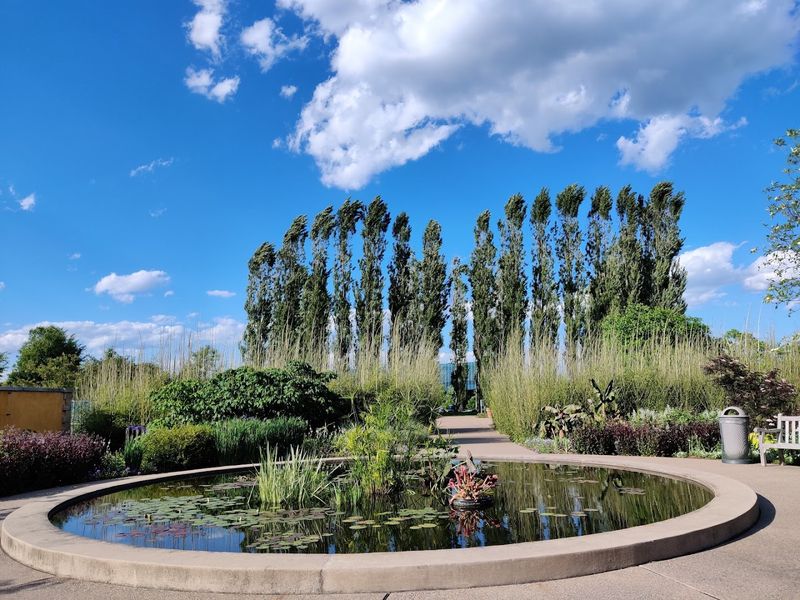
A circular pool filled with aquatic plant displays sits at the center of the Oasis Garden, surrounded by a path lined with bamboo that creates an unexpectedly lush corridor for such a temperate climate. The whole area has a quality that makes you slow down without consciously deciding to.
The Margery Enes Smith Soaring Waters Fountain is the centerpiece of this section, and it has earned a genuine reputation as one of the best places in all of North America to watch a sunset. That claim sounds bold, but the way the fountain catches late afternoon light and throws it across the surrounding plantings is the kind of thing that makes people stop mid-sentence and just look.
The fountain operates through the warmer months, and visiting in spring or summer gives you the full effect. Even in autumn, when the aquatic plants have faded and the bamboo takes on a golden tone, the garden holds its own. The Rose and Fragrance Garden nearby offers an entirely different sensory experience worth exploring next.
Roses, Tree Peonies, and a Walled Garden Built for the Senses
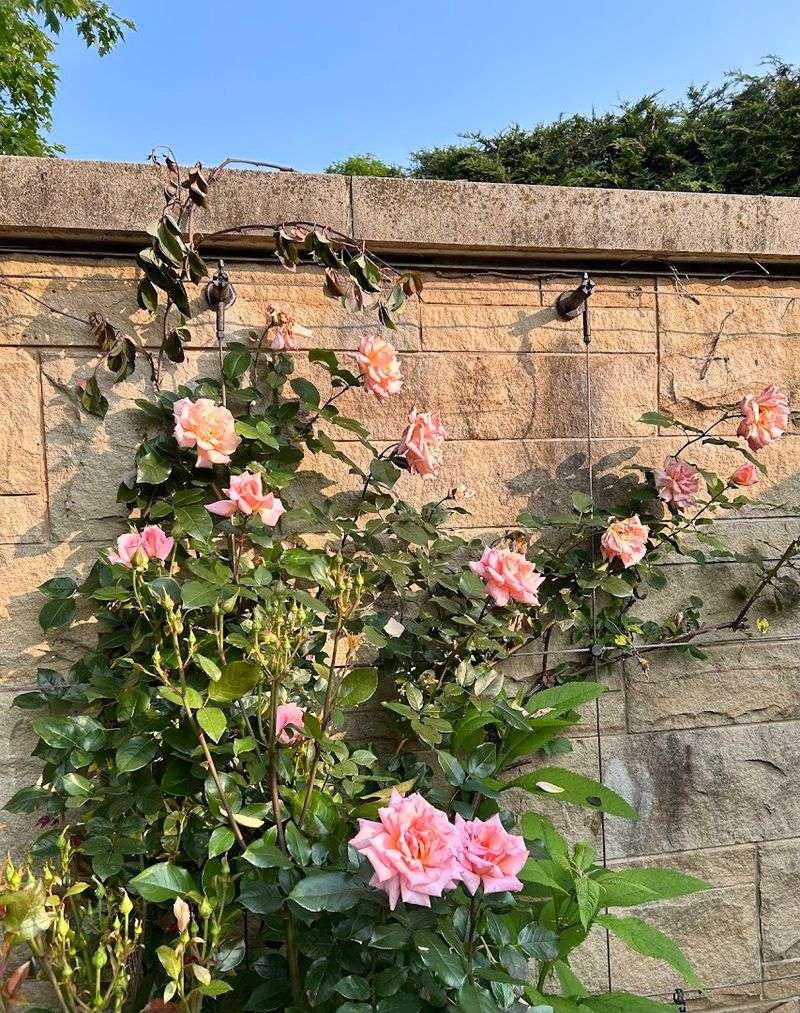
The Rose and Fragrance Garden is the kind of place that makes you involuntarily close your eyes and just breathe for a moment. Enclosed within walls that create a sheltered microclimate, the garden showcases plants chosen as much for their scent as for their visual impact.
Numerous rose varieties bloom throughout the growing season alongside tree peonies, which are among the most dramatic flowering shrubs in any temperate garden. The combination of structure and fragrance gives this section a character that feels distinct from every other part of the arboretum.
Visiting in late spring captures the peonies at their peak, while early summer brings the roses into full color. The walled design means that even on breezy days, the fragrance tends to linger rather than drift away, which turns a simple walk through the space into something closer to a full sensory experience. The Strolling Garden and its oval Event Lawn, just a short walk away, show yet another side of what this arboretum has to offer.
The Strolling Garden, the Event Lawn, and the Tree That Started It All
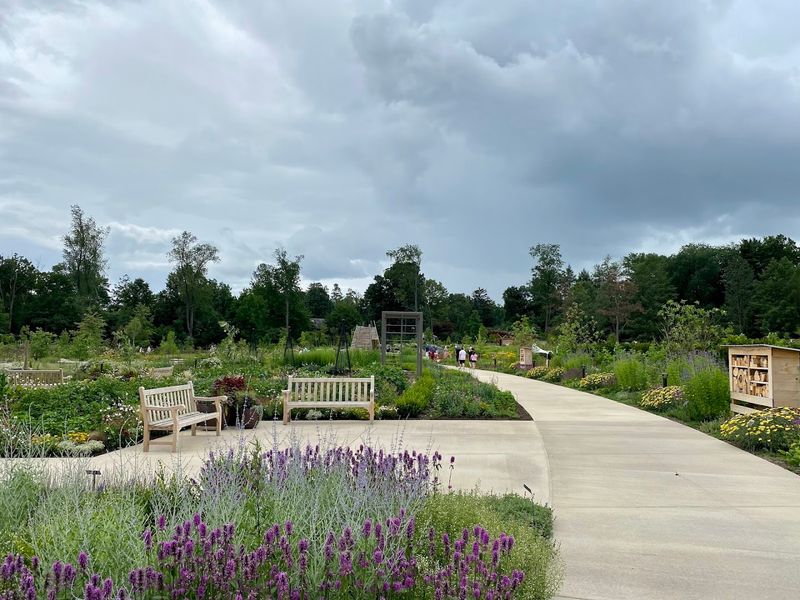
The Strolling Garden wraps around the oval Event Lawn in a way that feels deliberately unhurried, as though the designers wanted visitors to take their time rather than move through on a schedule. The lawn itself hosts festivals, concerts, and community gatherings throughout the year, giving the arboretum a social energy that goes beyond quiet contemplation.
The Hosler Oak stands within this section as the first tree officially planted in the botanic gardens, and there is something quietly moving about a single tree carrying that kind of symbolic weight. It does not look dramatically different from the other mature trees nearby, but knowing its history makes you pay attention to it in a way you might not otherwise.
Bringing a picnic to the Event Lawn on a mild afternoon is one of the more underrated ways to experience this space. The combination of open sky, surrounding plantings, and the distant sound of the fountain creates an atmosphere that feels both relaxed and quietly impressive. The natural areas beyond the gardens are worth your time as well.
Hartley Wood, Wildflower Trails, and the Wilder Side of the Property
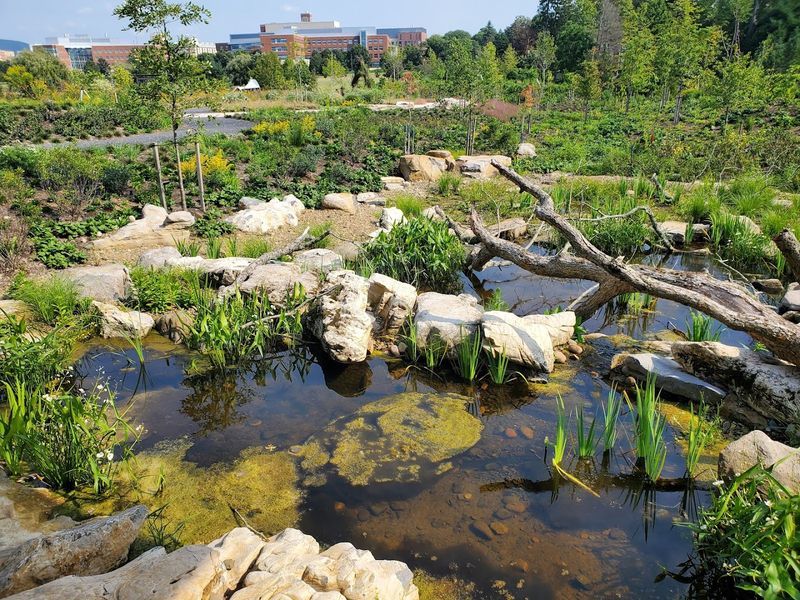
Not everyone who visits the arboretum makes it past the botanic gardens, which means the 340 acres of natural land beyond them are often beautifully uncrowded. Hartley Wood is a remnant of old-growth forest, and walking beneath its canopy feels noticeably different from the rest of the property, quieter and older in a way that is hard to put into words precisely.
The Gerhold Wildflower Trail offers a gentler version of that same experience, with native plants blooming in sequence from early spring through late summer. The Prairie Restoration Site and Big Hollow add further variety, while the Ramage Marsh Meadow preserves a field of switchgrass that protects a sensitive groundwater recharge area beneath the surface.
These natural sections reward visitors who are willing to spend more than an hour on the grounds. The educational placards placed throughout the arboretum continue into these areas, so even a solo walk turns into a quiet lesson about the ecology of central Pennsylvania. The arboretum visits well in every season, though spring and summer are particularly rewarding.
Practical Tips for Getting the Most Out of Your Visit
A few practical details make a real difference in how smoothly a visit to this arboretum goes. The grounds are open every day from dawn until dusk, and since there is no admission fee, the only cost to budget for is the one dollar per hour parking fee in the Lewis Katz Building lot, paid by credit card or through the ParkMobile app.
All major walkways are accessible for wheelchairs, motorized carts, baby carriages, and strollers, which makes this one of the more genuinely inclusive outdoor destinations in Pennsylvania. Clean indoor restroom facilities are available on the property, a detail that matters more than people admit when planning a two-hour outdoor walk.
Spring and summer offer the most dramatic displays, with the fountain running and the pollinator garden at full activity, but autumn brings its own rewards in color and quiet. Even a November visit in cold weather still delivers beauty, just of a more spare and contemplative kind. The arboretum can be reached by phone at 814-865-9118 or online at arboretum.psu.edu.
Share this story