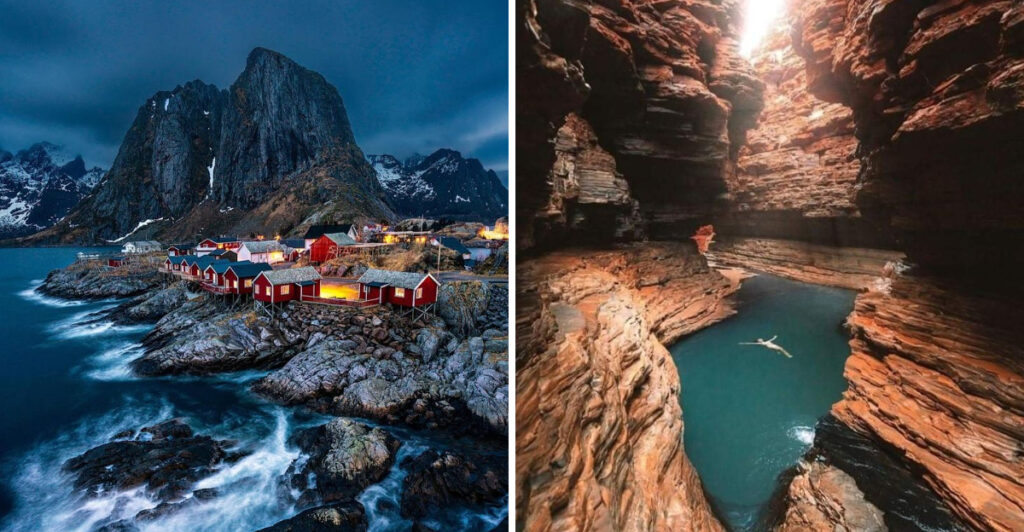
Most travelers have a bucket list full of the same famous spots, but the world is hiding far more than Paris and Bali. Beyond the tourist crowds and Instagram-famous landmarks, there are places so stunning they almost don’t seem real.
These 15 destinations are proof that the best adventures often happen off the beaten path. Pack your bags and get ready to be seriously amazed.
Lofoten Islands, Norway
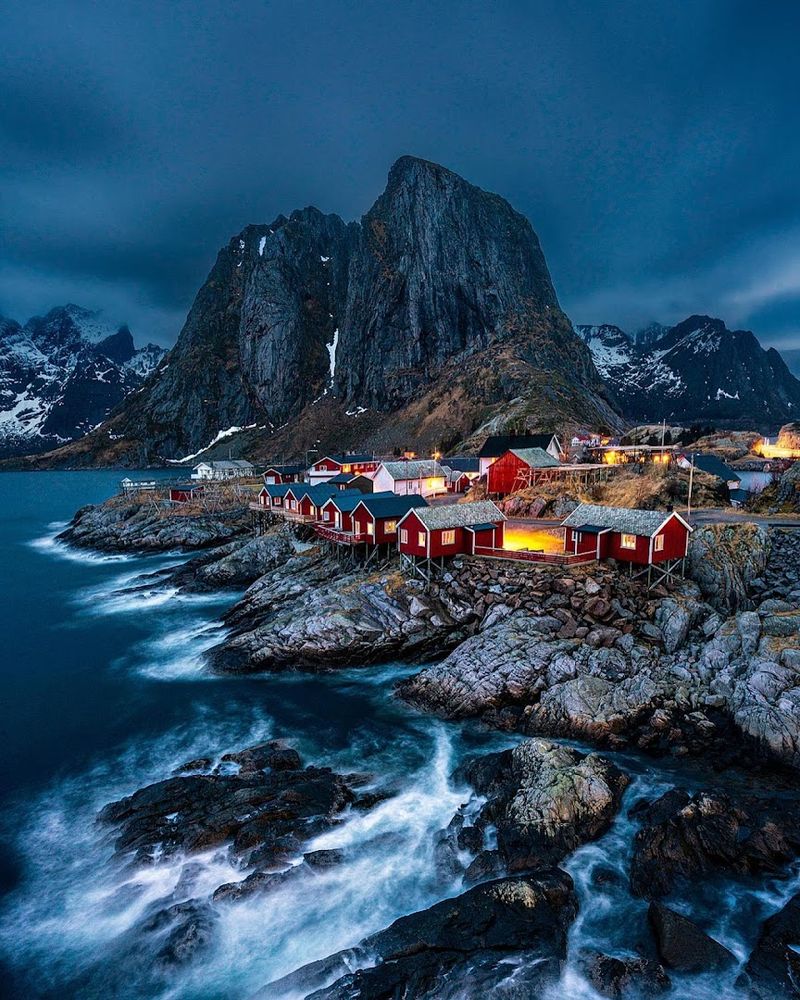
Imagine mountains bursting straight out of the ocean like nature is showing off. That is exactly what the Lofoten Islands look like, and it is every bit as jaw-dropping in real life as it sounds.
Red and yellow fishing cabins dot the shoreline, their reflections shimmering in the glassy Arctic water below.
Despite a recent uptick in visitors, large parts of this Norwegian archipelago still feel refreshingly wild and uncrowded. You can hike rugged trails, kayak through calm fjords, or simply sit on a white-sand beach that somehow exists inside the Arctic Circle.
Yes, white sand. Yes, inside the Arctic Circle.
Summers bring the famous Midnight Sun, when daylight stretches around the clock and golden light bathes everything in a warm glow. Winters offer a completely different spectacle: the northern lights dancing overhead while snow blankets the peaks.
The fishing villages have been here for centuries, and local seafood, especially stockfish, is absolutely worth trying. Lofoten rewards travelers who are willing to make the journey north, offering scenery that genuinely feels like stepping inside a painting.
Prokletije National Park, Montenegro
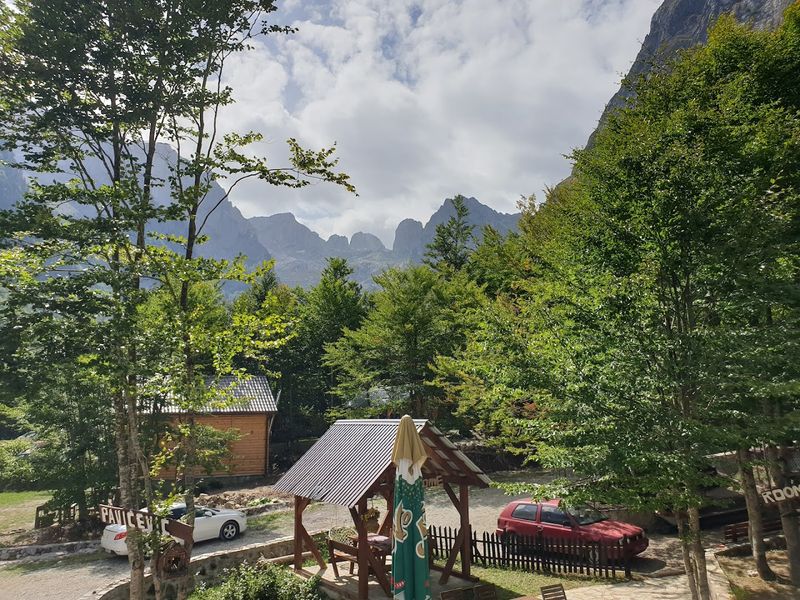
Nobody warned you that Montenegro was hiding some of Europe’s most dramatic mountain scenery, and honestly, that feels like a travel crime. Prokletije National Park, nicknamed the Accursed Mountains, sits tucked in the country’s far east, bordering Albania and Kosovo.
The name sounds ominous, but the scenery is anything but.
Glacial lakes sit calmly between jagged limestone peaks, reflecting skies so blue they look digitally enhanced. Hiking trails here are genuinely uncrowded, which feels almost surreal given how spectacular the views are.
You might share a trail with a local shepherd and his flock rather than a tour group selfie-stick parade.
The park is part of a larger cross-border protected area that includes the Albanian Alps, making it one of the Balkans’ most impressive natural regions. Wildlife including brown bears, wolves, and golden eagles call this area home.
Camping under the stars here feels like a true wilderness experience. For hikers who have grown tired of crowded Alpine routes, Prokletije offers a refreshing, raw alternative that delivers enormous scenery without the enormous crowds.
It is still wonderfully under the radar, which means now is the perfect time to visit.
Svaneti, Georgia
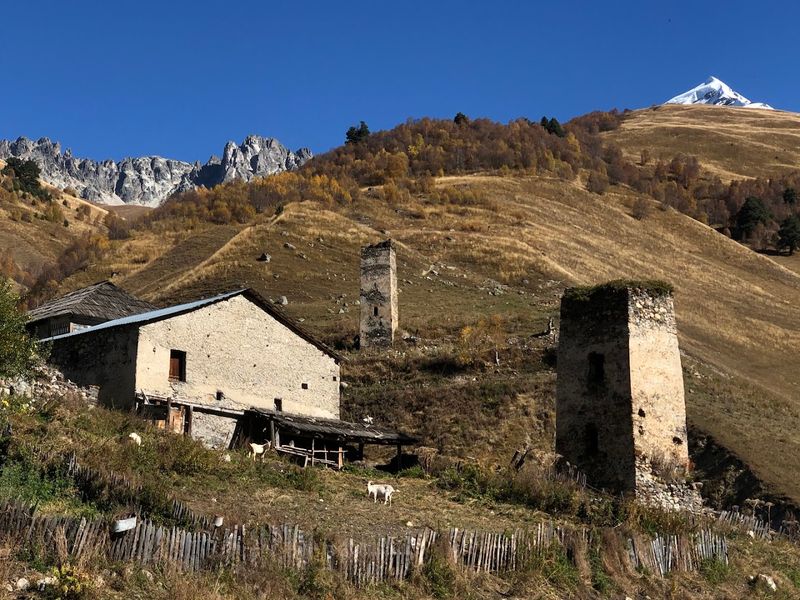
Hidden so deep in the Caucasus Mountains that roads only became reliable fairly recently, Svaneti is one of those places that genuinely feels like a different century. Stone defensive towers, some nearly a thousand years old, rise above tiny villages that have guarded their traditions fiercely through centuries of isolation.
The towers were built to protect families during feuds and invasions, and they still stand proud today.
The main town of Mestia serves as a base for exploring the region, offering access to hiking trails, glacier viewpoints, and local guesthouses run by families who welcome visitors warmly. Svan cuisine is hearty and delicious, featuring dishes like kubdari, a meat-filled bread that is basically a handheld feast.
Snow-capped peaks surround every village, and on clear days the mountain views are absolutely breathtaking. Summer brings wildflowers covering the meadows, while winter transforms the region into a quiet, snow-blanketed wonderland.
Skiing has recently become popular here, attracting adventurous travelers looking for slopes without the resort price tags. Georgia as a whole is one of Europe’s most underrated travel destinations, and Svaneti is its crown jewel.
Few places on Earth offer this combination of dramatic scenery, ancient history, and genuine cultural richness all in one valley.
Raja Ampat, Indonesia
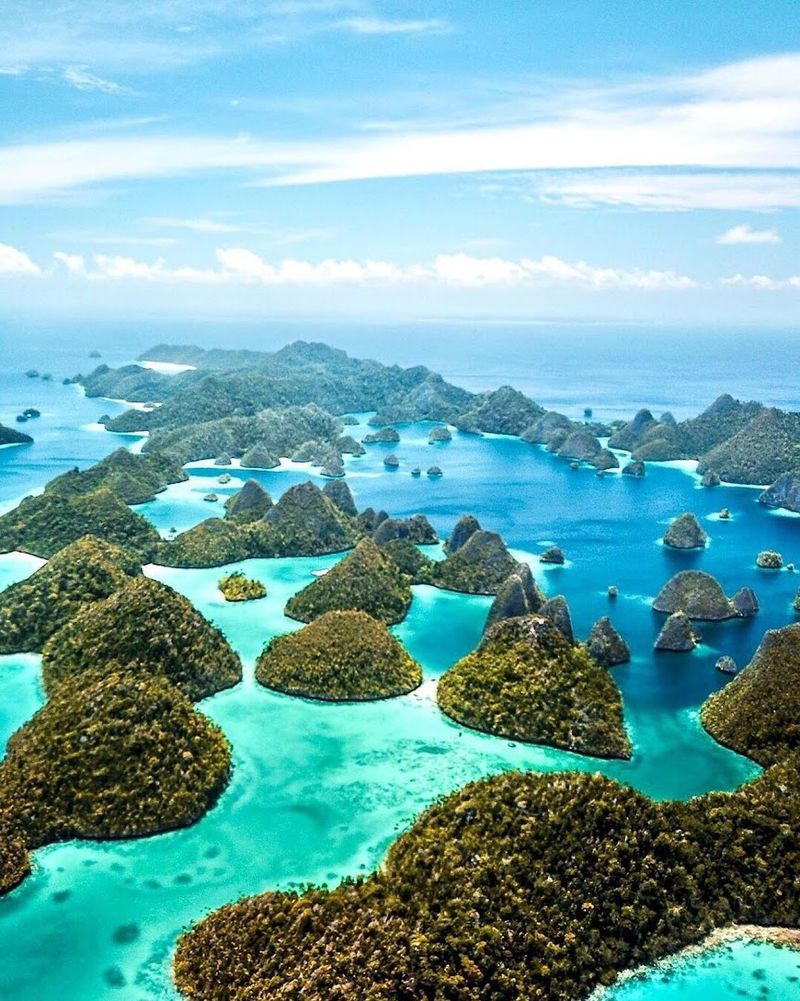
Scientists have counted more species of fish in Raja Ampat than almost anywhere else on the planet, and just snorkeling here feels like watching a nature documentary come to life. Located off the tip of West Papua in eastern Indonesia, this archipelago of over 1,500 islands is a marine biodiversity hotspot that leaves even experienced divers speechless.
Above the water, the scenery is equally extraordinary. Mushroom-shaped limestone islands draped in jungle rise from water so clear and colorful it almost looks artificial.
Dugout canoes paddle quietly between islands, and the pace of life is slow enough to feel genuinely restorative.
Getting here requires effort, typically involving flights to Sorong followed by a ferry or speedboat. But that extra journey keeps the crowds manageable and the reefs in remarkable condition.
Liveaboard dive boats are popular for exploring the more remote corners of the archipelago. Responsible tourism matters enormously here, and many local operators are deeply committed to protecting the reefs.
Manta rays glide through certain channels like enormous, graceful kites, and whale sharks occasionally appear during the right season. For anyone who loves the ocean, Raja Ampat is not just a destination.
It is an experience that genuinely changes how you see the underwater world.
Karijini National Park, Australia
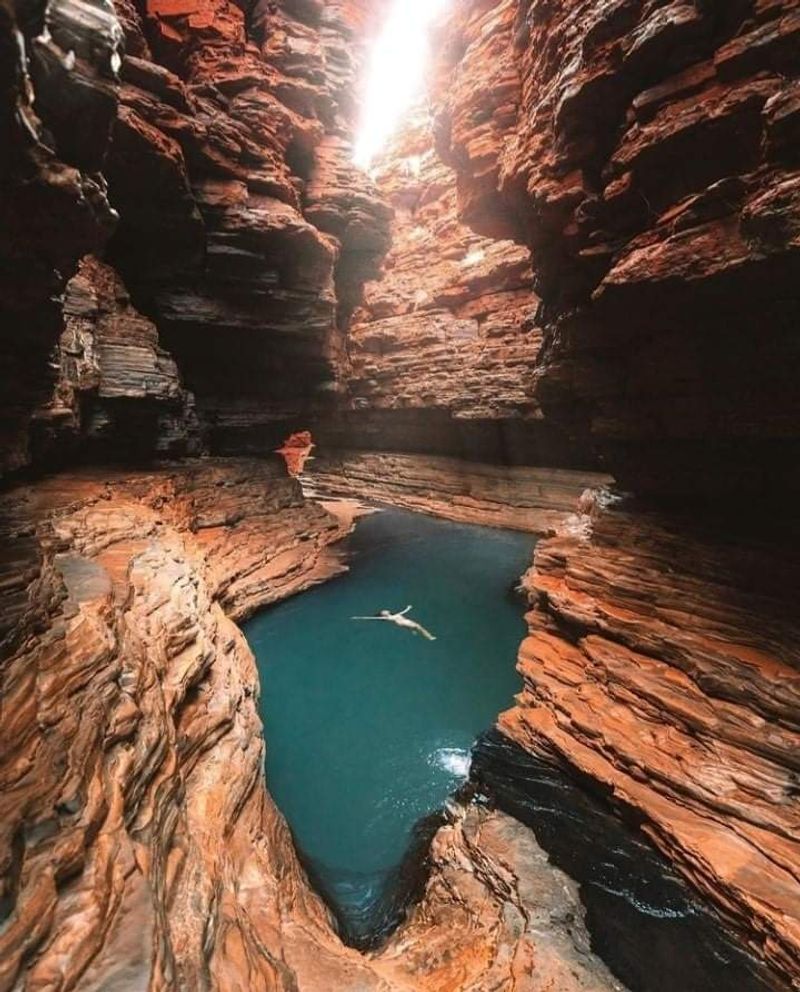
Western Australia keeps Karijini like a secret it is almost reluctant to share, and once you see the place, you completely understand why. The national park sits in the Pilbara region, where ancient red rock gorges plunge dozens of meters into the earth, revealing layers of stone that are nearly three billion years old.
That is older than most of the oxygen in our atmosphere.
At the bottom of these gorges, emerald swimming holes wait like rewards for anyone willing to scramble down the rocky paths. The contrast between the deep red canyon walls and the brilliant green water is genuinely stunning, and photos never quite capture how vivid it actually looks in person.
Wildlife is abundant throughout the park, including wallaroos, echidnas, and a dazzling variety of birds. Hiking ranges from easy walks along gorge rims to more challenging scrambles through narrow slots and past waterfalls.
Some sections require climbing through water, adding an element of adventure that most national parks simply cannot offer. The nearest major town is Tom Price, which provides basic supplies and accommodation.
Camping inside the park under an impossibly star-filled Pilbara sky is one of Australia’s great overlooked experiences. Karijini earns every superlative thrown its way.
Colchagua Valley, Chile
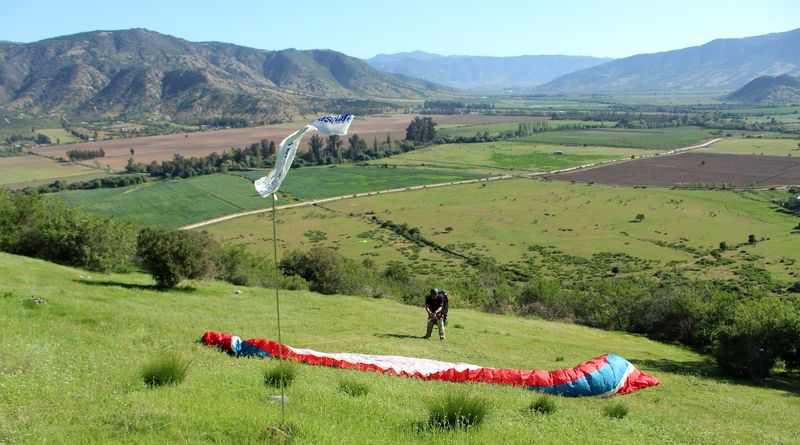
Chile’s wine country tends to get overshadowed by the country’s more dramatic attractions, like Patagonia and the Atacama Desert, but Colchagua Valley is quietly producing some of South America’s finest red wines. Carmenere, the grape variety that almost went extinct in Europe but thrived here, is the valley’s signature offering and absolutely worth seeking out.
The valley sits about two hours south of Santiago, making it an easy and rewarding weekend escape. Rolling hills covered in grapevines stretch toward the Andes, and many wineries offer tours that combine tastings with stunning mountain views.
The town of Santa Cruz serves as the valley’s charming hub, with excellent restaurants, a fascinating local museum, and a quirky wine train that connects visitors between estates.
Beyond the vineyards, Colchagua offers colonial architecture, horseback riding through the countryside, and the kind of relaxed, unhurried atmosphere that feels increasingly rare. The region also played a significant role in Chilean history, and the Museo de Colchagua houses one of Latin America’s most impressive collections of pre-Columbian artifacts.
Wine tourism here is growing but has not yet reached the saturation point of more famous regions. Visitors right now get excellent hospitality, affordable prices, and world-class wine without fighting for reservations months in advance.
Huacachina, Peru
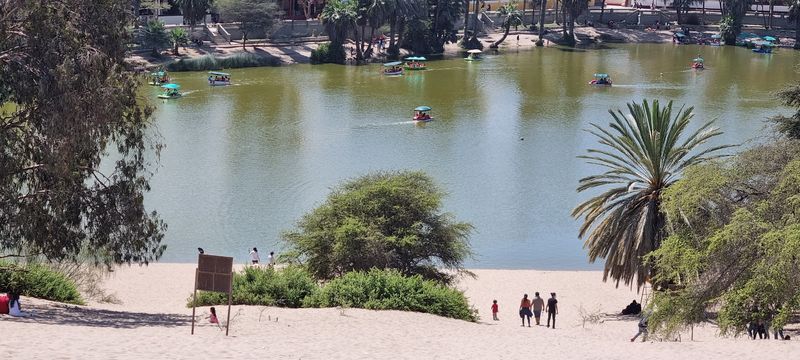
There is a tiny lagoon in the middle of a massive Peruvian desert, and it is surrounded by palm trees, colorful buildings, and sand dunes that rise so high they look genuinely intimidating. Huacachina is the kind of place that makes you stop and wonder whether you wandered into a dream.
It is real, and it is spectacular.
Dune buggies roar across the sand at exhilarating speeds, launching over crests and sliding down slopes while passengers shriek with a mix of terror and delight. Sandboarding follows, with riders strapping boards to their feet and carving down the steep dune faces.
Beginners tumble frequently, which somehow makes it even more fun.
Sunset here is the main event. As the light shifts to gold and then deep orange, the dunes take on colors that no camera fully captures.
The lagoon glows below, perfectly still, reflecting the sky above. The oasis itself has a small town feel, with hostels, restaurants, and a relaxed backpacker energy.
It sits just outside the city of Ica, which is easily reached from Lima or Cusco. Huacachina is proof that Peru offers far more than Machu Picchu, and this particular corner of the country deserves far more attention than it currently receives.
Ksamil, Albania
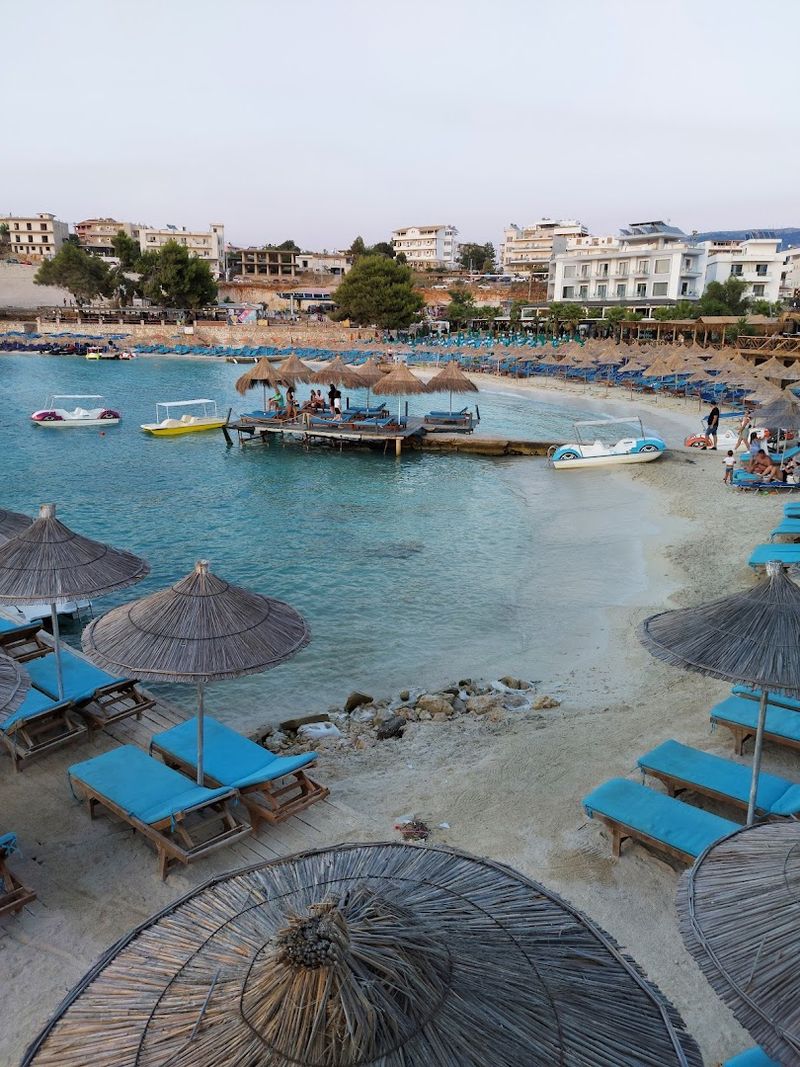
Albania might not be the first country that comes to mind for a beach holiday, but Ksamil is quietly making a very strong case for reconsideration. Tucked along the Albanian Riviera near the Greek border, this small coastal village offers turquoise water so clear that the sandy bottom is visible at impressive depths.
It looks almost Caribbean, which surprises most first-time visitors.
Small islands sit just offshore, reachable by a short swim or a quick boat ride. They have little more than a few trees and some beach chairs, but that simplicity is exactly the point.
The crowds found on Greek islands or Croatian beaches simply do not exist here in the same way.
Ksamil sits near Butrint National Park, a UNESCO World Heritage Site with remarkably well-preserved ruins from Greek, Roman, Byzantine, and Venetian periods all layered on top of each other. Combining beach days with history walks makes for an unusually satisfying travel experience.
Albanian food in the local restaurants is hearty, fresh, and surprisingly affordable. Seafood pulled from the Ionian Sea and grilled simply with lemon and olive oil is hard to improve upon.
Albania’s tourism infrastructure is growing fast, so visiting Ksamil now means enjoying its beauty before the secret gets fully out.
Lake Bohinj, Slovenia
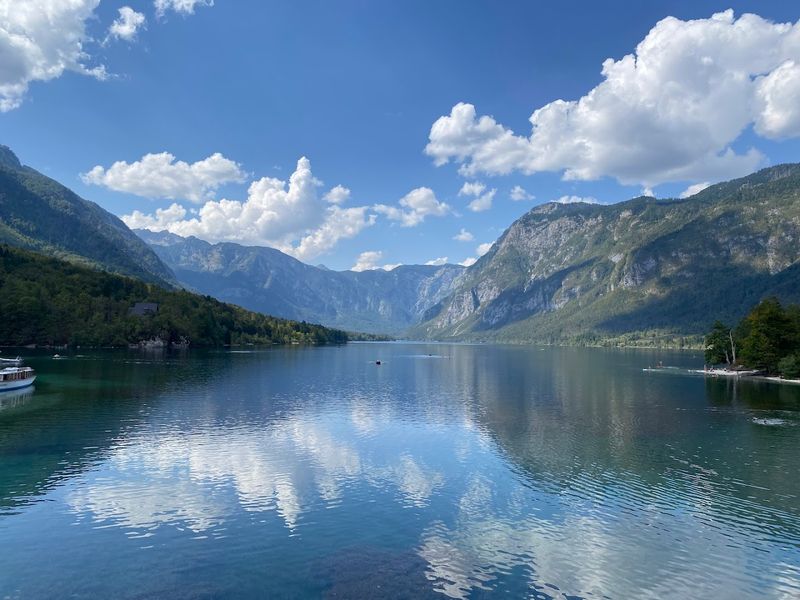
Everyone talks about Lake Bled, and yes, it is gorgeous, but Lake Bohinj sits just 26 kilometers away and offers something its famous neighbor often cannot: peace and quiet. As Slovenia’s largest permanent lake, Bohinj stretches through Triglav National Park, surrounded by Julian Alps peaks that reflect perfectly in the water on calm mornings.
Kayaking across the lake while mountains loom overhead is the kind of experience that resets your brain completely. Hiking trails fan out in every direction, ranging from gentle lakeside walks to serious alpine ascents that reward climbers with panoramic views across Slovenia and beyond.
In summer, the water is warm enough for swimming, and the lake’s clarity makes it feel almost impossibly refreshing.
The villages around Bohinj have maintained a traditional Slovenian character that feels genuinely authentic rather than curated for tourists. Local cheese, particularly the aged variety from the Bohinj plateau, is worth seeking out at any small shop or market stall.
Winter transforms the area into a ski destination, with the Vogel ski resort offering slopes above the lake with views that distract even experienced skiers. Slovenia as a whole punches well above its weight as a travel destination, and Bohinj is arguably its most underappreciated gem.
Arrive early, breathe deeply, and enjoy the silence.
Bisti/De-Na-Zin Wilderness, New Mexico, USA
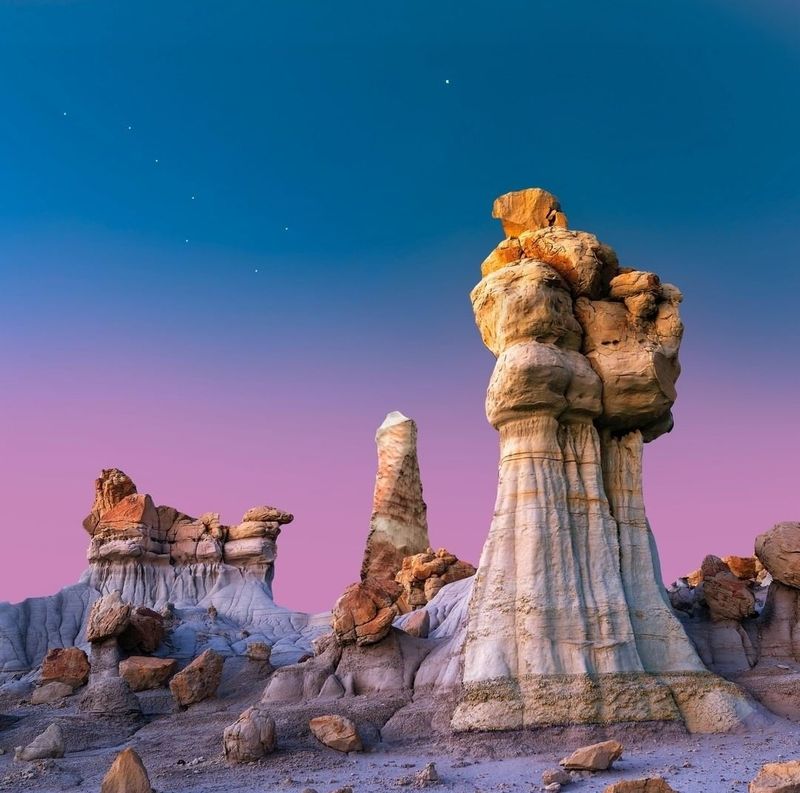
Some corners of the American Southwest look like they belong on another planet entirely, and Bisti/De-Na-Zin Wilderness might be the most otherworldly of them all. Located in northwestern New Mexico, this remote stretch of high desert is filled with hoodoos, crumbling rock formations, petrified wood, and eroded badlands in colors ranging from gray and purple to burnt orange.
It is completely surreal.
There are no marked trails here, which is either exciting or terrifying depending on your personality. Navigation requires a compass, a GPS device, and some basic wilderness confidence.
The payoff for that extra effort is a landscape that feels genuinely untouched and wildly photogenic at every turn.
Fossilized dinosaur bones have been discovered throughout the wilderness, adding a prehistoric layer to the already strange atmosphere. Early morning and late afternoon light transforms the landscape dramatically, turning ordinary rock formations into glowing sculptures.
Summer heat can be brutal, so spring and fall visits are strongly recommended. Bring more water than you think you need, sturdy footwear, and a willingness to get a little lost in the best possible sense.
The nearest town is Farmington, which provides basic supplies and accommodation. Bisti rewards the curious and the adventurous with scenery that most Americans have never seen and probably cannot quite believe exists.
Kangerlussuaq, Greenland
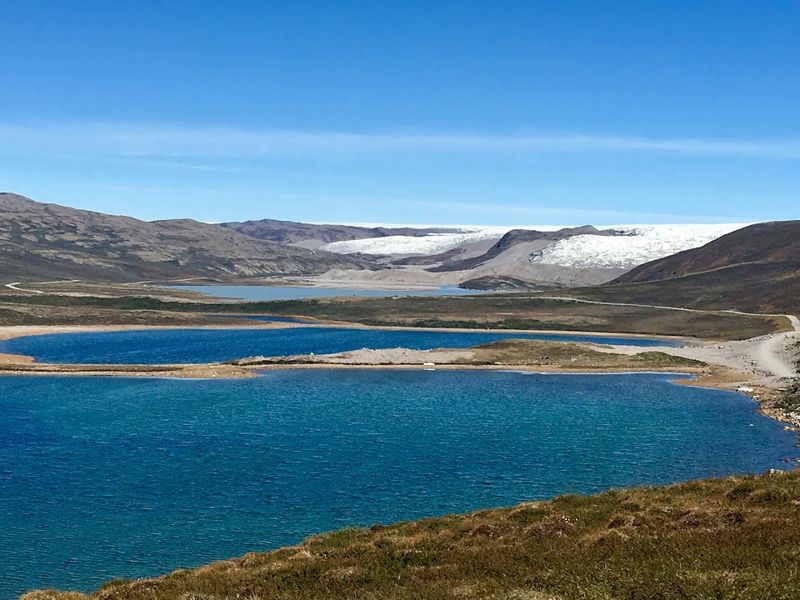
Greenland is the world’s largest island, and most of it is covered by an ice sheet so enormous that if it melted entirely, global sea levels would rise by over seven meters. Standing at the edge of that ice near Kangerlussuaq and staring out at an endless white horizon is one of the most humbling experiences a traveler can have.
The scale is simply incomprehensible.
Kangerlussuaq sits at the end of a long fjord in western Greenland and serves as the primary gateway to the interior ice sheet. A road leads directly to the ice edge, making it unusually accessible for such a remote destination.
Guided tours take visitors onto the glacier itself, where ice formations, meltwater streams, and crevasses create a landscape unlike anything found elsewhere.
Arctic wildlife roams the surrounding tundra, including musk oxen, Arctic foxes, and reindeer. The absence of light pollution makes Kangerlussuaq one of the world’s premier spots for viewing the northern lights during the darker months.
Clear, crisp Arctic air and minimal cloud cover give the lights room to perform their full spectacular show. There are no towns nearby, no crowds, and no distractions.
Just ice, tundra, sky, and silence. For travelers who want an experience that genuinely feels like the edge of the world, Kangerlussuaq delivers without compromise.
Tsingy de Bemaraha National Park, Madagascar
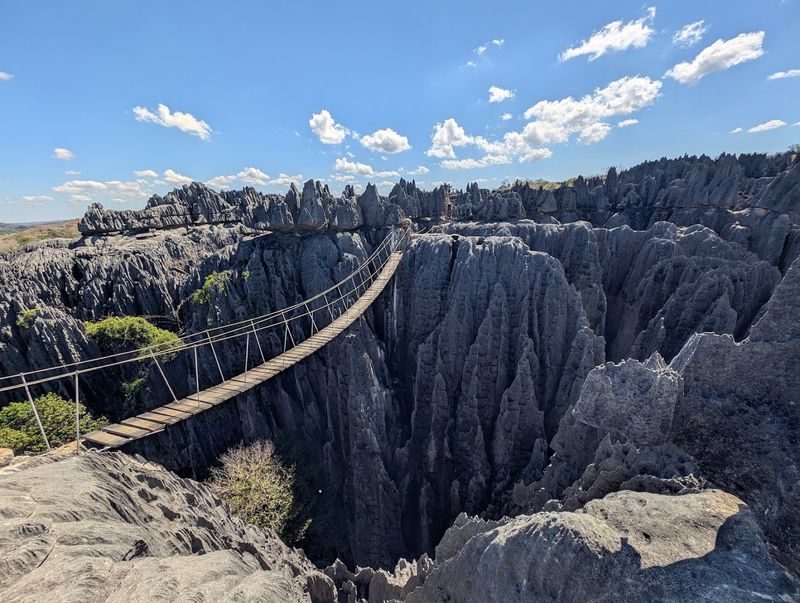
Razor-sharp limestone spires shoot upward from the earth like a petrified forest frozen mid-explosion, and navigating among them requires rope bridges, metal rungs bolted into rock, and a healthy respect for heights. Welcome to Tsingy de Bemaraha, one of the most extraordinary landscapes on Earth and a UNESCO World Heritage Site that most travelers have never heard of.
The word tsingy means roughly where one cannot walk barefoot in the local Malagasy language, which gives you a pretty accurate sense of what the terrain is like. The pinnacles were formed over millions of years as rainwater slowly dissolved the limestone into these dramatic, knife-edged formations.
Some towers reach over 100 meters tall.
Madagascar itself is a biodiversity hotspot, and the national park is home to lemurs, chameleons, rare birds, and plant species found nowhere else on the planet. Spotting a lemur peering down at you from between limestone spires is the kind of wildlife moment that stays with you for years.
Access requires effort, typically involving rough roads and boat crossings to reach the park entrance. That remoteness keeps visitor numbers low and the experience genuinely wild.
Guides are required for exploring the tsingy circuits, and their knowledge of the wildlife and terrain adds enormous value to every visit.
Kolsai Lakes, Kazakhstan
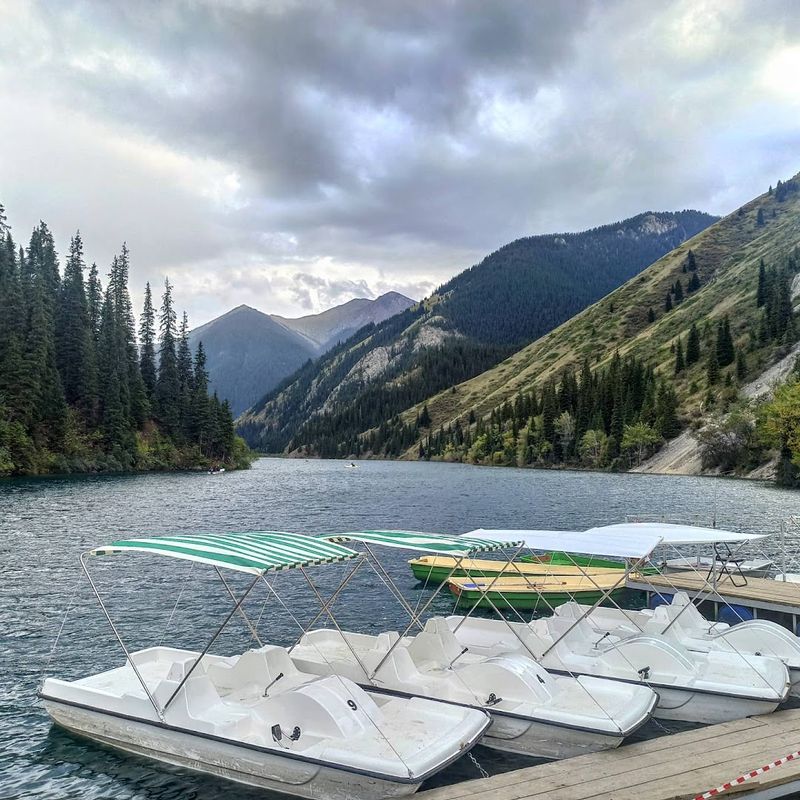
Central Asia is full of surprises, and the Kolsai Lakes rank among the region’s most spectacular natural treasures that almost nobody outside Kazakhstan seems to know about. Three alpine lakes cascade down a forested gorge in the Tian Shan Mountains, each one more beautiful than the last.
The water is the kind of vivid turquoise that makes you want to reach out and touch it just to confirm it is real.
The lowest lake is the easiest to reach and the most visited, but even here the crowds are a fraction of what you would find at comparable scenery in Europe or North America. A hiking trail connects all three lakes, passing through pine and fir forests that smell incredible after rainfall.
The upper lake sits near the Kyrgyz border at an elevation where the air feels noticeably thinner and the views expand dramatically.
Horses are available for rent near the trailhead for those who prefer a more leisurely ascent. Local yurt camps around the lower lake offer an authentic and surprisingly comfortable overnight experience, complete with traditional Kazakh food and hospitality that is genuinely warm.
The nearby Charyn Canyon, sometimes compared to a smaller version of the Grand Canyon, makes an excellent addition to any visit. Kazakhstan is opening up to tourism, and Kolsai is precisely the kind of destination that rewards early arrivals before wider discovery changes it.
Socotra Island, Yemen
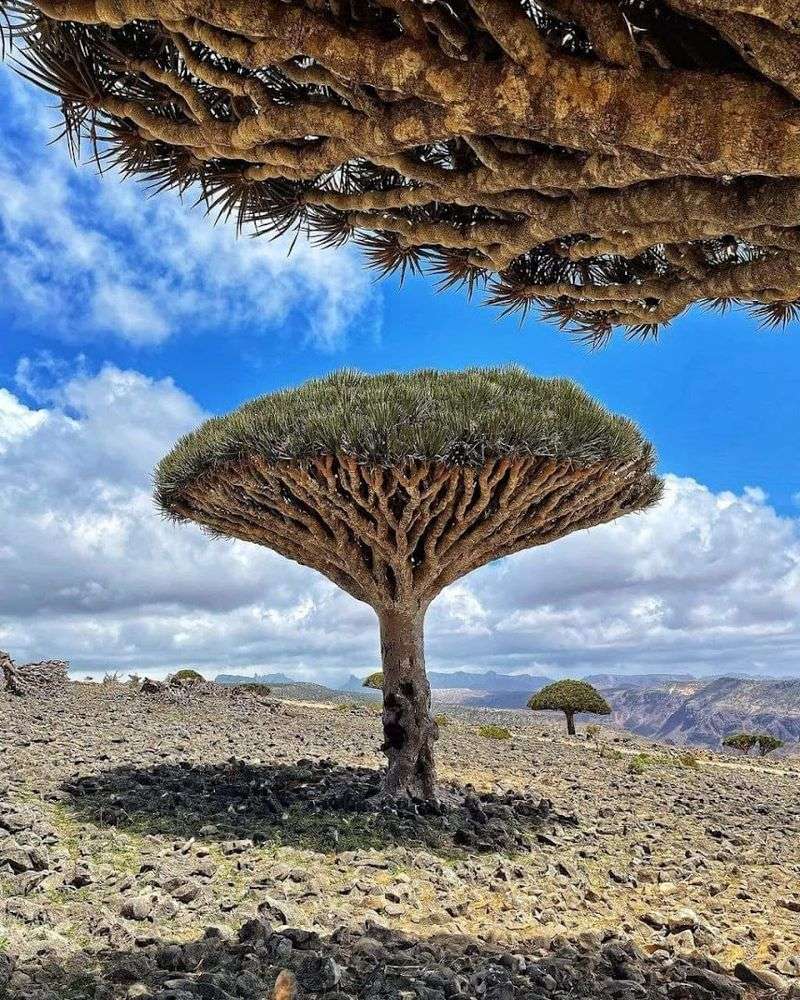
Roughly 37 percent of Socotra’s plant species exist nowhere else on Earth, which makes this remote Yemeni island less a travel destination and more a visit to a completely different version of our planet. The dragon blood tree is the island’s most famous resident, its flat umbrella-shaped canopy and blood-red sap giving it an appearance so alien that scientists genuinely use Socotra as a reference point when imagining life on other worlds.
The island spent millions of years isolated from mainland Arabia, allowing its flora and fauna to evolve in spectacular and bizarre directions. Beyond the dragon blood trees, the island hosts cucumber trees, bottle trees, and hundreds of endemic plant species that turn the landscape into something resembling a science fiction film set.
White-sand beaches fringe the coastline, and the surrounding waters hold excellent snorkeling and fishing. The local Socotri people have maintained their own distinct language and culture through centuries of isolation, adding a rich human dimension to the island’s natural wonders.
Visiting Socotra currently requires careful planning and research into the current situation in Yemen, as the country has faced ongoing conflict. Travelers should always consult up-to-date travel advisories before making any plans.
For those who can visit safely, Socotra offers an experience so unique and visually stunning that it genuinely has no equal anywhere on Earth.
Share this story