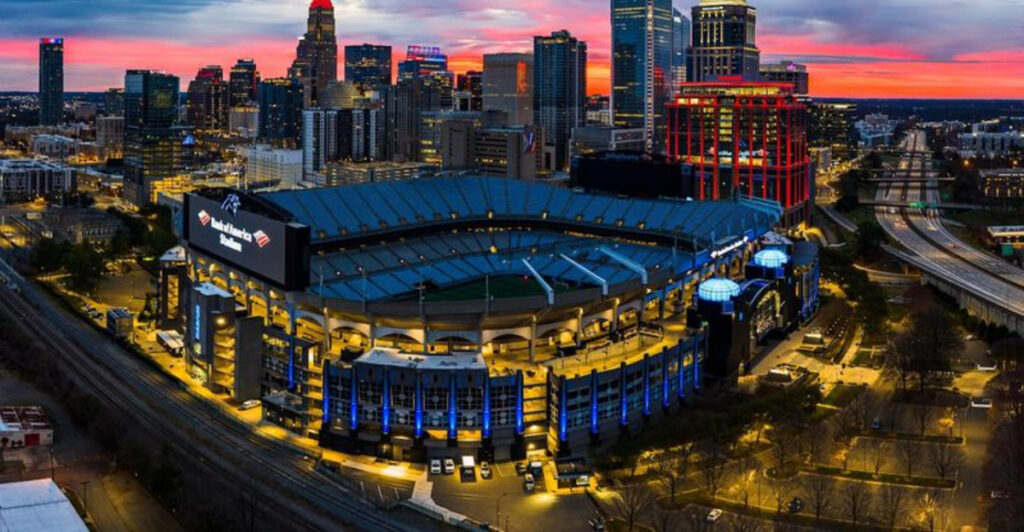
There is a stadium in Charlotte, North Carolina, that does not just host football games. It roars to life for soccer matches, concerts, and championship events with the kind of electric energy that makes your chest hum.
With nearly 75,000 seats and sightlines that make every spot feel close to the action, this place has quietly become one of the most versatile venues in the entire country. As FIFA World Cup 2026 approaches and Charlotte earns its place as a host city, all eyes are turning to this massive open-air arena that already feels ready for the world stage.
Keep reading to find out exactly what makes this stadium so special, and why it deserves every bit of the spotlight it is about to receive.
The Address and Setting of Bank of America Stadium
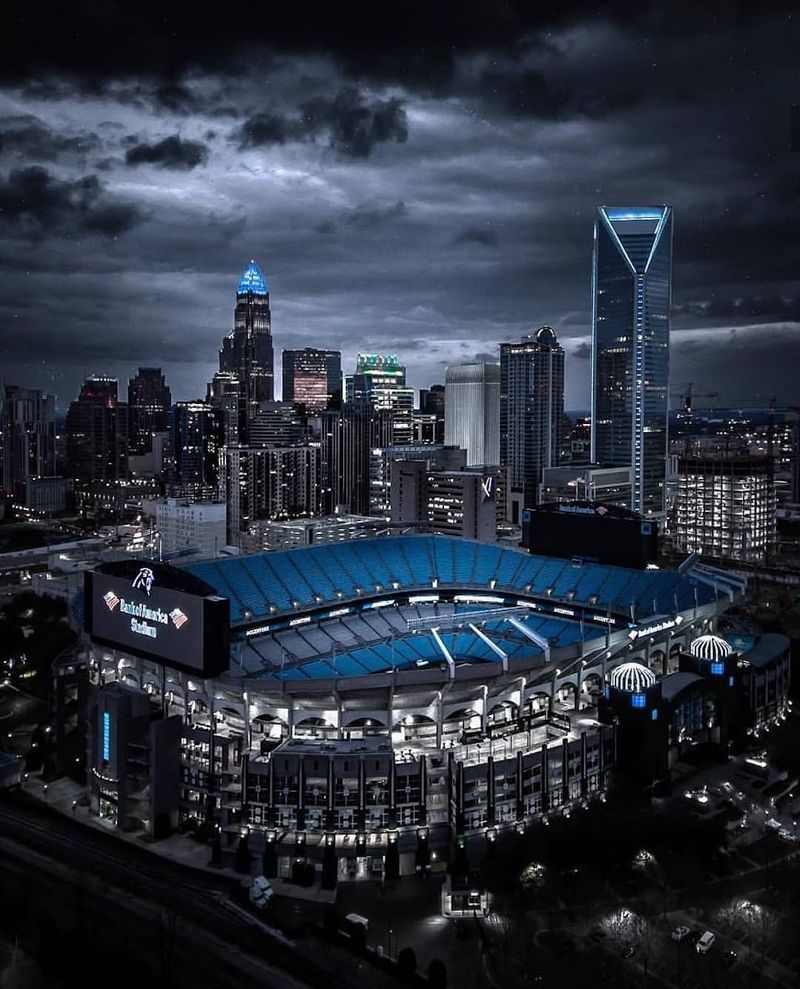
Right in the heart of uptown Charlotte, at 800 S Mint St, Charlotte, NC 28202, Bank of America Stadium rises up like a city landmark that means serious business. The stadium sits within easy walking distance of downtown hotels, restaurants, and public transit stops, making it one of the more accessible major venues in the Southeast.
The location itself is part of the experience. The Charlotte skyline frames the upper bowl on clear days, giving fans a view that no jumbotron can replicate.
Whether you are arriving on foot from a nearby hotel or pulling into one of the surrounding parking lots, the stadium announces itself well before you reach the gate.
The surrounding area has a mix of urban energy and neighborhood character. Tailgating lots fill up hours before kickoff, and the buzz of the crowd spills out onto Mint Street long before the first whistle blows.
With a rating of 4.6 stars across more than 10,000 reviews, the venue has clearly earned its reputation. You can reach the stadium by phone at +1 704-358-7480 or visit bankofamericastadium.com for event schedules and ticket details.
Few stadiums in the NFL carry this kind of urban energy right from the front gate.
The Sheer Size and Seat Count That Rival World Cup Venues
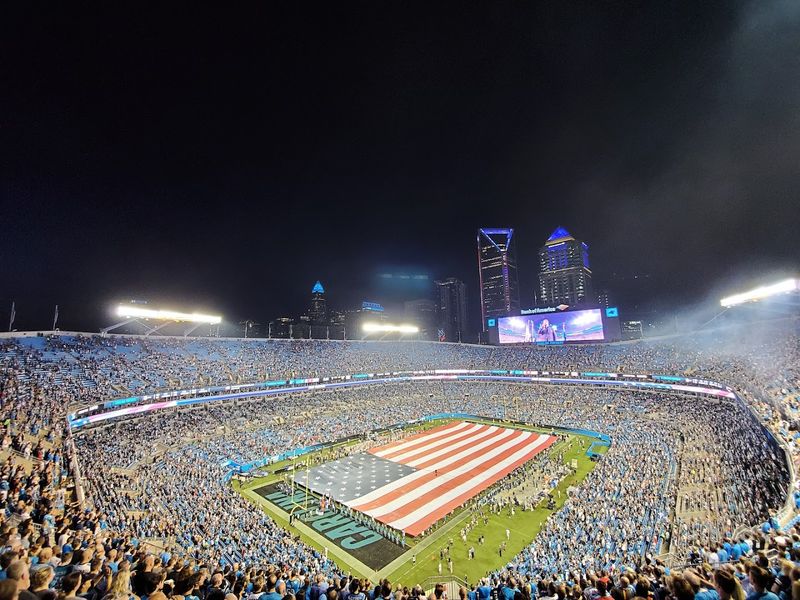
With an official capacity of 74,867 seats, Bank of America Stadium is not a venue that whispers. It shouts.
That number puts it firmly in the conversation with some of the largest stadiums used in previous FIFA World Cup tournaments, and it is a big reason why Charlotte was selected as one of the 2026 host cities.
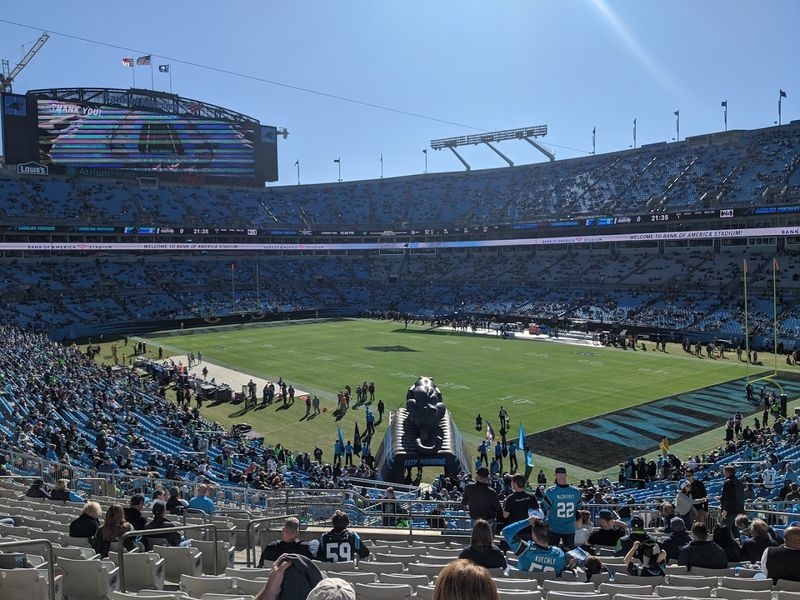
The bowl design wraps tightly around the field, which means even fans in the upper 500 level feel closer to the action than you might expect. The steep angle of the upper deck actually works in your favor, pulling your eye right down to the pitch rather than leaving you feeling like you are watching from another zip code.
When the stadium fills up, the sound is something else entirely. The roar of nearly 75,000 people in an open-air venue bounces off the concrete in waves that you feel in your feet as much as you hear with your ears.
For a World Cup match, that atmosphere becomes almost overwhelming in the best possible way. Charlotte is not just hosting a few group stage games as a formality.
This stadium has the bones to handle the biggest moments the sport has to offer.
Why Charlotte Was Chosen as a FIFA World Cup 2026 Host City
Not every American city got the call for the 2026 FIFA World Cup, and Charlotte earning a spot on that list says a lot about both the city and its stadium. FIFA evaluates venues based on capacity, infrastructure, transportation access, hotel availability, and overall readiness, and Charlotte checked every single box.
The region has invested heavily in sports infrastructure over the past decade. The stadium itself has hosted major events ranging from NFL playoff games to ACC Championship matchups, proving it can handle the logistical demands of a high-profile international tournament.
Charlotte also benefits from a passionate and growing soccer culture, largely fueled by Charlotte FC, the MLS club that calls Bank of America Stadium home. Watching a Charlotte FC match here gives you a real preview of what World Cup soccer will feel like in this building.
The energy is sharp, the crowd is engaged, and the sight of a proper soccer pitch laid out on that field feels completely natural.
The city’s airport, hotel capacity, and public transit improvements all support the case that Charlotte is not just a backup host. It is a genuine centerpiece of the 2026 tournament, and the stadium is the reason that confidence is well placed.
The Carolina Panthers and the NFL Legacy Behind the Venue

Before soccer took center stage, this stadium was built for football. Bank of America Stadium opened in 1996 as the home of the Carolina Panthers, and it has been the team’s fortress ever since.
The NFL fingerprints are all over the building, from the team store locations scattered throughout the concourses to the Panthers and Charlotte FC branding displayed side by side throughout the facility.
Attending a Panthers game here has its own rhythm. Fans arrive early, tailgate in the surrounding lots, and fill the building with a particular kind of southern football passion that is hard to manufacture.
The stadium has seen playoff runs, divisional battles, and more than a few heart-stopping fourth-quarter moments that left the crowd on its feet.
The field level perspective during a Panthers game is genuinely impressive. The Gallery luxury suites at field level offer a front-row seat to the action that feels almost cinematic, though even the upper deck provides solid sightlines thanks to the bowl geometry.
The Panthers legacy gives the stadium a sense of history and identity that newer venues sometimes lack. That lived-in character, combined with the upgrades needed for World Cup hosting, creates a unique blend of old-school NFL grit and international-level ambition that few venues in the country can claim.
Charlotte FC and the Stadium’s Growing Soccer Identity

Charlotte FC made its MLS debut in 2022 and immediately set league attendance records. The club drew crowds that stunned even league officials, and Bank of America Stadium became one of the loudest soccer venues in American professional soccer almost overnight.
Watching a Charlotte FC match here feels different from a football game in the best possible way. The open-air design amplifies crowd chants in a way that creates a proper soccer atmosphere, complete with supporter sections that bring drums, flags, and coordinated singing from the first whistle to the last.
The stadium staff has clearly gotten comfortable with soccer operations. Concession flow, entry management, and field setup all run smoothly for MLS matches, which bodes well for the additional complexity of a World Cup event.
The pitch itself is laid out beautifully, and the sightlines from virtually every seat in the house give you a clean view of the full field.
For anyone curious about what the 2026 World Cup experience might feel like in Charlotte, catching a Charlotte FC home match is the closest preview available. The club’s branding is visible throughout the stadium alongside Panthers gear, a visual reminder that this building now serves two sporting identities with genuine pride and equal commitment.
The Atmosphere Inside the Stadium on Game Day
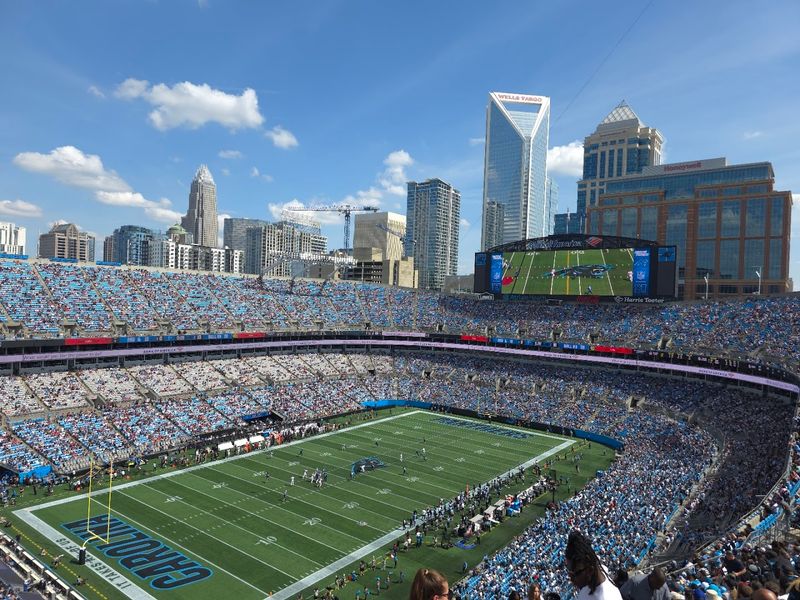
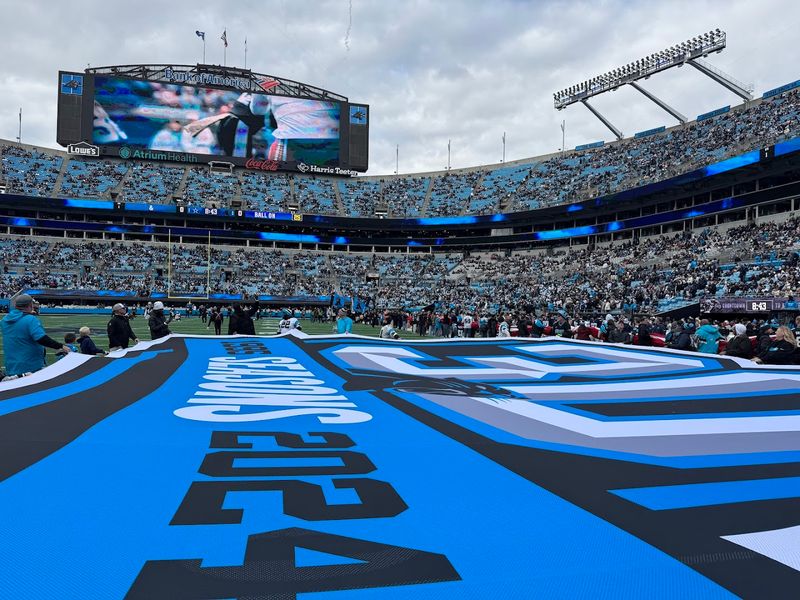
The moment the gates open on game day, the energy inside Bank of America Stadium shifts into a gear that is hard to describe without having felt it. The concourses fill quickly, the smell of concession food drifts through every corridor, and the crowd noise builds steadily as kickoff or kickoff approaches.
The open-air design plays a huge role in the atmosphere. Unlike enclosed domes, this stadium breathes.
Sound travels differently, the sky is visible above the upper bowl, and weather becomes part of the experience rather than something blocked out by a roof. On a crisp fall afternoon or a warm summer evening, the setting is genuinely beautiful.
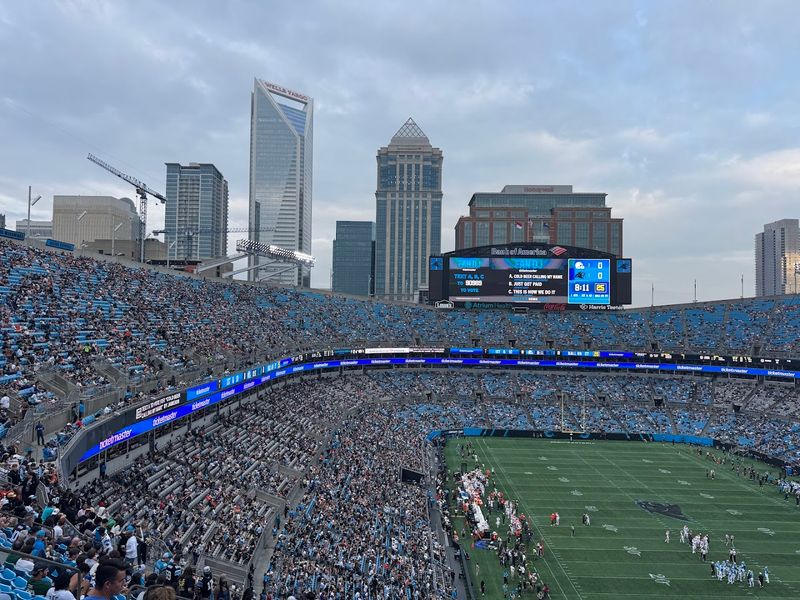
The Charlotte skyline view from the upper deck adds a layer of visual drama that most stadiums simply cannot offer. Fans seated in the 300 and 500 levels often comment that the skyline backdrop makes the whole experience feel cinematic, like you are watching the game inside a postcard.
The crowd energy does the rest. When the stadium reaches capacity and the crowd locks in on a big moment, the noise level climbs to something that vibrates in your chest.
That kind of shared electricity is exactly what a World Cup match demands, and this stadium delivers it naturally rather than through manufactured hype.
Food, Concessions, and What to Expect at the Stands
Concession food at Bank of America Stadium follows the standard stadium playbook with a few standout items worth seeking out. The chicken sandwich and soft pretzels at various concession stands have drawn genuine praise from fans, and the food lines tend to move at a reasonable pace even during high-traffic moments between quarters or halftime.
Prices run on the higher end, which is fairly standard for any major NFL venue. A pair of sandwiches, chips, and fountain drinks can easily run over sixty dollars, so budgeting ahead of time is a smart move.
Bringing cash or loading up a card before arrival helps keep the transaction process quick.
The third level of the stadium features an enclosed concourse area, which is a welcome feature during cold-weather games. Fans can grab food and drinks without braving the elements, then head back to their seats when they are ready.
One area where the stadium has room to grow is variety. Several visitors have noted that more diverse food options, such as local barbecue or regional specialties, would elevate the overall experience.
For a World Cup tournament drawing international visitors, expanding the culinary lineup beyond standard stadium fare would be a meaningful upgrade that matches the global scale of the event.
Parking, Transportation, and Getting There Without the Headache
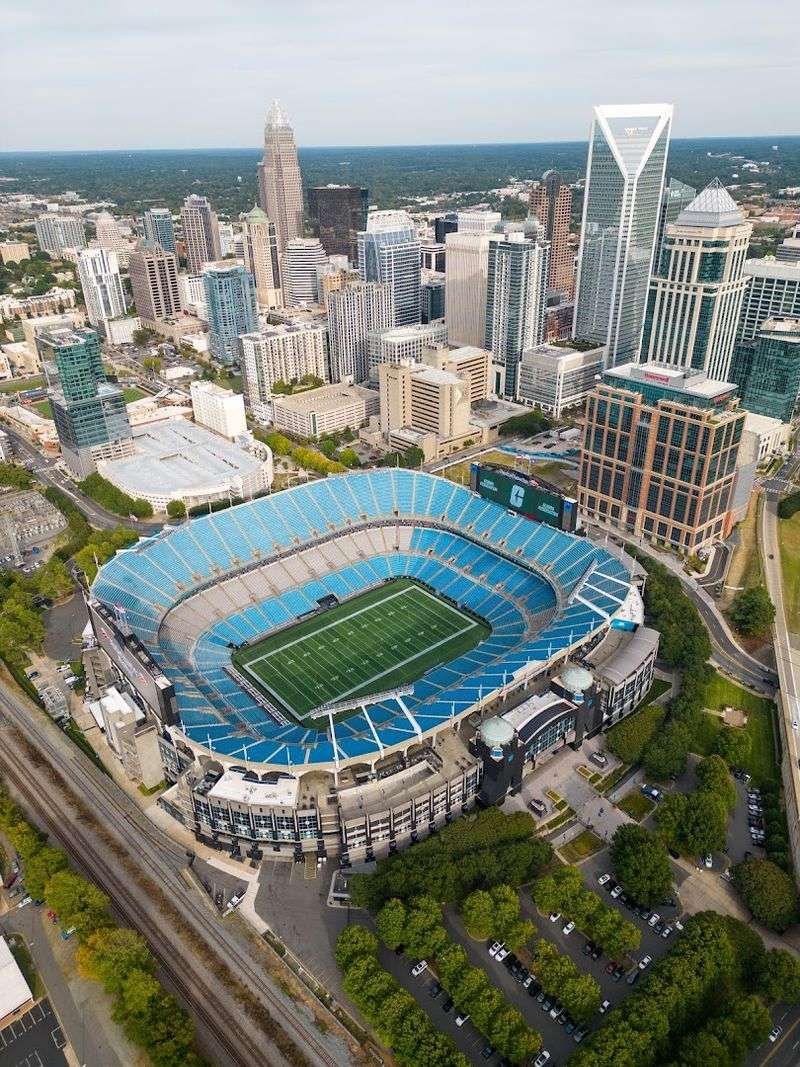
Getting to Bank of America Stadium is generally straightforward. Multiple parking lots and decks surround the venue, and the Mint Street Parking deck sits almost directly across from the stadium entrance, making it one of the most convenient options available.
The trade-off is that leaving after the event can stretch into a full hour of waiting before cars are actually allowed to exit the deck.
A smarter strategy that many experienced fans swear by is parking in a lot slightly farther from the stadium rather than the closest deck. The walk is longer, but the post-game exit moves significantly faster, and you spend less time sitting in a stationary line watching the minutes tick by.
Public transit is another solid option. Charlotte’s LYNX Blue Line light rail runs close to the stadium, and many fans use it specifically to sidestep the parking headache entirely.
Rideshare drop-off and pickup zones are also designated in the area, though expect surge pricing immediately after major events.
For World Cup matches in 2026, transportation planning will be critical. FIFA typically works with host cities to expand transit options and manage traffic flow, so the infrastructure around the stadium should see meaningful improvements before the tournament begins.
Planning early and arriving well before kickoff will make the whole experience far smoother.
Stadium Policies, Clear Bags, and What to Bring
Bank of America Stadium follows a clear bag policy for all events, which is standard across NFL venues and many major sports arenas. Every bag brought into the stadium must be either a clear plastic bag within specified size limits or a small clutch purse.
The policy exists for security purposes, and staff enforce it consistently at every entry point.
Fans are allowed to bring up to two unopened bottles of water, which is a genuinely useful perk on warm game days. Outside cups, however, are not permitted inside the venue, and floor seat guests are not allowed to have lids on their drinks while in the floor area, which has led to a fair number of spills in those sections.
Umbrellas are also restricted, which catches some visitors off guard on rainy days. The stadium does not offer storage lockers, so anything you cannot bring inside must either go back to your car or be discarded.
On a rainy game day, the trash cans near the entrance fill up with umbrellas from fans who did not know the policy in advance.
Reviewing the full list of prohibited items on the official website before your visit saves a lot of frustration at the gate. The staff are generally helpful and patient with questions, but knowing the rules ahead of time makes entry faster for everyone in line behind you.
The Seating Layout and Views From Different Levels
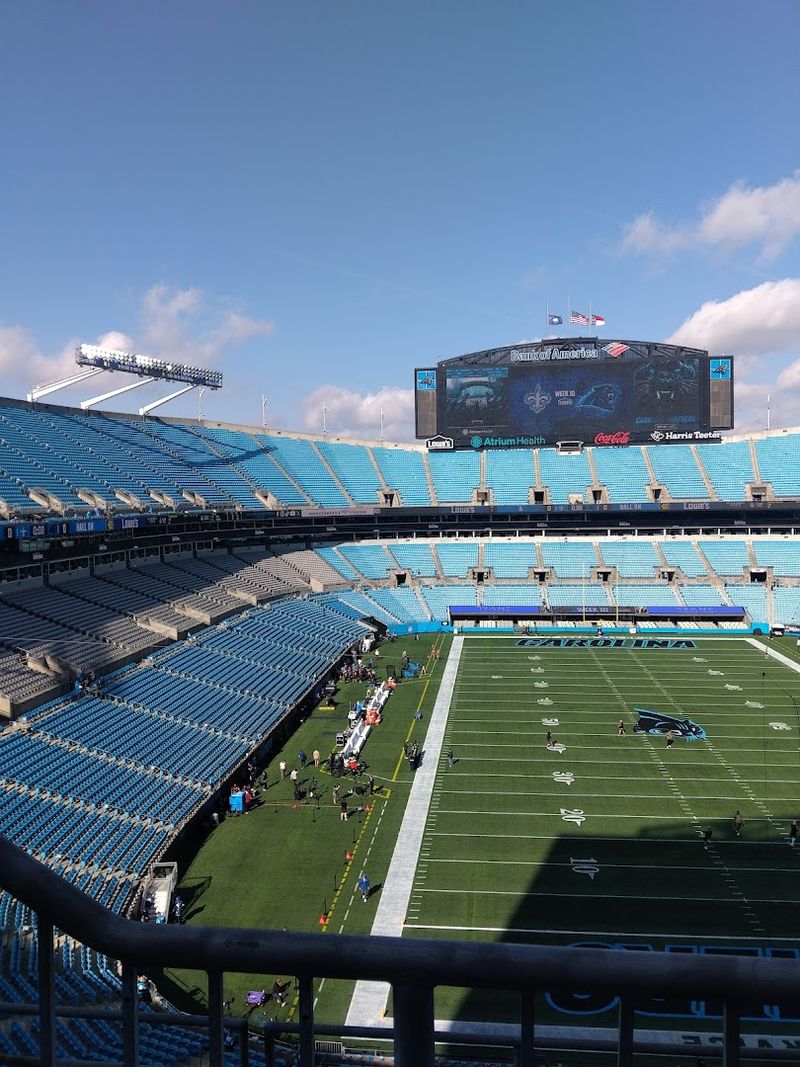
Bank of America Stadium organizes its seating into several distinct levels, each offering a different relationship with the field. The lower bowl puts you close to the action with field-level views that feel almost intimate for a venue this size.
The Gallery suites at field level are a particular highlight, offering a perspective that makes the game feel immediate and almost uncomfortably close to the players.
Mid-level seating in the 300s provides a balanced view that many fans consider the sweet spot. You are high enough to see the full field layout clearly, but close enough to track individual plays without squinting.
The sightlines from this level are consistently strong thanks to the steep bowl angle that pulls your eye toward the center of the action.
Upper-level seating in the 500s is where the skyline view becomes the secondary attraction. The Charlotte cityscape visible above the open upper bowl adds a visual element that compensates for the extra distance from the field.
Even from up there, the game remains watchable and the atmosphere is fully felt.
One consistent note from fans across all levels is that the seat width could use an update. The seats run narrow by modern standards, and when the stadium fills to capacity, personal space becomes a genuine issue.
It is a small but real comfort consideration for longer events like World Cup matches.
Major Events and Concerts That Have Graced This Venue
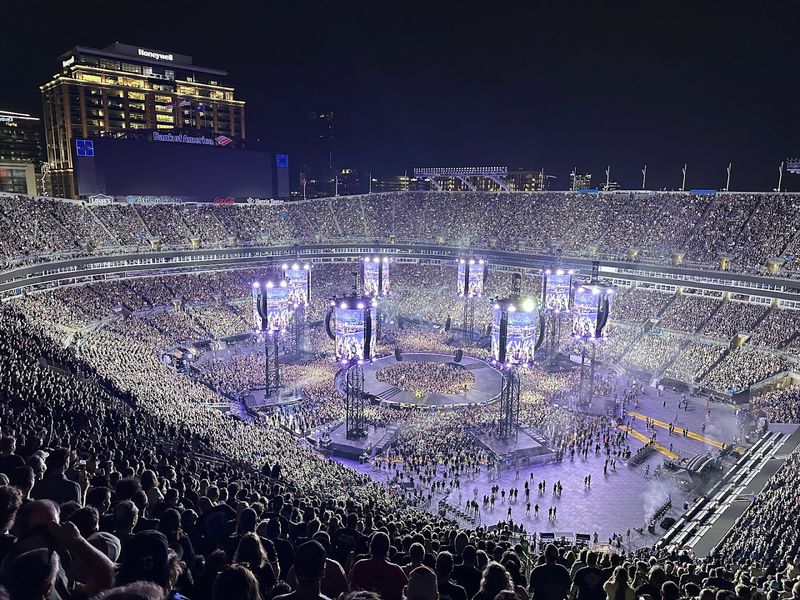
Bank of America Stadium has hosted far more than football and soccer over its nearly three-decade history. The venue has welcomed major concert tours, college football championship games, and a range of large-scale events that demonstrate its flexibility as a multipurpose facility.
The ACC Championship game has been held here, drawing college football fans from across the region for an event with its own distinct energy.
Concert nights transform the stadium into something completely different. The open-air bowl design works in favor of live music, allowing sound to travel across the full seating area without the muddiness that enclosed venues sometimes produce.
Fans who have attended both sports events and concerts here often note that the music experience holds up surprisingly well given the scale of the space.
The stadium’s track record with large events is a significant factor in FIFA’s confidence in Charlotte as a World Cup host. Managing a crowd of 74,000-plus people for a concert requires the same logistical muscle as a major international soccer tournament, and the venue has demonstrated that capacity repeatedly.
As the 2026 tournament approaches, the stadium’s event history serves as a kind of resume, proof that it can handle the pressure, the crowds, and the global attention that comes with hosting the world’s most-watched sporting event on American soil.
What the FIFA World Cup 2026 Will Mean for Charlotte and the Stadium
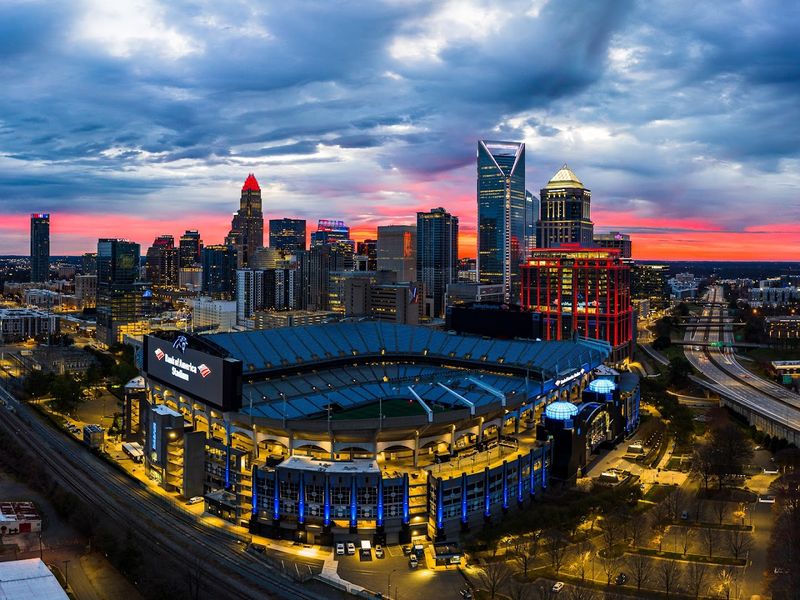
The 2026 FIFA World Cup is not just another event on the stadium calendar. For Charlotte, it represents a turning point in how the city is perceived on a global scale.
Hosting World Cup matches means welcoming fans, media, and players from dozens of countries, all of whom will experience the stadium, the city, and the region for the first time.
Bank of America Stadium is expected to undergo targeted upgrades ahead of the tournament to meet FIFA’s specific requirements. These improvements will likely touch the playing surface, broadcast infrastructure, VIP facilities, and fan amenity areas, all of which stand to benefit the Panthers and Charlotte FC long after the last World Cup whistle blows.
For locals, the tournament represents a rare opportunity to watch the world’s best soccer players compete in their own backyard. The group stage and potentially knockout round matches scheduled for Charlotte will draw international crowds that will fill the city’s hotels, restaurants, and public spaces in ways that few domestic events can replicate.
The stadium that has spent nearly three decades hosting NFL battles and MLS matches is about to step onto the biggest stage in global sport. Charlotte is ready, the venue is ready, and the energy that has been building here for years is about to introduce itself to the entire world in the most spectacular way possible.
Share this story