Some places on Earth are so extraordinary that no photograph can truly do them justice. From glowing waters to ancient monasteries perched on cliffsides, the world is full of experiences that feel almost unreal.
Whether you are an adventurer, a nature lover, or simply someone who loves to explore, these destinations offer something genuinely unforgettable. Here are 12 of the most unique travel experiences our planet has to offer.
1. Witness the Great Wildebeest Migration in Tanzania and Kenya
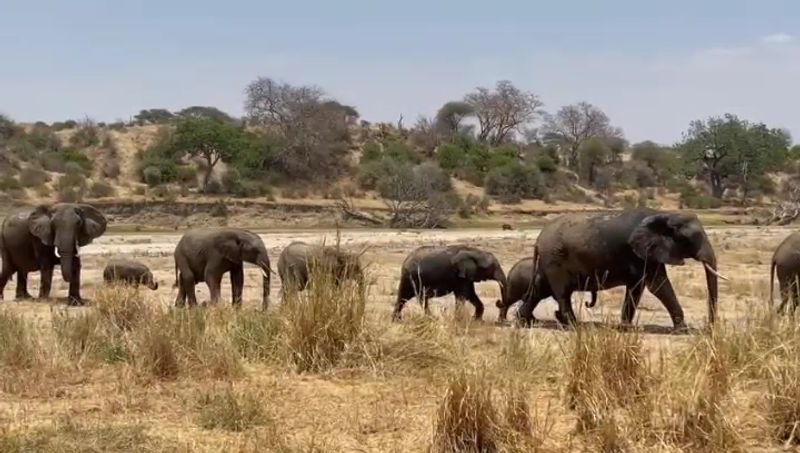
Every year, roughly 1.5 million wildebeest thunder across the Serengeti plains and into Kenya’s Masai Mara in one of nature’s most jaw-dropping spectacles. The migration follows rainfall and fresh grass, creating a circular journey that never truly stops.
Watching thousands of animals charge across the crocodile-filled Mara River is the kind of moment that stays with you forever.
The best time to catch the dramatic river crossings is between July and October. Safari camps along the Mara River offer front-row seats to the action.
Many camps are eco-friendly and staffed by local Maasai guides who bring deep knowledge of the land.
Budget travelers can find group safari packages starting around $150 per day. Higher-end luxury tented camps offer a more immersive experience.
Either way, planning at least five to seven days gives you the best chance of catching the crossings at their most thrilling peak.
2. Cruise Among Icebergs in Antarctica
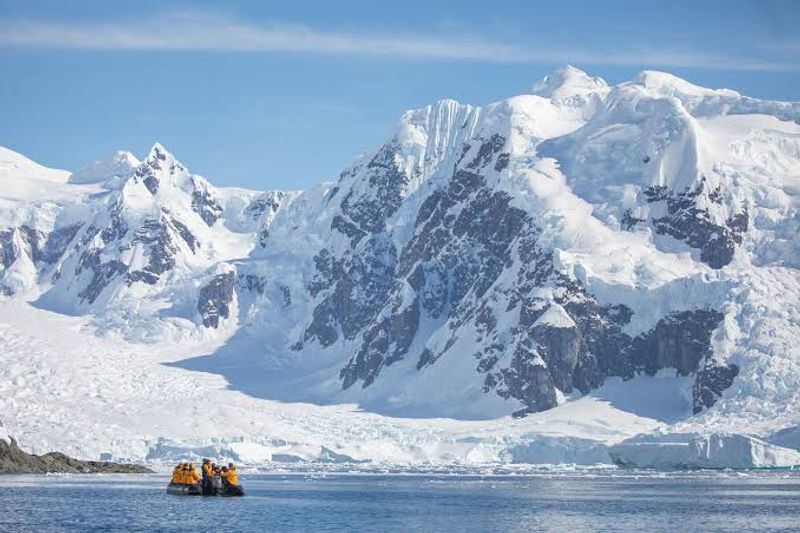
Antarctica is the most remote continent on Earth, and getting there feels like stepping onto another planet entirely. Towering icebergs in shades of blue and white drift silently past expedition ships, while penguins waddle along the shoreline completely unbothered by human visitors.
There is a stillness here that is almost impossible to describe.
Most Antarctica cruises depart from Ushuaia, Argentina, and take about two days to cross the Drake Passage. Trips typically run between 10 and 21 days, with prices starting around $5,000 per person.
Smaller expedition ships allow for more intimate landings and closer wildlife encounters.
Packing the right gear matters enormously. Waterproof layers, thermal base clothing, and sturdy boots are absolute essentials.
Many tour operators provide parkas and rubber boots for shore landings. The best travel window runs from November through March, when days are long and wildlife activity is at its peak.
3. Gorilla Trek Through Bwindi Impenetrable National Park in Uganda
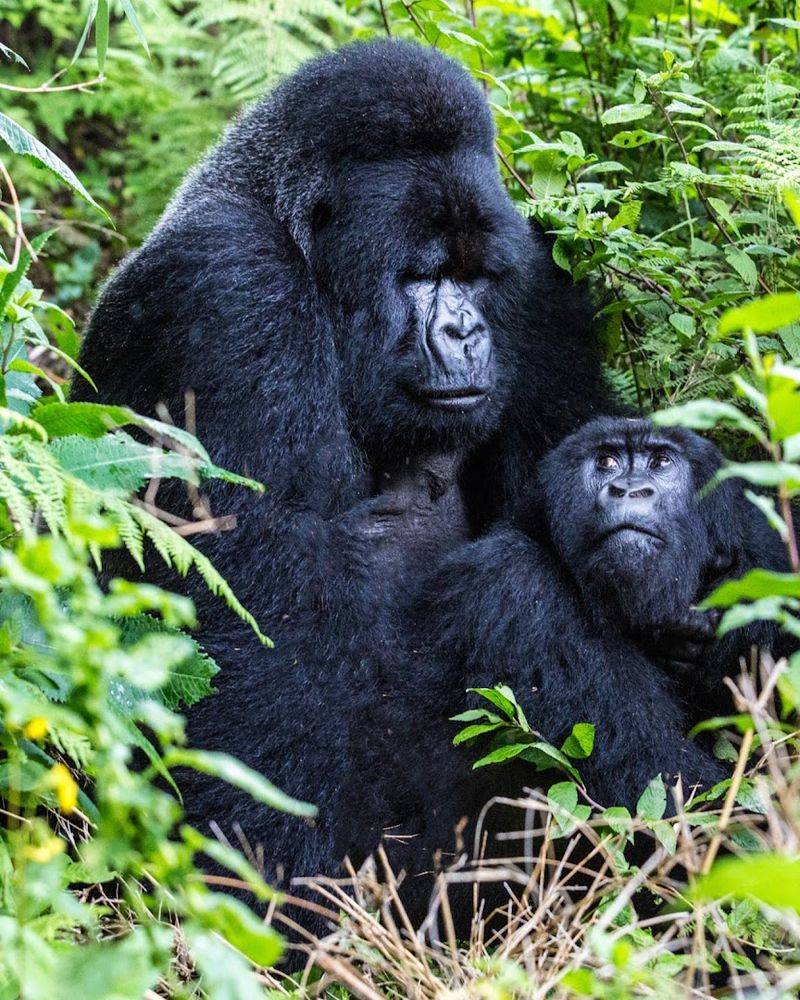
Coming face to face with a mountain gorilla in its natural habitat is one of the most humbling wildlife encounters on Earth. Bwindi Impenetrable National Park in southwestern Uganda is home to nearly half the world’s remaining mountain gorilla population.
The name alone hints at what to expect: thick jungle, steep terrain, and an atmosphere that feels primeval.
Treks can last anywhere from one to eight hours depending on where the gorilla families are located that day. Permits cost $700 per person and must be booked well in advance through the Uganda Wildlife Authority.
Only eight visitors are allowed to spend one hour with each habituated gorilla family per day.
Physically, the hike is demanding, so arriving in good shape helps. Local porters are available for hire and are worth every shilling.
Staying at one of the nearby eco-lodges adds to the experience and supports conservation efforts directly.
4. Snorkel Between Two Continents at Silfra Fissure in Iceland
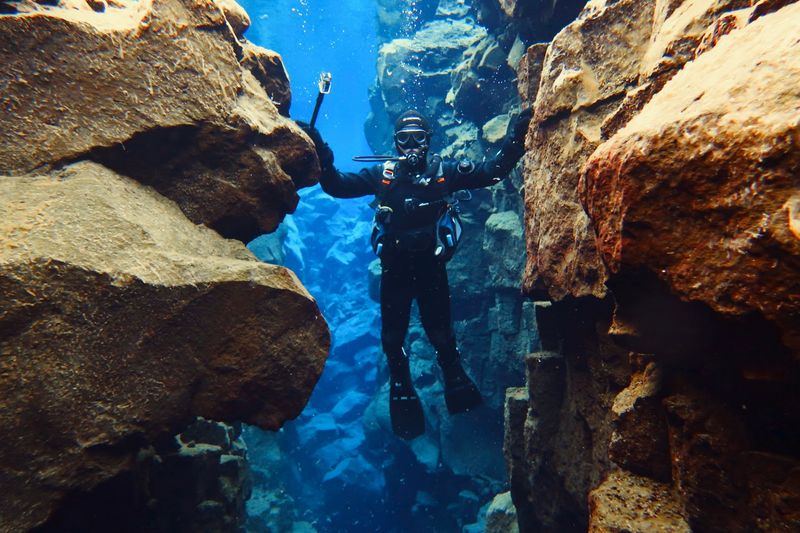
Silfra is one of the only places on Earth where you can swim directly in the crack between two tectonic plates. The North American and Eurasian plates drift apart here at about two centimeters per year, creating a fissure filled with some of the clearest water found anywhere on the planet.
Visibility can stretch beyond 100 meters, making it feel like floating through liquid glass.
The water is fed by glacial meltwater filtered through lava rock for decades, keeping it remarkably pure but also extremely cold at around 2 to 4 degrees Celsius year-round. Drysuits are mandatory and provided by tour operators based in Reykjavik or nearby Thingvellir National Park.
No prior diving certification is needed for snorkeling.
Tours depart daily and typically last two to three hours including gear fitting. Bookings should be made several weeks in advance during summer months.
The surrounding Thingvellir park is also a UNESCO World Heritage Site worth exploring before or after your swim.
5. Walk Across the Mirror-Like Salar de Uyuni During the Wet Season in Bolivia
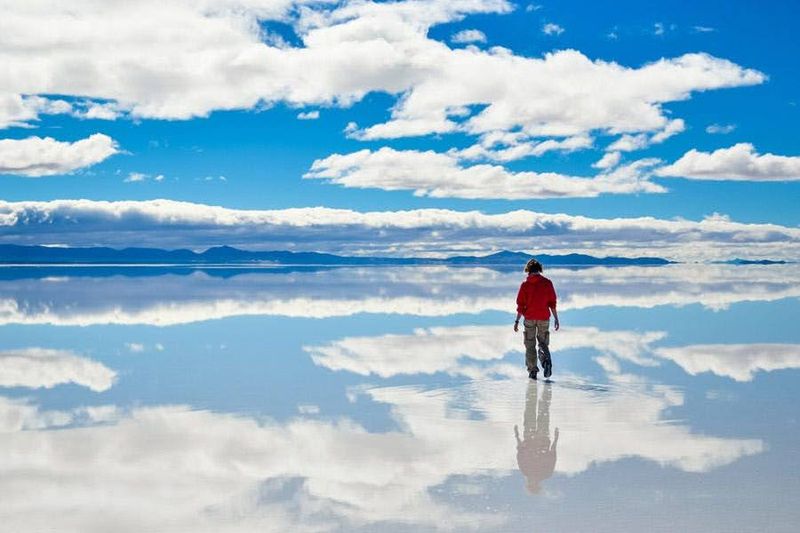
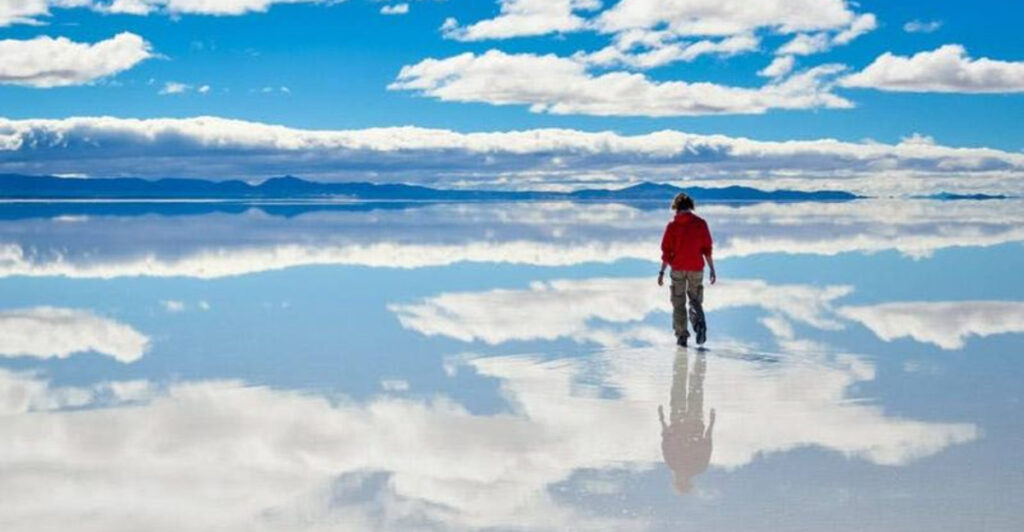
When a thin layer of rainwater covers the Salar de Uyuni, the world’s largest salt flat transforms into an enormous natural mirror. The sky and clouds reflect so perfectly on the water’s surface that it becomes nearly impossible to tell where the ground ends and the sky begins.
Standing in the middle of it feels surreal, like walking on clouds.
The wet season runs from December through April, which is when the reflections are most dramatic. The salt flat sits at 3,656 meters above sea level in southwestern Bolivia, so altitude sickness is something travelers should prepare for.
Spending a day or two in La Paz or Potosi before arriving helps your body adjust.
Guided jeep tours from the town of Uyuni are the most popular way to explore the area. Prices are affordable by international standards, often ranging from $30 to $80 per person for a day trip.
Sunrise and sunset visits offer the most breathtaking photographic lighting conditions.
6. Watch Lava Flow Into the Ocean at Hawaiʻi Volcanoes National Park
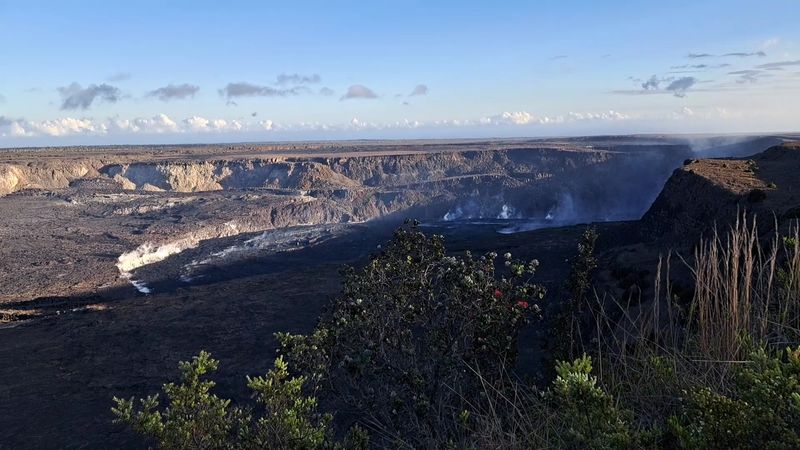
Few sights on Earth are as raw and powerful as watching molten lava pour into the ocean. When conditions allow, Hawaiʻi Volcanoes National Park on the Big Island offers a front-row view of the planet actively reshaping itself.
The lava hisses and steams as it meets the sea, sending towering plumes of vapor into the air.
Lava flow visibility changes frequently based on volcanic activity, so checking the U.S. Geological Survey’s Hawaiian Volcano Observatory updates before your visit is essential.
The park itself is open 24 hours a day, and nighttime visits offer the most dramatic visual displays of glowing lava against the dark sky.
Entry to the park costs $35 per vehicle and is valid for seven days. Rangers are stationed throughout the park to guide visitors safely.
The surrounding area also features lava tube caves, crater hikes, and ancient petroglyphs that make the entire visit well worth the trip.
7. See the Northern Lights from Finnish Lapland in Finland
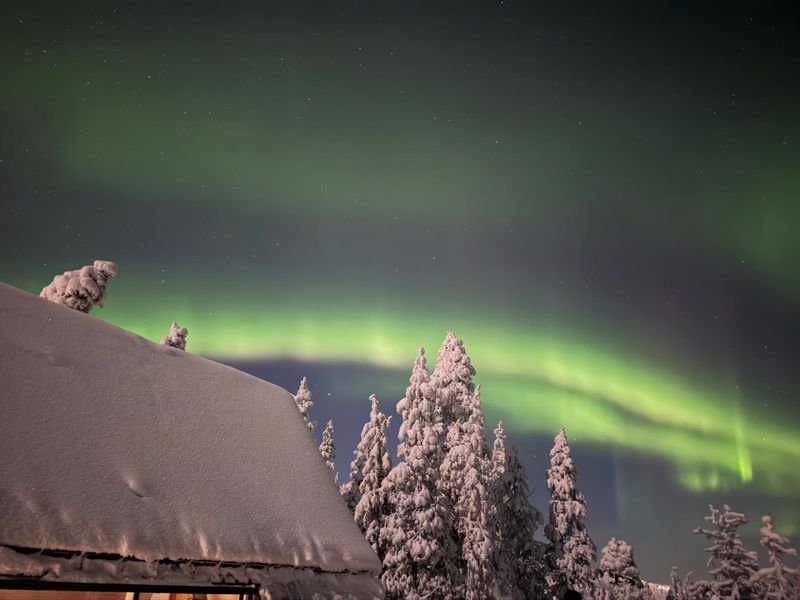
Finnish Lapland sits right in the heart of the auroral zone, making it one of the most reliable places on Earth to witness the Northern Lights. On clear nights between September and March, the sky can explode in ribbons of green, pink, and violet that ripple like silk curtains overhead.
The experience is genuinely otherworldly and hard to forget.
The town of Saariselka and the region around Rovaniemi are popular bases for aurora hunting. Glass-roofed cabins let you watch the lights from the warmth of your bed, which is a particularly memorable way to experience them.
Temperatures regularly drop below minus 20 degrees Celsius, so proper cold-weather clothing is non-negotiable.
Solar activity plays a huge role in how active the aurora display will be on any given night. Apps like SpaceWeatherLive help track geomagnetic activity in real time.
Pairing the aurora hunt with a reindeer sleigh ride or snowmobile tour makes the trip even more special.
8. Explore the Waitomo Glowworm Caves in New Zealand
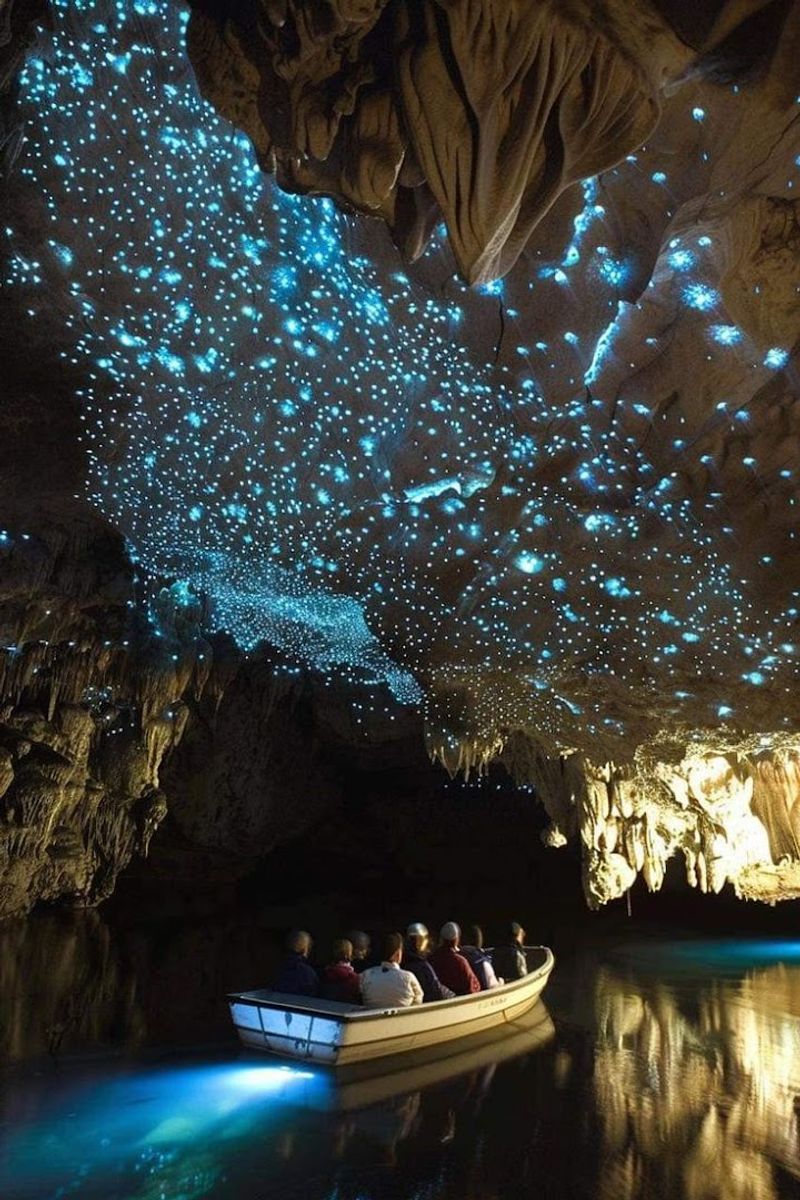
Drifting silently through an underground cave while thousands of tiny glowworms illuminate the ceiling above you is one of New Zealand’s most magical experiences. The Waitomo Glowworm Caves on the North Island are home to Arachnocampa luminosa, a species of glowworm found only in New Zealand.
Their soft blue-green glow creates a ceiling that looks remarkably like a starlit sky.
Guided boat tours through the cave system depart regularly from the Waitomo village visitor center. The standard tour lasts about 45 minutes and costs around NZD $55 per adult.
More adventurous options include blackwater rafting through underground rivers, where you float on inner tubes beneath the glowing ceiling.
The caves stay at a constant temperature of around 17 degrees Celsius year-round, making them comfortable to visit in any season. Booking ahead is strongly recommended during the busy December to February summer period.
The surrounding Waikato region also offers excellent hiking, farm stays, and Maori cultural experiences worth adding to your itinerary.
9. Hike to Tiger’s Nest Monastery in Bhutan
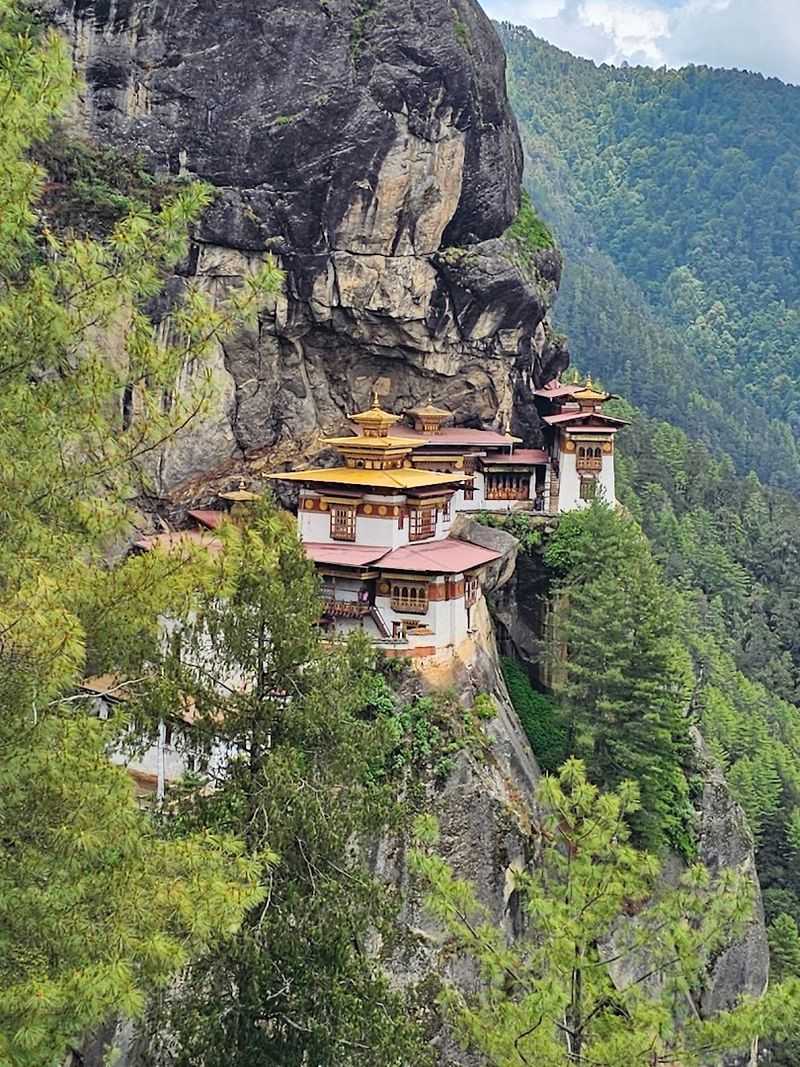
Paro Taktsang, known as Tiger’s Nest, is one of the most dramatic religious sites in the world. The monastery clings to a sheer cliff face at 3,120 meters above sea level in Bhutan’s Paro Valley, seemingly defying gravity with its white and golden walls.
Legend says the Buddhist saint Guru Rinpoche flew to this spot on the back of a tigress in the 8th century.
The hike up takes about two to three hours one way, following a forested trail with sweeping views of the valley below. A midpoint viewpoint offers the most iconic photograph of the monastery across the ravine.
Horses are available for the lower section of the trail for those who prefer a gentler ascent.
Bhutan requires all international visitors to book through a licensed tour operator and pay a Sustainable Development Fee. This policy keeps tourism thoughtful and controlled.
The effort to reach Tiger’s Nest makes arriving at its ancient wooden doors feel like a genuine achievement.
10. Float in the Dead Sea in Jordan and Israel
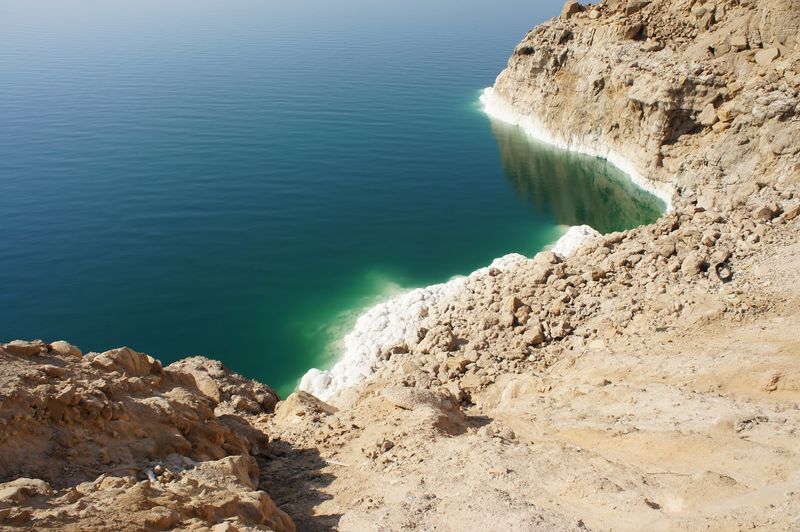
The Dead Sea is so salty that your body simply bobs to the surface the moment you step in. Sitting at roughly 430 meters below sea level, it holds the title of the lowest point on Earth’s surface.
The water contains about ten times more salt than the average ocean, making it impossible to sink and giving your skin an unusually silky feel afterward.
The mineral-rich black mud along the shoreline is famous for its skin benefits and is used in cosmetics worldwide. Smearing it over your skin and letting it dry before rinsing off is a classic tourist ritual that locals swear by.
Both the Jordanian and Israeli sides of the Dead Sea offer resort access with beach chairs and fresh-water showers.
Getting in the water requires care since the salt stings any cuts or open skin intensely. Keeping your face and eyes away from the water is equally important.
Visiting early in the morning avoids the midday heat and gives you calmer, quieter conditions on the shore.
11. Visit the Bioluminescent Waters of Mosquito Bay in Vieques, Puerto Rico
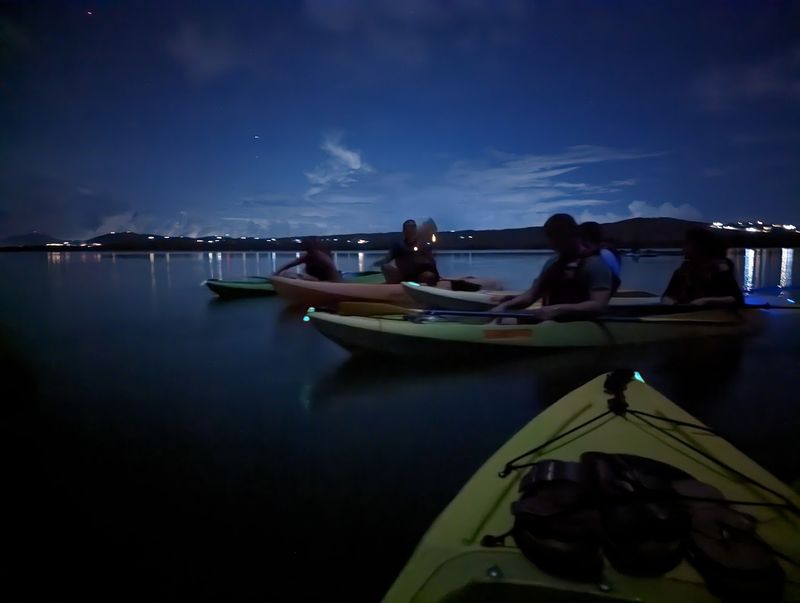
Mosquito Bay in Vieques holds a Guinness World Record as the world’s brightest bioluminescent bay. When microscopic organisms called dinoflagellates are disturbed by movement, they emit a vivid electric-blue glow that lights up the water around you.
Paddling a kayak through the bay at night feels like moving through liquid neon.
The bay’s unique geography, surrounded by mangroves that feed nutrients into the water, creates ideal conditions for these tiny creatures to thrive in extraordinarily high concentrations. No-motor rules protect the ecosystem and keep the bioluminescence strong.
Tours depart from the town of Esperanza and typically last about two hours.
The experience is most vivid on moonless nights, so planning your visit around the new moon phase makes a significant difference. Electric kayaks are used to avoid disturbing the ecosystem with fuel.
Vieques itself is a relaxed island with beautiful beaches, wild horses, and a laid-back Caribbean atmosphere that rewards a longer stay.
12. Spend a Night in the Sahara Desert Under the Stars in Morocco
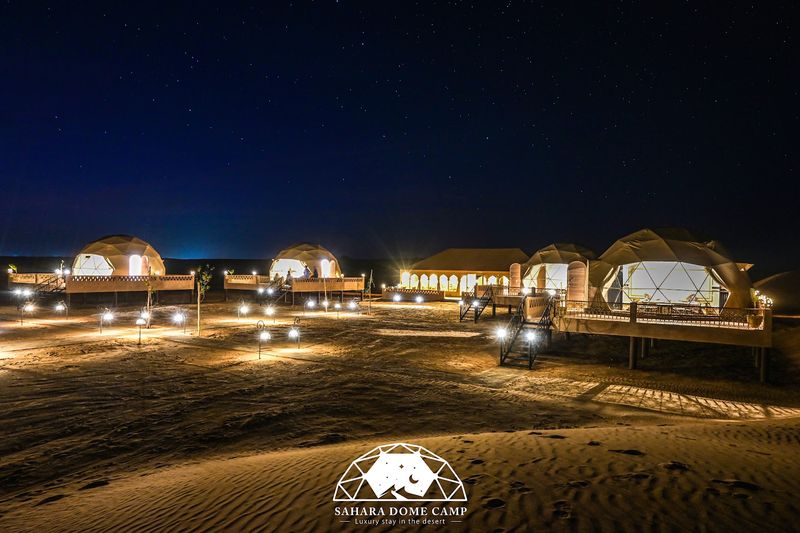
Sleeping under a sky absolutely packed with stars in the middle of the Sahara is the kind of experience that recalibrates your sense of scale. The Erg Chebbi dunes near Merzouga in southeastern Morocco rise up to 150 meters high and glow in shades of orange and gold as the sun sets.
The silence out here is so complete it feels almost physical.
Camel treks into the dunes are the most traditional way to reach a desert camp, taking roughly one to two hours from the edge of town. Camps range from basic Berber tents to surprisingly luxurious setups with proper beds, lanterns, and even private bathrooms.
Berber musicians often perform around a campfire after dinner, which adds a warm and memorable cultural element.
Temperatures drop sharply after dark even in summer, so packing a warm layer is wise. Waking before dawn to climb a dune and watch the sunrise is an absolute must.
The shifting colors of the Sahara at first light are genuinely unlike anything else on Earth.
Share this story